Michigan Flooring Contract for Contractor
What this document covers
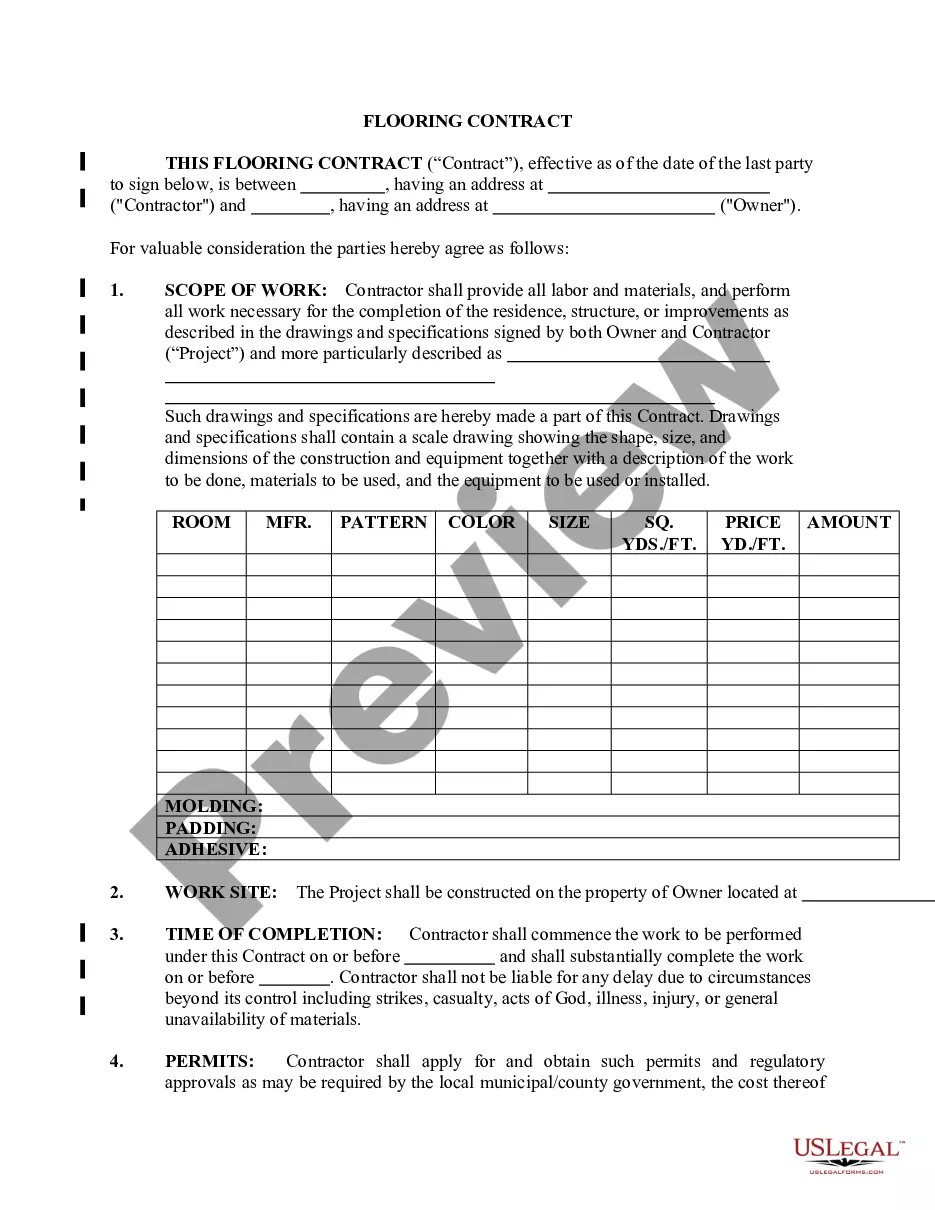
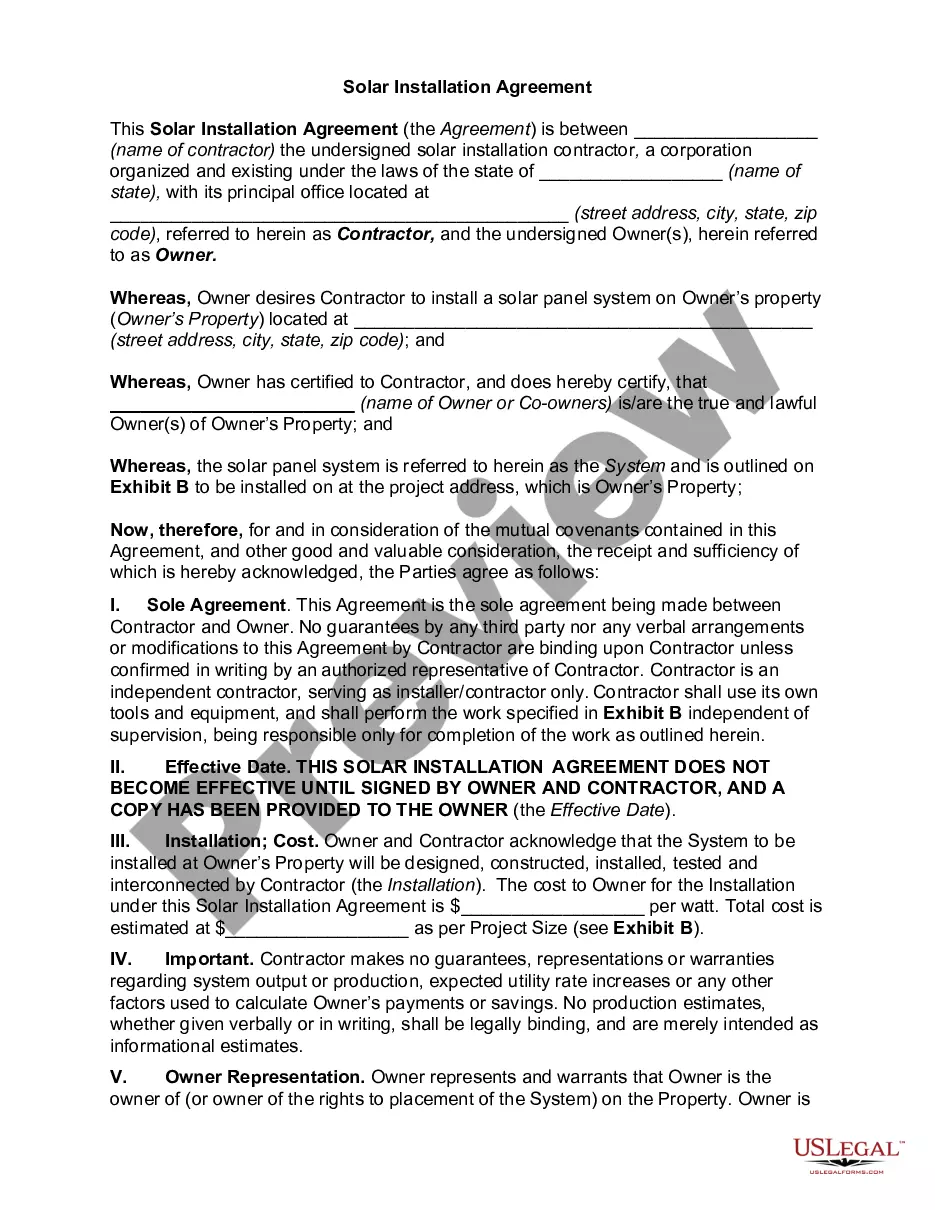
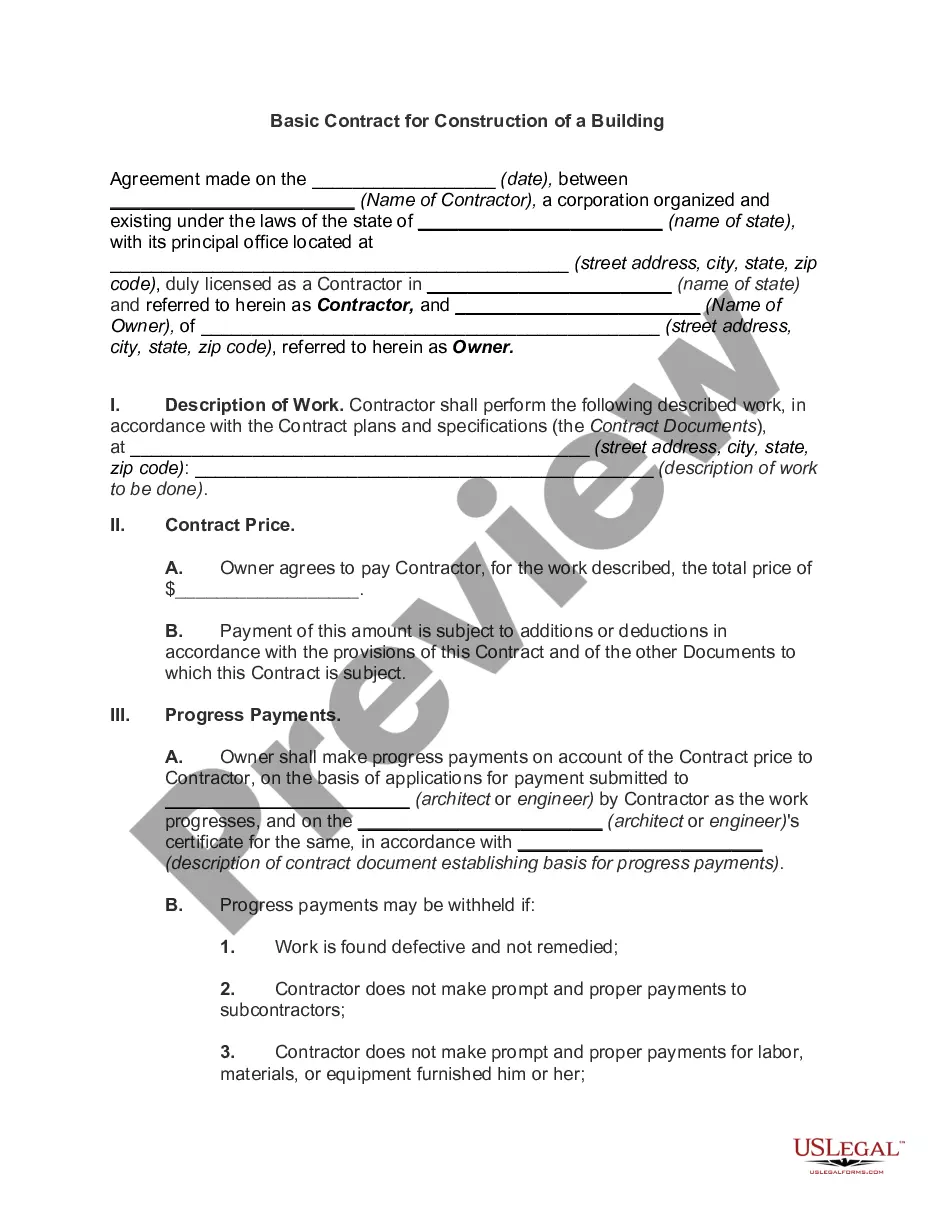
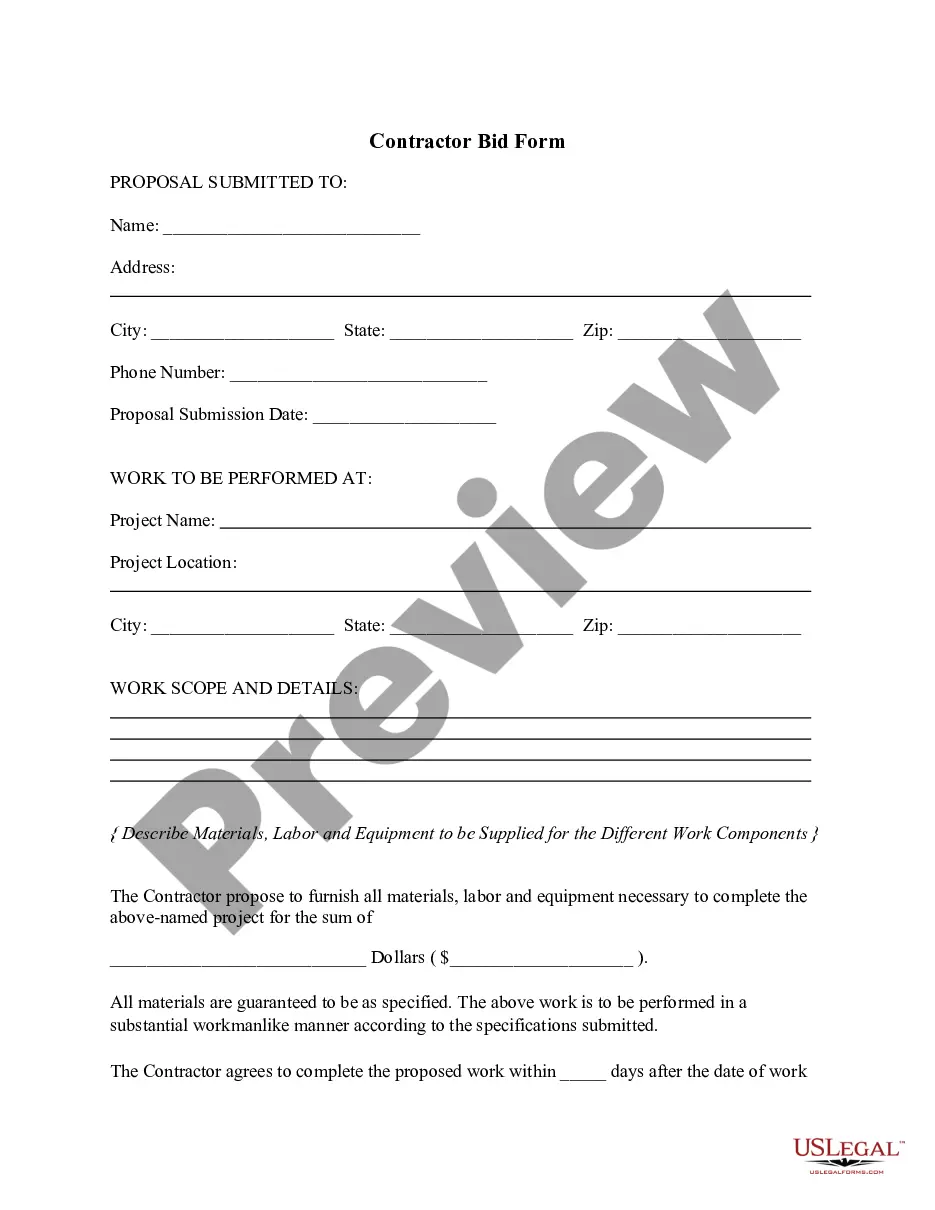
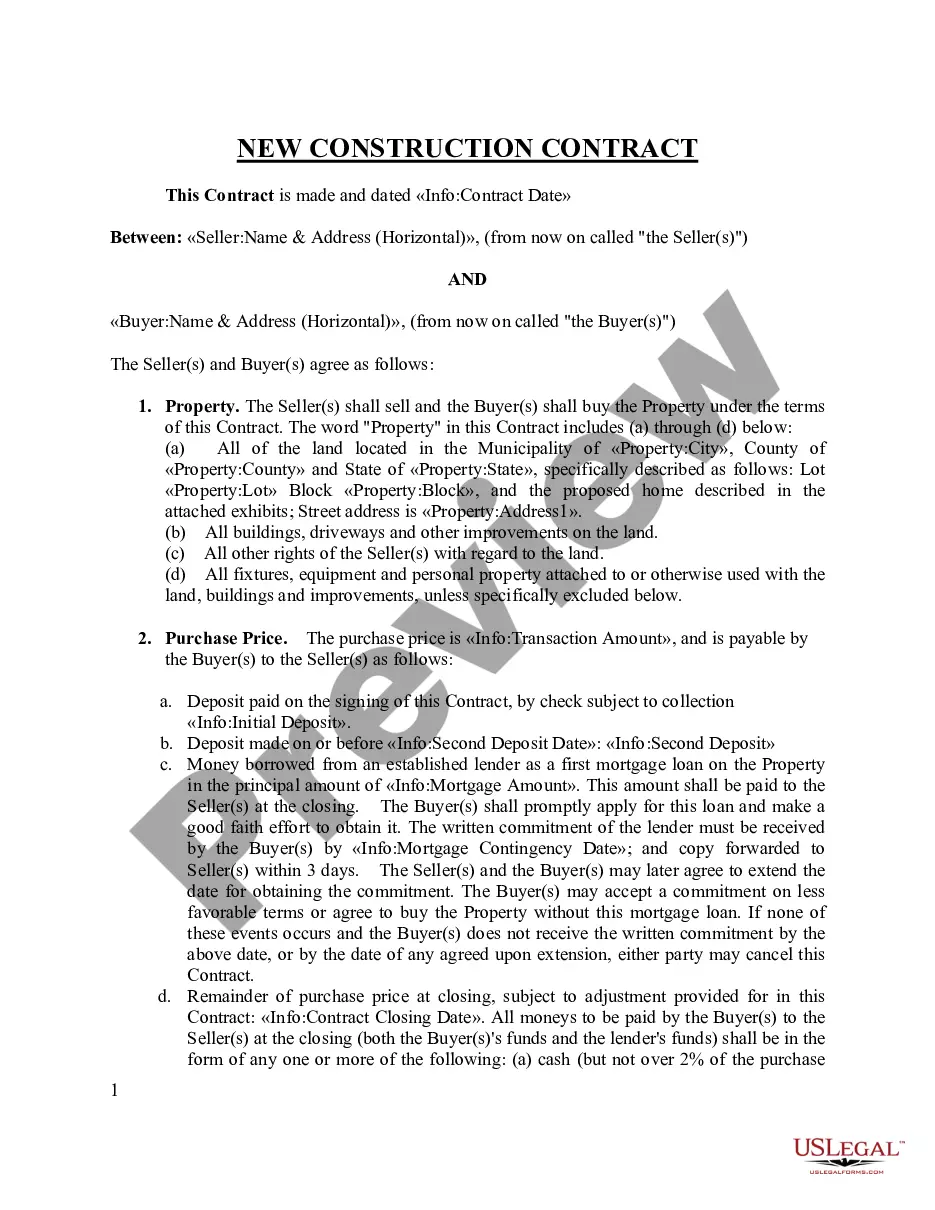
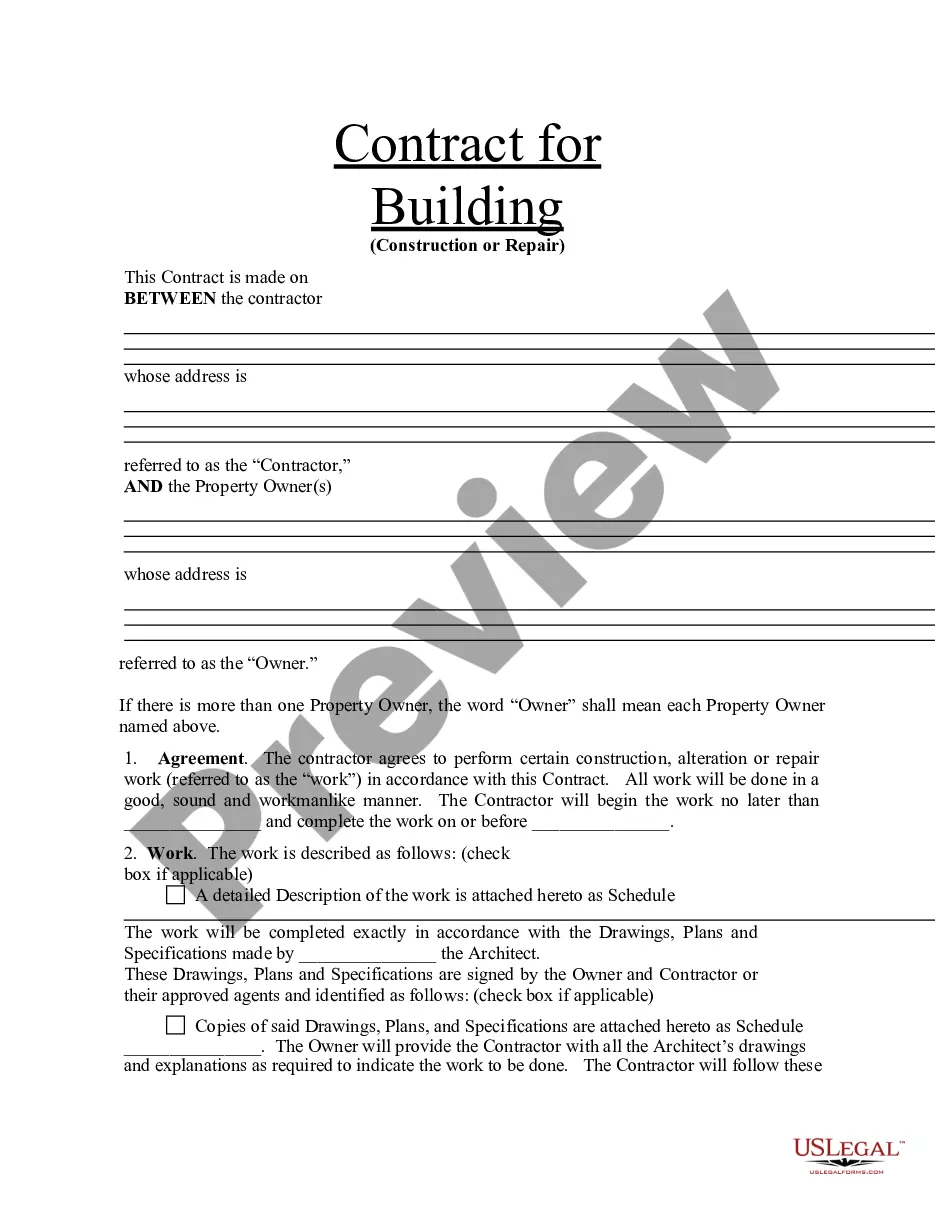
The Flooring Contract for Contractor is a legally binding agreement tailored for flooring contractors and property owners in Michigan. This form outlines crucial terms of the project, such as payment arrangements, warranty coverage, and insurance requirements. Unlike other generic contracts, this template is specially drafted to comply with Michigan laws, ensuring that both parties are protected and understand their responsibilities throughout the flooring project.
Key parts of this document
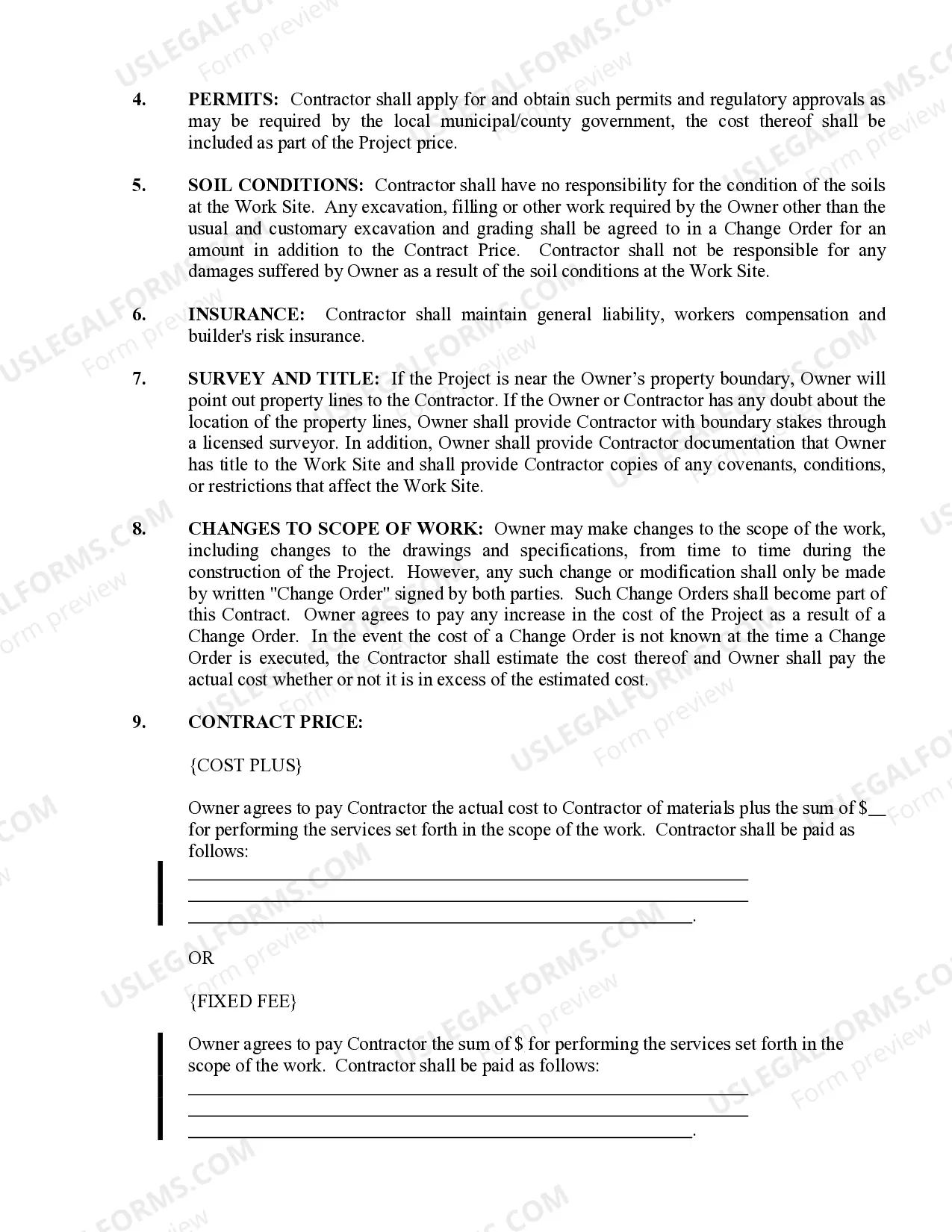
- Payment Structure: Options for cost plus or fixed fee arrangements.
- Permits and Approvals: Responsibilities for obtaining necessary permits.
- Change Orders: Guidelines for modifying work scope and associated costs.
- Insurance: Requirements for general liability, workers compensation, and builders risk insurance.
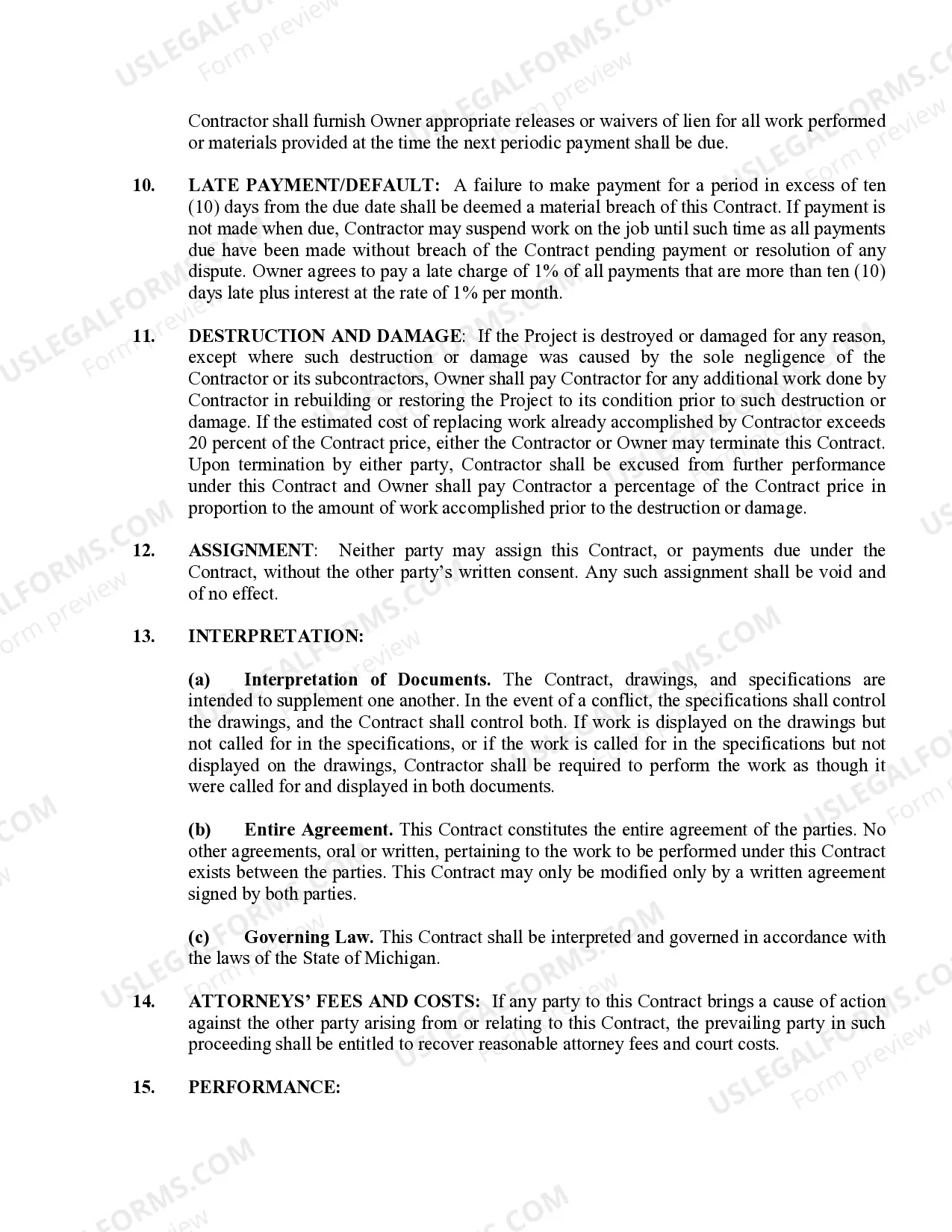
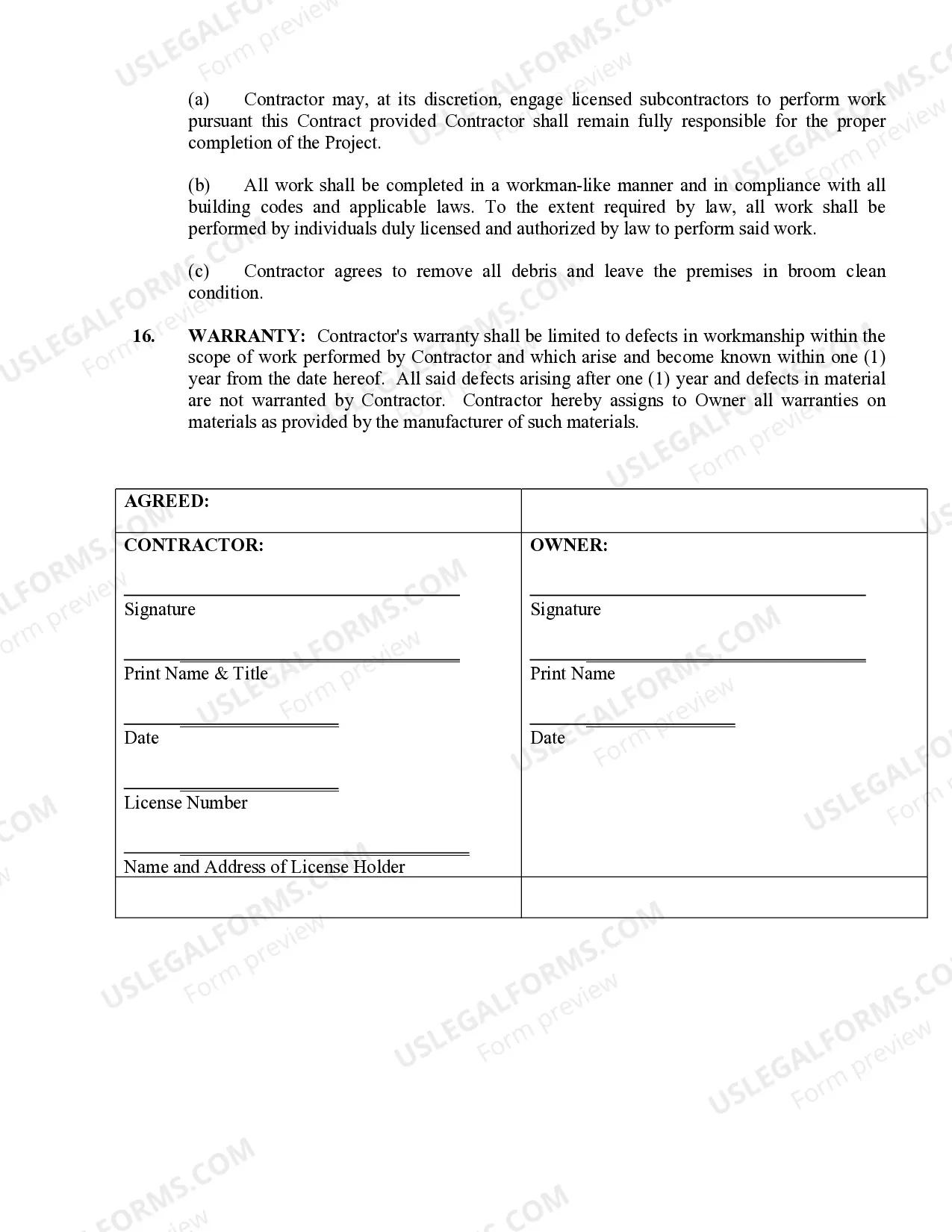
- Contractor Warranty: Limited warranty on defects in workmanship valid for one year.
- Termination Clauses: Conditions under which either party may terminate the contract.
When this form is needed
This flooring contract should be utilized whenever a property owner hires a contractor for flooring installation or refinishing work, especially when the project involves significant financial investment or complexity. It is particularly beneficial in scenarios where there may be alterations to the work plan or where explicit compliance with Michigan state laws is needed.
Who this form is for
- Property owners looking to hire a flooring contractor for their residential or commercial property.
- Flooring contractors seeking to formalize their agreements with property owners.
- Individuals unfamiliar with contract law who need a clear, legally compliant agreement.
How to prepare this document
- Identify the parties involved: Enter the names and contact details of both the contractor and the property owner.
- Specify the project details: Describe the work to be performed, including room sizes and type of flooring.
- Outline payment terms: Choose between cost plus or fixed fee payment arrangements and enter the agreed amounts.
- Clarify changes to the scope of work: Include provisions for change orders and how they will impact pricing.
- Obtain signatures: Ensure both parties sign and date the contract to validate the agreement.
Does this form need to be notarized?
This form does not typically require notarization unless specified by local law. It is still advisable to check local regulations to confirm any additional requirements you may need to fulfill.
Get your form ready online
Our built-in tools help you complete, sign, share, and store your documents in one place.
Make edits, fill in missing information, and update formatting in US Legal Forms—just like you would in MS Word.
Download a copy, print it, send it by email, or mail it via USPS—whatever works best for your next step.
Sign and collect signatures with our SignNow integration. Send to multiple recipients, set reminders, and more. Go Premium to unlock E-Sign.
If this form requires notarization, complete it online through a secure video call—no need to meet a notary in person or wait for an appointment.
We protect your documents and personal data by following strict security and privacy standards.

Make edits, fill in missing information, and update formatting in US Legal Forms—just like you would in MS Word.

Download a copy, print it, send it by email, or mail it via USPS—whatever works best for your next step.

Sign and collect signatures with our SignNow integration. Send to multiple recipients, set reminders, and more. Go Premium to unlock E-Sign.

If this form requires notarization, complete it online through a secure video call—no need to meet a notary in person or wait for an appointment.

We protect your documents and personal data by following strict security and privacy standards.
Common mistakes
- Not specifying the payment arrangement clearly, leading to disputes over costs.
- Ignoring the need for change orders when modifications to the work are discussed.
- Failing to thoroughly review insurance requirements before signing.
- Not including a clear description of the work to be performed, resulting in misunderstandings.
Why use this form online
- Easy access: Download and fill out the contract at your convenience.
- Editability: Modify the template to fit specific needs and circumstances.
- Reliability: Form drafted by licensed attorneys to ensure legal compliance.
Legal use & context
- The contract is legally binding once signed by both parties, ensuring the enforceability of its terms.
- It provisions for disputes, including late payments and breaches, providing protection and clarity.
- Warranties and insurance clauses safeguard against potential risks associated with flooring installations.
Summary of main points
- The Flooring Contract for Contractor is essential for formalizing flooring work agreements.
- Clearly defining terms helps prevent misunderstandings and disputes.
- This contract complies specifically with Michigan law, ensuring its enforceability in that state.
Looking for another form?
Form popularity
FAQ
Yes, you can certainly do flooring on your own in Michigan if it's your residence. However, ensure you understand the project requirements and necessary steps. For larger installations or commercial projects, having a Michigan Flooring Contract for Contractor can simplify the process and protect your investment. Always familiarize yourself with local regulations first.
In Michigan, you generally require a contractor's license to perform flooring work for clients. This ensures that you meet local building codes and standards. By securing a proper Michigan Flooring Contract for Contractor, you can operate legally and gain the trust of your clients. Always check with local authorities to confirm specific licensing requirements.
Learning how to install laminate flooring is an ideal project for DIYers and can instantly help upgrade your home. You can easily lay DIY laminate floors in almost every room in your home, including kitchens, since it doesn't have to be glued down and doesn't involve grout or mortar.
Do quality flooring work. Build a great website. Optimize your website for search engines. Take high-quality photographs of your work. Build a strong brand. Build relationships with local contractors. Purchase flooring job leads. Put an ad in the phonebook.
Acquire 4 years of experience in the trade for which you plan to get the license for. After this, you will have to take two exams: the California Law and Business Exam and the Flooring & Floor Covering C-15 exam.
The current limit is $600. Michigan licenses many different types of contractors that other states do not. The proposed law would allow people the ability to choose from a larger pool of contractors, while the burdens on people trying to work would be lessened.
STEP 1: Plan your business. STEP 2: Form a legal entity. STEP 3: Register for taxes. STEP 4: Open a business bank account & credit card. STEP 5: Set up business accounting. STEP 6: Obtain necessary permits and licenses. STEP 7: Get business insurance.
What are the costs involved in opening a carpet store? Your startup costs will be between $2,000 and $10,000, depending on your location. You can start from home, or you can use a small workshop with a monthly rent of about $1,000. Expect to pay additional money for high-grade insurance.
A residential builders or maintenance and alteration contractors license is required when contracting to construct, repair, alter, add to, or improve a residential or combination residential and commercial structure.
Michigan. A handyman in Michigan does not need a specific handyman's license to work in the state. However, there are many jobs that a handyman may do that could require a license, including carpentry, laying concrete, painting and tiling. These all require a Maintenance and Alteration Contractor License.