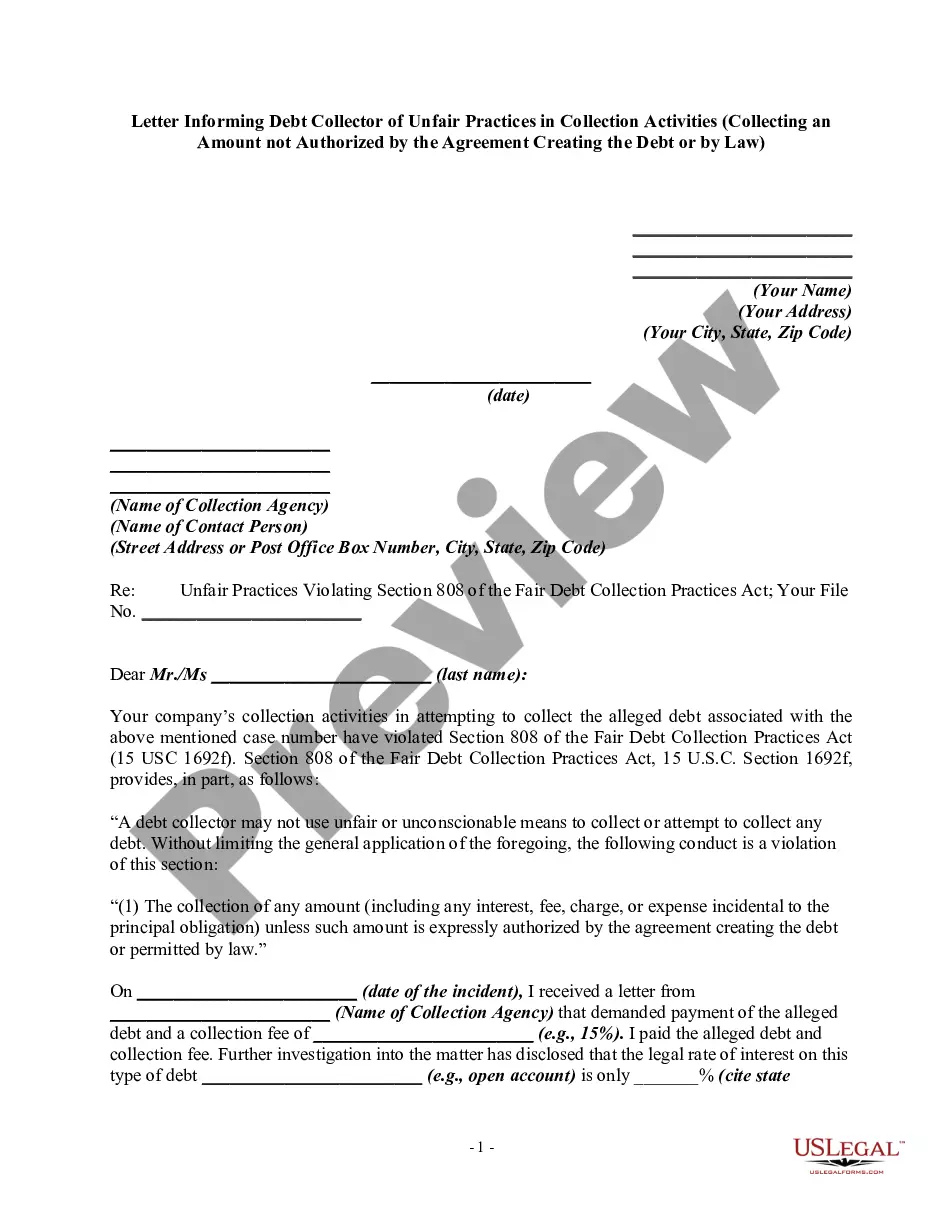
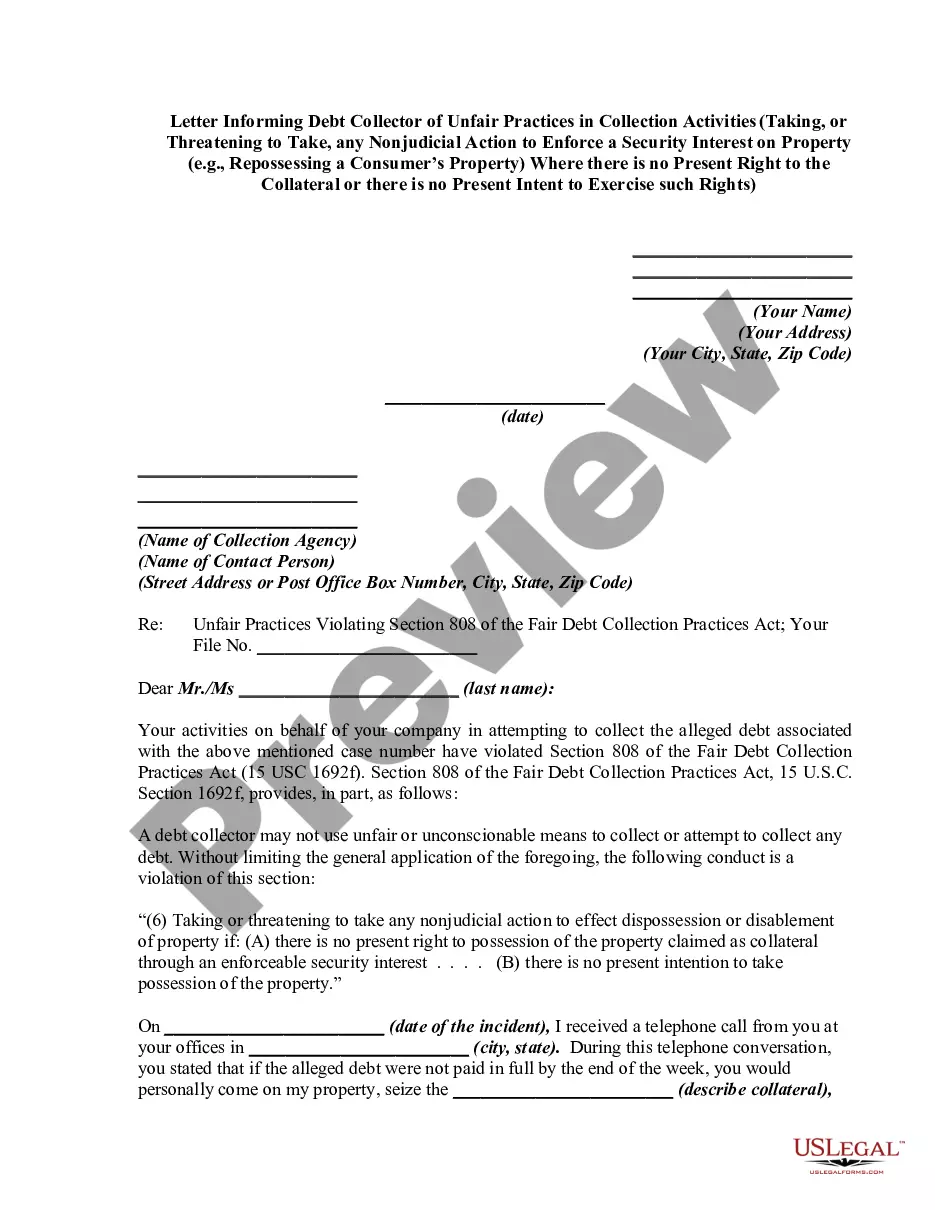
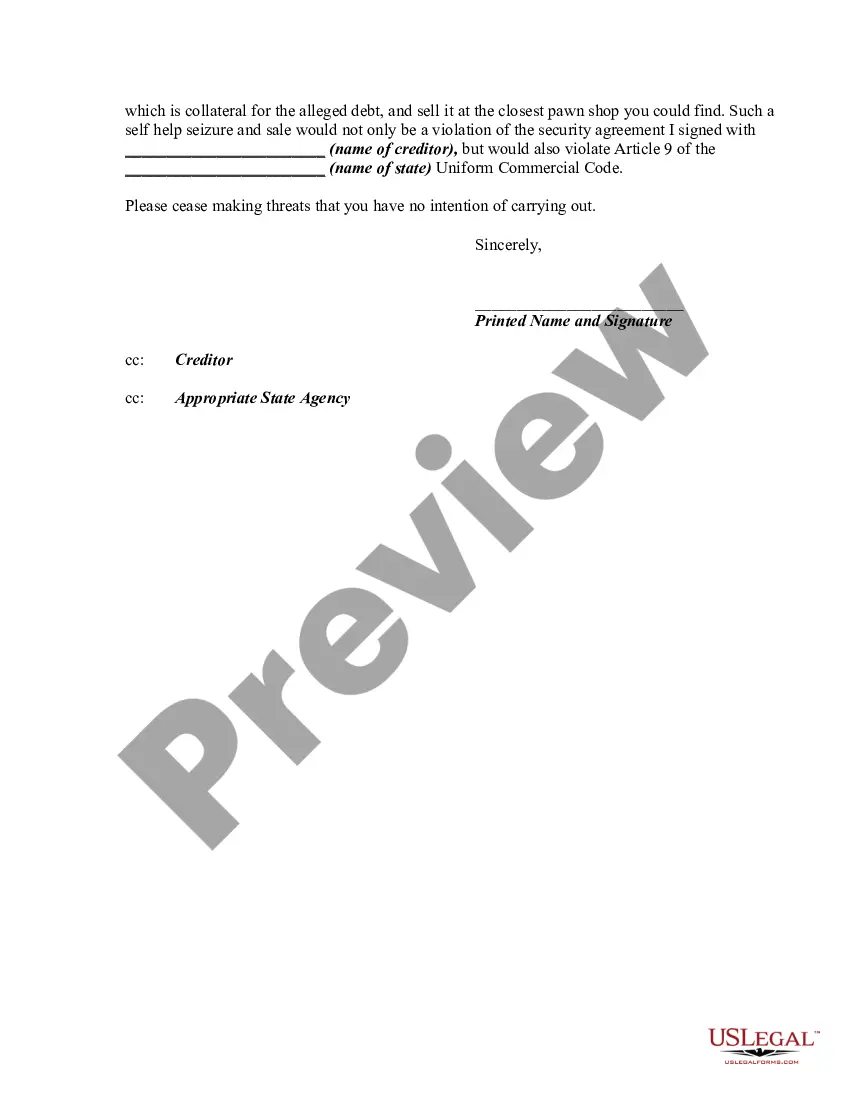
Maine Letter Informing Debt Collector of Unfair Practices in Collection Activities - Taking, or Threatening to Take, any Nonjudicial Action Where there is no Present Right or Intent to Exercise such Rights

State:
Multi-State
Control #:
US-DCPA-20.4BG
Format:
Word; 
Rich Text
Instant download

Description

A debt collector may not use unfair or unconscionable means to collect or attempt to collect any debt. Without limiting the general application of the foregoing, the following conduct is a violation of this section:


"(6) Taking or threatening to take any nonjudicial action to effect dispossession or disablement of property if: (A) there is no present right to possession of the property claimed as collateral through an enforceable security interest . . . . (B) there is no present intention to take possession of the property."
Free preview
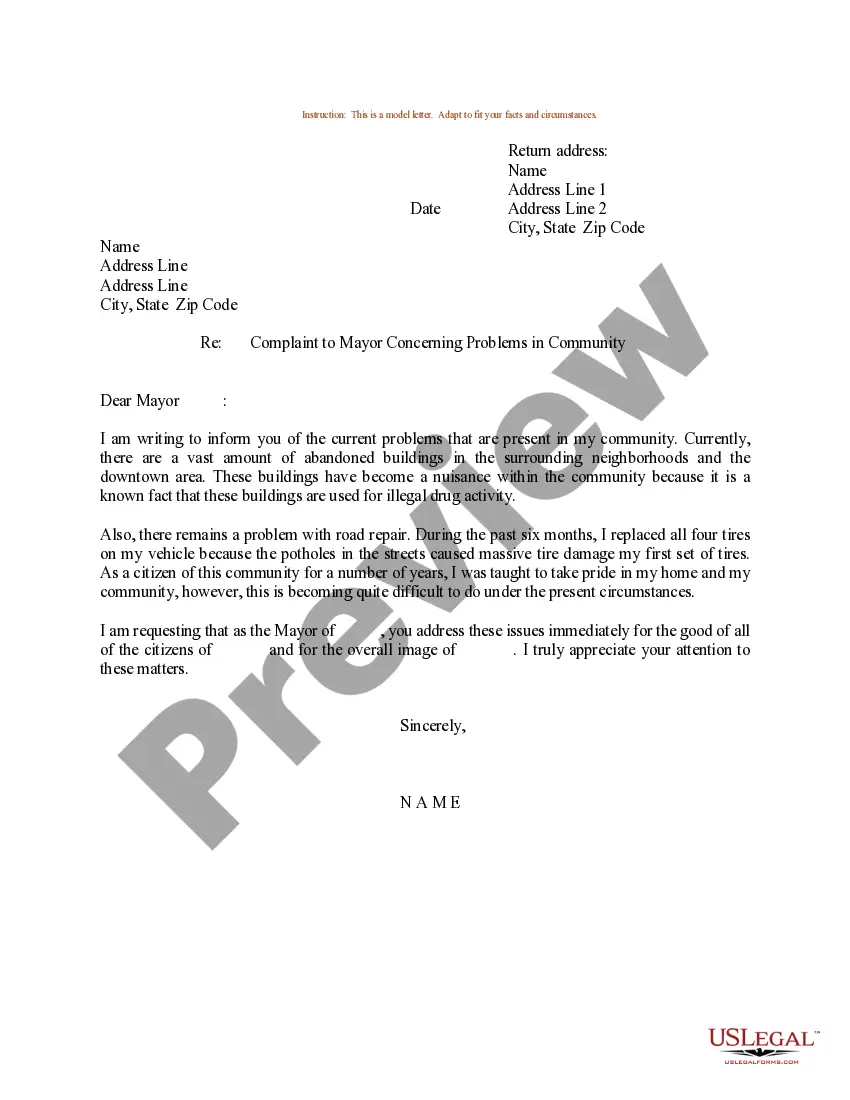
  • Preview Letter Informing Debt Collector of Unfair Practices in Collection Activities - Taking, or Threatening to Take, any Nonjudicial Action Where there is no Present Right or Intent to Exercise such Rights
  • Preview Letter Informing Debt Collector of Unfair Practices in Collection Activities - Taking, or Threatening to Take, any Nonjudicial Action Where there is no Present Right or Intent to Exercise such Rights

Related forms

form-preview
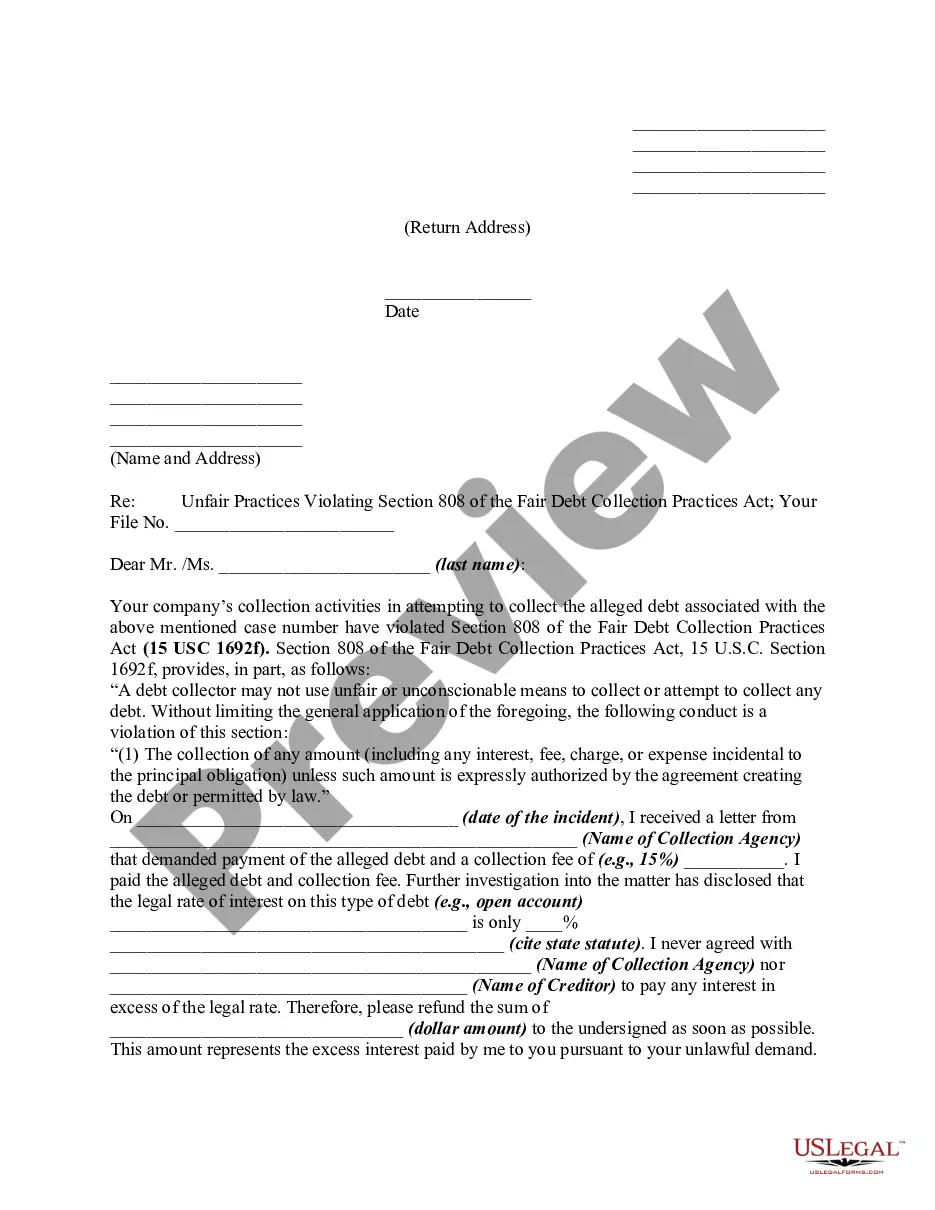
Maine Letter Informing Debt Collector of Unfair Practices in Collection Activities

Maine Letter Informing Debt Collector of Unfair Practices in Collection Activities

View this form
form-preview
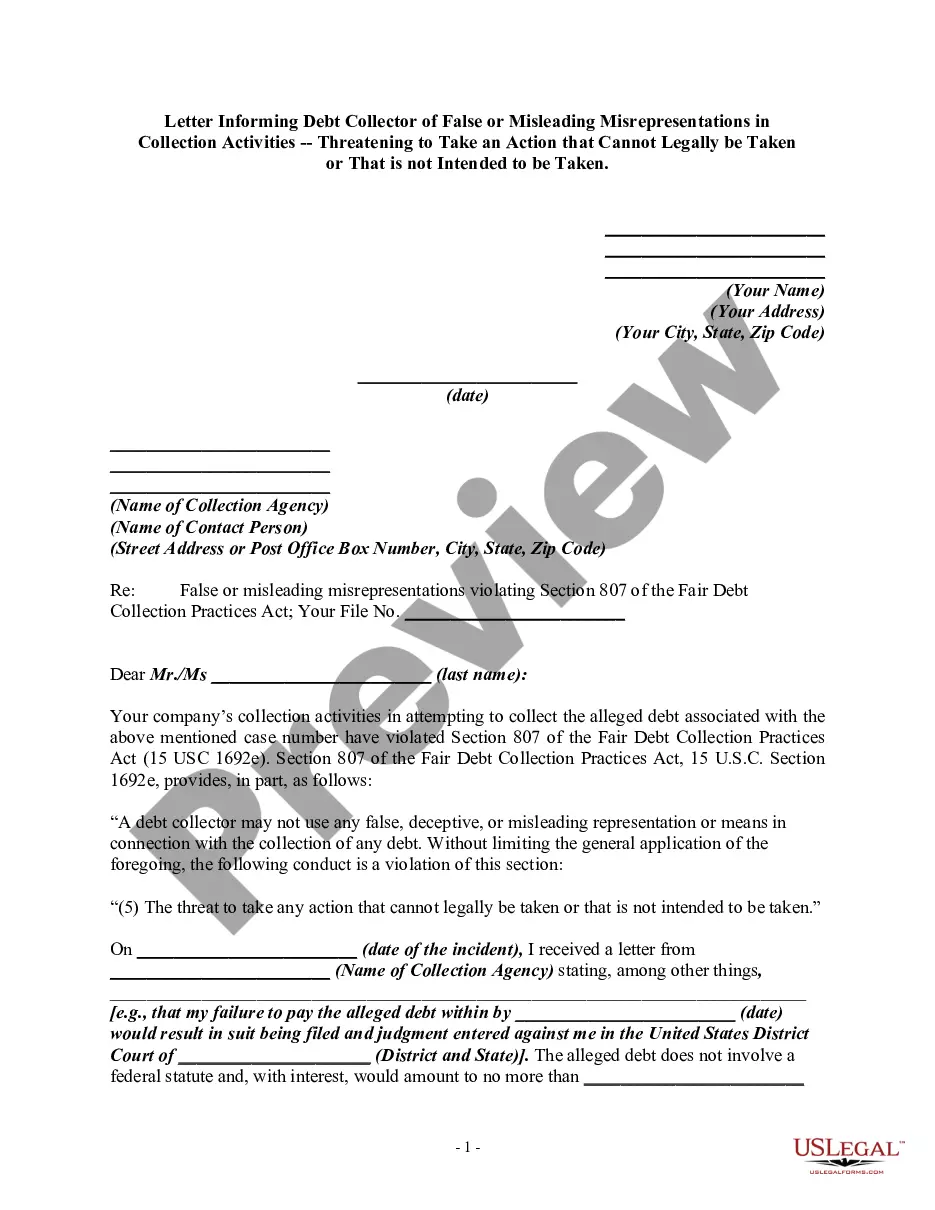
Maine Letter Informing Debt Collector of False or Misleading Misrepresentations in Collection Activities - Threatening to Take an Action that Cannot Legally be Taken or That is not Intended to be Taken

Maine Letter Informing Debt Collector of False or Misleading Misrepresentations in Collection Activities - Threatening to Take an Action that Cannot Legally be Taken or That is not Intended to be Taken

View this form
form-preview
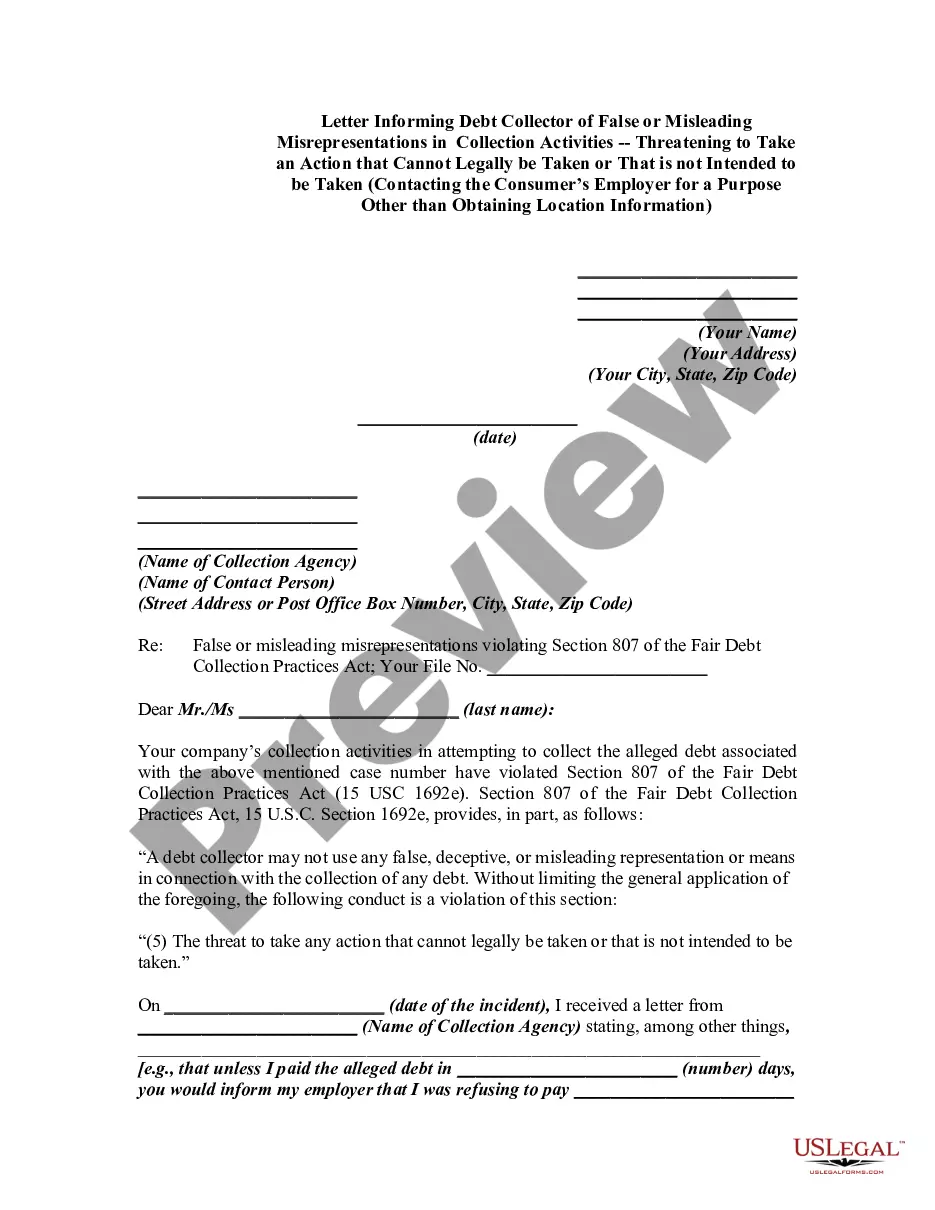
Maine Letter Informing Debt Collector of False or Misleading Misrepresentations in Collection Activities - Threatening to Take an Action that Cannot Legally be Taken or That is not Intended to be Taken - Contacting the Consumer’s Employer

Maine Letter Informing Debt Collector of False or Misleading Misrepresentations in Collection Activities - Threatening to Take an Action that Cannot Legally be Taken or That is not Intended to be Taken - Contacting the Consumer’s Employer

View this form
form-preview
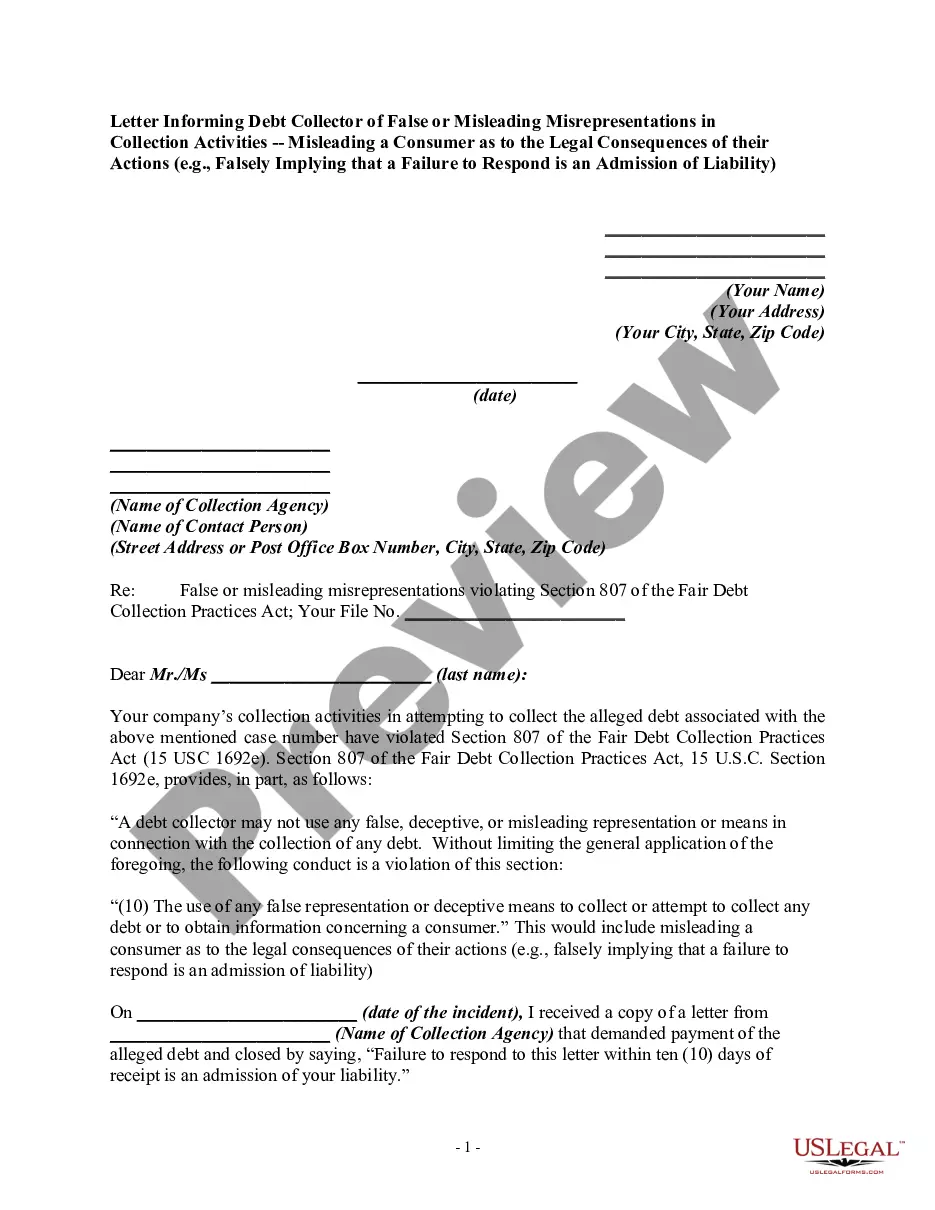
Maine Letter Informing Debt Collector of False or Misleading Misrepresentations in Collection Activities - Misleading a Consumer as to the Legal Consequences of their Actions - e.g., Falsely Implying that a Failure to Respond is an Admission of Liability

Maine Letter Informing Debt Collector of False or Misleading Misrepresentations in Collection Activities - Misleading a Consumer as to the Legal Consequences of their Actions - e.g., Falsely Implying that a Failure to Respond is an Admission of Liability

View this form
form-preview
Maine Letter Informing Debt Collector of Unfair Practices in Collection Activities - Collecting an Amount not Authorized by the Agreement Creating the Debt or by Law

Maine Letter Informing Debt Collector of Unfair Practices in Collection Activities - Collecting an Amount not Authorized by the Agreement Creating the Debt or by Law

View this form

How to fill out Letter Informing Debt Collector Of Unfair Practices In Collection Activities - Taking, Or Threatening To Take, Any Nonjudicial Action Where There Is No Present Right Or Intent To Exercise Such Rights?

Are you presently in a situation where you frequently require documents for either business or personal purposes.

There are many legal document templates available online, but finding reliable ones is not easy.

US Legal Forms offers thousands of form templates, including the Maine Letter Notifying Debt Collector of Unreasonable Practices in Collection Activities - Taking, or Threatening to Take, any Nonjudicial Action When There is no Current Right or Intent to Exercise such Rights, designed to comply with federal and state regulations.

Select a suitable file format and download your copy.

Find all the document templates you have purchased in the My documents section. You can obtain another copy of the Maine Letter Notifying Debt Collector of Unreasonable Practices in Collection Activities - Taking, or Threatening to Take, any Nonjudicial Action When There is no Current Right or Intent to Exercise such Rights at any time, if necessary. Simply navigate the required form to download or print the document template.

  1. If you already know the US Legal Forms website and possess an account, simply Log In.
  2. Then, you can download the Maine Letter Notifying Debt Collector of Unreasonable Practices in Collection Activities - Taking, or Threatening to Take, any Nonjudicial Action When There is no Current Right or Intent to Exercise such Rights template.
  3. If you don’t have an account and want to start using US Legal Forms, follow these steps.
  4. Find the form you need and ensure it is for the correct city/county.
  5. Use the Review button to examine the form.
  6. Read the description to confirm you have selected the right form.
  7. If the form is not what you’re looking for, utilize the Lookup section to find the form that meets your needs and specifications.
  8. When you find the correct form, click Acquire now.
  9. Choose the pricing plan you want, fill in the required details to create your account, and complete the payment via PayPal or credit card.

Form popularity

FAQ

Debts that may not be covered are those that are not incurred voluntarily, such as income taxes, parking and speeding tickets, and domestic support obligations like child support and alimony, or spousal support.

If the FDCPA is violated, the debtor can sue the debt collection company as well as the individual debt collector for damages and attorney fees.

Your credit card debt, auto loans, medical bills, student loans, mortgage, and other household debts are covered under the FDCPA.

The Fair Debt Collection Practices Act (FDCPA) The FDCPA prohibits debt collection companies from using abusive, unfair or deceptive practices to collect debts from you.

Debt Collectors Can't Call You Repeatedly to Harass You This means that while the FDCPA doesn't place a specific limit on the number of calls debt collectors can make, it prohibits them from calling you multiple times just to harass you. (15 U.S. Code §? 1692d).

Fortunately, there are legal actions you can take to stop this harassment:Write a Letter Requesting To Cease Communications.Document All Contact and Harassment.File a Complaint With the FTC.File a Complaint With Your State's Agency.Consider Suing the Debt Collection Agency for Harassment.

No harassment The Fair Debt Collection Practices Act (FDCPA) says debt collectors can't harass, oppress, or abuse you or anyone else they contact. Some examples of harassment are: Repetitious phone calls that are intended to annoy, abuse, or harass you or any person answering the phone. Obscene or profane language.

The definition of debt collection harassment is to intimidate, abuse, coerce, bully or browbeat consumers into paying off debt. This happens most often over the phone, but harassment could come in the form of emails, texts, direct mail or talking to friends or neighbors about your debt.

The FDCPA broadly prohibits a debt collector from using 'any false, deceptive, or misleading representation or means in connection with the collection of any debt. ' 15 U.S.C. § 1692e. The statute enumerates several examples of such practices, 15 U.S.C.

7 Most Common FDCPA ViolationsContinued attempts to collect debt not owed.Illegal or unethical communication tactics.Disclosure verification of debt.Taking or threatening illegal action.False statements or false representation.Improper contact or sharing of info.Excessive phone calls.

Trusted and secure by over 3 million people of the world’s leading companies

Maine Letter Informing Debt Collector of Unfair Practices in Collection Activities - Taking, or Threatening to Take, any Nonjudicial Action Where there is no Present Right or Intent to Exercise such Rights