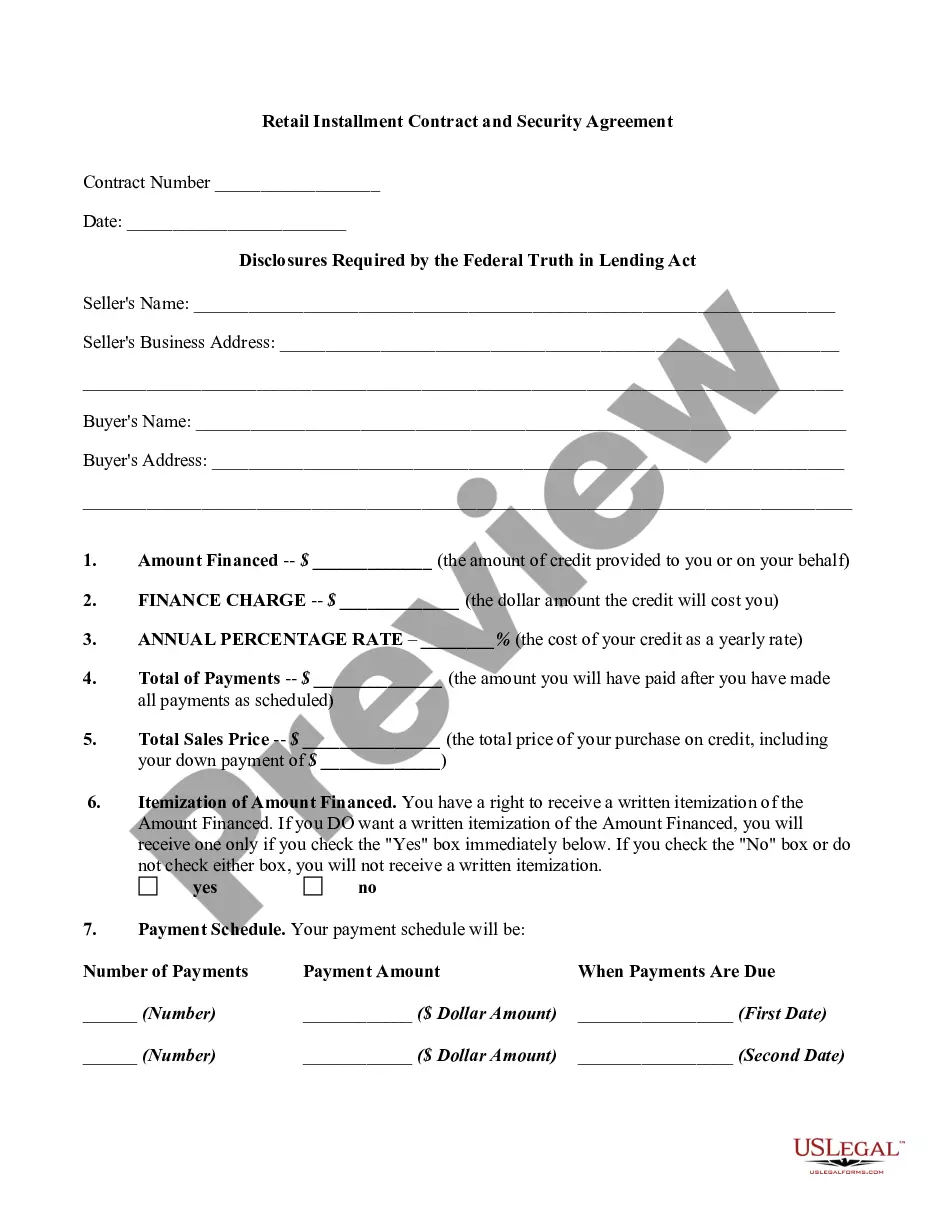
Maine Commercial Lease Agreement
Description
Get your form ready online
Our built-in tools help you complete, sign, share, and store your documents in one place.
Make edits, fill in missing information, and update formatting in US Legal Forms—just like you would in MS Word.
Download a copy, print it, send it by email, or mail it via USPS—whatever works best for your next step.
Sign and collect signatures with our SignNow integration. Send to multiple recipients, set reminders, and more. Go Premium to unlock E-Sign.
If this form requires notarization, complete it online through a secure video call—no need to meet a notary in person or wait for an appointment.
We protect your documents and personal data by following strict security and privacy standards.

Make edits, fill in missing information, and update formatting in US Legal Forms—just like you would in MS Word.

Download a copy, print it, send it by email, or mail it via USPS—whatever works best for your next step.

Sign and collect signatures with our SignNow integration. Send to multiple recipients, set reminders, and more. Go Premium to unlock E-Sign.

If this form requires notarization, complete it online through a secure video call—no need to meet a notary in person or wait for an appointment.

We protect your documents and personal data by following strict security and privacy standards.
Looking for another form?





How to fill out Commercial Lease Agreement?
Are you currently in a situation where you require documentation for various business or specific purposes almost every day.
There are numerous legitimate document templates available online, but finding ones you can trust is not easy.
US Legal Forms offers a wide array of form templates, including the Maine Commercial Lease Agreement, designed to comply with state and federal regulations.
Once you find the correct form, click Get now.
Select the pricing plan you prefer, fill out the necessary information to create your account, and complete the transaction using PayPal or a credit card.
- If you are already familiar with the US Legal Forms site and have an account, simply Log In.
- Then, you can download the Maine Commercial Lease Agreement template.
- If you do not have an account and wish to use US Legal Forms, follow these instructions.
- Acquire the form you need and ensure it is for the correct city/county.
- Utilize the Review button to inspect the form.
- Check the summary to confirm you have selected the appropriate form.
- If the form is not what you are looking for, use the Search box to find the form that meets your requirements.
Form popularity
FAQ
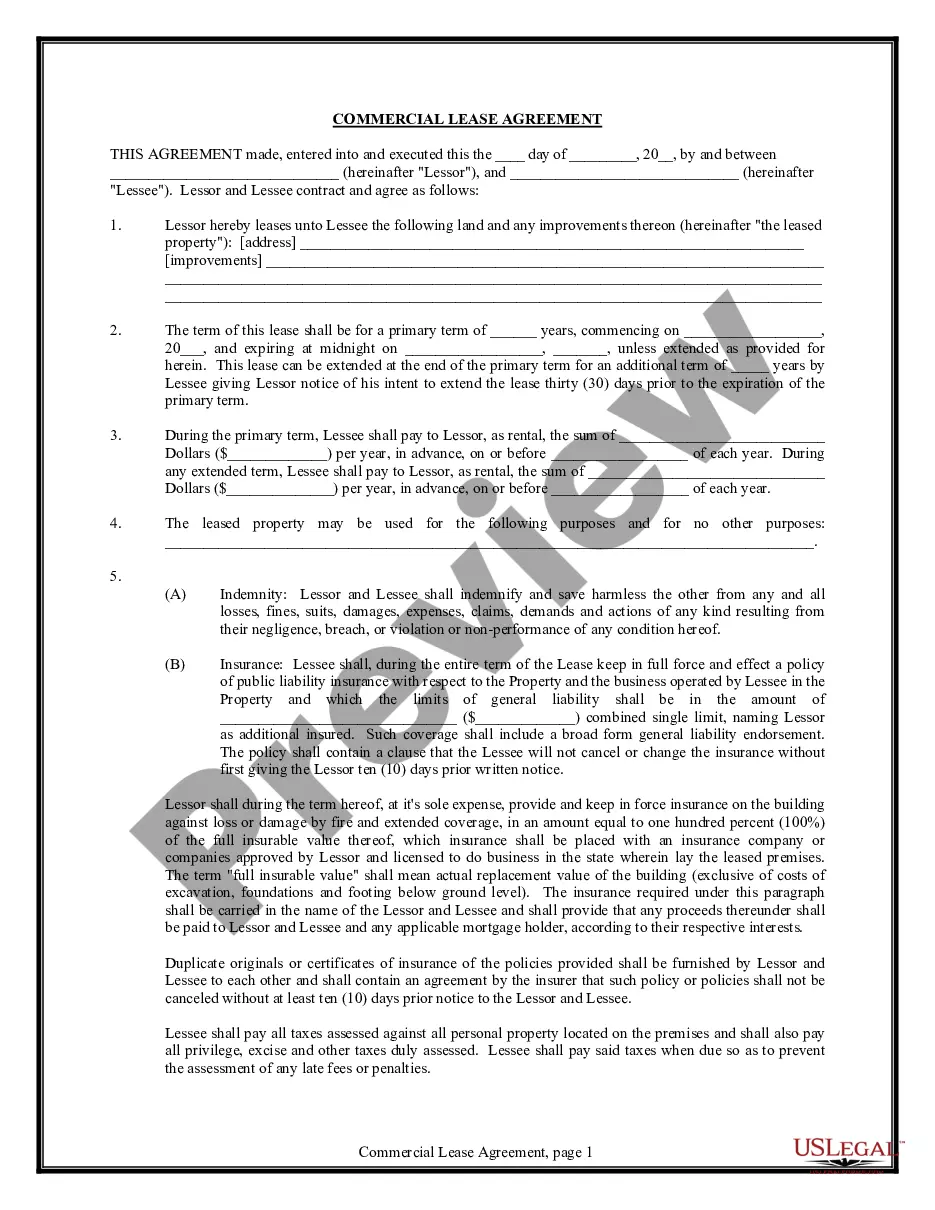
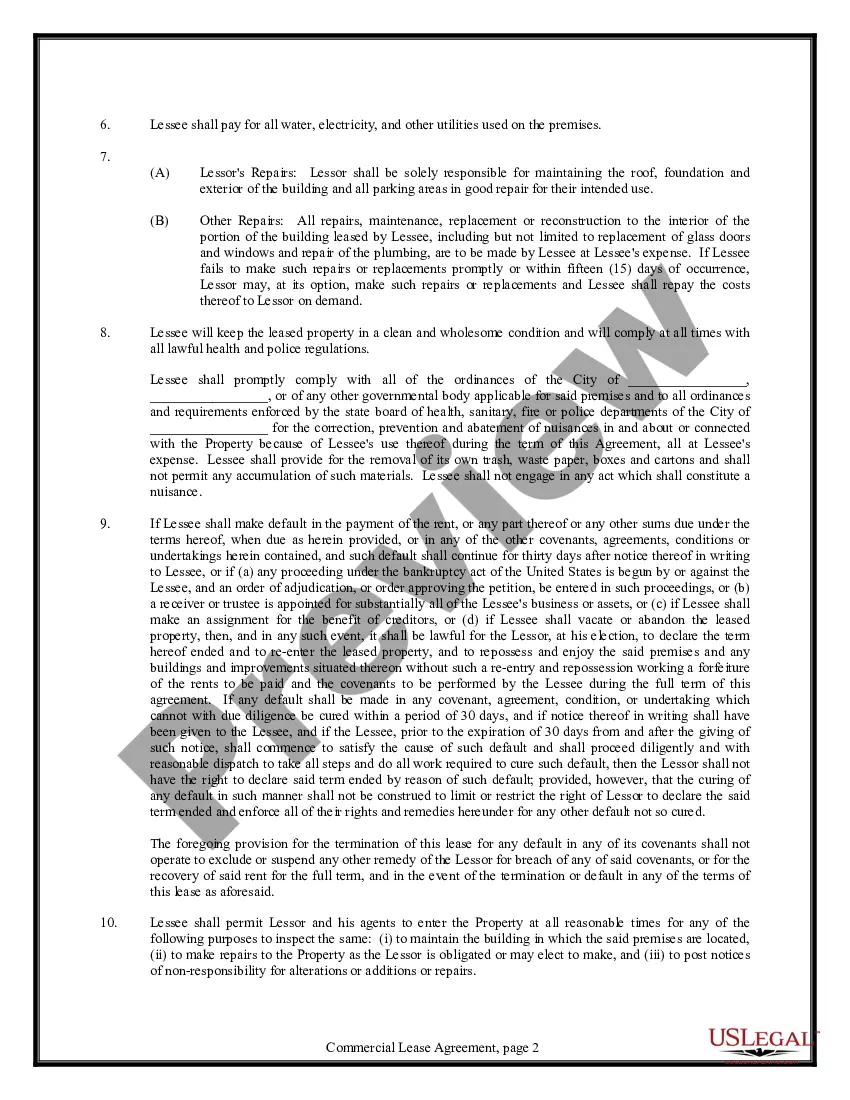
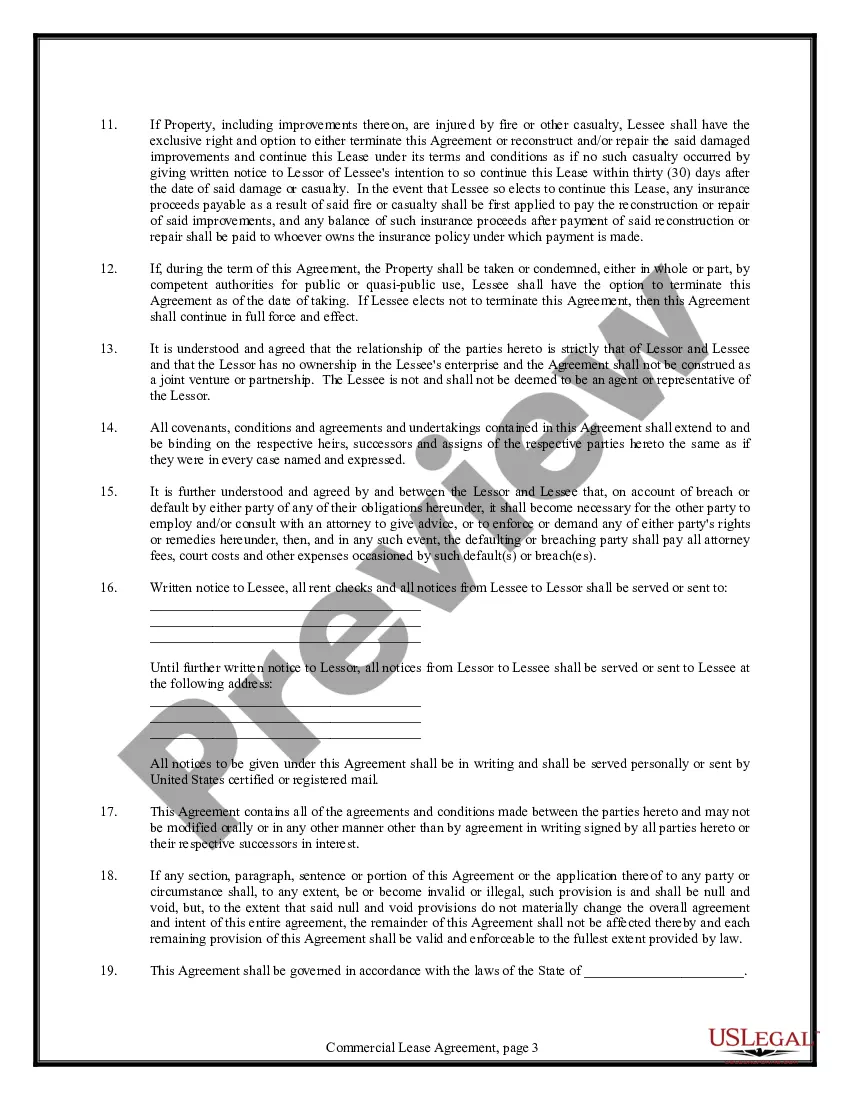
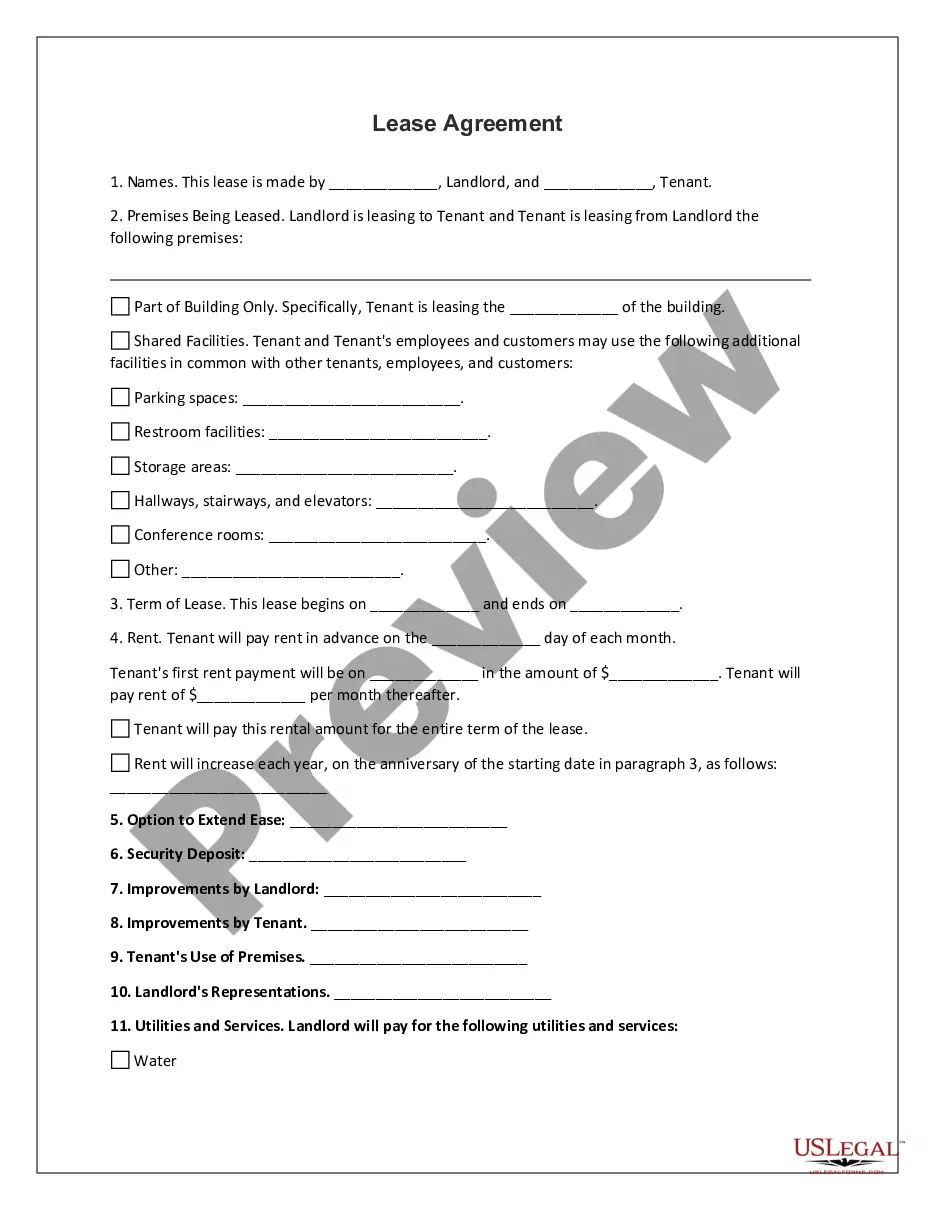
Typical clauses in a Maine Commercial Lease Agreement include rent amount, lease duration, property use, maintenance responsibilities, and termination conditions. It is crucial to understand each aspect thoroughly as they can significantly affect your rights and responsibilities. Seeking expert guidance or using reliable templates can help you navigate these essential components. Consider US Legal Forms as a valuable resource for commonly used clauses in commercial leases.
Commercial Tenants:Tenants must pay their rent on the due date agreed on in the lease with the landlord. Tenants cannot hold back rent because a landlord has failed to fulfill their obligations as outlined in the lease. Tenants must fulfill their obligations as outlined by the lease agreement.
Your landlord is responsible for any aspects of health and safety written in the lease (eg in communal areas). You must take reasonable steps to make sure your landlord fulfils these responsibilities. If you get into a dispute with your landlord, you need to keep paying rent - otherwise you may be evicted.
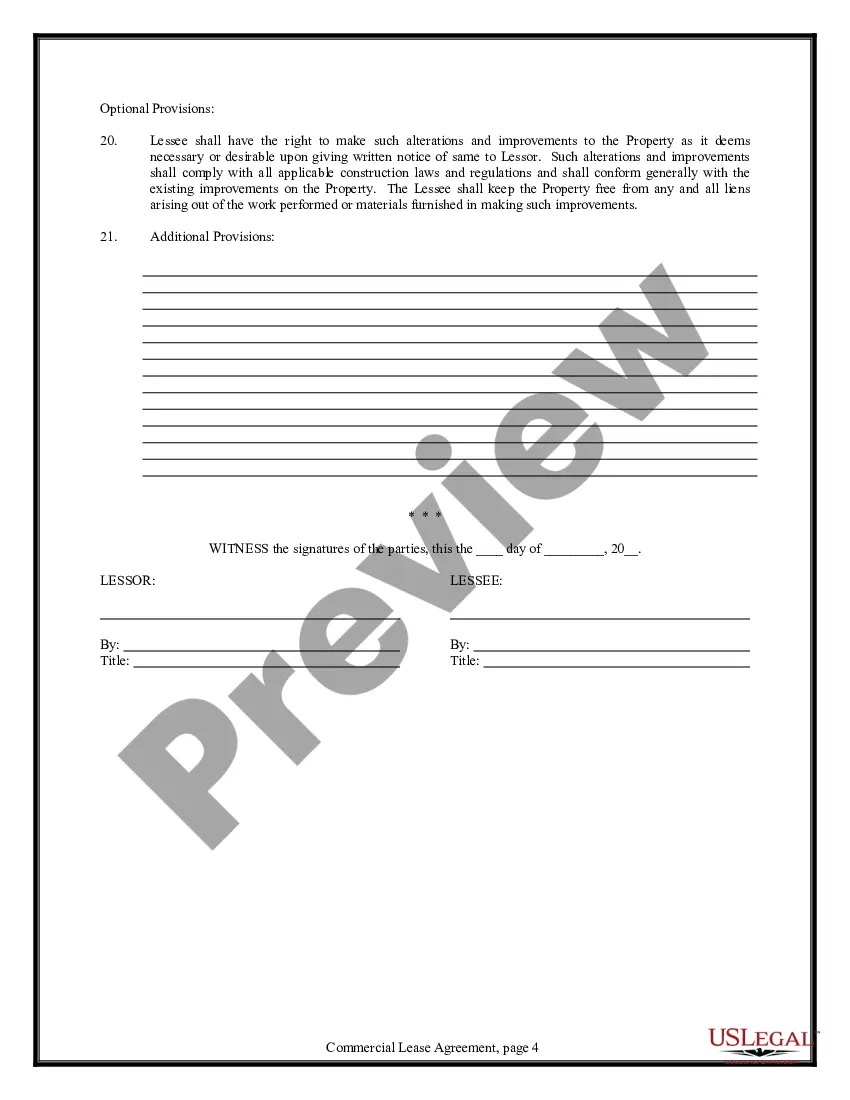
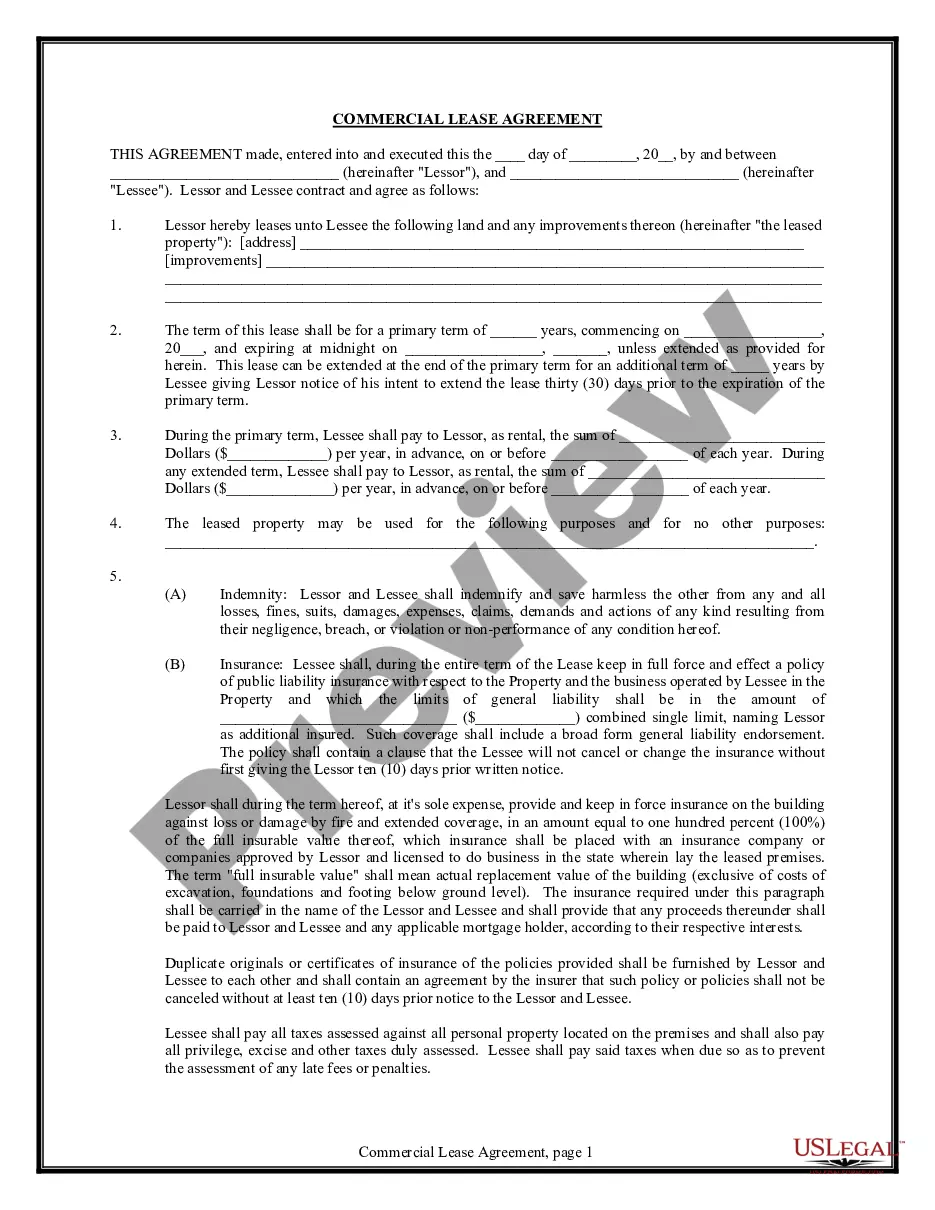
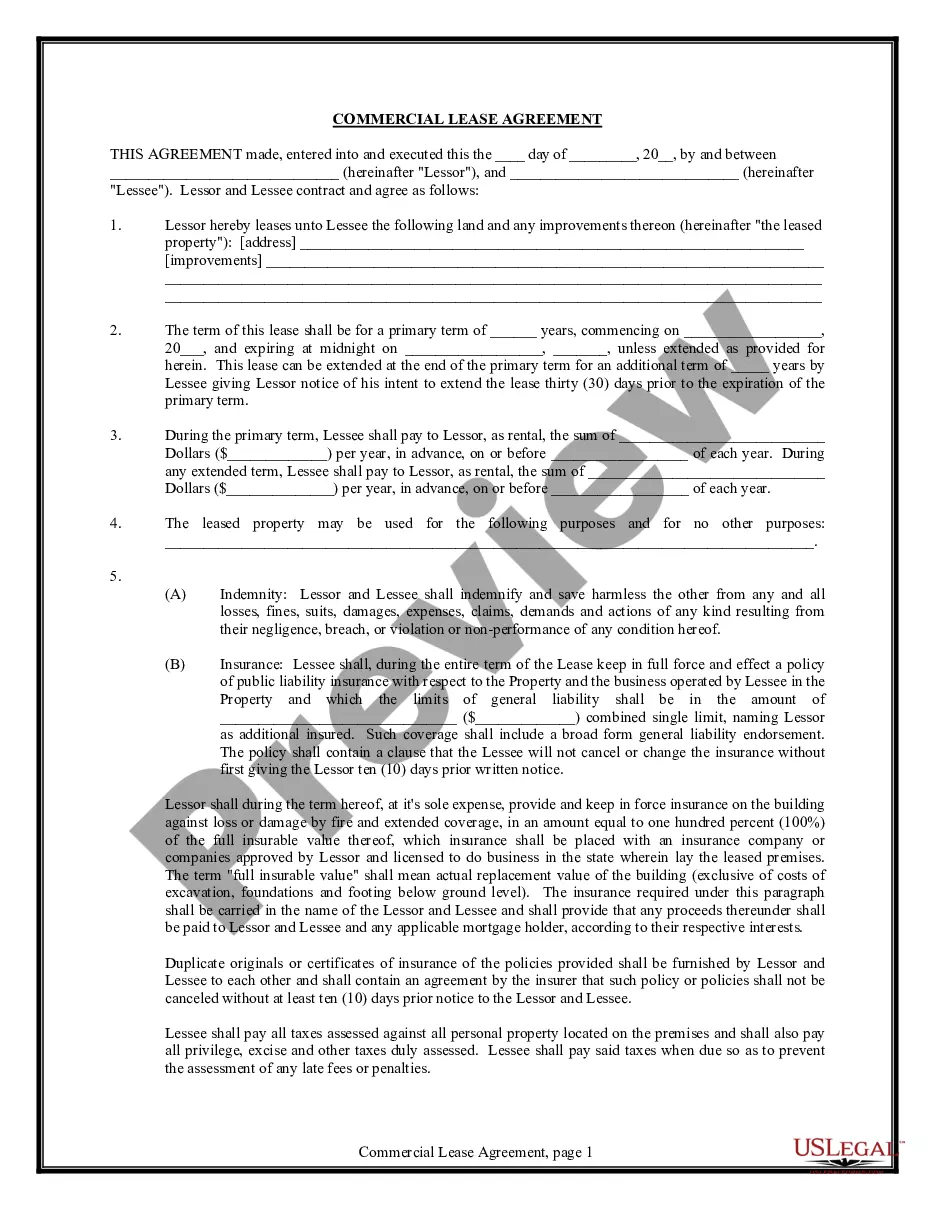
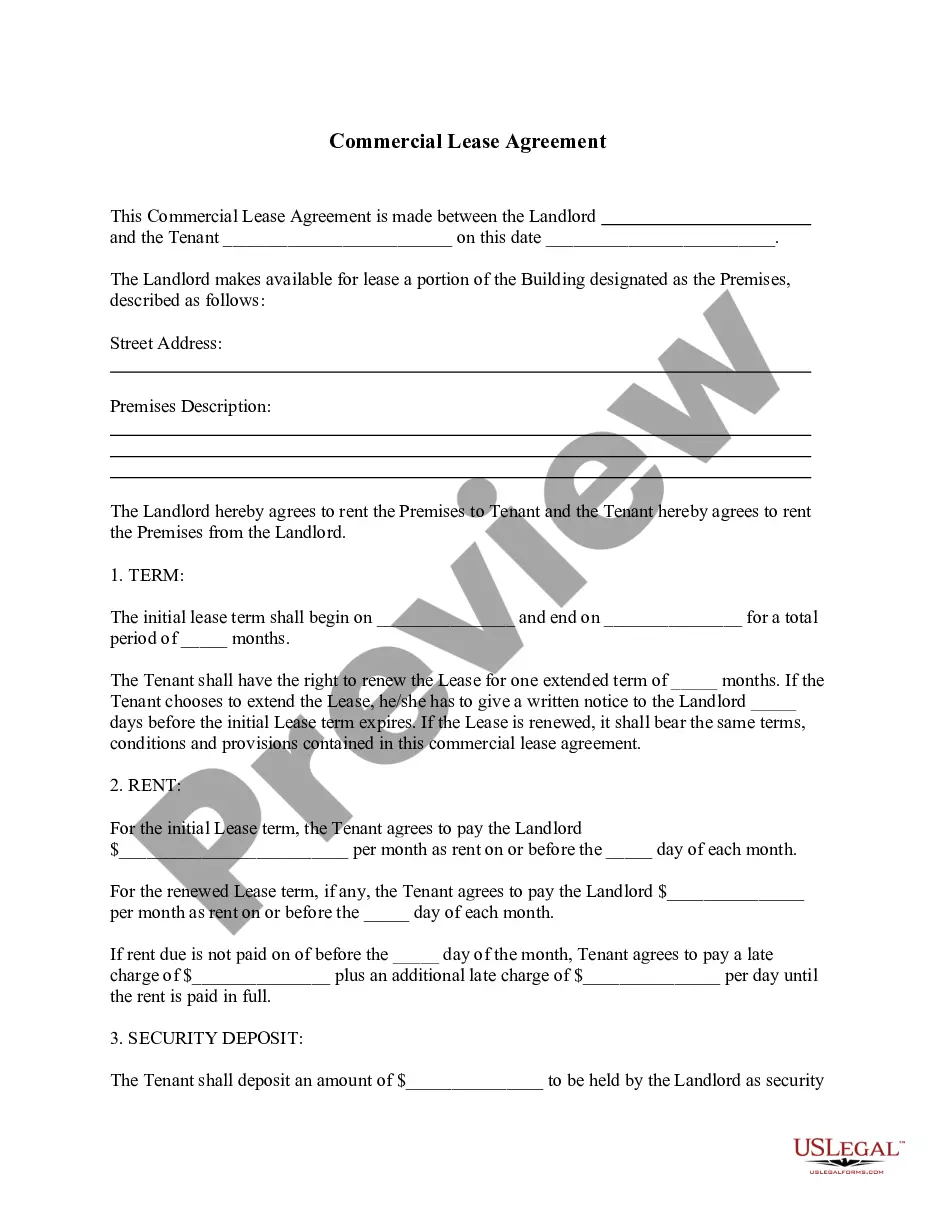
A Commercial Tenancy Agreement, also known as a Business Lease or a Commercial Lease, is used when the owner of a business property wishes to rent space to another business owner. Both parties may either be individuals or corporations.
The responsibilities of landlord and tenant will be clearly set out in the lease. Normally commercial landlords are responsible for any structural repairs such as foundations, flooring, roof and exterior walls, and tenants are responsible for non-structural repairs such as air conditioning or plumbing.
Commercial leases are legally binding contracts between landlords and commercial tenants. They give tenants the right to use the premises in a particular way for a set period for an agreed rent. Your lease will establish your rights and responsibilities as a tenant, as well as those of your landlord.
This lease structure makes the tenant responsible for the majority of costs. Specifically, the tenant pays the base rent, property but also taxes, insurance, utilities, and maintenance. This even includes standard property repairs associated with the commercial space being occupied.
Commercial leases are typically three to five years. That guarantees enough rental income for the landlords to recoup their investment. Leases are often negotiable, but for a commercial lease, landlords frequently allow customization of the space for the sake of the renting business.
Landlords are normally responsible for any structural repairs needed to maintain commercial properties. This includes exterior walls, foundations, flooring structure and the roof.
A Commercial Tenancy Agreement, also known as a Business Lease or a Commercial Lease, is used when the owner of a business property wishes to rent space to another business owner. Both parties may either be individuals or corporations.