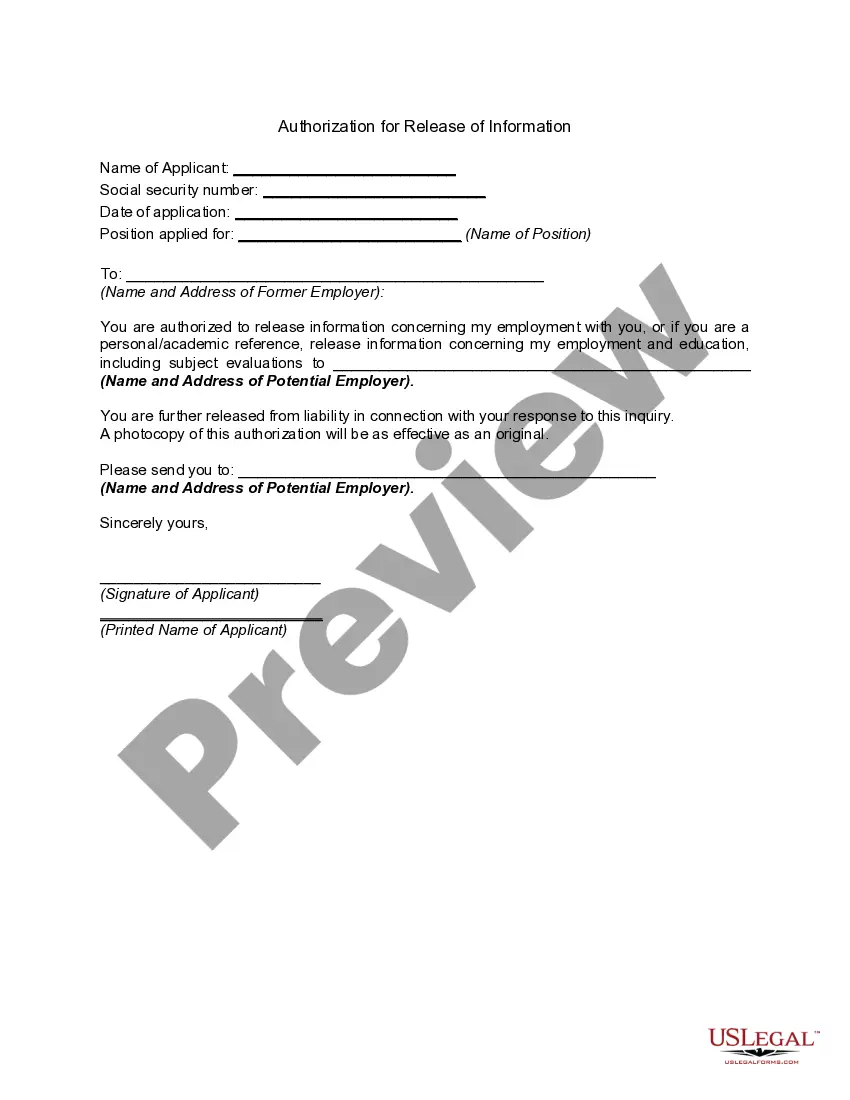
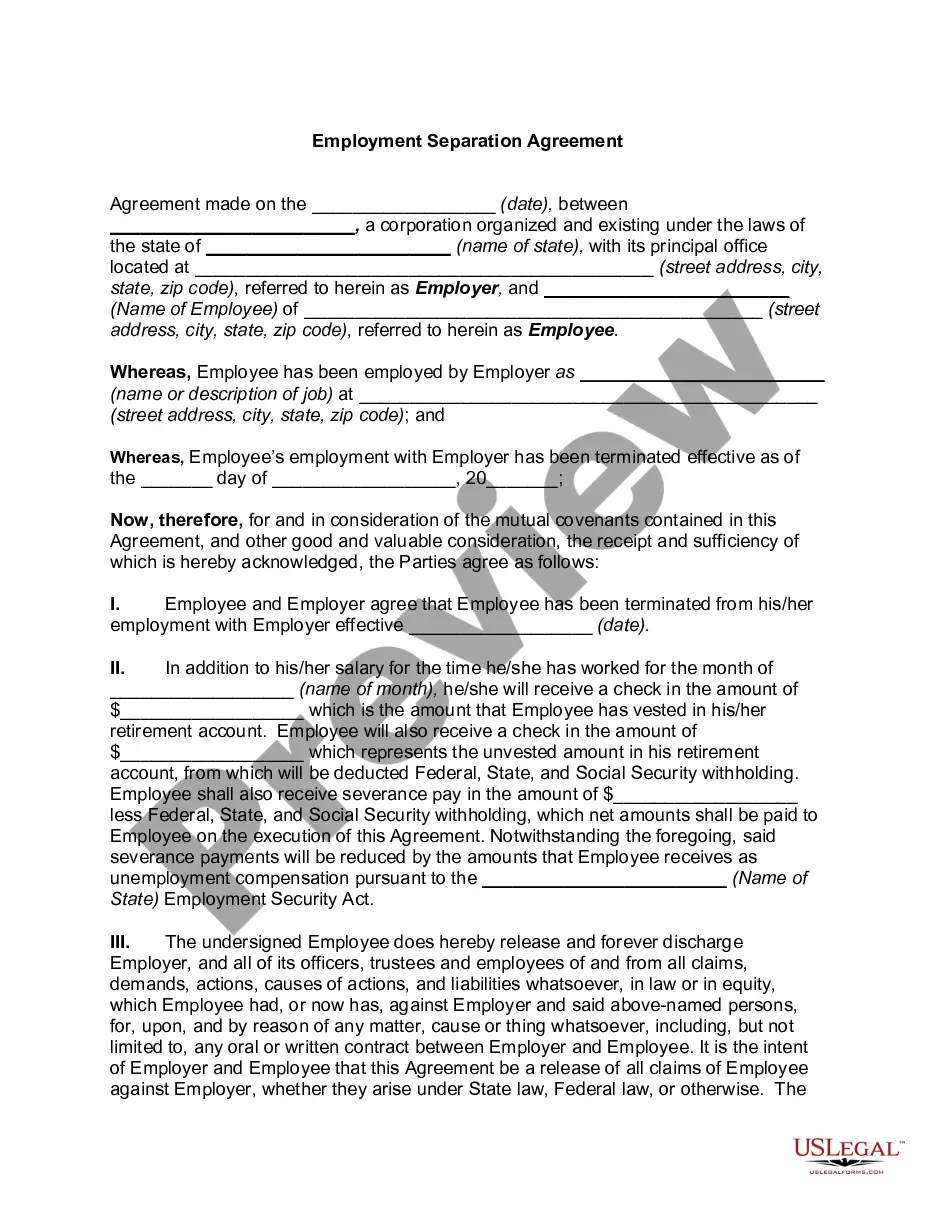
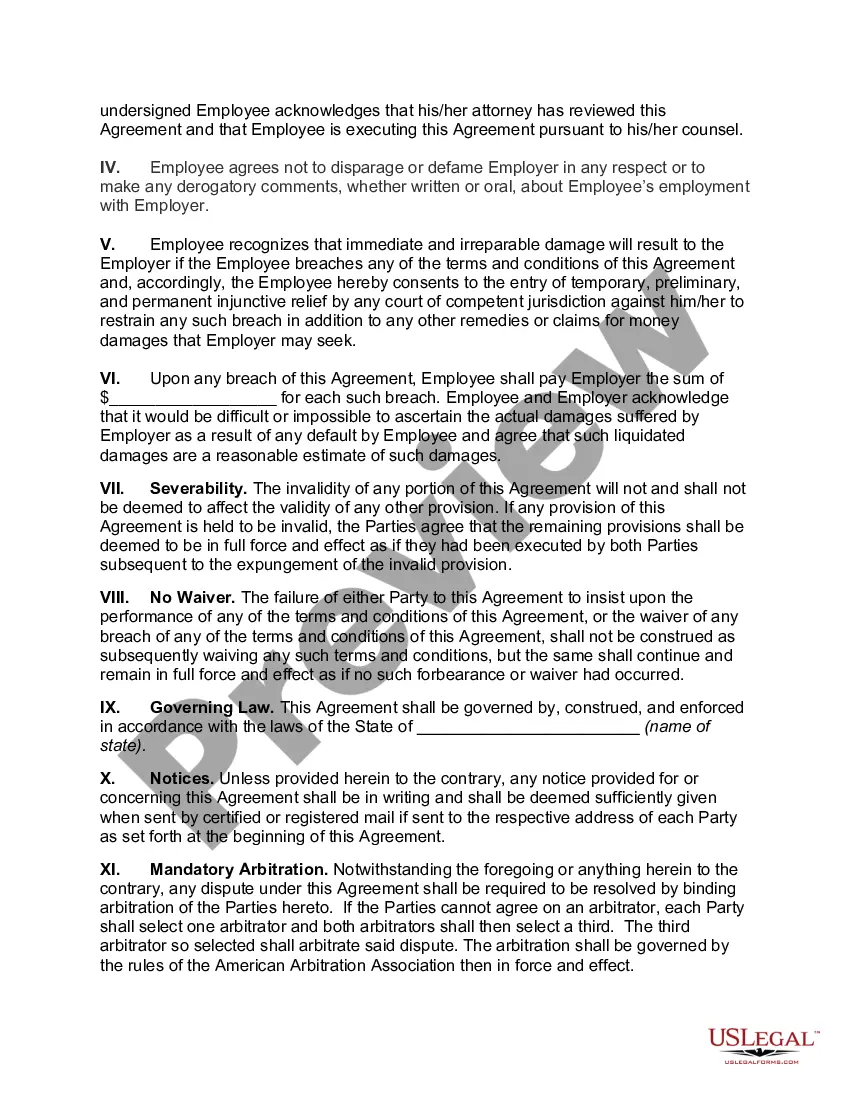
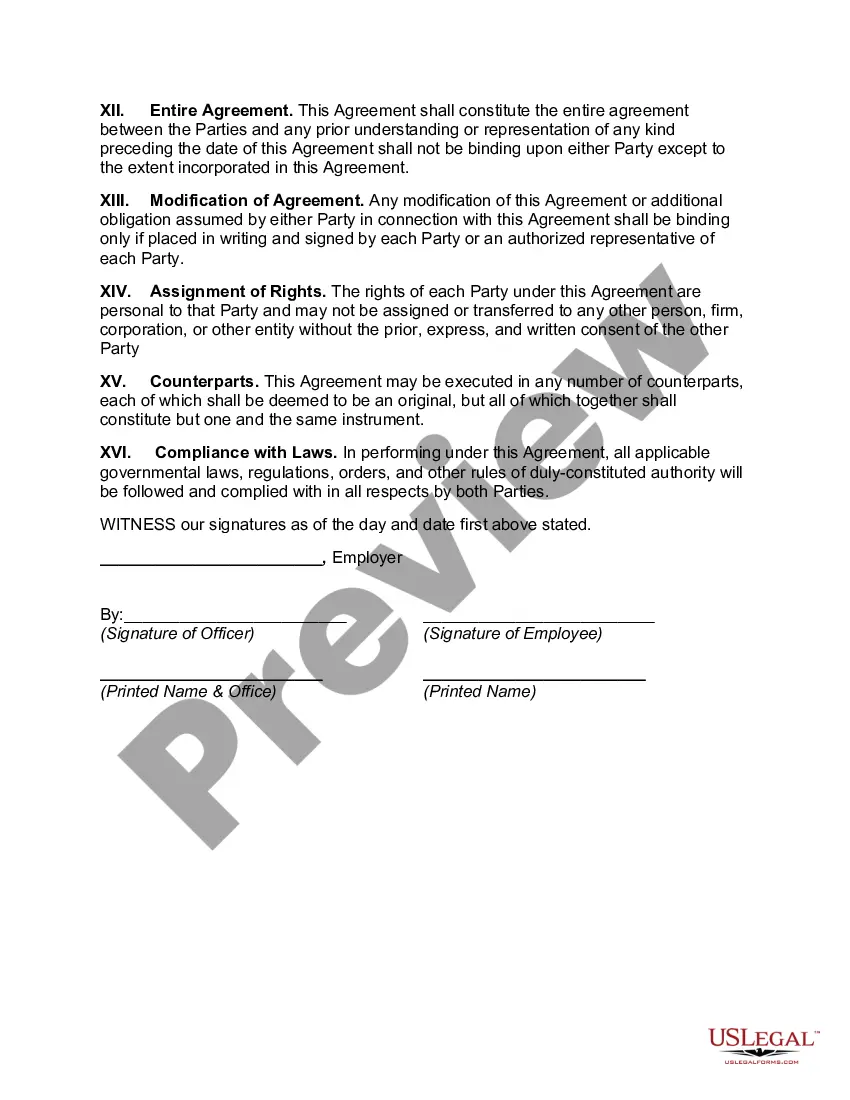
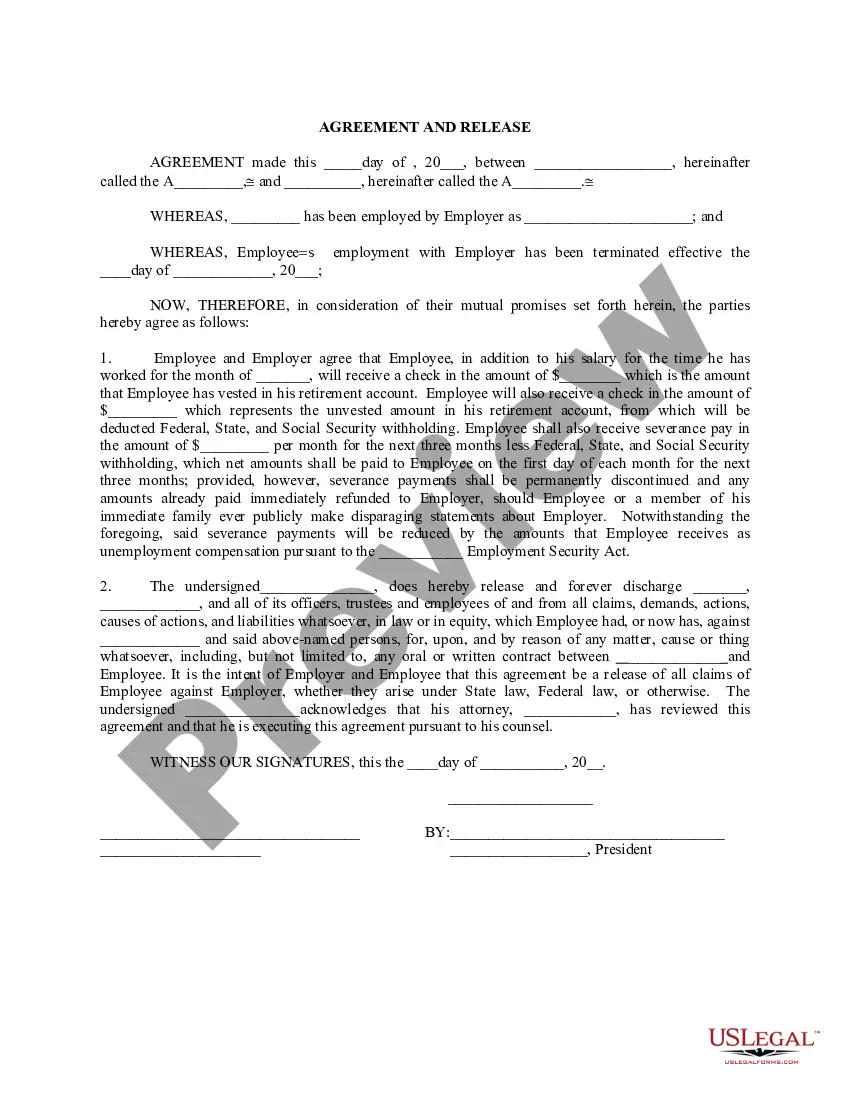
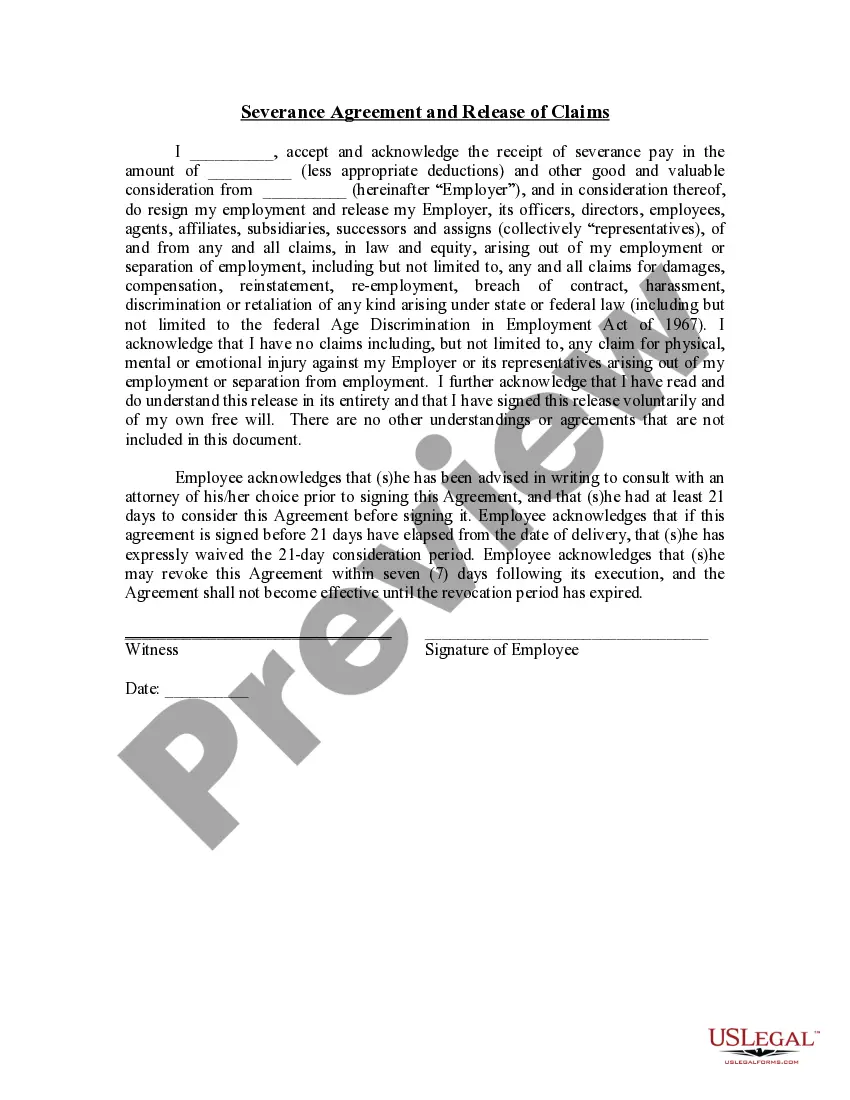
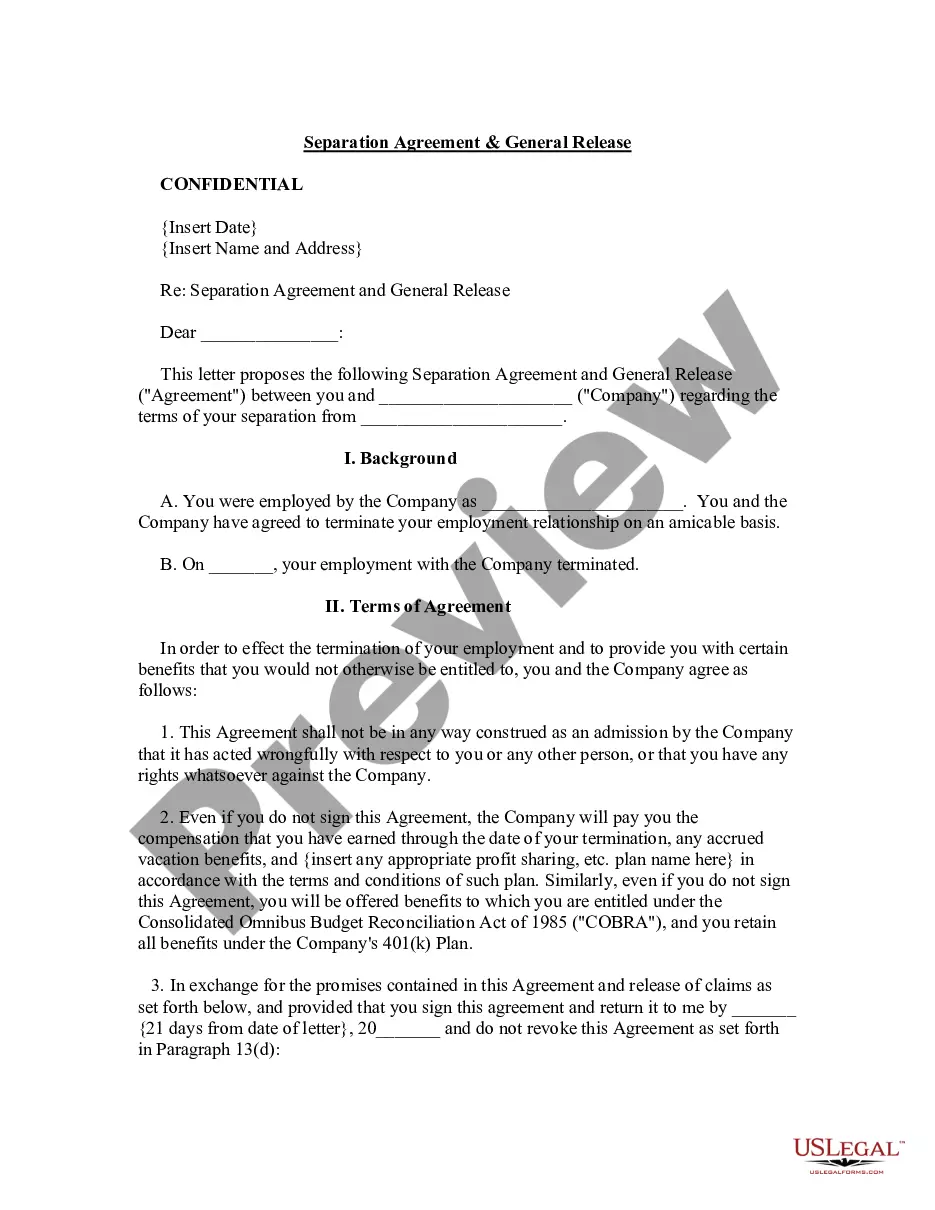
Maine Employment Separation Agreement
Description
Get your form ready online
Our built-in tools help you complete, sign, share, and store your documents in one place.
Make edits, fill in missing information, and update formatting in US Legal Forms—just like you would in MS Word.
Download a copy, print it, send it by email, or mail it via USPS—whatever works best for your next step.
Sign and collect signatures with our SignNow integration. Send to multiple recipients, set reminders, and more. Go Premium to unlock E-Sign.
If this form requires notarization, complete it online through a secure video call—no need to meet a notary in person or wait for an appointment.
We protect your documents and personal data by following strict security and privacy standards.

Make edits, fill in missing information, and update formatting in US Legal Forms—just like you would in MS Word.

Download a copy, print it, send it by email, or mail it via USPS—whatever works best for your next step.

Sign and collect signatures with our SignNow integration. Send to multiple recipients, set reminders, and more. Go Premium to unlock E-Sign.

If this form requires notarization, complete it online through a secure video call—no need to meet a notary in person or wait for an appointment.

We protect your documents and personal data by following strict security and privacy standards.
Looking for another form?

How to fill out Employment Separation Agreement?
Are you presently experiencing a circumstance that requires documents for both business and personal applications almost every day.
There are numerous legal document templates available online, but finding reliable ones can be challenging.
US Legal Forms offers thousands of form templates, such as the Maine Employment Separation Agreement, specifically designed to comply with federal and state regulations.
Once you find the appropriate form, click Get now.
Choose the payment plan you require, fill in the necessary information to create your account, and complete your purchase using PayPal or Visa or Mastercard.
- If you are already familiar with the US Legal Forms website and have an account, simply Log In.
- Then, you can download the Maine Employment Separation Agreement template.
- If you do not have an account and wish to start using US Legal Forms, follow these instructions.
- Obtain the form you need and ensure it is suitable for your specific city/region.
- Utilize the Preview button to examine the template.
- Review the details to confirm that you have selected the correct form.
- If the form does not meet your needs, use the Search field to find the document that fits your requirements.
Form popularity
FAQ
In circumstances where an employee resigns or retires, UIF benefits are not available. Similarly, if an employee chooses to conclude a mutual separation agreement with her/his/their employer, the employee will not be entitled to claim unemployment insurance benefits in terms of the UIA.
Maine is an employment-at-will state. This means that an employer may generally terminate an employee at any time and for any reason, unless a law or agreement provides otherwise.
This bill requires all employees to give 2 weeks' notice 42 prior to quitting and employers, including the State and the Legislature, to give 2 weeks' notice prior to terminating an 44 employee.
You may also be eligible for benefits if you quit for certain compelling personal reasons, including to relocate with a spouse (depending on the circumstances), to escape domestic violence, or due to your own illness (as long as you meet certain requirements relating to communicating with your employer and applying for
Maine Severance Pay: What you need to knowThe severance pay to eligible employees must be in addition to any final wage payment to the employee and must be paid within 1 regular pay period after the employee's last full day of work. New regulations clarify the operation of this requirement (ME Rule 12-170-15).
The agreement that records a mutual termination of employment and a waiver and release of claims (in consideration of receipt of an ex gratia payment) is known as a mutual separation agreement. For former employees, a waiver and release of claims letter is typically used instead of a mutual separation agreement.
Maine employers and employees work under a system called "employment-at-will." This means that you are free to quit your job whenever you want. Your employer is also free to fire you for any reason or no reason at all. The only limit is that your employer cannot fire you based on discrimination or retaliation.
Where parties decide to separate amicably, they may negotiate the relevant terms of separation. Once consensus is reached between the parties, they sign a binding mutual separation agreement. As such, a mutual separation agreement includes a waiver of rights by both parties to enable a soft exit of the employee.
A separation agreement (also commonly referred to as a severance agreement) between an employer and a departing employee specifying terms of the employee's separation from employment, including a release of legal claims against the employer in exchange for a benefit.
Can I sue my employer for wrongful termination? No. Maine does not have a law against wrongful termination and Maine courts will not review an employer's personnel decision to determine whether it was right or wrong, fair or unfair.