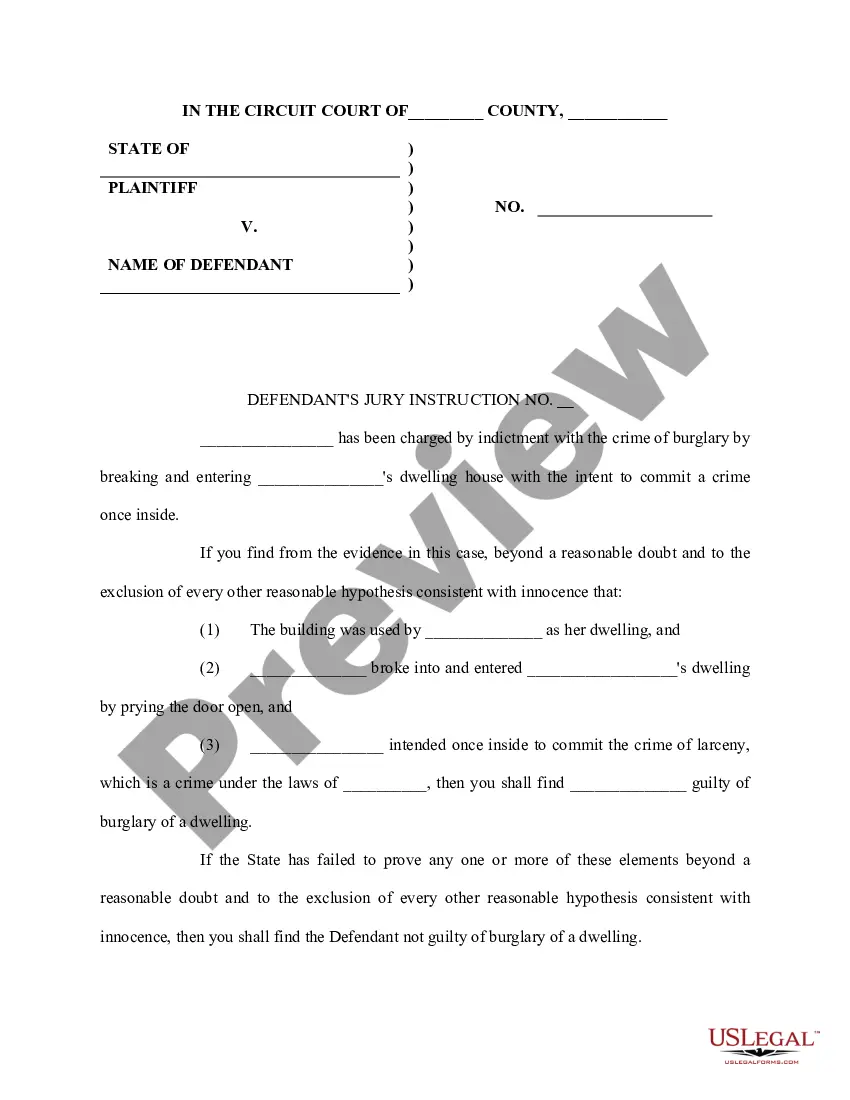
Maine Burglary by Breaking and Entering
Description
Get your form ready online
Our built-in tools help you complete, sign, share, and store your documents in one place.
Make edits, fill in missing information, and update formatting in US Legal Forms—just like you would in MS Word.
Download a copy, print it, send it by email, or mail it via USPS—whatever works best for your next step.
Sign and collect signatures with our SignNow integration. Send to multiple recipients, set reminders, and more. Go Premium to unlock E-Sign.
If this form requires notarization, complete it online through a secure video call—no need to meet a notary in person or wait for an appointment.
We protect your documents and personal data by following strict security and privacy standards.

Make edits, fill in missing information, and update formatting in US Legal Forms—just like you would in MS Word.

Download a copy, print it, send it by email, or mail it via USPS—whatever works best for your next step.

Sign and collect signatures with our SignNow integration. Send to multiple recipients, set reminders, and more. Go Premium to unlock E-Sign.

If this form requires notarization, complete it online through a secure video call—no need to meet a notary in person or wait for an appointment.

We protect your documents and personal data by following strict security and privacy standards.
Looking for another form?
How to fill out Burglary By Breaking And Entering?
You can spend multiple hours online searching for the legal document template that satisfies the state and federal requirements you require. US Legal Forms offers thousands of legal forms that are reviewed by experts. You can download or print the Maine Burglary by Breaking and Entering from the service.
If you possess a US Legal Forms account, you may Log In and select the Download option. After that, you can complete, modify, print, or sign the Maine Burglary by Breaking and Entering. Each legal document template you acquire is yours permanently. To obtain another copy of any purchased form, visit the My documents tab and click the relevant option.
If you are using the US Legal Forms website for the first time, follow the simple instructions below: First, ensure you have selected the correct document template for the region/area of your choice. Review the form details to confirm you have chosen the appropriate form. If available, use the Preview option to browse through the document template as well.
Utilize professional and state-specific templates to address your business or personal needs.
- If you wish to find another version of your form, use the Search field to locate the template that fulfills your needs and requirements.
- Once you have found the template you want, click Purchase now to proceed.
- Select the pricing plan you need, enter your details, and register for a free account on US Legal Forms.
- Complete the transaction. You can use your credit card or PayPal account to pay for the legal form.
- Choose the format of your document and download it to your device.
- Make adjustments to the document if necessary. You can complete, modify, sign, and print the Maine Burglary by Breaking and Entering.
- Download and print thousands of document templates using the US Legal Forms Website, which provides the largest selection of legal forms.
Form popularity
FAQ
In common law, burglary is defined as the breaking and entering of the dwelling house of another in the nighttime with the intent to commit a felony. If there is no such intent to commit a felony, the breaking and entering may constitute illegal trespass.
On this page you'll find 30 synonyms, antonyms, and words related to housebreaking, such as: burglary, robbery, breaking and entering, and forced entry.
Ing to State Law Title 17-A, §401, Burglary can be a Class A, Class B, or Class C charge. This means that the penalties can range from 5 to 30 years in prison and the fines can range from $5,000 to $25,000. If there are previous felony convictions, the penalties become even more serious.
On this page you'll find 7 synonyms, antonyms, and words related to break and entry, such as: break in, null, burglary, housebreaking, robbery, and second-story work.
As long as there is the intent to commit a crime, it can constitute burglary. There is no breaking and entering requirement. The offender may trespass through an open door. This is different from robbery, which involves the use of force or fear to obtain another person's property.
While both involve illegal entry to a property, burglary requires a criminal intent beyond the unlawful entry, whereas breaking and entering does not. Burglary and breaking and entering are both serious offenses characterized by unauthorized access to private property.
Burglary, also called breaking and entering (B&E) and sometimes housebreaking, is the act of illegally entering a building or other areas without permission, typically with the intention of committing a criminal offence.
In others, ?burglary? happens when someone enters a building or vehicle without permission and with the intent to commit a crime; ?breaking and entering? happens when someone does the same, without the intent to commit a crime.