Maine Easement
Overview of this form
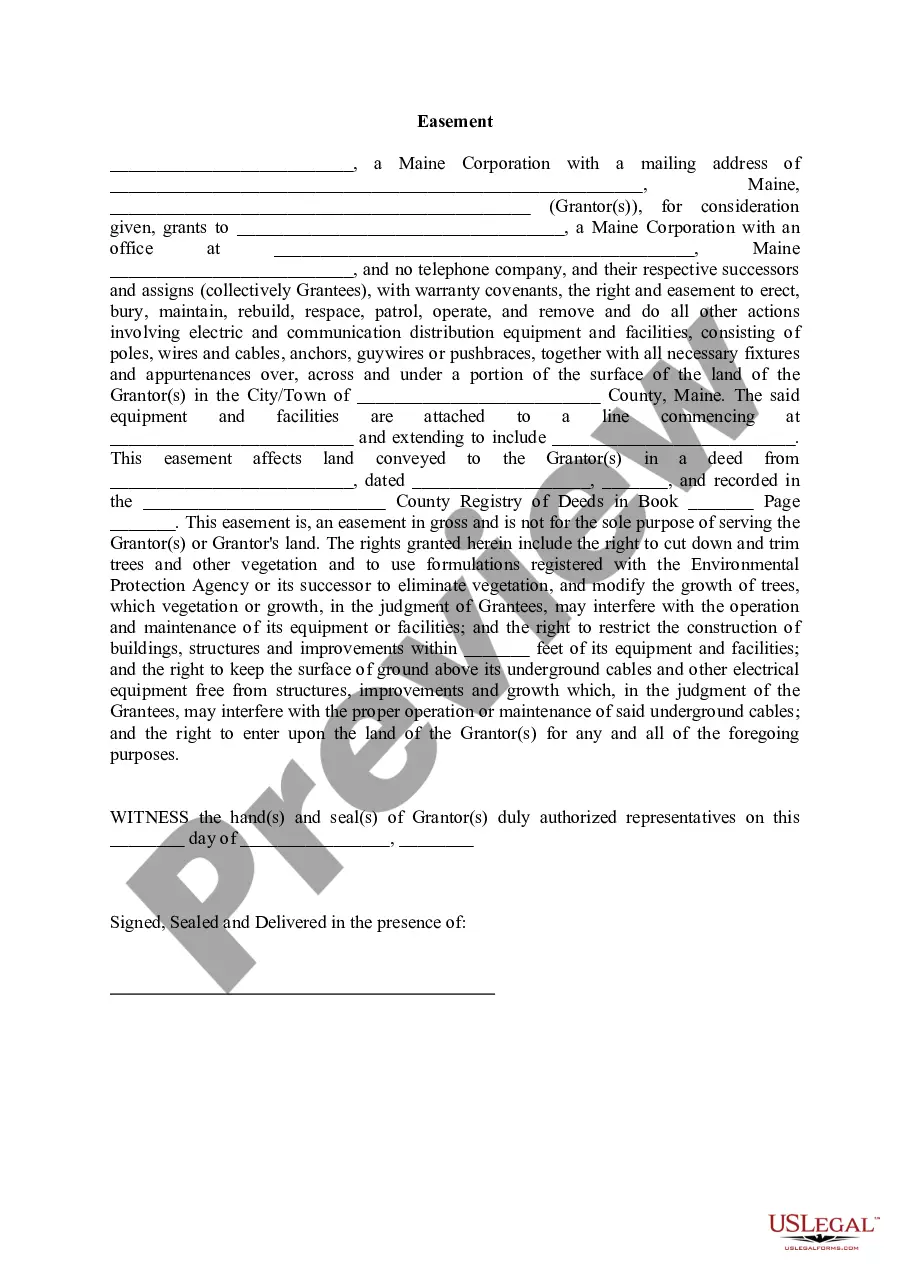
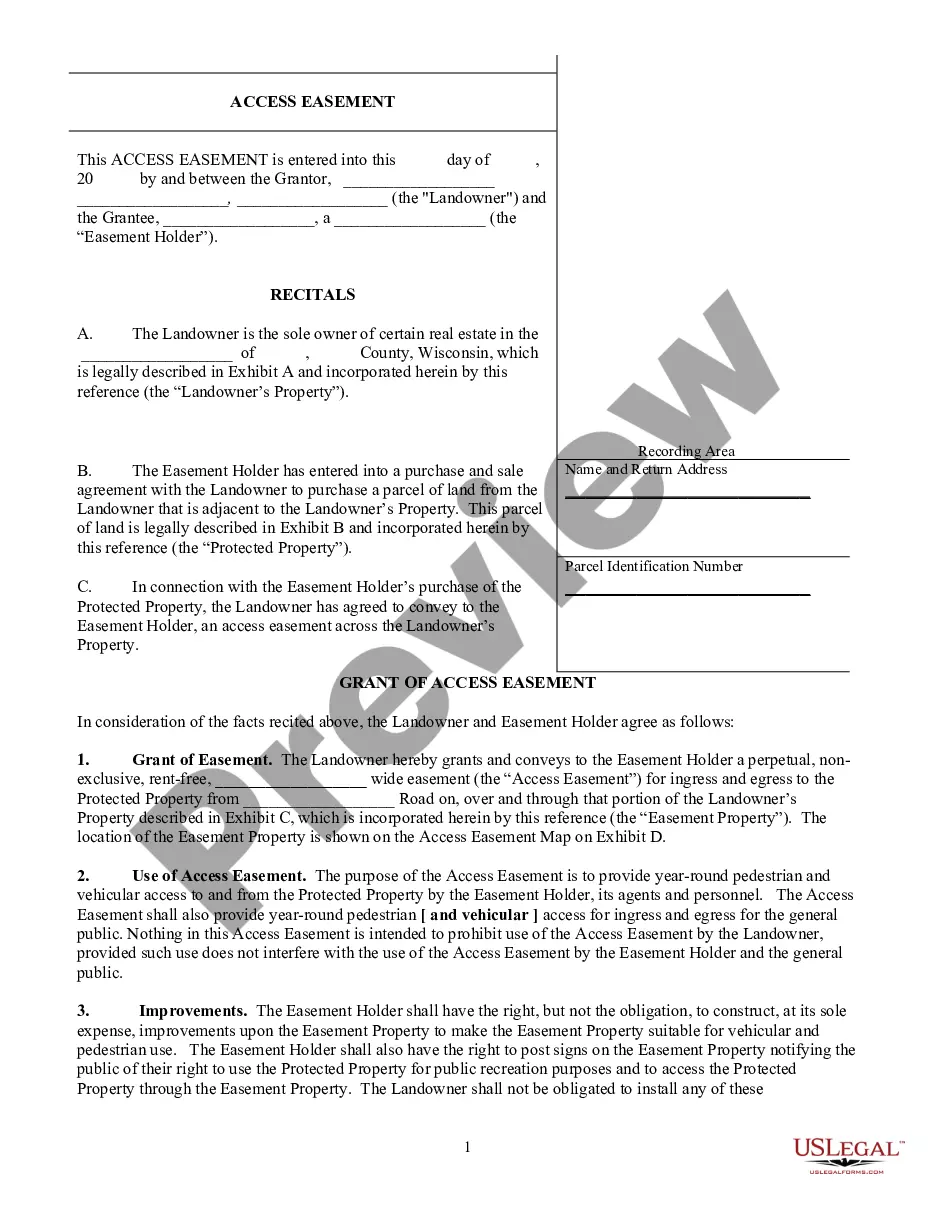
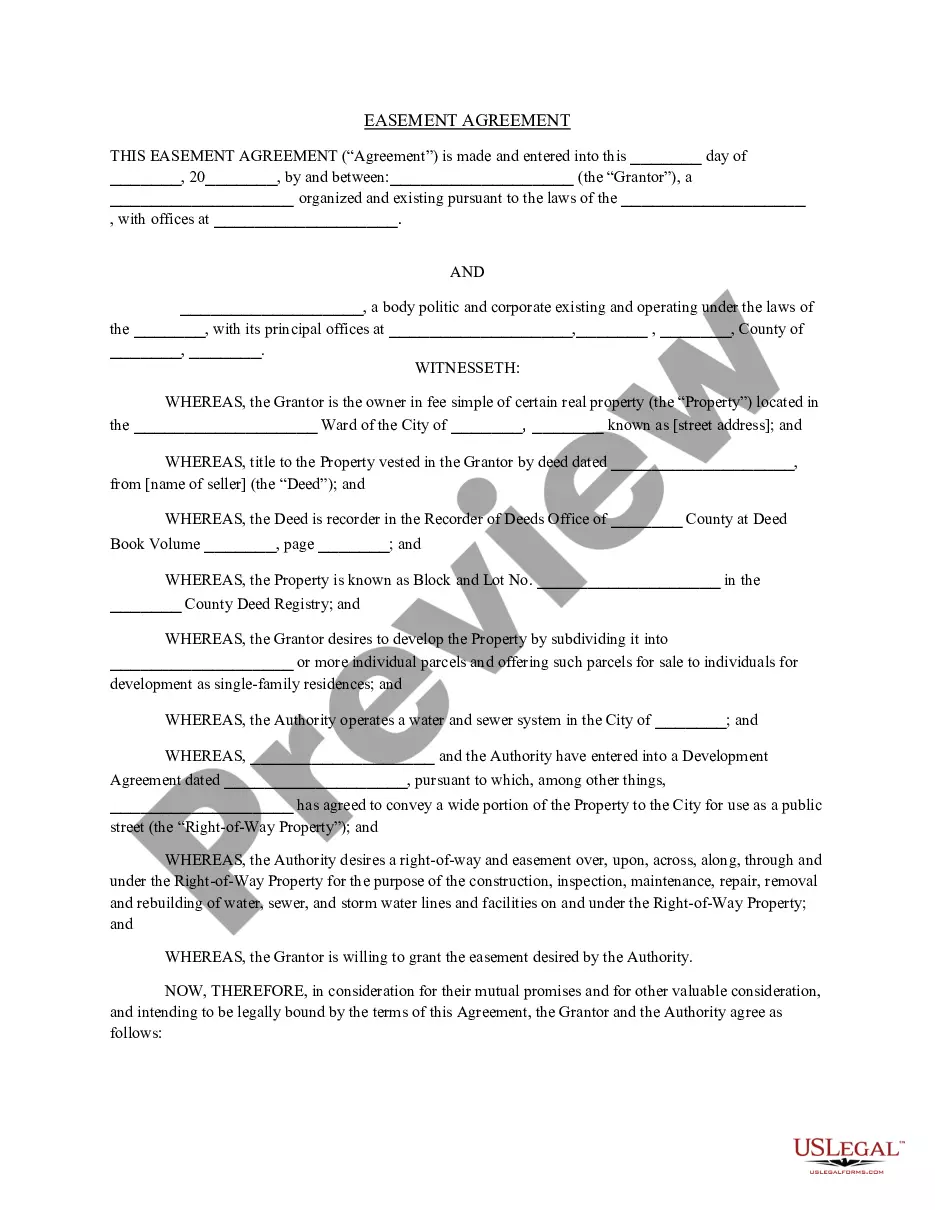
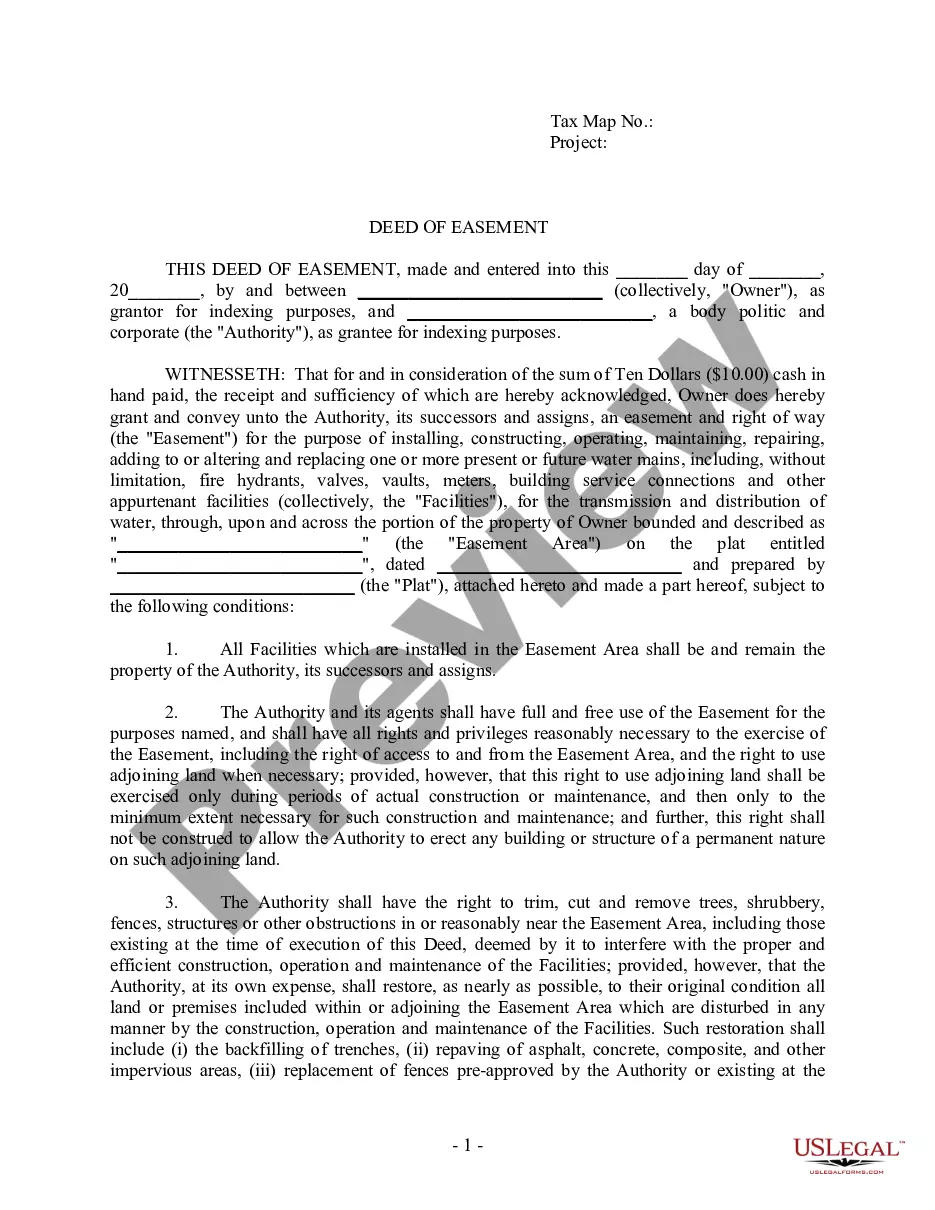
An easement is a legal document that grants one party the right to use a portion of another party's property for a specific purpose. In this case, the easement is between two corporations, allowing for the installation and maintenance of telecommunication equipment on the property of the Grantor. Unlike other types of easements, this easement is in gross, meaning it is not solely intended for the benefit of the Grantor's property. Understanding the easement's purpose is crucial for effectively using it in real estate and telecommunications contexts.
Key parts of this document
- Identification of the Grantor(s) and Grantees, specifying their corporate status and addresses.
- A description of the rights being granted, including the right to install and maintain telecommunication facilities.
- Specific location details of the easement on the Grantor's property.
- Provision for cutting or trimming vegetation that may obstruct the operation of the easement.
- Conditions addressing construction restrictions near the easement facilities.
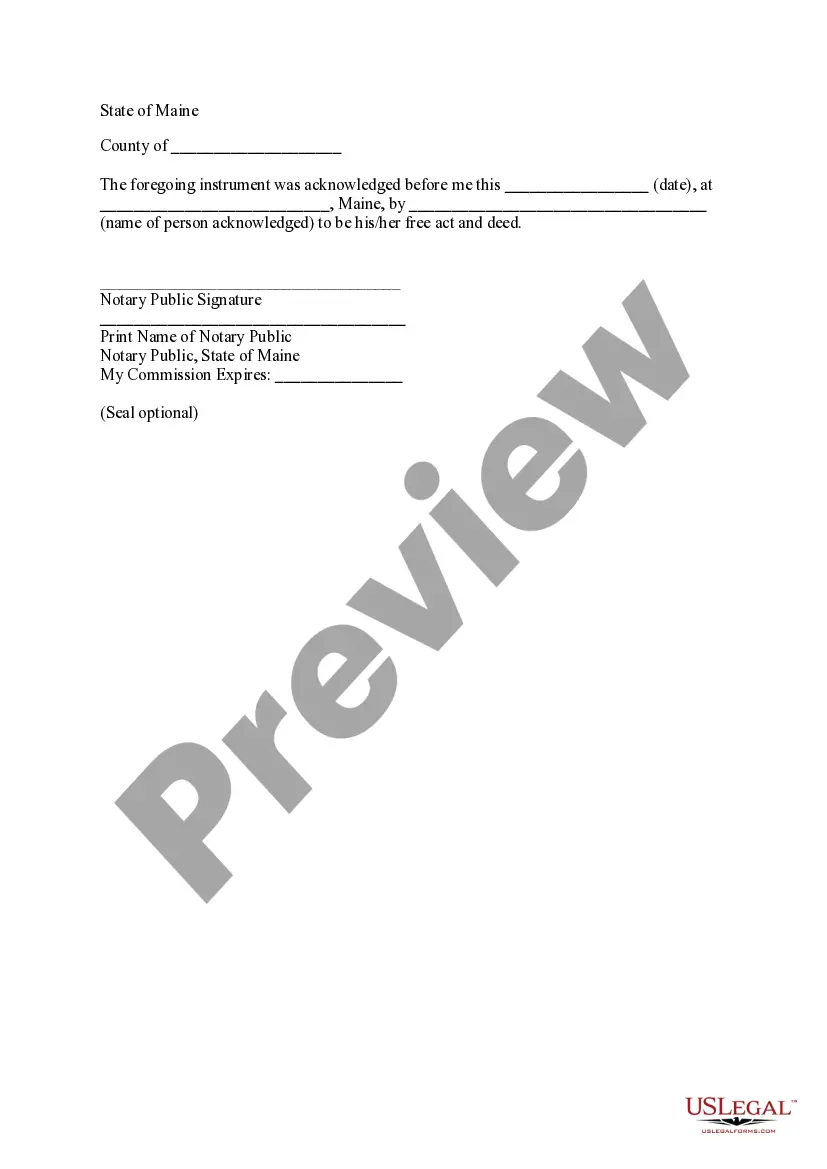
- Signature lines for the authorized representatives and notarial acknowledgment.

When this form is needed
This easement form should be used when one corporation wishes to install and maintain telecommunication equipment on the property of another corporation. It is necessary in scenarios where access to specific areas of land is needed for infrastructure such as poles and cables and helps prevent future disputes regarding land use and access rights.
Who can use this document
This easement is intended for:
- Corporations seeking to establish legal rights for telecommunication infrastructure on another corporation's property.
- Property owners who are granting rights to another corporation for the purpose outlined in the easement.
- Legal professionals drafting agreements related to property use and telecommunication rights.
How to prepare this document
- Identify the parties by entering the full names and corporate addresses of both the Grantor(s) and Grantees.
- Specify the location and extent of the easement on the Grantorâs property.
- Outline the rights granted, ensuring all relevant activities related to the easement are included.
- Fill in the date and sign the document before a notary public.
- Ensure the notary public completes the acknowledgment section, confirming the identities of the signatories.
Does this document require notarization?
Yes, this form must be notarized to be legally valid. The notary public's acknowledgment confirms the identity of the parties involved and ensures that the document adheres to legal standards. US Legal Forms provides integrated online notarization, allowing for secure and convenient notarization via video call, available 24/7.
Get your form ready online
Our built-in tools help you complete, sign, share, and store your documents in one place.
Make edits, fill in missing information, and update formatting in US Legal Forms—just like you would in MS Word.
Download a copy, print it, send it by email, or mail it via USPS—whatever works best for your next step.
Sign and collect signatures with our SignNow integration. Send to multiple recipients, set reminders, and more. Go Premium to unlock E-Sign.
If this form requires notarization, complete it online through a secure video call—no need to meet a notary in person or wait for an appointment.
We protect your documents and personal data by following strict security and privacy standards.

Make edits, fill in missing information, and update formatting in US Legal Forms—just like you would in MS Word.

Download a copy, print it, send it by email, or mail it via USPS—whatever works best for your next step.

Sign and collect signatures with our SignNow integration. Send to multiple recipients, set reminders, and more. Go Premium to unlock E-Sign.

If this form requires notarization, complete it online through a secure video call—no need to meet a notary in person or wait for an appointment.

We protect your documents and personal data by following strict security and privacy standards.
Typical mistakes to avoid
- Failing to accurately describe the location and extent of the easement.
- Not specifying the rights granted in sufficient detail.
- Neglecting to have the document notarized when required.
- Leaving out the signatures of both parties, which invalidates the easement.
Why complete this form online
- Convenient access to the easement form anytime, anywhere.
- Easy to fill out and edit to match your specific needs.
- Reliable templates drafted by licensed attorneys to ensure legal compliance.
Looking for another form?
Form popularity
FAQ
An easement owner cannot claim another party has trespassed on their easement, because trespass involves interference with the plaintiff's exclusive possession. Easement holders do not have a right to exclusive possession. They may claim nuisance, but only if the interference is substantial and unreasonable.
The party gaining the benefit of the easement is the dominant estate (or dominant tenement), while the party granting the benefit or suffering the burden is the servient estate (or servient tenement). For example, the owner of parcel A holds an easement to use a driveway on parcel B to gain access to A's house.
Easement holders have the right to use the land to their enjoyment as long as it does not place an unreasonable burden on the servient estate. Landowners have the right to make whatever use of the land as long as it doesn't unduly affect the easement.
This 33-feet law is regardless of the specific right-of-way width. However, there is a waiver process if the posted speed limit is 35 mph or less and MaineDOT determines that the obstacle will not pose a safety risk to the traveling public.
If an authority has an easement registered over your land, they have the right to access the easement to maintain or repair the easement land or their equipment on the land.
Types of Easements An easement may be classified as either an easement appurtenant or an easement in gross. Easement Appurtenant. An easement appurtenant is an easement that benefits one parcel of land, known as the dominant tenement, to the detriment of another parcel of land, known as the servient tenement.
Easements are legal designations that allow individuals or entities to use portions of your property (to build on or for physical access), even though you still own the land and technically have a right to build on it.There are utility easements that allow sewer and gas lines.
A property easement is a legal situation in which the title to a specific piece land remains with the landowner, but another person or organization is given the right to use that land for a distinct purpose.
Action can be taken against if you interfere with their right to access the easement for example you can't lock or fence them out of the easement land, nor build over the easement land.