Maine Missing Witness
Understanding this form
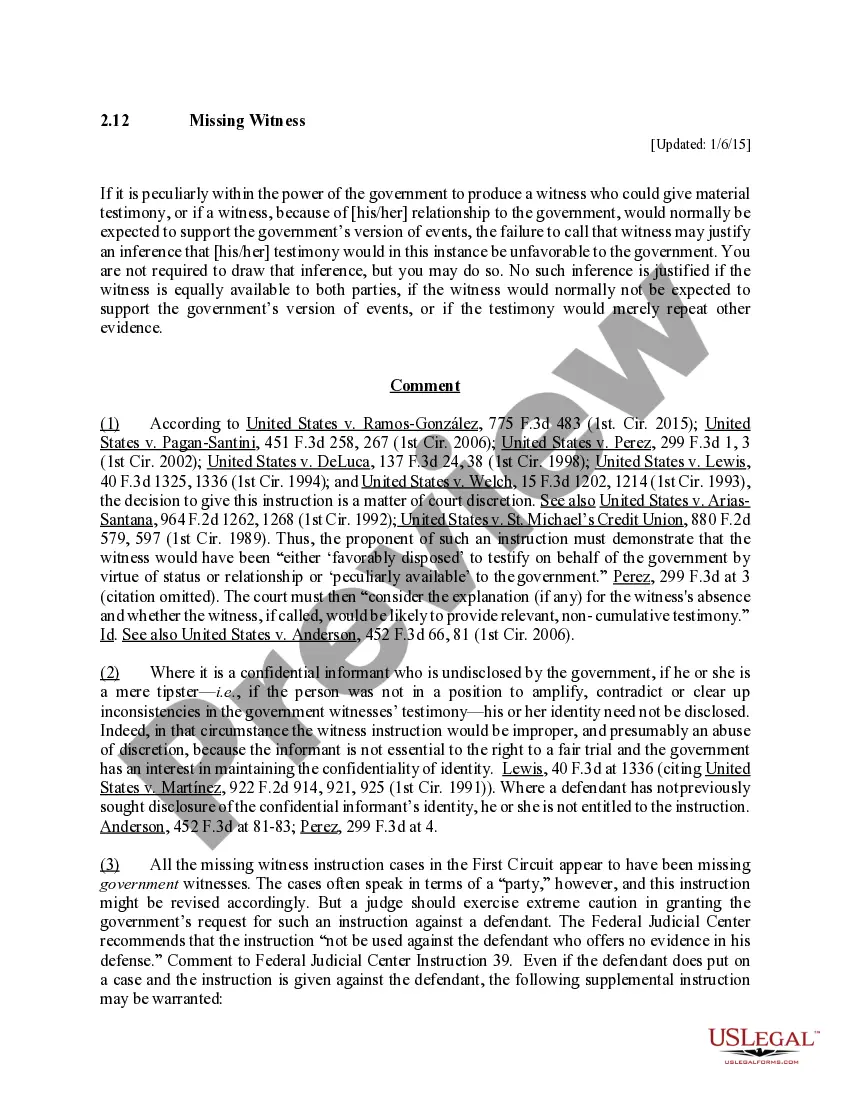
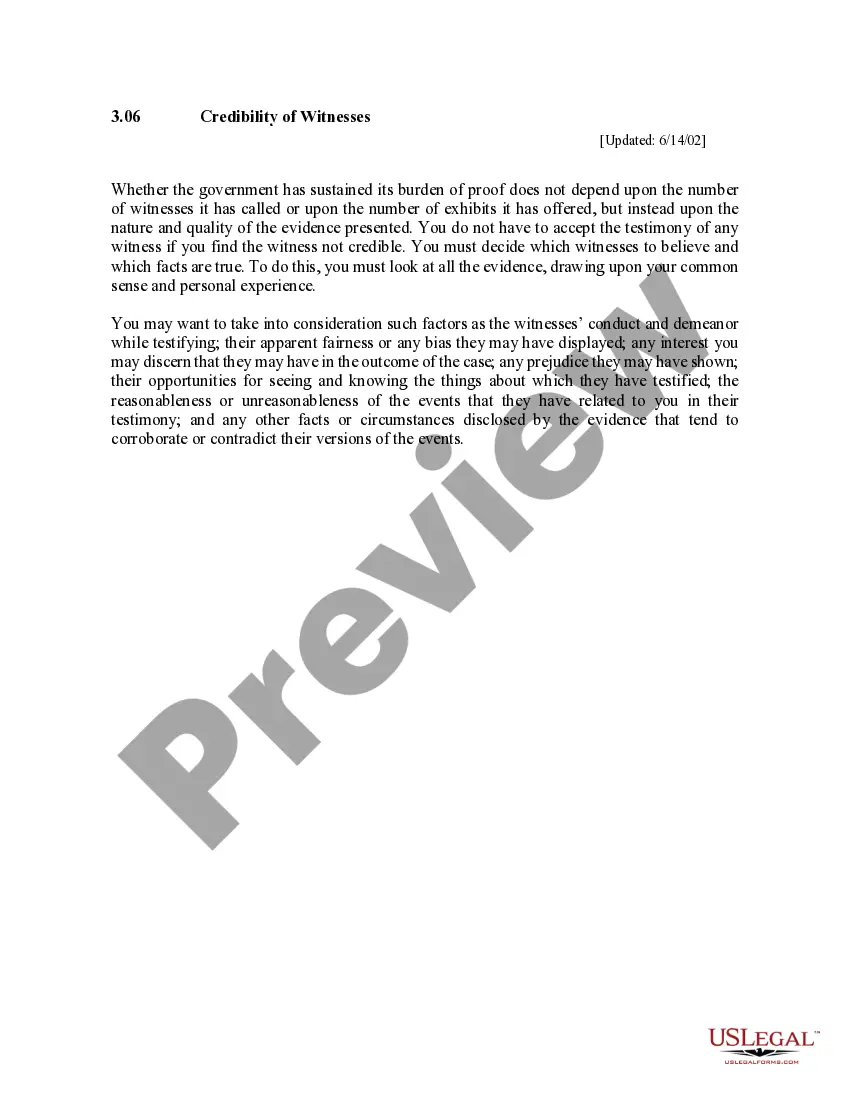
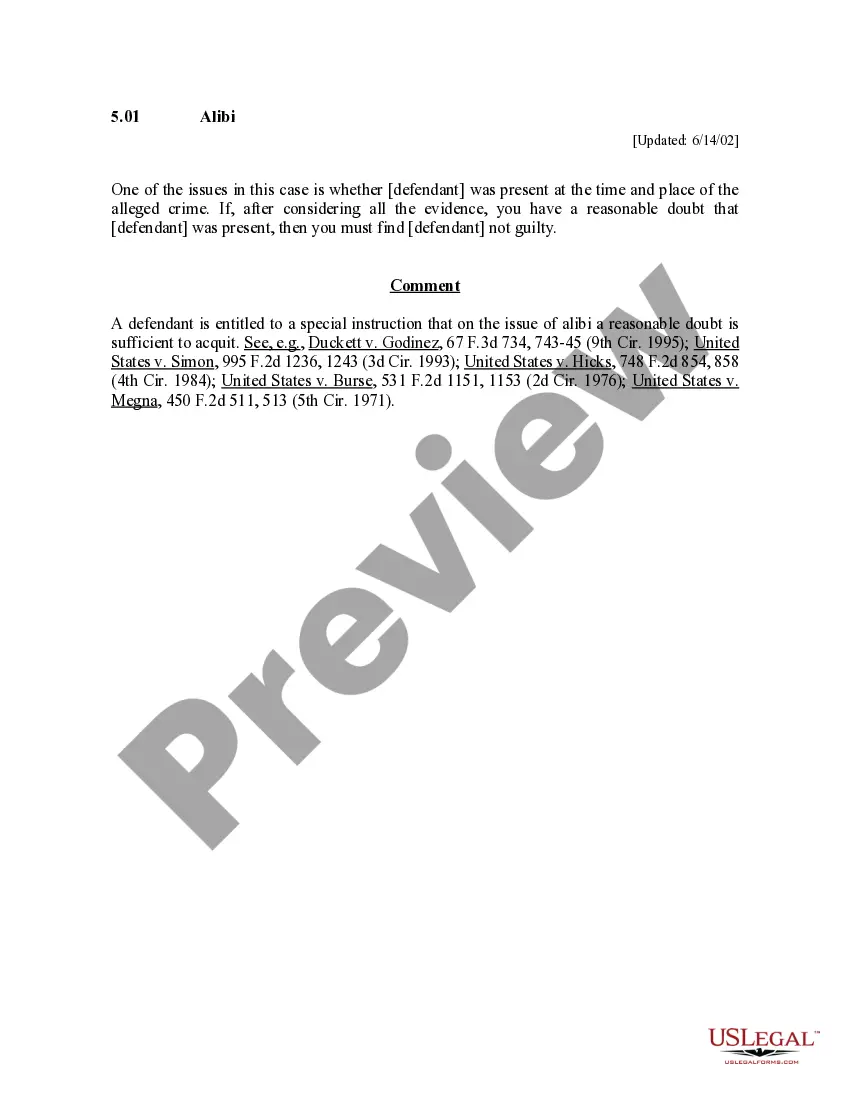
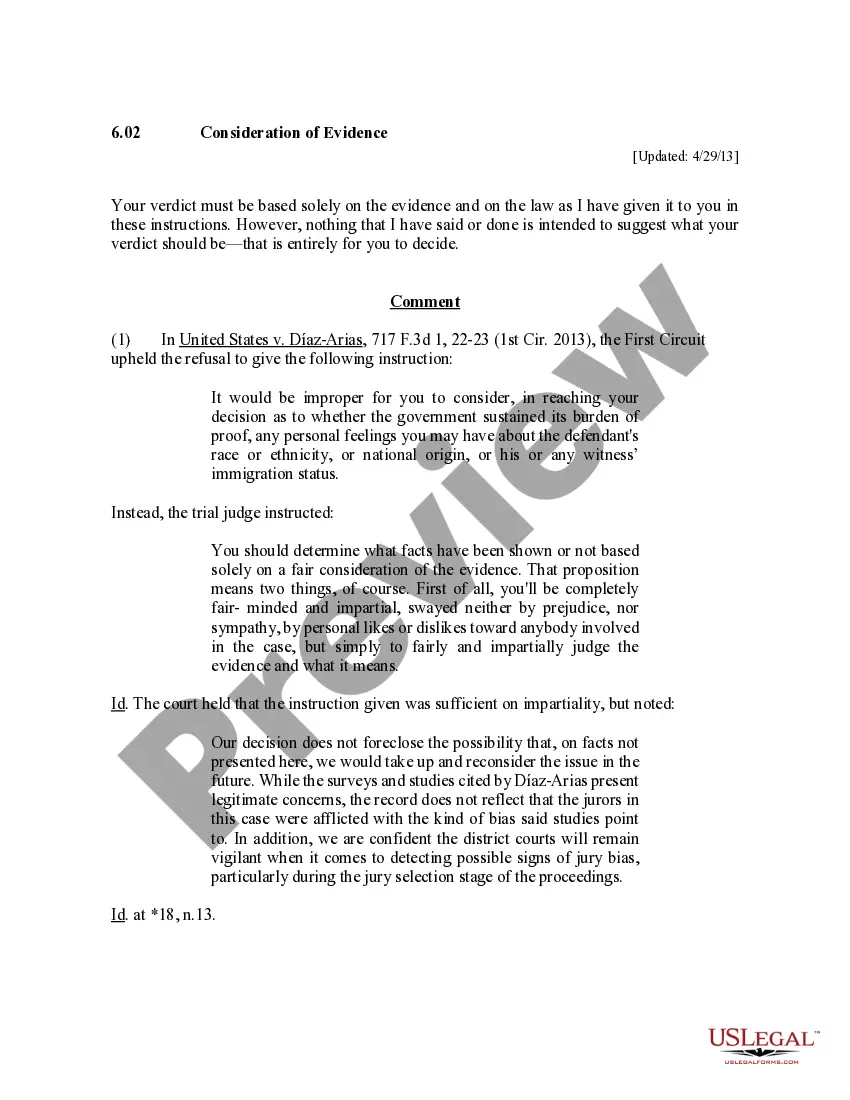
The Missing Witness form is an official pattern jury instruction used in criminal cases within the Federal District Court of Maine. It provides guidance on how jurors may consider the absence of a potentially favorable witness for the government, specifically addressing scenarios where the government has failed to call a witness who could provide relevant, material testimony. This instruction is vital as it helps jurors evaluate the implications of witness availability and the credibility of evidence presented during the trial.
What’s included in this form
- Definition of the criteria for drawing inferences based on the absence of a witness.
- Guidelines on when an inference of unfavorable testimony may be drawn.
- Conditions under which the missing witness instruction may not apply.
- Judicial discretion considerations regarding the witness's absence.
- Clarification of the prosecutor's obligation to disclose witness identities in certain circumstances.

When to use this document
This form should be used in criminal trials where a significant government witness is not called to testify. It is applicable when the peculiar absence of a witness can create a presumption of unfavorable testimony against the government, aiding jurors in their deliberation process. Situations may include cases involving confidential informants or key witnesses whose testimonies could significantly affect the defendant's case.
Who should use this form
- Judges presiding over criminal trials in the Federal District Court of Maine.
- Prosecutors who need to assess the implications of missing witnesses.
- Defense attorneys seeking to challenge prosecutorial claims related to absent witnesses.
- Jury members tasked with evaluating the evidence presented during the trial.
Instructions for completing this form
- Identify the context of the trial and the specific witness whose absence is relevant.
- Determine if the witness could have provided testimony favorable to the government.
- Evaluate the reasons for the witness's absence and the potential implications for the trial.
- Consider any precedential legal cases that may influence the instruction's application.
- Draft the instruction clearly and concisely for use during jury deliberations.
Does this form need to be notarized?
This form does not typically require notarization to be legally valid. However, some jurisdictions or document types may still require it. US Legal Forms provides secure online notarization powered by Notarize, available 24/7 for added convenience.
Get your form ready online
Our built-in tools help you complete, sign, share, and store your documents in one place.
Make edits, fill in missing information, and update formatting in US Legal Forms—just like you would in MS Word.
Download a copy, print it, send it by email, or mail it via USPS—whatever works best for your next step.
Sign and collect signatures with our SignNow integration. Send to multiple recipients, set reminders, and more. Go Premium to unlock E-Sign.
If this form requires notarization, complete it online through a secure video call—no need to meet a notary in person or wait for an appointment.
We protect your documents and personal data by following strict security and privacy standards.

Make edits, fill in missing information, and update formatting in US Legal Forms—just like you would in MS Word.

Download a copy, print it, send it by email, or mail it via USPS—whatever works best for your next step.

Sign and collect signatures with our SignNow integration. Send to multiple recipients, set reminders, and more. Go Premium to unlock E-Sign.

If this form requires notarization, complete it online through a secure video call—no need to meet a notary in person or wait for an appointment.

We protect your documents and personal data by following strict security and privacy standards.
Mistakes to watch out for
- Failing to establish the essential connection between the missing witness and the case at hand.
- Neglecting to consider alternative explanations for the witness's absence.
- Assuming that all missing witnesses justify an inference against the government without adequate evidence.
- Overlooking relevant case law that may affect the instruction's applicability.
Quick recap
- The Missing Witness form provides crucial instructions for understanding the implications of absent witnesses in criminal trials.
- Judicial discretion plays a significant role in determining when to apply this instruction.
- Jurors should carefully evaluate the reasons for a witness's absence and the context of the trial.
- This form serves to ensure a fair trial by allowing jurors to consider the absence of potentially favorable testimony.
Looking for another form?



Form popularity
FAQ
(1) A mediator has a privilege to refuse to testify in any proceeding concerning a mediation or any communication between the mediator and a participant in the mediation that was made during the course of, or that related to the subject matter of, any mediation.
Maine Rule 609 requires all convictions to pass a "reverse Rule 403 " test, i.e. they can be admitted only if their probative value as to credibility outweighs any danger of unfair prejudice to a criminal defendant or any civil party.
A witness who is qualified as an expert by knowledge, skill, experience, training, or education may testify in the form of an opinion or otherwise if such testimony will help the trier of fact to understand the evidence or to determine a fact in issue.
Rule 601 - COMPETENCY TO TESTIFY IN GENERAL (a) Every person is competent to be a witness unless these rules provide otherwise.
(a) Subsequent remedial measures. When measures are taken that would have made an earlier injury or harm less likely to occur, evidence of the subsequent measures is not admissible to prove: (1) Negligence; (2) Culpable conduct; (3) A defect in a product or its design; or (4) A need for a warning or instruction.
The court may judicially notice a fact that is not subject to reasonable dispute because it: (1) Is generally known within the trial court's territorial jurisdiction; or (2) Can be accurately and readily determined from sources whose accuracy cannot reasonably be questioned.
The court must exercise reasonable control over the mode and order of examining witnesses and presenting evidence so as to: (1) Make those procedures effective for determining the truth; (2) Avoid wasting time; and (3) Protect witnesses from harassment or undue embarrassment.
Evidence is relevant if: (a) It has any tendency to make a fact more or less probable than it would be without the evidence; and (b) The fact is of consequence in determining the action.