Maine Trim Carpenter Contract for Contractor
Overview of this form
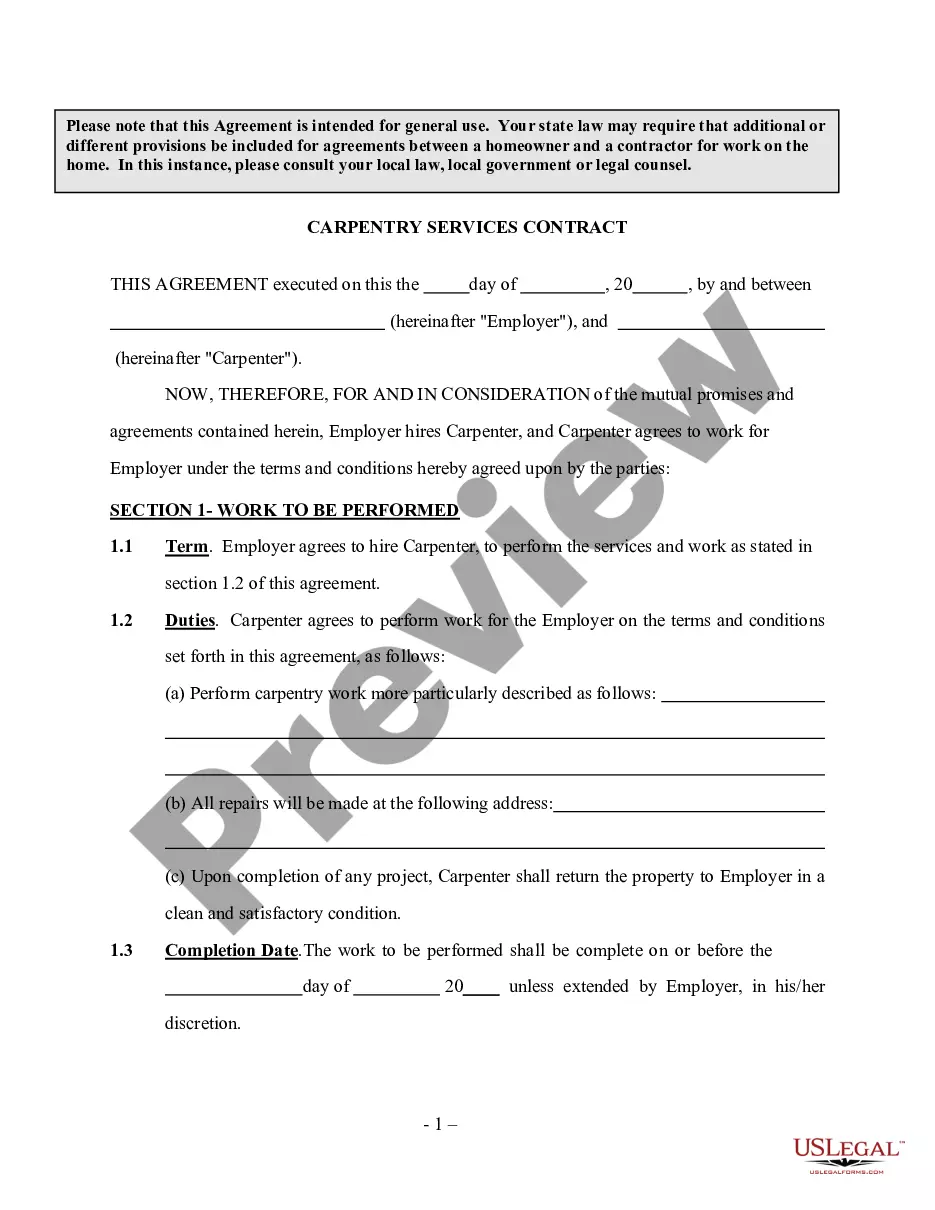
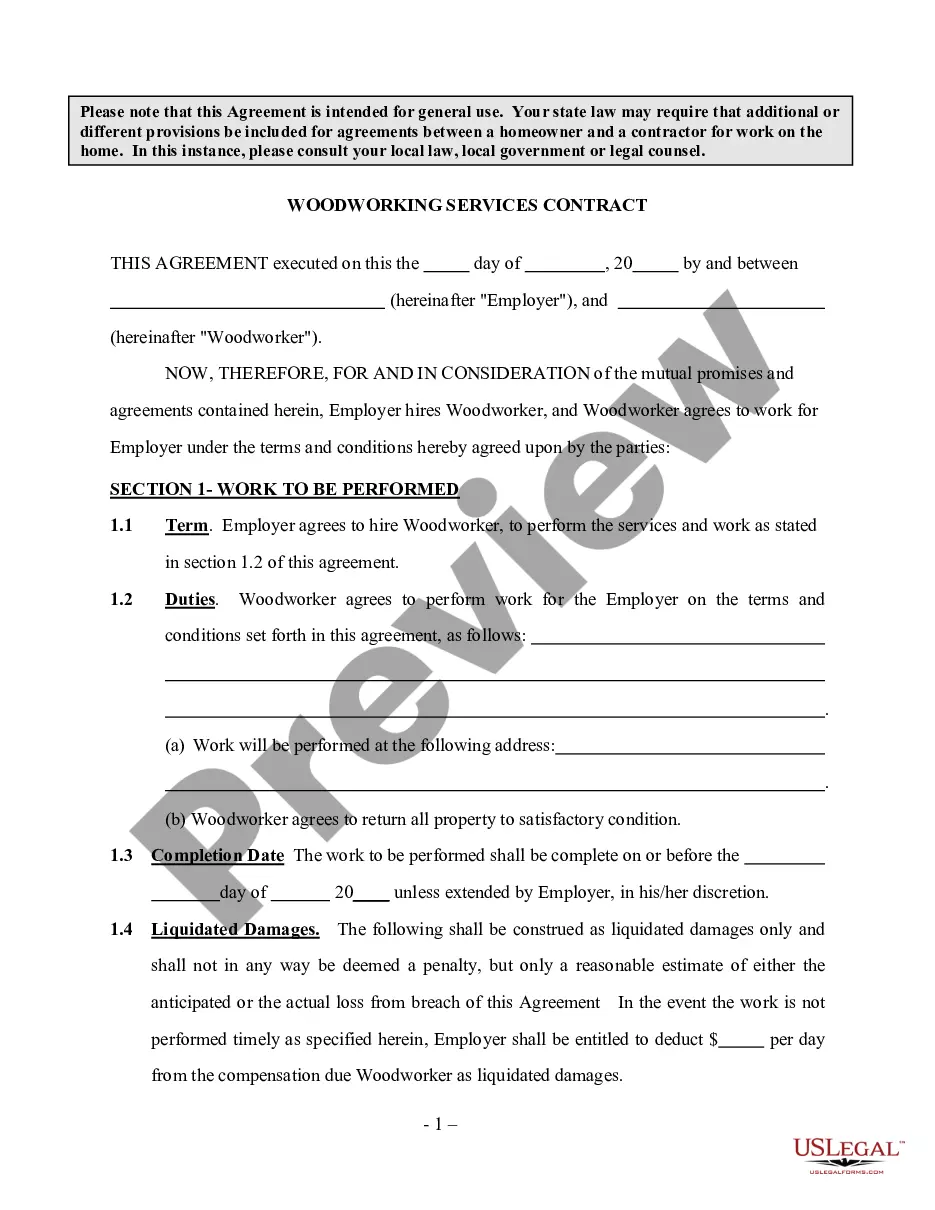
The Trim Carpenter Contract for Contractor is a legal document designed to formalize the agreement between trim carpenter contractors and property owners. This contract outlines various important aspects of the working relationship, including payment methods and project specifications, ensuring clarity and mutual understanding. It differs from other contractor agreements by specifically addressing the unique needs and requirements relevant to trim carpentry projects, while also complying with the laws of the State of Maine.
Key parts of this document
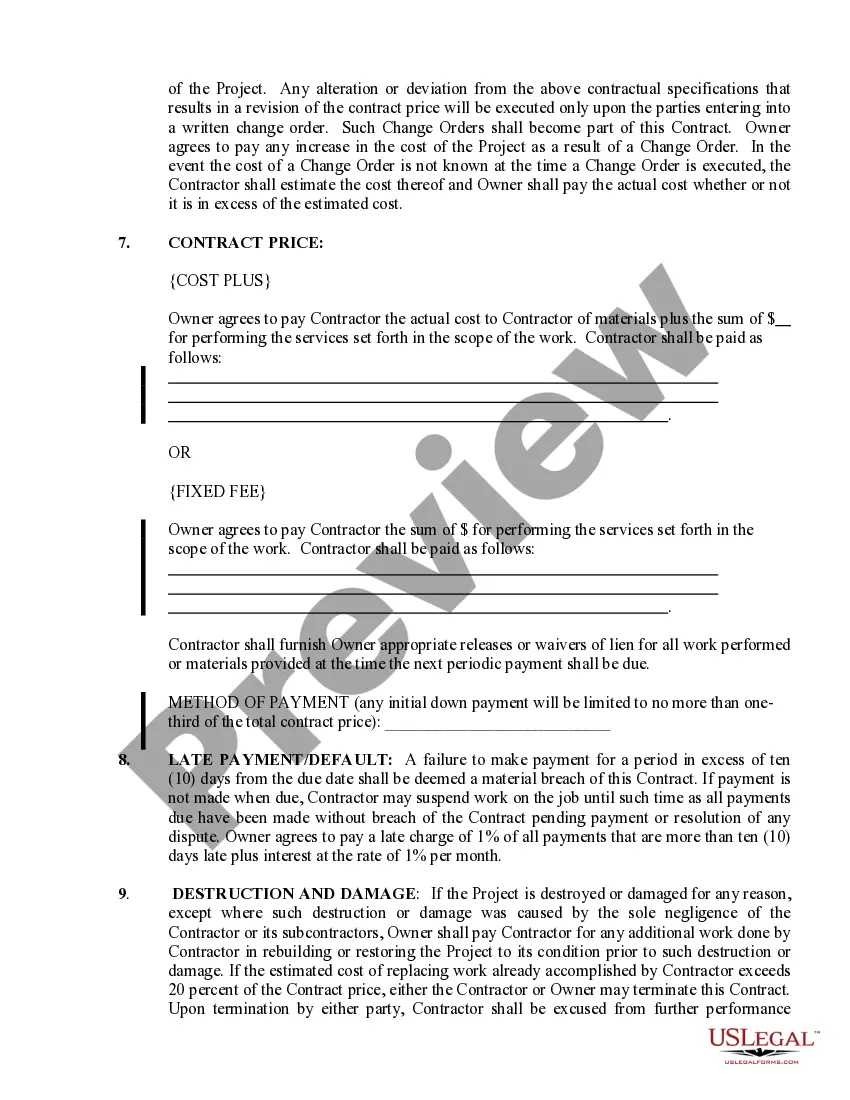
- Permits: Specifies the contractor's responsibility for acquiring necessary permits.
- Insurance: Outlines the insurance obligations of the contractor, including general liability and workers' compensation.
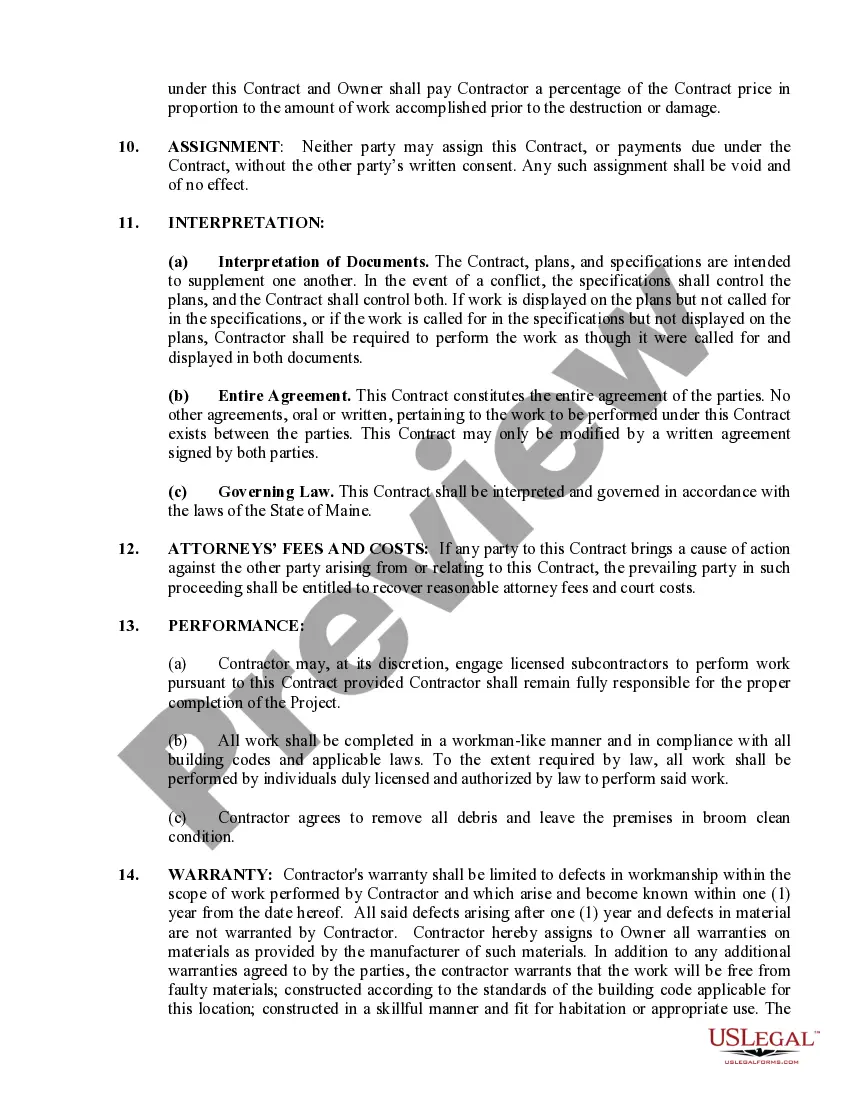
- Method of Payment: Details payment structure, including initial down payment limitations.
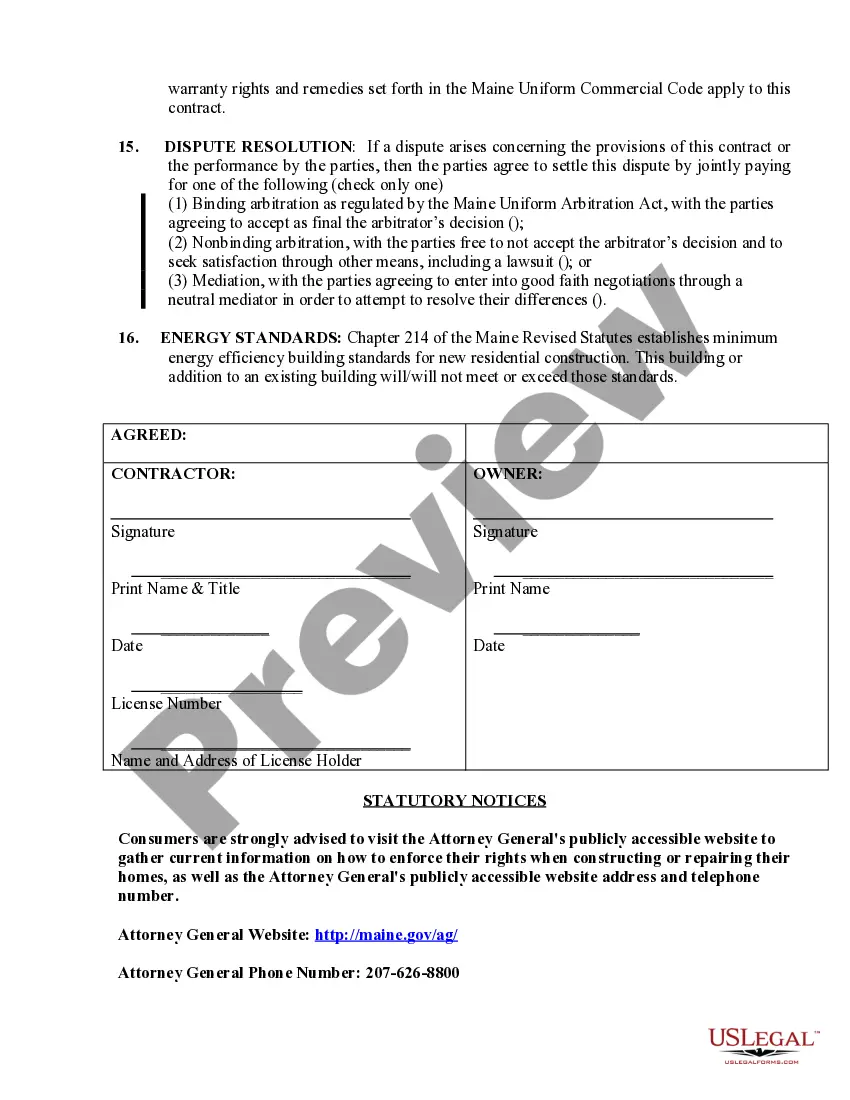
- Late Payment/Default: States consequences of late payment, including potential work suspension.
- Destruction and Damage: Addresses obligations in case of project damage and conditions for contract termination.
- Warranty: Limits the contractor's warranty on workmanship to one year from the contract date.


When to use this document
This form should be used when a property owner hires a trim carpenter for specific carpentry work involving trim installations. It is suitable for projects involving renovations, remodels, or new constructions where detailed carpentry work is required. The contract protects both parties by clearly outlining expectations, performance standards, and financial obligations.
Who should use this form
- Trim carpenter contractors seeking a structured agreement with clients.
- Property owners looking to engage a contractor for trim carpentry projects.
- Individuals managing home improvement or new construction projects requiring professional carpentry services.
Steps to complete this form
- Identify the parties involved by entering the names of the contractor and the property owner.
- Specify the project details, including the scope of work and any specific materials to be used.
- Outline the payment structure, including the total contract price and any down payment percentage.
- Include terms related to permits, insurance, and warranty as required.
- Both parties should review and sign the contract to acknowledge agreement to its terms.
Notarization requirements for this form
This form does not typically require notarization to be legally valid. However, some jurisdictions or document types may still require it. US Legal Forms provides secure online notarization powered by Notarize, available 24/7 for added convenience.
Get your form ready online
Our built-in tools help you complete, sign, share, and store your documents in one place.
Make edits, fill in missing information, and update formatting in US Legal Forms—just like you would in MS Word.
Download a copy, print it, send it by email, or mail it via USPS—whatever works best for your next step.
Sign and collect signatures with our SignNow integration. Send to multiple recipients, set reminders, and more. Go Premium to unlock E-Sign.
If this form requires notarization, complete it online through a secure video call—no need to meet a notary in person or wait for an appointment.
We protect your documents and personal data by following strict security and privacy standards.

Make edits, fill in missing information, and update formatting in US Legal Forms—just like you would in MS Word.

Download a copy, print it, send it by email, or mail it via USPS—whatever works best for your next step.

Sign and collect signatures with our SignNow integration. Send to multiple recipients, set reminders, and more. Go Premium to unlock E-Sign.

If this form requires notarization, complete it online through a secure video call—no need to meet a notary in person or wait for an appointment.

We protect your documents and personal data by following strict security and privacy standards.
Typical mistakes to avoid
- Failing to specify all project details, leading to misunderstandings about the scope of work.
- Not including required payment terms or conditions, which can result in payment disputes.
- Neglecting to obtain necessary permits, putting the project at risk of delays or legal issues.
Benefits of using this form online
- Convenience: Downloadable and easily accessible from any device, allowing you to fill it out at your convenience.
- Editability: Forms can be customized to fit specific project needs and circumstances.
- Reliability: Drafted by licensed attorneys to ensure legal compliance and clarity.
Legal use & context
- This contract is legally binding when signed by both parties, resulting in enforceable obligations.
- It protects both the contractor and the property owner by clearly stipulating expectations and responsibilities.
- Failure to adhere to the terms may result in legal disputes or penalties for non-compliance.
What to keep in mind
- The Trim Carpenter Contract for Contractor is essential for formalizing agreements in carpentry projects.
- It includes key components such as payment terms, project details, and insurance obligations.
- Using this contract helps prevent disputes and ensures compliance with Maine's legal requirements.
Looking for another form?


Form popularity
FAQ
Identifying/Contact Information. Title and Description of the Project. Projected Timeline and Completion Date. Cost Estimate and Payment Schedule. Stop Work Clause and Stop Payment Clause. Act of God Clause. Change Order Agreement. Warranty.
Finish carpenters are skilled professionals who perform the final touches on homes after the structure is fully built. These carpenters must carry out various tasks such as installing doors, building bookshelves, and adding designs to window and door trims.
The formal agreement should be titled Contract for Carpentry Work or something similar. Add the names of every party who is involved in the contract. Using either a paragraph format or a bulleted list, state all of the items you have agreed on, using the parties' last names as needed.
Check Contract Basics. The basic job of a contractor agreement is to spell out the scope of the project's work. Set a Payment Schedule. Schedule Start and End Dates. Specify Change Orders. Research Your Arbitration Options. Turn Down the Contractor's Warranty.
Identify the customer and service provider. Describe the services being provided. Outline a payment schedule. Establish terms about confidentiality, non-solicitation, and non-competition. Address ownership of materials. Personalize your Service Agreement.
Identifying/Contact Information. Title and Description of the Project. Projected Timeline and Completion Date. Cost Estimate and Payment Schedule. Stop Work Clause and Stop Payment Clause. Act of God Clause. Change Order Agreement. Warranty.
Both parties should sign the contract, and both should be bound by the terms and conditions spelled out in the agreement. In general that means the contractor will be obliged to provide specified materials and to perform certain services for you. In turn, you will be required to pay for those goods and that labor.
Begin with the Date and the Address of the Other Party. Start with the Basic Details of the Planned Work. Include Special Stipulations. State Whether There Will be a Further Agreement. Create an Area for Signatures. Sign and Date the Contract Letter.