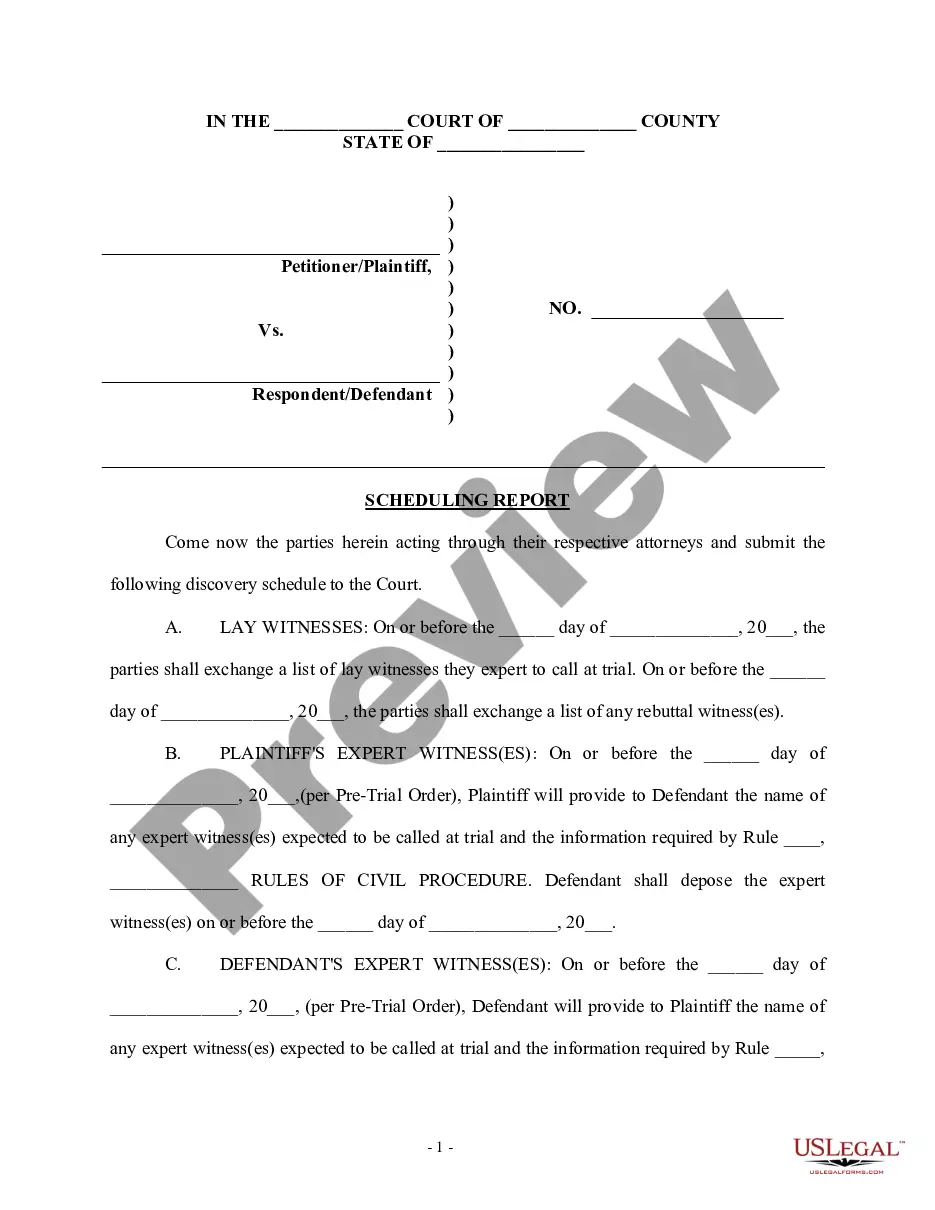
This form allows a parent or guardian to release a minor for duck hunting from liability for injuries which may be incurred by a minor child while on the premises, taking part in activities, etc.
Maryland Waiver and Release From Liability For Minor Child for Duck Hunting
Category:
State:
Multi-State
Control #:
US-WAV-85M
Format:
Word;
Rich Text
Instant download
Description
Free preview
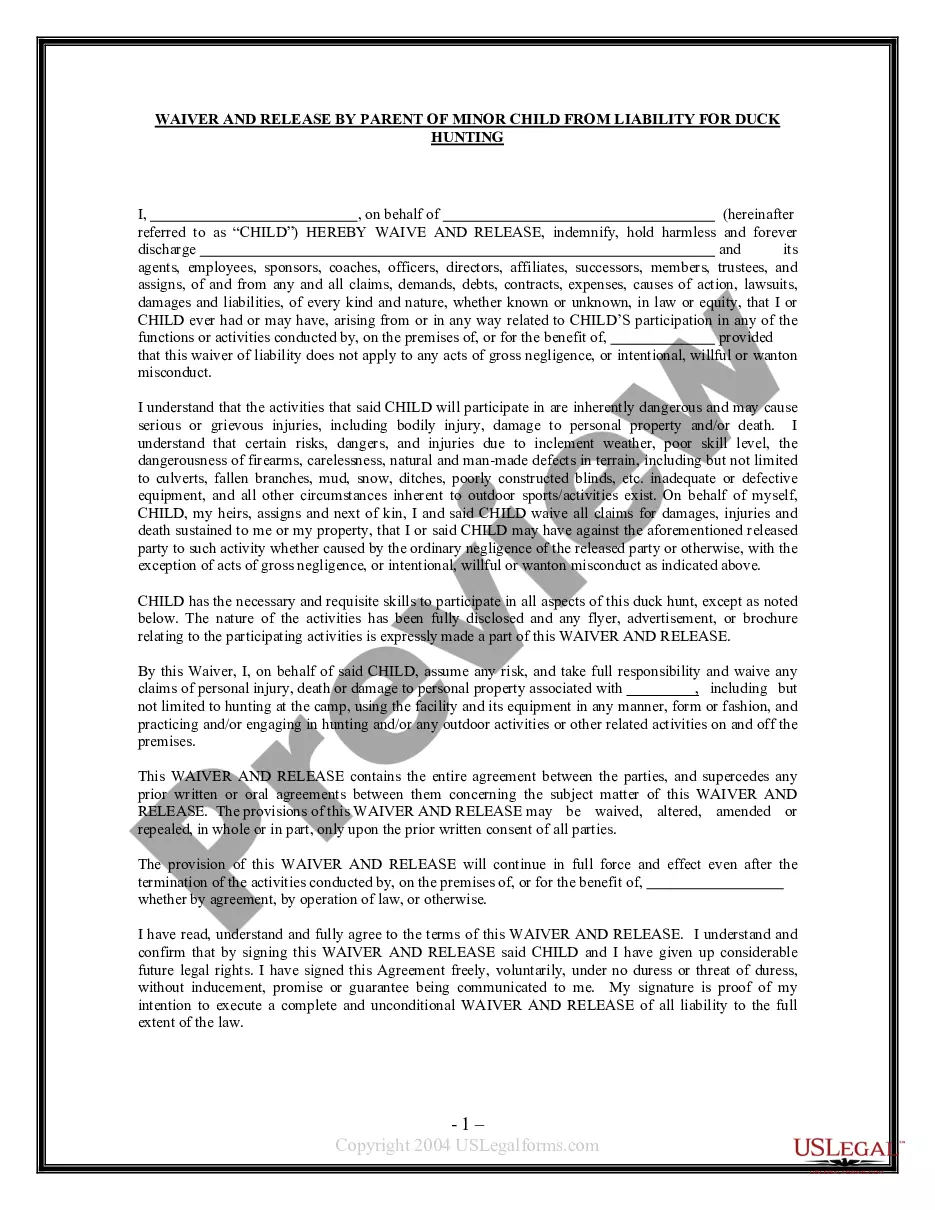
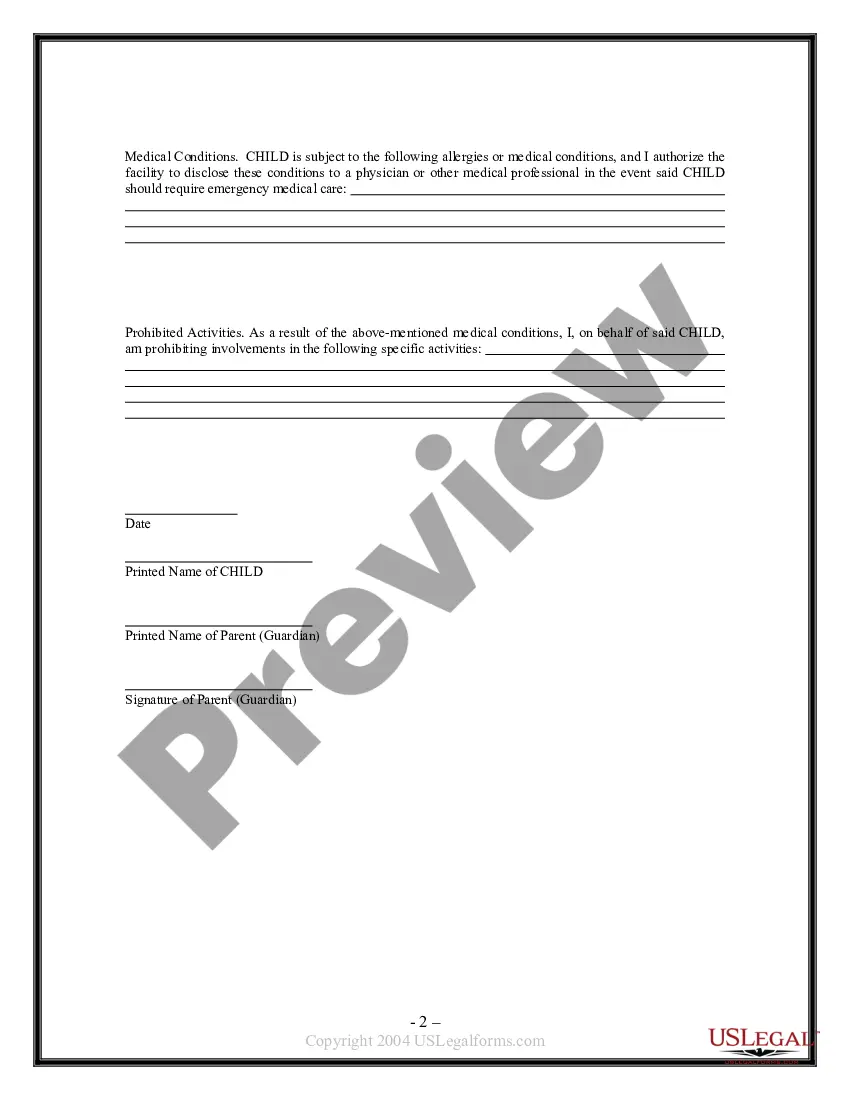
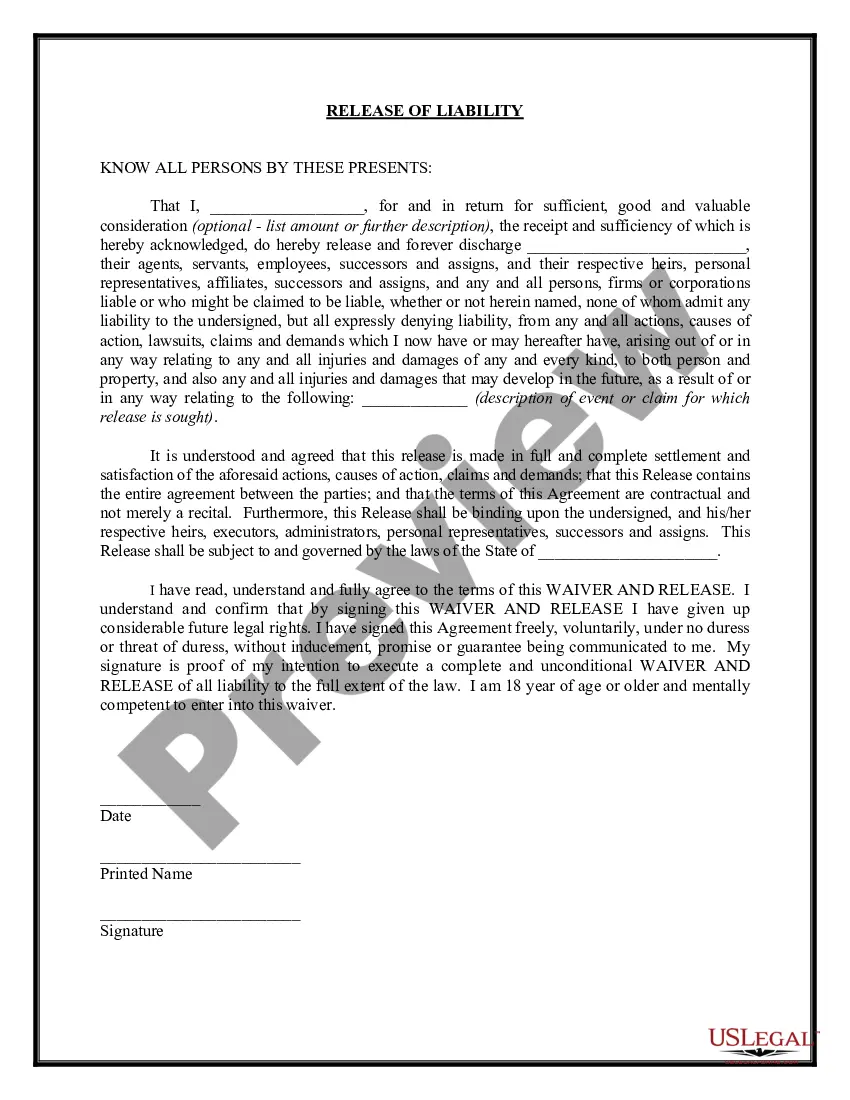
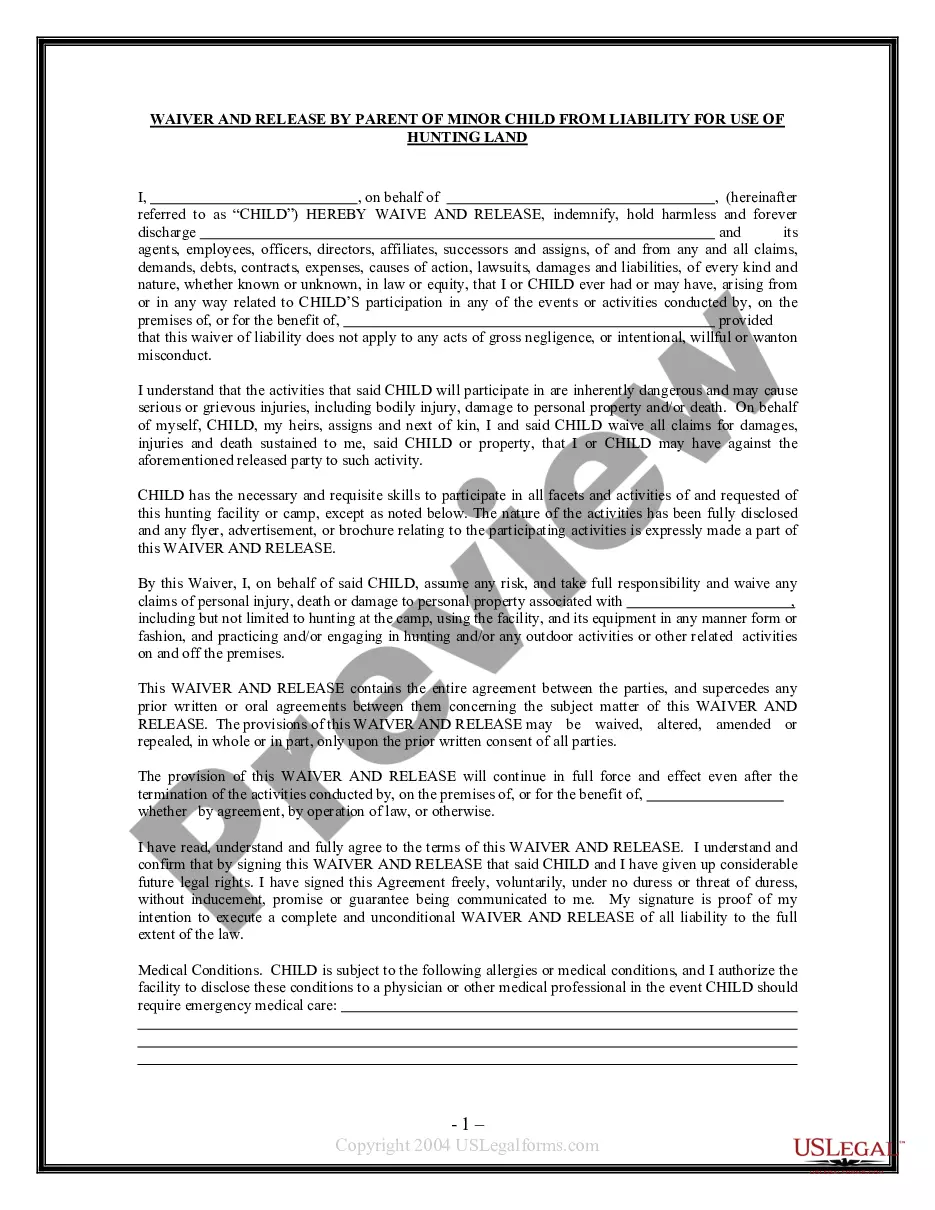
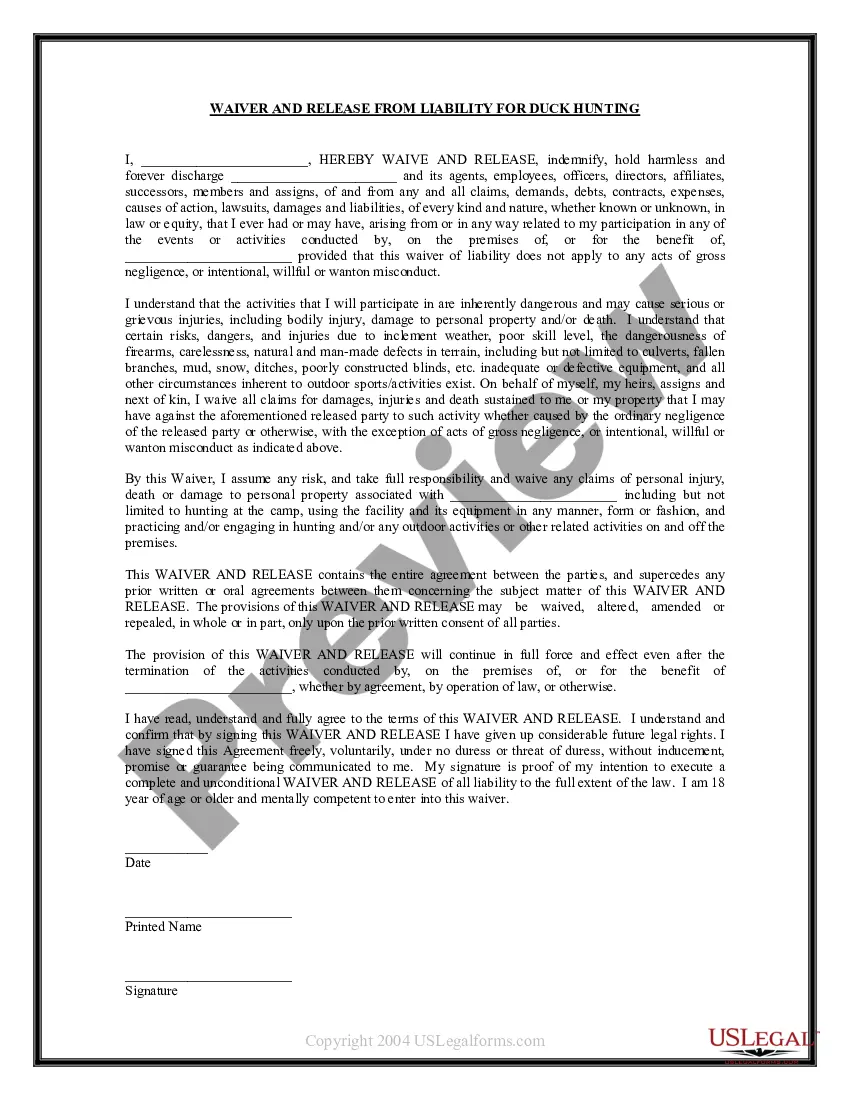
How to fill out Waiver And Release From Liability For Minor Child For Duck Hunting?
You might spend hours online trying to locate the legal document template that meets your state and federal requirements.
US Legal Forms offers thousands of legal forms that are vetted by experts.
You can download or print the Maryland Waiver and Release From Liability For Minor Child for Duck Hunting from their service.
Review the form details to confirm you have chosen the right form. If available, use the Preview button to view the document template as well.
- If you have a US Legal Forms account, you can Log In and click the Download button.
- Then, you can complete, modify, print, or sign the Maryland Waiver and Release From Liability For Minor Child for Duck Hunting.
- Every legal document template you obtain is yours indefinitely.
- To get another copy of the obtained form, go to the My documents tab and click the corresponding button.
- If you are using the US Legal Forms website for the first time, follow the simple instructions below.
- First, ensure you have selected the correct document template for the state/region of your choice.
Form popularity
FAQ
The main difference between releases and waivers is the transferring of ownership. When rights are released, they are transferred to another party. When rights are waived, they are gone altogether.
This may seem like a silly distinction to make, but lack of knowledge or willingness is actually one of the biggest reasons lawyers can completely toss out a waiver in a personal injury case.
In California, waivers of liability are generally enforceable so long as they have been drafted correctly, are explicit as to the scope of coverage, are legible and use high-visibility text, and do not illegally waive unknown or unrelated claims.
AN AGREEMENT NOT TO SUE THE RELEASEES for any loss, injury, costs or damages of any form or type, howsoever caused or arising, and whether directly or indirectly from the participation of my minor child/ward in any aspect of the EVENT; and. 4.
A liability waiver is a legal document that a person who participates in an activity may sign to acknowledge the risks involved in their participation. By doing so, the company attempts to remove legal liability from the business or person responsible for the activity.
A release of liability, also known as a liability waiver or a hold harmless agreement, is a contract in which one party agrees not to hold another party liable for damages or injury. These contracts are common in fields that involve some risk to property, finances, or health.
Liability waivers are enforceable in California solely to the extent they shift to the customer the risk of ordinary negligence. Under California law, a liability waiver cannot excuse an injury caused by a defendant's gross negligence, recklessness or intentionally wrongful act.
A waiver is an exculpatory contract. That means it's used to excuse a party from responsibility when the other contracted party is injured by either known or unknown risks in a particular activity. This includes inherent risks and ordinary negligence.
You might think that since you signed a waiver acknowledging the risks of the activity, you have no legal leg to stand on to file a personal injury lawsuit. Waivers can make personal injury lawsuits more complex, but you can still seek damages for injuries that could have and should have been prevented.
Under California law, waivers of liability may not prevent people from suing for injuries resulting from gross negligence, recklessness, intentional torts or illegal acts.