Maryland Waiver and Release From Liability For Minor Child for Scuba Diving and Skin Diving
Description
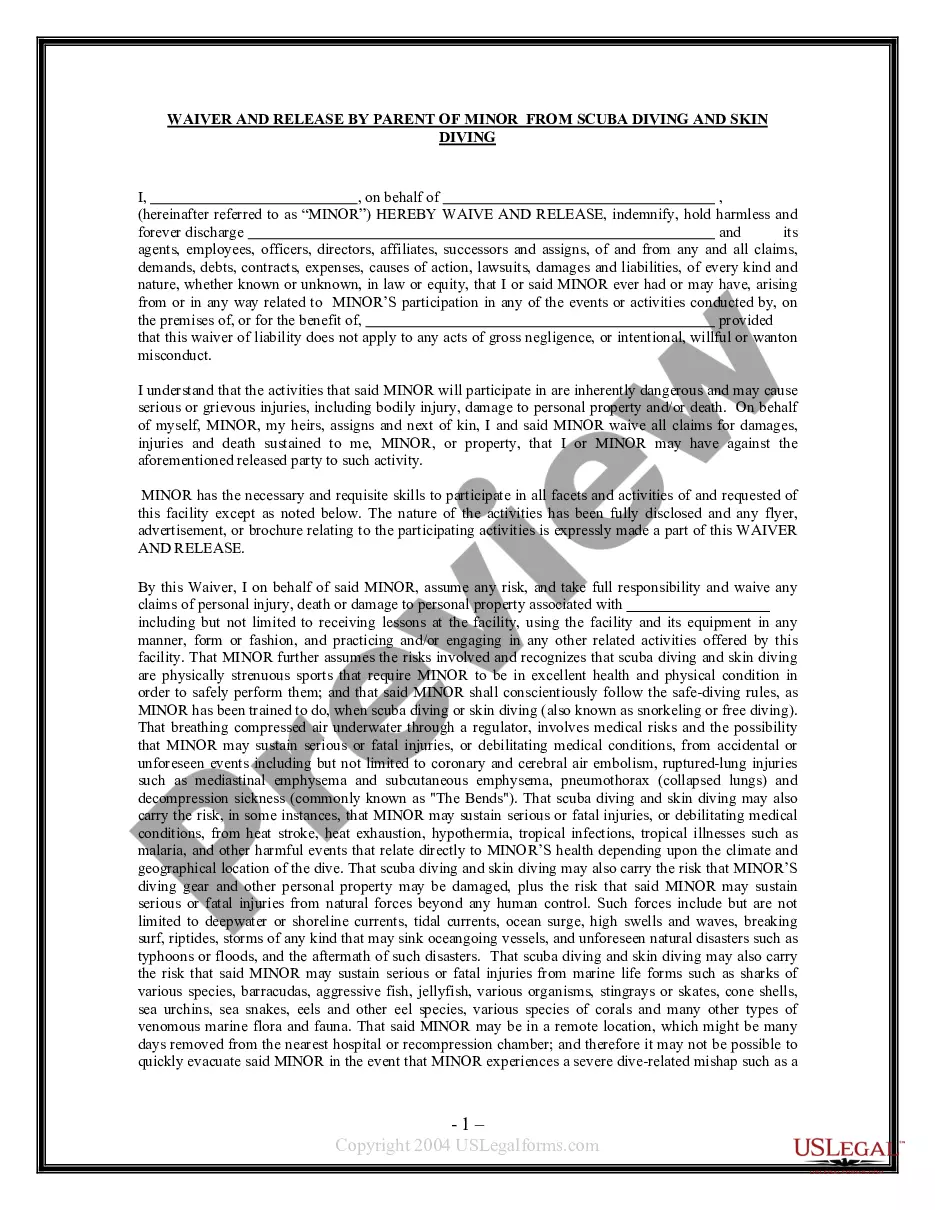
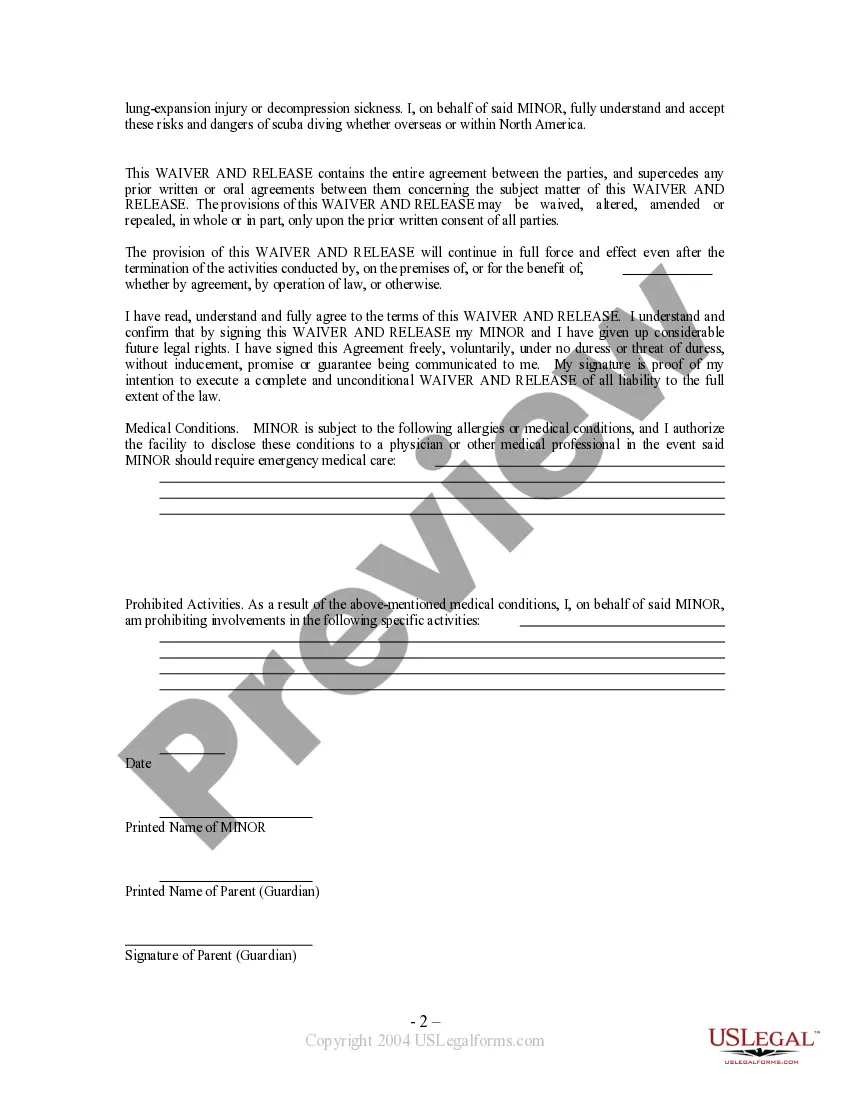


How to fill out Waiver And Release From Liability For Minor Child For Scuba Diving And Skin Diving?
Are you in a situation where you require documents for both business or personal reasons almost every day.
There are numerous legal document templates accessible online, but locating forms you can trust isn't easy.
US Legal Forms provides thousands of form templates, including the Maryland Waiver and Release From Liability For Minor Child for Scuba Diving and Skin Diving, designed to comply with federal and state regulations.
Select the pricing plan you prefer, fill out the required information to create your account, and pay for the order using your PayPal or credit card.
Choose a convenient format and download your copy.
- If you are already familiar with the US Legal Forms website and have an account, simply Log In.
- After that, you can download the Maryland Waiver and Release From Liability For Minor Child for Scuba Diving and Skin Diving template.
- If you do not have an account and wish to start using US Legal Forms, follow these instructions.
- Find the form you need and ensure it's for the correct city/county.
- Use the Preview button to review the form.
- Read the information to ensure you have selected the correct form.
- If the form isn't what you're looking for, use the Search field to find the form that suits your needs and requirements.
- Once you find the appropriate form, click on Buy now.
Form popularity
FAQ
The minimum age limit for scuba diving varies by organization, but it is often set at 10 to 12 years old. Young divers typically need parental consent and a Maryland Waiver and Release From Liability For Minor Child for Scuba Diving and Skin Diving. This waiver helps ensure that parents understand the risks involved. Always confirm the age policies with the diving center to ensure a safe diving experience for your child.
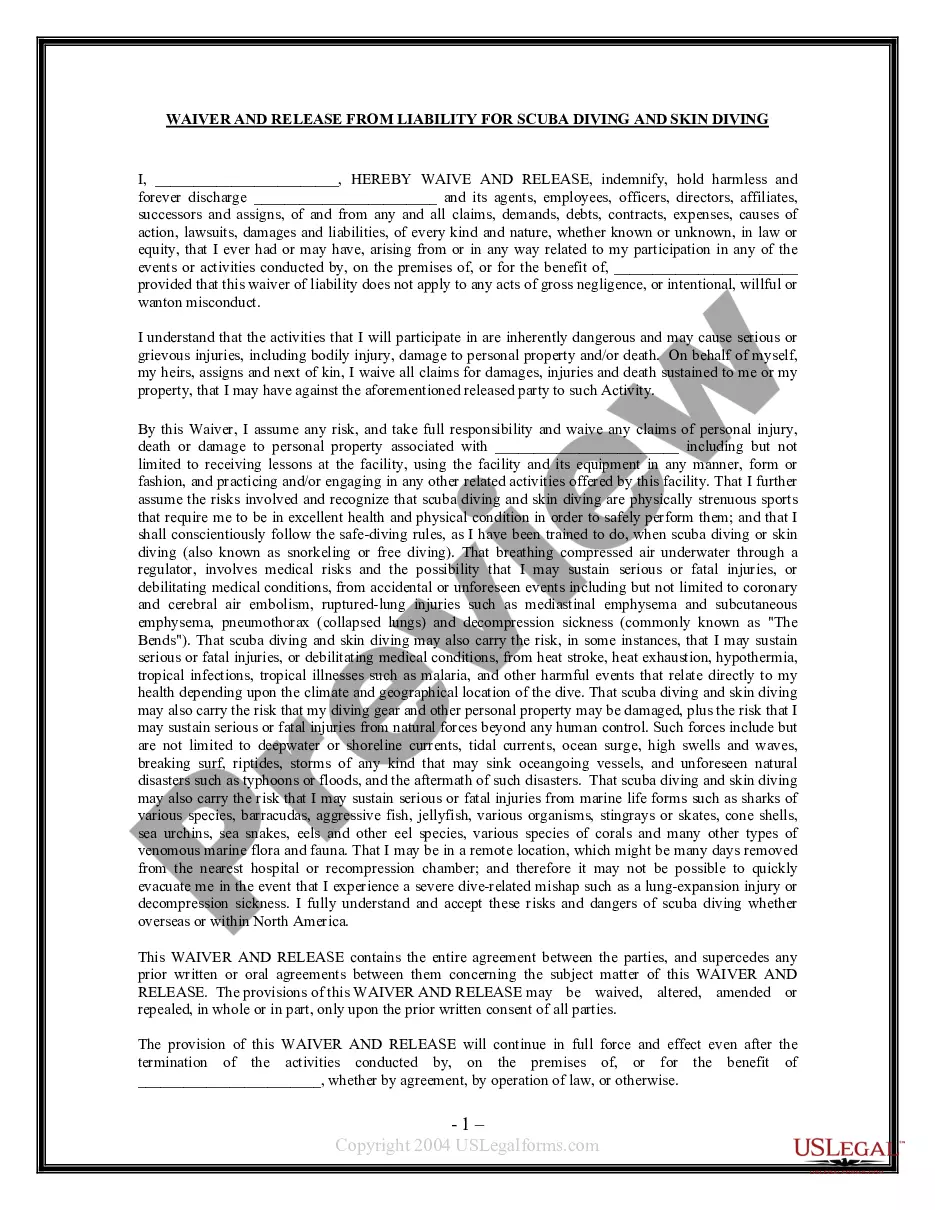
Yes, liability waivers are generally enforceable in Maryland, provided they meet certain legal criteria. These waivers must clearly outline the risks involved and be signed voluntarily. For activities such as scuba diving, a Maryland Waiver and Release From Liability For Minor Child for Scuba Diving and Skin Diving is crucial for protecting both the minor and the diving facility. It's wise to consult with a legal expert if you have any concerns about the waiver's enforceability.
Yes, you can scuba dive at 12 years old, but it often depends on the dive operator's policies and local regulations. Many organizations offer programs specifically designed for younger divers. However, a Maryland Waiver and Release From Liability For Minor Child for Scuba Diving and Skin Diving may be required to ensure safety and parental consent. Always check with your diving school for their specific age requirements.
Ambiguous language or missing information can invalidate a waiver. The waiver contains errors that make it invalid. The language of the waiver must obey relevant state laws. An improperly worded or drafted waiver, as well as one that violates the law or public policy, may not hold up in court.
Under California law, waivers of liability may not prevent people from suing for injuries resulting from gross negligence, recklessness, intentional torts or illegal acts.
So, if an accident happens and injury occurs, is a Waiver effective in protecting the institution from liability and preventing a lawsuit from the injured party? The answer is that, if properly worded and signed, the Waiver is likely valid and will preclude legal claims for injuries.
You might think that since you signed a waiver acknowledging the risks of the activity, you have no legal leg to stand on to file a personal injury lawsuit. Waivers can make personal injury lawsuits more complex, but you can still seek damages for injuries that could have and should have been prevented.
A waiver is an exculpatory contract. That means it's used to excuse a party from responsibility when the other contracted party is injured by either known or unknown risks in a particular activity. This includes inherent risks and ordinary negligence.
Liability waivers are enforceable in California solely to the extent they shift to the customer the risk of ordinary negligence. Under California law, a liability waiver cannot excuse an injury caused by a defendant's gross negligence, recklessness or intentionally wrongful act.
Generally, a liability waiver document is a legally binding agreement that relinquishes the right of one party to pursue legal remedy for injuries accrued on the property, regardless of fault involved.