Maryland Resume for Accountant
Description

How to fill out Resume For Accountant?
You can dedicate time online trying to locate the appropriate legal document template that aligns with the federal and state regulations you require. US Legal Forms provides a vast array of legal templates that are reviewed by experts. You can easily download or print the Maryland Resume for Accountant from my services.
If you already possess a US Legal Forms account, you can Log In and click on the Download button. After that, you can complete, modify, print, or sign the Maryland Resume for Accountant. Every legal document template you obtain is yours indefinitely. To acquire an additional copy of any purchased form, navigate to the My documents tab and click on the corresponding button.
If this is your first time using the US Legal Forms website, follow the simple instructions below: First, ensure that you have selected the correct document template for the state/city of your choice. Review the form summary to confirm that you have chosen the right form. If available, utilize the Preview button to examine the document template as well.
Avoid altering or removing any HTML tags. Only synonymize plain text outside of the HTML tags.
- If you wish to obtain another version of the form, use the Search field to locate the template that satisfies your needs and requirements.
- Once you have found the template you desire, click Get now to proceed.
- Select the pricing plan you wish, enter your details, and register for an account on US Legal Forms.
- Complete the payment. You can use your credit card or PayPal account to purchase the legal document.
- Choose the format of your document and download it to your device.
- Make adjustments to your document if possible. You can complete, modify, sign, and print the Maryland Resume for Accountant.
- Download and print numerous document templates using the US Legal Forms website, which offers the largest selection of legal forms. Utilize professional and state-specific templates to address your business or personal needs.
Form popularity
FAQ
To effectively showcase your CPA eligibility on your Maryland Resume for Accountant, include it in the education section. Clearly state your degree, the institution, and mention your CPA eligibility status. Additionally, you can create a separate section for certifications where you can elaborate on any relevant credentials. Utilizing resources from USLegalForms can help you format this information professionally, ensuring it stands out to potential employers.
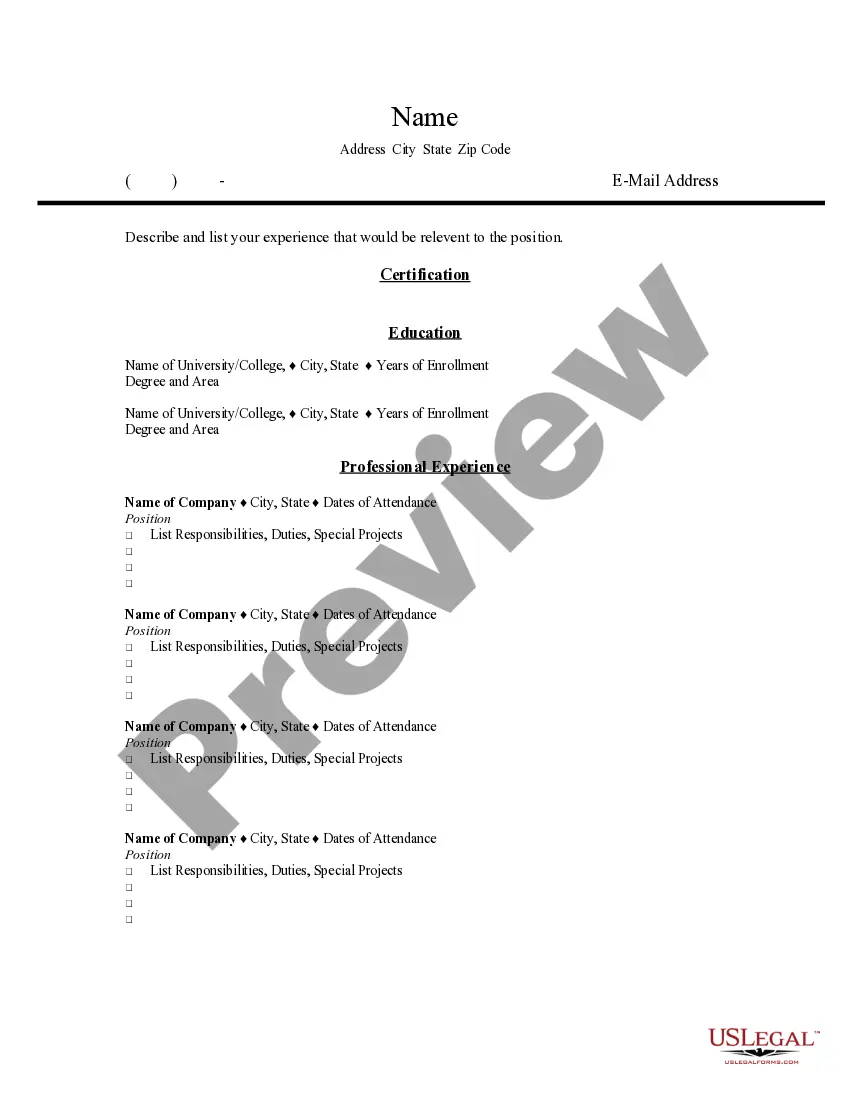
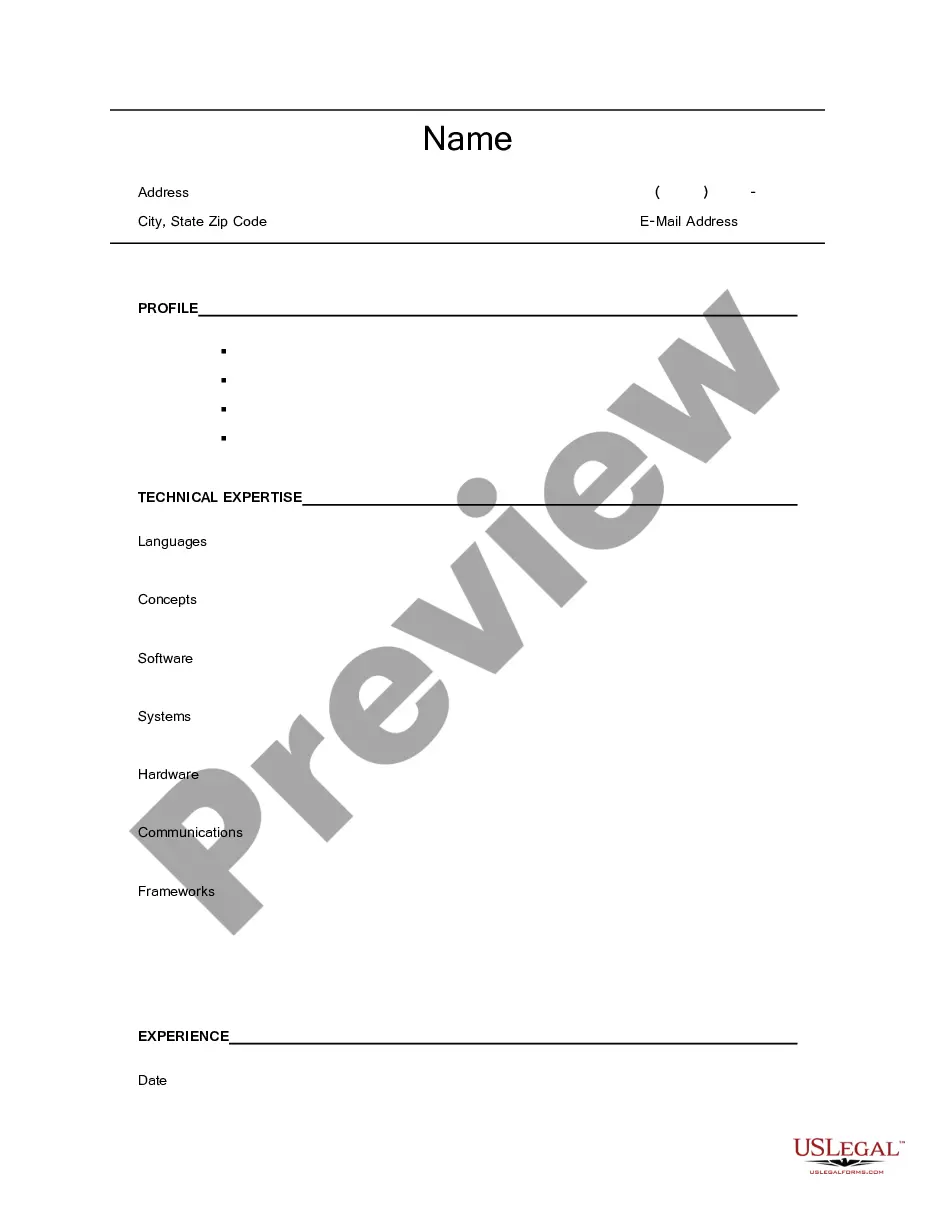
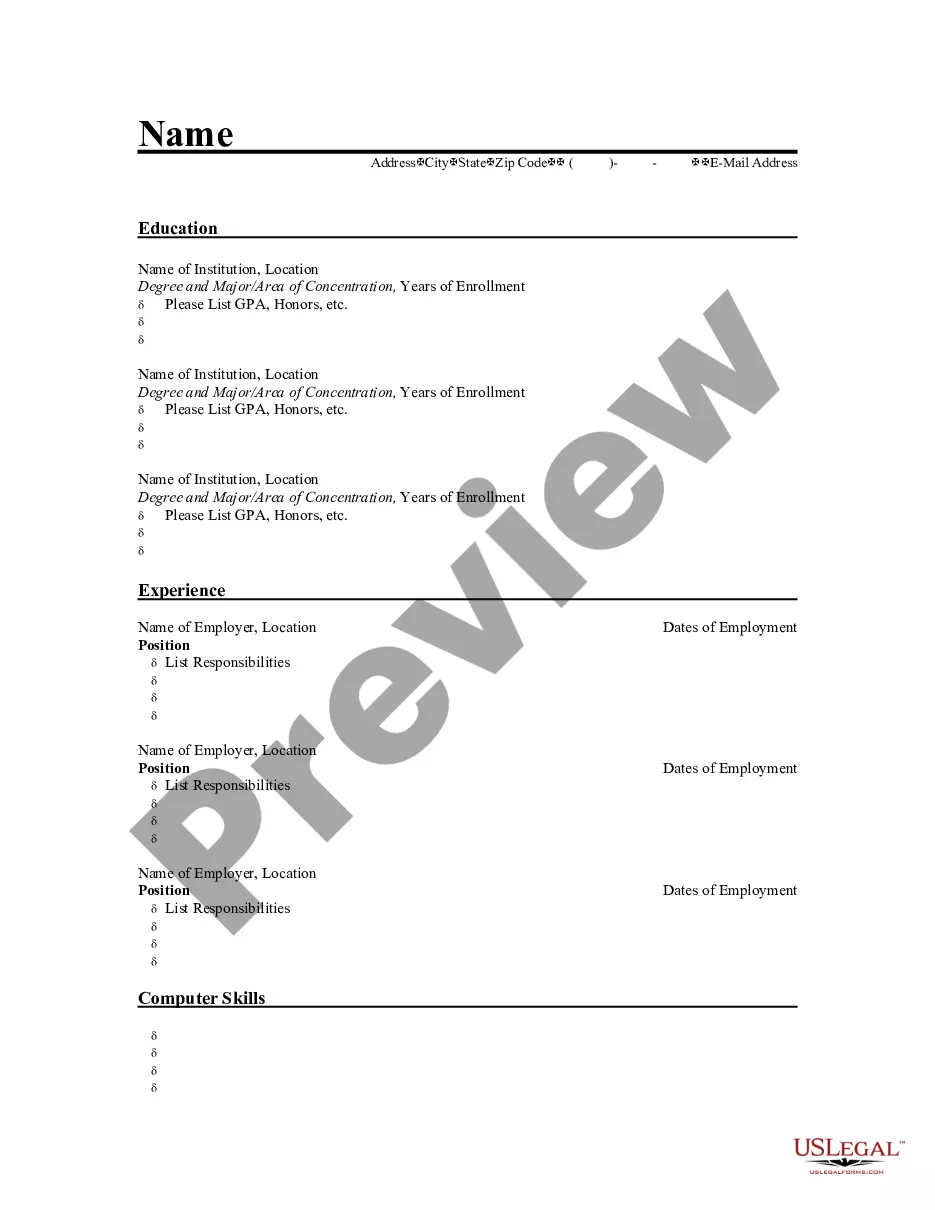
Creating a Maryland Resume for Accountant requires a clear structure and relevant content. Start with your contact information, followed by a professional summary that highlights your skills and experience. Include sections for work history, education, and certifications, ensuring you list your achievements in a quantifiable manner. For a polished finish, consider using templates available on platforms like USLegalForms, which can guide you in crafting a standout resume.
Example Accounting Resume ObjectivesTo employ my knowledge and experience with the intention of securing a professional career with opportunity for challenges and career advancement, while gaining knowledge of new skills and expertise.
7 Skills to Leave Off Your ResumeA Language You Only Studied in High School.Basic Computer Skills Like Email and Microsoft Word.Social Media (If You Haven't Used It as Part of Your Job)Soft Skills.Exaggerations or Flat-Out Lies.Outdated Tech.Irrelevant or Joke Skills.
5 steps to make the perfect accountant resumeProminently display your education & certifications.Make a strong argument with your resume objective.Show you have the essential accounting skills.Use hard numbers to quantify your professional experience.Use key action verbs.
Some important types of skills to cover on a resume include:Active listening.Communication.Computer skills.Customer service.Interpersonal skills.Leadership.Management skills.Problem-solving.More items...?
How to write an accounting professional resumeChoose best resume format.Indicate your name and contact information.Write your career summary.Describe your work experience.Write your education background.Show your accounting skills.Highlight your certifications.Include any relevant information.More items...?27-Sept-2021
Accountant resume do'sDo keep it brief.Acknowledge your academic credentials early.Do include company names clearly, and spelled correctly.Do call out memberships with industry-recognised bodies or organisations you've worked with.Do tailor your accounting resume specifically to the company you're applying with.More items...
Skills in accounts payable and receivable are extremely relevant for those in industry accounting and is a great skill to list on your resume. Managing vendor accounts. Accounting departments in industry accounting are often responsible for managing all the vendor accounts that need to be paid.
Substantiate financial transactions by auditing documents. Maintain accounting controls by preparing and recommending policies and procedures. Guide accounting clerical staff by coordinating activities and answering questions. Reconcile financial discrepancies by collecting and analyzing account information.