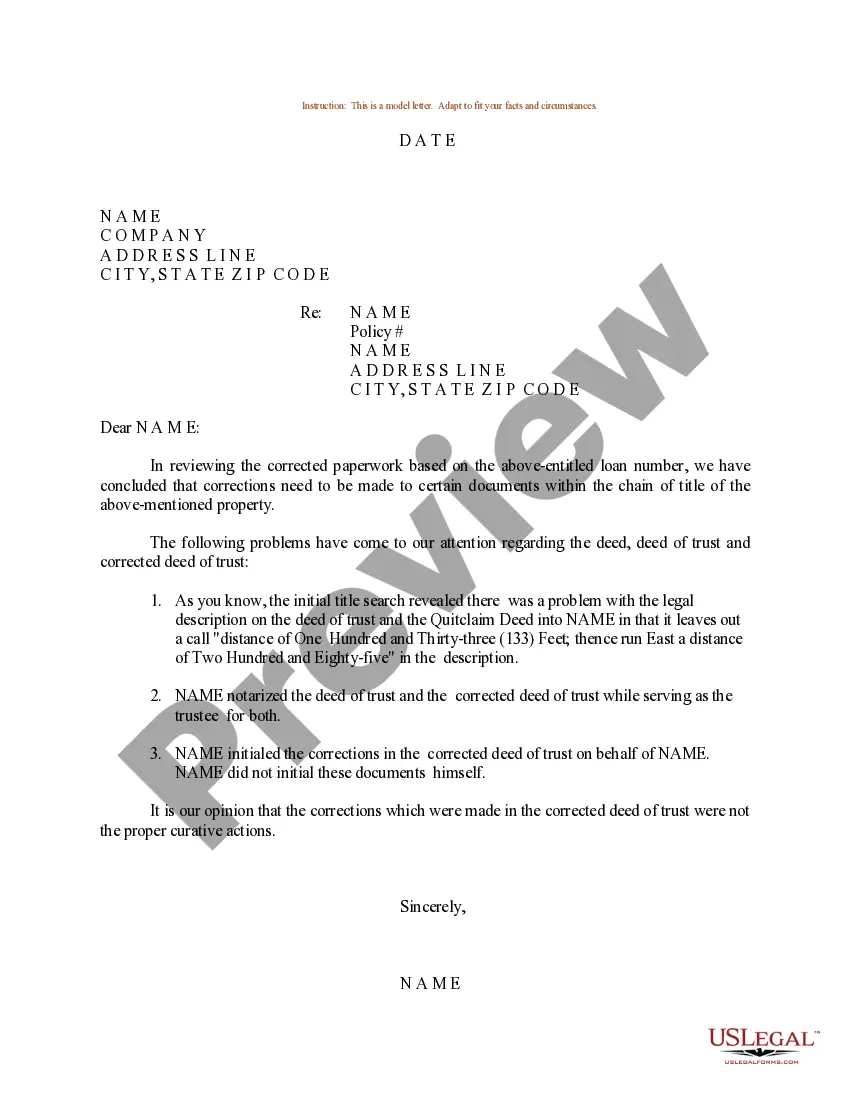
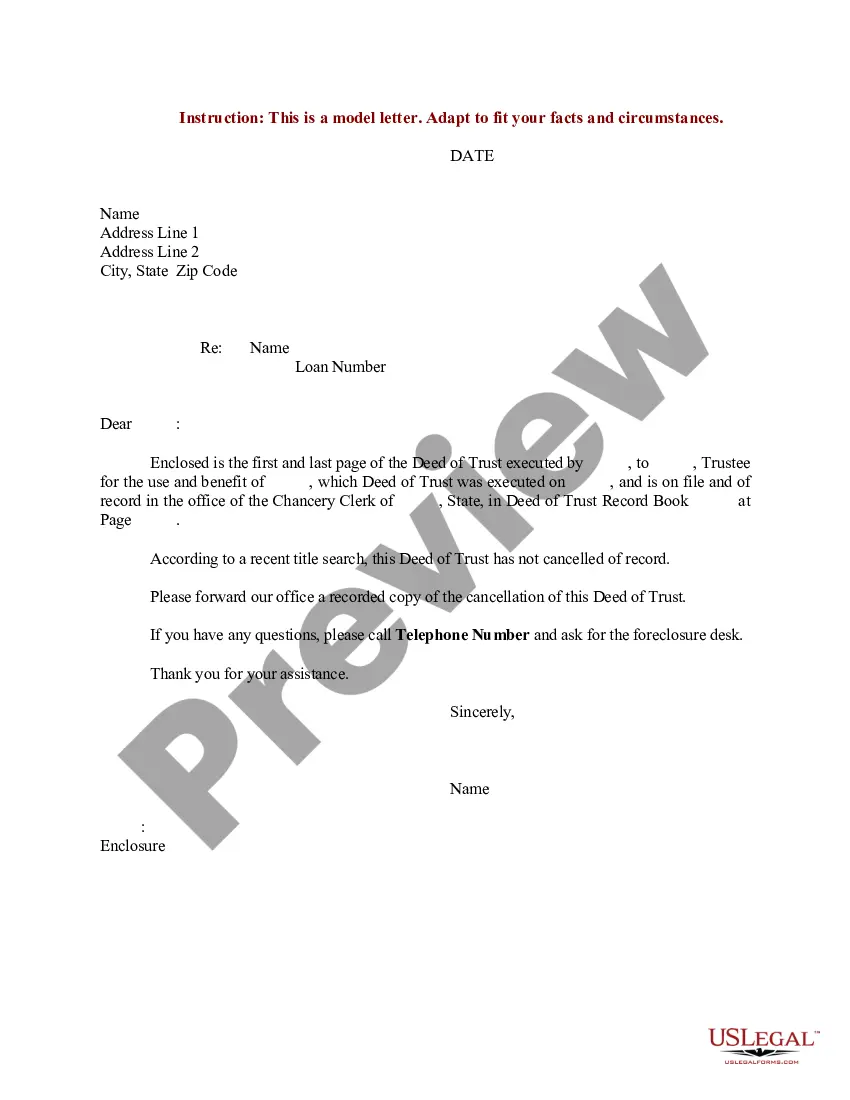
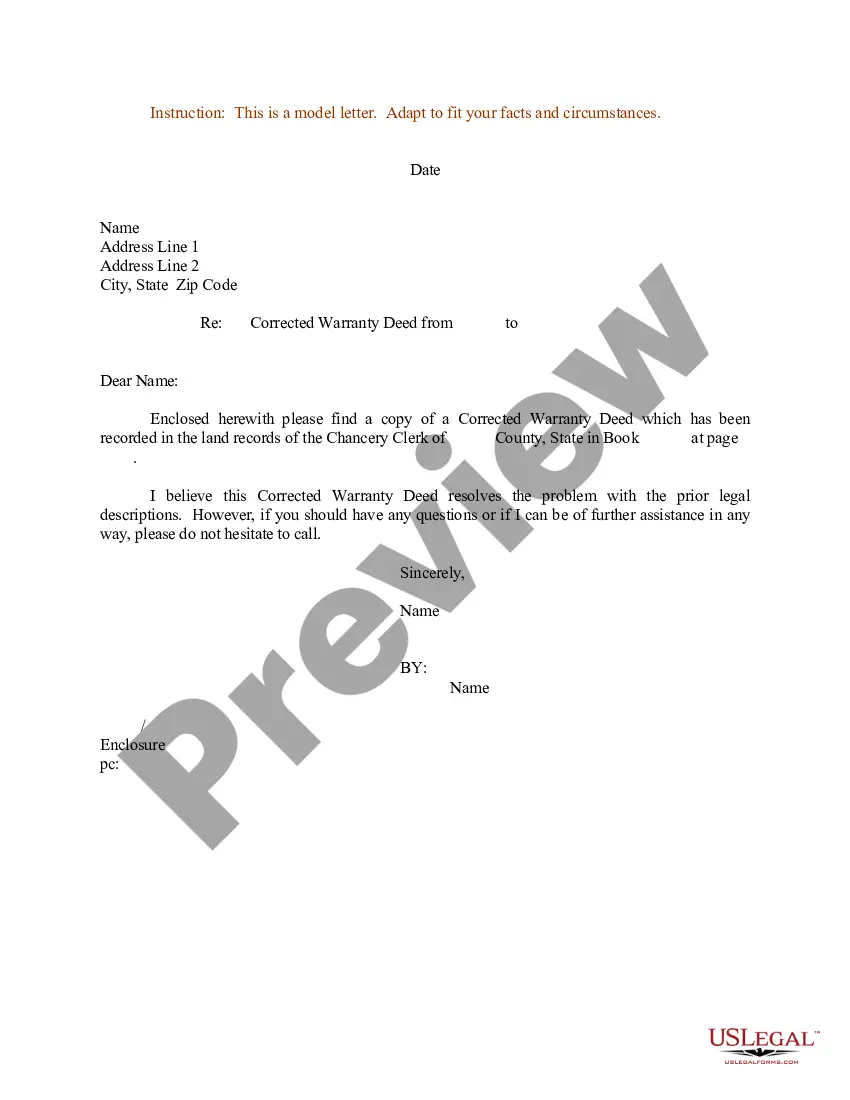
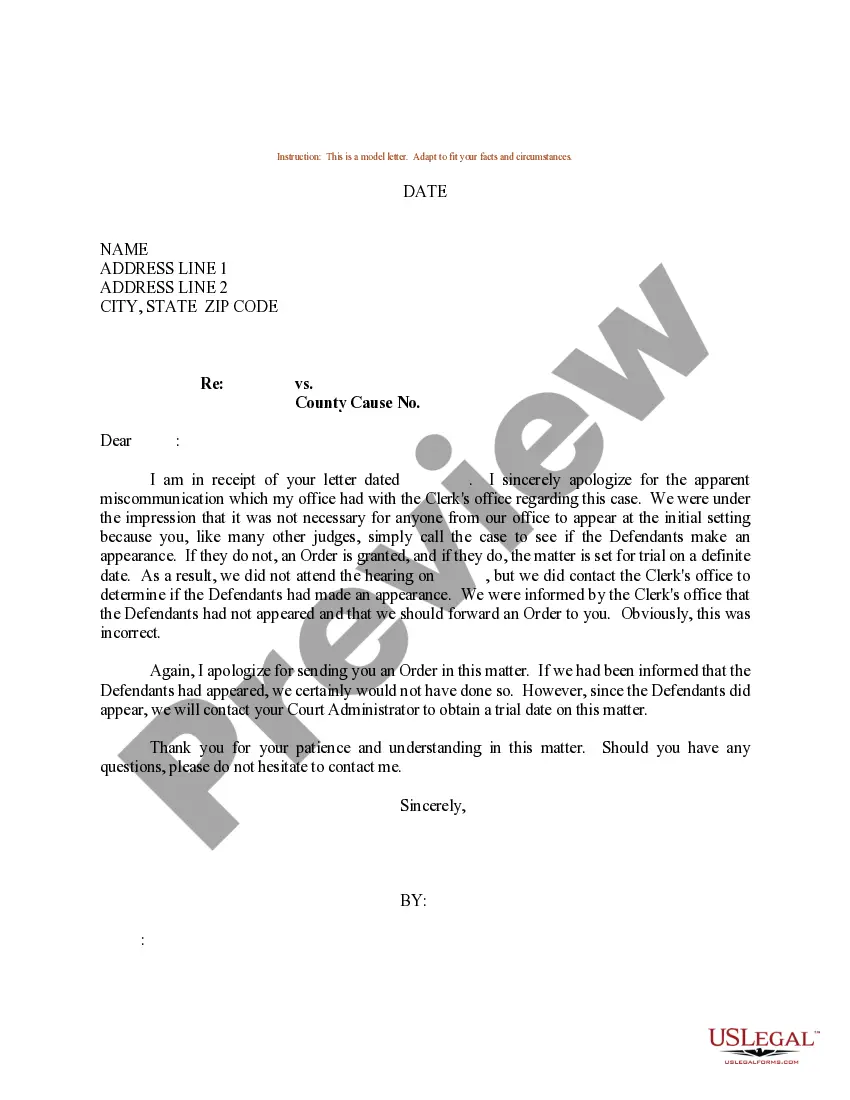
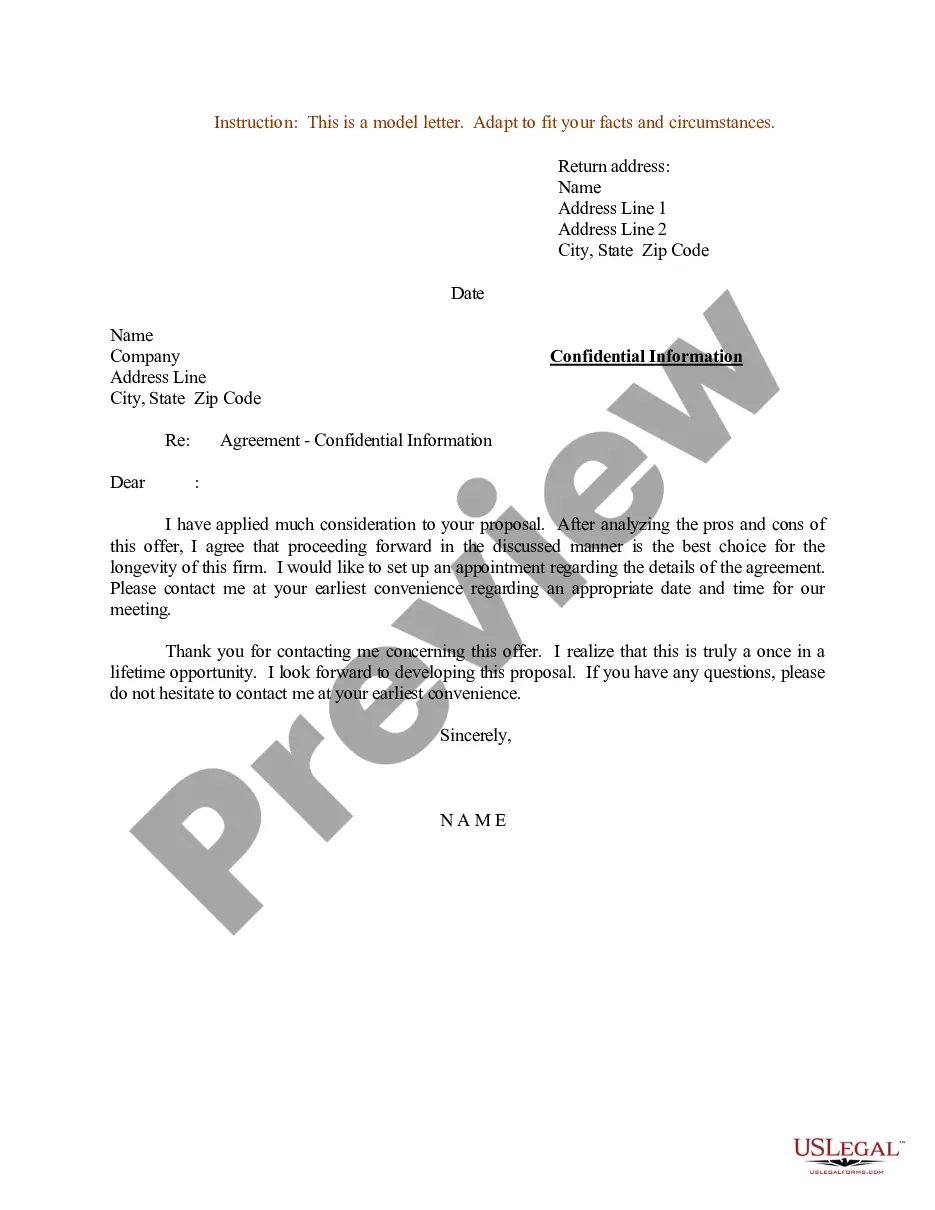
Maryland Sample Letter for Corrections to Deed, Deed of Trust, and corrected Deed of Trust
Description

Get your form ready online
Our built-in tools help you complete, sign, share, and store your documents in one place.
Make edits, fill in missing information, and update formatting in US Legal Forms—just like you would in MS Word.
Download a copy, print it, send it by email, or mail it via USPS—whatever works best for your next step.
Sign and collect signatures with our SignNow integration. Send to multiple recipients, set reminders, and more. Go Premium to unlock E-Sign.
If this form requires notarization, complete it online through a secure video call—no need to meet a notary in person or wait for an appointment.
We protect your documents and personal data by following strict security and privacy standards.

Make edits, fill in missing information, and update formatting in US Legal Forms—just like you would in MS Word.

Download a copy, print it, send it by email, or mail it via USPS—whatever works best for your next step.

Sign and collect signatures with our SignNow integration. Send to multiple recipients, set reminders, and more. Go Premium to unlock E-Sign.

If this form requires notarization, complete it online through a secure video call—no need to meet a notary in person or wait for an appointment.

We protect your documents and personal data by following strict security and privacy standards.
Looking for another form?



How to fill out Sample Letter For Corrections To Deed, Deed Of Trust, And Corrected Deed Of Trust?
US Legal Forms - among the greatest libraries of legal kinds in the States - delivers a variety of legal papers themes it is possible to obtain or produce. Making use of the site, you can find a large number of kinds for business and person uses, sorted by types, states, or key phrases.You can get the latest variations of kinds much like the Maryland Sample Letter for Corrections to Deed, Deed of Trust, and corrected Deed of Trust in seconds.
If you have a membership, log in and obtain Maryland Sample Letter for Corrections to Deed, Deed of Trust, and corrected Deed of Trust from your US Legal Forms collection. The Acquire button will show up on each kind you perspective. You gain access to all in the past saved kinds from the My Forms tab of your account.
If you wish to use US Legal Forms initially, allow me to share basic instructions to help you began:
- Be sure you have chosen the right kind for your personal metropolis/area. Click on the Preview button to check the form`s content. Read the kind outline to ensure that you have chosen the proper kind.
- When the kind does not suit your demands, utilize the Look for discipline near the top of the display screen to get the one that does.
- In case you are pleased with the form, confirm your decision by simply clicking the Buy now button. Then, pick the rates program you like and provide your credentials to register for the account.
- Process the deal. Utilize your bank card or PayPal account to perform the deal.
- Choose the format and obtain the form on your own system.
- Make alterations. Complete, edit and produce and signal the saved Maryland Sample Letter for Corrections to Deed, Deed of Trust, and corrected Deed of Trust.
Each template you included with your bank account lacks an expiry time and it is your own property forever. So, if you wish to obtain or produce another version, just go to the My Forms portion and then click in the kind you need.
Obtain access to the Maryland Sample Letter for Corrections to Deed, Deed of Trust, and corrected Deed of Trust with US Legal Forms, one of the most considerable collection of legal papers themes. Use a large number of specialist and express-certain themes that satisfy your small business or person needs and demands.
Form popularity
FAQ
What is a corrective deed? A corrective deed is an instrument filed in the public record in addition to the incorrect deed. It's known as a confirmatory instrument since it perfects an existing title by removing any defects, but it doesn't pass title on its own.
The Bottom Line A quitclaim deed offers the least level of buyer protection and is generally used for title transfers between family members or to clear a defect on the title.
In Maryland, the original deed cannot be amended for rerecording. If any changes or corrections are made, it becomes a supplemental instrument only and must follow requirements for such instruments. Instead, a newly drafted confirmatory deed, executed, acknowledged, and recorded, will have full legal status.
A Corrective Deed is a special type of deed used to fix problems in deeds that have already been recorded. Unlike other types of deeds that transfer interests in real estate, a Corrective Deed does not create a new interest. Instead, the Corrective Deed corrects the documents relating to the prior transfer of interest.
A correction deed, also known as a confirmatory or corrective deed, is a legal document used to fix errors on a property title that is recorded. Property owners can use this special type of deed to amend common errors such as misspellings, incomplete names, and other missing information.
Deed signed by mistake (grantor did not know what was signed) Deed executed under falsified power of attorney. Deed executed under expired power of attorney (death, disability, or insanity of principal) Deed apparently valid, but actually delivered after death of grantor or grantee, or without consent of grantor.