Maryland Agreement between Certified Disability Advocate and Client

State:
Multi-State
Control #:
US-01812BG
Format:
Word
Instant download

Description

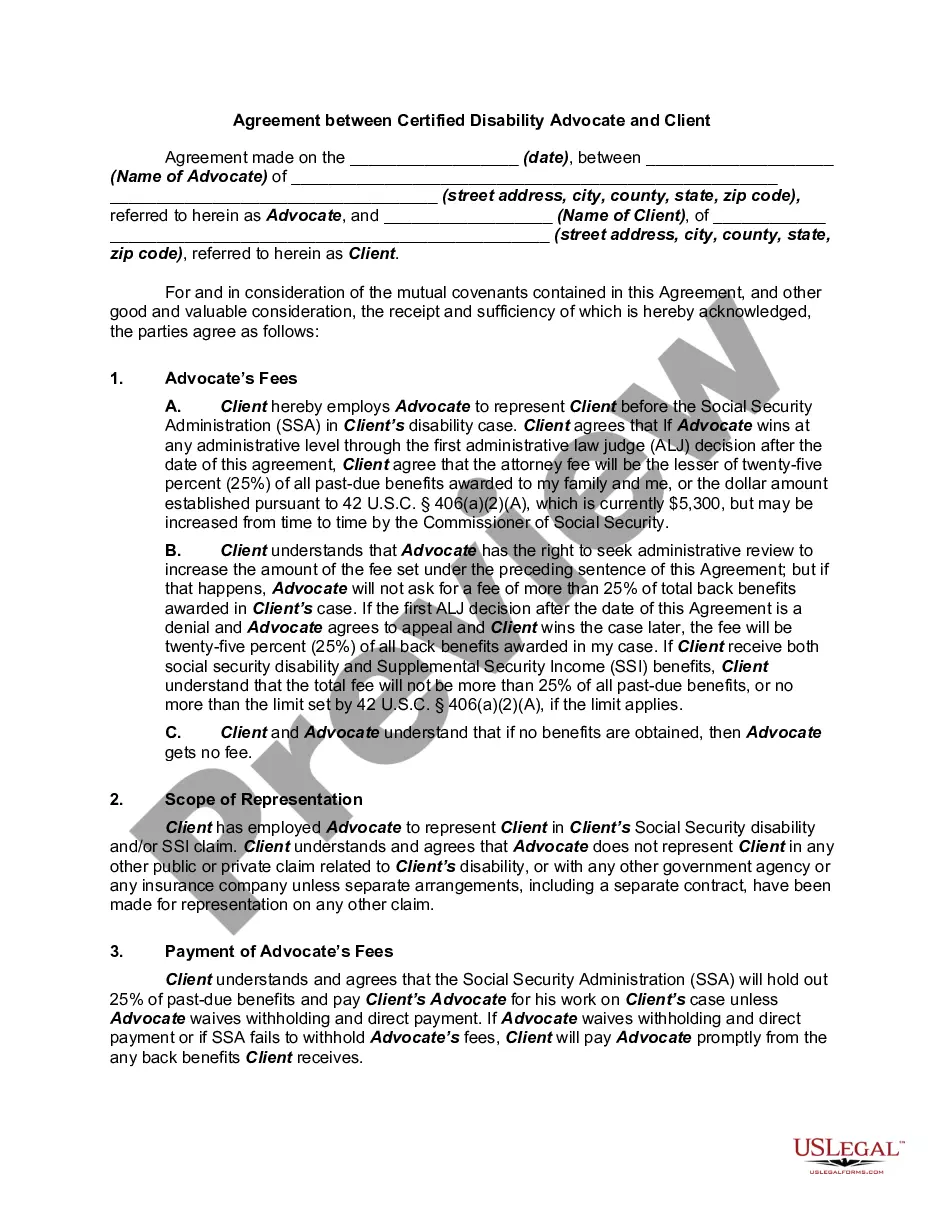
A Disability Advocate, also known as a Disability Consultant or non-attorney Representative, is a specially trained individual who assists others who are applying for Social Security disability benefits.


The duties of a Disability Advocate involve the execution of both formal and informal procedures on behalf of an applicant for Social Security disability benefits. These actions include, but are not limited to, the assessment of a case to determine the approximate percent chance of winning, and the development of a case by requesting copies of the client's medical records. By law, Social Security must consider the advocate's argument before making a final decision. If the advocate's argument is properly structured and supported by the evidence, it can greatly enhance the client's chances of winning benefits.
Free preview
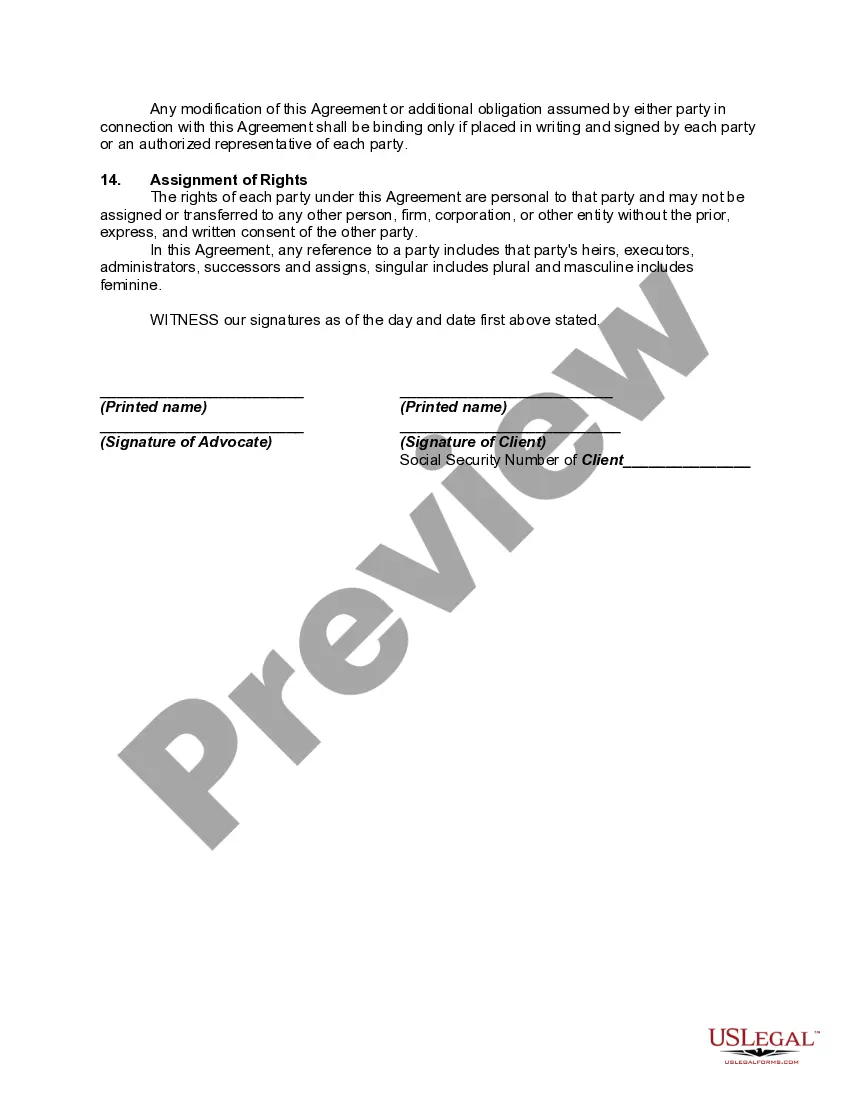
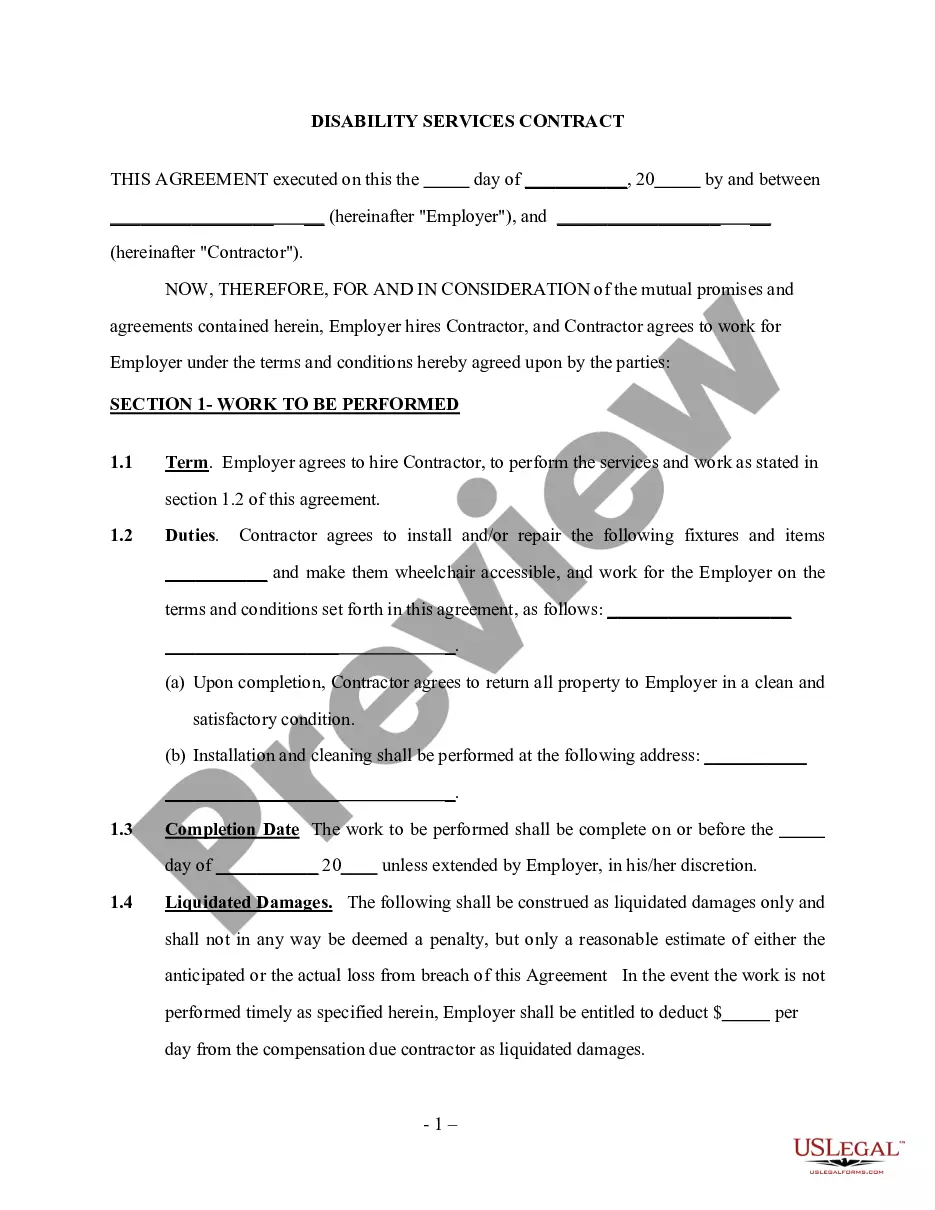
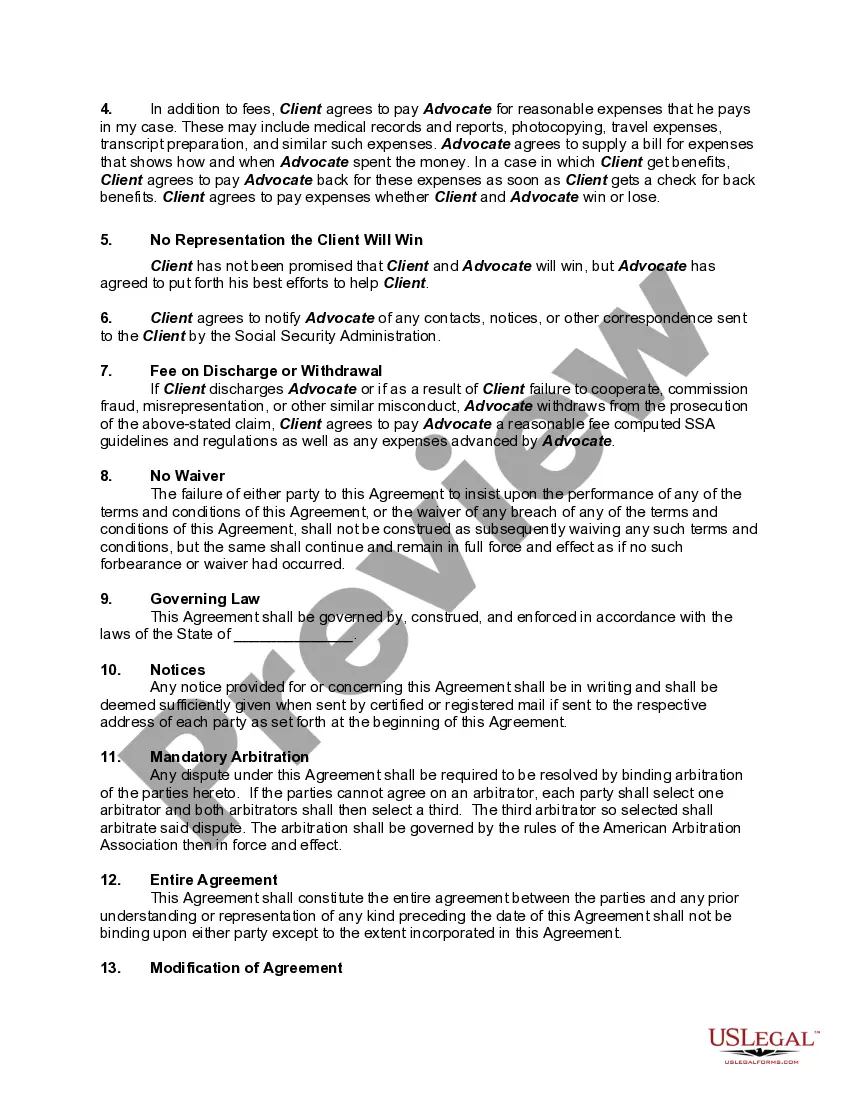
  • Preview Agreement between Certified Disability Advocate and Client
  • Preview Agreement between Certified Disability Advocate and Client
  • Preview Agreement between Certified Disability Advocate and Client

How to fill out Agreement Between Certified Disability Advocate And Client?

Are you currently in a situation where you require documents for either business or personal purposes on a regular basis.

There are numerous legal document templates available online, but finding ones you can trust is not easy.

US Legal Forms offers a wide array of template documents, such as the Maryland Agreement between Certified Disability Advocate and Client, designed to comply with state and federal regulations.

When you find the suitable document, click Get now.

Choose the pricing plan you prefer, provide the necessary information to create your account, and pay for your order using your PayPal or credit card.

  1. If you are already acquainted with the US Legal Forms website and have an account, simply Log In.
  2. After that, you can download the Maryland Agreement between Certified Disability Advocate and Client template.
  3. If you do not have an account and wish to start using US Legal Forms, follow these steps.
  4. Select the document you need and ensure it is for the correct city/state.
  5. Utilize the Review feature to examine the form.
  6. Read the description to confirm you have chosen the right document.
  7. If the document is not what you need, use the Lookup field to find the template that meets your needs.

Form popularity

FAQ

DDA certification refers to the credentials awarded to individuals who complete the necessary training and meet the standards set by the state. This certification validates the advocate's knowledge and ability to assist clients effectively. A DDA certification solidifies the Maryland Agreement between Certified Disability Advocate and Client, establishing clear expectations for both parties. This credential helps clients feel secure and understood in their advocacy journey.

To obtain a DDA license in Maryland, individuals must complete designated training and meet state requirements. They will also need to submit an application along with proof of training and clear background checks. Engaging in the Maryland Agreement between Certified Disability Advocate and Client is essential post-licensing, as it formalizes the relationship and responsibilities between the advocate and the client. This agreement enhances accountability and fosters effective communication.

Rule 19 303 in Maryland pertains to the professional conduct expected of advocates within the disability community. This rule outlines the ethical obligations that Certified Disability Advocates must uphold when representing clients. It ensures that the Maryland Agreement between Certified Disability Advocate and Client promotes trust and transparency throughout the advocacy process. Understanding this rule is critical for maintaining a strong professional reputation.

Rule 19 407 outlines specific procedures concerning the management and oversight of the Maryland Agreement between Certified Disability Advocate and Client. It emphasizes the importance of following established guidelines to ensure fair practices in advocacy. Awareness of this rule can help both clients and advocates maintain compliance while effectively navigating disability claims.

In Maryland, it is possible to take the bar exam without attending a traditional law school through an apprenticeship program. This alternative path can open opportunities for individuals interested in pursuing legal qualifications in a unique way. Understanding this process can also relate to the Maryland Agreement between Certified Disability Advocate and Client, as knowledgeable advocates can help guide clients through unconventional pathways.

Rule 5.6 in Maryland deals with restrictions on the right to practice law after professional relationships end. It emphasizes the importance of the Maryland Agreement between Certified Disability Advocate and Client in structuring ethical professional relationships. Knowing this rule can help advocates and clients ensure continued compliance and advocacy integrity.

In Maryland, a motion to dismiss can be submitted based on various legal grounds such as lack of jurisdiction, failure to state a claim, or other procedural issues. Understanding these grounds is important, especially for clients entering into the Maryland Agreement between Certified Disability Advocate and Client, as it highlights the importance of proper legal representation. Consulting with a qualified advocate can enhance your chance of success.

Rule 4.2 in Maryland governs communication with represented parties, especially in legal contexts. This rule is significant for anyone involved in the Maryland Agreement between Certified Disability Advocate and Client, as it specifies the appropriate channels for communication. Understanding these regulations helps maintain ethical standards and protects clients during their legal journeys.

Rule 19 307 addresses requirements concerning the documentation necessary for the Maryland Agreement between Certified Disability Advocate and Client. This rule outlines what information must be collected and maintained to ensure compliance. Adhering to this rule is vital for advocates supporting clients through the disability process.

Rule 19 409 in Maryland pertains to the legal requirements involved in the Maryland Agreement between Certified Disability Advocate and Client. This rule outlines the necessary terms and conditions that must be met to ensure a valid agreement. Understanding this rule is essential for both advocates and clients to protect their rights and obligations.

Trusted and secure by over 3 million people of the world’s leading companies

Maryland Agreement between Certified Disability Advocate and Client