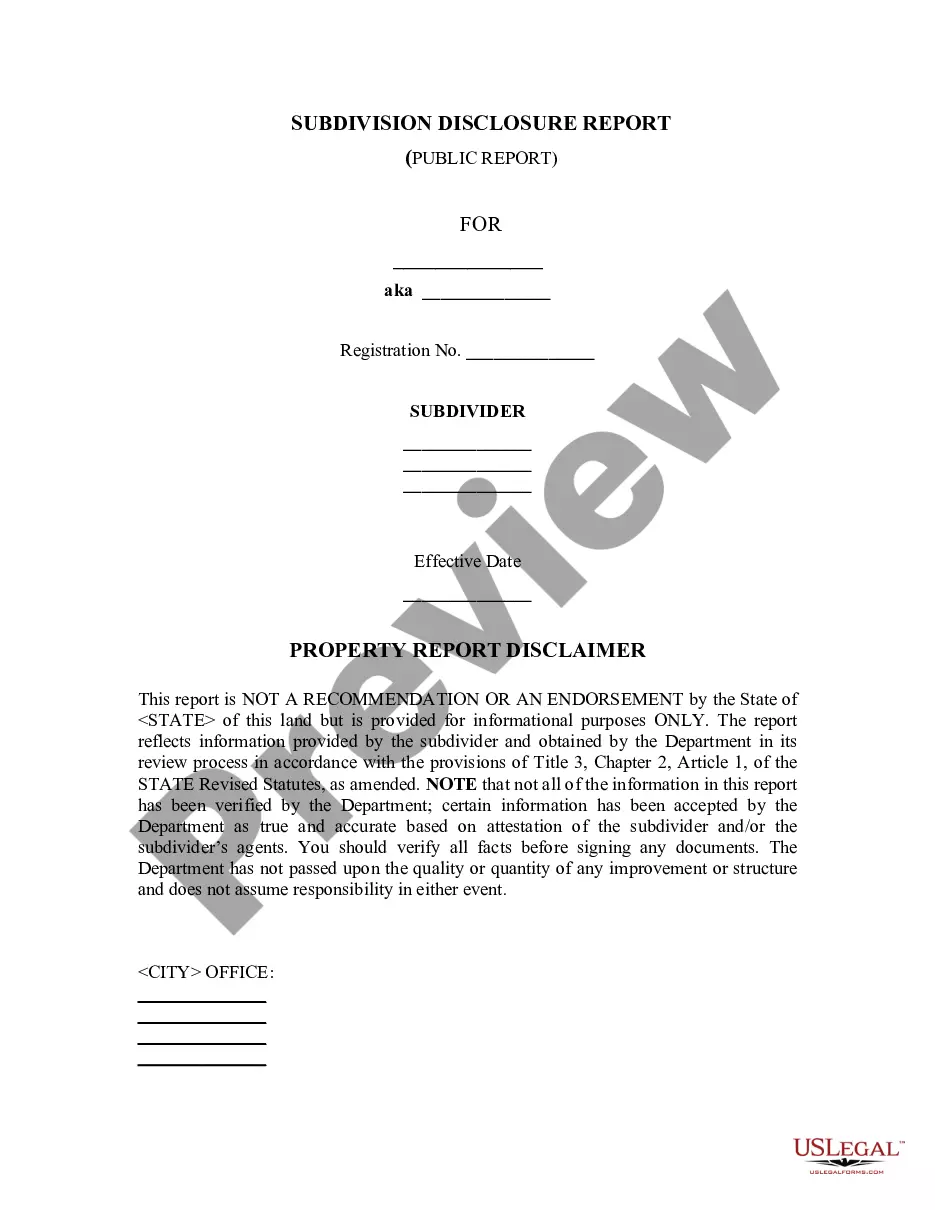
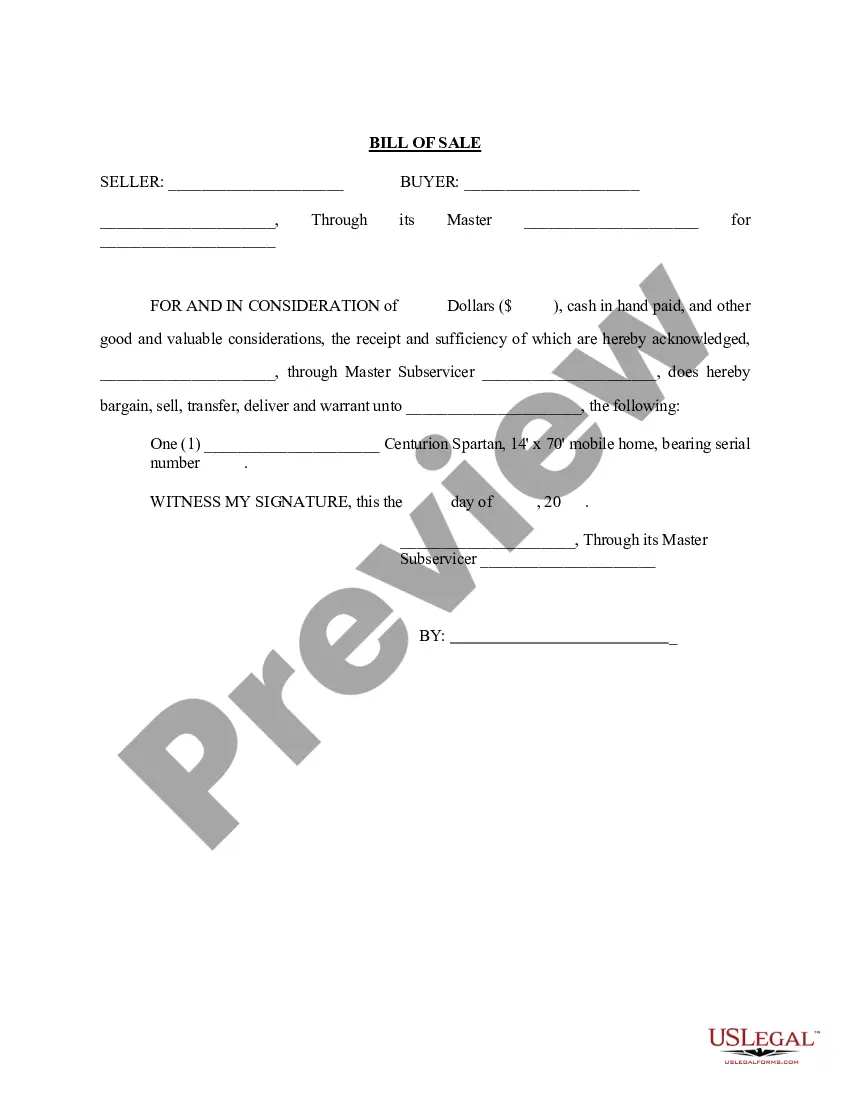
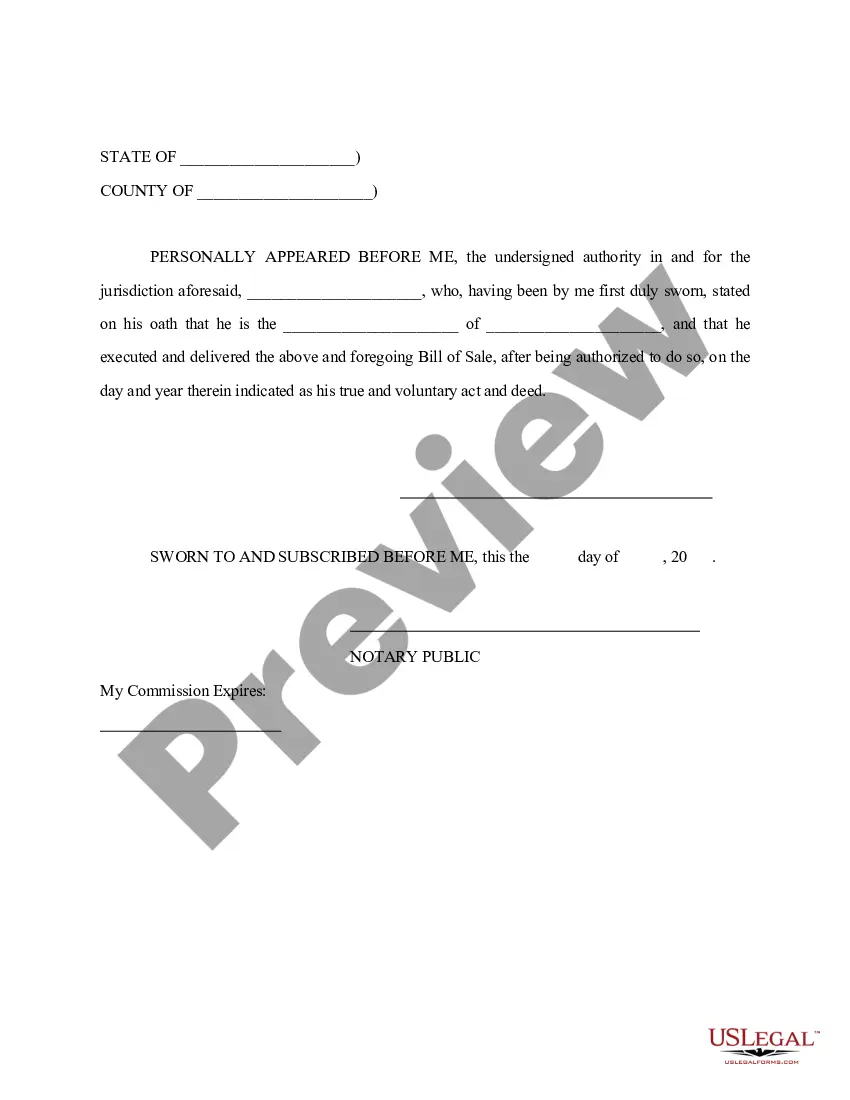
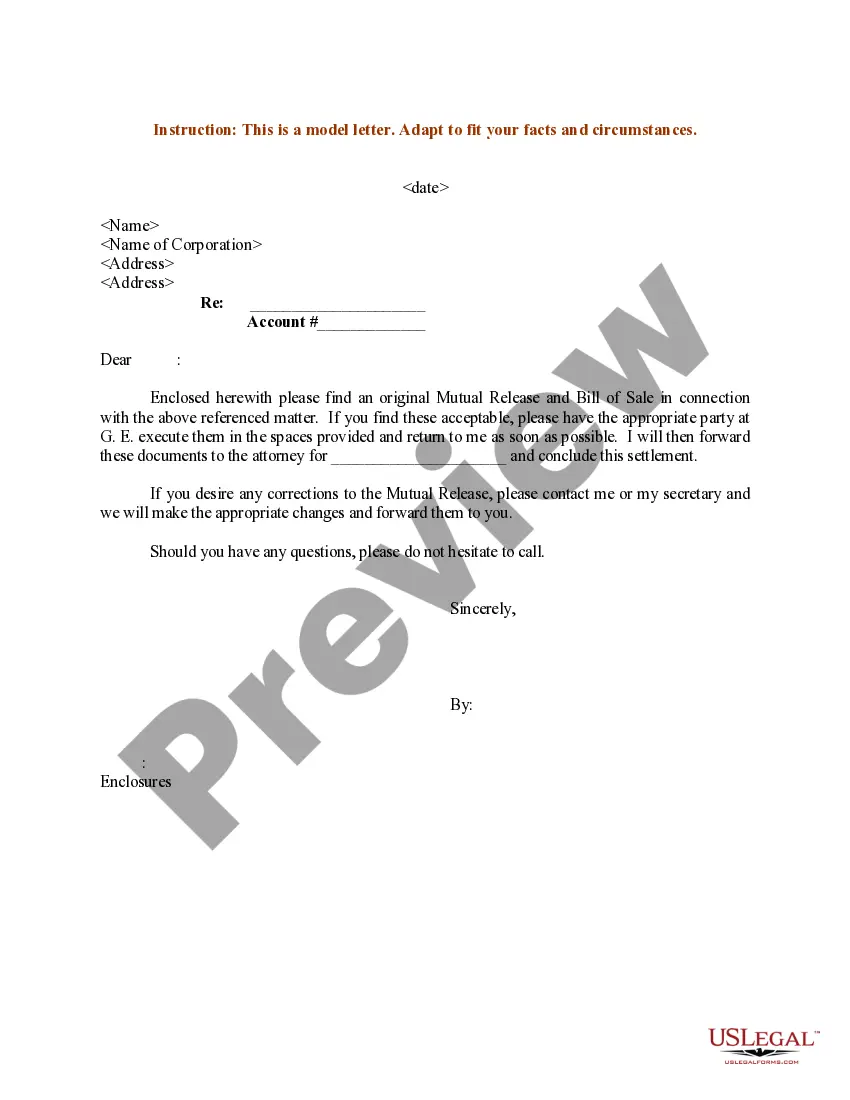
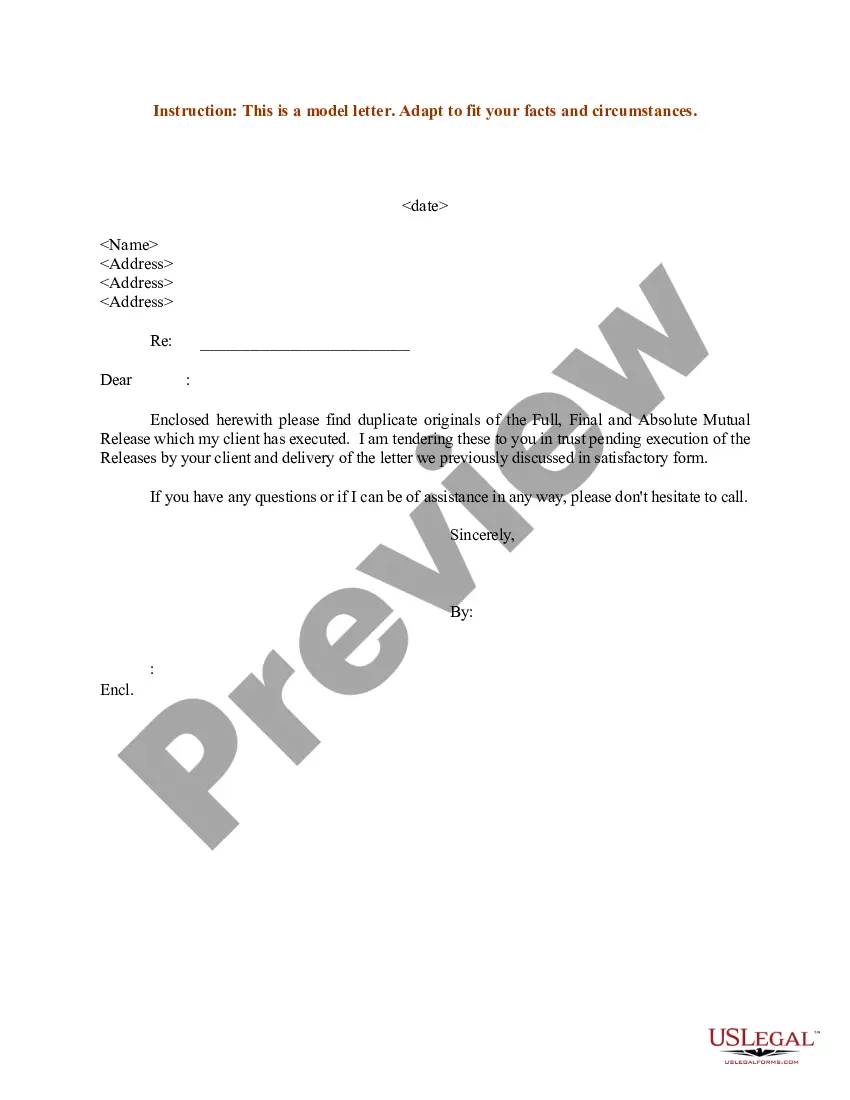
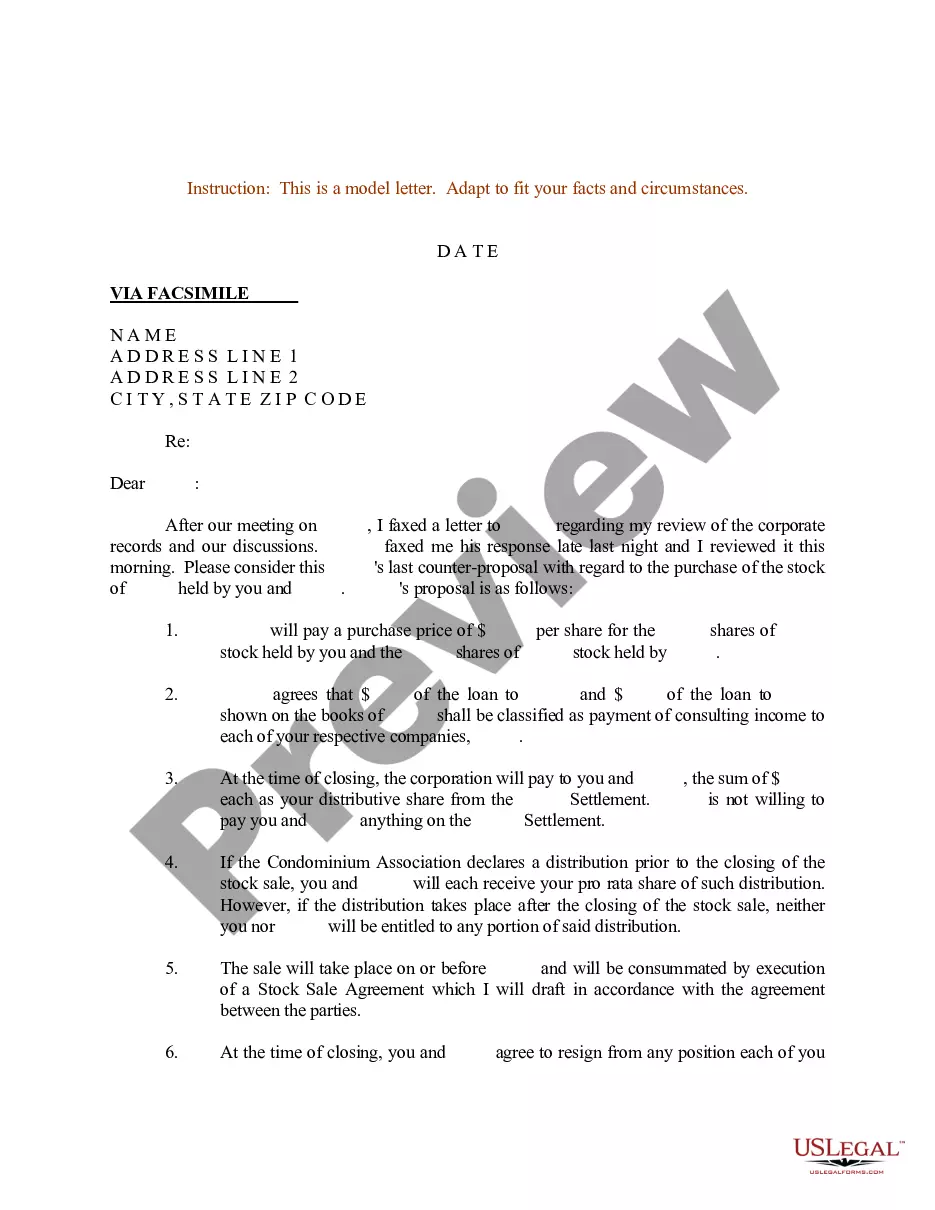
Maryland Sample Letter for Full, Final, and Absolute Mutual Release and Bill of Sale
Description


Get your form ready online
Our built-in tools help you complete, sign, share, and store your documents in one place.
Make edits, fill in missing information, and update formatting in US Legal Forms—just like you would in MS Word.
Download a copy, print it, send it by email, or mail it via USPS—whatever works best for your next step.
Sign and collect signatures with our SignNow integration. Send to multiple recipients, set reminders, and more. Go Premium to unlock E-Sign.
If this form requires notarization, complete it online through a secure video call—no need to meet a notary in person or wait for an appointment.
We protect your documents and personal data by following strict security and privacy standards.

Make edits, fill in missing information, and update formatting in US Legal Forms—just like you would in MS Word.

Download a copy, print it, send it by email, or mail it via USPS—whatever works best for your next step.

Sign and collect signatures with our SignNow integration. Send to multiple recipients, set reminders, and more. Go Premium to unlock E-Sign.

If this form requires notarization, complete it online through a secure video call—no need to meet a notary in person or wait for an appointment.

We protect your documents and personal data by following strict security and privacy standards.
Looking for another form?


How to fill out Sample Letter For Full, Final, And Absolute Mutual Release And Bill Of Sale?
Are you currently in a scenario where you require documents for either business or personal purposes almost every day.
There are numerous legal document templates accessible online, but finding ones you can trust is challenging.
US Legal Forms provides thousands of form templates, such as the Maryland Sample Letter for Full, Final, and Absolute Mutual Release and Bill of Sale, that are crafted to comply with state and federal regulations.
Once you find the right form, simply click Purchase now.
Select the payment plan you desire, provide the necessary information to process your payment, and pay for the order using your PayPal or credit card.
- If you are already familiar with the US Legal Forms website and have an account, simply Log In.
- After that, you can download the Maryland Sample Letter for Full, Final, and Absolute Mutual Release and Bill of Sale template.
- If you do not have an account and wish to start using US Legal Forms, follow these steps.
- Find the form you need and ensure it is for your correct city/region.
- Utilize the Preview button to view the form.
- Check the details to confirm that you have selected the correct form.
- If the form is not what you are looking for, use the Search field to locate the form that meets your needs.
Form popularity
FAQ
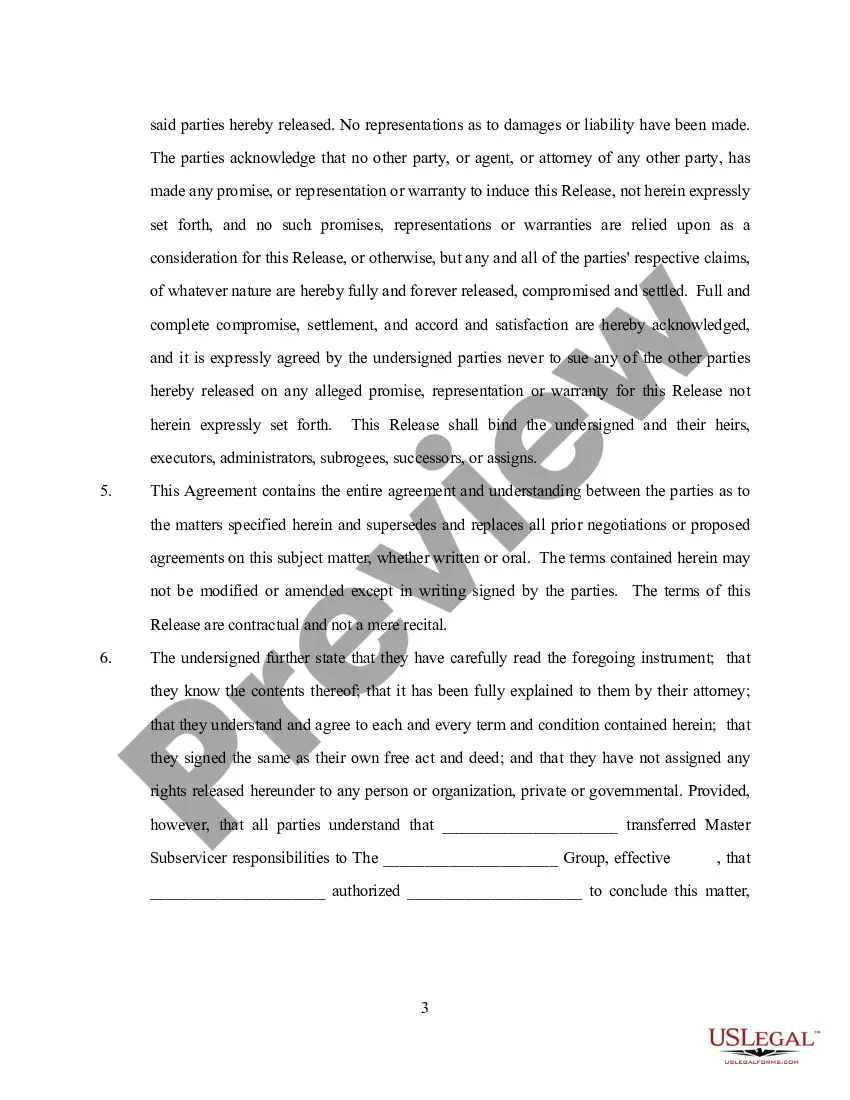
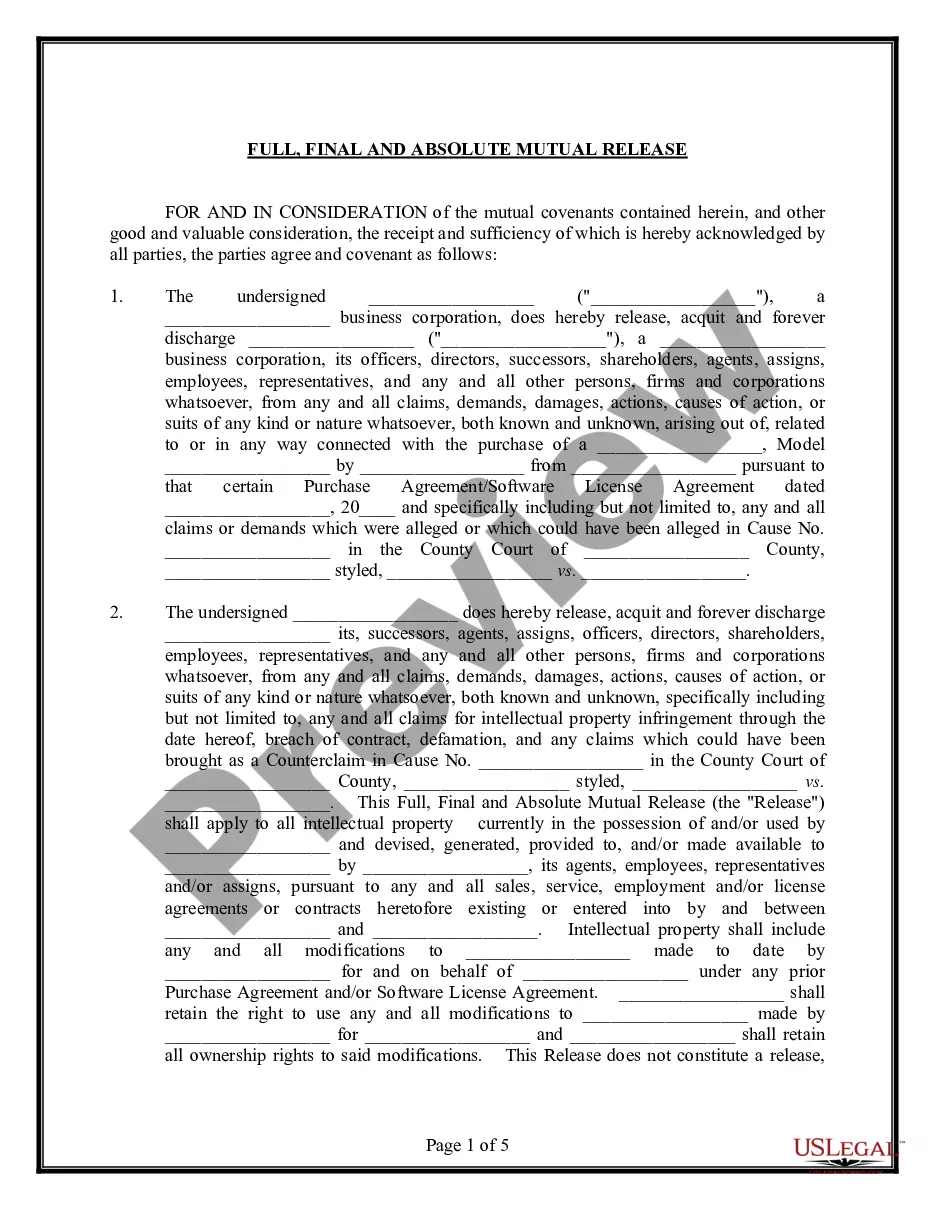
The Parties acknowledge that this is a full and final release, and that Executive and Company both intend and expressly agree that this release shall be effective as a bar to each and every claim, demand and cause of action that the claiming party may have or has against the other party as of the date of this Agreement ...
What is the main difference between a Full Release Settlement and a No Release Settlement? In a Full Release Settlement, the claimant signs a release form giving up the right to additional indemnification; in a No Release Settlement, the claimant does not sign a release form.
The release of all claims form, also called a ?liability waiver,? is an agreement establishing a resolution of each party's differences and dismissing their claims. It clears the at-fault party and their insurance company from liability. Once you, the claimant, sign it, you can not pursue any additional compensation.
The preamble of a mutual release typically gives a brief summary of the subject claim or controversy. The operative clauses then go on to specify that the parties mutually "release" each other from any and all claims, counterclaims, cross-claims, third-party claims, and/or causes of action.
I agree to the terms of this Agreement, and I am voluntarily signing this release of all claims. I acknowledge that I have read and understand this Agreement, and I understand that I cannot pursue any of the claims and rights that I have waived in this Agreement at any time in the future.
Also known as a general release or release. A written contract in which one or more parties agree to give up legal causes of action against the other party in exchange for adequate consideration (that is, something of value to which the party releasing the legal claims is not already entitled).
I agree to the terms of this Agreement, and I am voluntarily signing this release of all claims. I acknowledge that I have read and understand this Agreement, and I understand that I cannot pursue any of the claims and rights that I have waived in this Agreement at any time in the future.
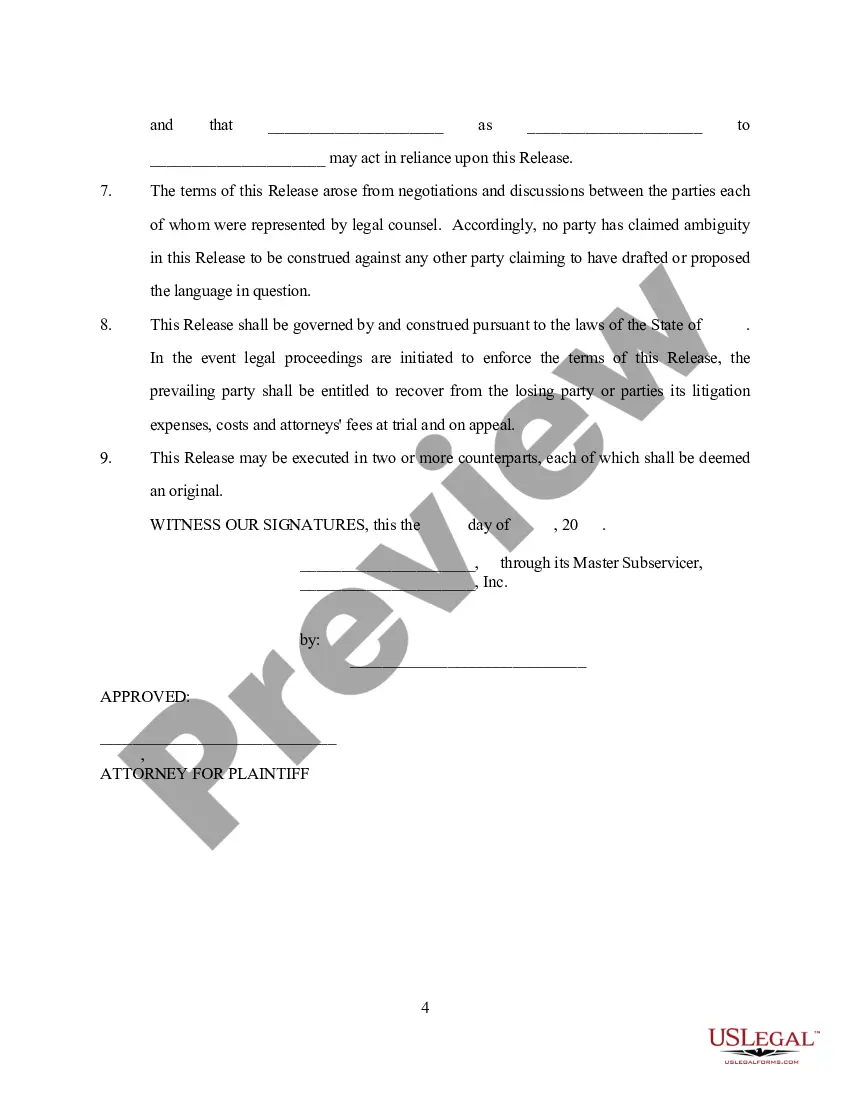
Party A and Party B do hereby irrevocably and unconditionally release, cancel, and forever discharge the other Party and its directors, officers, employees, subsidiaries, affiliates, agents, and representatives from any and all claims, complaints, causes of action, demands, damages, obligations, liabilities, losses, ...