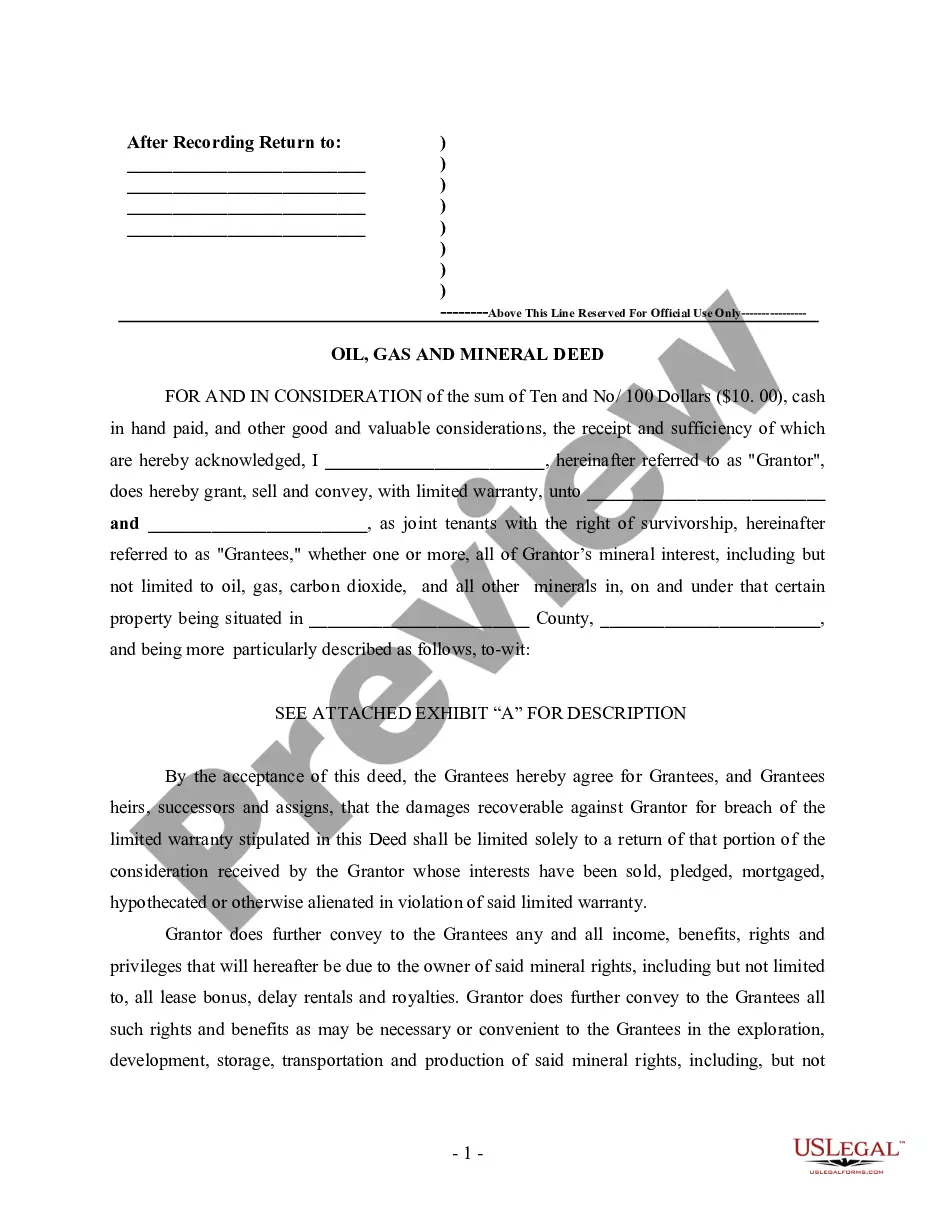
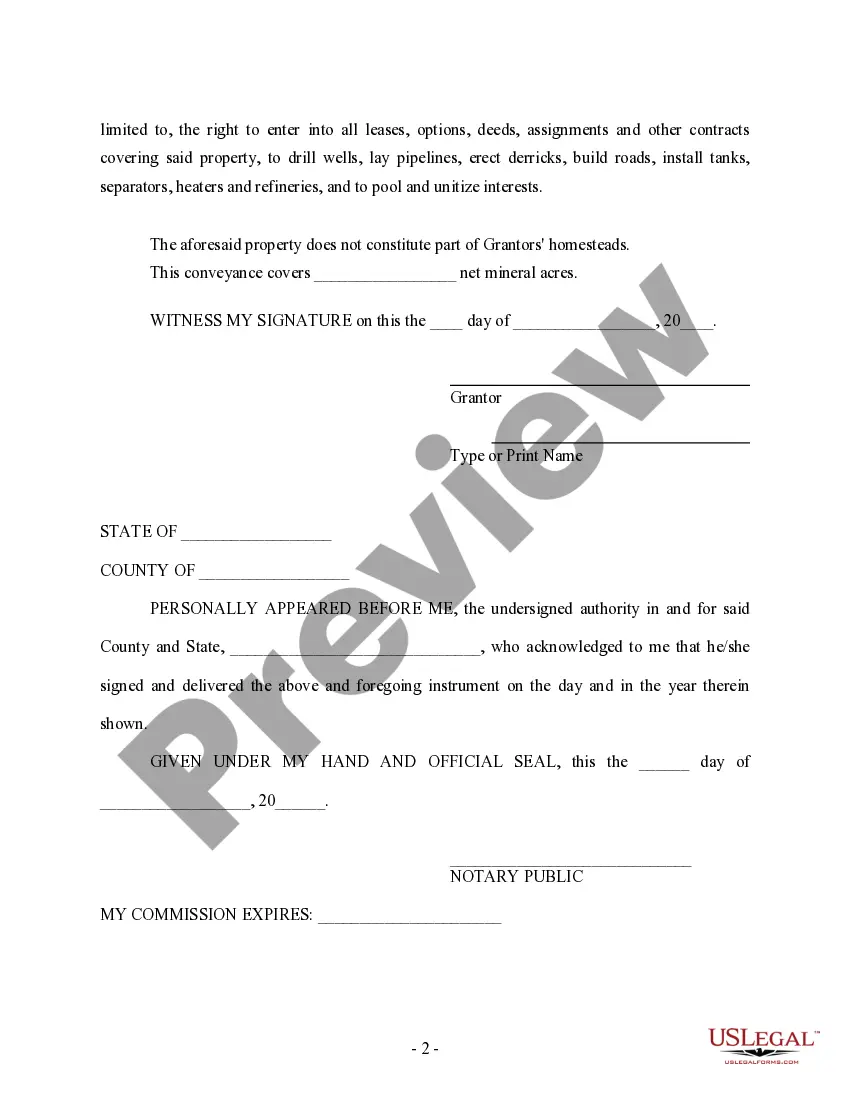
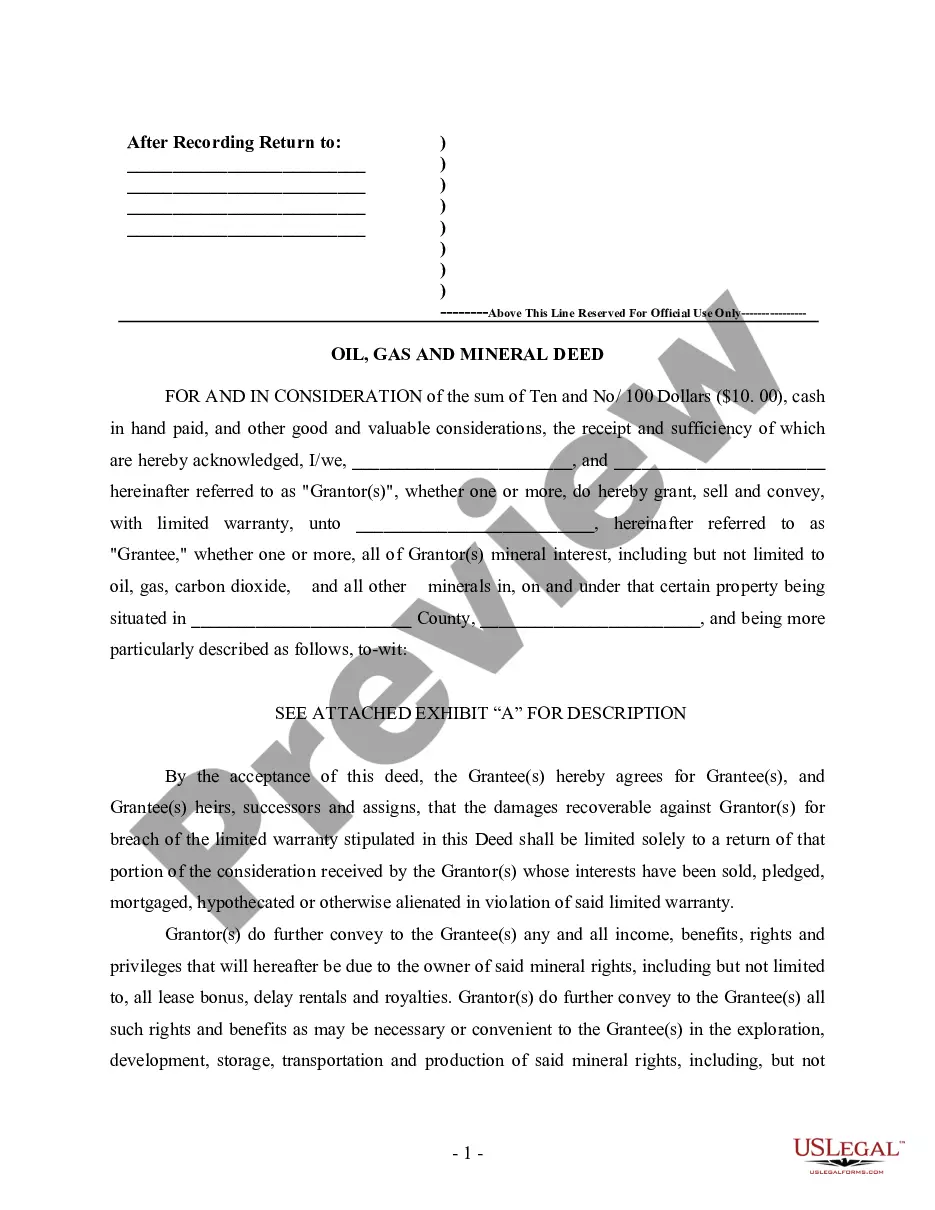
Grantor conveys, with limited warranty, unto the grantees all of grantor's mineral interest, including but not limited to oil, gas, carbon dioxide, and all other minerals in, on and under certain property described in the document.
Maryland Oil, Gas and Mineral Deed - Individual to Two Individuals
Category:
State:
Multi-State
Control #:
US-00576-A
Format:
Word;
Rich Text
Instant download
Description
Free preview
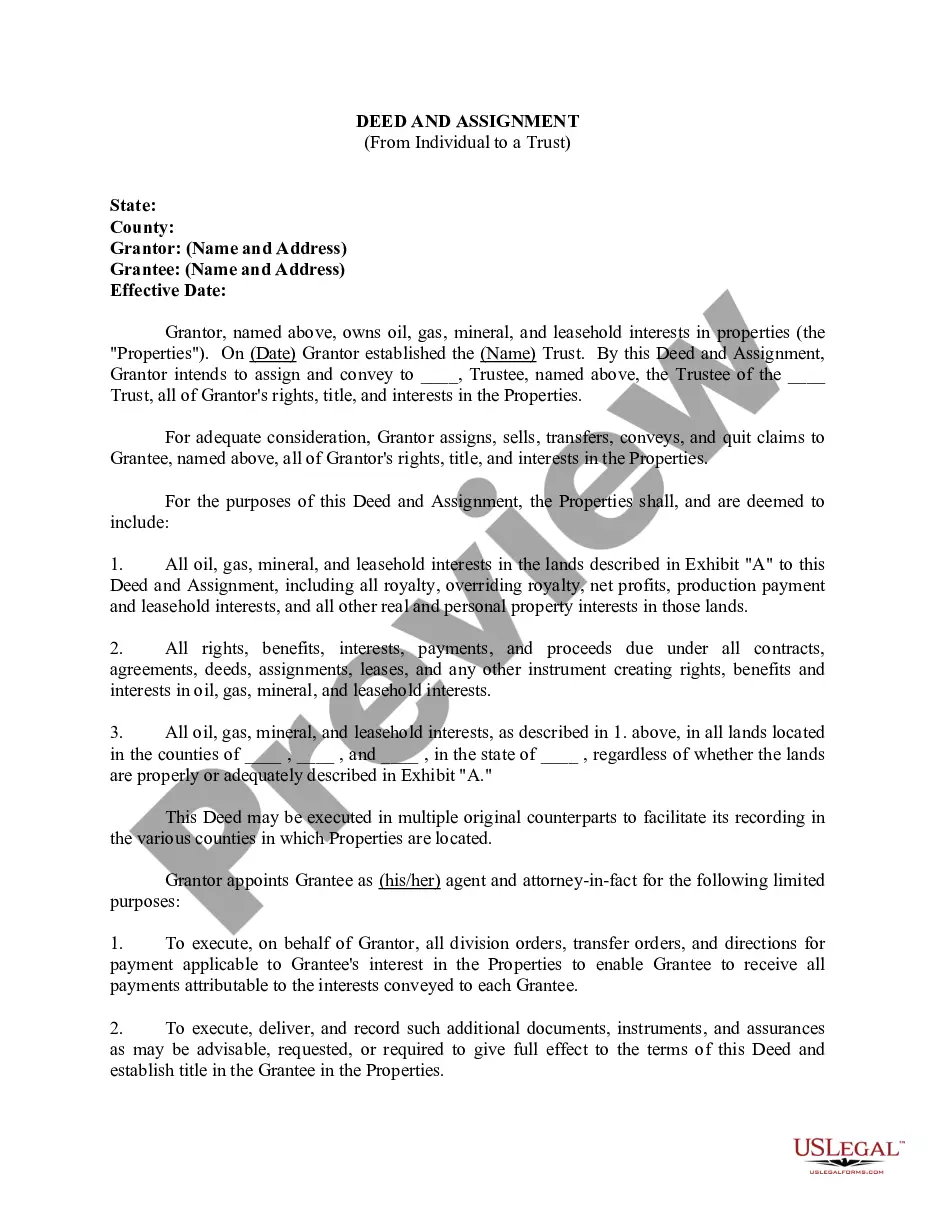
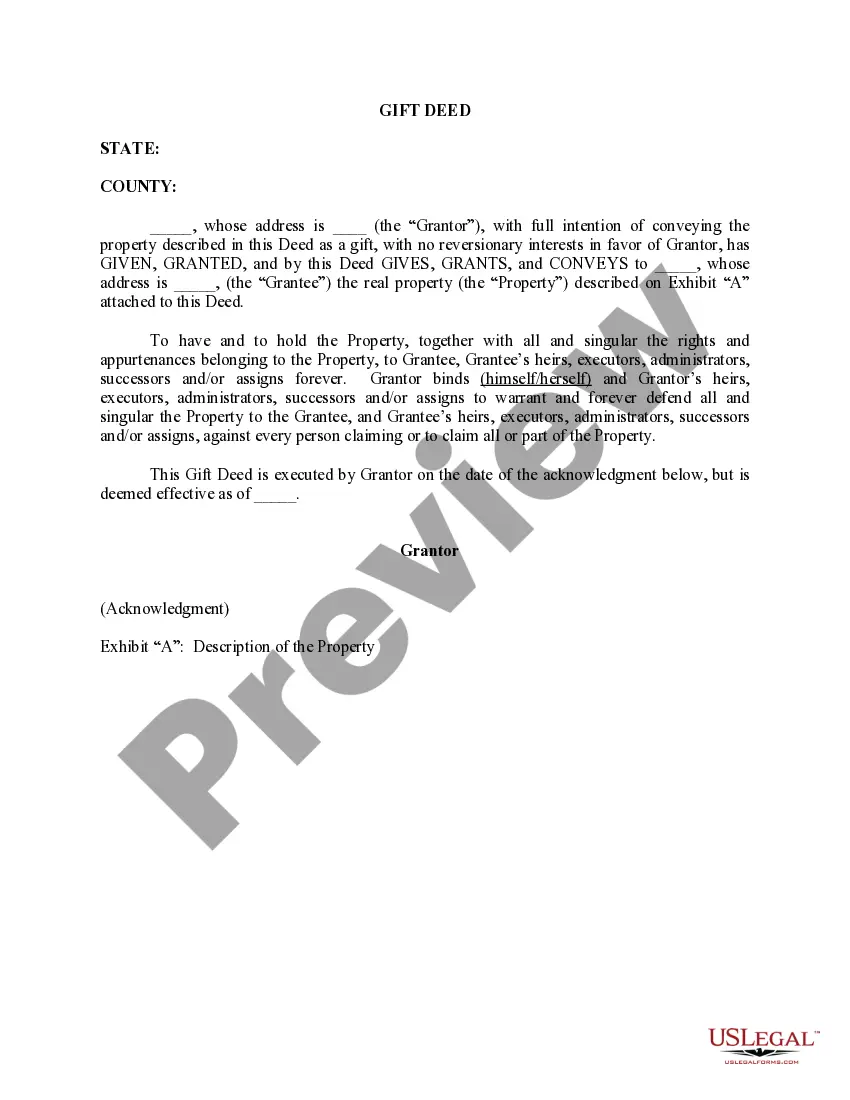
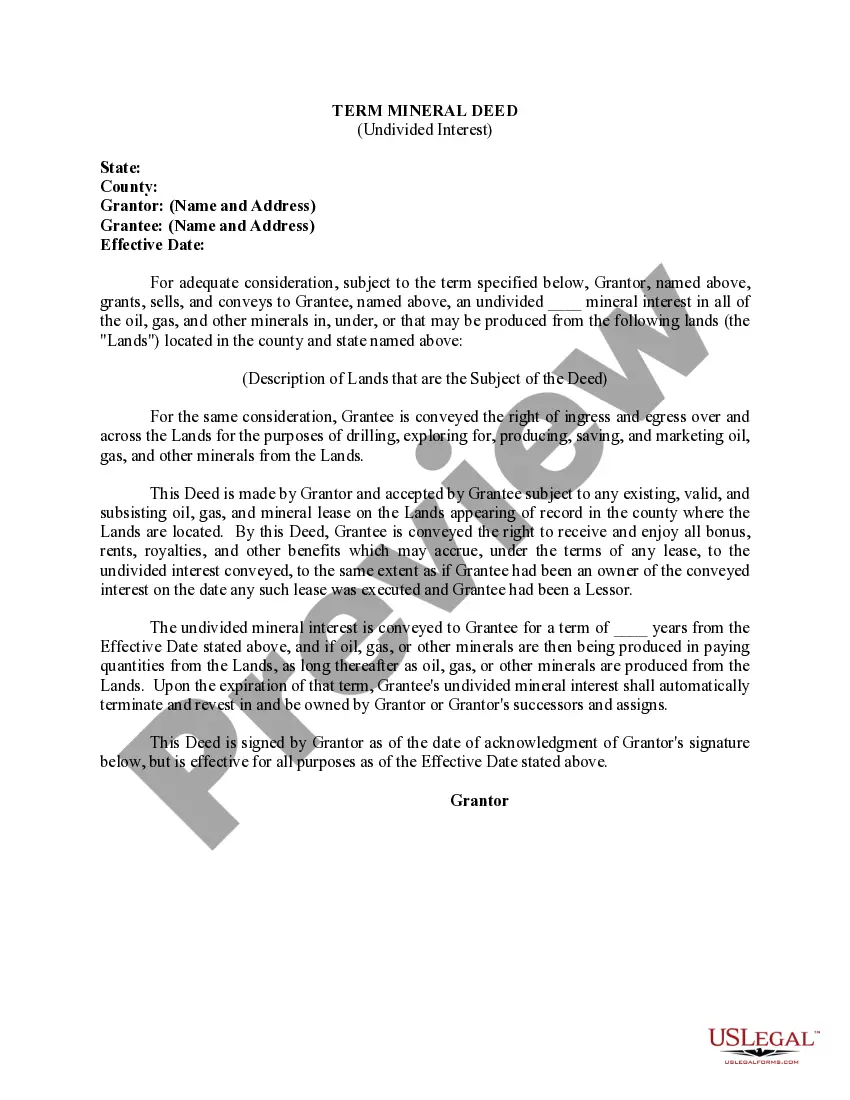
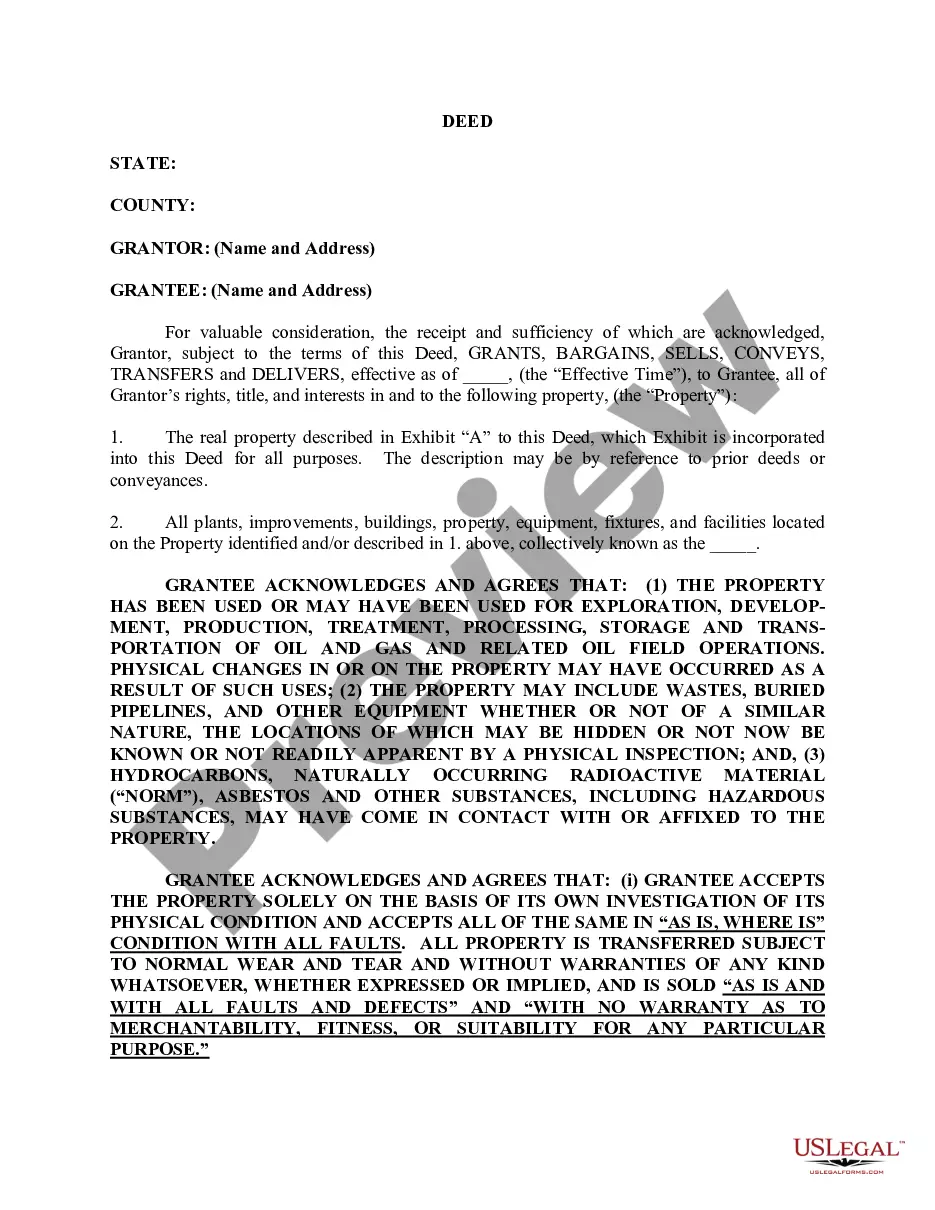
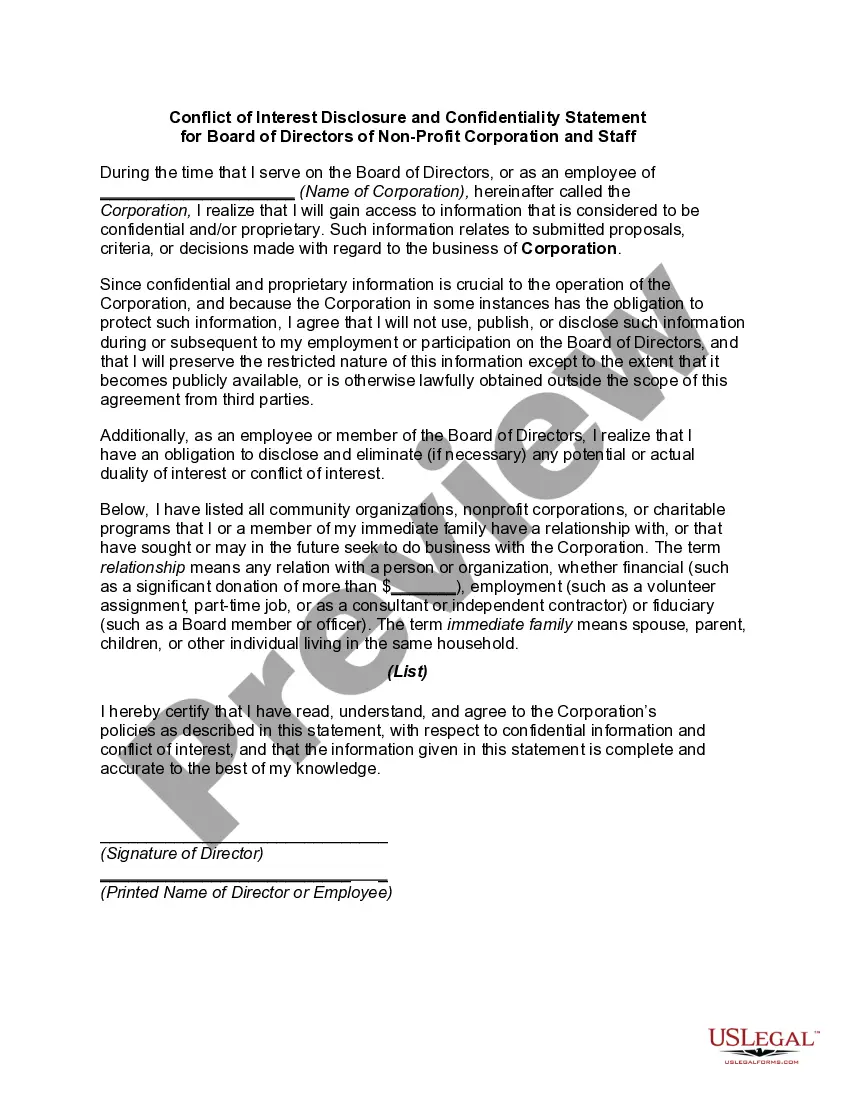

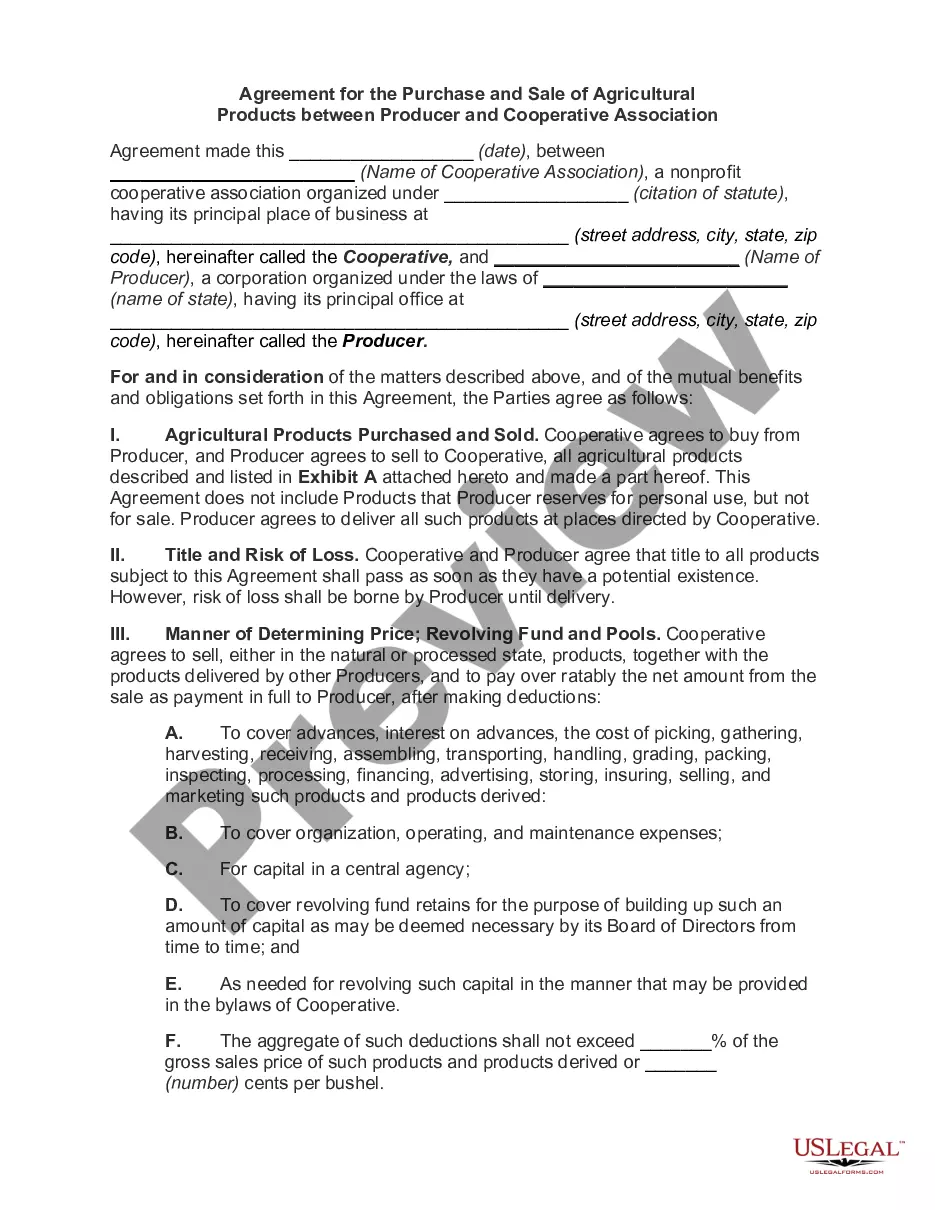
How to fill out Oil, Gas And Mineral Deed - Individual To Two Individuals?
Are you presently in a situation where you need documents for potential business or specific reasons almost every time.
There are numerous legitimate document templates accessible online, but finding ones you can rely on isn’t easy.
US Legal Forms provides thousands of form templates, such as the Maryland Oil, Gas and Mineral Deed - Individual to Two Individuals, which are designed to comply with state and federal regulations.
Utilize US Legal Forms, the most extensive collection of legal forms, to save time and avoid errors.
The service offers professionally crafted legal document templates that you can use for various purposes. Create an account on US Legal Forms and start simplifying your life.
- If you are already familiar with the US Legal Forms site and have an account, just Log In.
- Then, you can download the Maryland Oil, Gas and Mineral Deed - Individual to Two Individuals template.
- If you do not have an account and wish to start using US Legal Forms, follow these steps.
- Obtain the form you need and ensure it is for the correct city/region.
- Use the Preview option to examine the form.
- Read the description to confirm you have selected the correct form.
- If the form isn’t what you are looking for, use the Lookup box to find the form that meets your needs and requirements.
- Once you find the right form, click Get now.
- Choose the payment plan you want, provide the required information to create your account, and complete the transaction using your PayPal or Visa or Mastercard.
- Select a convenient format and download your copy.
- Find all the document templates you have purchased in the My documents section.
- You can get an additional copy of the Maryland Oil, Gas and Mineral Deed - Individual to Two Individuals anytime if needed.
- Just click the necessary form to download or print the document template.
Form popularity
FAQ
Also known as a mineral estate, mineral rights are just what their name implies: The right of the owner to utilize minerals found below the surface of property. Besides minerals, these rights can apply to oil and gas. Interestingly, mineral rights can be separate from actual land ownership.
No, questions about mineral rights are best left to an oil and gas attorney. If a buyer wants to be sure they are getting the mineral rights they will need to hire an oil and gas attorney. An agent should never try to determine if the purchaser will get the mineral rights.
Mineral rights are ownership rights that allow the owner the right to exploit minerals from underneath a property. The rights refer to solid and liquid minerals, such as gold and oil. Mineral rights can be separate from surface rights and are not always possessed by the property owner.
Whether you have an offer on the table or not, you may have good reasons to sell your mineral rights: To pursue other opportunities. If you have a nonproducing property, you might have to wait years for anything to happen ? and nothing may ever happen, even after multiple leases.
To add a name to a deed in Maryland, you must prepare a new deed that includes both the current owner's name and the new owner's name. The current owner is the grantor, and the new owner is the grantee. The new deed should include a legal description of the property.
Transfer by deed: You can sell your mineral rights to another person or company by deed. Transfer by will: You can specify who you want to inherit your mineral rights in your will. Transfer by lease: You can lease mineral rights to a third party through a lease agreement.
Owning mineral rights (often referred to as a "mineral interest" or a "mineral estate") gives the owner the right to exploit, mine, and/or produce any or all minerals they own. Minerals can refer to oil, gas, coal, metal ores, stones, sands, or salts.
Mineral rights can be divided by specific mineral commodities. For example, one company can own the mineral rights to coal, while another company owns the oil and gas rights. Consequently, it is important to know which minerals are included in a mineral deed. Some deeds specify that ?all minerals? are included.