Maryland Affidavit of Forgery
Description

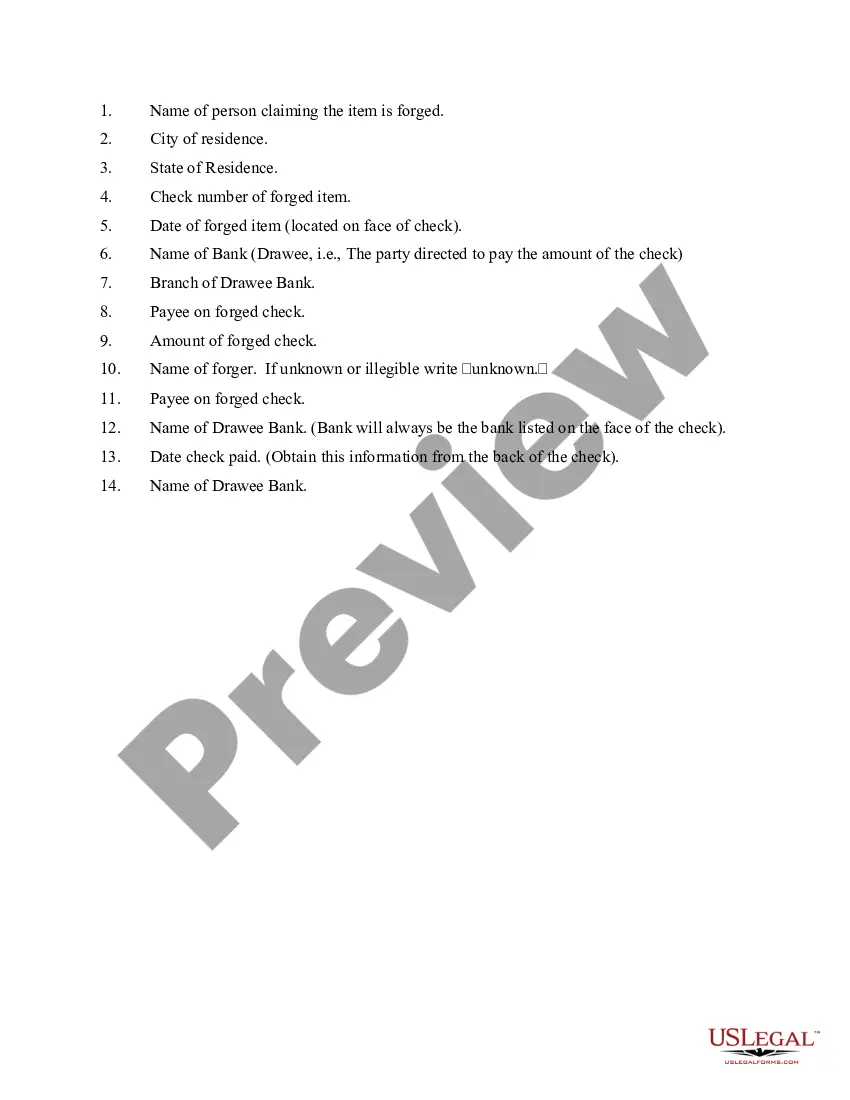
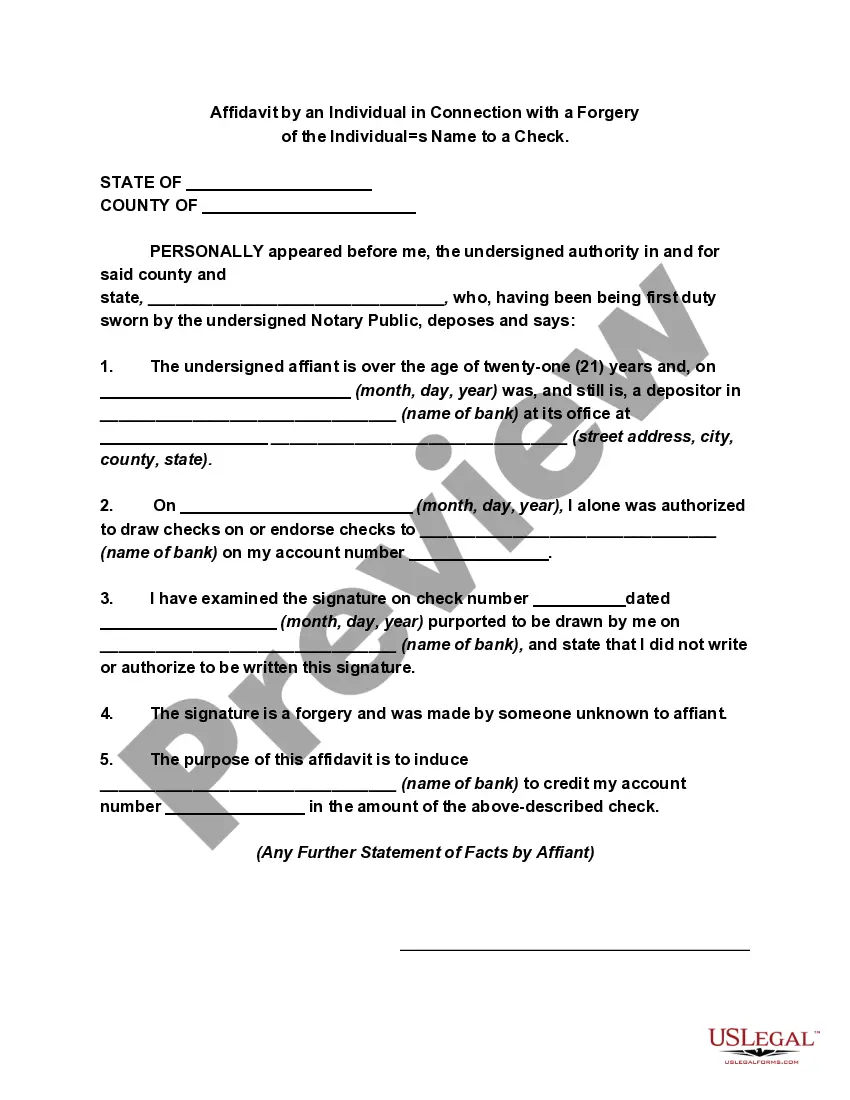
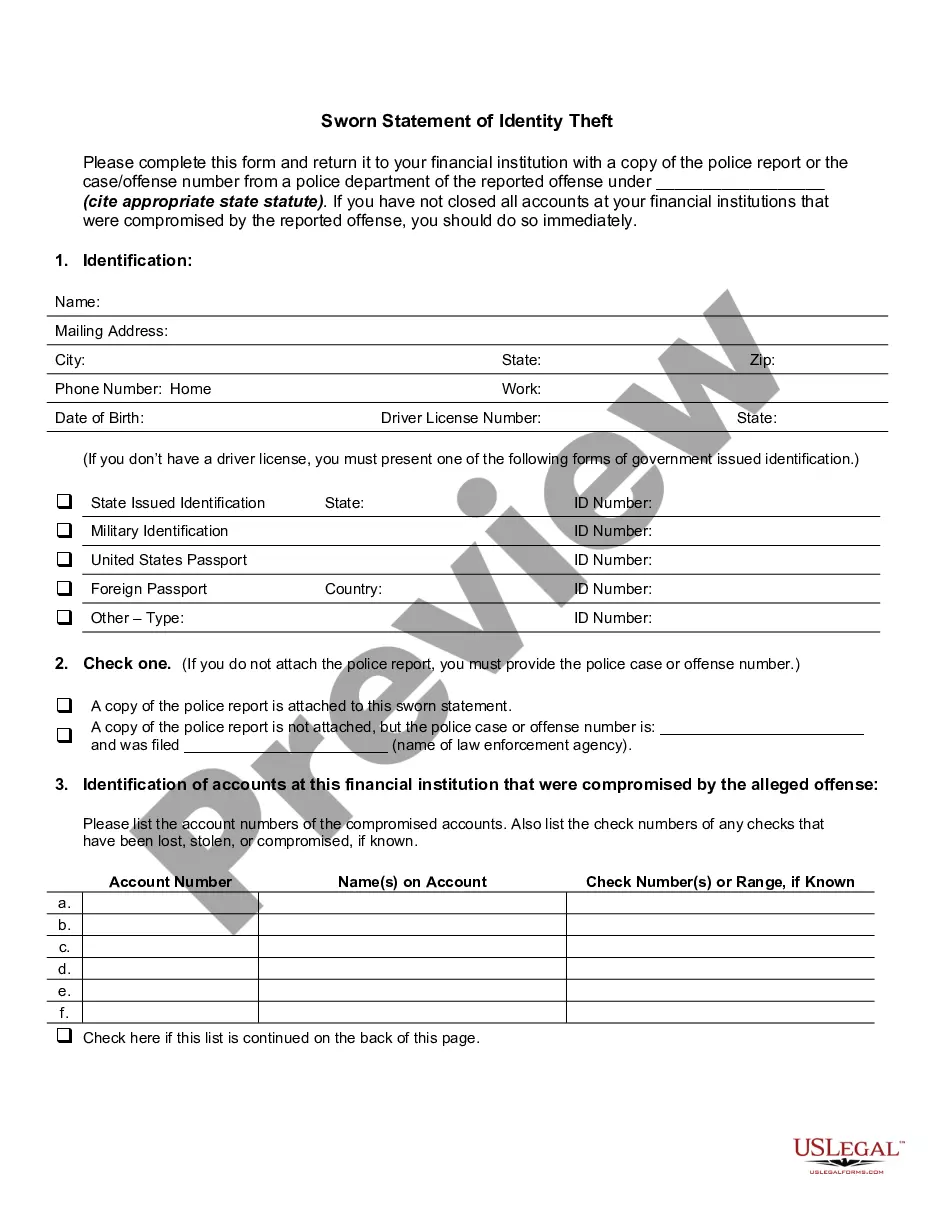
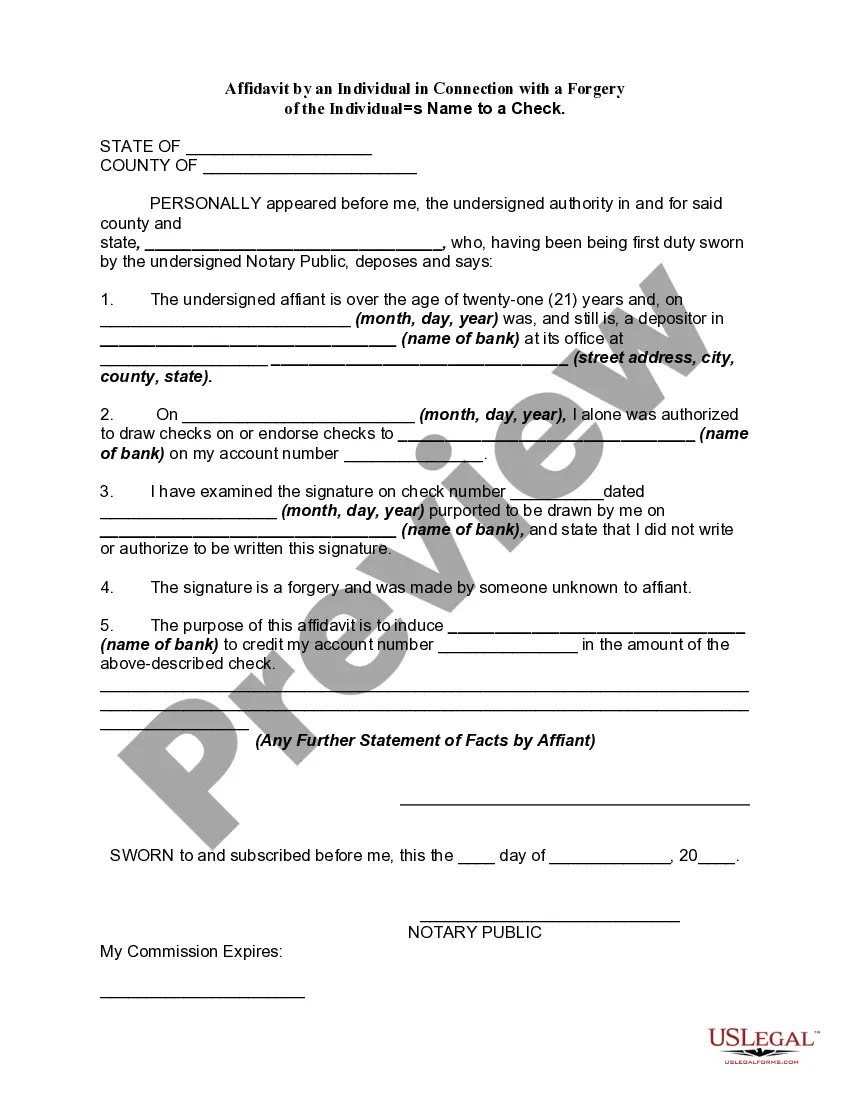
How to fill out Affidavit Of Forgery?
If you need to aggregate, download, or print authorized document templates, utilize US Legal Forms, the largest collection of legal forms available online.
Take advantage of the site’s straightforward and convenient search feature to find the documents you require.
Numerous templates for commercial and personal purposes are organized by categories and states, or keywords.
Step 4. Once you have found the form you need, click the Purchase now button. Choose your preferred pricing plan and enter your information to register for an account.
Step 5. Complete the payment. You may use your credit card or PayPal account to finalize the transaction.
- Utilize US Legal Forms to locate the Maryland Affidavit of Forgery in just a few clicks.
- If you are already a US Legal Forms user, Log In to your account and click the Download button to obtain the Maryland Affidavit of Forgery.
- You can also access forms you previously saved in the My documents section of your account.
- If you are using US Legal Forms for the first time, follow the steps below.
- Step 1. Ensure you have selected the form for the correct city/state.
- Step 2. Use the Preview option to review the form's content. Remember to read the description.
- Step 3. If you are not satisfied with the form, use the Search bar at the top of the screen to find other versions of the legal form template.
Form popularity
FAQ
A Maryland Affidavit of Forgery is a legal document that helps individuals declare that a specific signature or document is not genuine. This affidavit serves as a formal declaration, assisting in the resolution of disputes related to forged documents. By filing this affidavit, you can protect your rights and clarify the authenticity of signatures on important papers. Utilizing platforms like US Legal Forms simplifies the process of creating and filing your affidavit, ensuring that you meet all legal requirements.
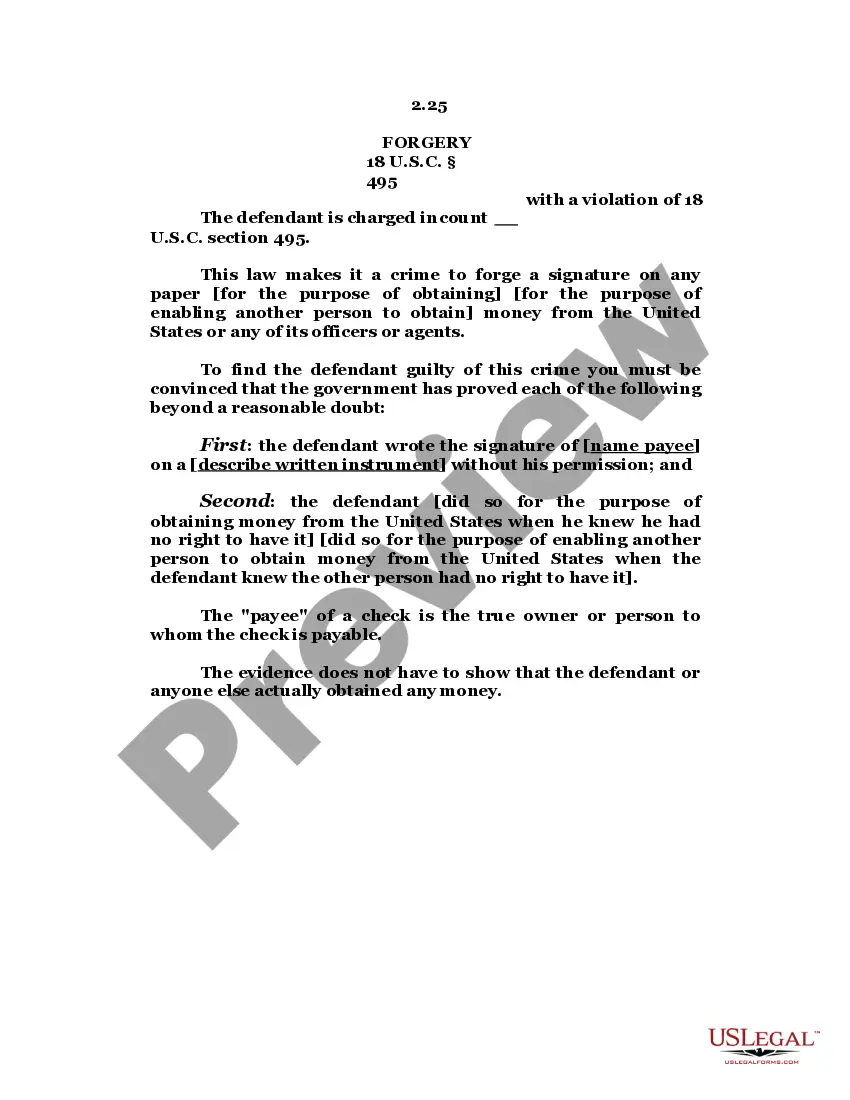
To convict a defendant in a forgery case, the prosecutor must prove: The defendant committed forgery by creating a false document, materially altering an existing document, or by using an unauthorized document; and. The defendant committed the criminal forgery with the intent to commit fraud.
In order to be guilty of forgery in Maryland, you must make a false writing, or alter an existing document, with the intent to defraud someone else. The State does not have to prove exactly which person you intended to defraud, but they do have to prove that you intended to defraud another person.
By producing sufficient evidence at trial. In this case, the most likely sources of evidence would either be eye witnesses (if someone witnessed the forgery) or expert testimony (i.e., handwriting experts). Any experts would have done an analysis and would testify about the results of their analysis.
Just how is forgery proven? A: The simplest way to demonstrate the signature is not yours is through an eye witness who saw the person committing the forgery. Since doing so may not be likely, a question arises: Is the person who signed claiming they were authorized to sign on your behalf?
A comparison is made through the standards between the signed document and the signature of the individual. An identical match to a previous signature could prove a forgery, or it could prove that the person is the same. The instance may depend on how often the individual signs his or her name exactly the same.
Simple Forgery This type of forgery is the easiest to detect because the forger makes no effort to simulate the signature they are trying to produce. Because the signature is generally written in the forger's own handwriting, it could be identified through a handwriting comparison.
Penalties of Forgery For something on the lowest end of the spectrum, it would be a misdemeanor. That is not greater than three years all the way up to a felony with the maximum penalty of 10 years. It depends on whether they committed the actual forgery.
Forgery is a complex process to prove and frequently involves the services of a fraud or forensic accountant. Forensic document and handwriting experts examine physical evidence to prove alteration and/or simulation.