Maryland Revised Uniform Anatomical Gift Act Donation
About this form
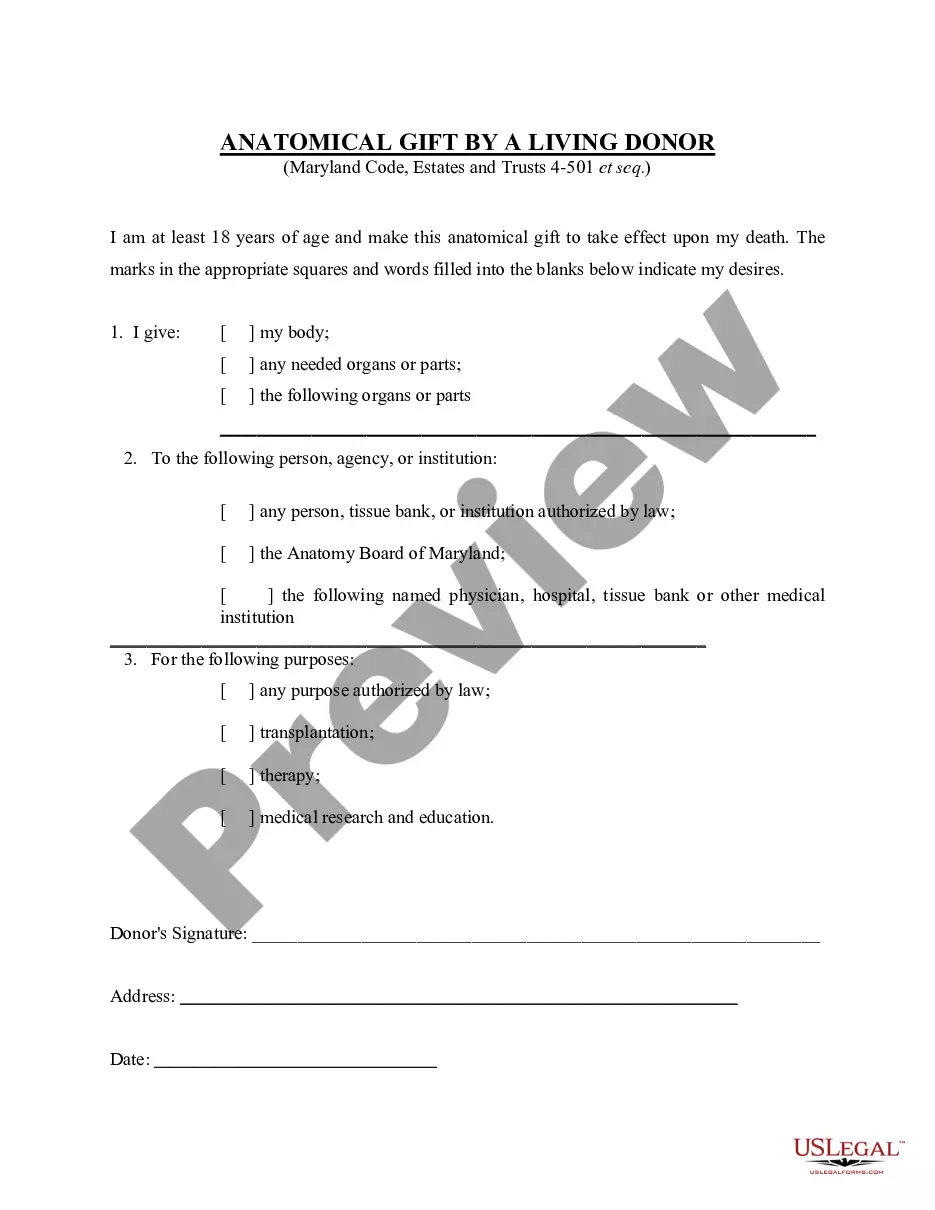
The Revised Uniform Anatomical Gift Act Donation form allows individuals to specify their wishes regarding organ and body part donations upon death. This form is crucial for ensuring that wishes are legally documented and respected, distinguishing it from informal verbal agreements or intentions that may not hold up legally.
Main sections of this form
- Donor's personal information: The donor specifies their name and address.
- Gift designation: The donor marks the parts of the body or organs they wish to donate.
- Authorized recipient: The form includes options for naming a specific individual, agency, or institution to receive the donation.
- Purpose of the donation: Includes options such as transplantation, therapy, or medical research.
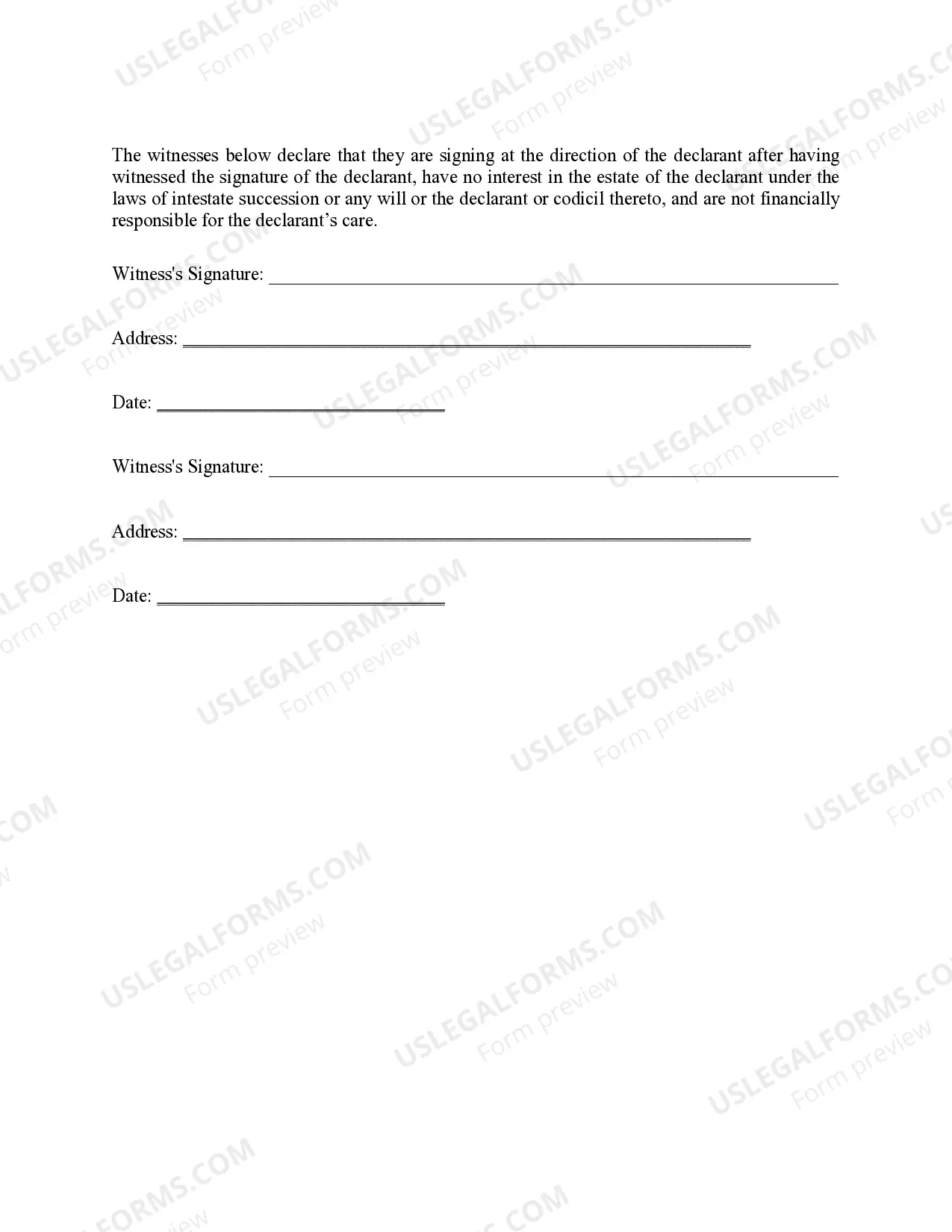
- Witness signatures: Requires signatures from two witnesses who are not beneficiaries.
- Notarization: Must be signed in the presence of a notary public for validity.
When this form is needed
This form should be used by individuals who want to document their intentions regarding anatomical gifts clearly and legally. It is particularly relevant for those who have considered organ donation and wish to ensure their wishes are honored after their death. Using this form can help prevent family disputes and provide clarity about the donor's preferences.
Who this form is for
- Individuals aged 18 and over who are legally competent to make decisions about their bodies.
- People who wish to donate all or part of their body upon death.
- Those who want to specify the intended recipient(s) of their anatomical gift.
- Individuals desiring to contribute to medical research or therapy through organ donation.
How to complete this form
- Enter your personal information, including your name and address.
- Indicate whether you wish to donate your entire body, any needed organs or parts, or specify particular organs.
- Choose the person, agency, or institution that will receive your donation.
- Select the purpose of your donation (e.g., transplantation, therapy, medical research).
- Sign the form in the presence of two witnesses who must also sign.
- Have the document notarized to ensure its legal validity.
Notarization requirements for this form
Yes, this form must be notarized to be legally valid. US Legal Forms offers integrated online notarization services available 24/7. This allows you to complete your document safely and securely via a video call, ensuring that all legal requirements are met without needing to travel.
Get your form ready online
Our built-in tools help you complete, sign, share, and store your documents in one place.
Make edits, fill in missing information, and update formatting in US Legal Forms—just like you would in MS Word.
Download a copy, print it, send it by email, or mail it via USPS—whatever works best for your next step.
Sign and collect signatures with our SignNow integration. Send to multiple recipients, set reminders, and more. Go Premium to unlock E-Sign.
If this form requires notarization, complete it online through a secure video call—no need to meet a notary in person or wait for an appointment.
We protect your documents and personal data by following strict security and privacy standards.

Make edits, fill in missing information, and update formatting in US Legal Forms—just like you would in MS Word.

Download a copy, print it, send it by email, or mail it via USPS—whatever works best for your next step.

Sign and collect signatures with our SignNow integration. Send to multiple recipients, set reminders, and more. Go Premium to unlock E-Sign.

If this form requires notarization, complete it online through a secure video call—no need to meet a notary in person or wait for an appointment.

We protect your documents and personal data by following strict security and privacy standards.
Mistakes to watch out for
- Failing to have the form signed by two witnesses.
- Not including the required notarization of signatures.
- Leaving parts of the form blank, which can lead to ambiguity.
- Not clearly specifying the organs or body parts intended for donation.
Advantages of online completion
- Convenient access: Download and fill out the form from the comfort of your home.
- Editability: Make changes to your donation preferences easily.
- Legal reliability: Access to a document prepared in accordance with state laws.
- Quick retrieval: Easily store and retrieve your document when needed.
Key takeaways
- The Revised Uniform Anatomical Gift Act Donation form enables legal documentation of organ donation wishes.
- It requires witness signatures and notarization for validity.
- Use this form to ensure your donation preferences are honored and to reduce potential disputes among family members.
Looking for another form?

Form popularity
FAQ
Contact us. For questions or information about whole-body donation, contact Mayo Clinic's Department of Anatomy at 507-284-2693. You may also request an information packet using this online form.
One reason for this is the belief that body donation can be expensive. On the contrary, there are no direct costs for donating your body to science. In fact, it can even save you and your family from paying steep funeral costs.
Certain conditions such as HIV/AIDS, Hepatitis B or C, COVID-19 (symptoms, exposure, or diagnosis), extremely high or low body mass index (BMI), consent issues, location of residence or passing, legal issues, condition of body at the time of passing, or any inability to place the donation with current medical research
For information about making a gift, call 1-855-852-8129 or email development@mayo.edu. To make a gift, make checks payable to Mayo Clinic Health System, or click on "Donate Now" above.
The potential donor has an infectious or contagious disease (such as HIV/AIDS, hepatitis B or hepatitis C, or prion diseases). The next of kin objects to the donation of the body. The body is not acceptable for anatomical study (extremely emaciated or extremely obese).
One reason for this is the belief that body donation can be expensive. On the contrary, there are no direct costs for donating your body to science. In fact, it can even save you and your family from paying steep funeral costs.
Any person wishing to donate their body can make prior arrangements with the local medical college, hospital, or an NGO, before death. Individuals may request a consent form from a medical institution or an NGO, who will then give information about policies and procedures followed after the potential donor is deceased.