Maryland Grant of Storm Water Management Easement and Right of Way
Overview of this form
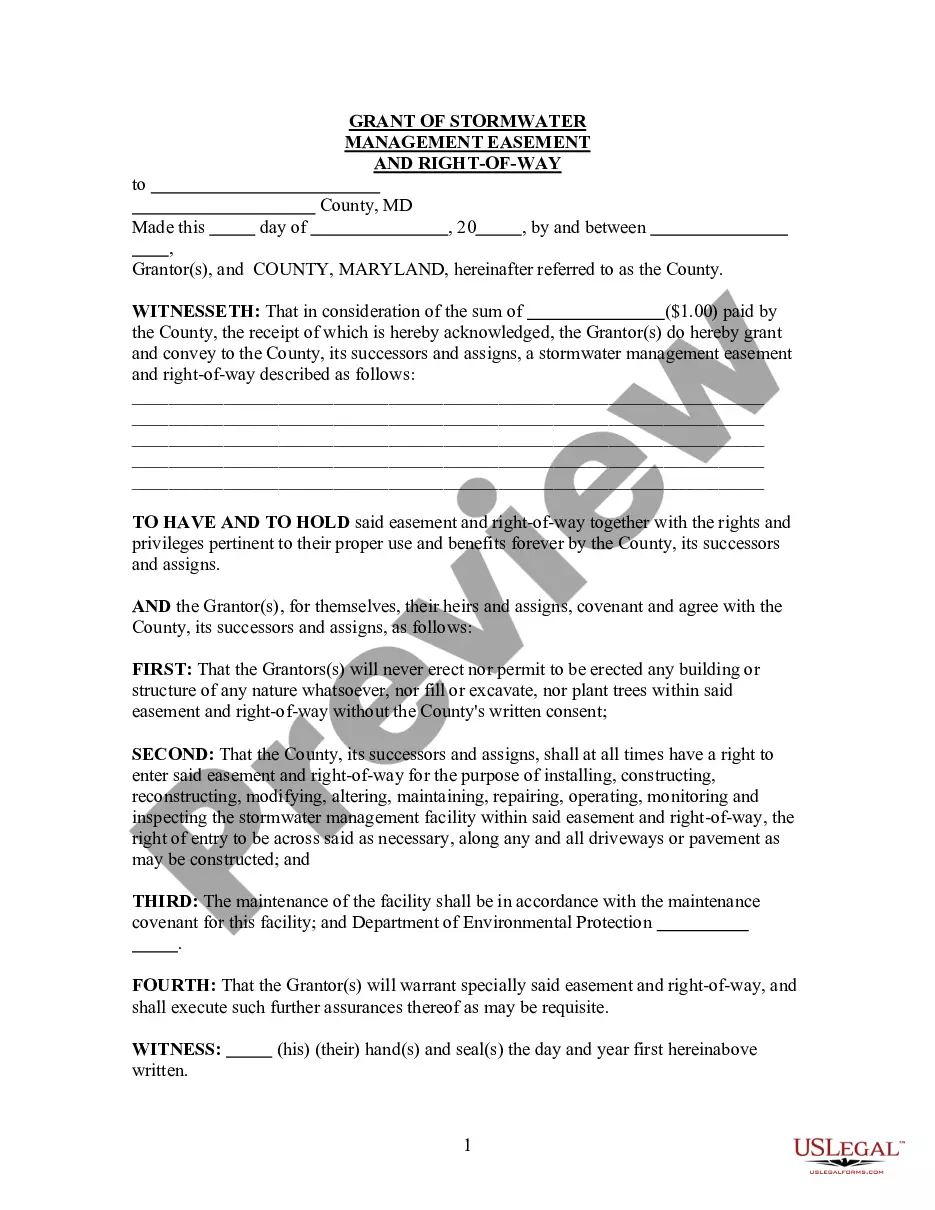
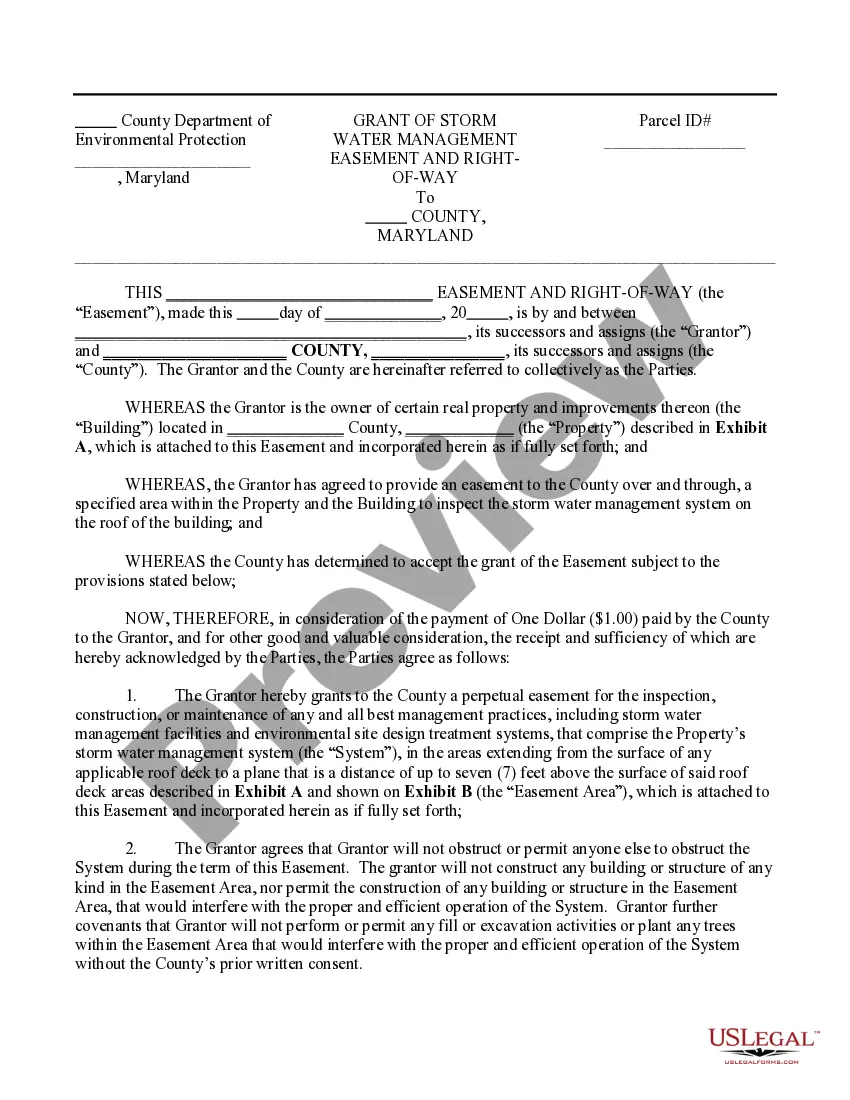
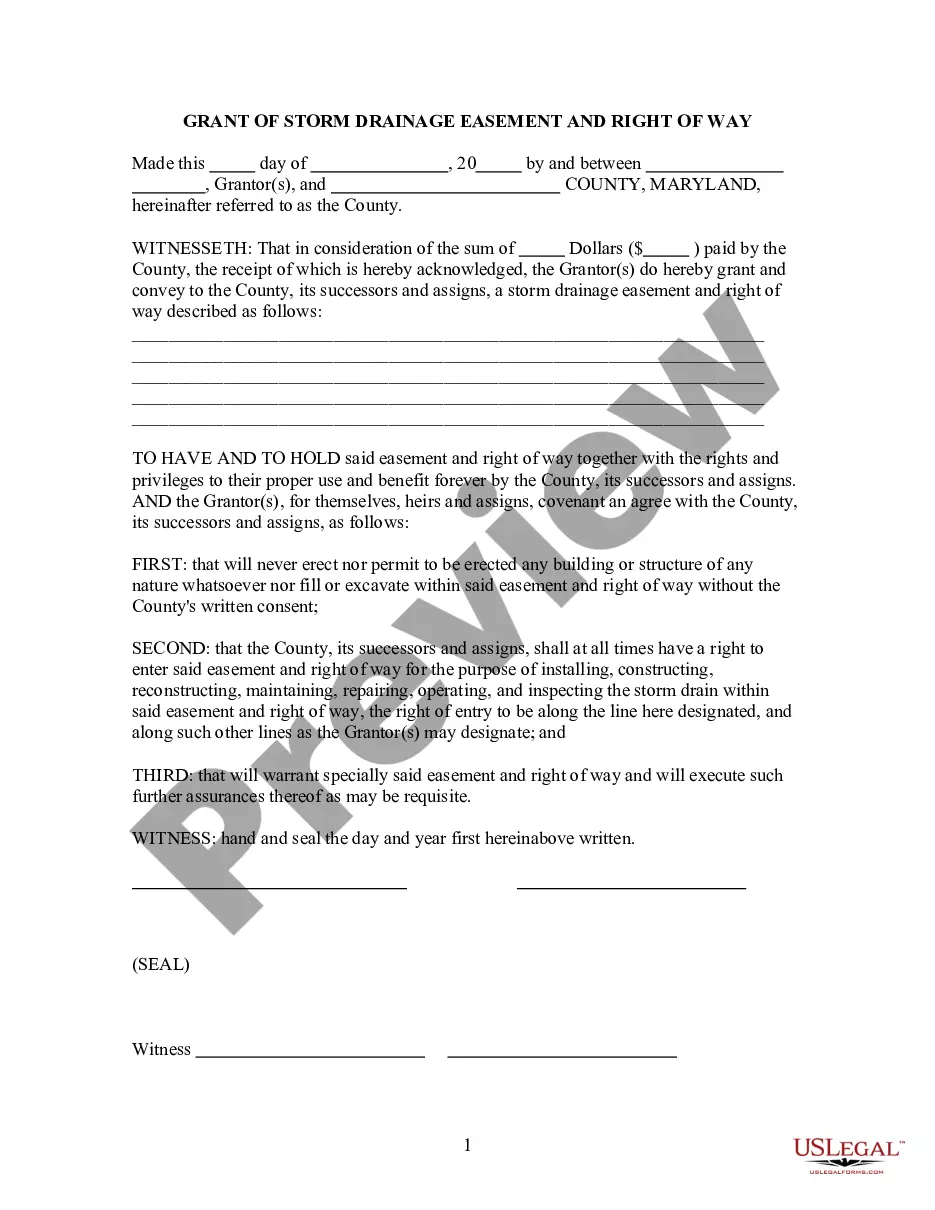
The Grant of Storm Water Management Easement and Right of Way is a legal document that allows one party to enter another's property to construct and maintain stormwater management facilities. Unlike other easements, this specific form establishes rights for stormwater management, ensuring proper drainage and environmental protection.
Key parts of this document
- Description of the easement and right-of-way.
- Conditions for the use of the easement by the County.
- Prohibitions on construction and excavation within the easement without consent.
- Signing parties, including the Grantor(s) and the County.
Situations where this form applies
This form is used when a local government, typically a County, needs access to private property for stormwater management activities. It is essential in scenarios involving the installation, construction, modification, maintenance, or inspection of stormwater facilities to ensure compliance with local regulations and environmental laws.
Who this form is for
- County or municipal governments needing rights for stormwater management.
- Property owners granting an easement for stormwater facilities.
- Developers or contractors involved in construction projects affecting stormwater systems.
Steps to complete this form
- Identify the parties involved, including the Grantor(s) and the County.
- Clearly describe the property and the specific rights granted under the easement.
- Include any additional conditions, restrictions, or rights associated with the easement.
- Gather all required signatures from the Grantor(s) and authorized representatives of the County.
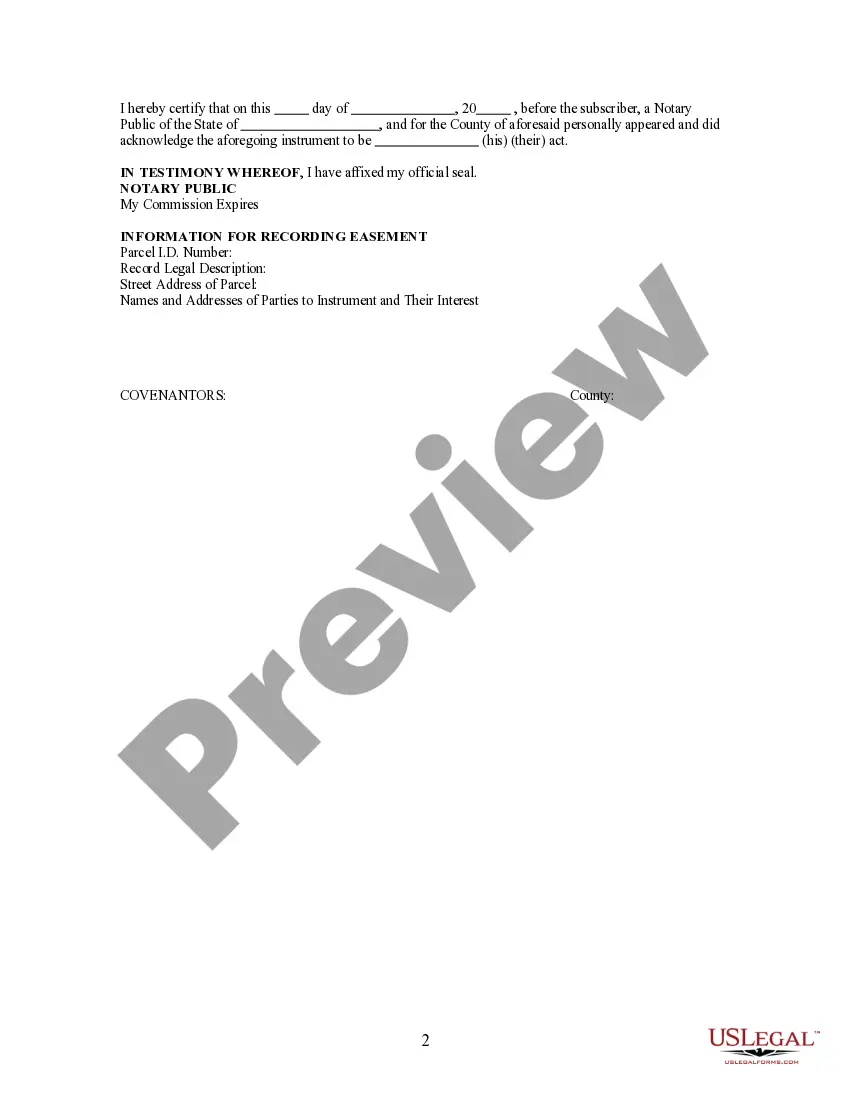
- Ensure completion of any notarization requirements if mandated by local law.
Does this document require notarization?
This form does not typically require notarization unless specified by local law. Always verify if your jurisdiction has additional requirements for legal validity.
Get your form ready online
Our built-in tools help you complete, sign, share, and store your documents in one place.
Make edits, fill in missing information, and update formatting in US Legal Forms—just like you would in MS Word.
Download a copy, print it, send it by email, or mail it via USPS—whatever works best for your next step.
Sign and collect signatures with our SignNow integration. Send to multiple recipients, set reminders, and more. Go Premium to unlock E-Sign.
If this form requires notarization, complete it online through a secure video call—no need to meet a notary in person or wait for an appointment.
We protect your documents and personal data by following strict security and privacy standards.

Make edits, fill in missing information, and update formatting in US Legal Forms—just like you would in MS Word.

Download a copy, print it, send it by email, or mail it via USPS—whatever works best for your next step.

Sign and collect signatures with our SignNow integration. Send to multiple recipients, set reminders, and more. Go Premium to unlock E-Sign.

If this form requires notarization, complete it online through a secure video call—no need to meet a notary in person or wait for an appointment.

We protect your documents and personal data by following strict security and privacy standards.
Avoid these common issues
- Failing to include detailed descriptions of the easement area.
- Not obtaining all necessary signatures before finalizing the form.
- Ignoring local laws that may require additional clauses or specifications.
Why complete this form online
- Convenience of downloading and completing the form at any time.
- Editability of the form allows for custom adjustments as needed.
- Reliability from being drafted by licensed attorneys to ensure legal soundness.
Quick recap
- The Grant of Storm Water Management Easement allows for essential stormwater management access and use.
- It is crucial to specify the terms clearly to avoid future disputes.
- Use the form appropriately according to state-specific rules and guidelines.
Looking for another form?
Form popularity
FAQ
The land for the beneficial enjoyment of which the right exists is called the dominant heritage, and the owner or occupier thereof the dominant owner; the land on which the liability is imposed is called the servient heritage, and the owner or occupier thereof the servient owner.
When you yield the right of way to another vehicle, you are letting them go before you in the traffic situation.If you reach the intersection at the same time, the driver on the left should yield the right of way. Pedestrians must always be yielded the right of way at intersections and crosswalks.
The right of way is the total land area acquired for the construction of the roadway. Its width should be enough to accommodate all the elements of the roadway cross section, any future widening of the road and any public utility facilities that will be installed along the roadway.
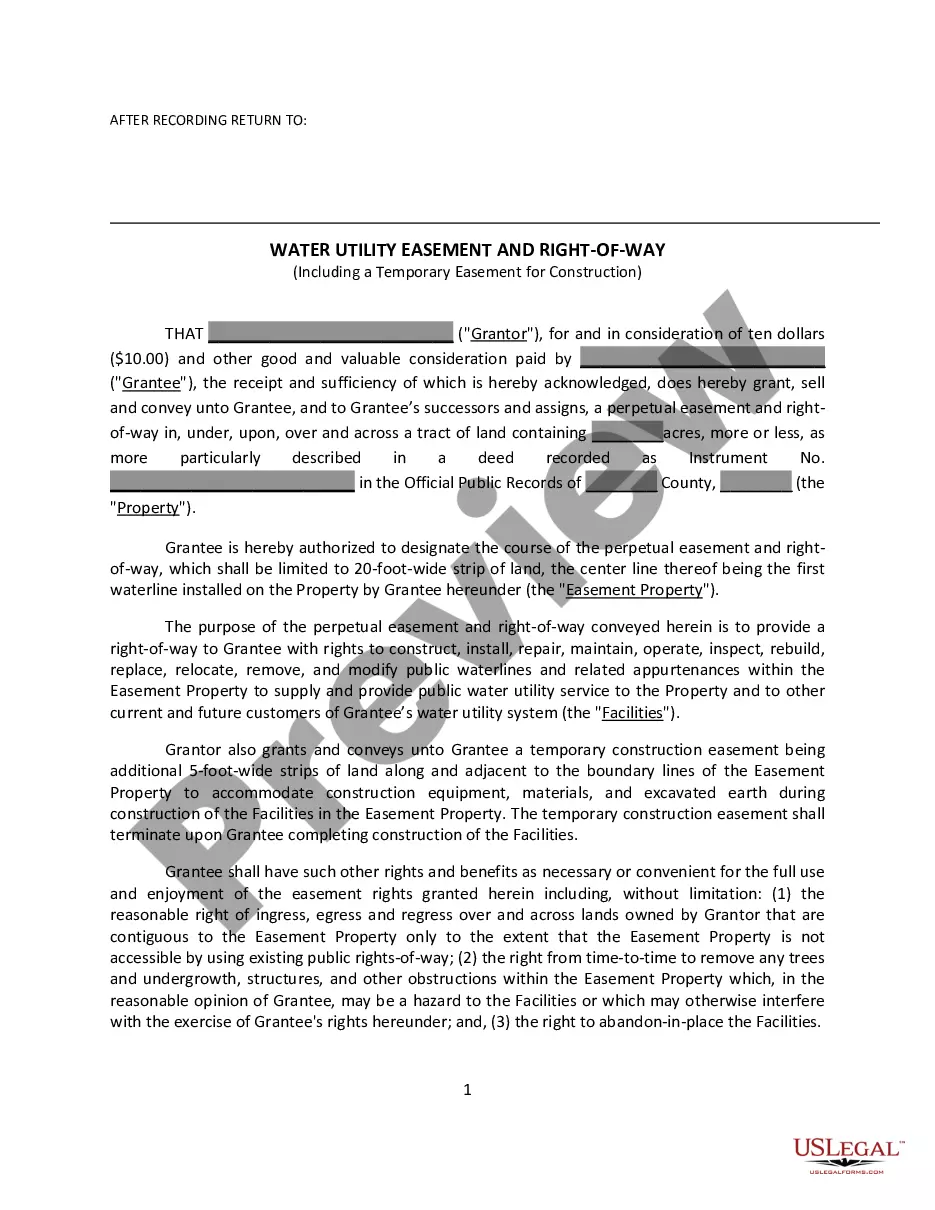
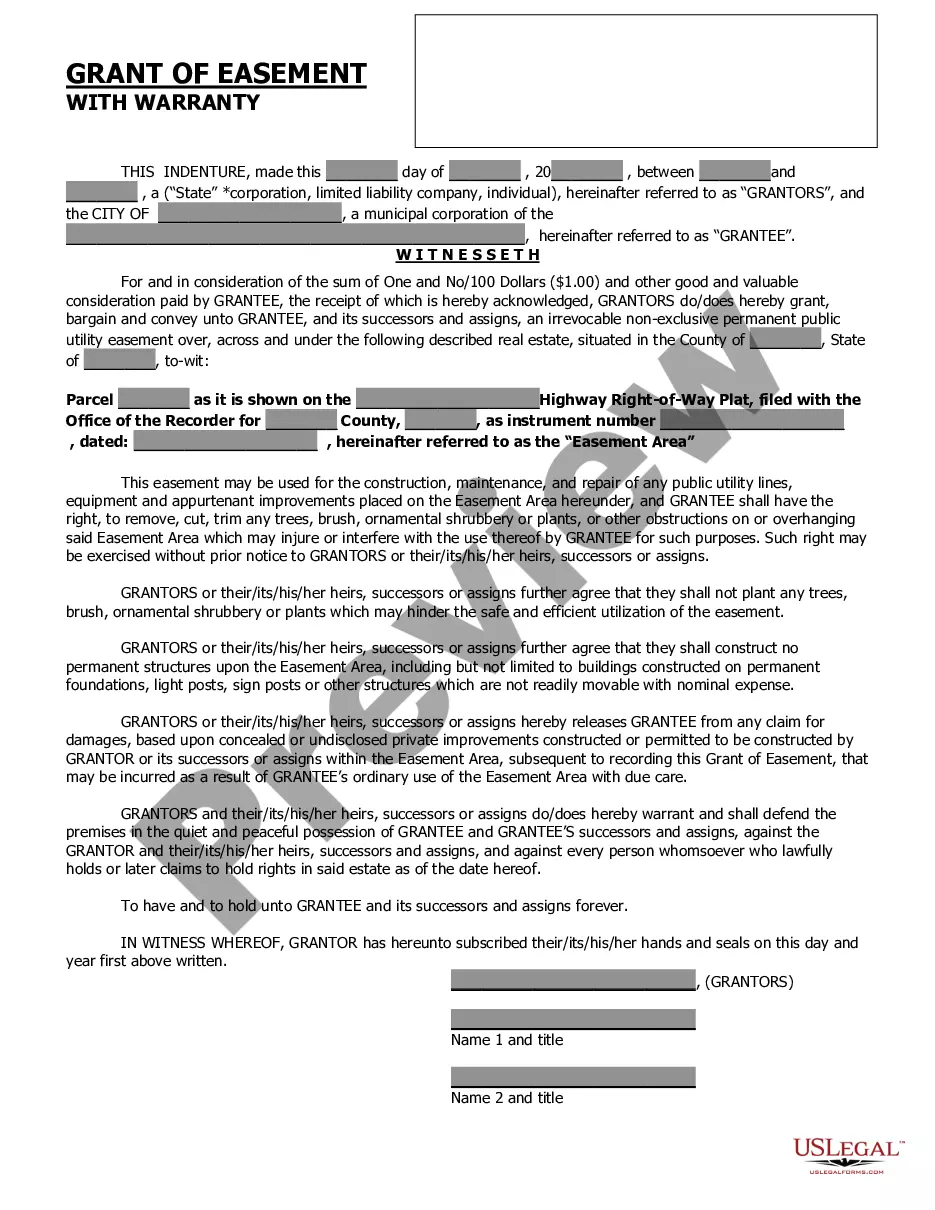
What are Easements and Rights-of-Way? Easements are nonpossessory interests in real property. More simply, an easement is the right to use another's property for a specific purpose. Rights-of-way are easements that specifically grant the holder the right to travel over another's property.
Generally once an easement or right of way has arisen it will continue indefinitely unless it is extinguished or released.
The party gaining the benefit of the easement is the dominant estate (or dominant tenement), while the party granting the benefit or suffering the burden is the servient estate (or servient tenement). For example, the owner of parcel A holds an easement to use a driveway on parcel B to gain access to A's house.
Right of Way. An easement is the right to use another person's land for a stated purpose. It can involve a general area of the property or a specific portion. A right of way is an easement that allows someone to travel through your property to get to another location.
1 : the legal right to pass over someone else's land. 2 : the right of some traffic to go before other traffic. right-of-way.
Summary. An easement in gross is a right allowing an individual or an entity to use someone else's land/property. An easement in gross agreement benefits the property owner as an individual, not the property. An easement holder will be unable to transfer the benefits to another party.