Maryland Mutual Wills containing Last Will and Testaments for Man and Woman living together not Married with No Children
What is this form?
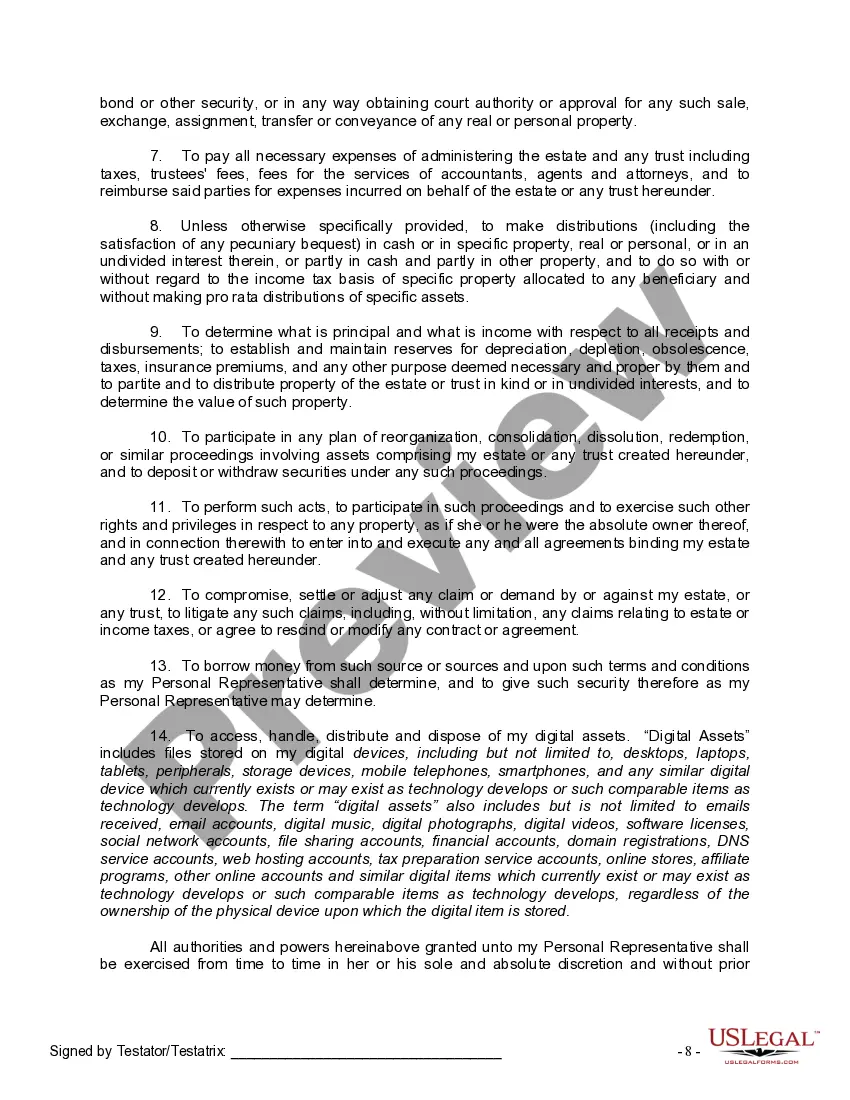
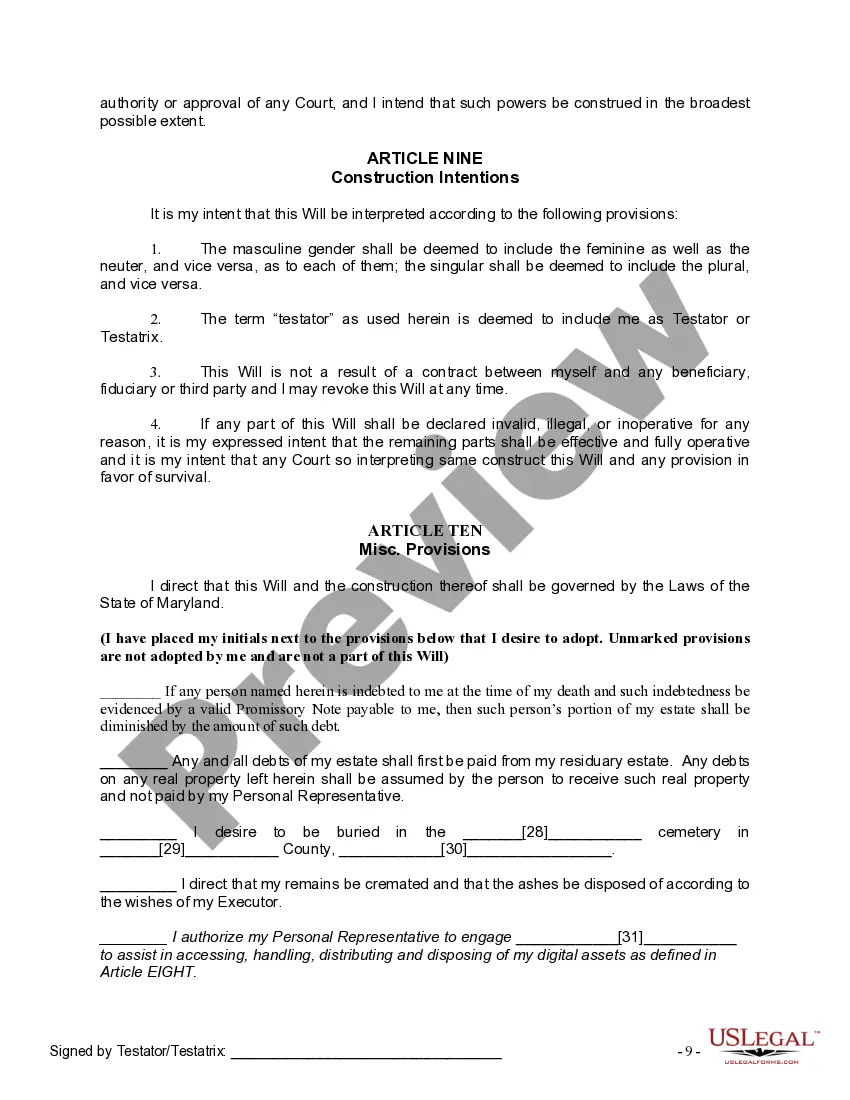
This Mutual Wills form contains Last Will and Testaments designed for a man and a woman living together, who are not married and do not have children. This legal document allows both individuals to mutually agree on how their properties will be distributed upon death, ensuring that assets pass to each other without complications. Unlike individual wills, mutual wills are specifically tailored to express the intention of both parties to support each other, providing clarity and legal backing to their wishes.
Form components explained
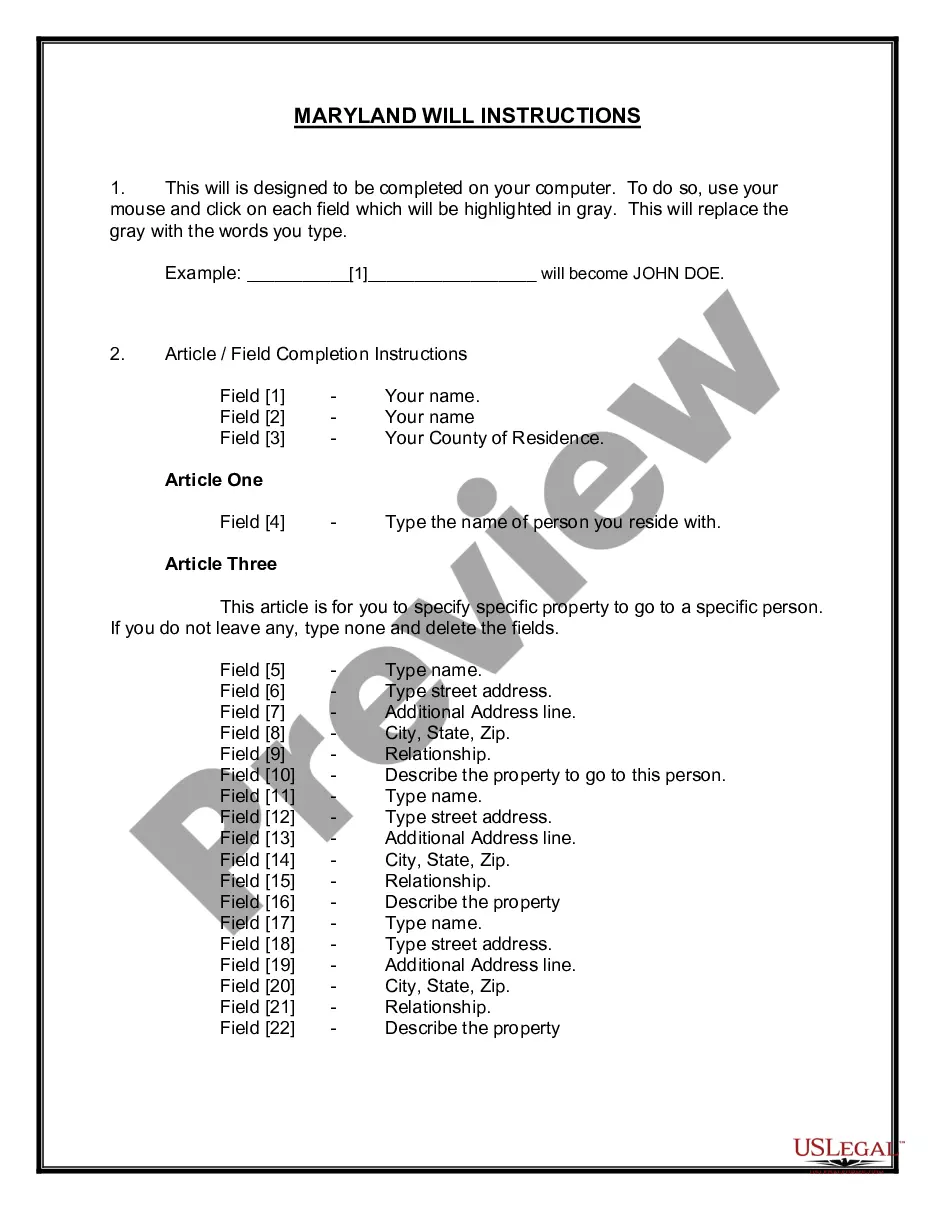
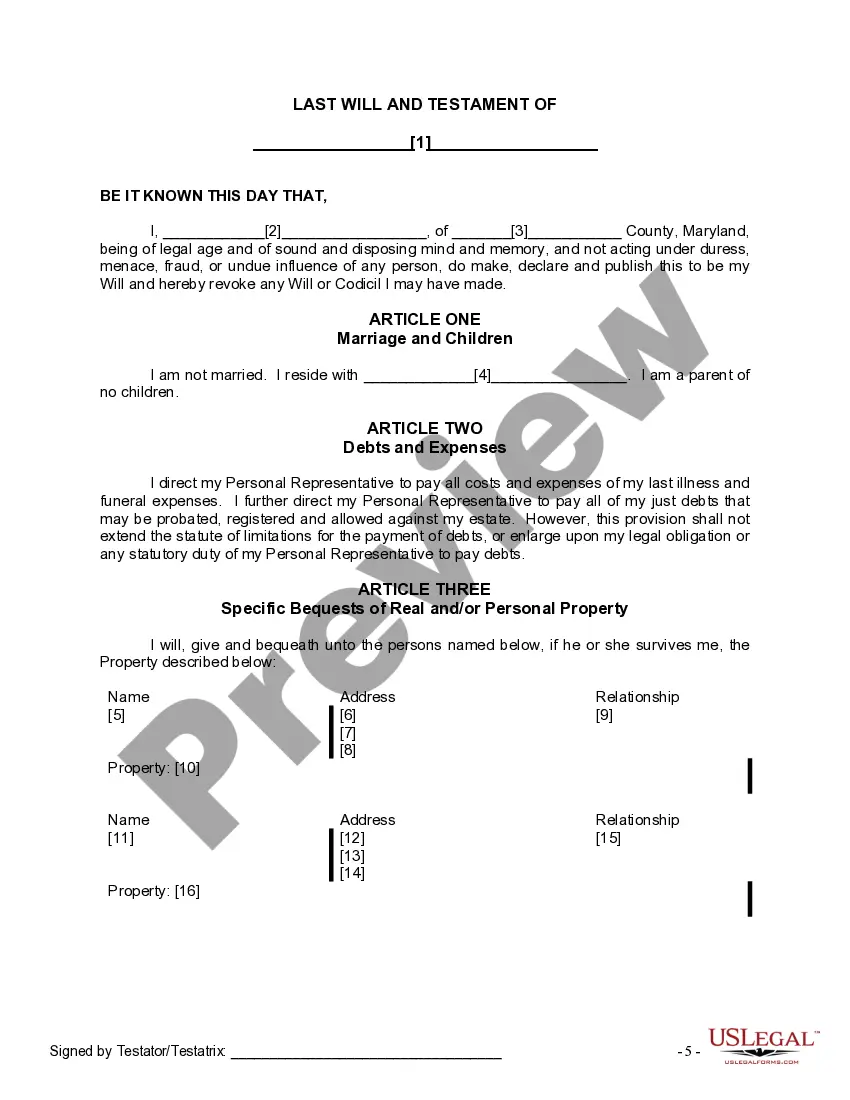
- Personal Information: Identification details of each party, including their names and addresses.
- Debts and Expenses: Instructions for the payment of debts and funeral expenses from the estate.
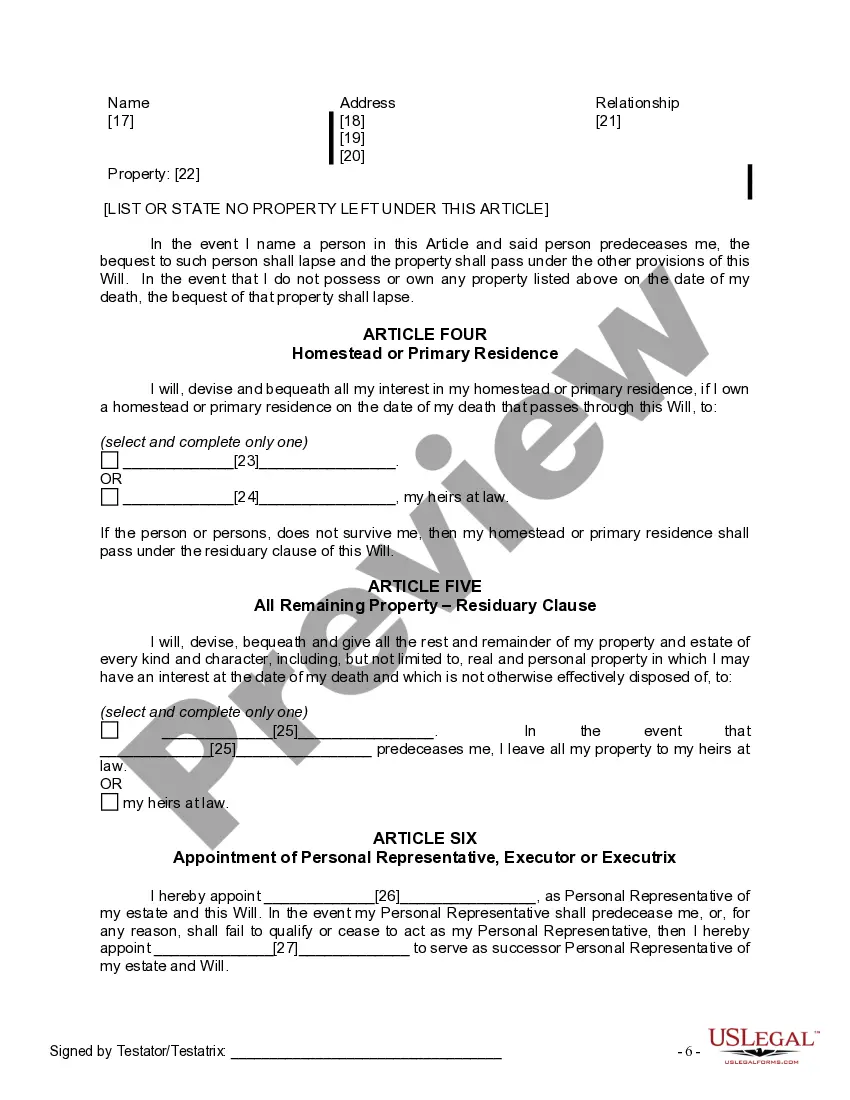
- Specific Bequests: Designation of specific gifts or properties to named beneficiaries.
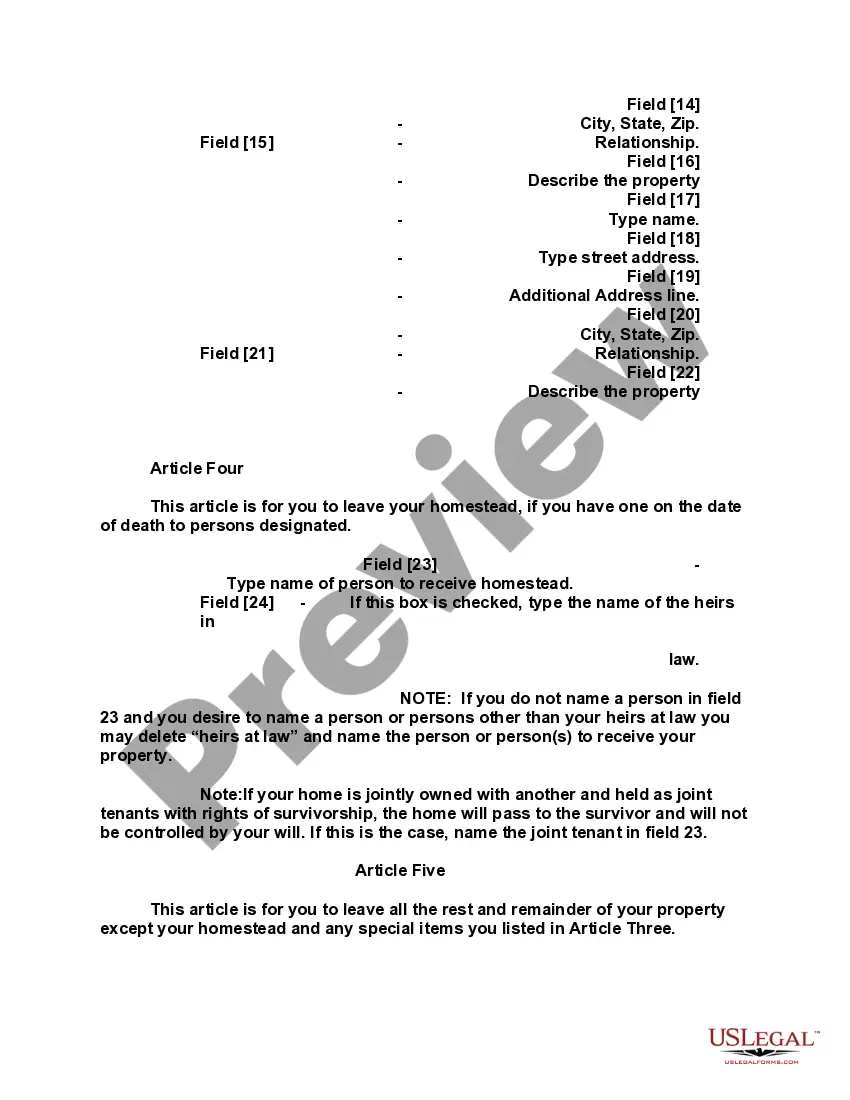
- Homestead Clause: Directions regarding the distribution of the primary residence upon death.
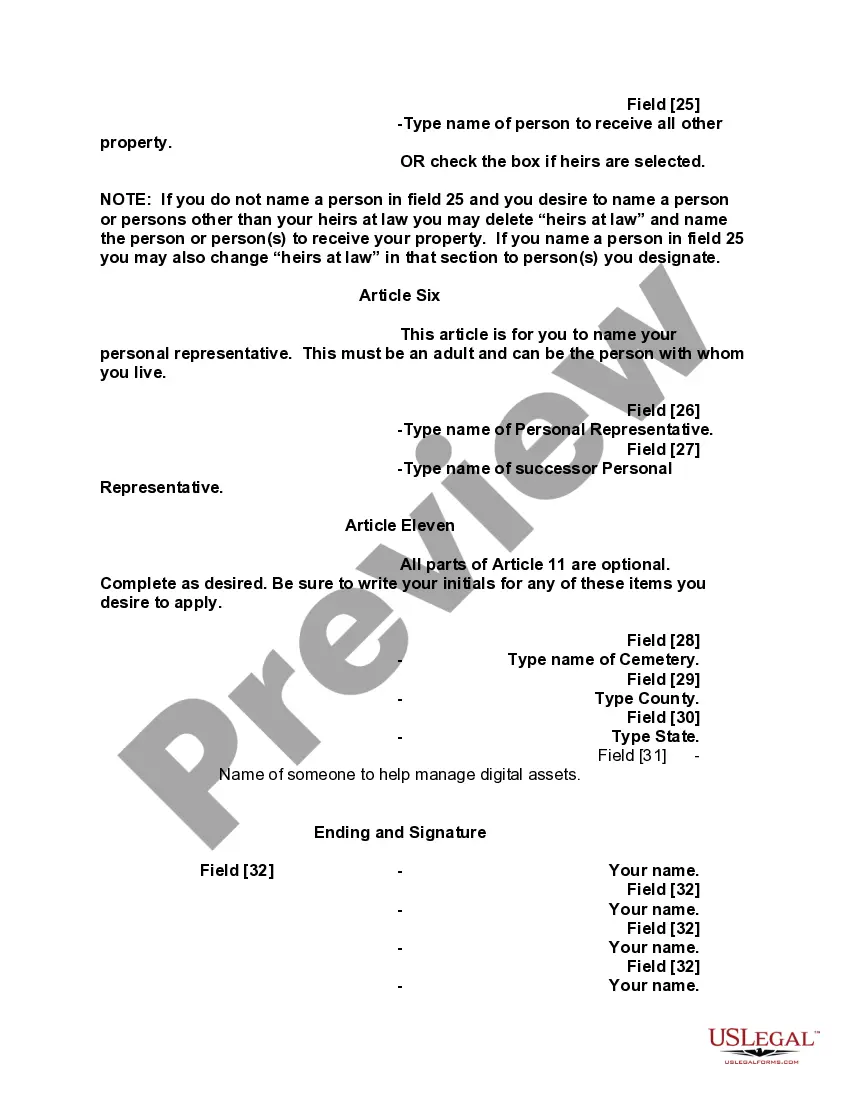
- Residuary Clause: Instructions for distributing any remaining assets not specifically bequeathed.
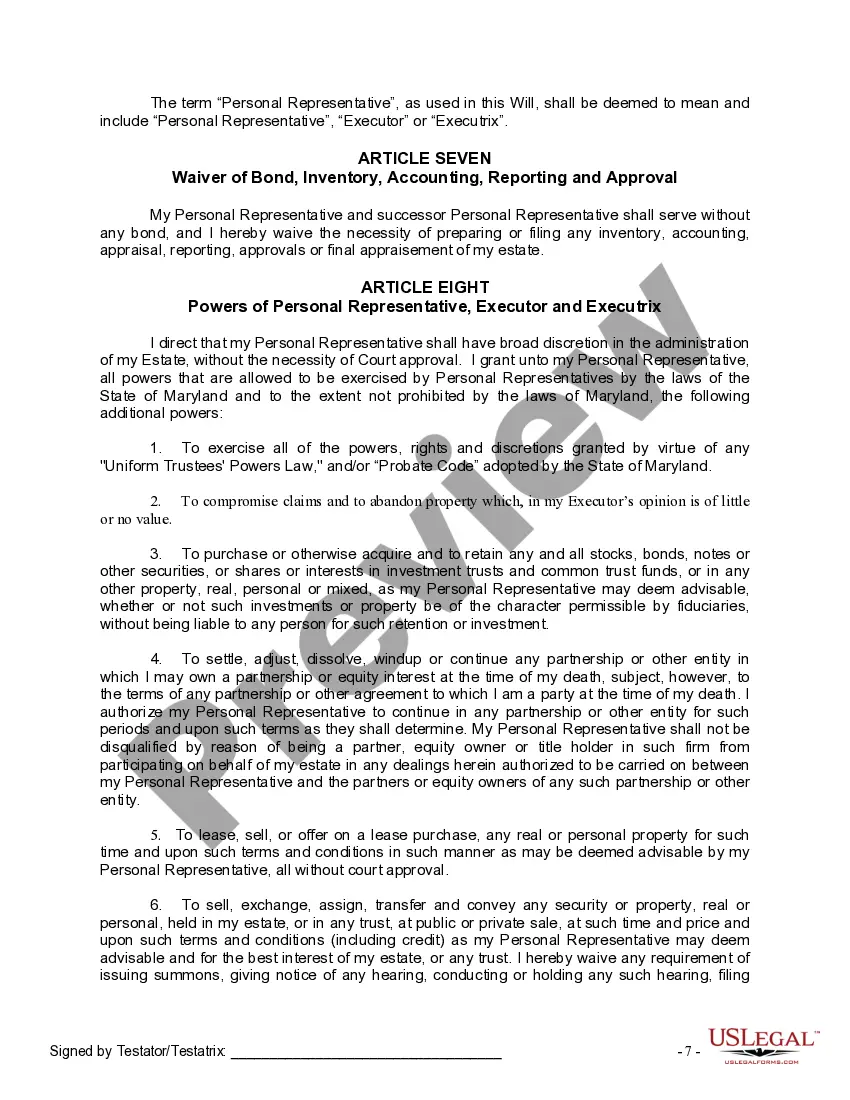
- Appointment of Personal Representative: Designation of an individual to administer the estate and carry out will provisions.



Situations where this form applies
This form should be used when an unmarried couple living together wants to ensure that their assets are passed to each other upon death. It is ideal for couples without children who wish to create a legal agreement that honors their mutual intentions regarding property distribution. Also, this form can address specific preferences for estate management and can guide what happens when one partner predeceases the other.
Who can use this document
This form is intended for:
- Unmarried couples living together without children.
- Individuals looking to ensure mutual support through their estate planning.
- Partners who wish to create clarity in asset distribution without the complexities of marriage laws.
How to prepare this document
To complete this Mutual Wills form, follow these steps:
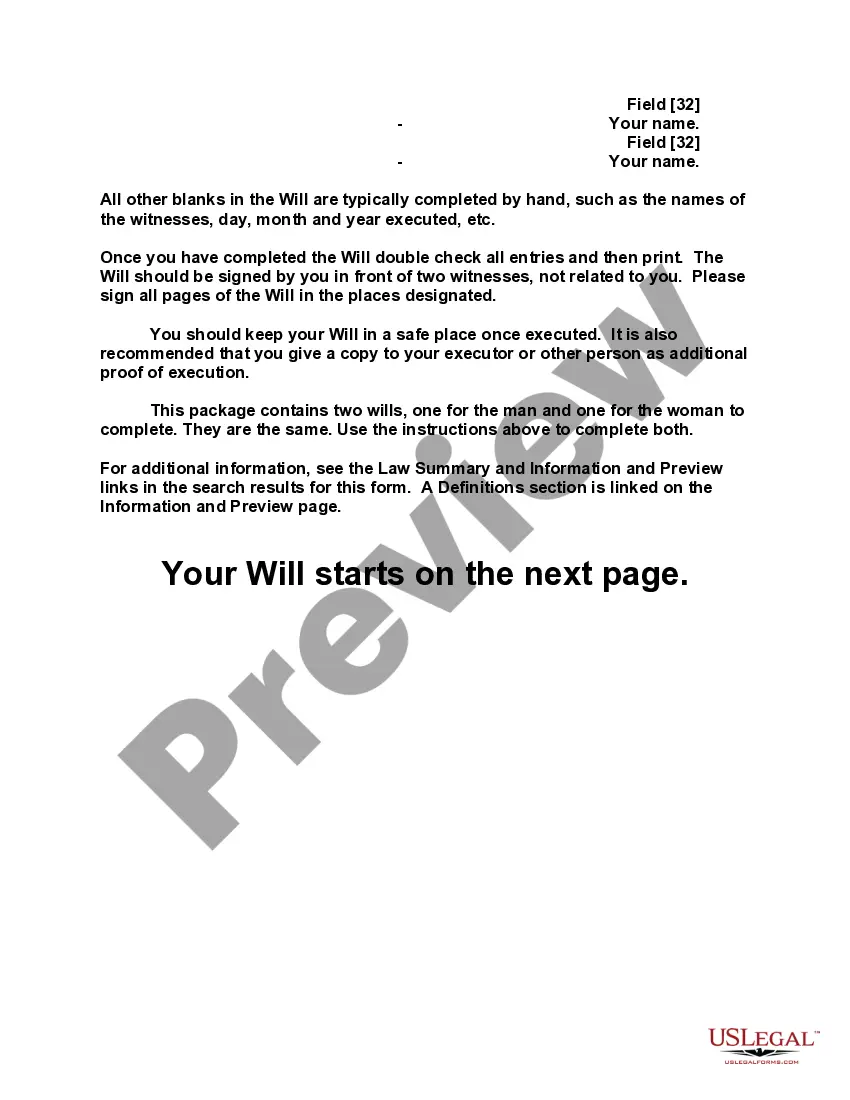
- Identify the parties by entering their full names and addresses at the beginning of the wills.
- Detail any debts and funeral expenses that should be settled before any distributions.
- Specify specific bequests for properties or assets to clearly outline who receives what.
- Designate a personal representative to manage the estate according to the will's provisions.
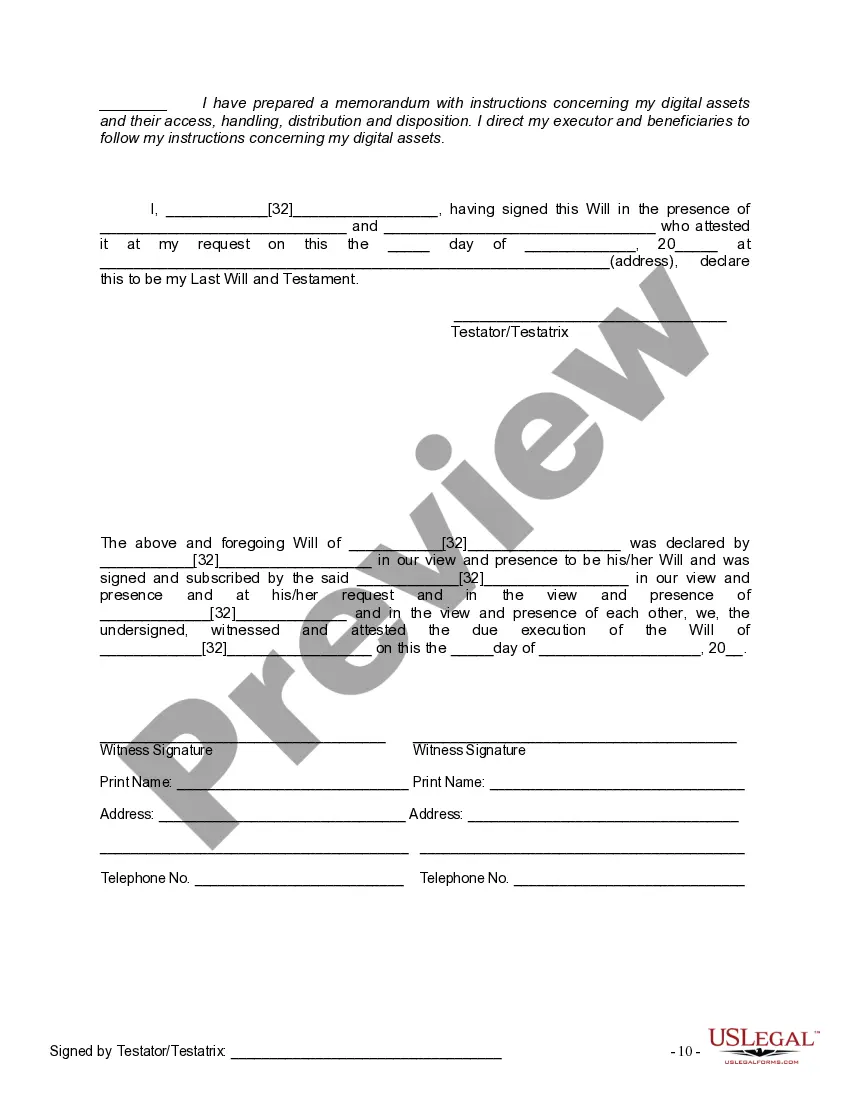
- Ensure both parties sign the wills in the presence of two witnesses for legal validation.
Does this form need to be notarized?
Yes, this form must be notarized to be legally valid. The wills must be signed in front of a notary public in addition to the required witnesses. US Legal Forms provides integrated online notarization services, making it easy to get your documents notarized securely via video call at any time.
Get your form ready online
Our built-in tools help you complete, sign, share, and store your documents in one place.
Make edits, fill in missing information, and update formatting in US Legal Forms—just like you would in MS Word.
Download a copy, print it, send it by email, or mail it via USPS—whatever works best for your next step.
Sign and collect signatures with our SignNow integration. Send to multiple recipients, set reminders, and more. Go Premium to unlock E-Sign.
If this form requires notarization, complete it online through a secure video call—no need to meet a notary in person or wait for an appointment.
We protect your documents and personal data by following strict security and privacy standards.

Make edits, fill in missing information, and update formatting in US Legal Forms—just like you would in MS Word.

Download a copy, print it, send it by email, or mail it via USPS—whatever works best for your next step.

Sign and collect signatures with our SignNow integration. Send to multiple recipients, set reminders, and more. Go Premium to unlock E-Sign.

If this form requires notarization, complete it online through a secure video call—no need to meet a notary in person or wait for an appointment.

We protect your documents and personal data by following strict security and privacy standards.
Mistakes to watch out for
- Failing to have both wills signed by two witnesses as required by state laws.
- Not updating these wills if major life changes occur, such as a new partner or change in assets.
- Inaccurately completing the sections regarding specific bequests, which could lead to confusion or disputes later.
Why use this form online
- Convenient downloadable format allows easy access and editing from home.
- Cuts down on legal fees by enabling couples to draft their wishes without extensive legal counsel.
- Provides peace of mind that both parties' wishes are legally documented and enforced.
Main things to remember
- This Mutual Wills form is specifically for unmarried couples living together without children.
- Mutual wills provide clarity and enforce mutual intentions regarding asset distribution.
- Execution and notarization requirements vary by state, so itâs crucial to understand local regulations.
Looking for another form?


Form popularity
FAQ
A joint will is a legal document executed by two (or more) people, which merges their individual wills into a single, combined last will and testament. Like most wills, a joint will lets the will-makers name who will get their property and assets after they die. Joint wills are usually created by married couples.
You and your spouse may have one of the most common types of estate plans between married couples, which is a simple will leaving everything to each other. With this type of plan, you leave all of your assets outright to your surviving spouse. The kids or other beneficiaries only get something after you are both gone.
Property in a living trust. One of the ways to avoid probate is to set up a living trust. Retirement plan proceeds, including money from a pension, IRA, or 401(k) Stocks and bonds held in beneficiary. Proceeds from a payable-on-death bank account.
Most single people should have a will. A will can help you determine who will get your property (including your home, business, pets, and digital assets), name guardians for your children, and name an executor. A will also puts your wishes in writing so there's no confusion about your intentions.
Bank accounts. Brokerage or investment accounts. Retirement accounts and pension plans. A life insurance policy.
Choose an online legal services provider or locate a will template. Carefully consider your distribution wishes. Identify a personal representative/executor. Understand the requirements to make your will legal. Make sure someone else knows about your will. Consult a lawyer if you have a more complicated estate.
An executor of a will cannot take everything unless they are the will's sole beneficiary.However, the executor cannot modify the terms of the will. As a fiduciary, the executor has a legal duty to act in the beneficiaries and estate's best interests and distribute the assets according to the will.
Choose an online legal services provider or locate a will template. Carefully consider your distribution wishes. Identify a personal representative/executor. Understand the requirements to make your will legal. Make sure someone else knows about your will. Consult a lawyer if you have a more complicated estate.
A will can also be declared invalid if someone proves in court that it was procured by undue influence. This usually involves some evil-doer who occupies a position of trust -- for example, a caregiver or adult child -- manipulating a vulnerable person to leave all, or most, of his property to the manipulator instead