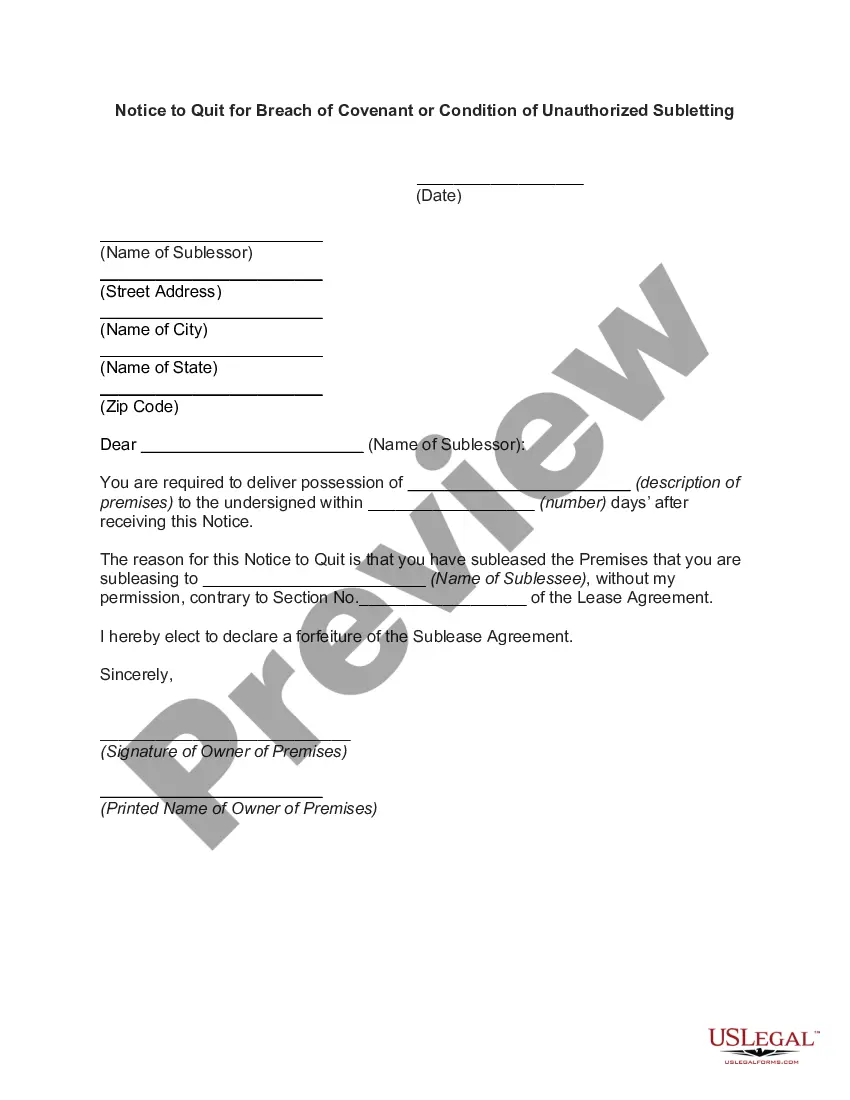
Massachusetts Notice to Quit for Breach of Covenant or Condition of Unauthorized Subletting
Description
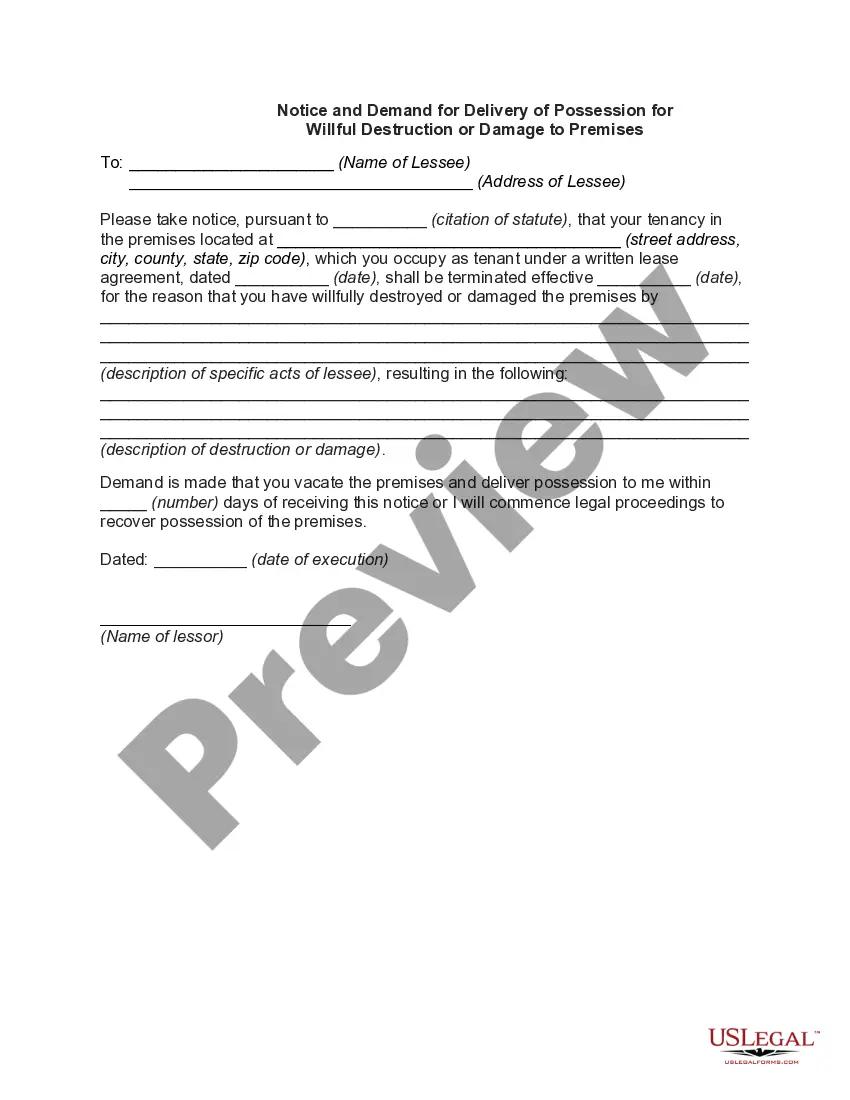
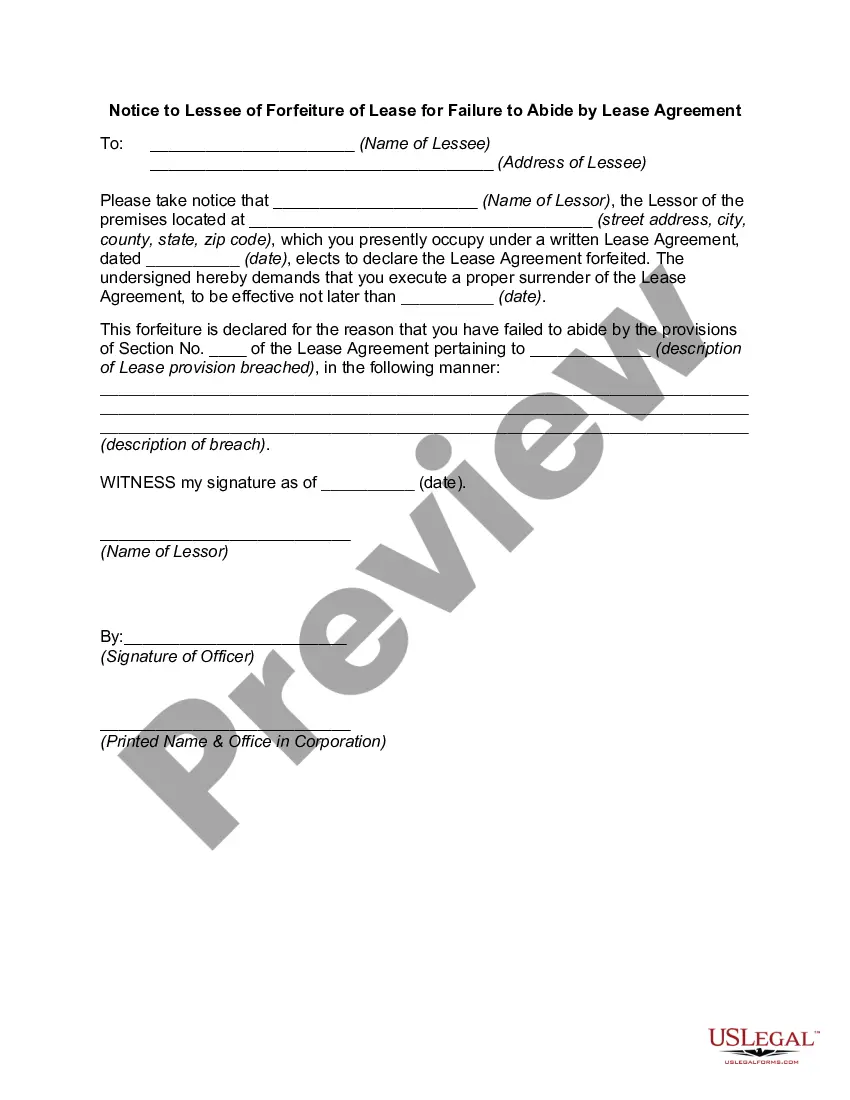

How to fill out Notice To Quit For Breach Of Covenant Or Condition Of Unauthorized Subletting?
You can dedicate numerous hours online seeking the legal form template that meets the federal and state requirements you desire.
US Legal Forms offers a vast array of legal templates that are reviewed by experts.
You can download or print the Massachusetts Notice to Quit for Breach of Covenant or Condition of Unauthorized Subletting from our service.
If available, use the Review button to examine the document template as well.
- If you have a US Legal Forms account, you can Log In and click the Download button.
- After that, you may complete, edit, print, or sign the Massachusetts Notice to Quit for Breach of Covenant or Condition of Unauthorized Subletting.
- Every legal document template you obtain is yours permanently.
- To obtain another copy of any acquired form, visit the My documents section and click the appropriate button.
- If you are using the US Legal Forms website for the first time, follow the simple instructions below.
- First, ensure you have chosen the correct document template for the state/city of your preference.
- Read the form details to confirm you have selected the correct document.
Form popularity
FAQ
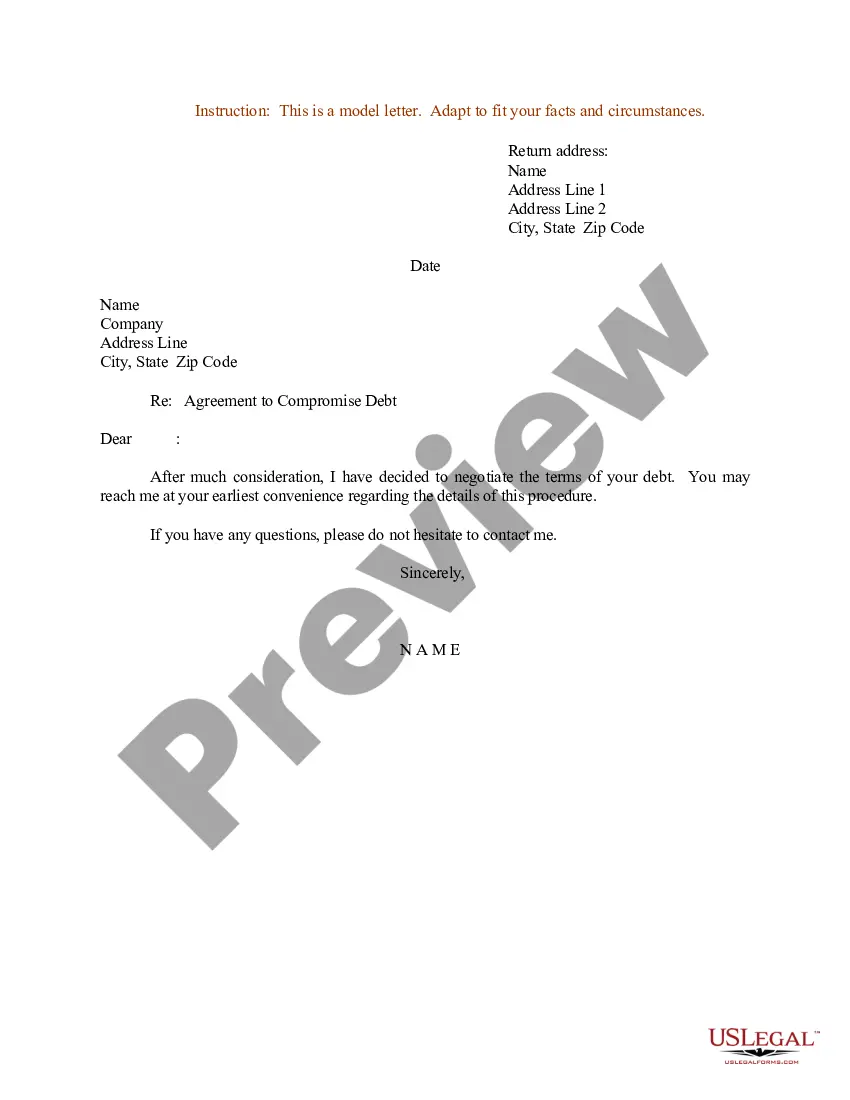
Writing a quit notice requires clarity and compliance with Massachusetts laws. The notice should state the tenant's name, the reason for the notice, and the deadline for vacating the premises, such as in the case of Massachusetts Notice to Quit for Breach of Covenant or Condition of Unauthorized Subletting. Remember to provide a detailed description of the breach that has occurred. Lastly, ensure you document the delivery of the notice to avoid disputes later.
You cannot evict your roommate, as you are not your roommate's landlord. What if there's no lease? If there is no lease in place, you are not a landlord under Massachusetts law. As such, you cannot evict your roommate.
In the covenant of quiet enjoyment, the landlord promises that during the term of the tenancy no one will disturb the tenant in the tenant's use and enjoyment of the premises.
Sublease and Assignment Provisions in Massachusetts Unless the lease prohibits subleasing, a landlord may not unreasonably withhold permission to sublet. In Massachusetts, subleasing is only allowed if the landlord consents.
Possession and breach of covenant claims are breaches by the tenant (usually) or the landlord of their obligations contained in the lease. Tenants' breaches commonly include; failure to pay the rent, sub-letting without permission, carrying out unauthorised alterations, failure to repair or becoming insolvent.
A tenant has the right to quiet enjoyment of the property without interference by the landlord. This is called the covenant of quiet enjoyment. It exists in every lease.
In the past, a landlord may have waived their right to forfeiture if a tenant breached a covenant because that tenant was a 'good payer'. Now this tenant may be not meeting their rent obligations and continuing to breach covenants.
No, unless you are subletting part of your apartment to your roommate, you cannot evict your roommate. If the roommate is violating some aspect of the lease, you may be able to persuade the landlord to evict your roommate, but that action would also affect you.
For the landlord to forfeit, the lease must first contain a forfeiture clause. This allows the landlord to terminate the tenancy upon the tenant failing to pay the rent (usually after a period of grace of between 14-28 days) or in the event of any other specified breach of covenant.
If your roommate ignores your notice and remains in the rental, you might have to file an eviction lawsuit. In general, the procedures for evicting a resident who isn't a party to the lease or rental agreement will be the same as those for official tenants, but your state or local laws might be an exception.