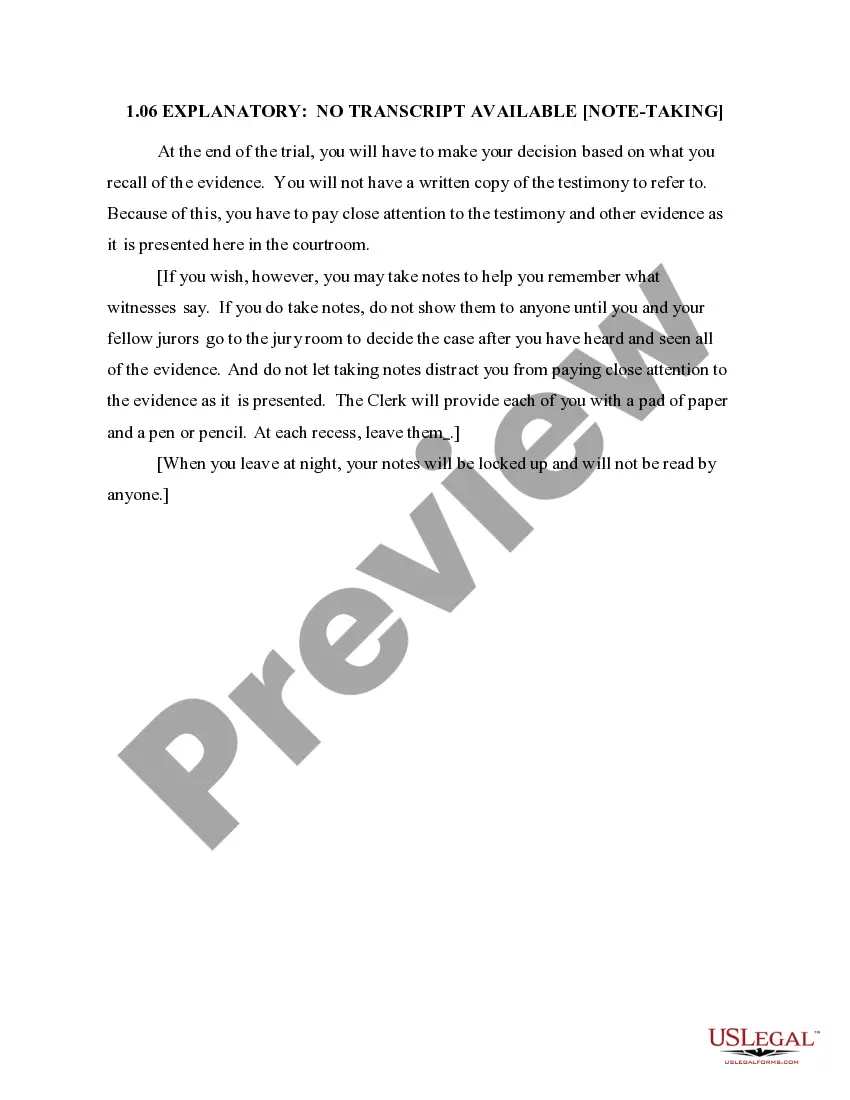
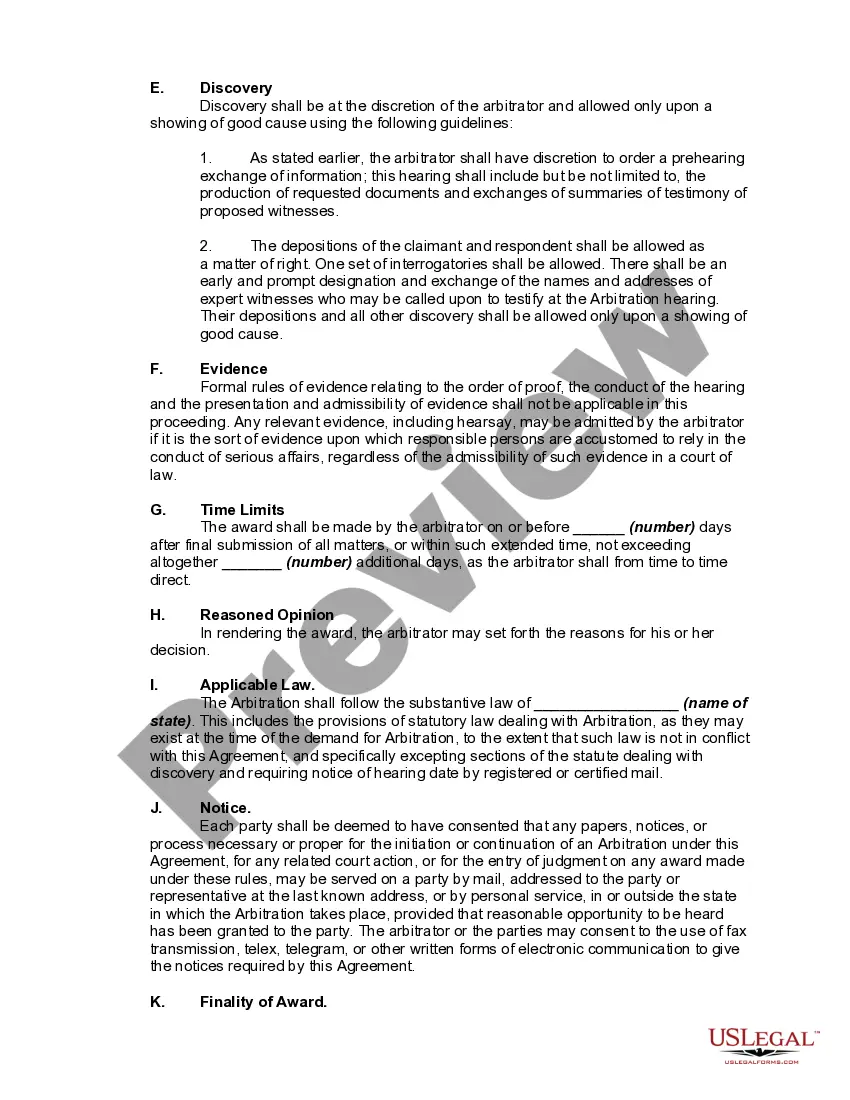
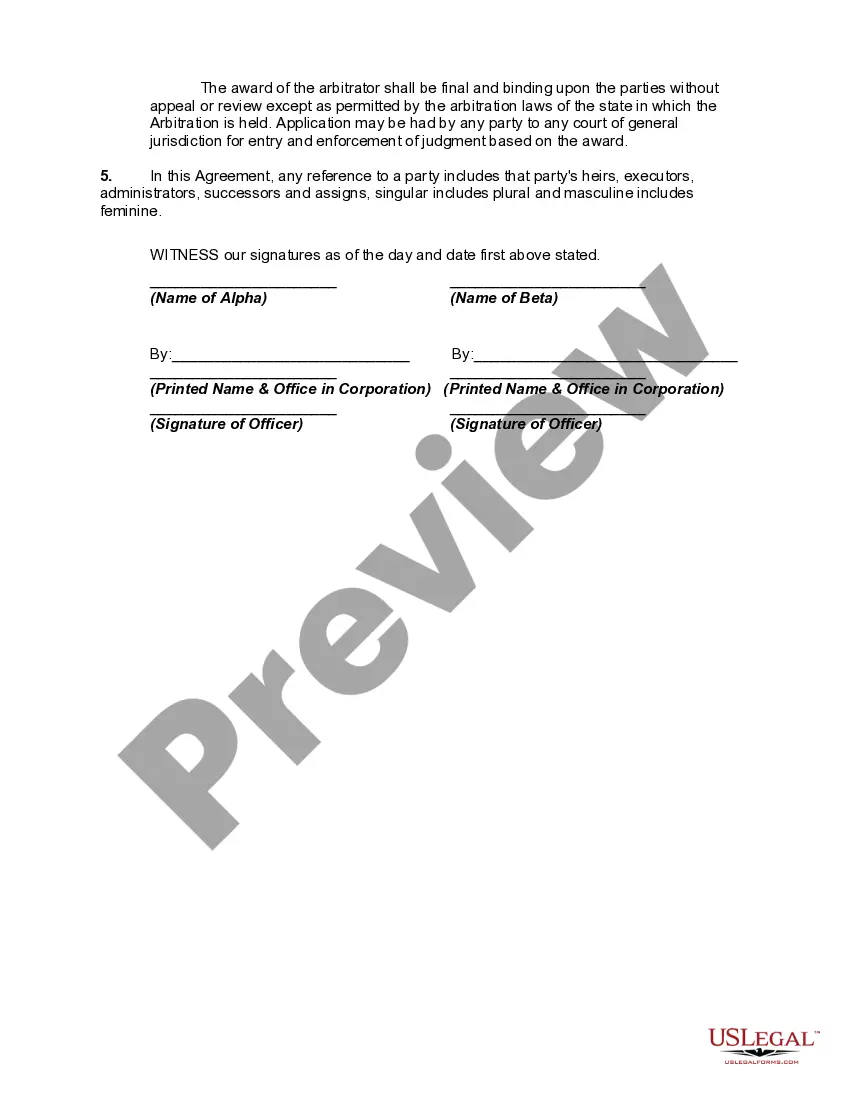
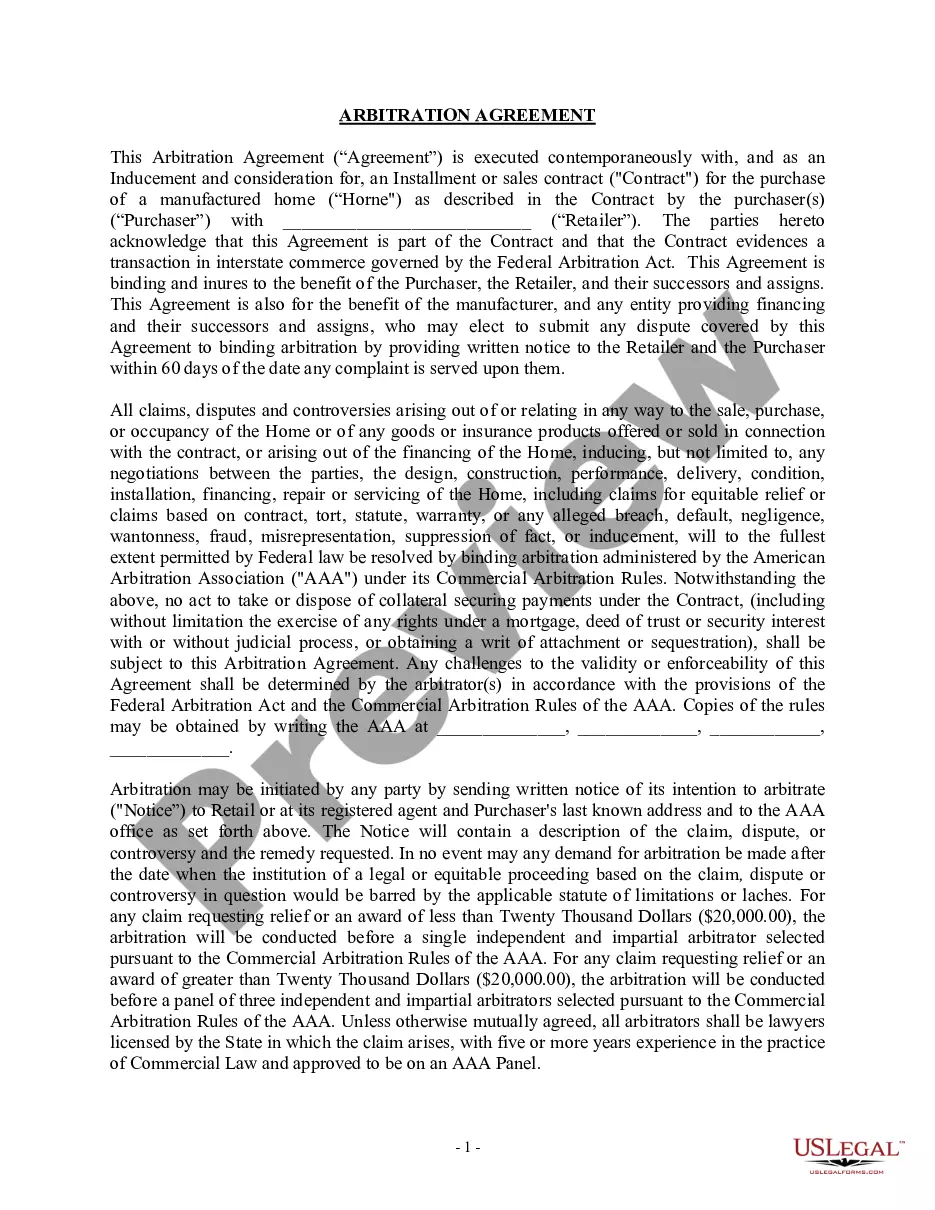
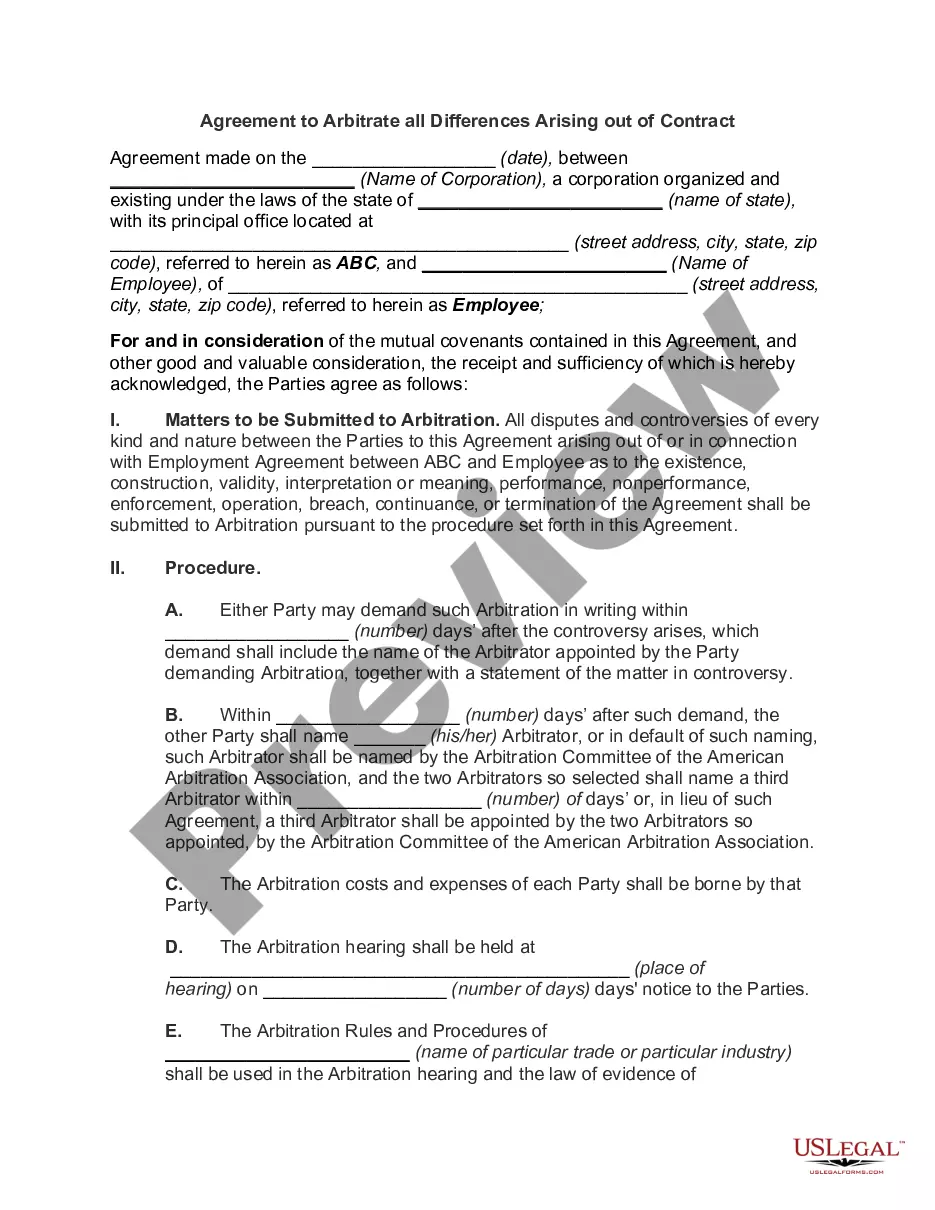
Arbitration is an alternative means of settling a dispute by impartial persons without proceeding to a court trial. It is sometimes preferred as a means of settling a matter in order to avoid the expense, delay, and acrimony of litigation. Discovery is with the discretion of the Arbitrator and there are simplified rules of evidence in arbitration.
Mediation is a non-adversarial method of alternative dispute resolution (ADR) in which a neutral third party helps resolve a dispute. The mediator does not have the power to render a decision on the matter or order an outcome. If a satisfactory resolution cannot be reached, the parties can pursue a lawsuit or arbitration.
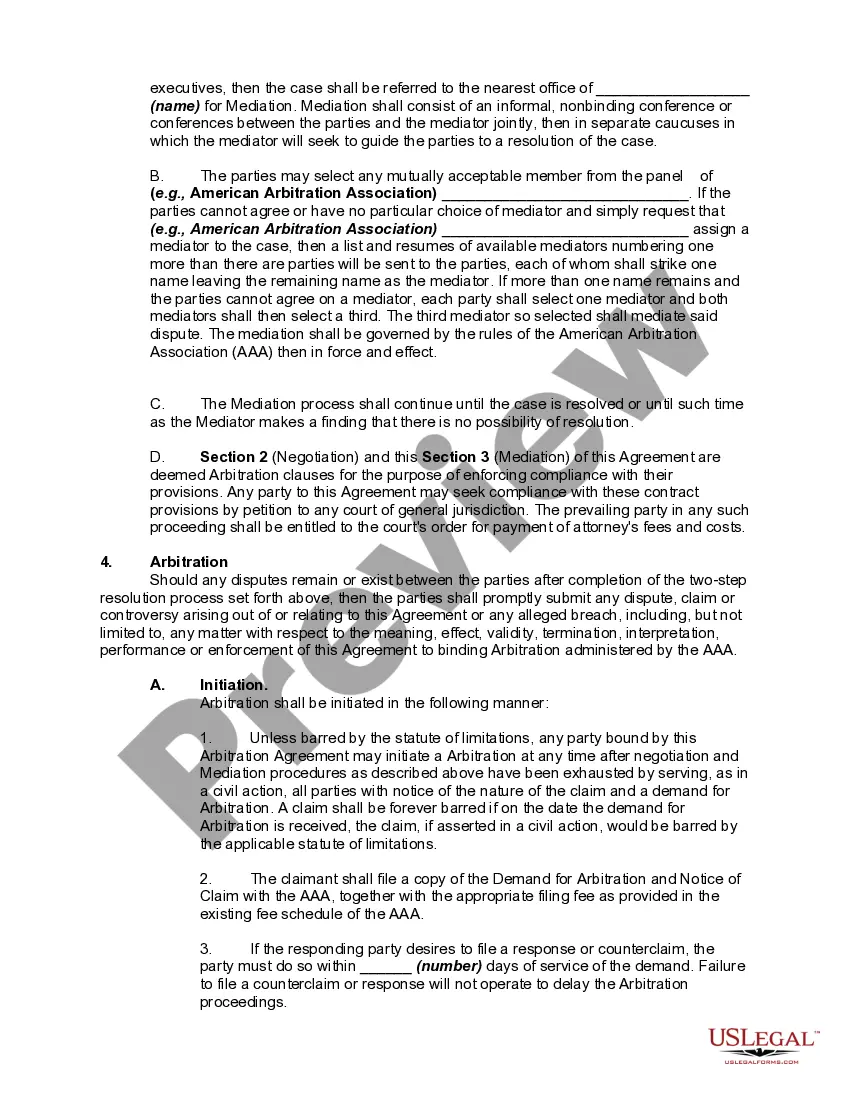
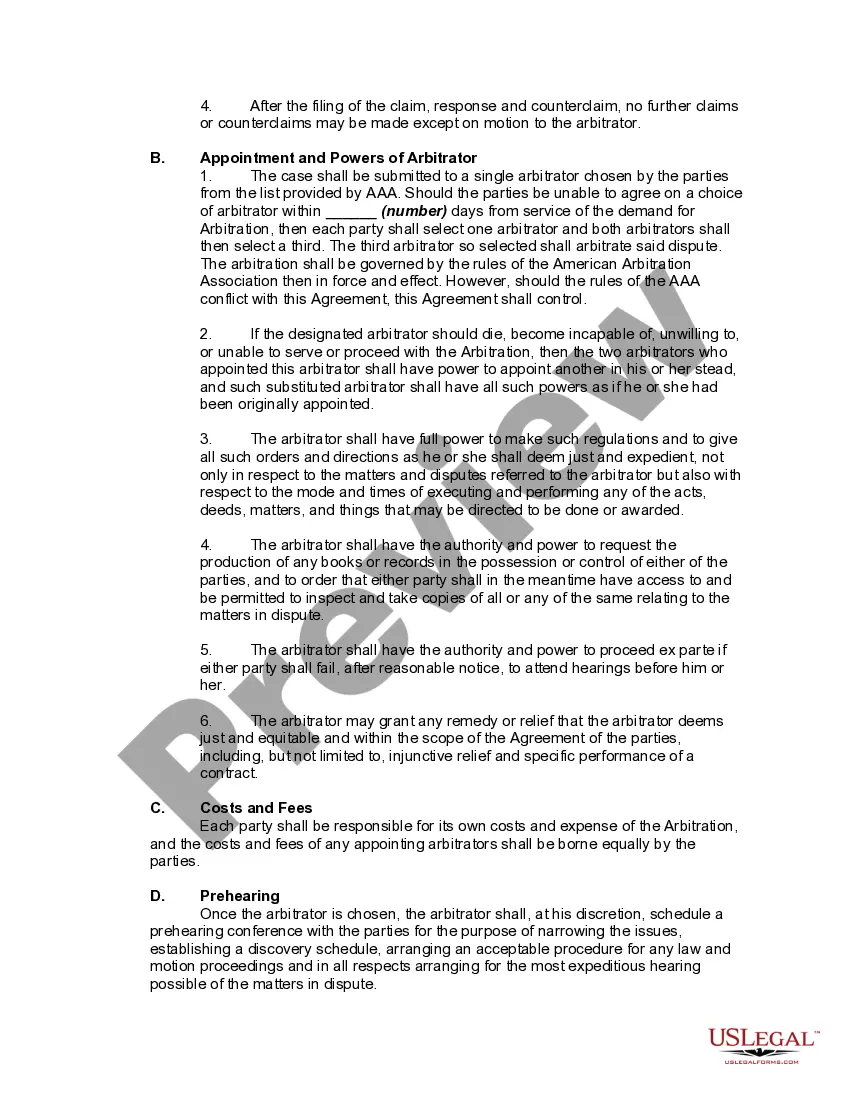
This form provides for negotiation, then mediation if the negotiation fails to resolve the issues. If both negotiation and mediation fail to resolve the issues, the parties arbitrate the dispute.
Massachusetts Mediation and Arbitration Agreement
Category:
State:
Multi-State
Control #:
US-02980BG
Format:
Word;
Rich Text
Instant download
Description
Free preview
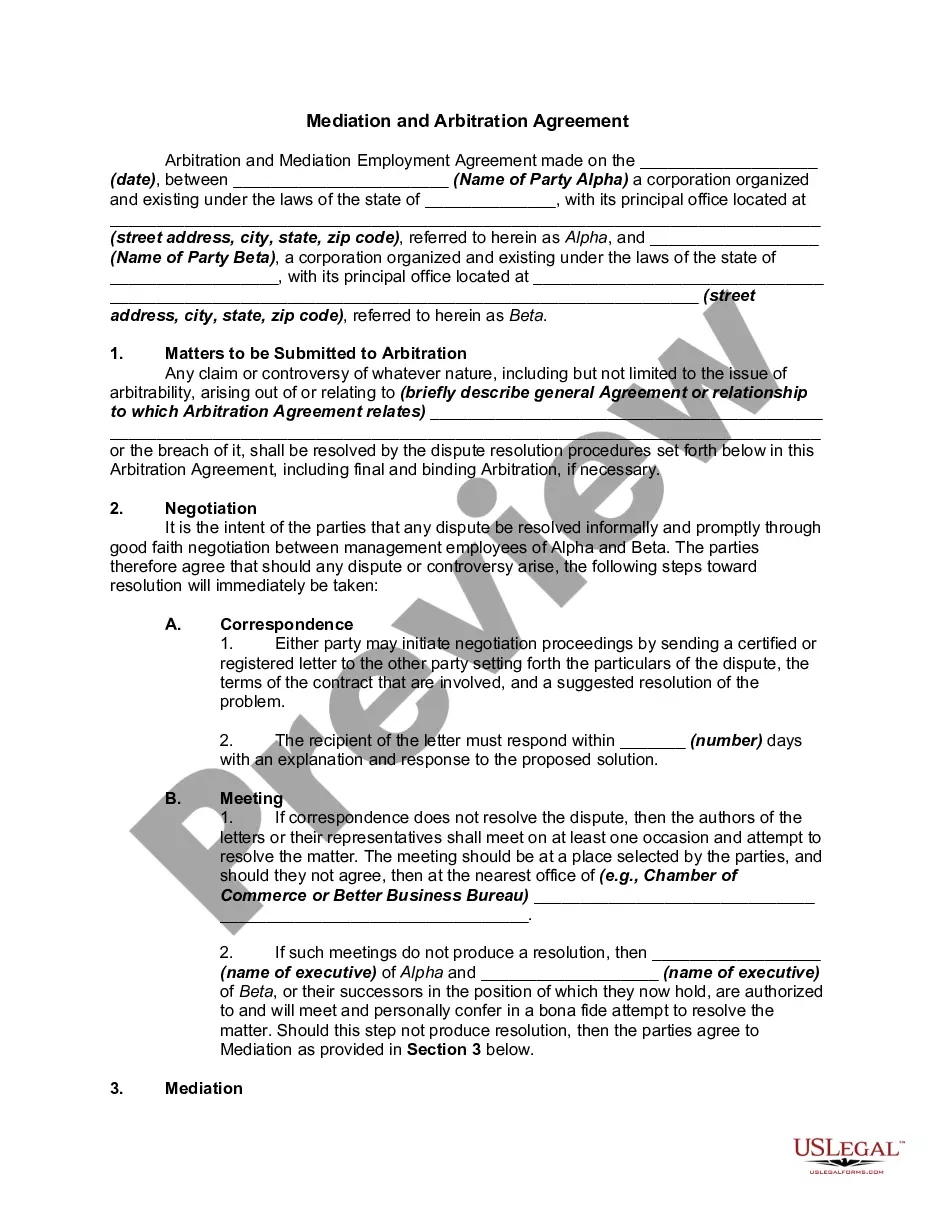



Get your form ready online
Our built-in tools help you complete, sign, share, and store your documents in one place.
Built-in online Word editor
Make edits, fill in missing information, and update formatting in US Legal Forms—just like you would in MS Word.
Export easily
Download a copy, print it, send it by email, or mail it via USPS—whatever works best for your next step.
E-sign your document
Sign and collect signatures with our SignNow integration. Send to multiple recipients, set reminders, and more. Go Premium to unlock E-Sign.
Notarize online 24/7
If this form requires notarization, complete it online through a secure video call—no need to meet a notary in person or wait for an appointment.
Store your document securely
We protect your documents and personal data by following strict security and privacy standards.

Make edits, fill in missing information, and update formatting in US Legal Forms—just like you would in MS Word.

Download a copy, print it, send it by email, or mail it via USPS—whatever works best for your next step.

Sign and collect signatures with our SignNow integration. Send to multiple recipients, set reminders, and more. Go Premium to unlock E-Sign.

If this form requires notarization, complete it online through a secure video call—no need to meet a notary in person or wait for an appointment.

We protect your documents and personal data by following strict security and privacy standards.
Looking for another form?





How to fill out Mediation And Arbitration Agreement?
US Legal Forms - one of the largest repositories of legal templates in the United States - provides a wide variety of legal document formats that you can download or print.
By utilizing the website, you can access thousands of forms for business and personal purposes, organized by categories, states, or keywords. You can obtain the most recent versions of forms like the Massachusetts Mediation and Arbitration Agreement in moments.
If you have an account, Log In to download the Massachusetts Mediation and Arbitration Agreement from the US Legal Forms database. The Download option will be available for every form you view. You can access all previously saved forms under the My documents section of your account.
Complete the transaction. Use your credit card or PayPal account to finalize the transaction.
Download the form to your device and make modifications. Fill out, edit, print, and sign the saved Massachusetts Mediation and Arbitration Agreement. Each template you add to your account does not expire and is permanently yours. Therefore, if you wish to download or print another copy, simply navigate to the My documents section and click on the form you need. Access the Massachusetts Mediation and Arbitration Agreement with US Legal Forms, the most extensive collection of legal document formats. Utilize a vast selection of professional and state-specific templates that cater to your business or personal needs.
- Make sure you have selected the correct form for your city/state.
- Use the Review option to examine the form's content.
- Check the description of the form to ensure you've chosen the right one.
- If the form doesn't meet your requirements, utilize the Search field at the top of the screen to find the one that does.
- Once satisfied with the form, confirm your choice by clicking the Acquire now button.
- Next, select the payment plan you prefer and provide your information to register for an account.
Form popularity
FAQ
A mediation and arbitration agreement outlines the terms under which parties agree to resolve their disputes through mediation and, if necessary, arbitration. This type of agreement provides a structured process that promotes open communication and encourages collaboration. By incorporating a Massachusetts Mediation and Arbitration Agreement, parties can benefit from a clear framework that saves time, minimizes conflict, and ensures a more favorable outcome for everyone involved.
In Massachusetts, mediation is not mandatory, but it is strongly encouraged in various legal contexts. Courts often recommend mediation as a way to resolve disputes effectively and amicably, particularly in family law cases. Engaging in a Massachusetts Mediation and Arbitration Agreement can lead to faster resolution and reduced costs, making it a valuable option for parties seeking to avoid protracted litigation.
Yes, you can go to arbitration after mediation if the mediation does not resolve the dispute. The Massachusetts Mediation and Arbitration Agreement often allows for this progression from mediation to arbitration. This sequence offers parties an opportunity to resolve issues amicably before moving to a more formal arbitration process. Engaging with platforms like US Legal Forms can help you understand your options and guide you through both processes.
To file for arbitration in Massachusetts, you need to follow specific steps outlined in your Massachusetts Mediation and Arbitration Agreement. Typically, you start by submitting a demand for arbitration to the chosen arbitration service. This submission usually includes details about your dispute and any relevant documents supporting your case. Utilizing resources like US Legal Forms can simplify this process and provide the necessary forms.
The combination of mediation and arbitration refers to a blended approach used to resolve disputes. In this process, parties first attempt mediation to reach a mutual agreement. If mediation does not succeed, arbitration then serves as the next step for a binding resolution. Understanding the Massachusetts Mediation and Arbitration Agreement helps you navigate this combined approach effectively.
Arbitration clauses are generally enforceable in Massachusetts, similar to Massachusetts Mediation and Arbitration Agreements, as long as they comply with established legal standards. Courts will assess whether the clause is fair, voluntary, and understood by both parties. If you have concerns about an arbitration clause in your agreement, consulting with a legal professional can help you navigate the complexities involved.
Yes, you can use both mediation and arbitration processes, often referred to as a hybrid approach. In a Massachusetts Mediation and Arbitration Agreement, parties may first attempt to resolve their disputes through mediation. If mediation does not succeed, they can then proceed to arbitration, providing a structured method to settle the conflict efficiently. This approach can offer benefits like reduced costs and quicker resolutions.
Yes, Massachusetts courts typically enforce arbitration agreements, including Massachusetts Mediation and Arbitration Agreements, as long as they meet certain legal criteria. These agreements must be clear, voluntarily entered into, and not unconscionable. If you have questions about the enforceability of your agreement, seeking guidance from a legal expert can provide additional clarity and help protect your rights.
Signing a Massachusetts Mediation and Arbitration Agreement generally means you agree to resolve disputes through arbitration instead of court. However, there are circumstances where you may still pursue a lawsuit. For example, if the agreement is deemed unenforceable or if the issue falls outside the agreement’s scope, you might retain the right to litigate. It's essential to consult with a legal professional to understand your specific situation.
To initiate arbitration, first refer to your Massachusetts Mediation and Arbitration Agreement to confirm the process outlined within it. Next, gather necessary documentation and notify the other party of your intention to proceed with arbitration. Once both parties agree, you can select an arbitrator and set a date for the hearing, allowing you to move toward resolution efficiently.