Massachusetts Voting Agreement Among Stockholders to Elect Directors
Description
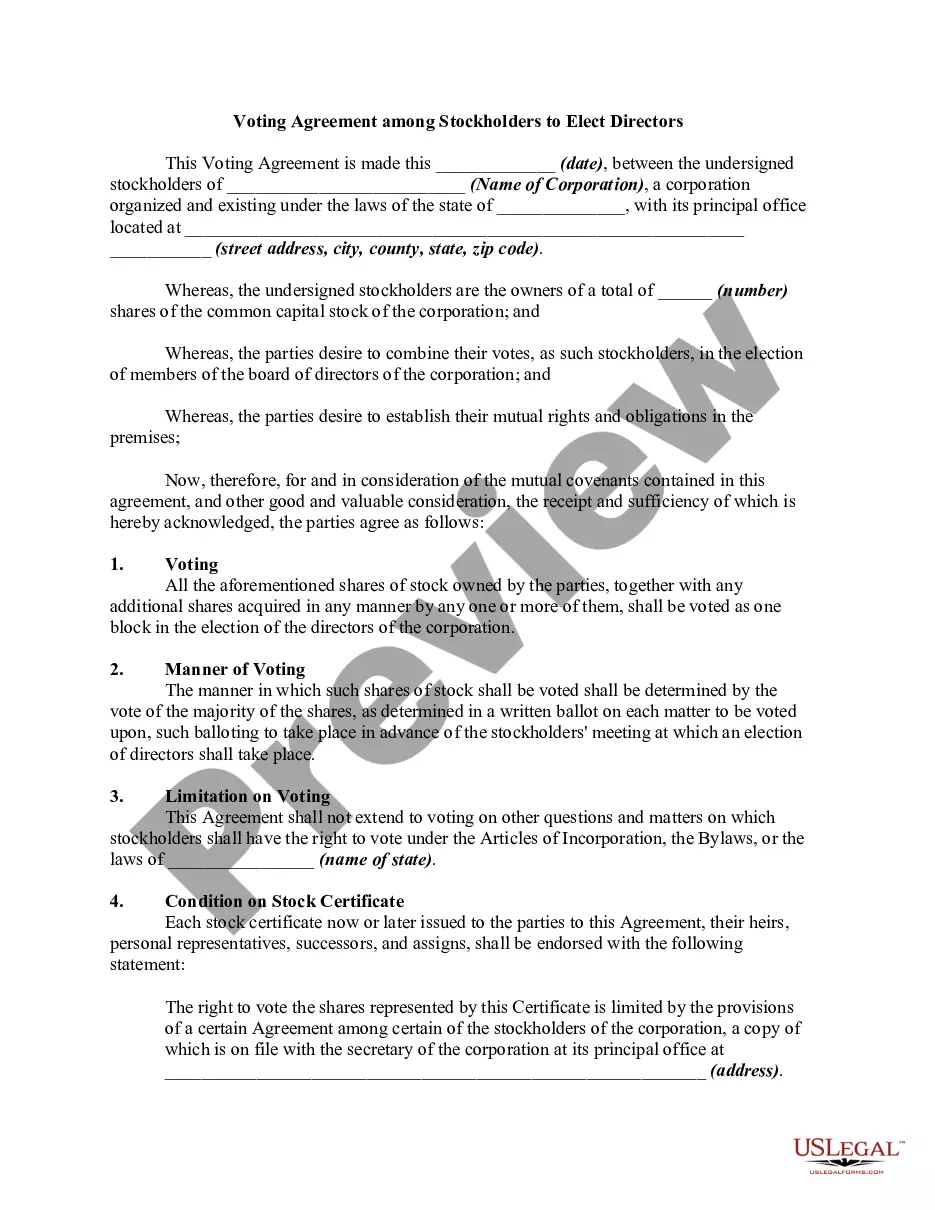
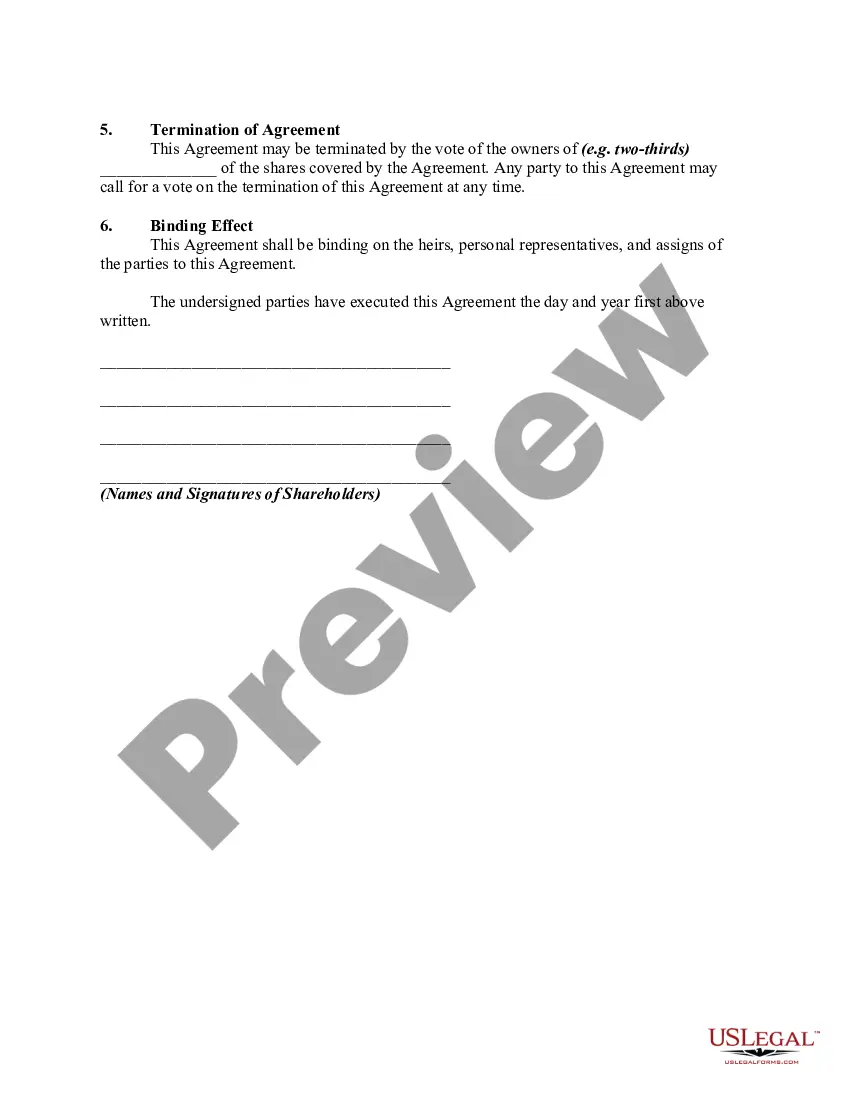
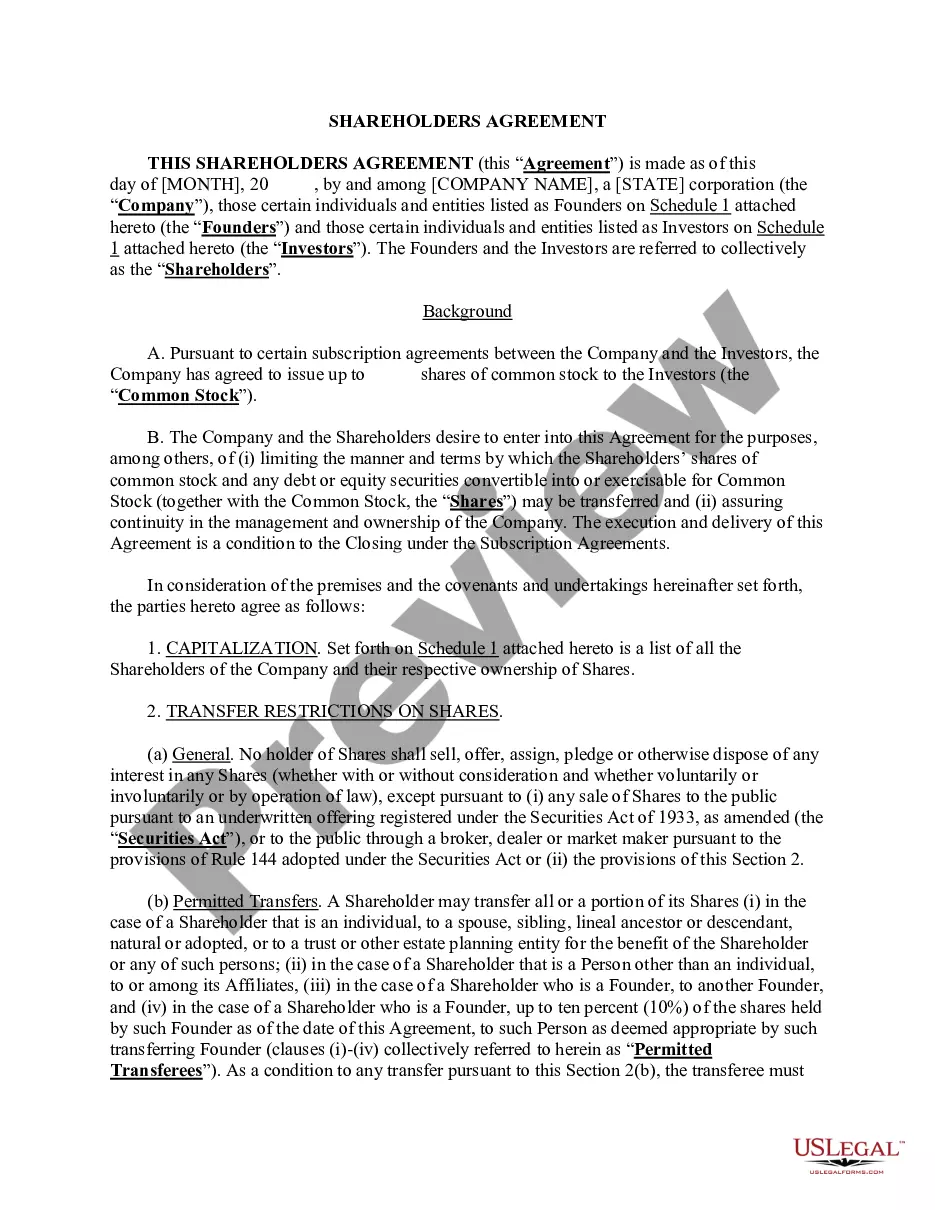
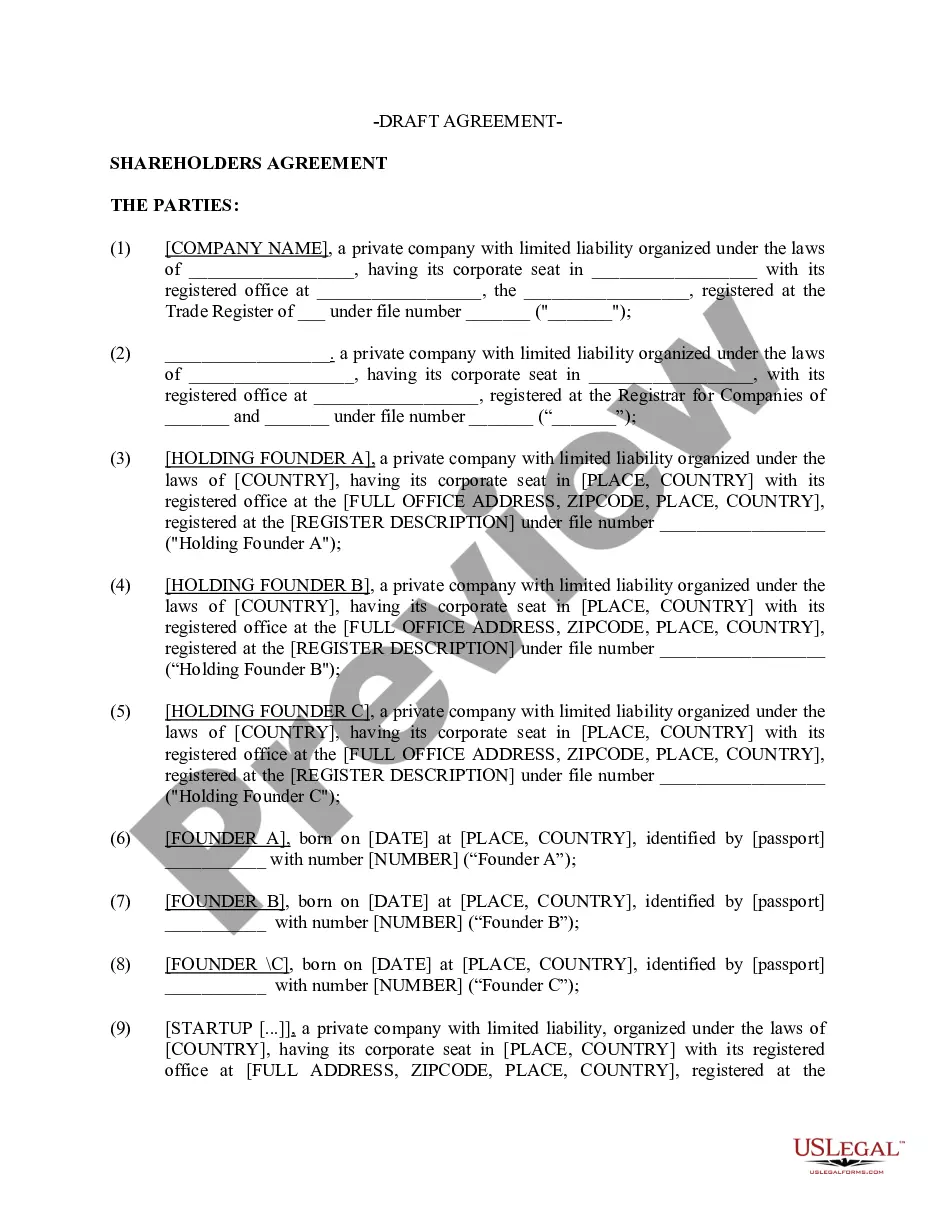
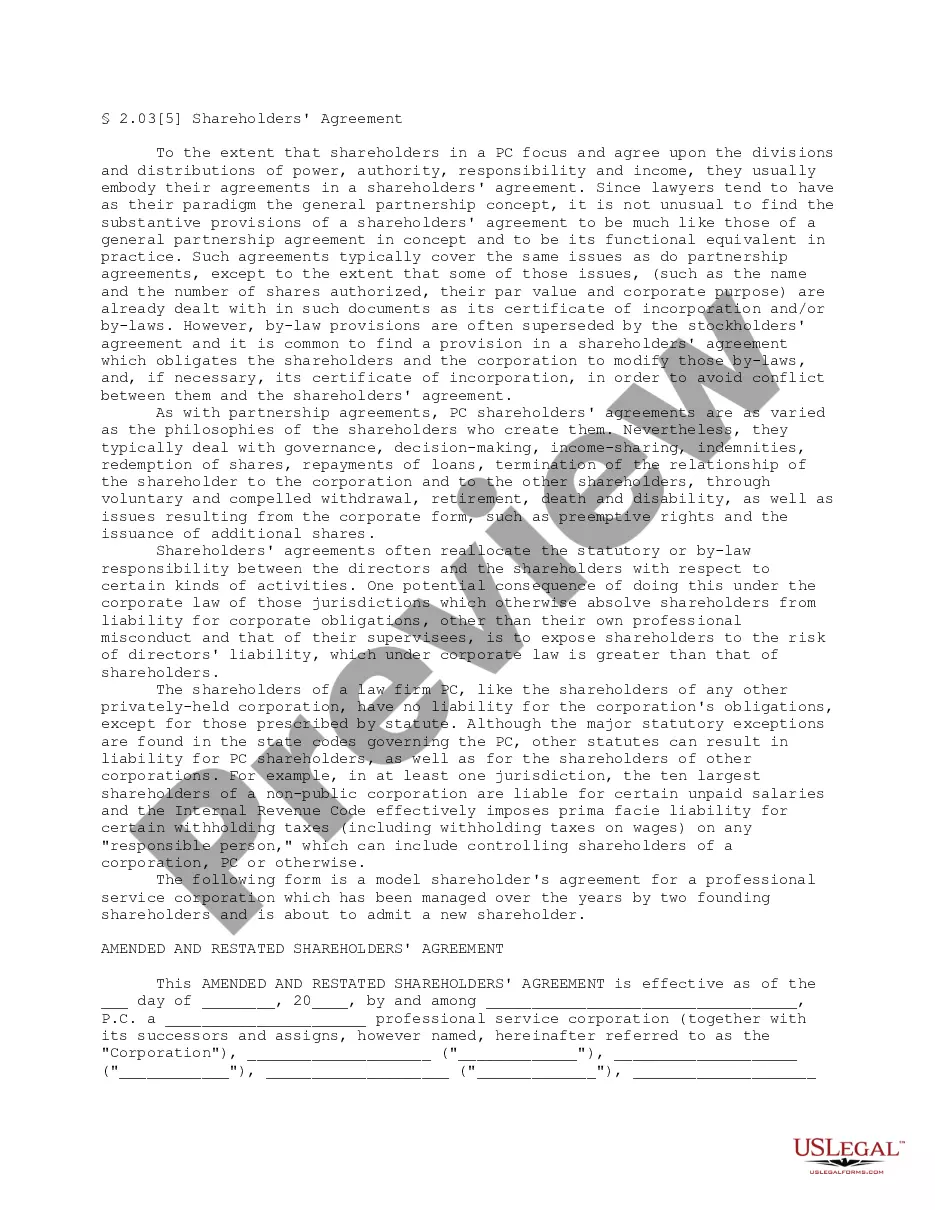
Get your form ready online
Our built-in tools help you complete, sign, share, and store your documents in one place.
Make edits, fill in missing information, and update formatting in US Legal Forms—just like you would in MS Word.
Download a copy, print it, send it by email, or mail it via USPS—whatever works best for your next step.
Sign and collect signatures with our SignNow integration. Send to multiple recipients, set reminders, and more. Go Premium to unlock E-Sign.
If this form requires notarization, complete it online through a secure video call—no need to meet a notary in person or wait for an appointment.
We protect your documents and personal data by following strict security and privacy standards.

Make edits, fill in missing information, and update formatting in US Legal Forms—just like you would in MS Word.

Download a copy, print it, send it by email, or mail it via USPS—whatever works best for your next step.

Sign and collect signatures with our SignNow integration. Send to multiple recipients, set reminders, and more. Go Premium to unlock E-Sign.

If this form requires notarization, complete it online through a secure video call—no need to meet a notary in person or wait for an appointment.

We protect your documents and personal data by following strict security and privacy standards.
Looking for another form?


How to fill out Voting Agreement Among Stockholders To Elect Directors?
You can utilize your time online searching for the legitimate document template that conforms to the federal and state standards that you require.
US Legal Forms offers a wide range of legal forms that have been evaluated by professionals.
You are able to download or print the Massachusetts Voting Agreement Among Stockholders to Elect Directors from my service.
If available, use the Preview button to view the document template as well.
- If you possess a US Legal Forms account, you can Log In and hit the Download button.
- Afterward, you can complete, edit, print, or sign the Massachusetts Voting Agreement Among Stockholders to Elect Directors.
- Every legal document template you purchase is yours indefinitely.
- To obtain another copy of any acquired form, navigate to the My documents tab and click the respective button.
- When using the US Legal Forms website for the first time, follow the straightforward instructions below.
- First, ensure that you have selected the correct document template for your desired region/town.
- Review the form description to confirm that you have chosen the appropriate form.
Form popularity
FAQ
The voting agreements only involve executive officers, directors, affiliates, founders and their family members, and holders of 5% or more of the voting equity securities of the target. The persons signing the voting agreements collectively own less than 100% of the voting equity of the target.
It is imperative to note that the voting rights agreements are valid only between the shareholders. One can elect directors at annual or special meetings and express their opinions to company management and directors on important topics that could influence the value of their shares.
Key Takeaways. Stockholder voting right allow shareholders of record in a company to vote on certain corporate actions, elect members to the board of directors, and approve issuing new securities or payment of dividends. Shareholders cast votes at a company's annual meeting.
Shareholders typically have the right to vote in elections for the board of directors and on proposed operational alterations such as shifts of corporate aims and goals or fundamental structural changes.
This can be achieved by a vote at a general meeting or (in the case of a private company only) by getting agreement to a written resolution. A director who is also a shareholder can participate in the vote, even if he is one of the directors interested in the matter being authorised.
Voting Agreements If a suit for specific performance is successful, the court will order the parties to vote the shares in accordance with the voting agreement. Unlike voting trusts, voting agreements can be for any duration and do not need to be filed with the corporation.
Directors cannot enter into similar voting agreement. This is the prerogative of the shareholders. Each director has an obligation to exercise his own business judgment because directors own special fiduciary duties to the corporation.
Typically, the Shareholders meet annually to elect the Directors and approve their actions; the Board of Directors meets annually or quarterly to review the Officers' actions and the Officers meet as often as necessary to run the entity.
A voting trust agreement is a contractual agreement in which shareholders with voting rights transfer their shares to a trustee, in return for a voting trust certificate. This gives the voting trustees temporary control of the corporation.
The board of directors of a public company is elected by shareholders. The board makes key decisions on issues such as mergers and dividends, hires senior managers, and sets their pay. Board of directors candidates can be nominated by the company's nominations committee or by outsiders seeking change.