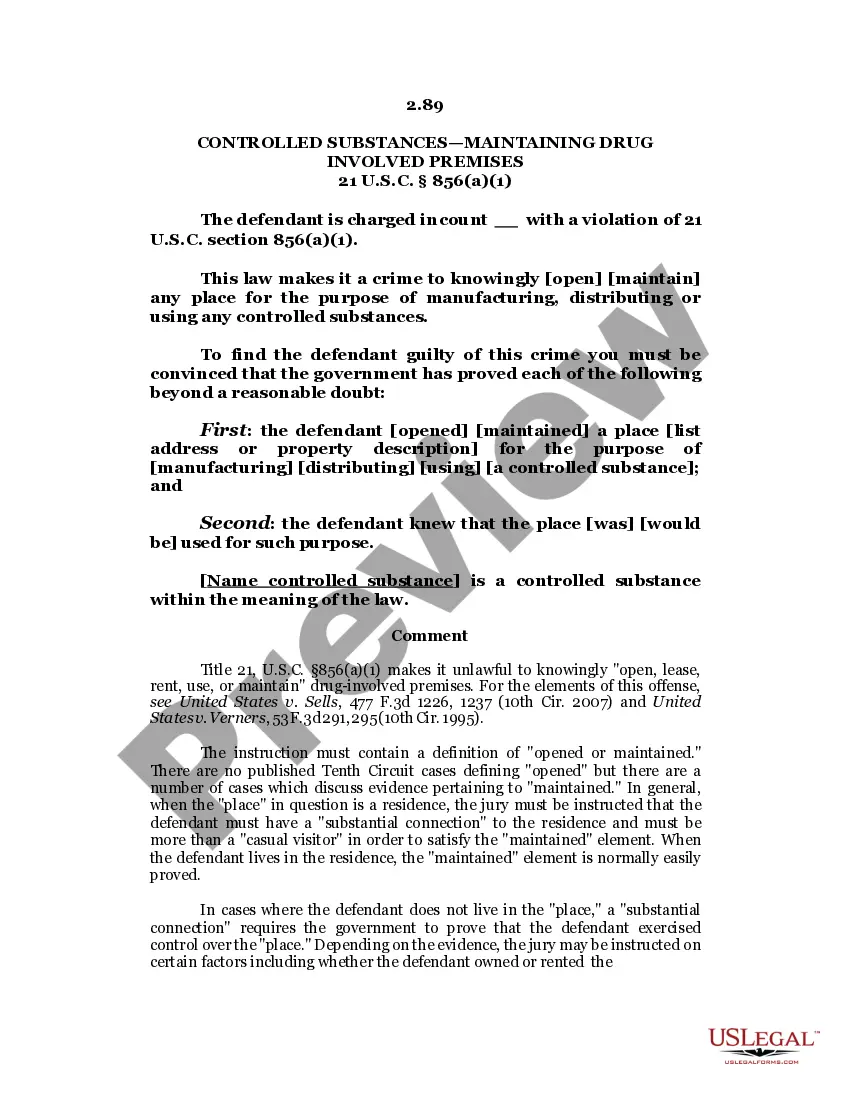
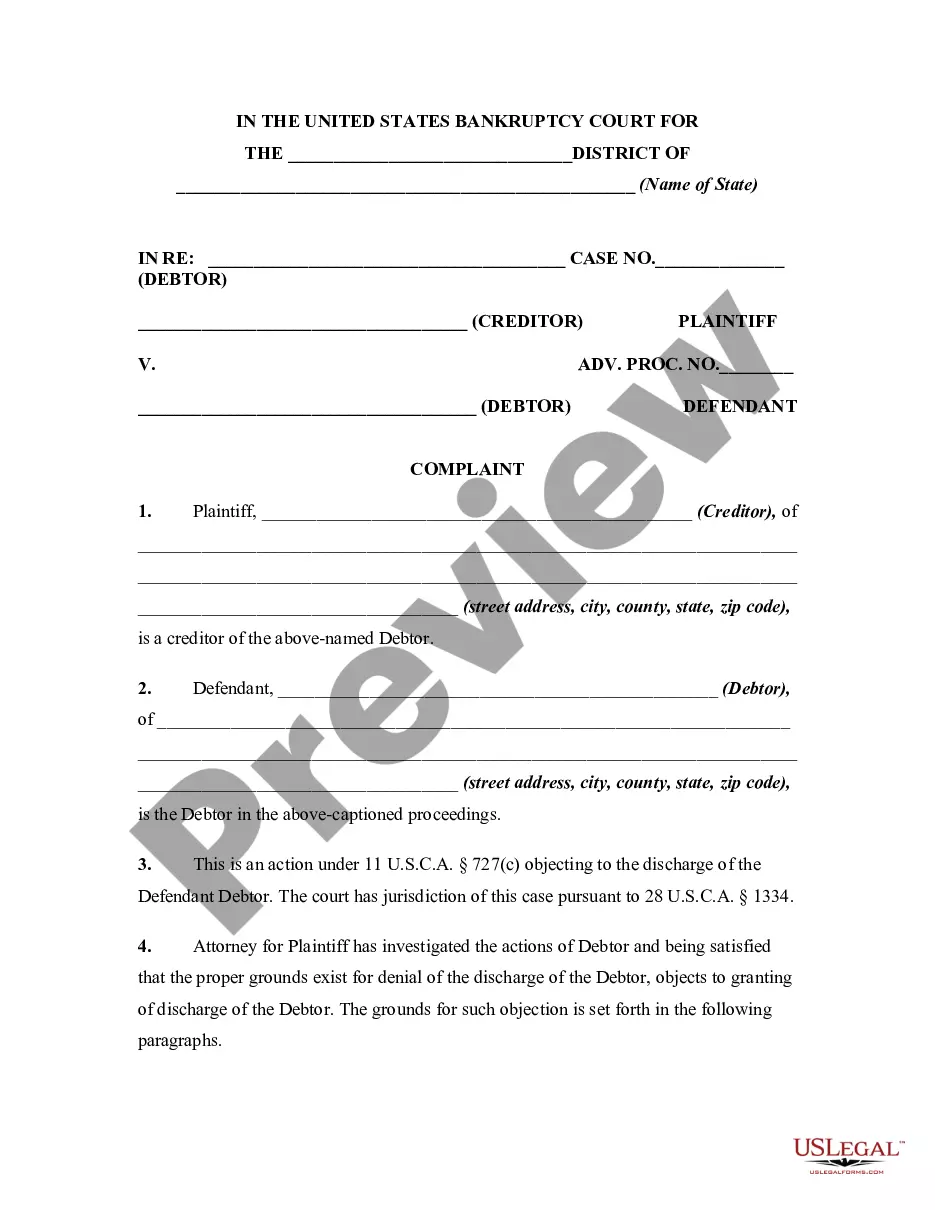
The decree of the bankruptcy court which terminates the bankruptcy proceedings is generally a discharge that releases the debtor from most debts. A bankruptcy court may refuse to grant a discharge under certain conditions.
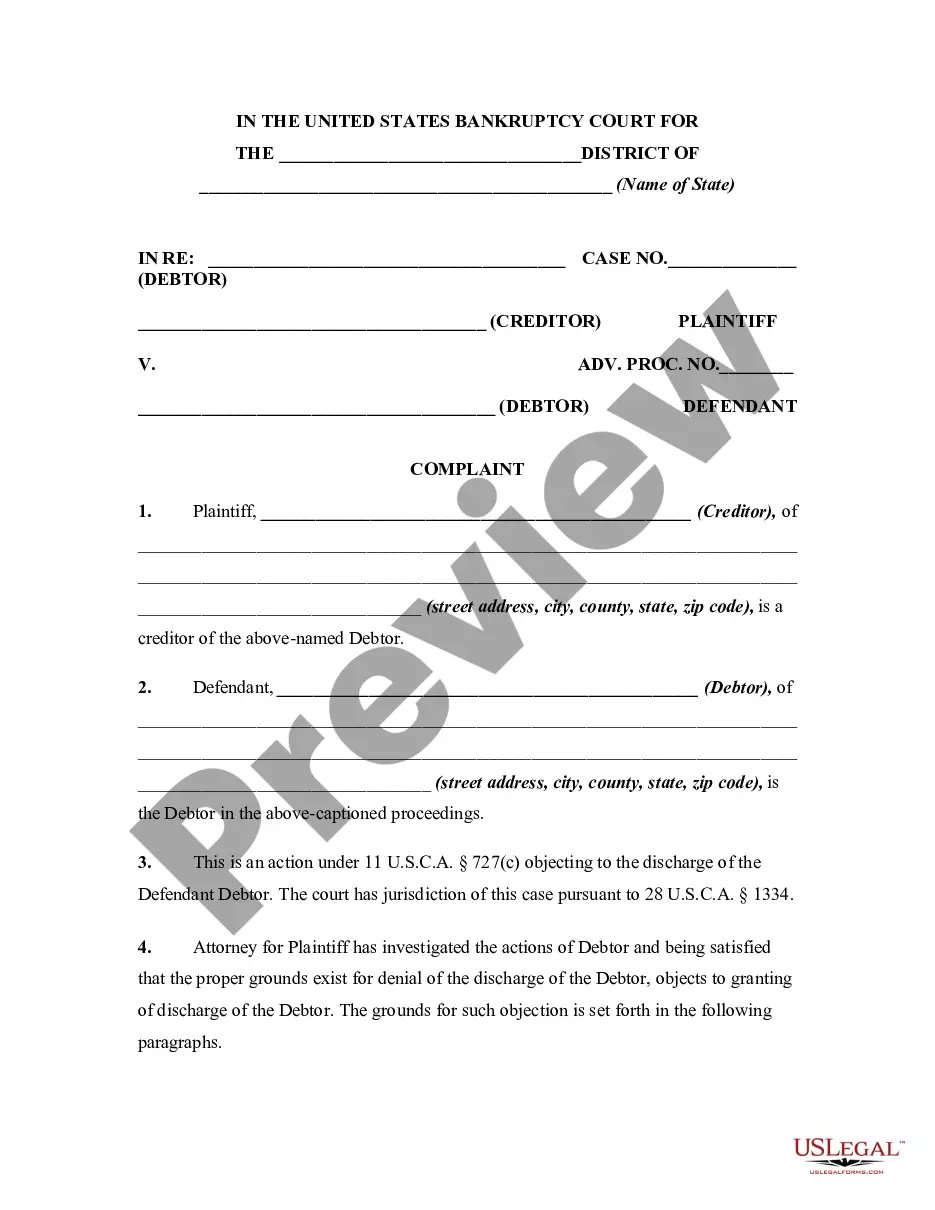
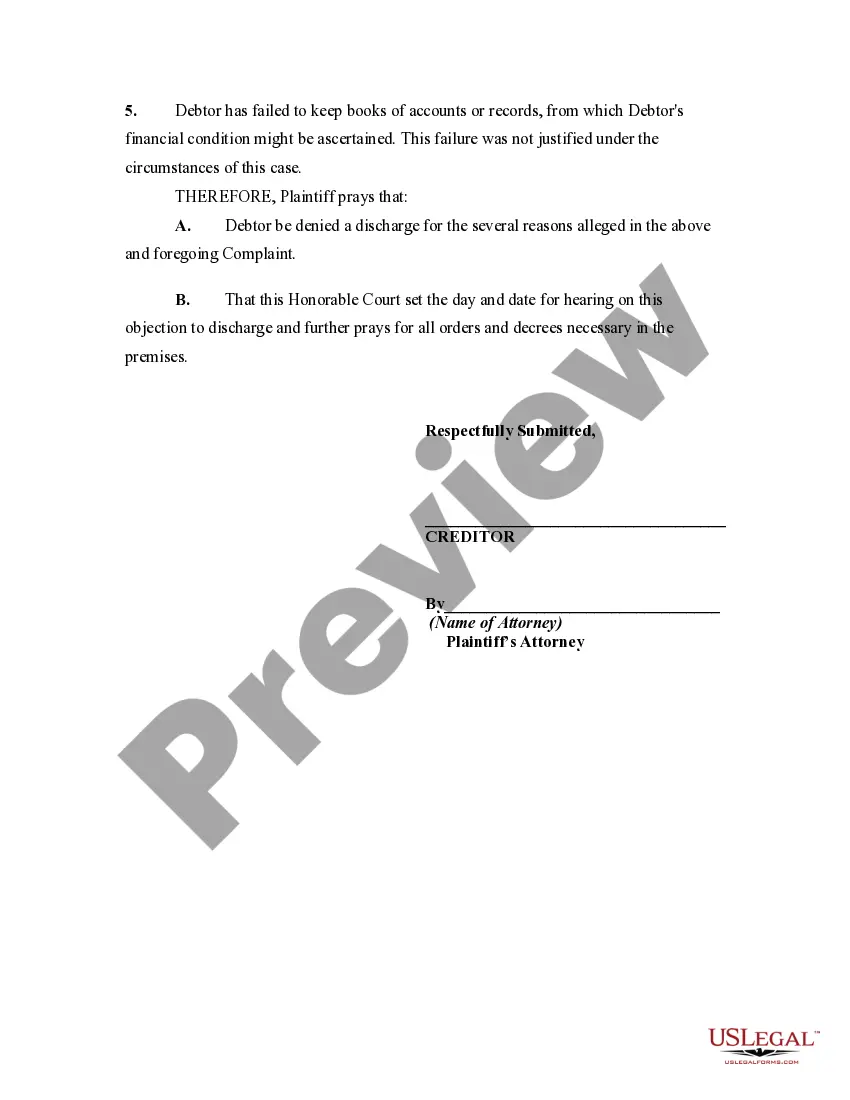
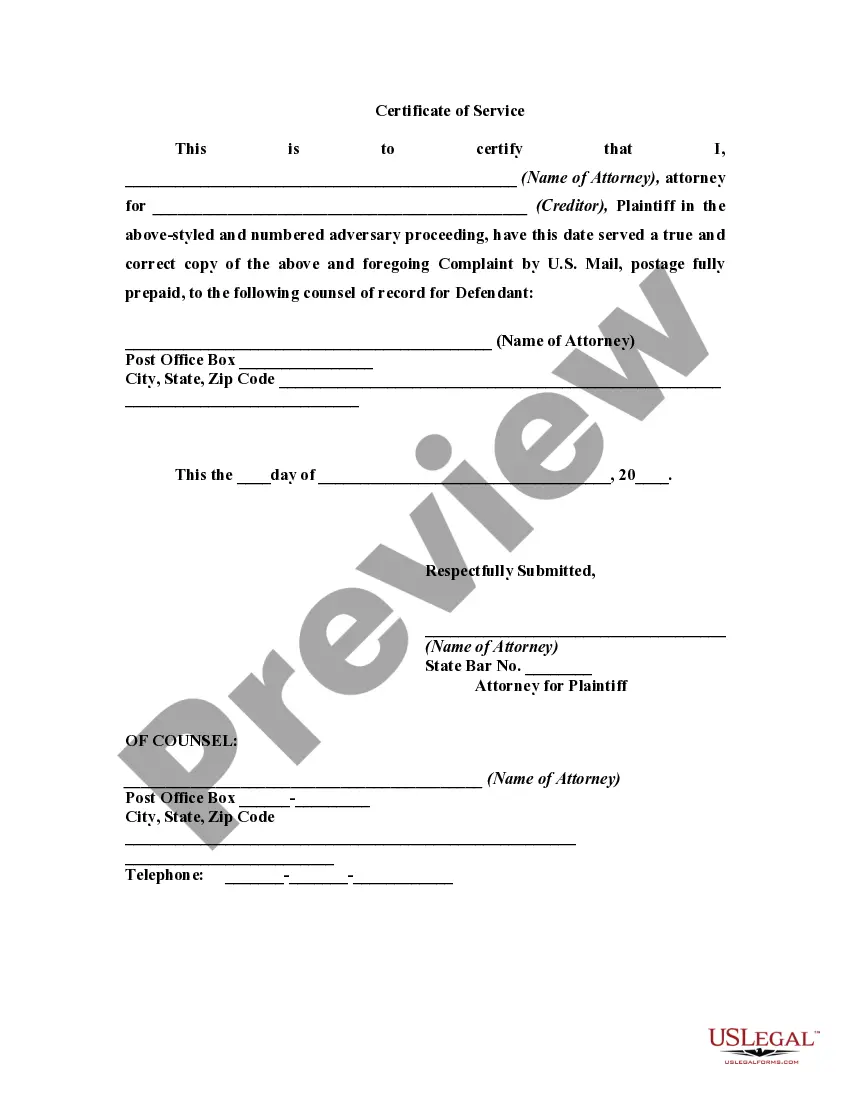
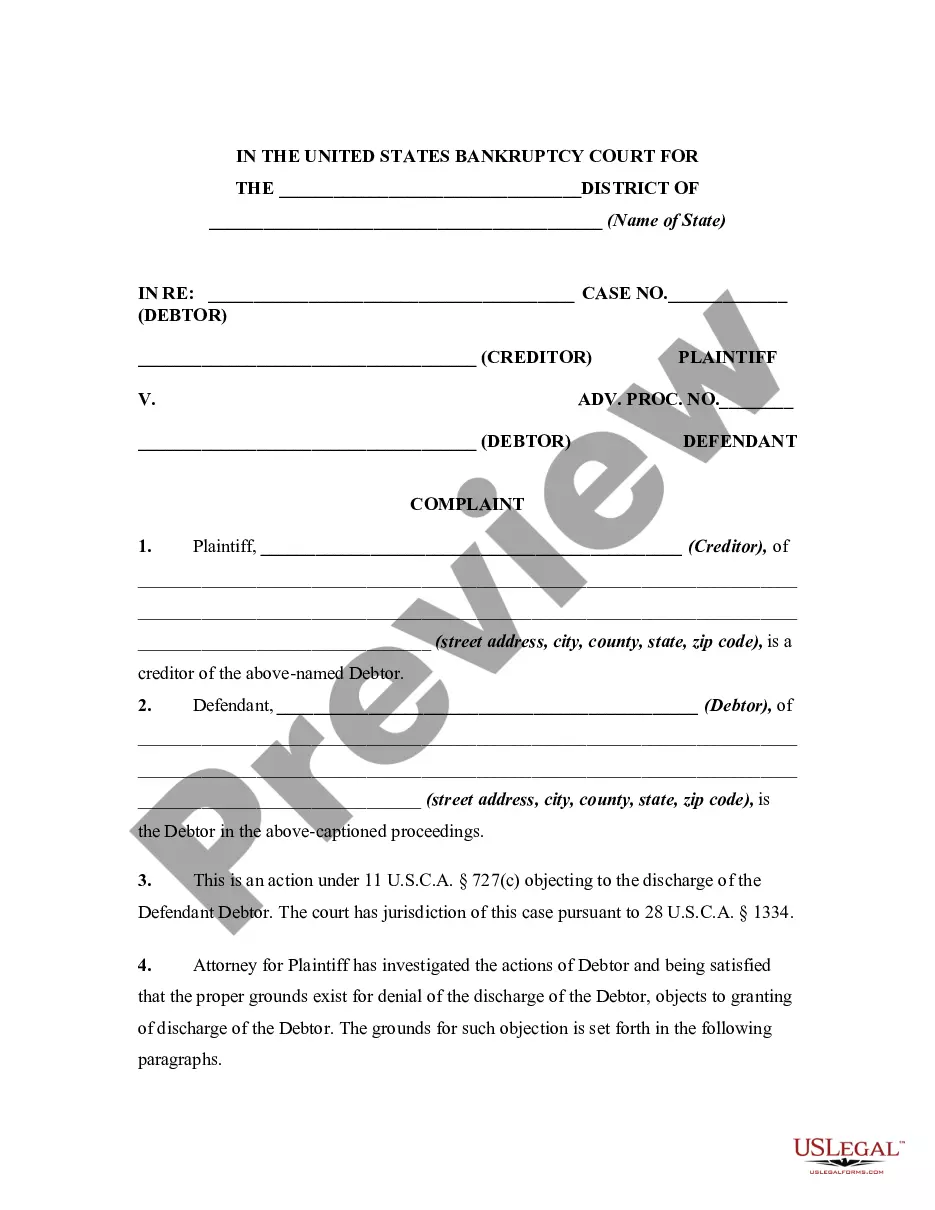
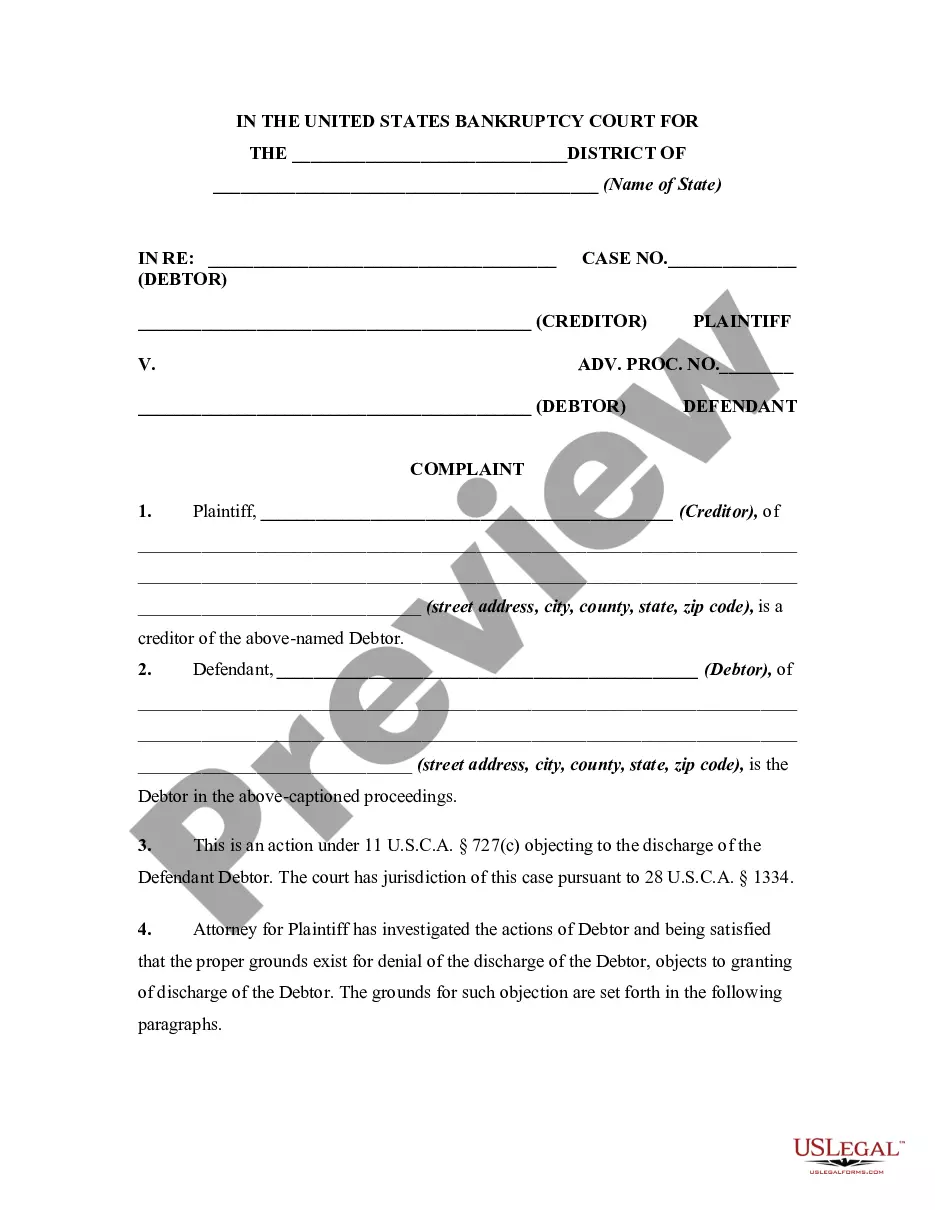
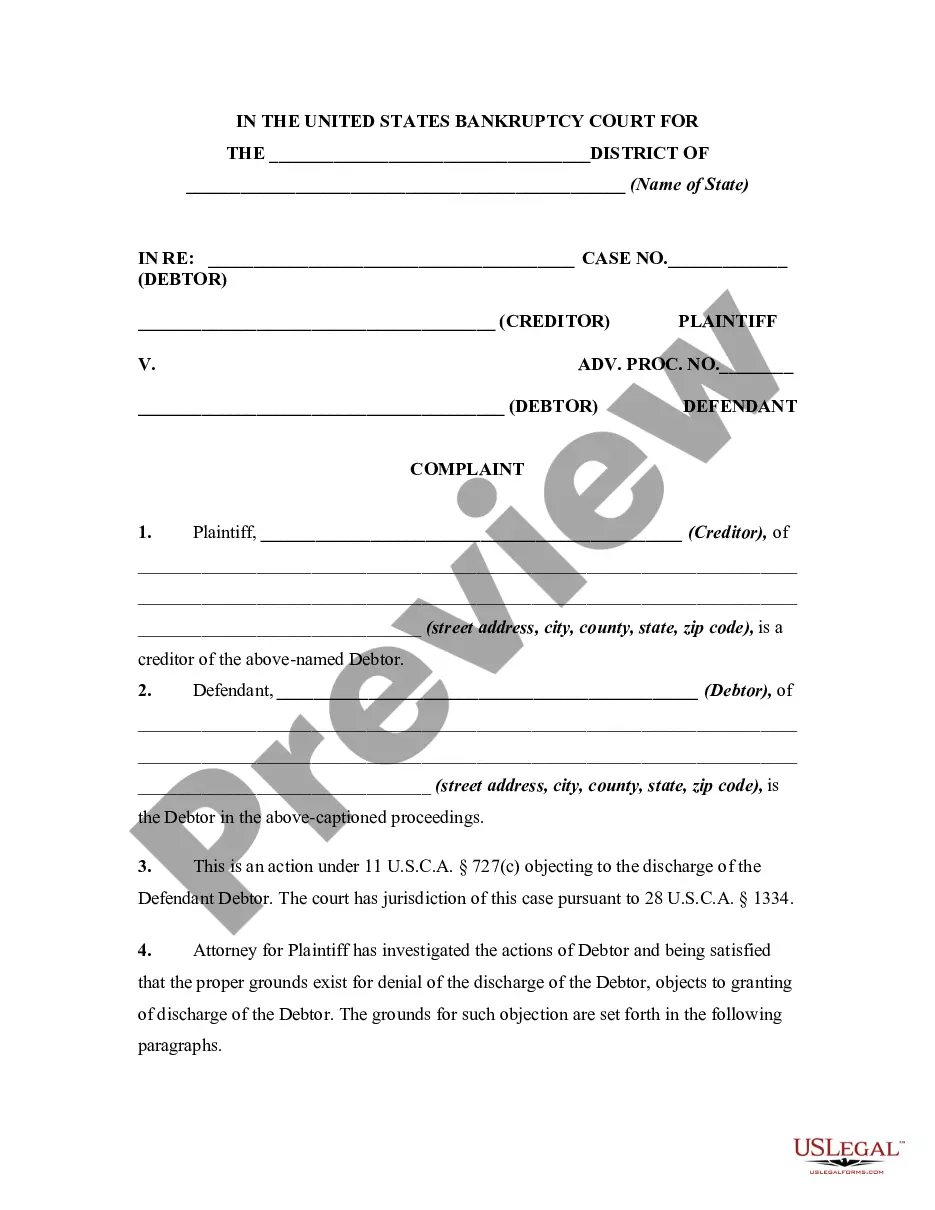
Massachusetts Complaint Objecting to Discharge or Debtor in Bankruptcy Proceeding for Failure to Keep Books and Records
State:
Multi-State
Control #:
US-01088BG
Format:
Word;
Rich Text
Instant download
Description
Free preview
Get your form ready online
Our built-in tools help you complete, sign, share, and store your documents in one place.
Built-in online Word editor
Make edits, fill in missing information, and update formatting in US Legal Forms—just like you would in MS Word.
Export easily
Download a copy, print it, send it by email, or mail it via USPS—whatever works best for your next step.
E-sign your document
Sign and collect signatures with our SignNow integration. Send to multiple recipients, set reminders, and more. Go Premium to unlock E-Sign.
Notarize online 24/7
If this form requires notarization, complete it online through a secure video call—no need to meet a notary in person or wait for an appointment.
Store your document securely
We protect your documents and personal data by following strict security and privacy standards.

Make edits, fill in missing information, and update formatting in US Legal Forms—just like you would in MS Word.

Download a copy, print it, send it by email, or mail it via USPS—whatever works best for your next step.

Sign and collect signatures with our SignNow integration. Send to multiple recipients, set reminders, and more. Go Premium to unlock E-Sign.

If this form requires notarization, complete it online through a secure video call—no need to meet a notary in person or wait for an appointment.

We protect your documents and personal data by following strict security and privacy standards.
Looking for another form?


How to fill out Complaint Objecting To Discharge Or Debtor In Bankruptcy Proceeding For Failure To Keep Books And Records?
US Legal Forms - one of the largest collections of legal documents in the USA - offers an extensive selection of legal form templates that you can download or print. By using the website, you can access thousands of forms for business and personal use, organized by type, state, or keywords.
You can find the latest templates such as the Massachusetts Complaint Objecting to Discharge or Debtor in Bankruptcy Proceeding for Failure to Keep Books and Records in just a few minutes. If you hold a subscription, Log In and download the Massachusetts Complaint Objecting to Discharge or Debtor in Bankruptcy Proceeding for Failure to Keep Books and Records from your US Legal Forms library. The Download option will appear on every form you view. You can access all previously downloaded forms in the My documents section of your account.
To utilize US Legal Forms for the first time, here are straightforward instructions to get you started: Ensure you have selected the appropriate form for your city/state. Click on the Review option to inspect the form's content. Check the form description to confirm you have chosen the correct form. If the form does not meet your requirements, use the Search bar at the top of the screen to find one that does. When you are content with the form, confirm your choice by clicking the Get now button. Then, select the payment plan you prefer and provide your details to register for an account. Process the transaction. Use your credit card or PayPal account to complete the transaction. Choose the format and download the form to your device. Make edits. Complete, modify, and print or sign the downloaded Massachusetts Complaint Objecting to Discharge or Debtor in Bankruptcy Proceeding for Failure to Keep Books and Records. Each template you added to your account has no expiration date and belongs to you permanently. So, if you wish to download or print another copy, simply go to the My documents section and click on the form you need.
- Access the Massachusetts Complaint Objecting to Discharge or Debtor in Bankruptcy Proceeding for Failure to Keep Books and Records with US Legal Forms, the most extensive collection of legal document templates.
- Utilize a plethora of professional and state-specific templates that cater to your business or personal requirements and needs.
Form popularity
FAQ
No one can prevent a person from filing bankruptcy but a bankrupt's discharge can be opposed by the Office of the Superintendent of bankruptcy, a creditor or the trustee.
You'll still be required to keep up all payments on secured debts for assets you plan to keep, like payments on your mortgage or car loan. Bankruptcy does not eliminate spousal or child support payments. Bankruptcy also won't get rid of court fines or debts due to fraud.
You cannot remove a discharged debt from your credit report unless the information listed is incorrect. Even though you repaid the debt, partially or in full, or the lender stopped its collection attempts, the entry will remain on your report for seven years.
To remove the bankruptcy before the seven or ten years elapse, you'll have to prove that the bankruptcy was placed on your report by mistake or that the bankruptcy has remained on your credit report past the statutory timeline as defined by the Fair Credit Reporting Act (FCRA).
Accurate items in your record can't be removed before the term set by law expires, which is seven years for most negative items. For example, if you missed payments on your credit card, your dispute to remove that information will be denied.
Though Chapter 7 stays on your report for up to 10 years, the debt you discharge may go away sooner. That's because most negative accounts fall off your report seven years or so after any final payment or activity. But some Chapter 13 debts may show up on your report after the bankruptcy drops off.
This requirement protects consumers from having any inaccurate information on their reports that would unfairly harm their credit. But this also prevents information from being removed when it is correct. So when you have a bankruptcy case on your credit report and it's accurate, it can't be removed early.
You can't remove bankruptcies from your credit report unless they are inaccurate. Bankruptcies will automatically be removed from your credit report after seven or 10 years.