Massachusetts Protecting Minors from Identity Theft Package
What is this form package?
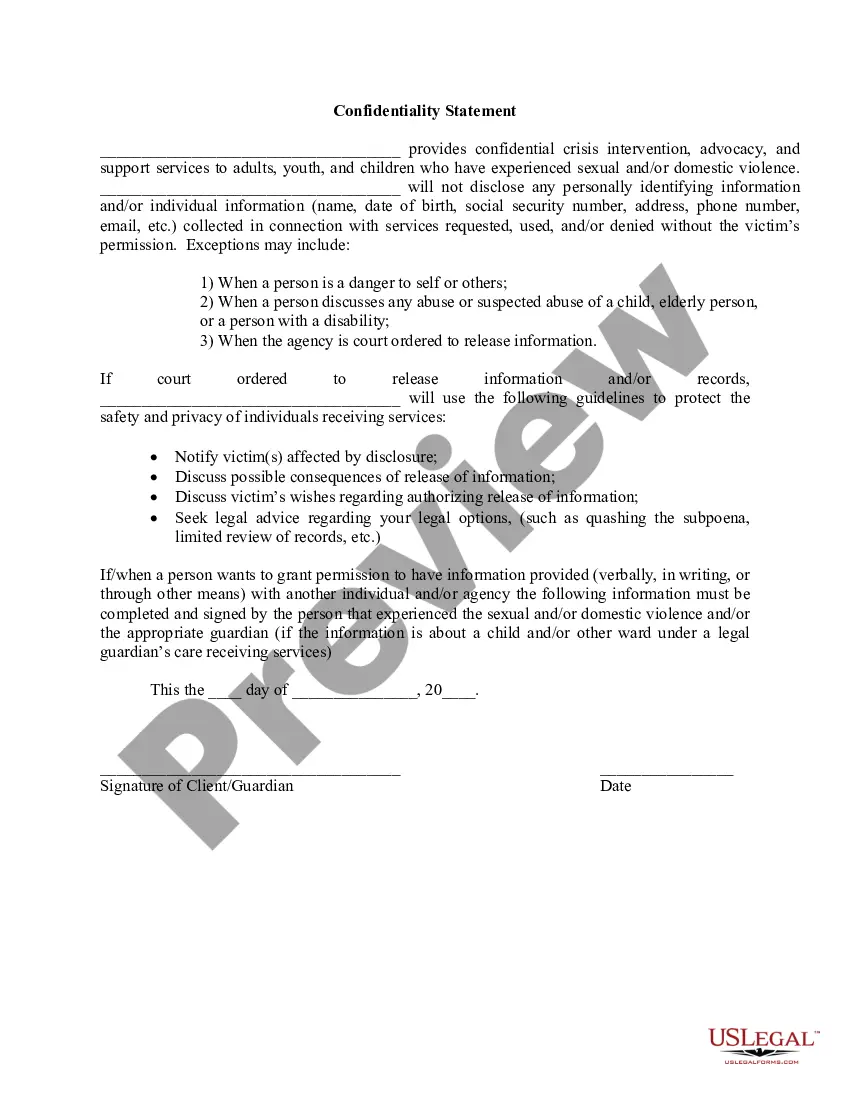
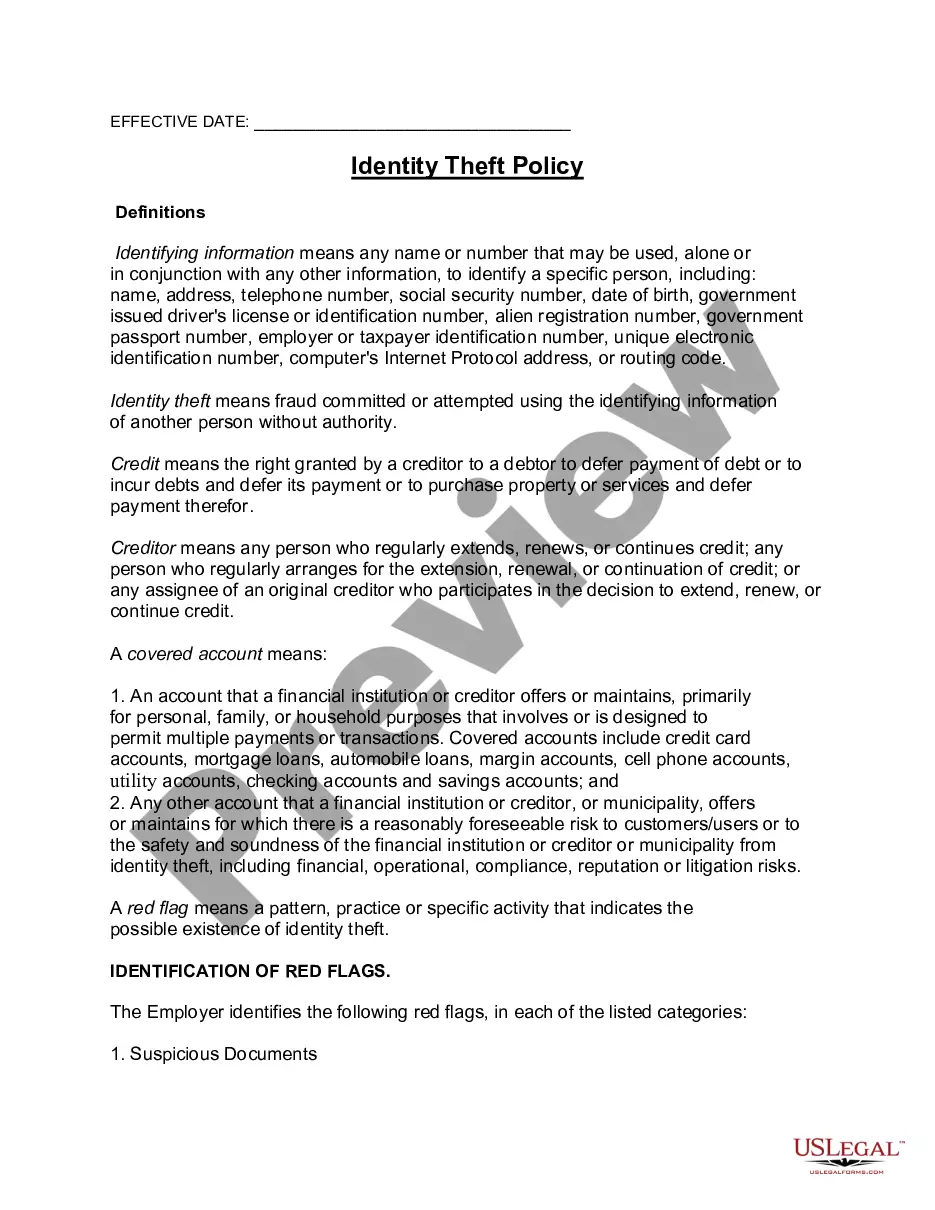
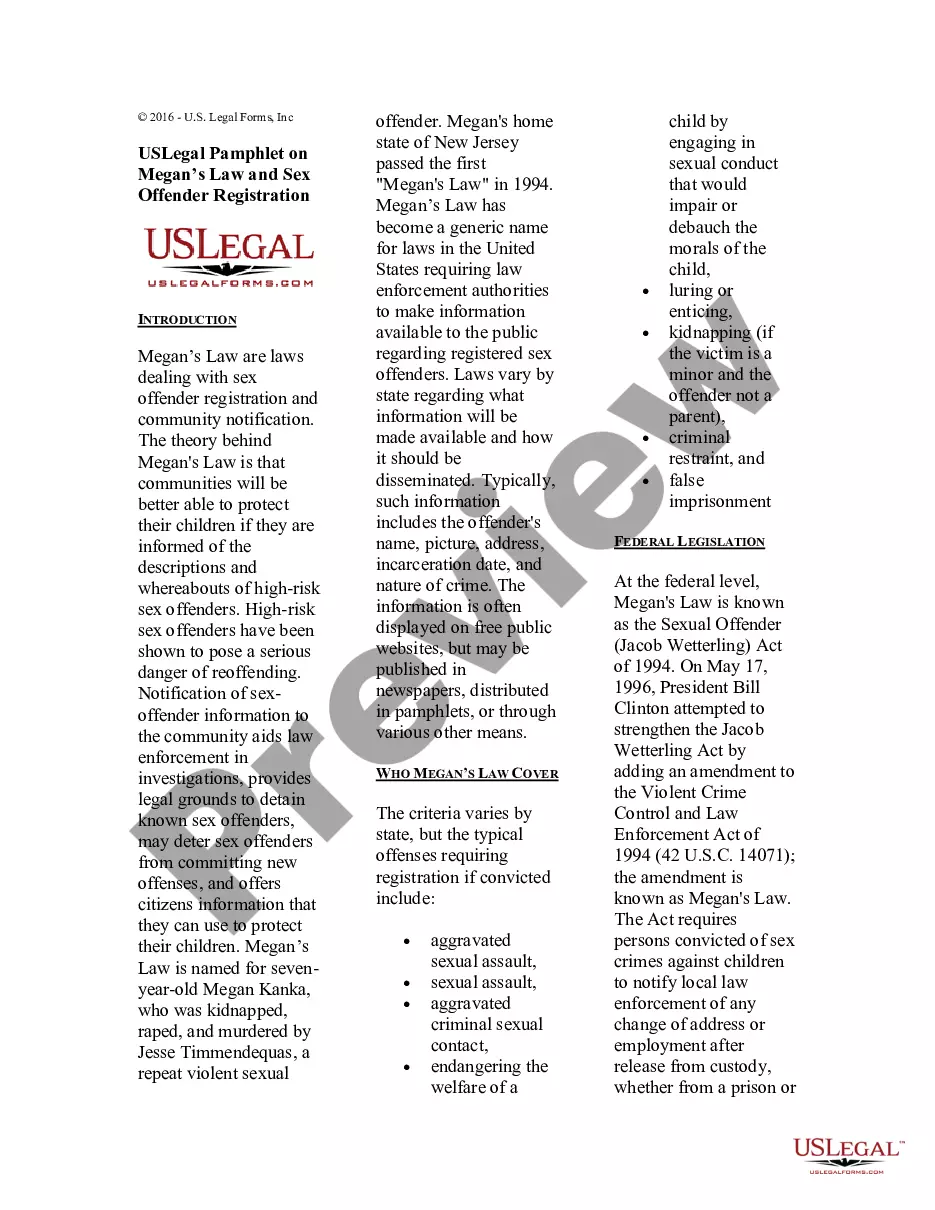
The Massachusetts Protecting Minors from Identity Theft Package is designed to help minors and their parents deal with the aftermath of identification theft. This package provides essential forms that allow parents to clear their child's name from fraudulent activities and communicate with creditors and government agencies. By utilizing this package, families can effectively minimize time and costs associated with restoring a minor's identity and protect their financial future, which sets it apart from other general identity theft packages.
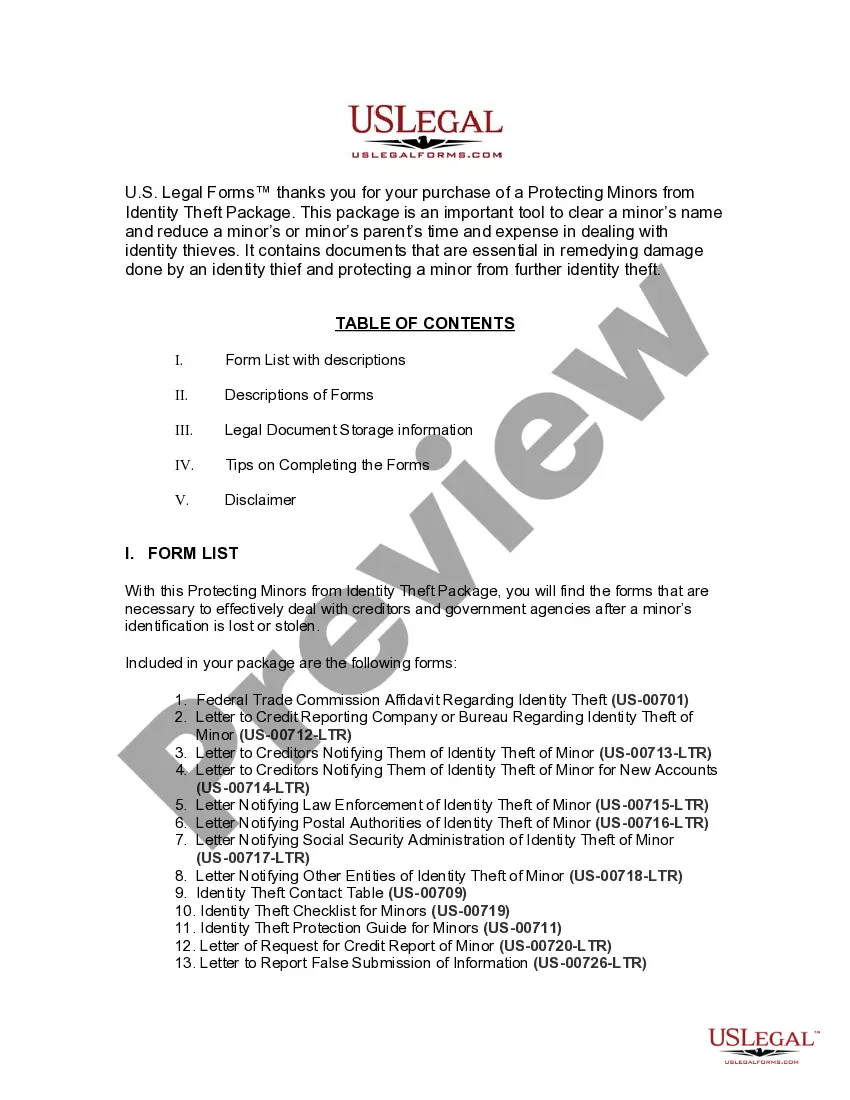
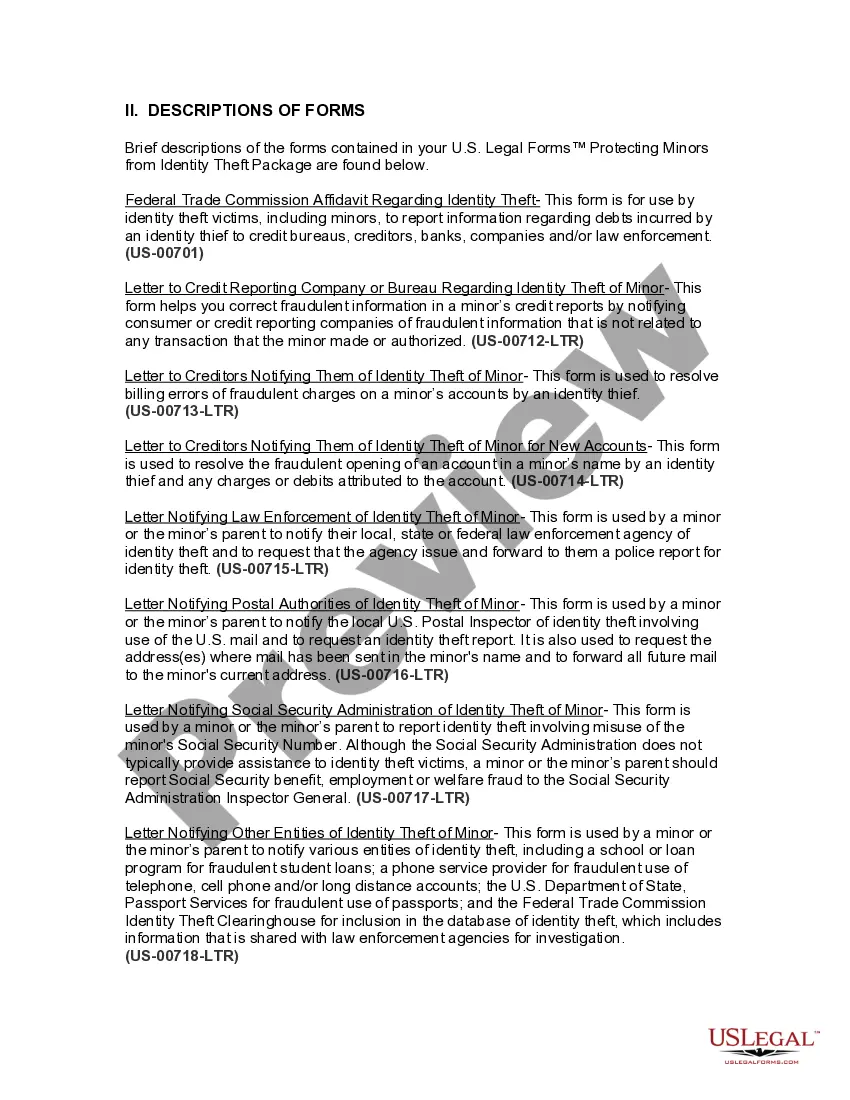
Forms you’ll find in this package
- Federal Trade Commission Affidavit regarding Identity Theft
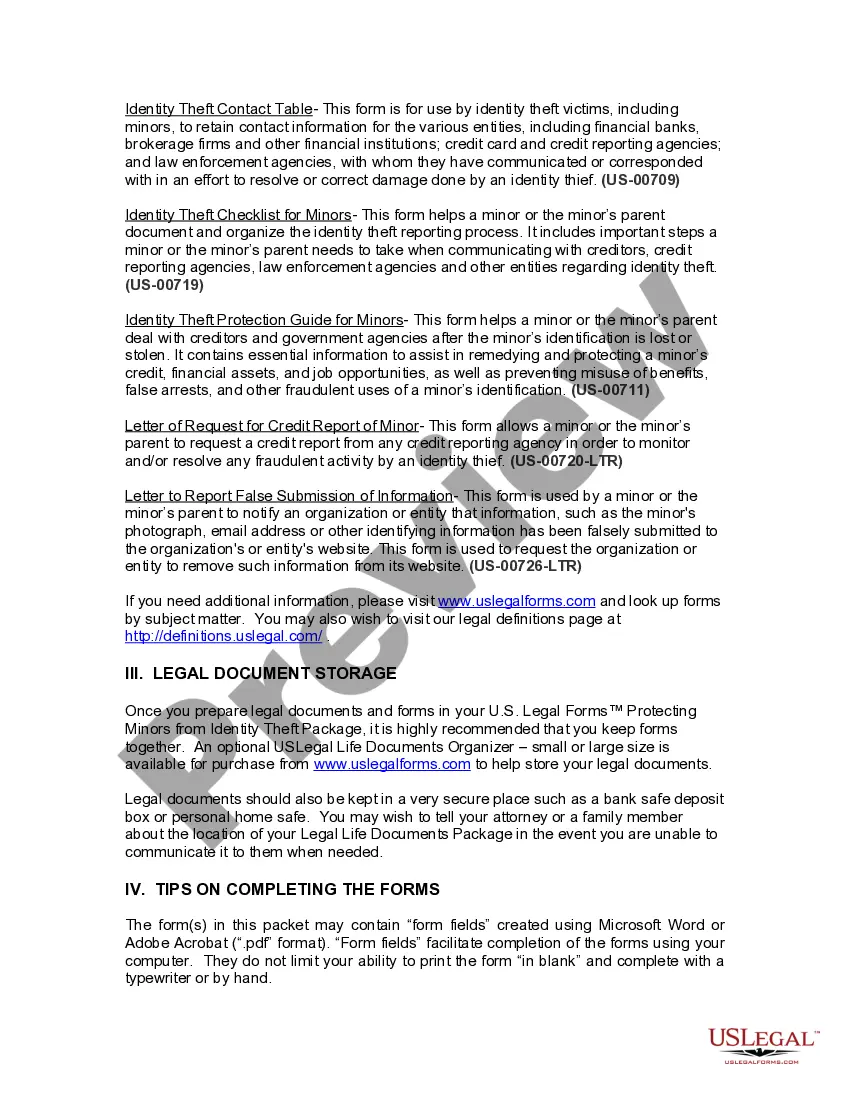
- Identity Theft Contact Table
- Guide for Protecting Minors from Identity Theft
- Letter to Credit Reporting Company or Bureau Regarding Identity Theft of Minor
- Letter to Creditors Notifying Them of Identity Theft of Minor
- Letter to Creditors Notifying Them of Identity Theft of Minor for New Accounts
- Letter Notifying Law Enforcement of Identity Theft of Minor
- Letter Notifying Postal Authorities of Identity Theft of Minor
- Letter Notifying Social Security Administration of Identity Theft of Minor
- Letter to Other Entities Notifying Them of Identity Theft of Minor
- Identity Theft Checklist for Minors
- Sample Letter for Request for Credit Report of a Minor
- Sample Letter to Report False Submission of Minor's Information
When to use this document
This form package is useful in several scenarios, including:
- When a minor's identification is lost or stolen, and immediate action is required.
- When a minor's credit report shows unfamiliar accounts or transactions.
- If a minor has been a victim of identity theft and requires assistance in reporting it to authorities.
- When parents need to notify various entities about identity theft affecting their child.
Who can use this document
- Parents or guardians of minors who have been victims of identity theft.
- Minors seeking to rectify issues related to stolen identification.
- Families looking to prevent future identity theft occurrences for minors.
Steps to complete these forms
- Review the included forms carefully to understand their purpose and contents.
- Gather necessary information such as identification details and accounts affected by identity theft.
- Complete each form by entering relevant information based on the specific situation.
- Sign and date the forms where required to authenticate your request.
- Submit the completed forms to the appropriate organizations and agencies.
Notarization details for included forms
Forms in this package typically do not require notarization unless required by local law. Ensure you review each form thoroughly to confirm specific signing requirements before submission.
Get your form ready online
Our built-in tools help you complete, sign, share, and store your documents in one place.
Make edits, fill in missing information, and update formatting in US Legal Forms—just like you would in MS Word.
Download a copy, print it, send it by email, or mail it via USPS—whatever works best for your next step.
Sign and collect signatures with our SignNow integration. Send to multiple recipients, set reminders, and more. Go Premium to unlock E-Sign.
If this form requires notarization, complete it online through a secure video call—no need to meet a notary in person or wait for an appointment.
We protect your documents and personal data by following strict security and privacy standards.

Make edits, fill in missing information, and update formatting in US Legal Forms—just like you would in MS Word.

Download a copy, print it, send it by email, or mail it via USPS—whatever works best for your next step.

Sign and collect signatures with our SignNow integration. Send to multiple recipients, set reminders, and more. Go Premium to unlock E-Sign.

If this form requires notarization, complete it online through a secure video call—no need to meet a notary in person or wait for an appointment.

We protect your documents and personal data by following strict security and privacy standards.
Typical mistakes to avoid
- Failing to include all relevant details in the forms.
- Not submitting forms to the right agencies or creditors.
- Neglecting to keep copies of all documentation submitted.
- Overlooking the need for signatures on forms where required.
Why complete this package online
- Immediate access to crucial forms without the need for an in-person visit to a lawyer.
- Easily editable forms that allow for personalization according to your situation.
- Reliable and professionally drafted documents that comply with state laws.
- Potential cost savings as purchasing the package is more economical than acquiring forms individually.
Legal use & context
- The forms included are legally binding once completed and submitted to the relevant authorities.
- Timely reporting of identity theft can mitigate further financial damage.
- This package aids in establishing a clear record of actions taken to resolve identity theft issues.
Key takeaways
- The Massachusetts Protecting Minors from Identity Theft Package is essential for addressing theft of a minor's identity.
- Utilizing these forms helps streamline communication with creditors and agencies.
- Proper completion and submission of these forms can significantly ease the burden of identity theft recovery.
Looking for another form?

Form popularity
FAQ
If your child is a victim of identity theft Contact the fraud departments of companies where accounts were opened in your child's name. Ask them to close the account and send you a letter of confirmation. You may need to provide a copy of your child's birth certificate and a police report.
Parents and legal guardians have unfettered access to their children's personal information. In many cases, a parent, a close relative, or a legal guardian might use the child's Social Security number to commandeer their identity (and clean credit history).
Now a child's number can more easily be used to establish a credit history. Minors are especially vulnerable because they are likely to have an unblemished credit history.In some cases, thieves get access to a child's stolen Social Security number.
Chelsea, MA 02150, (857) 386-2000. You can also file a report on their Internet Crime Complaint Center. Social Security Administration: To report the fraudulent use of your Social Security number, you should contact the Office of the Inspector General's Fraud Hotline at 1-800-269-0271 and follow up in writing.
First, you need to check with the Social Security Administration once a year to make sure no one is using your child's SSN. Secondly, you need to check your child's credit report (free Equifax -1-800-525-6285; Experian-1-888-397-3742; TransUnion-1-800-680-7289.)
If someone steals your identity, you have the right to: create an FTC Identity Theft Report. place a one-year fraud alert on your credit report. place a seven-year extended fraud alert on your credit report.
Contact the Federal Trade Commission (FTC) to report the ID theft and get a recovery plan. Contact your local law enforcement and get a police report. Contact the fraud departments of companies where accounts were opened in your child's name.
A conviction for an identity theft crime can result in time spent in jail or prison. In general, a conviction for a misdemeanor offense can lead to up to a year in jail, while felony sentences can result in several years or more in prison.
No, you cannot stop someone from claiming a dependent.