Massachusetts Master Deed and Declaration of Condominium
What is this form?
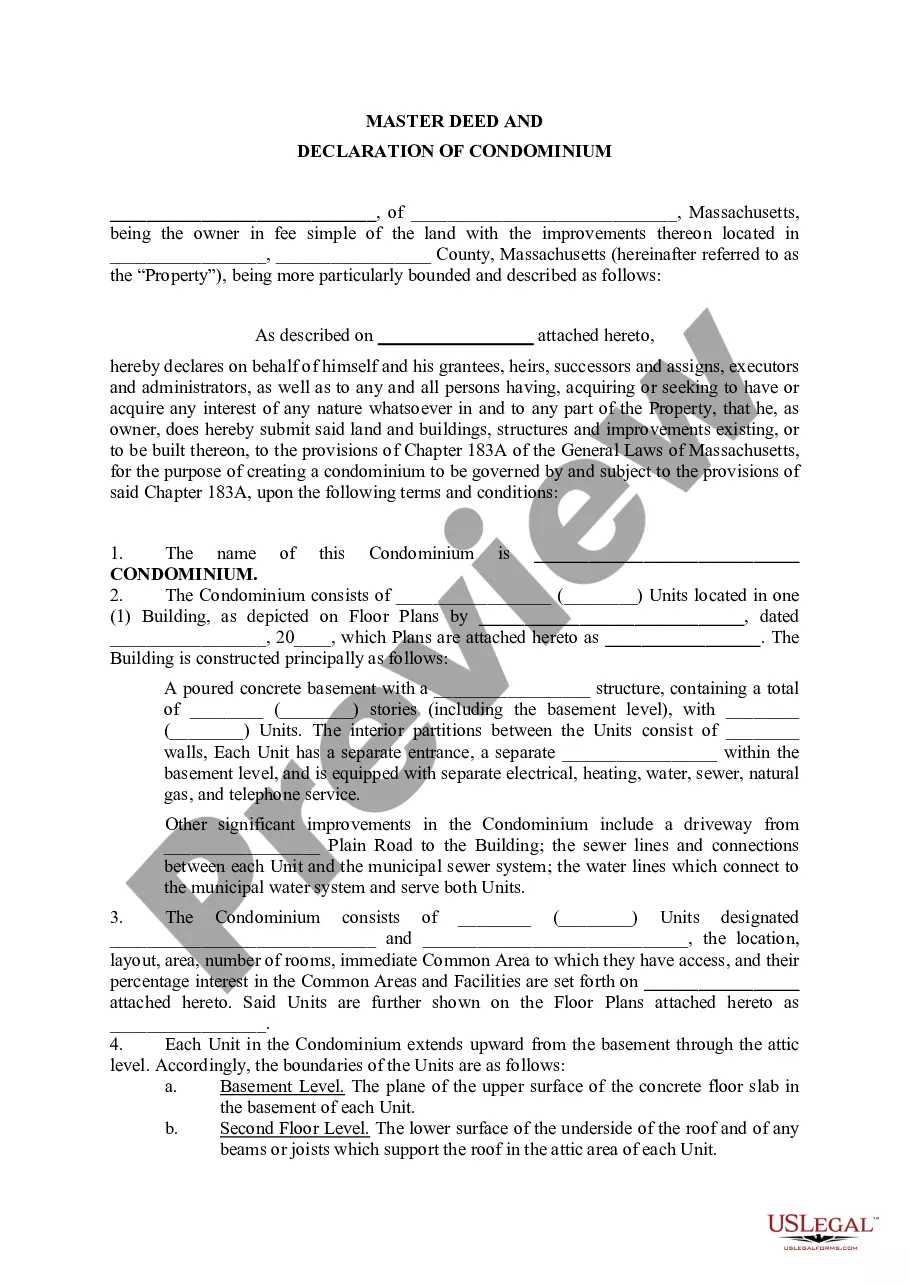
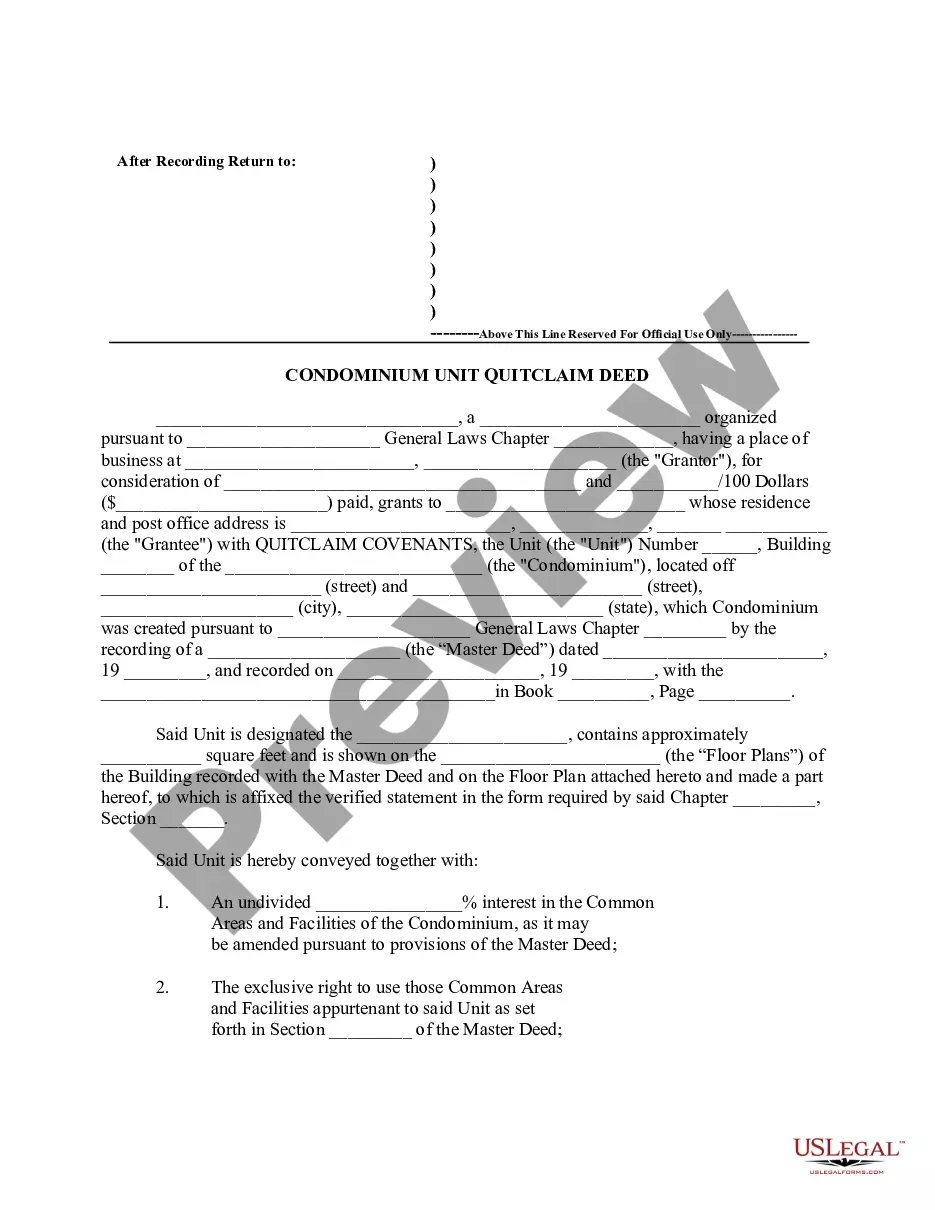
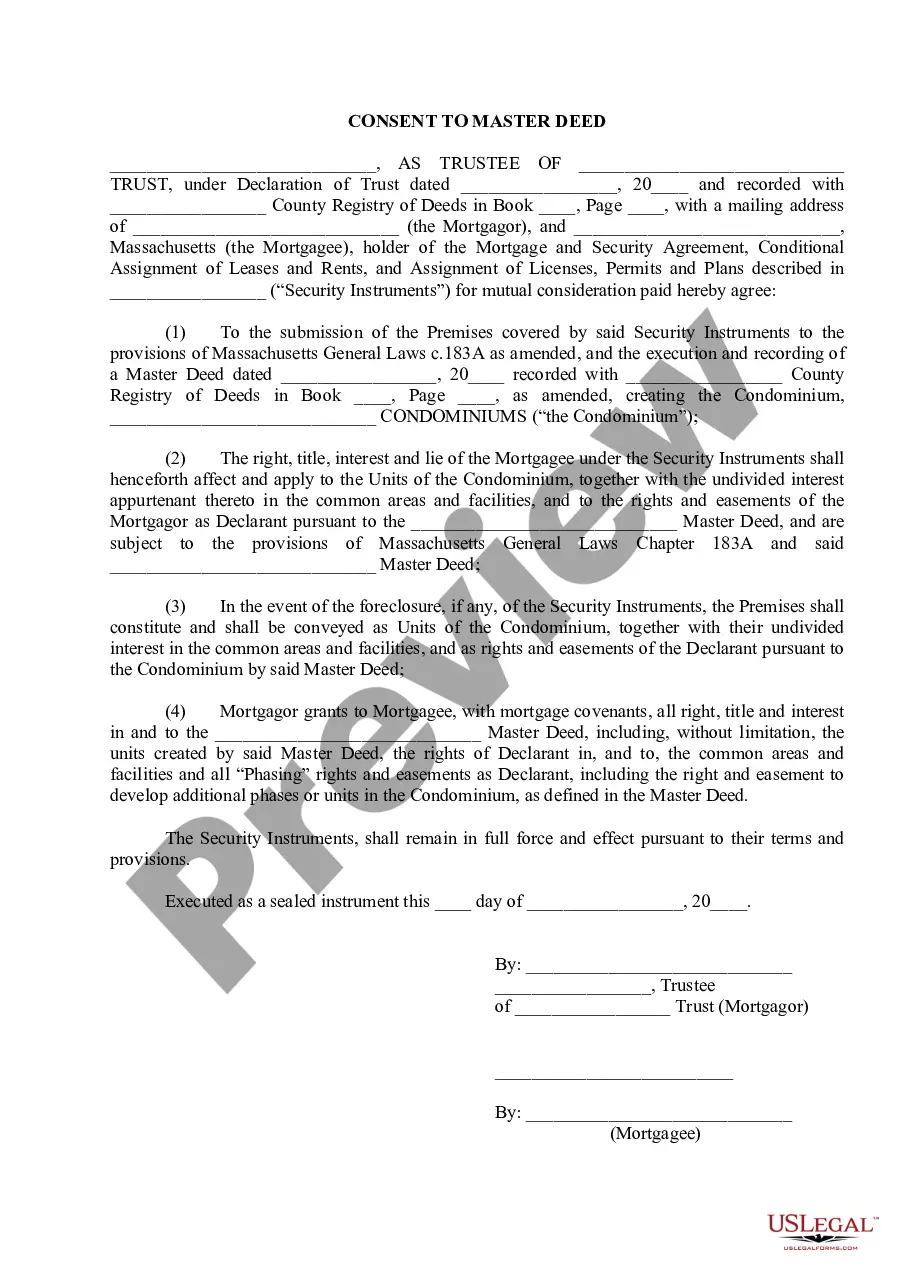
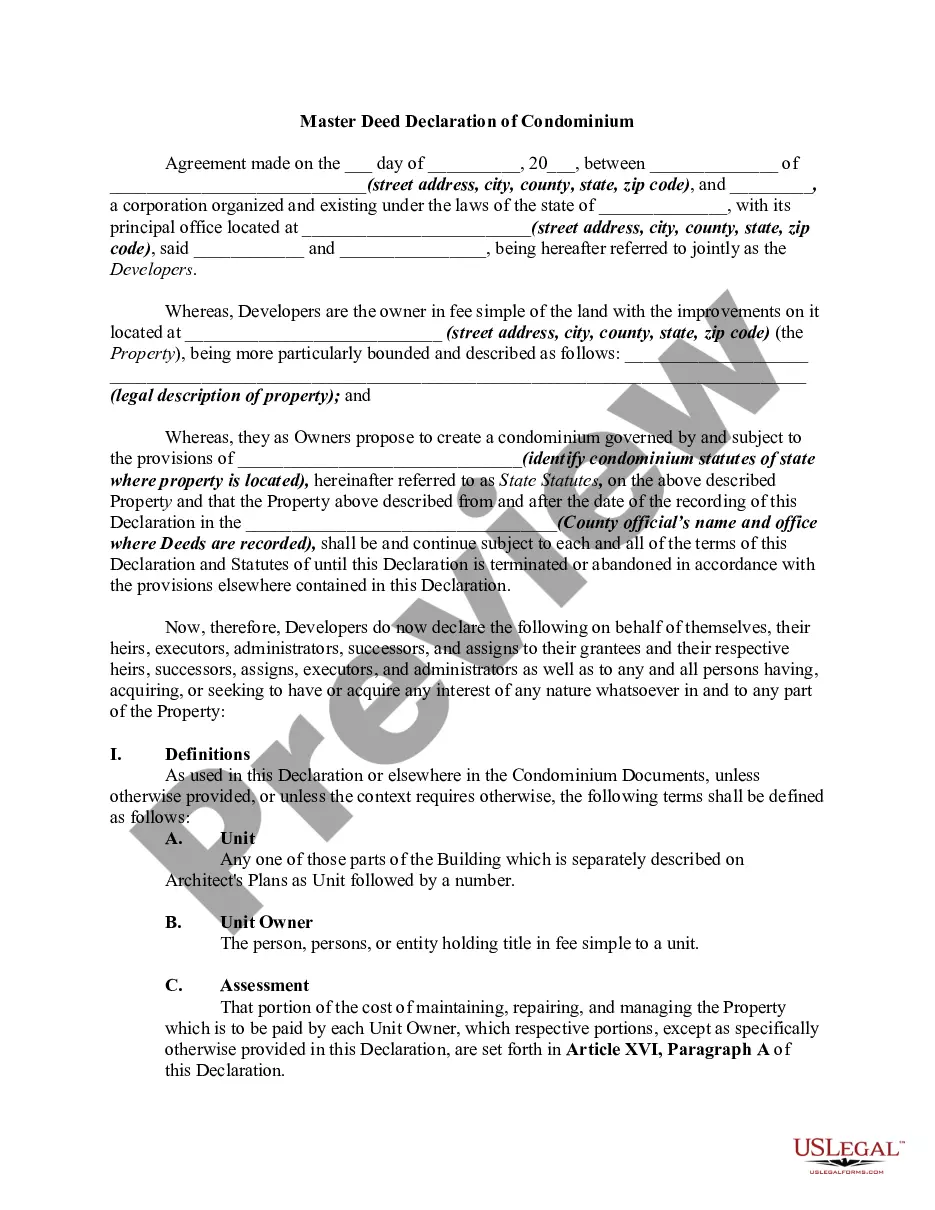
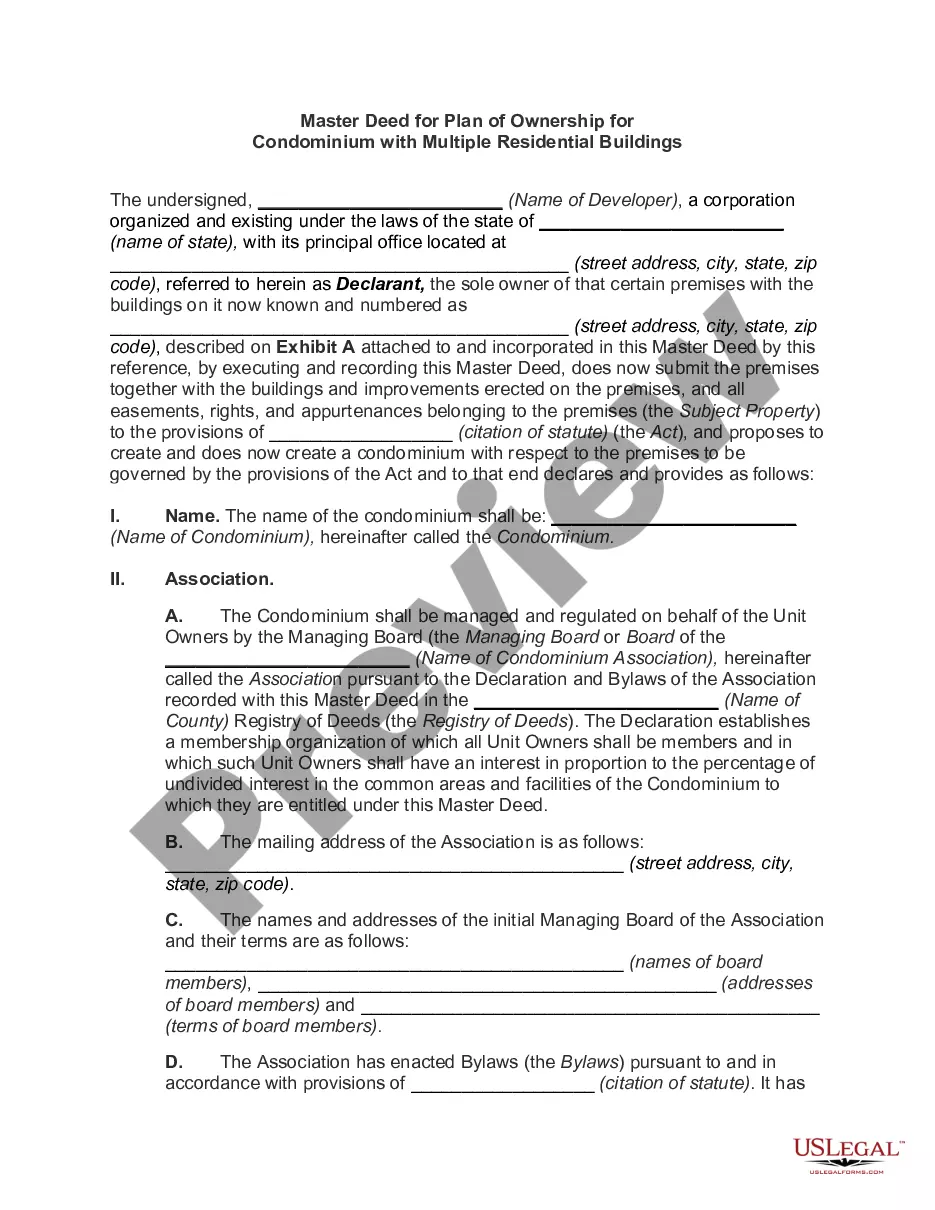
The Master Deed and Declaration of Condominium is a legal document that outlines the creation of a condominium property in Massachusetts. It serves to define the property, establish ownership divisions into individual condominium units, and grant rights to common areas for the condominium owners. This form is essential for developers and property owners who seek to legally formalize a condominium arrangement, distinguishing it from other property ownership structures like single-family homes or townhouses.
Key components of this form
- Identification of the property, including legal description and boundaries.
- Name of the condominium and description of the building and units.
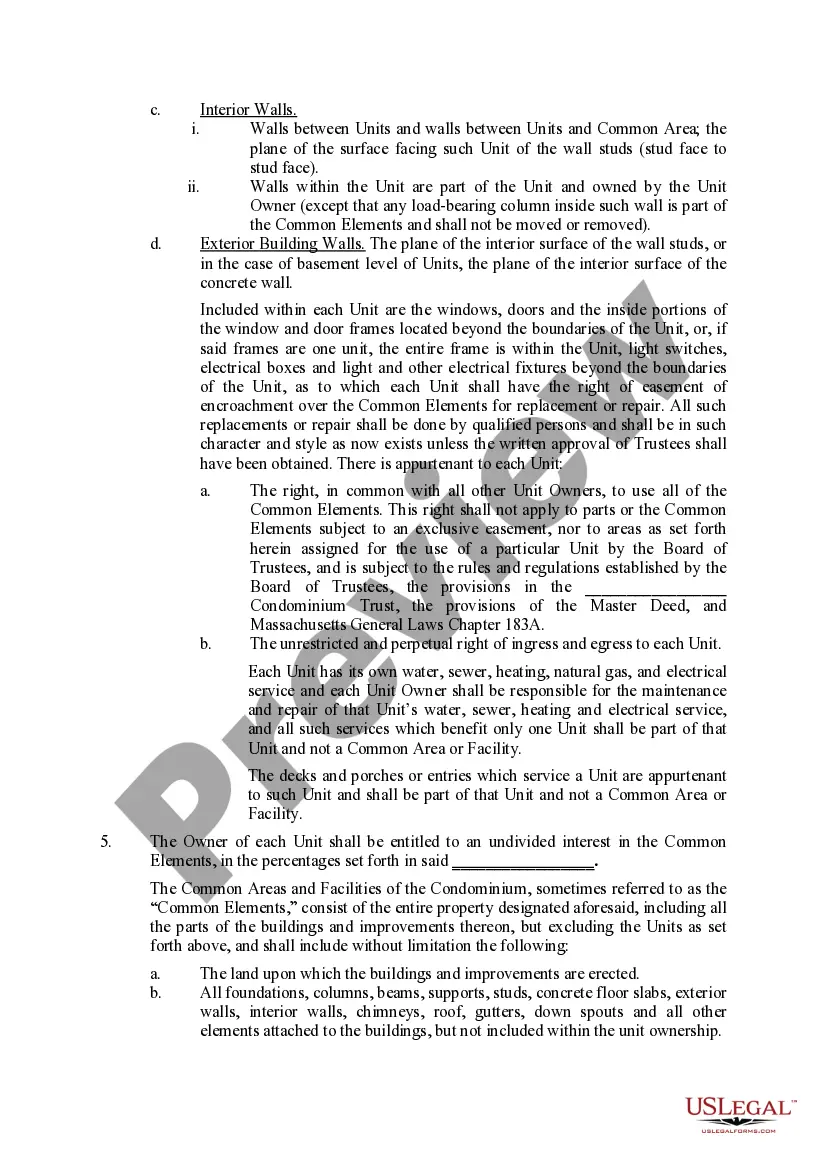
- Details on common areas and facilities shared by condominium owners.
- Ownership interests and rights associated with each condominium unit.
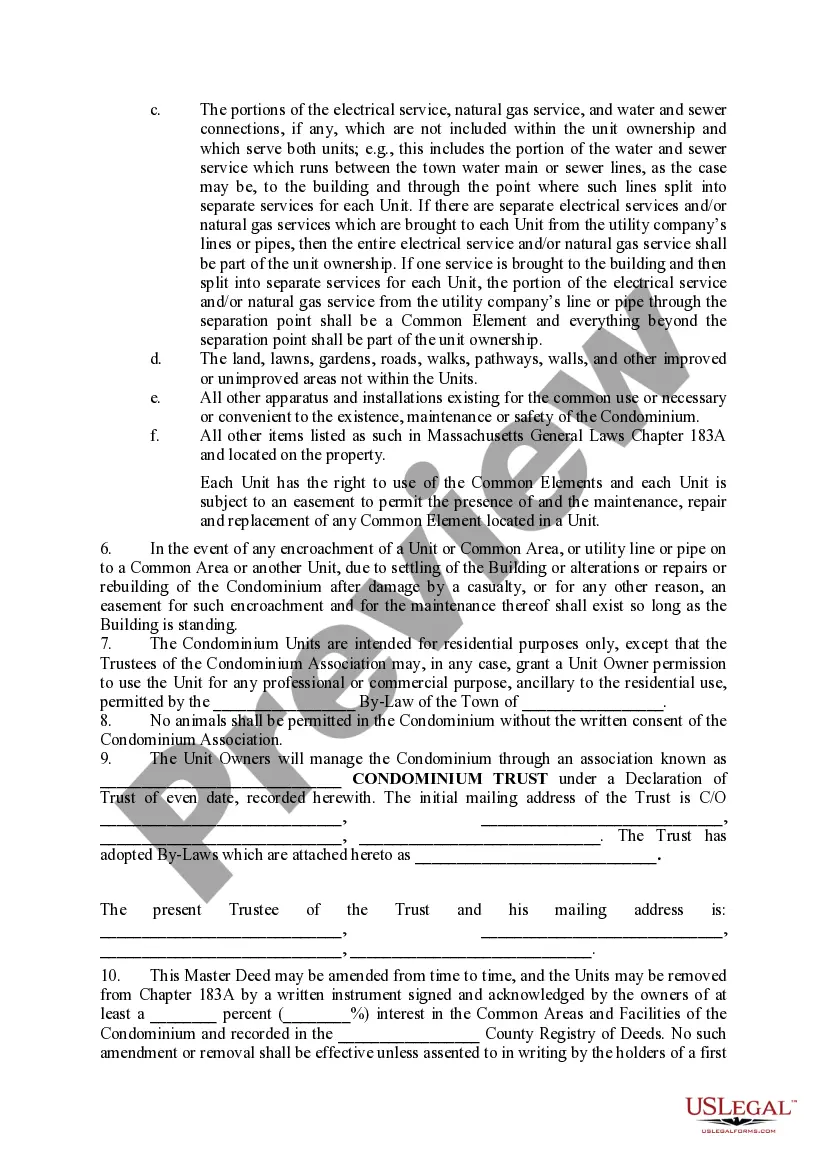
- Provisions on management through the condominium association and trust.
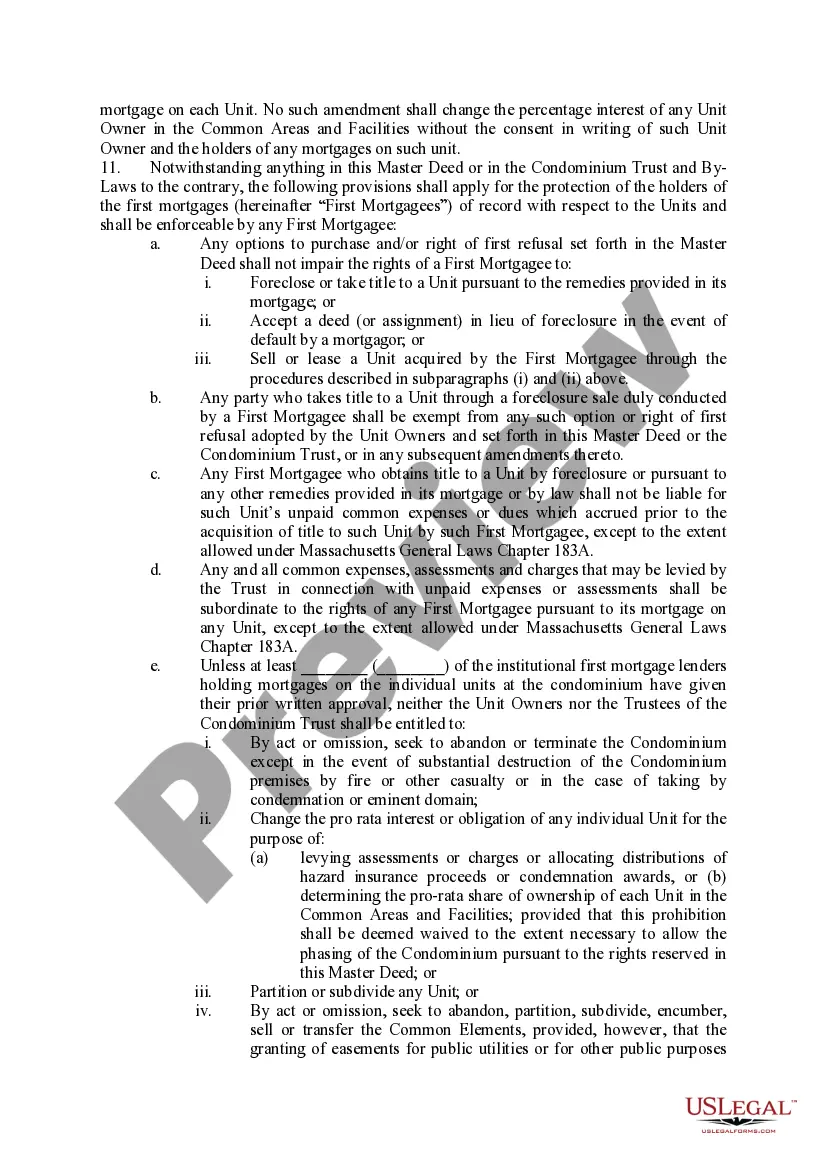
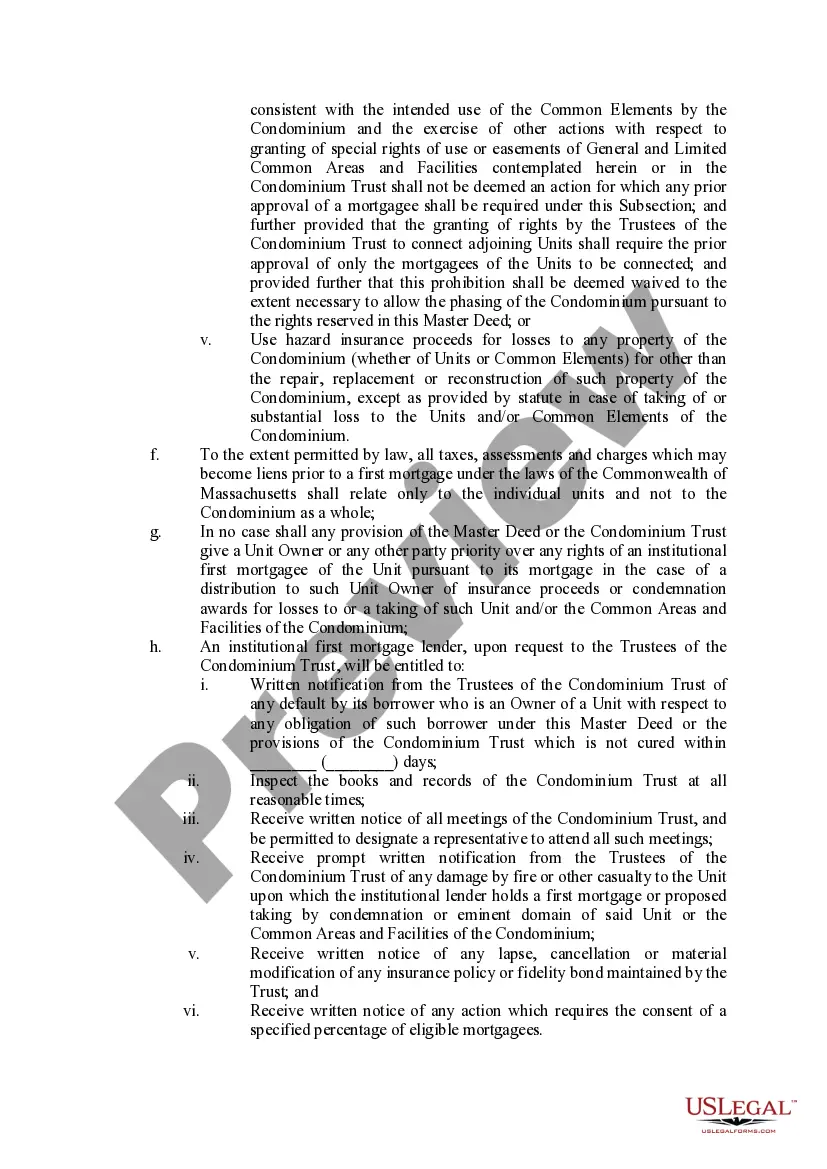
- Provisions for amendments and mortgagee protections.

When this form is needed
This form should be used when a developer or current property owner wants to create a condominium structure within a defined property in Massachusetts. It is necessary when establishing multiple individual ownerships within a single building or complex, allowing for shared ownership of common areas while maintaining private ownership of individual units. This form is critical for legal recognition and the establishment of governance under Massachusetts law.
Intended users of this form
- Real estate developers planning to construct and sell condominium units.
- Current property owners wishing to convert existing properties into condominiums.
- Attorneys assisting clients with condominium projects.
- Investors interested in forming a condominium association for investment purposes.
How to complete this form
- Identify the property, including its legal description and physical boundaries.
- Specify the name of the condominium and detail the number of units and building description.
- Outline the rights associated with the common areas and any exclusive easements.
- Establish governing provisions, including condominium association management and by-laws.
- Ensure all necessary signatures and notarizations are obtained where required.
Notarization guidance
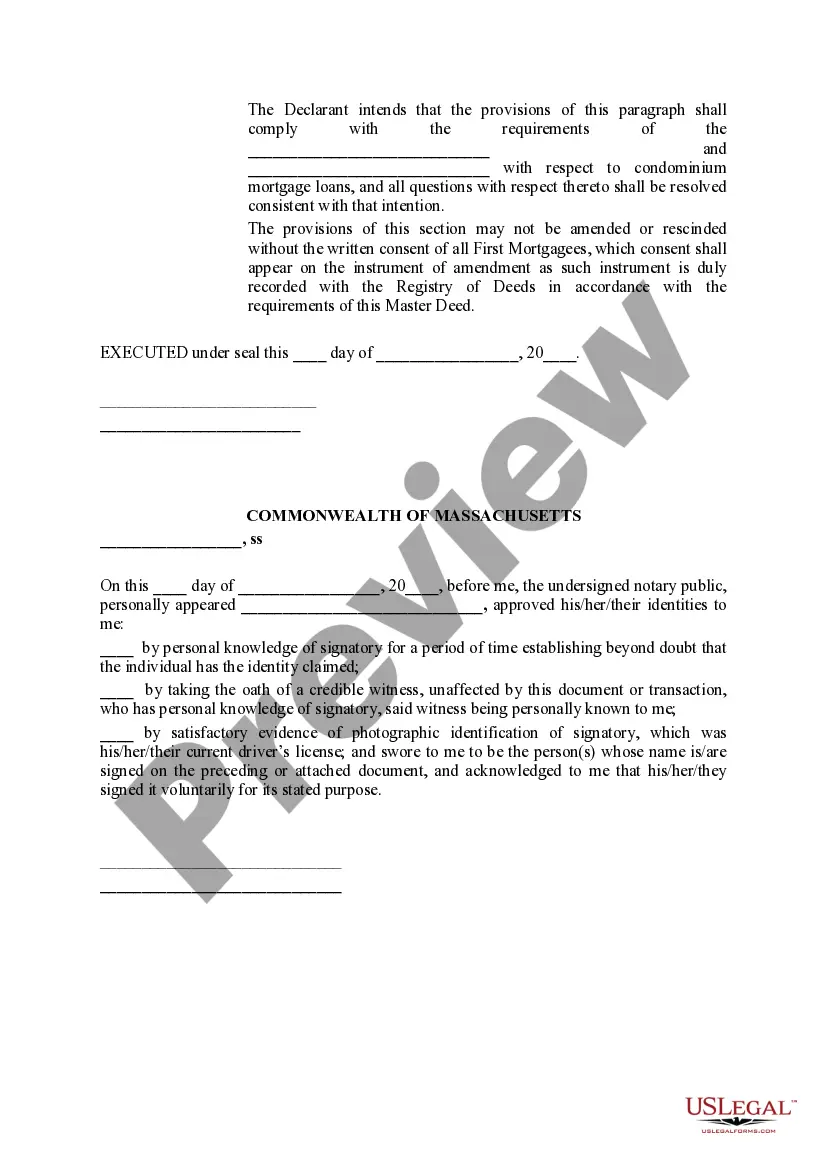
Yes, this form must be notarized to be legally valid in Massachusetts. It is crucial to ensure that all parties involved sign the document in the presence of a notary public, confirming their identities and intentions. US Legal Forms offers integrated online notarization services that are available 24/7, allowing users to complete the process securely through a video call.
Get your form ready online
Our built-in tools help you complete, sign, share, and store your documents in one place.
Make edits, fill in missing information, and update formatting in US Legal Forms—just like you would in MS Word.
Download a copy, print it, send it by email, or mail it via USPS—whatever works best for your next step.
Sign and collect signatures with our SignNow integration. Send to multiple recipients, set reminders, and more. Go Premium to unlock E-Sign.
If this form requires notarization, complete it online through a secure video call—no need to meet a notary in person or wait for an appointment.
We protect your documents and personal data by following strict security and privacy standards.

Make edits, fill in missing information, and update formatting in US Legal Forms—just like you would in MS Word.

Download a copy, print it, send it by email, or mail it via USPS—whatever works best for your next step.

Sign and collect signatures with our SignNow integration. Send to multiple recipients, set reminders, and more. Go Premium to unlock E-Sign.

If this form requires notarization, complete it online through a secure video call—no need to meet a notary in person or wait for an appointment.

We protect your documents and personal data by following strict security and privacy standards.
Avoid these common issues
- Failing to accurately describe the property boundaries and common areas.
- Neglecting to include all necessary parties in the signing process.
- Not complying with local and state laws regarding condominium creation.
- Inadequately defining the percentages of ownership for each unit.
Benefits of completing this form online
- Convenience of accessing and filling out the form from anywhere.
- Editability allows for adjustments based on specific property details.
- Reliability of having a form drafted by licensed attorneys, ensuring legal accuracy.
Legal use & context
- This form provides legal recognition of condominium ownership under Massachusetts law.
- It establishes rights and responsibilities for unit owners, ensuring clear governance and operation of the condominium.
- Failure to properly complete or record the Master Deed may affect the enforceability of the condominium's governing documents.
Main things to remember
- The Master Deed and Declaration of Condominium is vital for establishing condominium ownership in Massachusetts.
- Accurate completion and notarization of the form are essential for legal validity.
- Understanding the common areas and ownership rights can prevent disputes among residents.
Looking for another form?
Form popularity
FAQ
Article 5 of Massachusetts law generally relates to regulations affecting different aspects of property law. Within the context of condominiums, you will find that various articles, including specifics in the Massachusetts Master Deed and Declaration of Condominium, are crucial for understanding the governance and operational standards of such properties. Knowing these legal articles can guide you through ownership rights and communal responsibilities.
A document used by condominium developers to record the project;its division into condominium ownership;and the grant of common areas to the condominium owners. Also called the declarations,the condominium declaration,or the declaration of condominium. (Do not confuse with master's deed.)
Unit description The description of the condominium units and the common areas and any restrictions on their use is established in a document commonly called a "Master Deed" (also known as the "Enabling Declaration", the "Declaration of Conditions", or the "Condominium Document").
An individual who purchases a unit in a condominium receives title to such unit in fee simple, owning it outright. The owner has all legal rights incident to ownership, including the right to sell, absent a Restrictive Covenant limiting its use.
In its modern usage, condominium refers to a form of housing involving two elements of ownership. The first is the living space itself, which may be held in common, in joint tenancy, or in any other form of ownership.
A document used by condominium developers to record the project;its division into condominium ownership;and the grant of common areas to the condominium owners. Also called the declarations,the condominium declaration,or the declaration of condominium. (Do not confuse with master's deed.)
Every homeowners association is governed by a master deed that establishes information about the units, common areas, bylaws and owners' rights according to state laws.The master deed provides for easements that outline the conditions in which the HOA or its management company or agent can enter a house or condo unit.
These include the Declaration, the Bylaws, the Plats and Plans, and the Rules and Regulations. If your Condominium Association is incorporated, you should also obtain and review the Articles of Incorporation. These documents will spell out the operating procedures under which the Condominium functions.
What Is a Condominium? A condominium is a form of property ownership involving multiple-unit dwellings where a person owns his or her individual unit, but the common areas are owned in common. All members share in the costs and maintenance of the common areas.