Massachusetts Declaration of Homestead
Overview of this form
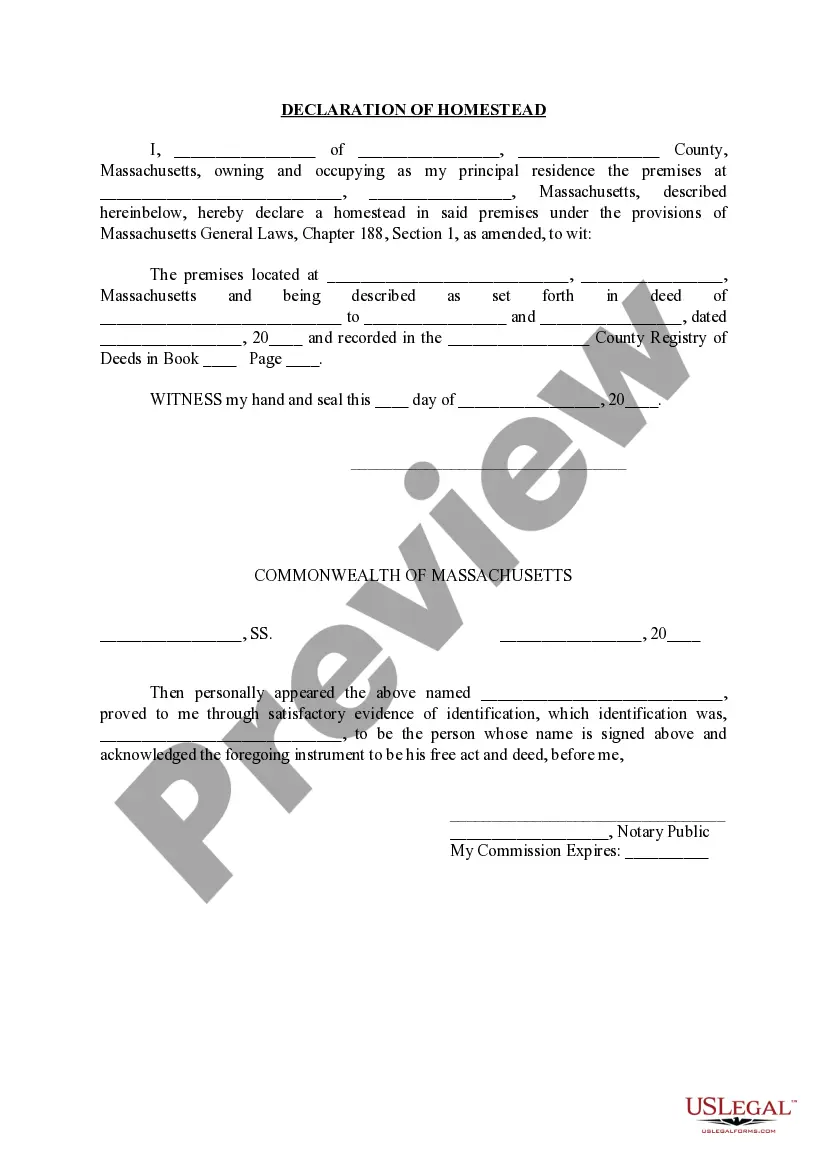
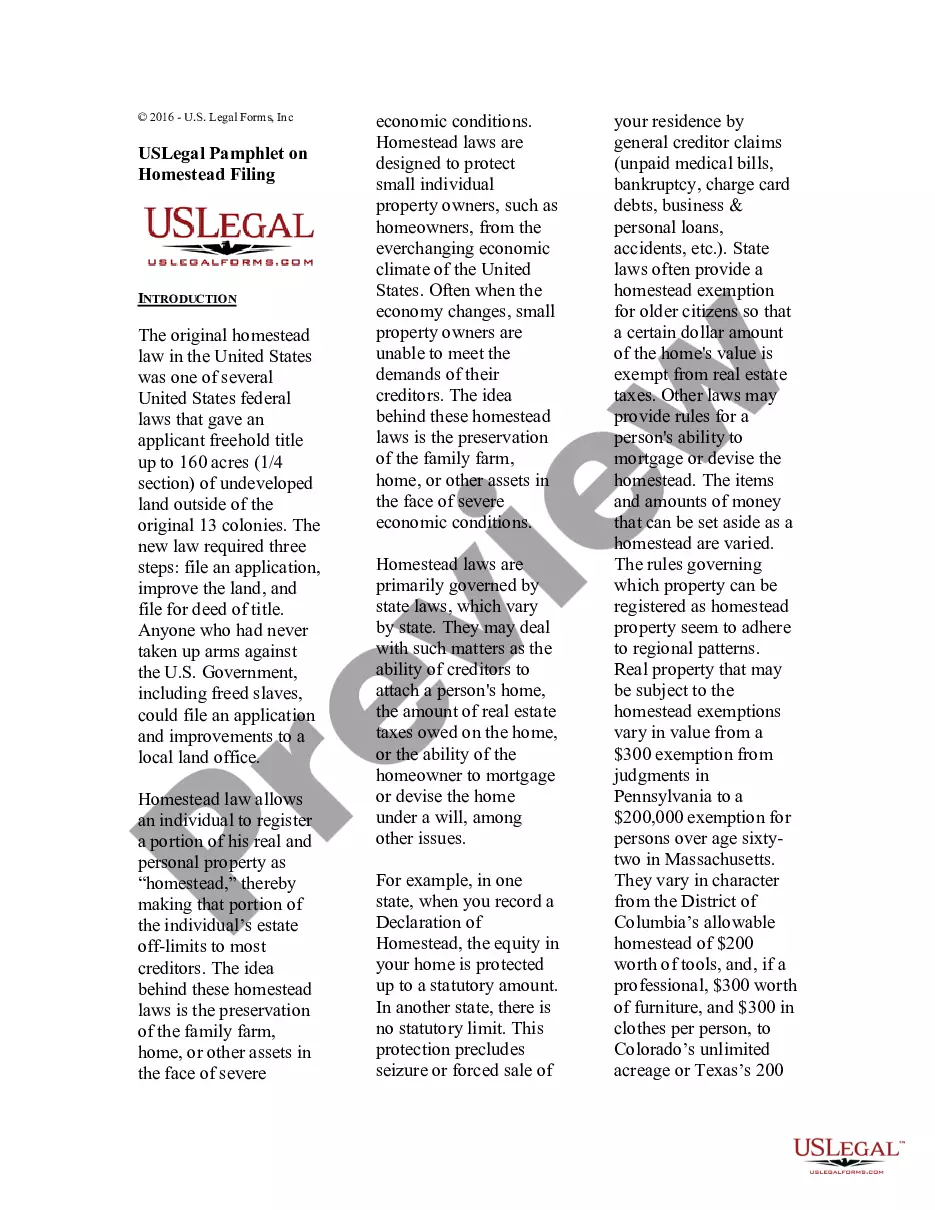
The Declaration of Homestead is a legal document designed to protect the equity or cash value in your home from unsecured creditors. By filing this declaration, homeowners in Massachusetts can safeguard their primary residence against certain debts, ensuring that they retain ownership of their primary asset even in financial distress. Unlike other property-related documents, the Declaration of Homestead specifically focuses on preserving home equity and providing legal assurance against creditor claims.
What’s included in this form
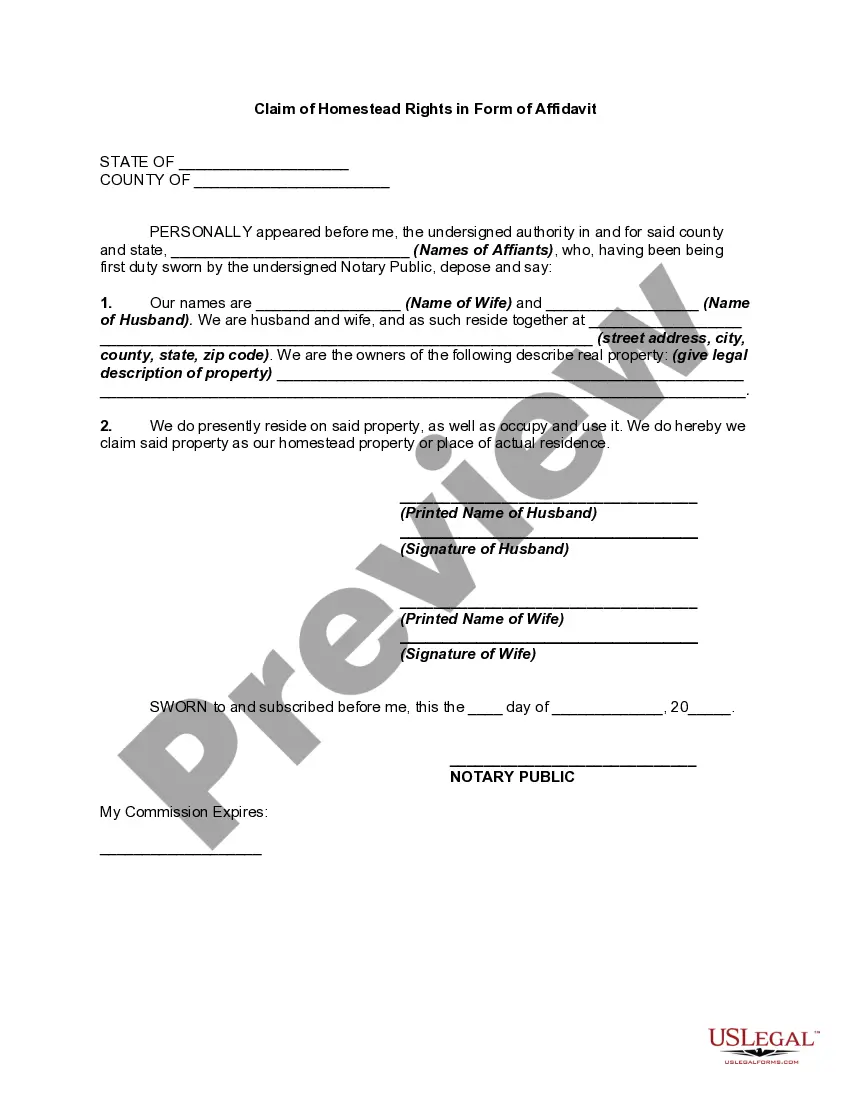
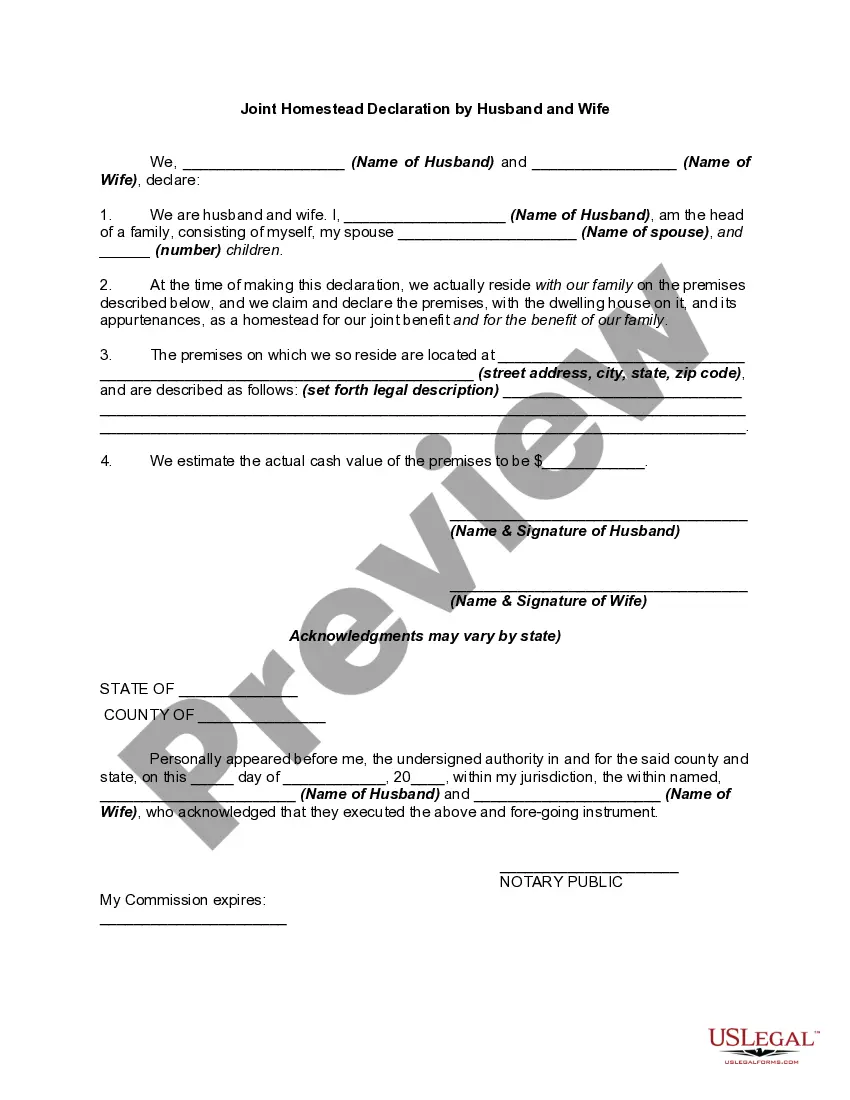
- Personal information of the homeowner, including name and address.
- Property description with details referencing the deed and county registry.
- A declaration statement acknowledging the intention to establish a homestead for the specified premises.
- Signature line for the homeowner to affirm the declaration.
- Notarization section to validate the documentâs authenticity.
Situations where this form applies
This form is particularly useful when a homeowner wants to protect their home from unsecured creditors, such as credit card companies or medical providers. It can be employed during financial difficulties or after receiving threats of legal action from creditors. If you are in a situation where your home equity may be claimed as part of debt repayment, the Declaration of Homestead can be an essential step in safeguarding your property.
Intended users of this form
- Homeowners residing in Massachusetts.
- Individuals facing financial challenges or potential legal actions by creditors.
- Anyone who wishes to secure the equity in their primary residence.
How to complete this form
- Identify yourself by entering your full name and the county where you reside.
- Specify the address of the property you are declaring as a homestead.
- Include the legal description of the property as noted in the deed.
- Sign the document in the designated area to affirm the declaration.
- Schedule an appointment with a notary public to authenticate your signature.
Notarization guidance
Yes, this form must be notarized to be legally valid. It is important to have your signature witnessed by a notary public to confirm your identity and the authenticity of the document. US Legal Forms offers integrated online notarization, providing a secure and efficient way to complete this process at your convenience.
Get your form ready online
Our built-in tools help you complete, sign, share, and store your documents in one place.
Make edits, fill in missing information, and update formatting in US Legal Forms—just like you would in MS Word.
Download a copy, print it, send it by email, or mail it via USPS—whatever works best for your next step.
Sign and collect signatures with our SignNow integration. Send to multiple recipients, set reminders, and more. Go Premium to unlock E-Sign.
If this form requires notarization, complete it online through a secure video call—no need to meet a notary in person or wait for an appointment.
We protect your documents and personal data by following strict security and privacy standards.

Make edits, fill in missing information, and update formatting in US Legal Forms—just like you would in MS Word.

Download a copy, print it, send it by email, or mail it via USPS—whatever works best for your next step.

Sign and collect signatures with our SignNow integration. Send to multiple recipients, set reminders, and more. Go Premium to unlock E-Sign.

If this form requires notarization, complete it online through a secure video call—no need to meet a notary in person or wait for an appointment.

We protect your documents and personal data by following strict security and privacy standards.
Common mistakes to avoid
- Failing to provide a full and accurate property description.
- Not signing the document before a notary.
- Omitting required personal information.
- Not filing the form with the county registry of deeds.
Benefits of completing this form online
- Immediate access to the form allows for quicker action in asset protection.
- Easily downloadable and printable for personal use.
- Reliability, with forms drafted by licensed attorneys ensuring legal compliance.
Looking for another form?
Form popularity
FAQ
By filing and recording of a written declaration of homestead at the local registry in the county in which the property is located increases the exemption amount from $125,000 to $500,000. Keep in mind that two kinds of a declaration of homestead exist.
A homestead declaration is a legal document that claims and registers a particular house as the owner's homestead or principle dwelling. This document helps to protect the house against loss to creditors.Your judgment creditors still have a remedy even if you have filed the homestead declaration.
(US) a house and adjoining land designated by the owner as his fixed residence and exempt under the homestead laws from seizure and forced sale for debts. The place of the house or home place.
A homestead declaration is a legal document that claims and registers a particular house as the owner's homestead or principle dwelling. This document helps to protect the house against loss to creditors.
A Declaration of Homestead is a way to protect your home from unsecured creditors. The Declaration of Homestead protects the equity or cash value in your home. To find out the equity you have in your home, get the fair market value of your home.
Basically, a homestead exemption allows a homeowner to protect the value of her principal residence from creditors and property taxes. A homestead exemption also protects a surviving spouse when the other homeowner spouse dies.
The Massachusetts Homestead Act is a law under which a homeowner is protected by an Estate of Homestead. A homestead estate provides limited protection of the value of the home, up to $500,000, against unsecured creditor claims.
The Massachusetts Homestead Act is a law in Massachusetts by which a homeowner is protected by what is called an estate of homestead.Under Massachusetts law, everyone who owns a home and principally resides in that home receives an automatic exemption in the amount of $125,000.
Basically, a homestead exemption allows a homeowner to protect the value of her principal residence from creditors and property taxes. A homestead exemption also protects a surviving spouse when the other homeowner spouse dies.