Alaska Hold Harmless Agreement
What this document covers
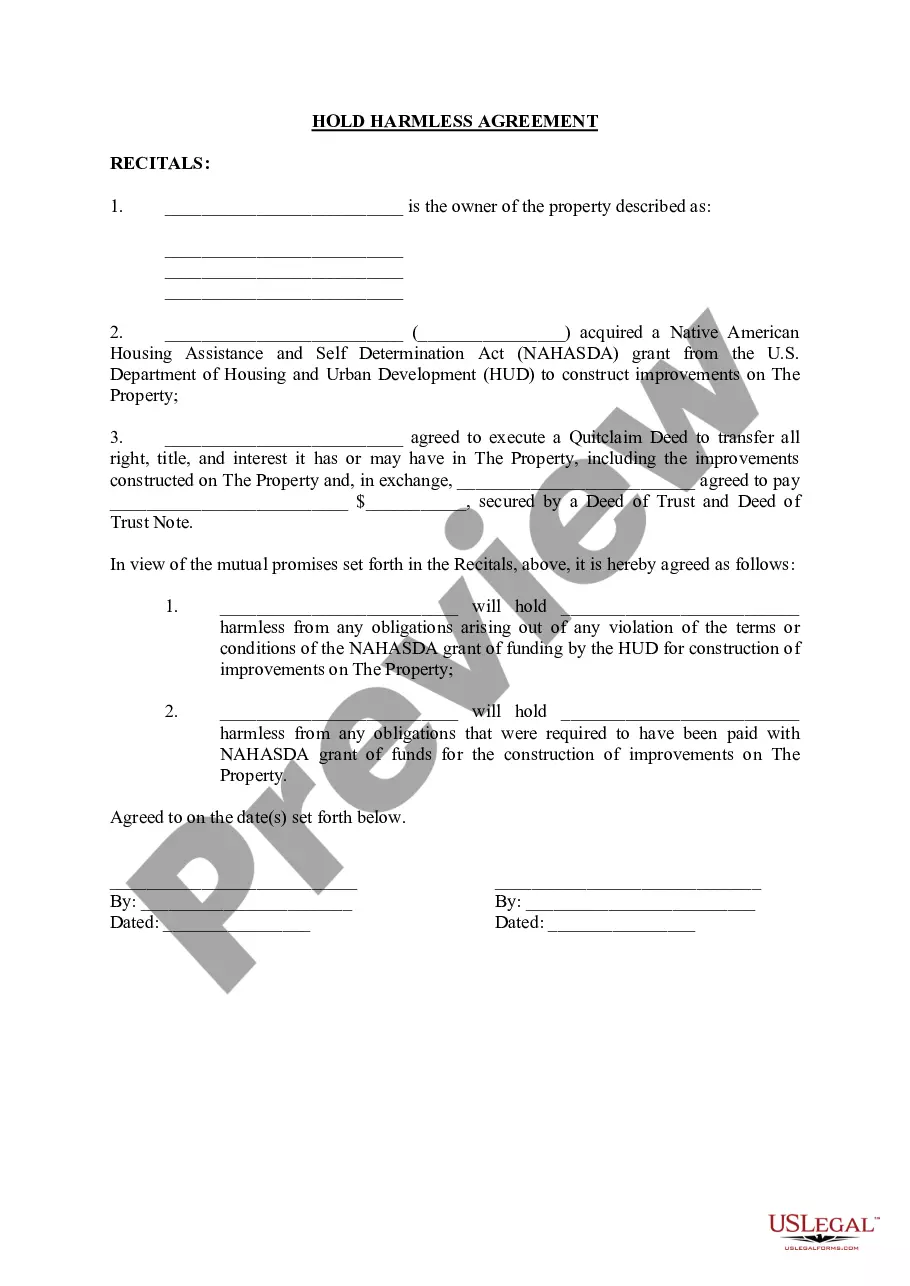
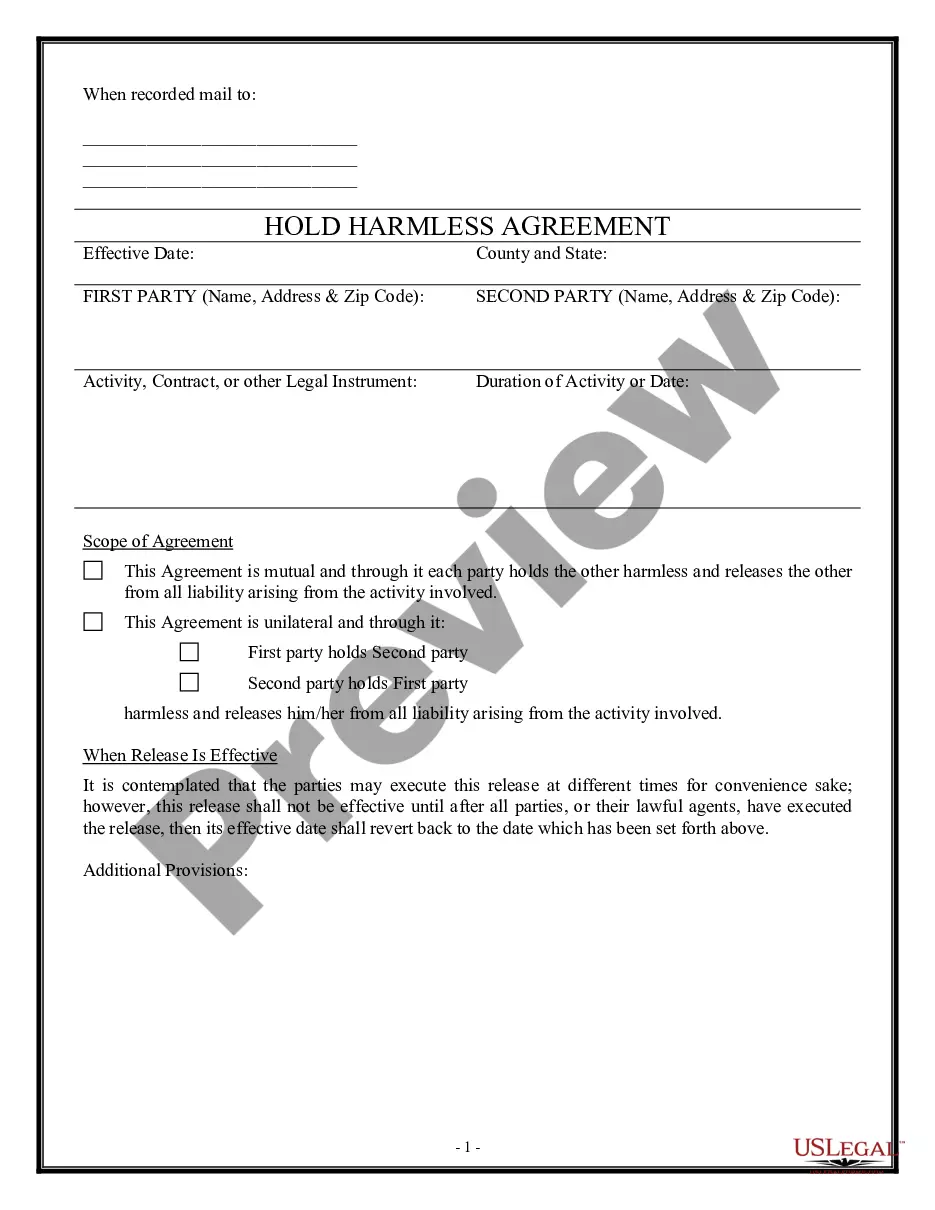
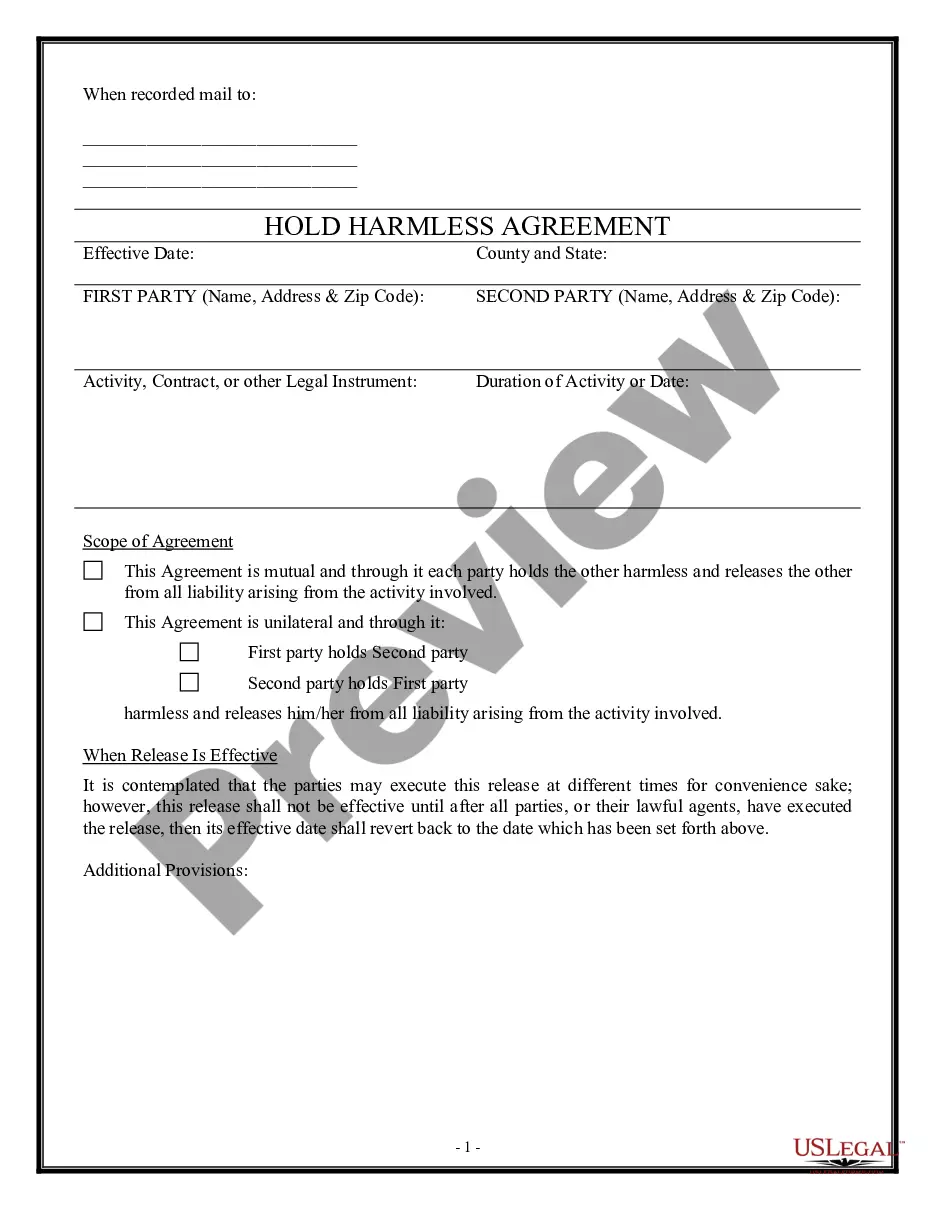
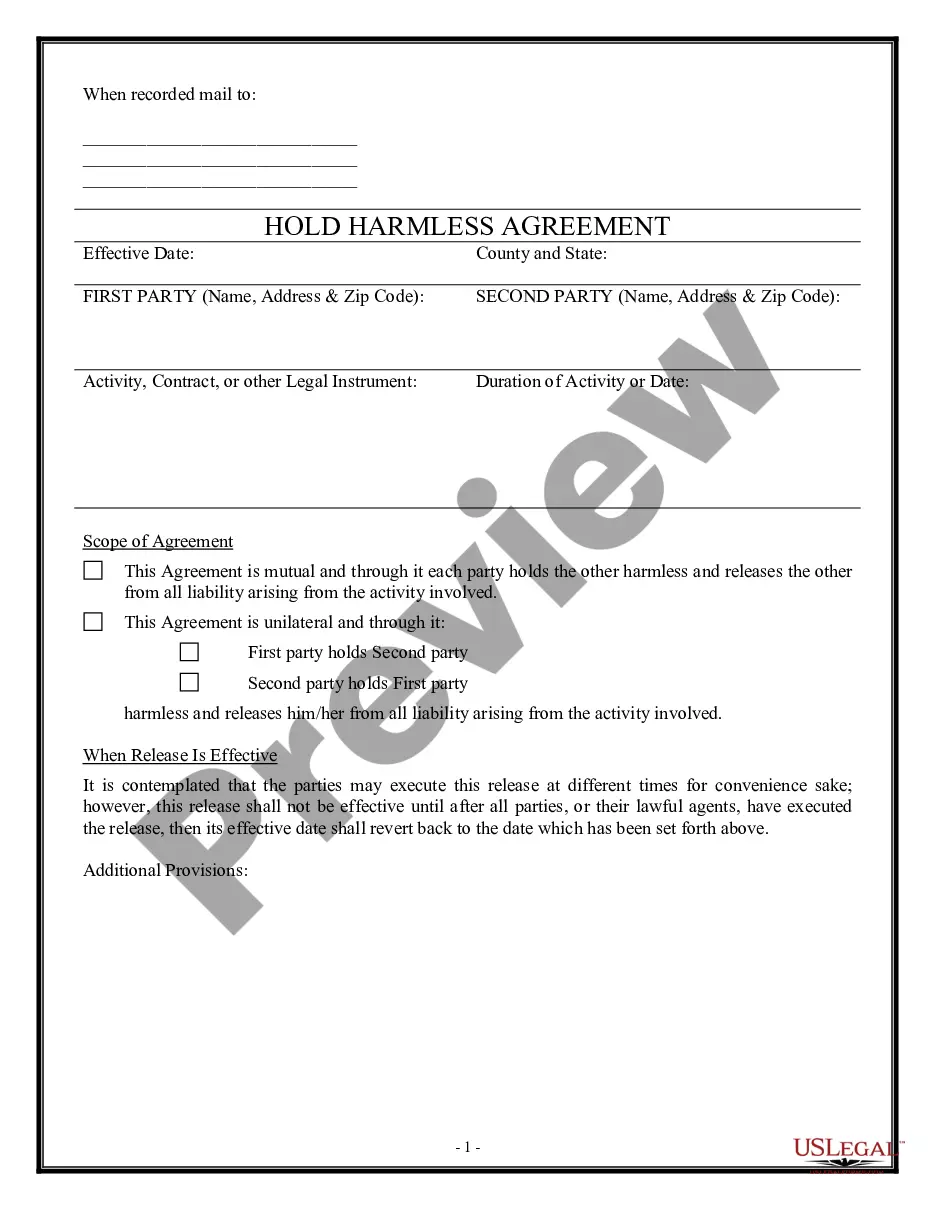
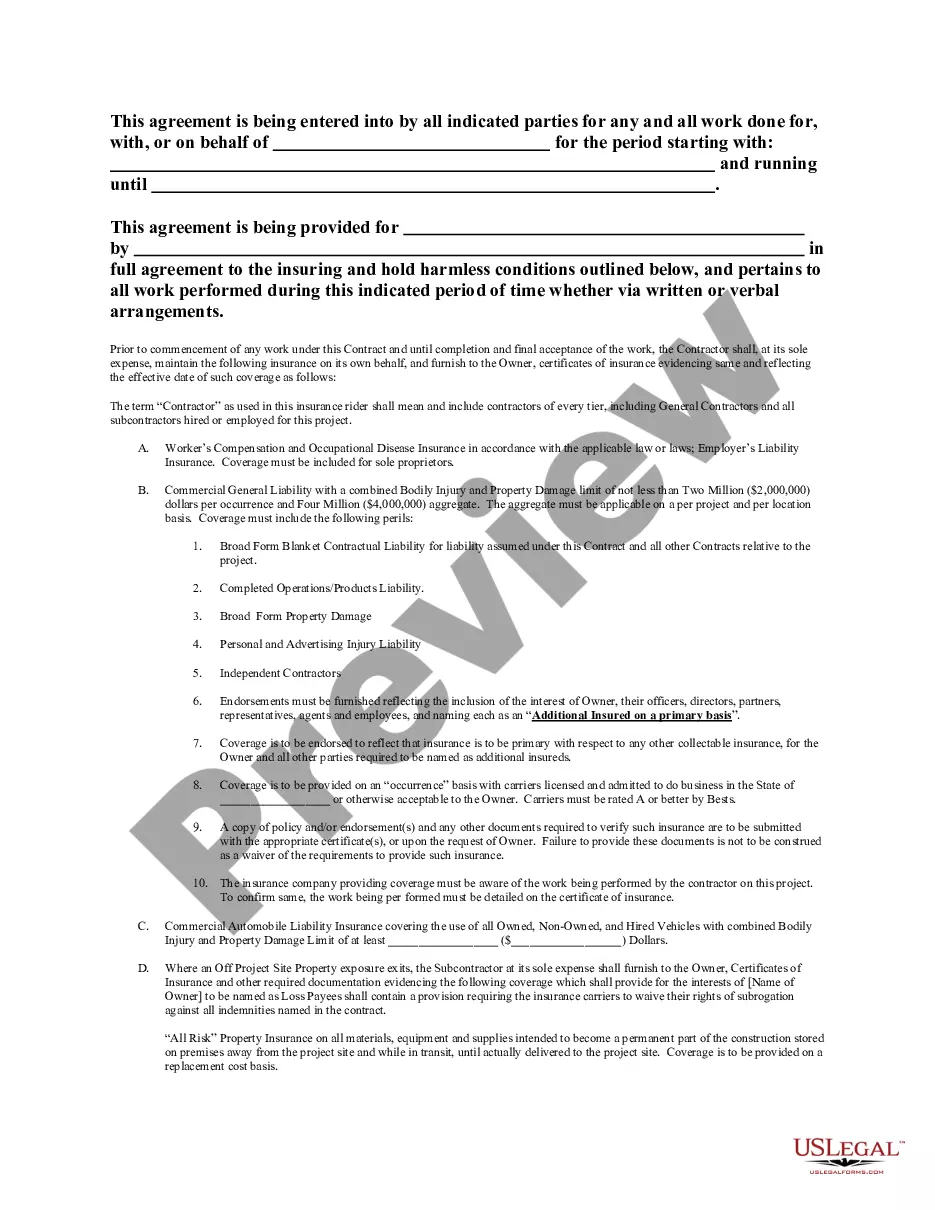
A Hold Harmless Agreement is a legal document where one party agrees not to hold another party liable for any risks or damages that may arise from a specified activity or condition. This agreement is commonly used in transactions involving property, construction, or any situation where one party may face liability due to the actions of another party. It ensures that the first party is protected from legal claims that may stem from the approved activities or agreements detailed in the form.
Key parts of this document
- Identification of the property and the parties involved.
- Recitals outlining the background and intent of the agreement.
- Clauses stating the obligations of each party in relation to the NAHASDA grant.
- Signatures and dates to validate the agreement.
Common use cases
This form is useful in scenarios where one party is undertaking construction or improvements on a property funded by a grant, particularly under the Native American Housing Assistance and Self-Determination Act (NAHASDA). It should be used when the property owner requires protection from potential liabilities originating from the contractorâs actions or the stipulations of the grant agreement.
Who needs this form
- Property owners who are transferring rights related to a property with a NAHASDA grant.
- Contractors or parties involved in construction projects funded by federal grants.
- Individuals or entities looking to protect themselves from liabilities related to property improvements or development.
Instructions for completing this form
- Identify the parties involved and enter their names in the designated fields.
- Specify the propertyâs details, including its legal description.
- Complete the recitals section with relevant grant details and payment information.
- Both parties must review the obligations outlined and ensure they understand the terms.
- Sign and date the agreement to finalize it legally.
Does this form need to be notarized?
This form does not typically require notarization unless specified by local law. However, users are encouraged to verify any specific requirements in their jurisdiction to ensure the agreementâs validity.
Get your form ready online
Our built-in tools help you complete, sign, share, and store your documents in one place.
Make edits, fill in missing information, and update formatting in US Legal Forms—just like you would in MS Word.
Download a copy, print it, send it by email, or mail it via USPS—whatever works best for your next step.
Sign and collect signatures with our SignNow integration. Send to multiple recipients, set reminders, and more. Go Premium to unlock E-Sign.
If this form requires notarization, complete it online through a secure video call—no need to meet a notary in person or wait for an appointment.
We protect your documents and personal data by following strict security and privacy standards.

Make edits, fill in missing information, and update formatting in US Legal Forms—just like you would in MS Word.

Download a copy, print it, send it by email, or mail it via USPS—whatever works best for your next step.

Sign and collect signatures with our SignNow integration. Send to multiple recipients, set reminders, and more. Go Premium to unlock E-Sign.

If this form requires notarization, complete it online through a secure video call—no need to meet a notary in person or wait for an appointment.

We protect your documents and personal data by following strict security and privacy standards.
Mistakes to watch out for
- Failing to fully understand the obligations outlined in the agreement.
- Omitting critical details regarding property or parties involved.
- Not having the agreement signed or dated by both parties.
Advantages of online completion
- Convenience of downloading the form anytime, anywhere.
- Editability, allowing users to customize the agreement as needed before finalizing.
- Reliability, ensuring access to legally vetted documents drafted by licensed attorneys.
Looking for another form?


Form popularity
FAQ
The Alaska Hold Harmless Agreement is a standard real estate contract-style template used to have one party release another from liability for defined activities or risks on or related to a property. It’s commonly used when inviting guests, contractors, or volunteers onto a property, or when work could create risk that the other party should not bear.
A hold harmless agreement can be legally binding in Alaska if it clearly releases liability for defined activities, is signed by the party agreeing to release, and describes the scope of the release. The form documents the understanding between parties and should be kept with other real estate records; consult an attorney for specifics.
The Alaska Hold Harmless Agreement is a liability-release template for property-related activities. While exact contents may vary, the purpose is to capture the parties involved and the activity or risk covered so that the release applies to the identified situation.
Complete the form by identifying the releasing and receiving parties, describing the activity or property involved, and signing and dating the document. Copies should be retained by each party; if a notary or witness is needed, arrange that step per the form’s guidance.
Common Alaska contexts include contractor access agreements on a property, guest waivers for tours or events, and volunteer or outdoor activity releases; these templates create a documented understanding that limits liability for the specified activity.
This Alaska template is tailored for Alaska real estate contexts, reflecting how risk is managed when parties interact on property in Alaska. While the basic concept is similar to general forms, the Alaska version aligns with its regional use and parties involved.