Massachusetts Letter to Lienholder to Notify of Trust
About this form
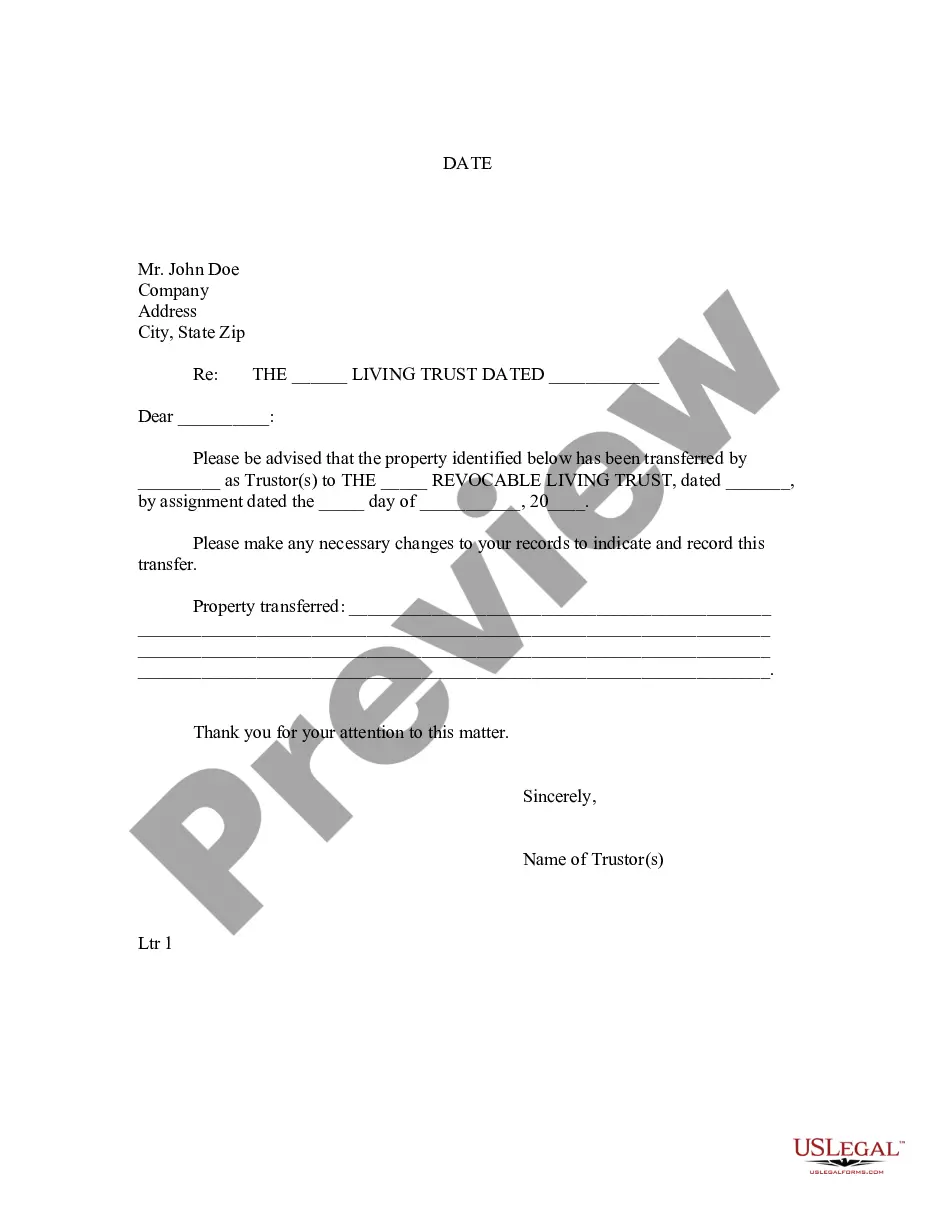
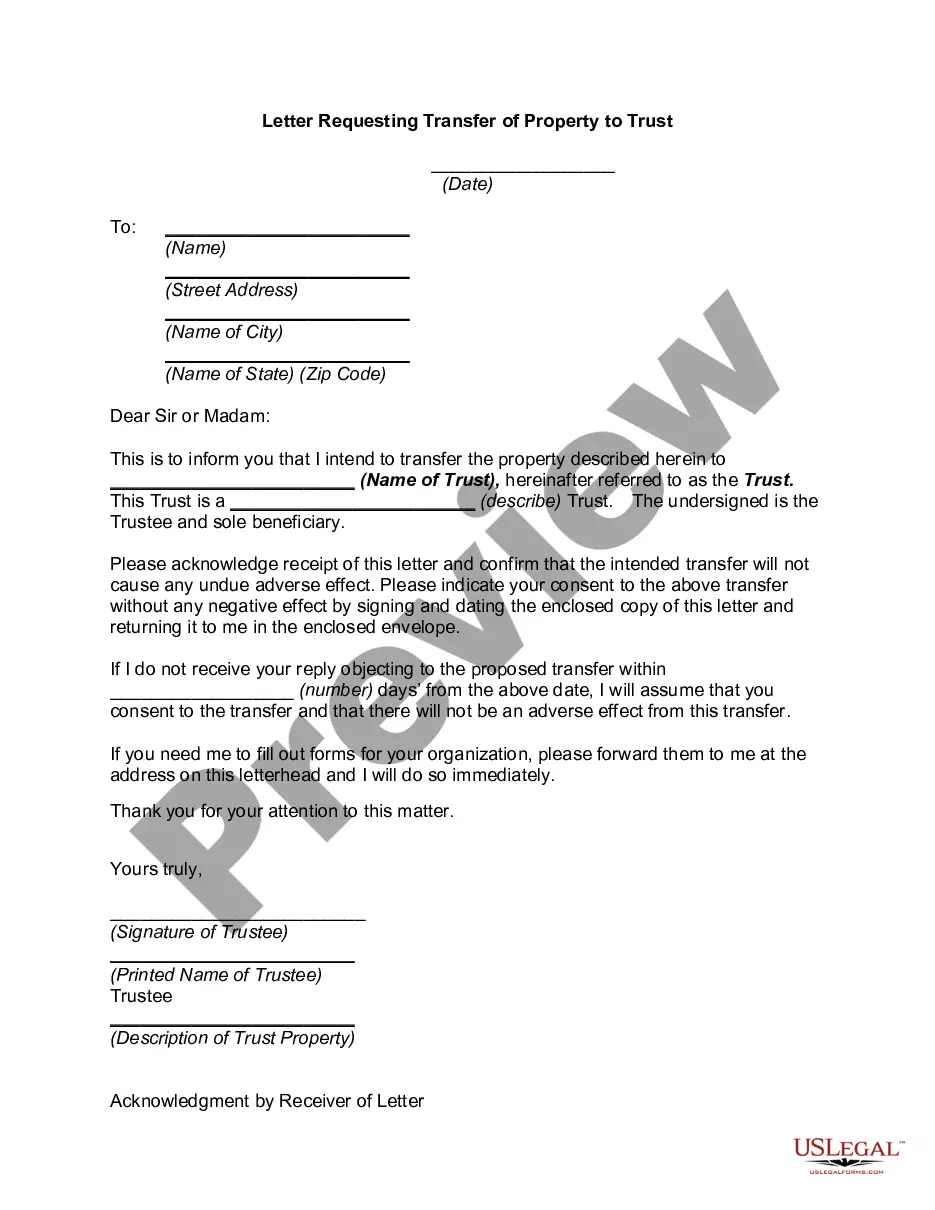
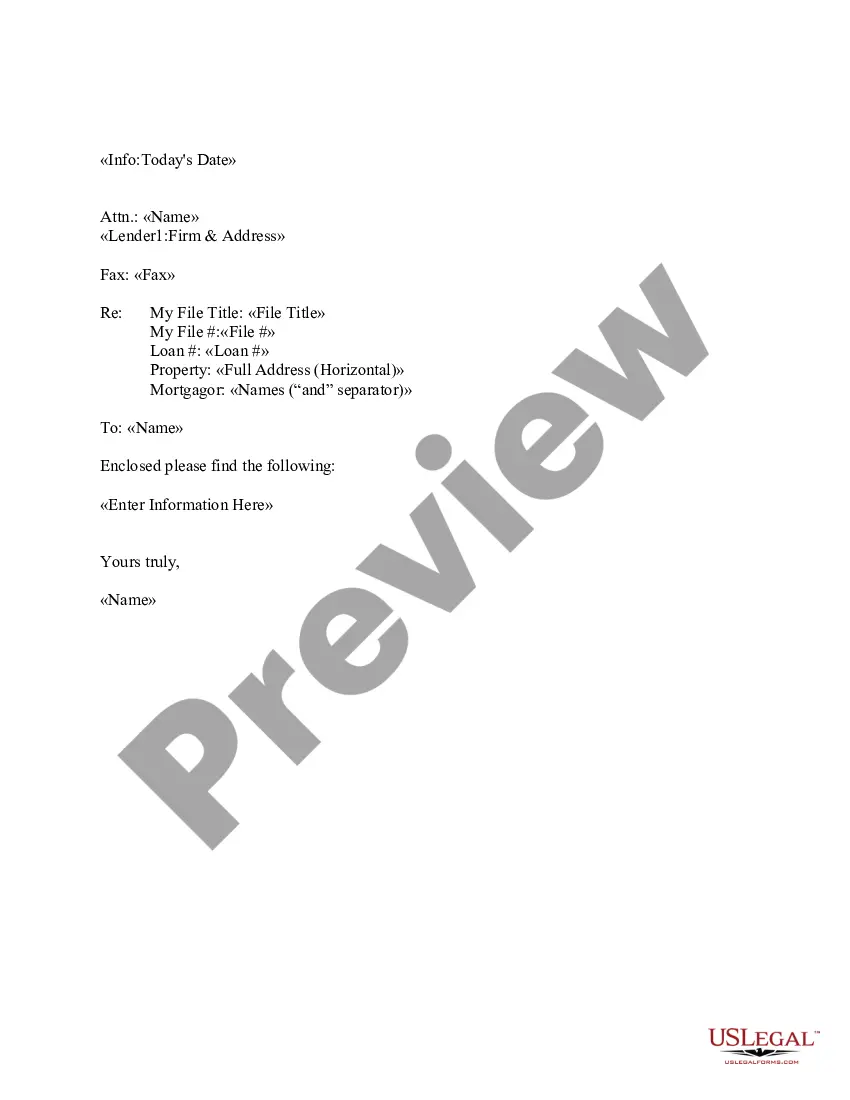
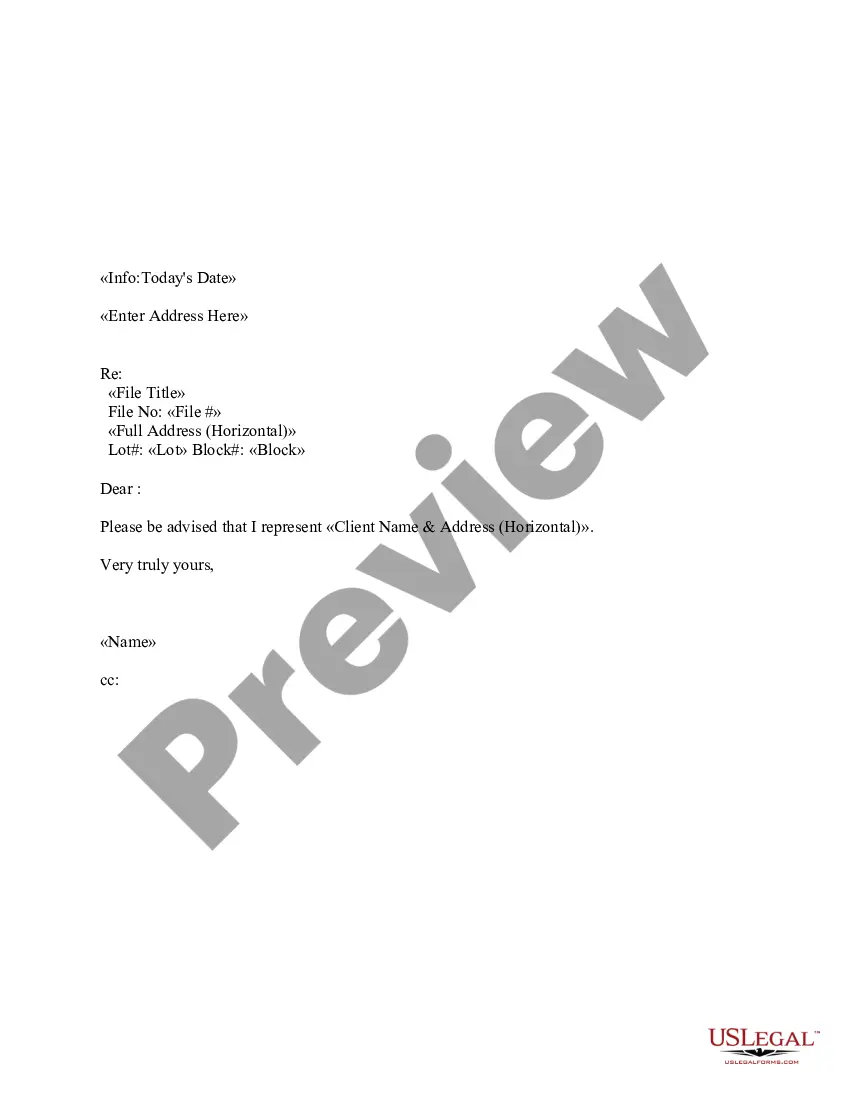
The Letter to Lienholder to Notify of Trust is a formal notification to a lienholder that property has been transferred into a living trust. This type of trust is established during an individual's lifetime for effective estate planning. It allows the trustor to specify which assets are held within the trust, ensuring a clear record of ownership is maintained for lenders and other stakeholders, distinguishing it from similar forms that may not involve trust arrangements.
Key parts of this document
- Date of the letter
- Recipient's information, including the lienholder's name and address
- Identification of the living trust and its date
- Description of the property being transferred
- Signature of the trustor(s)
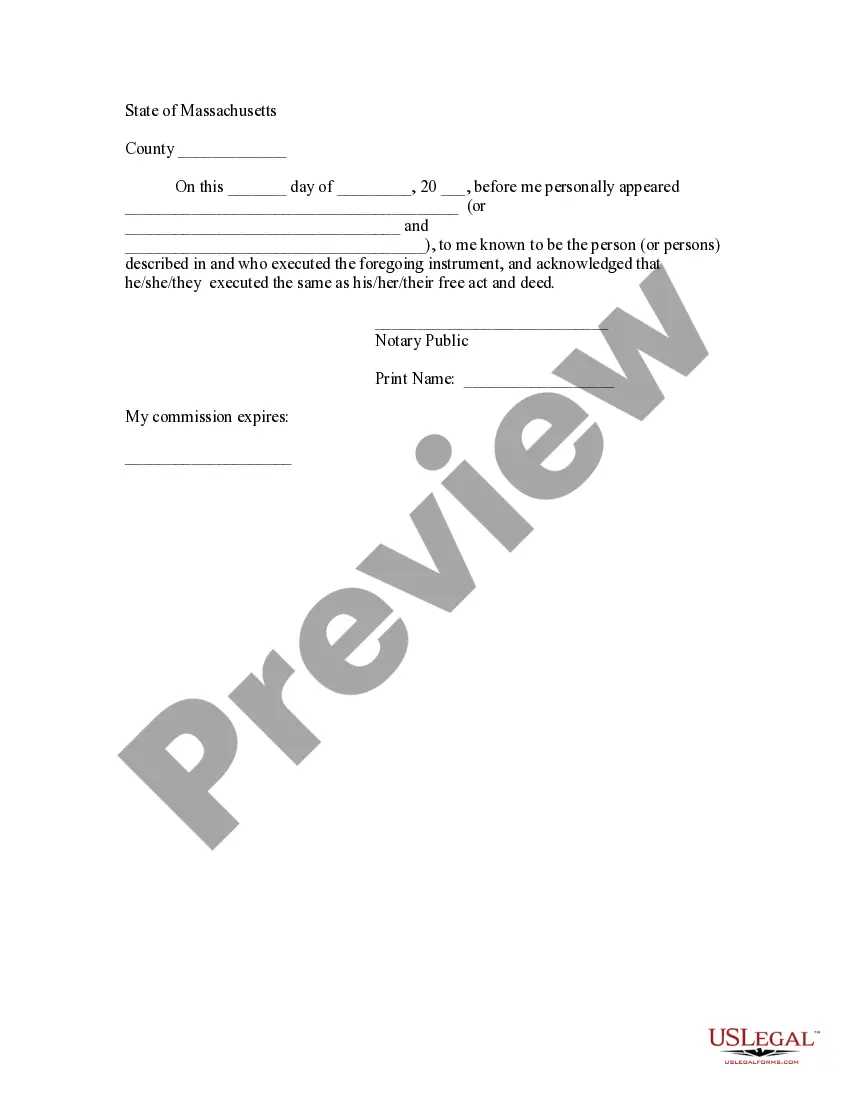
- Notary section for legal validation
When to use this form
This form is used when a property owner establishes a living trust and needs to notify any lienholders about the transfer of the property into that trust. This situation commonly arises during estate planning or when managing assets to avoid probate. Additionally, it ensures that the lienholder updates their records to reflect the new ownership status of the property.
Who this form is for
This form is suitable for:
- Individuals establishing a living trust for estate planning purposes
- Trustors who have transferred assets into a trust
- Lienholders who need to adjust their records after property transfers
How to complete this form
- Insert the date of the letter at the top.
- Fill in the lienholder's name and address.
- Identify the trust by stating its name and date.
- Clearly describe the property being transferred.
- Ensure the trustor(s) sign the document.
- Have the document notarized to ensure its validity.
Notarization requirements for this form
This document requires notarization to meet legal standards. US Legal Forms provides secure online notarization powered by Notarize, allowing you to complete the process through a verified video call, available 24/7.
Get your form ready online
Our built-in tools help you complete, sign, share, and store your documents in one place.
Make edits, fill in missing information, and update formatting in US Legal Forms—just like you would in MS Word.
Download a copy, print it, send it by email, or mail it via USPS—whatever works best for your next step.
Sign and collect signatures with our SignNow integration. Send to multiple recipients, set reminders, and more. Go Premium to unlock E-Sign.
If this form requires notarization, complete it online through a secure video call—no need to meet a notary in person or wait for an appointment.
We protect your documents and personal data by following strict security and privacy standards.

Make edits, fill in missing information, and update formatting in US Legal Forms—just like you would in MS Word.

Download a copy, print it, send it by email, or mail it via USPS—whatever works best for your next step.

Sign and collect signatures with our SignNow integration. Send to multiple recipients, set reminders, and more. Go Premium to unlock E-Sign.

If this form requires notarization, complete it online through a secure video call—no need to meet a notary in person or wait for an appointment.

We protect your documents and personal data by following strict security and privacy standards.
Common mistakes
- Failing to accurately describe the transfer property.
- Not signing the document or missing the notary requirement.
- Using incorrect or outdated information about the trust.
Why use this form online
- Convenience of downloading and filling out the form at your own pace.
- Editability allows for easy adjustments before finalizing.
- Access to professionally drafted forms ensures accuracy and compliance.
Looking for another form?
Form popularity
FAQ
Consistent with current Massachusetts practice, a non-charitable irrevocable trust may be terminated or modified with consent of all the beneficiaries and with court approval, so long as the modification or termination is not inconsistent with a material purpose of the trust.
Since the Schedule of Beneficiaries to a trust is not recorded with the Declaration of Trust at the Registry of Deeds, the identity of the Beneficiaries is not a matter of public record.There are two types of Trusts in Massachusetts.
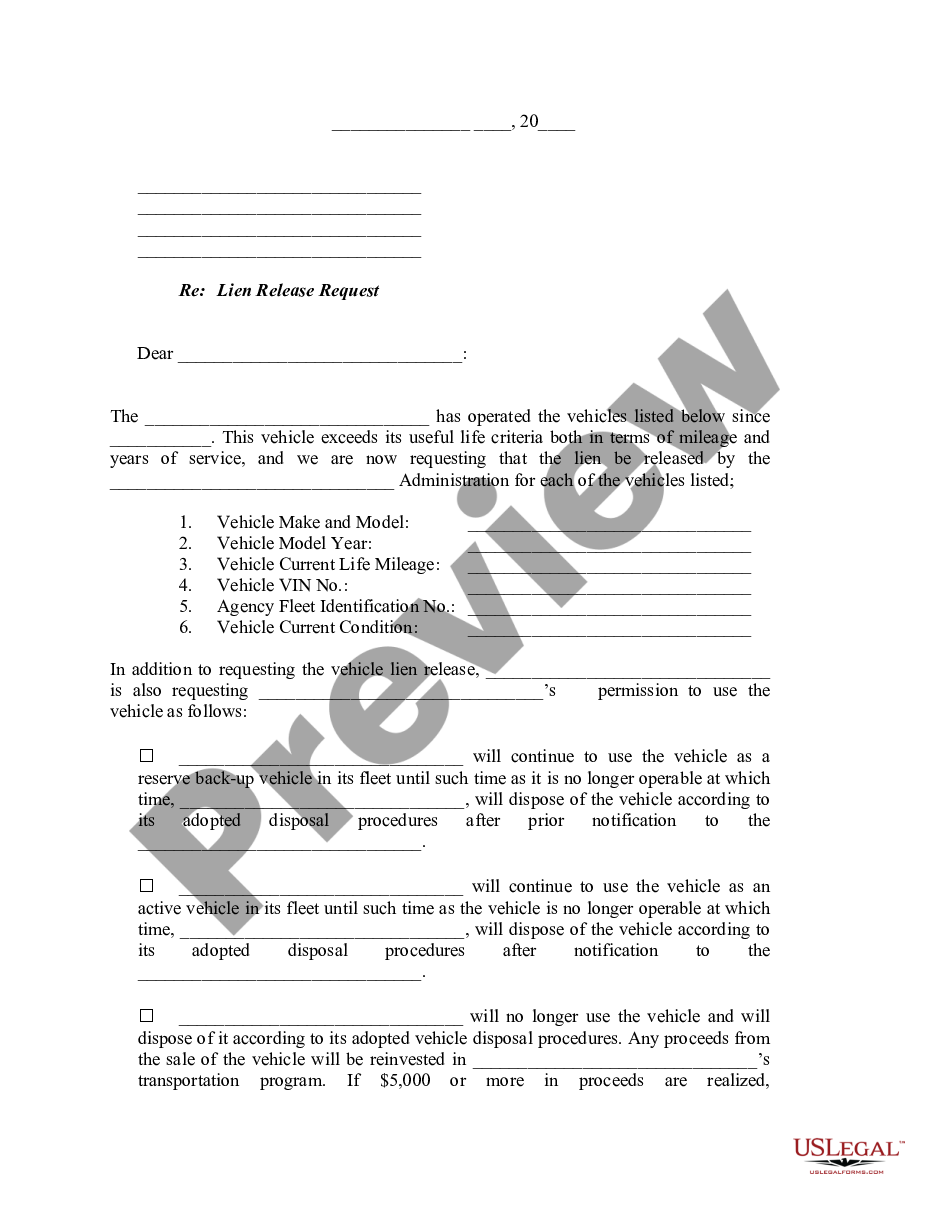
The car (vehicle) lien release form is a document that is used by a lending institution or entity after a borrower has paid the loan in full and the borrower would like to retrieve the title to their vehicle.
The release of lien may be a separate document or it could be the original vehicle title, with the lien signed off on the front. All titles and releases of lien are sent via regular, first-class mail.
Trusts in Massachusetts are governed by the Massachusetts Uniform Trust Code, codified at G.L.c. 203E.The trustee's certificate is recorded either immediately upon the trust's acquisition of real property, or when the trustee acts upon the title 1.
It's perfectly legal to sell a car with a lien, as long as you pay off the loan first. To sell a car with a lien, you have the option to sell it to a car dealer as a trade-in, or sell the car to a private buyer.
The car (vehicle) lien release form is a document that is used by a lending institution or entity after a borrower has paid the loan in full and the borrower would like to retrieve the title to their vehicle.
Depending on state laws, paper titles are generally mailed and electronic titles and/or liens are released to the motor vehicle agency approximately 10 business days after the payoff is received. Allow 15-30 days for receipt of your title based on mail time and/or motor vehicle agency process.
A lien is a claim on property to ensure payment of a debt. When you borrow money to purchase a car, the lender files a lien on the vehicle with the state to insure that if the loan defaults, the lender can take the car. When the debt is fully repaid, a release of the lien is provided by the lender.