Massachusetts Dissolution Package to Dissolve Corporation
Understanding this form
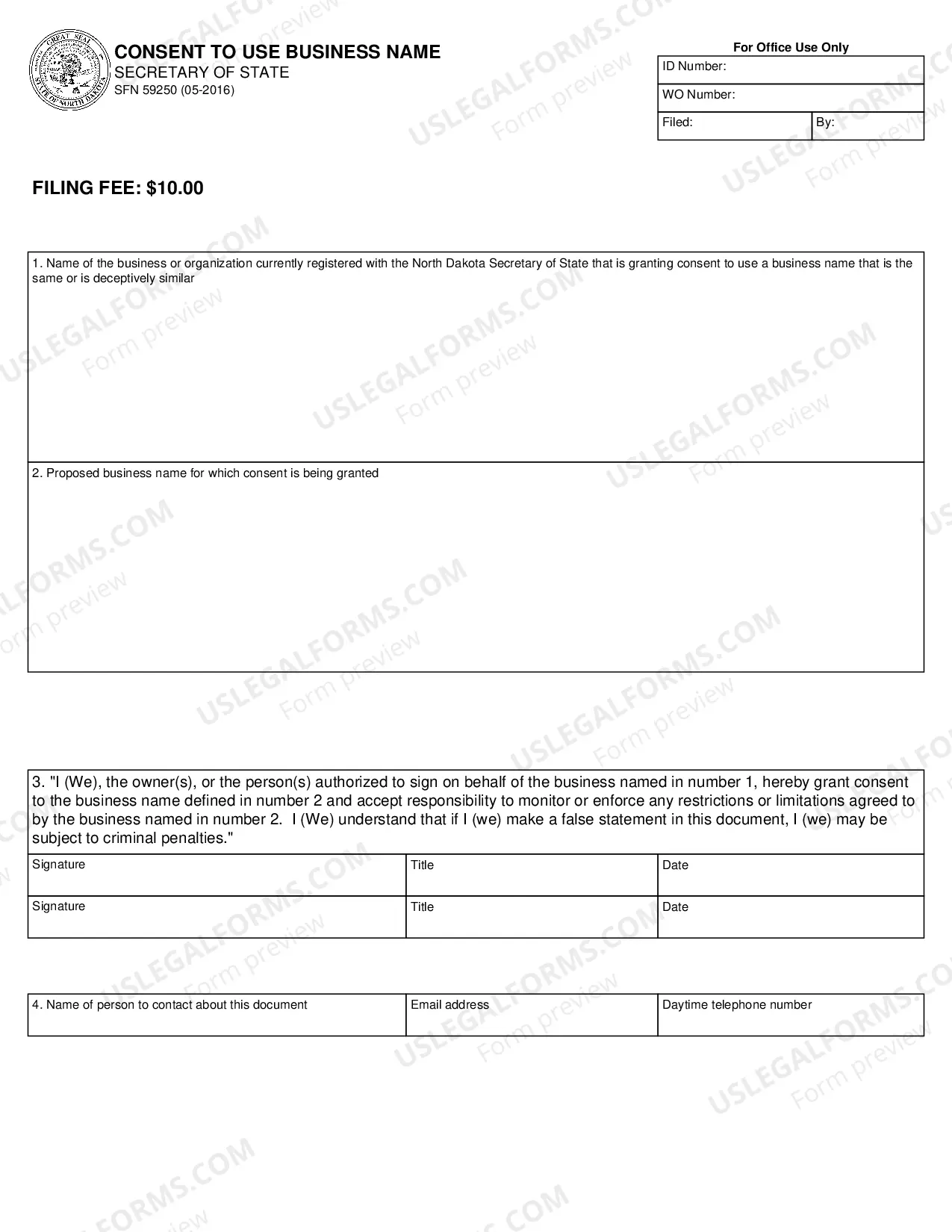
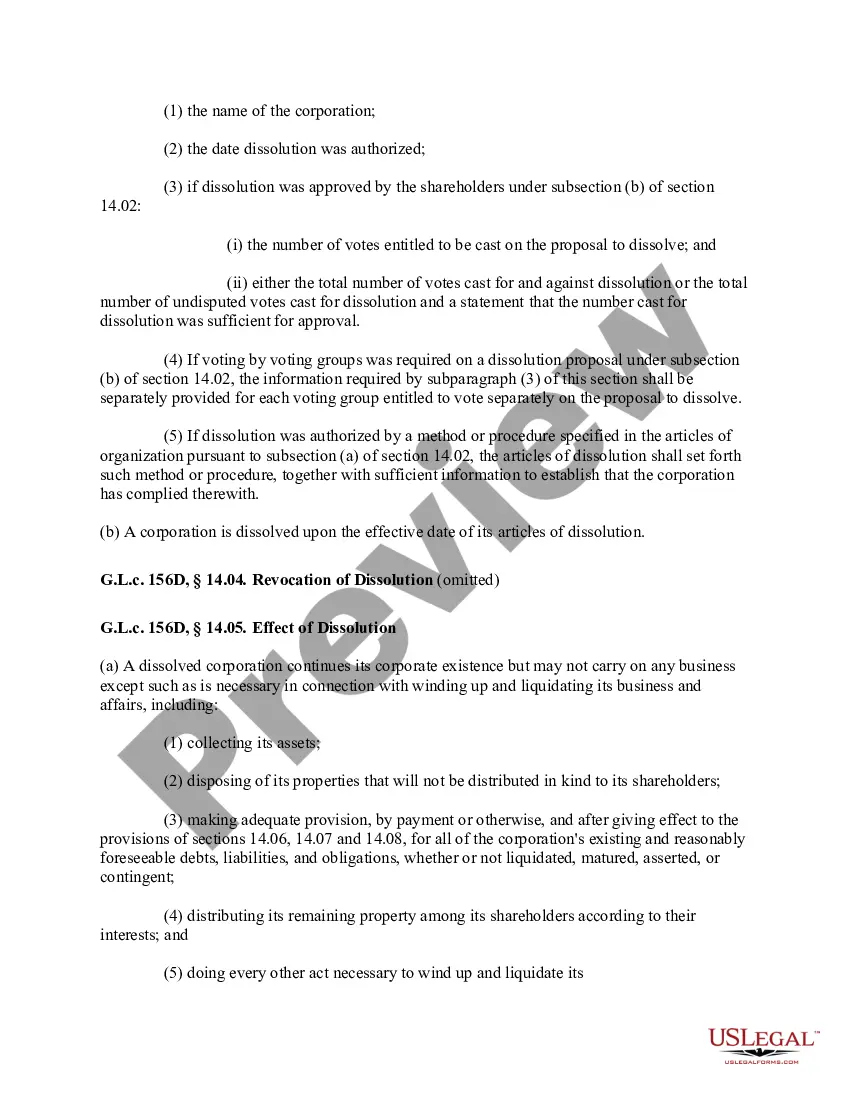
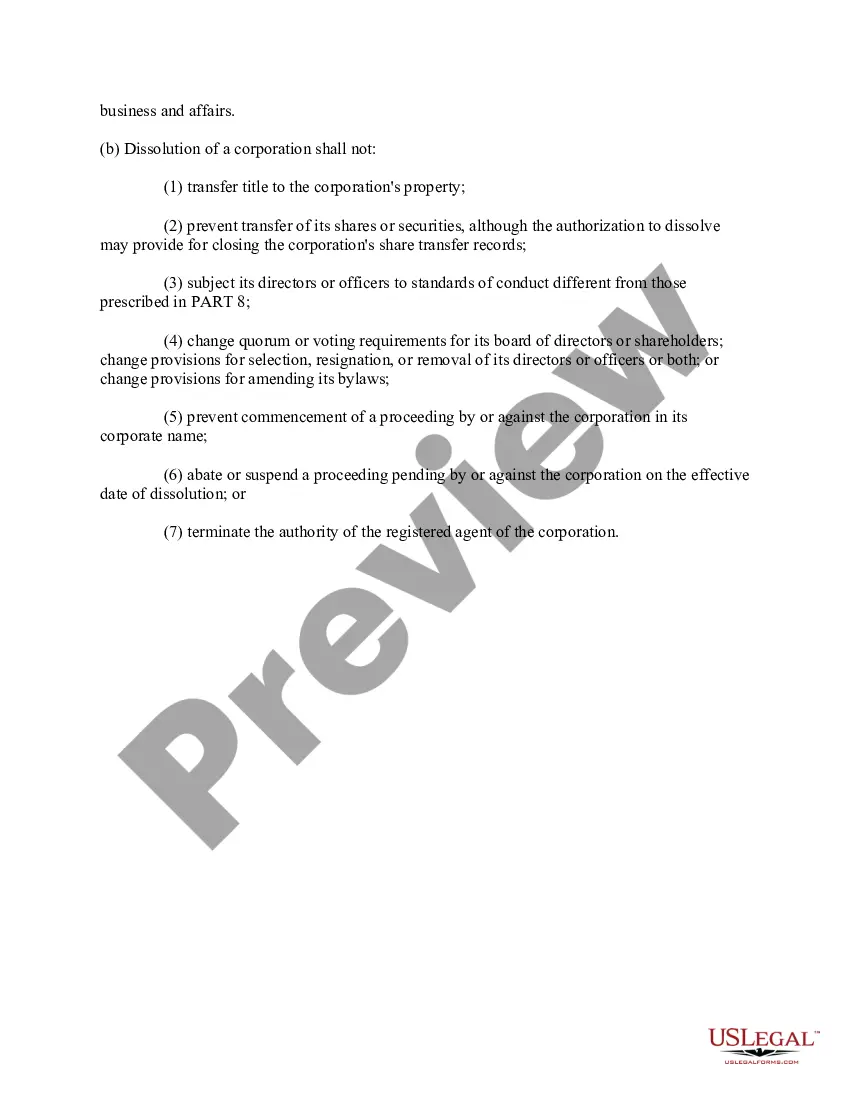
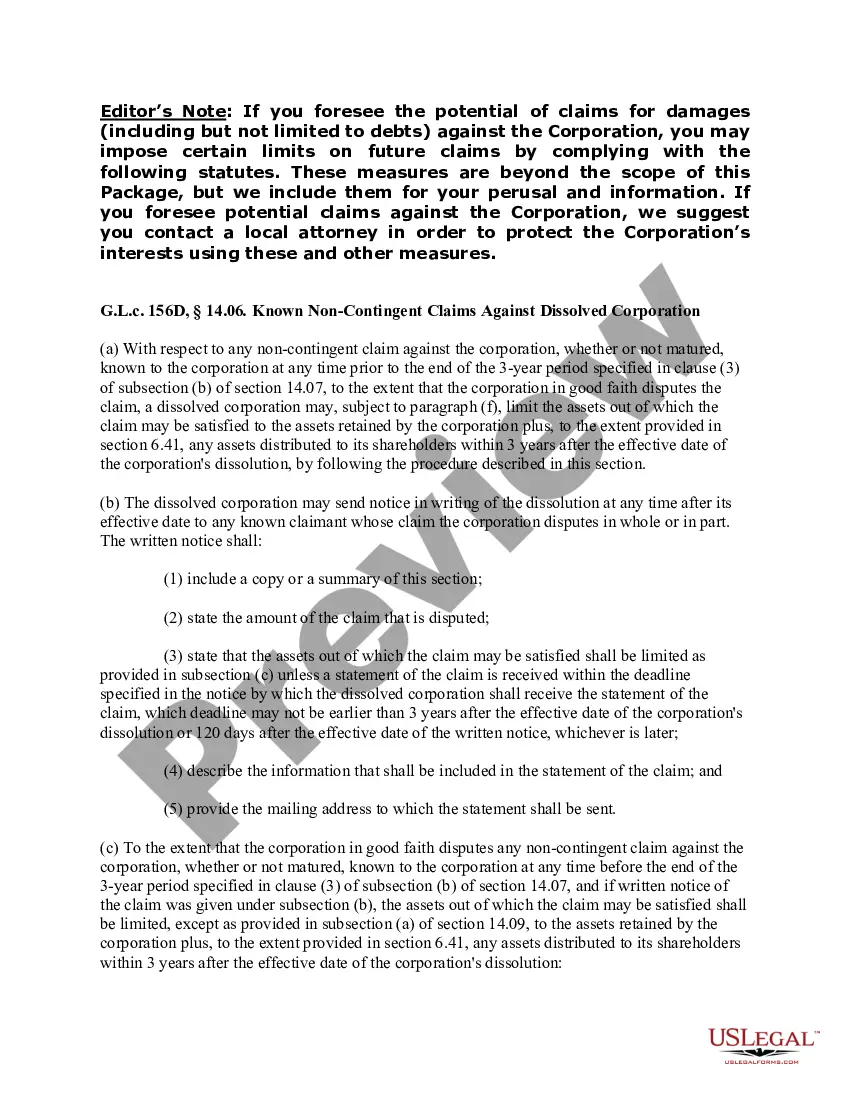
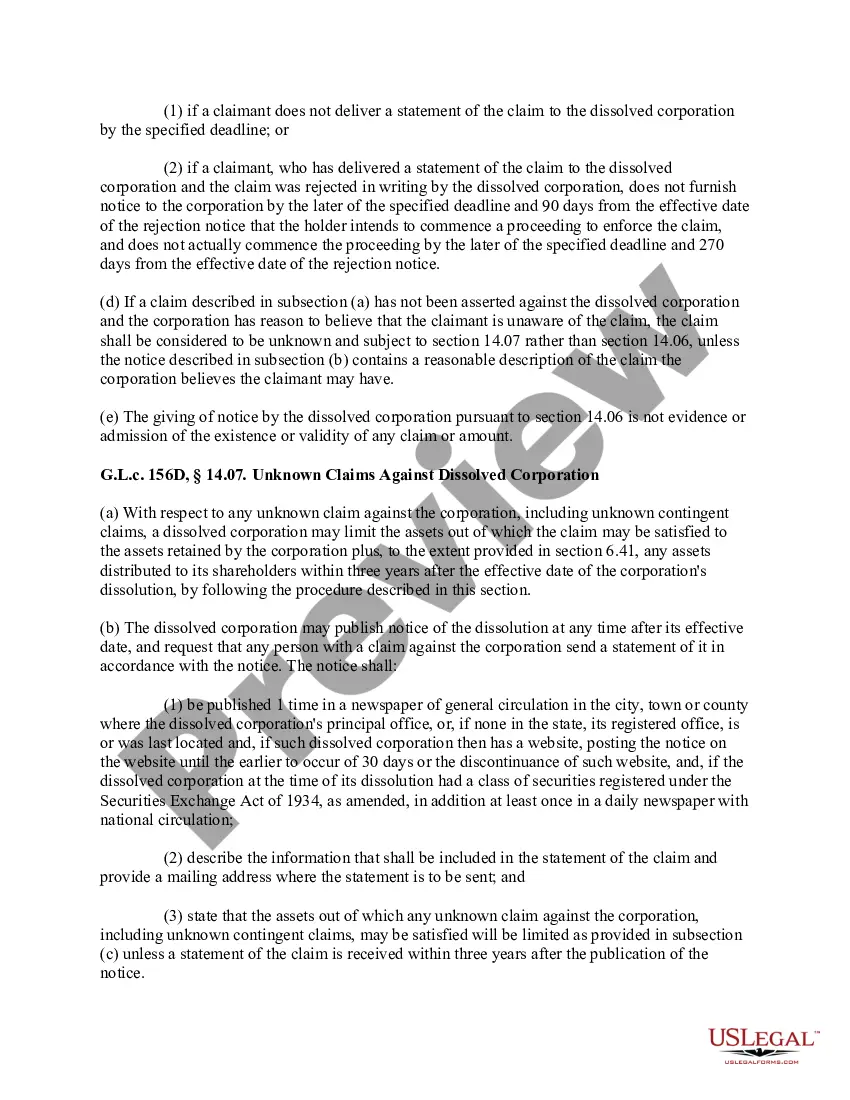
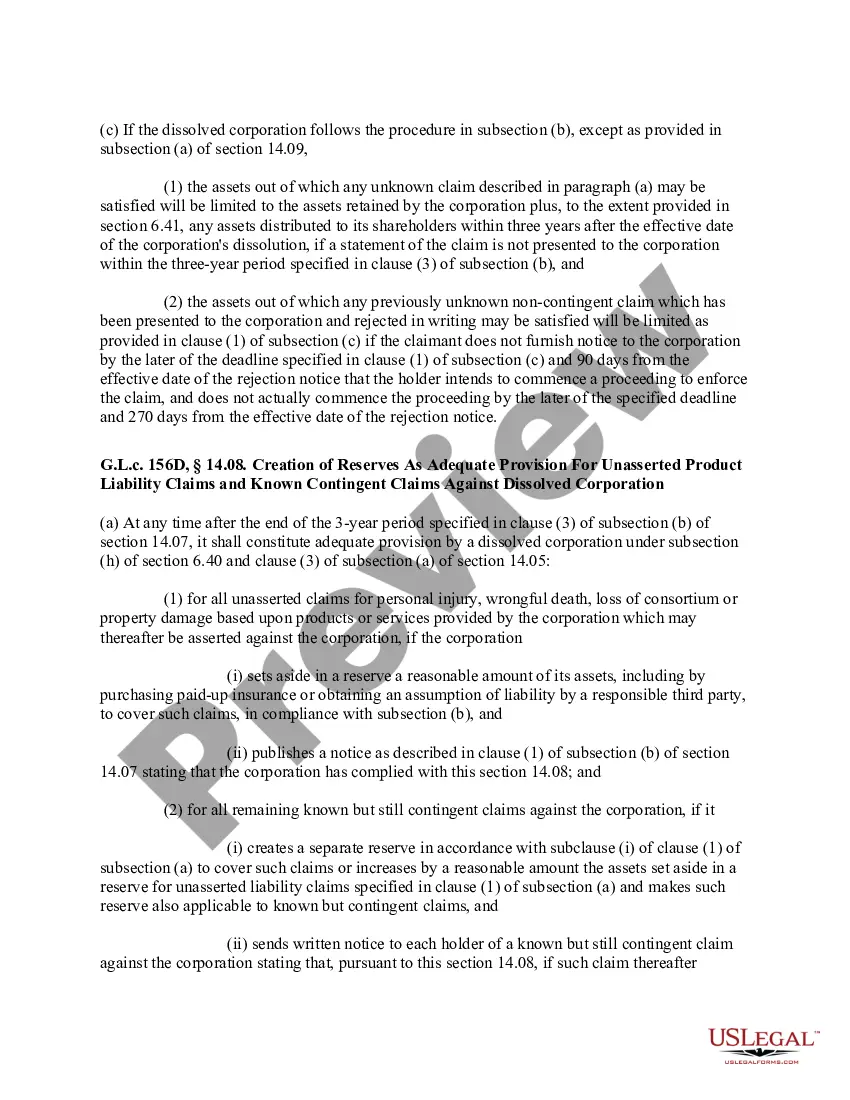
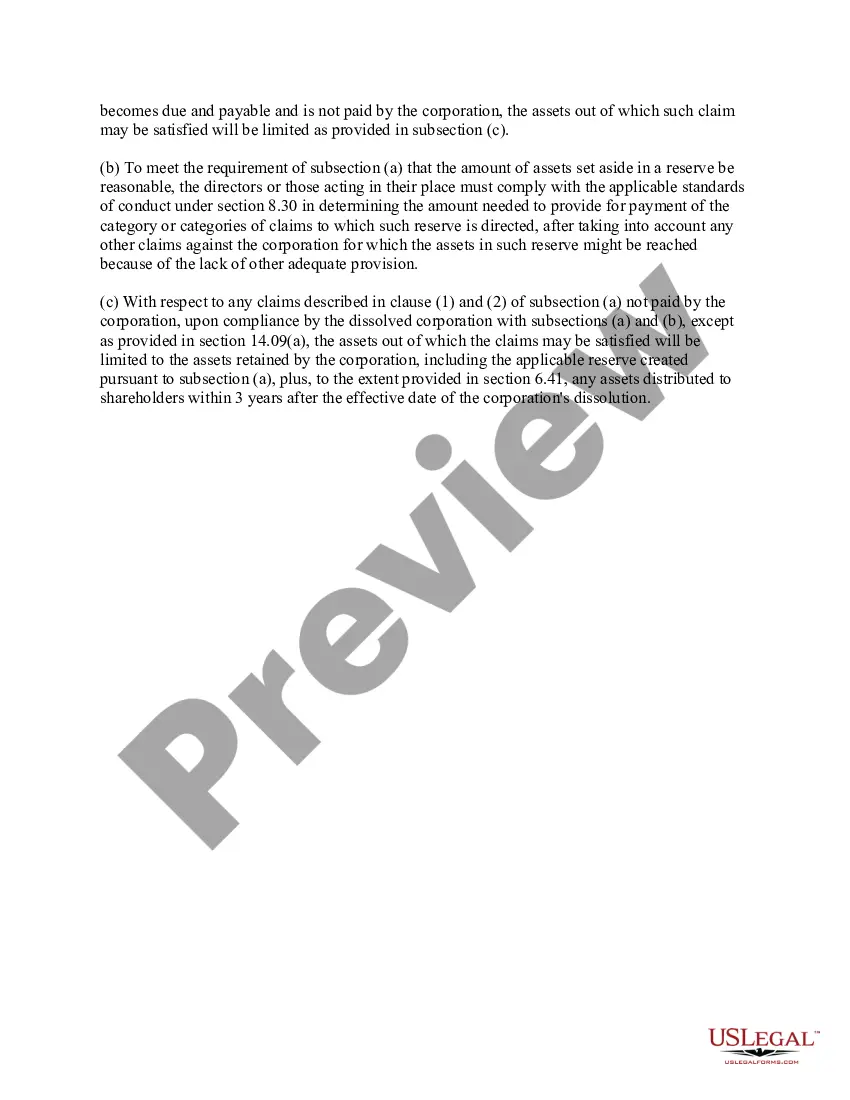
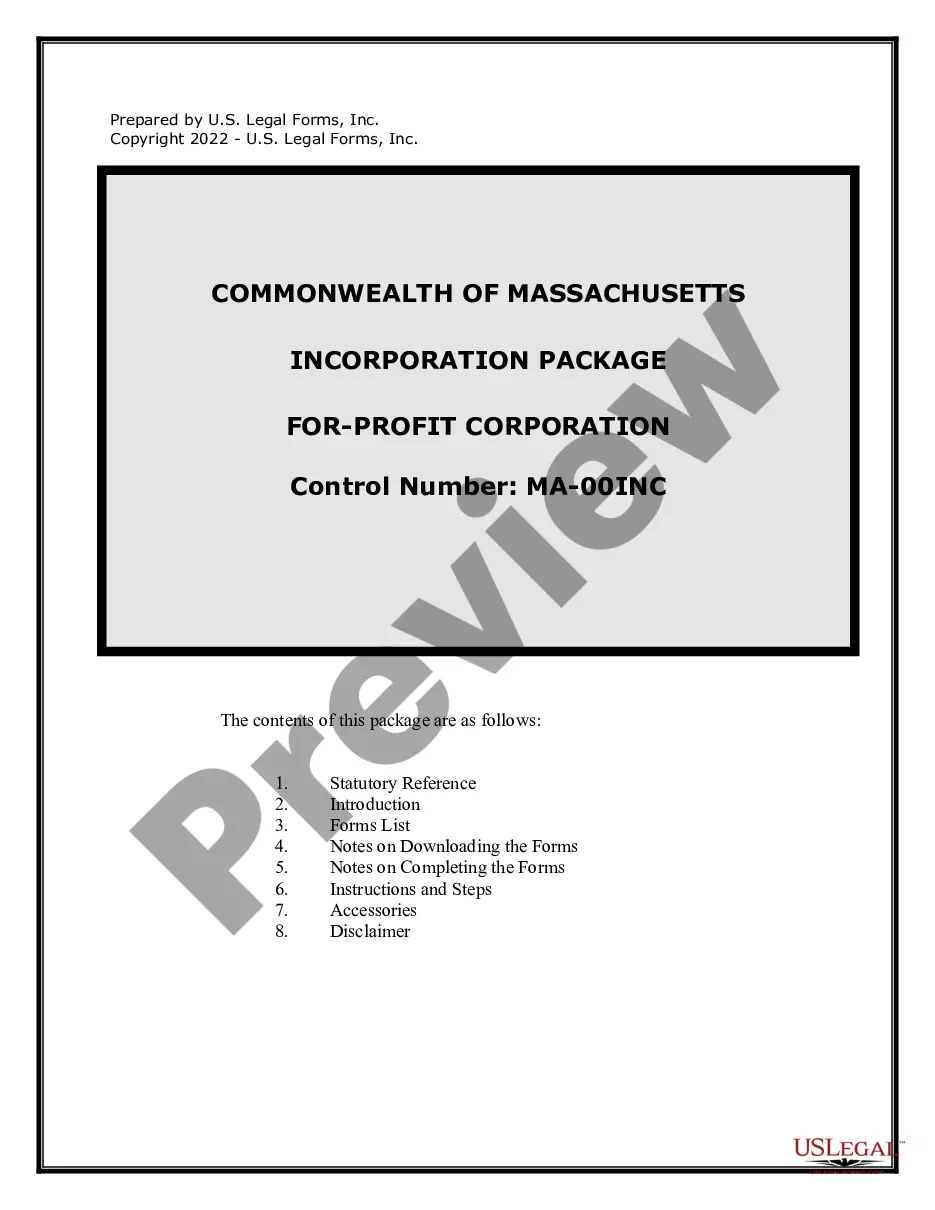
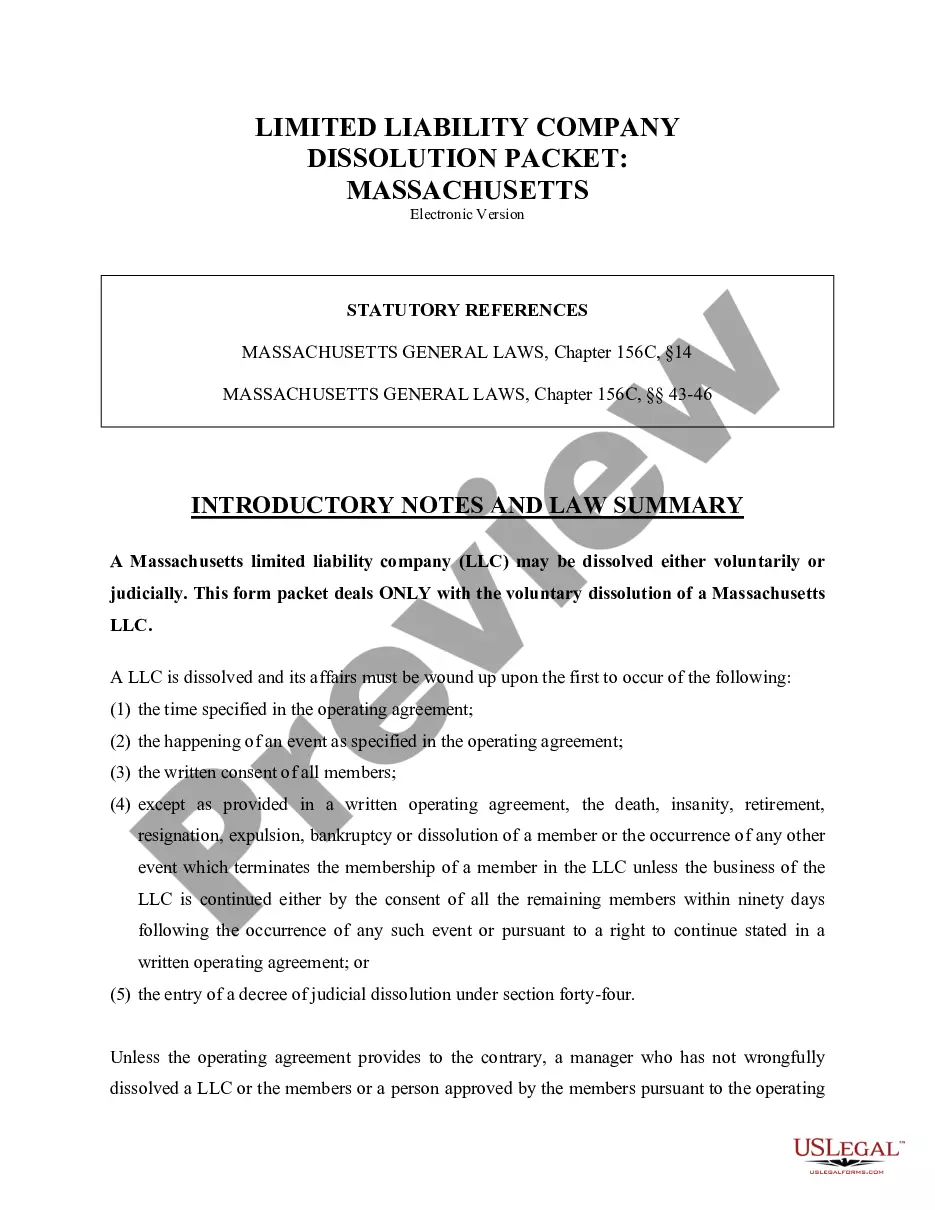
The Massachusetts Dissolution Package to Dissolve Corporation is a comprehensive set of legal documents used to formally dissolve a corporation in Massachusetts. This package includes all necessary forms, detailed instructions, and other essential information to guide you through the dissolution process. It is designed to help users ensure that all legal requirements are met, distinguishing it from other dissolution forms that may lack specificity or comprehensive guidance.
Key components of this form
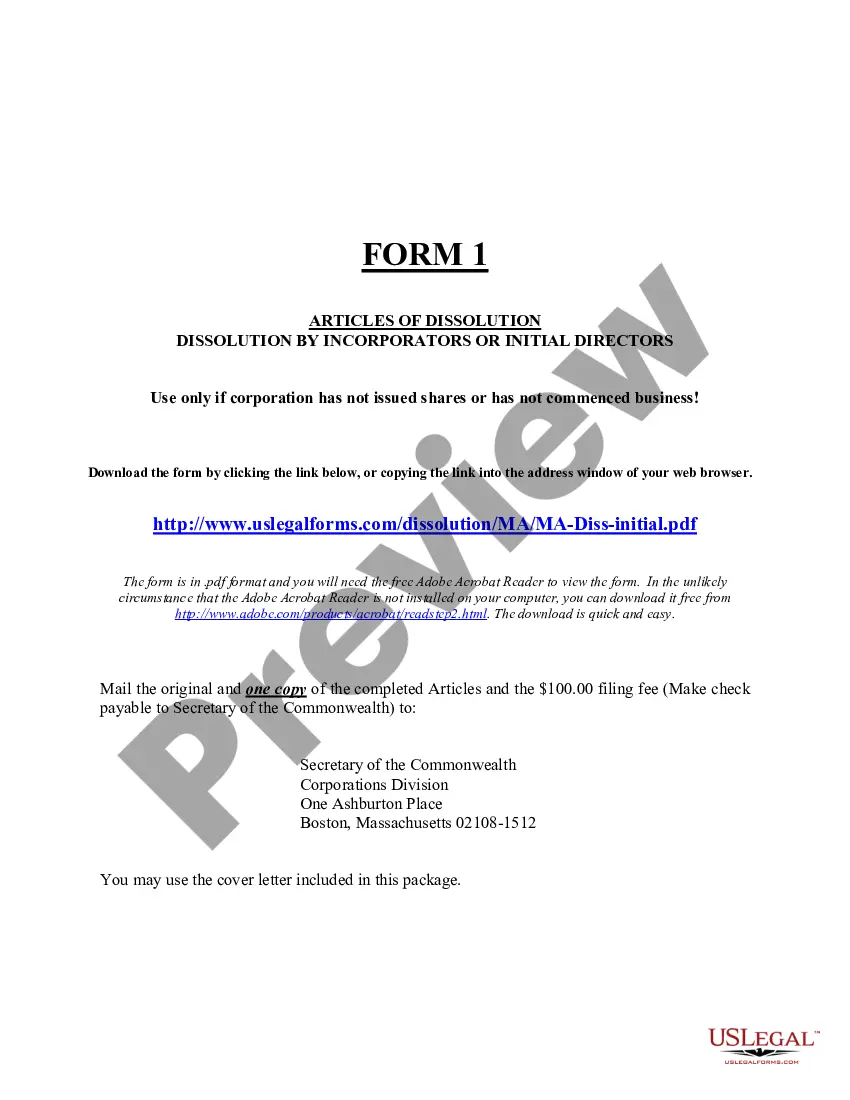
- Articles of Dissolution - The primary form required for dissolution, outlining the corporation's details.
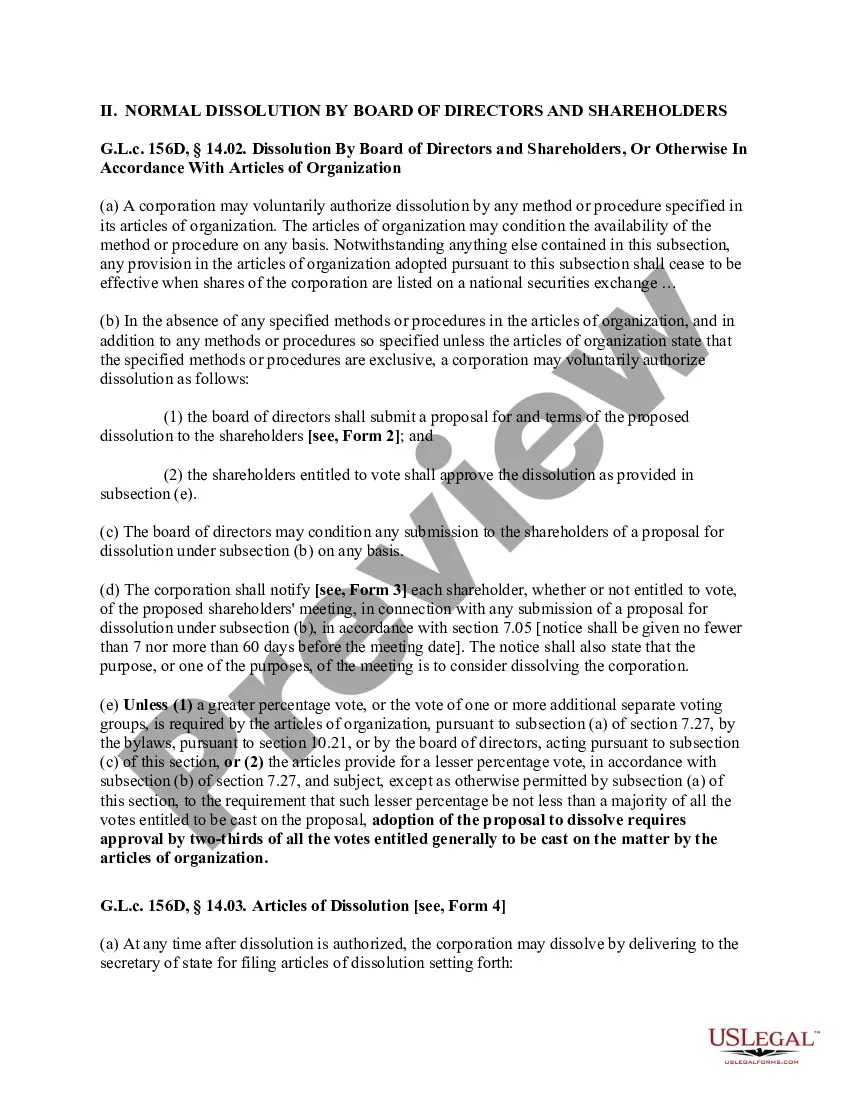
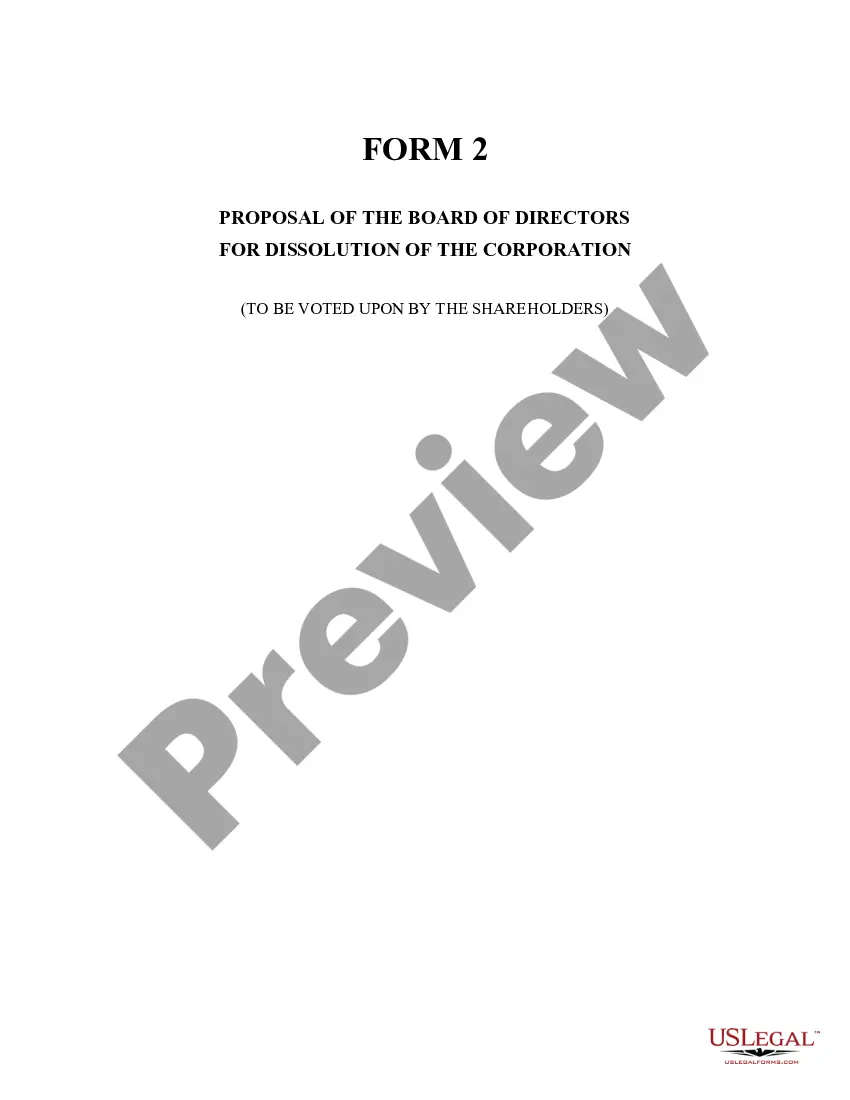
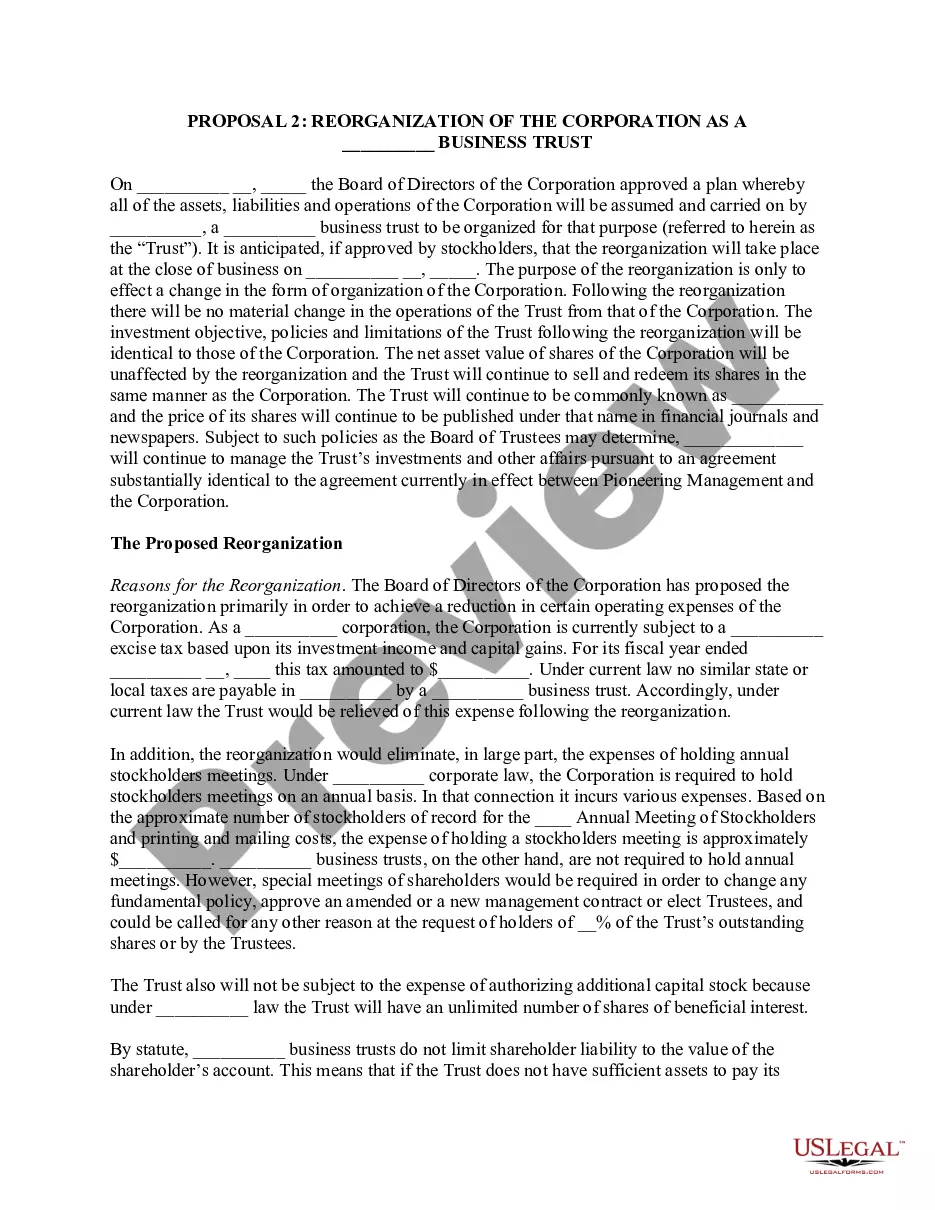
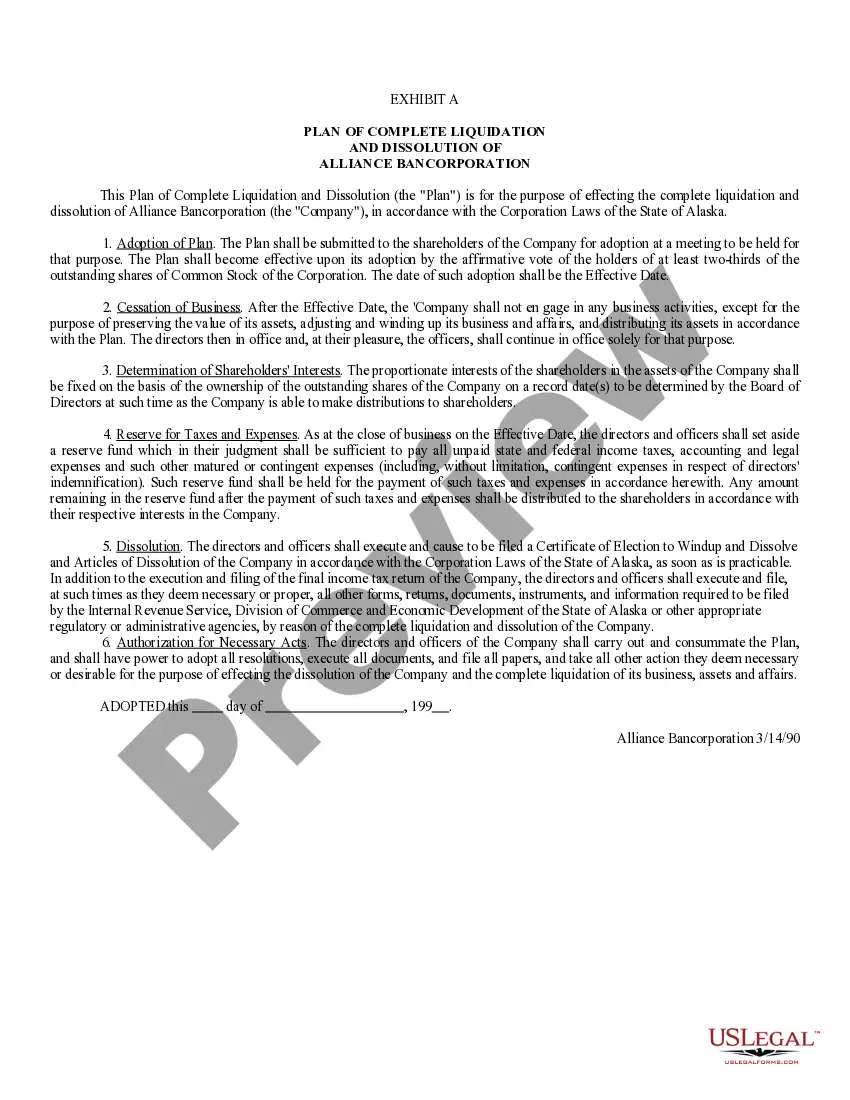
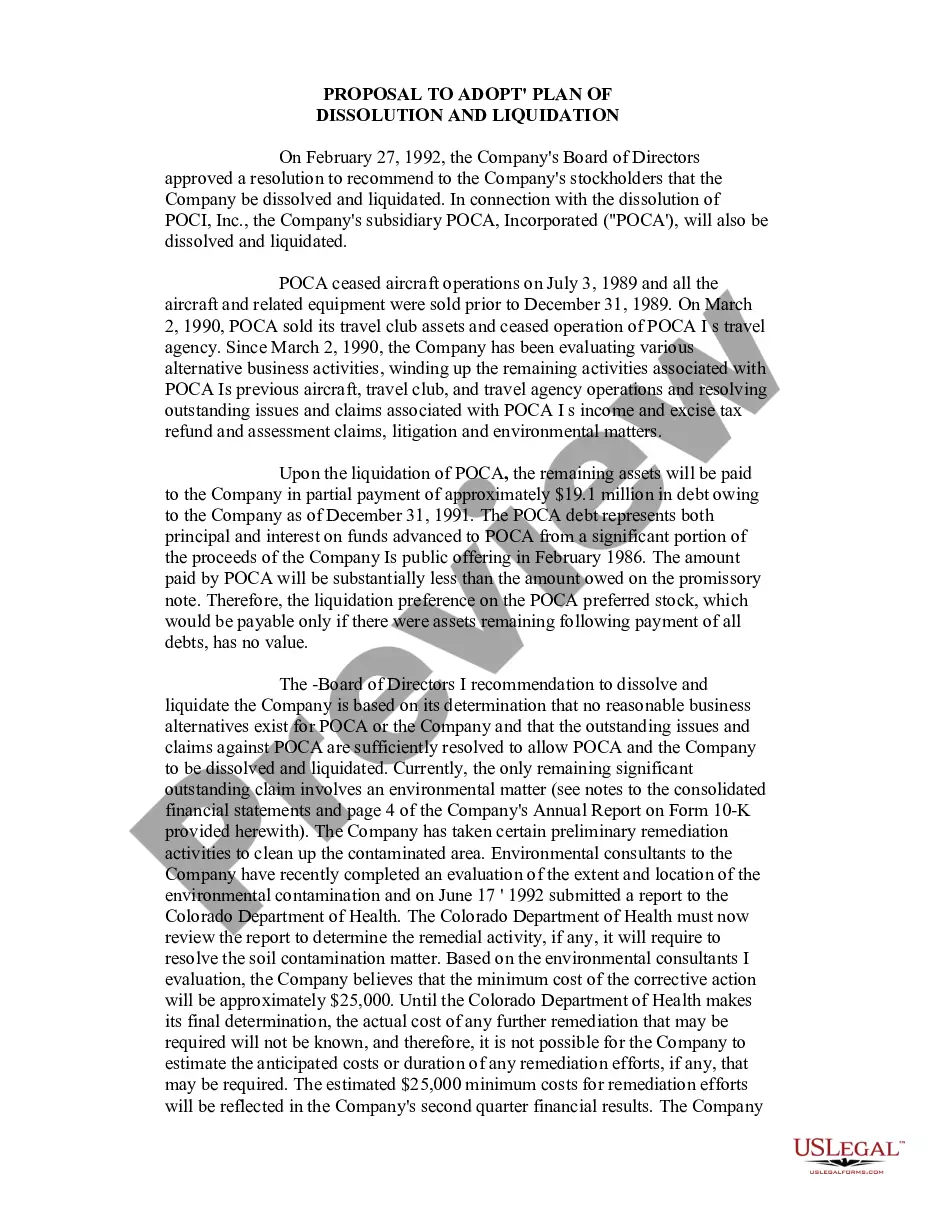
- Proposal of the Board of Directors for Dissolution - A document proposing the dissolution for shareholder voting.
- Notice of Special Meeting - This informs shareholders about the proposed meeting related to the dissolution.
- Transmittal Letter - A template letter that accompanies the submission of the dissolution forms to the Secretary of the Commonwealth.
- Filing Fee Information - Details about the $100 filing fee required for processing the dissolution.

When to use this form
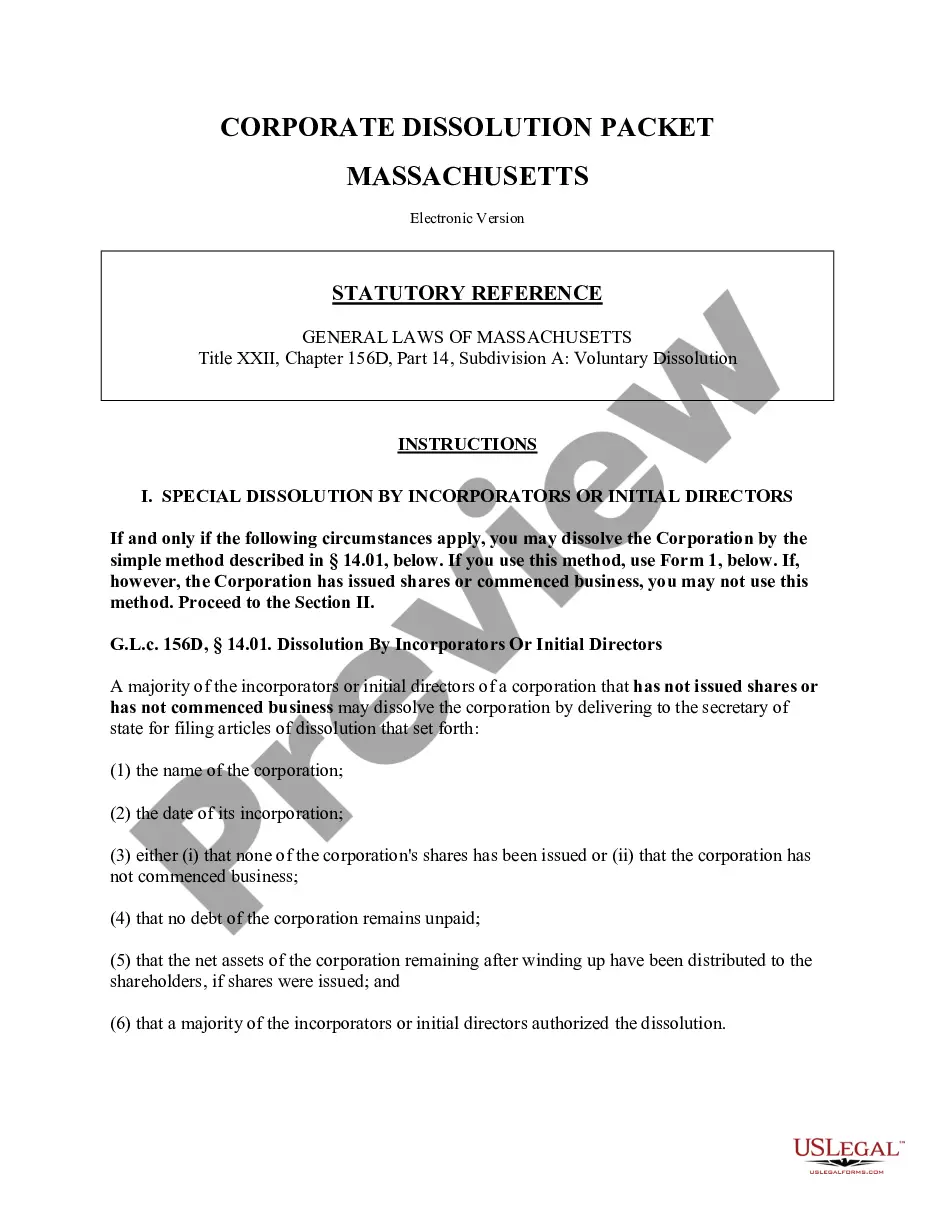
This form is essential when a corporation in Massachusetts decides to cease its operations and formally dissolve. Scenarios that warrant the use of this form include: when the corporation has not issued any shares, has not commenced business, or when the decision to dissolve comes from the board of directors and shareholders. Proper completion of this package ensures compliance with Massachusetts state laws governing corporate dissolution.
Who can use this document
- Incorporators or initial directors of a Massachusetts corporation seeking to dissolve.
- The board of directors, with shareholder approval, wishing to dissolve an operating corporation.
- Shareholders wanting to understand the dissolution process and the necessary steps.
- Business owners and legal representatives looking to manage corporate dissolution responsibly.
Steps to complete this form
- Begin by determining if the corporation has issued shares or commenced business to choose the appropriate dissolution method.
- Complete the Articles of Dissolution by entering the corporation's name, date of incorporation, and liquidation details.
- Prepare the Proposal of the Board of Directors for Shareholder Vote, including the motion to dissolve the corporation.
- Notify shareholders of the special meeting using the Notice of Special Meeting template.
- Submit the completed Articles of Dissolution, along with the filing fee and any required additional documents to the Secretary of the Commonwealth.
Notarization guidance
Notarization is not commonly needed for this form. However, certain documents or local rules may make it necessary. Our notarization service, powered by Notarize, allows you to finalize it securely online anytime, day or night.
Get your form ready online
Our built-in tools help you complete, sign, share, and store your documents in one place.
Make edits, fill in missing information, and update formatting in US Legal Forms—just like you would in MS Word.
Download a copy, print it, send it by email, or mail it via USPS—whatever works best for your next step.
Sign and collect signatures with our SignNow integration. Send to multiple recipients, set reminders, and more. Go Premium to unlock E-Sign.
If this form requires notarization, complete it online through a secure video call—no need to meet a notary in person or wait for an appointment.
We protect your documents and personal data by following strict security and privacy standards.

Make edits, fill in missing information, and update formatting in US Legal Forms—just like you would in MS Word.

Download a copy, print it, send it by email, or mail it via USPS—whatever works best for your next step.

Sign and collect signatures with our SignNow integration. Send to multiple recipients, set reminders, and more. Go Premium to unlock E-Sign.

If this form requires notarization, complete it online through a secure video call—no need to meet a notary in person or wait for an appointment.

We protect your documents and personal data by following strict security and privacy standards.
Avoid these common issues
- Failing to notify all shareholders about the dissolution meeting in a timely manner.
- Not including all required information in the Articles of Dissolution, leading to processing delays.
- Overlooking the necessary steps if the corporation has already issued shares or commenced business.
- Neglecting to check the amount of the filing fee or method of payment.
Why use this form online
- Convenience of accessing and downloading forms directly from any location.
- Editability allows users to easily fill in required information to match their specific circumstances.
- Reliable templates drafted by licensed attorneys, ensuring legal compliance.
- Resourceful instructions provided to guide users through the entire process.
Key takeaways
- The Massachusetts Dissolution Package is essential for legally dissolving a corporation in the state.
- It includes all necessary forms and instructions to facilitate the process.
- Using this package helps ensure compliance with Massachusetts state law and minimizes potential legal issues.
- Timely notification and proper documentation are critical to successfully complete the dissolution.
Looking for another form?
Form popularity
FAQ
In legal terms, when a company is dissolved, it ceases to exist. It cannot still be trading - although a person may trade (misleadingly) using its name.
Call a Board Meeting. File a Certificate of Dissolution With the Secretary of State. Notify the Internal Revenue Service (IRS) Close Accounts and Credit Lines, Cancel Licenses, Etc.
Under the primary BCA procedure, your corporation is dissolved through action by your board of directors followed by a shareholder vote. More specifically, your board of directors must adopt and submit a proposal to dissolve to the shareholders. The shareholders must then vote on the proposal at a shareholder meeting.
If the company has ceased trading and is closed owing money and your debt is with that company then your liability ends with that company.
Dissolving the CorporationCalifornia's General Corporation Law (GCL) provides for voluntary dissolution if shareholders holding shares with at least 50 percent of the voting power vote for dissolution.
When a corporation is dissolved, it no longer legally exists and, in most cases, its debts disappear as well. State laws usually give additional time beyond the dissolution for creditors to file suits for failure to pay any corporate debts or for the wrongful distribution of corporate assets.
After dissolution, you cannot use the funds remaining in your business bank account for new business. LLC members no longer have the authority to conduct business or do anything that would indicate that the LLC is still active. Your bank account can cover only essential winding up affairs.
Step 1: Corporation or LLC action. Step 2: Filing the Certificate of Dissolution with the state. Step 3: Filing federal, state, and local tax forms. Step 4: Notifying creditors your business is ending. Step 5: Settling creditors' claims.
After a company is dissolved, it must liquidate its assets. Liquidation refers to the process of sale or auction of the company's non-cash assets.Assets used as security for loans must be given to the bank or creditor that extended the loan, or you must pay off the loan before selling such assets.