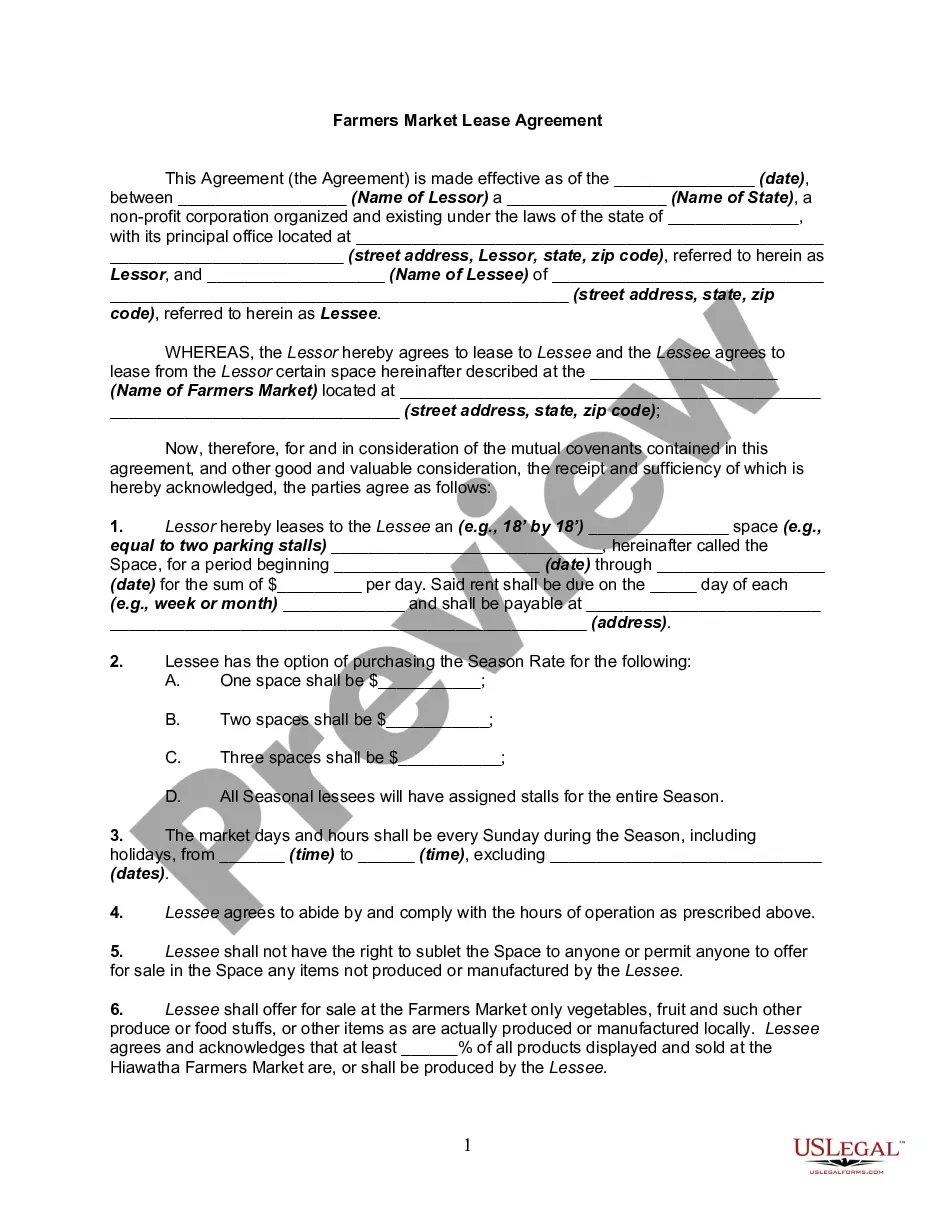
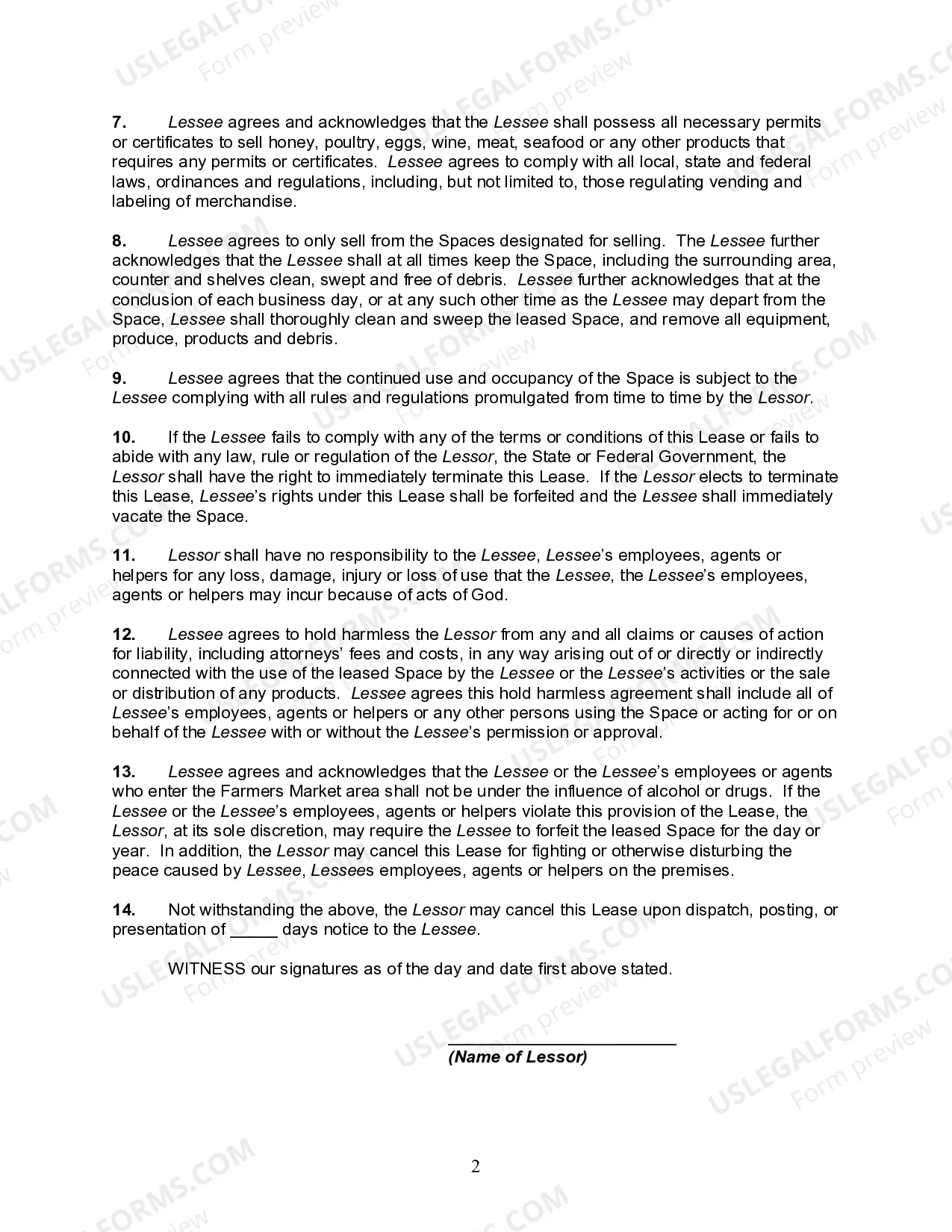
Louisiana Farmers Market Lease Agreement
Description
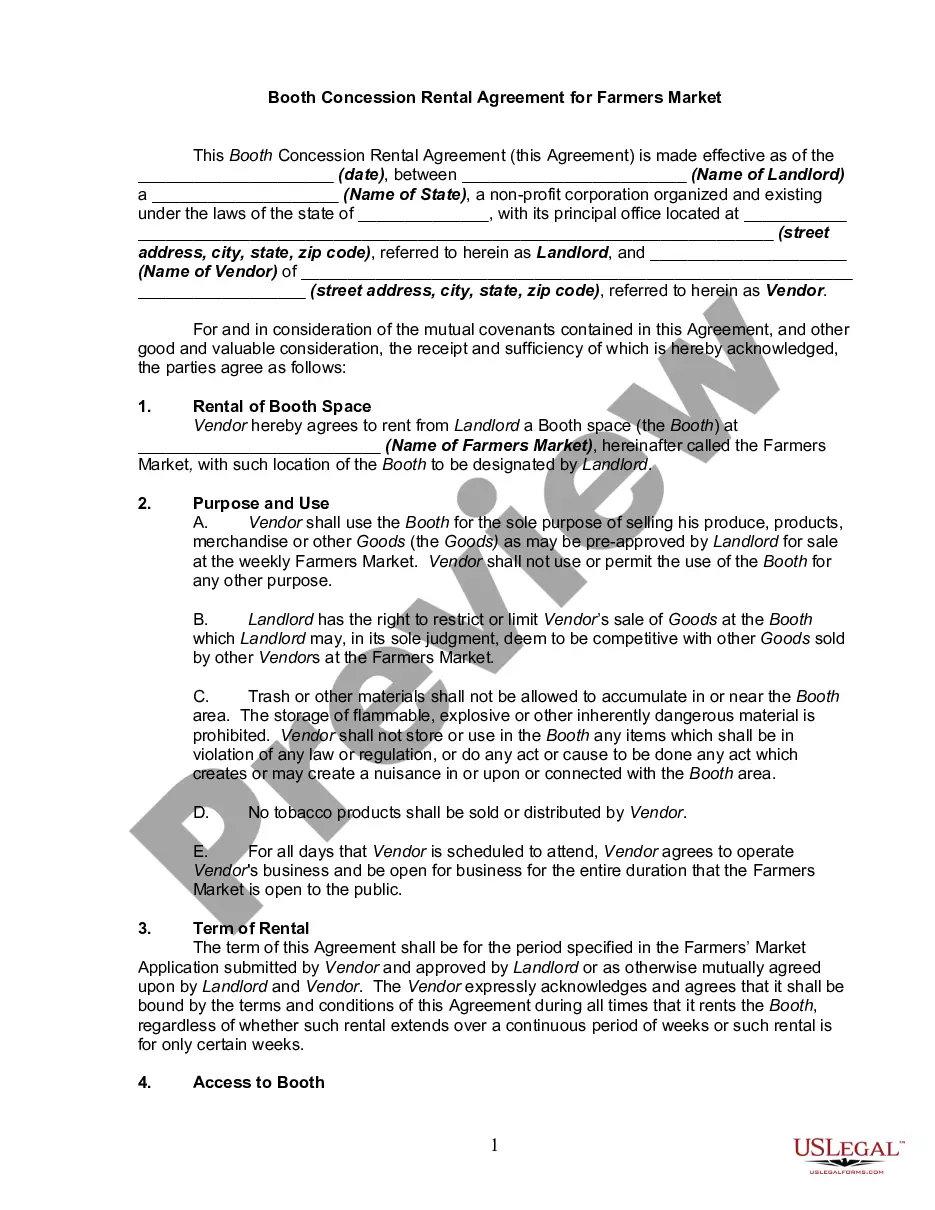
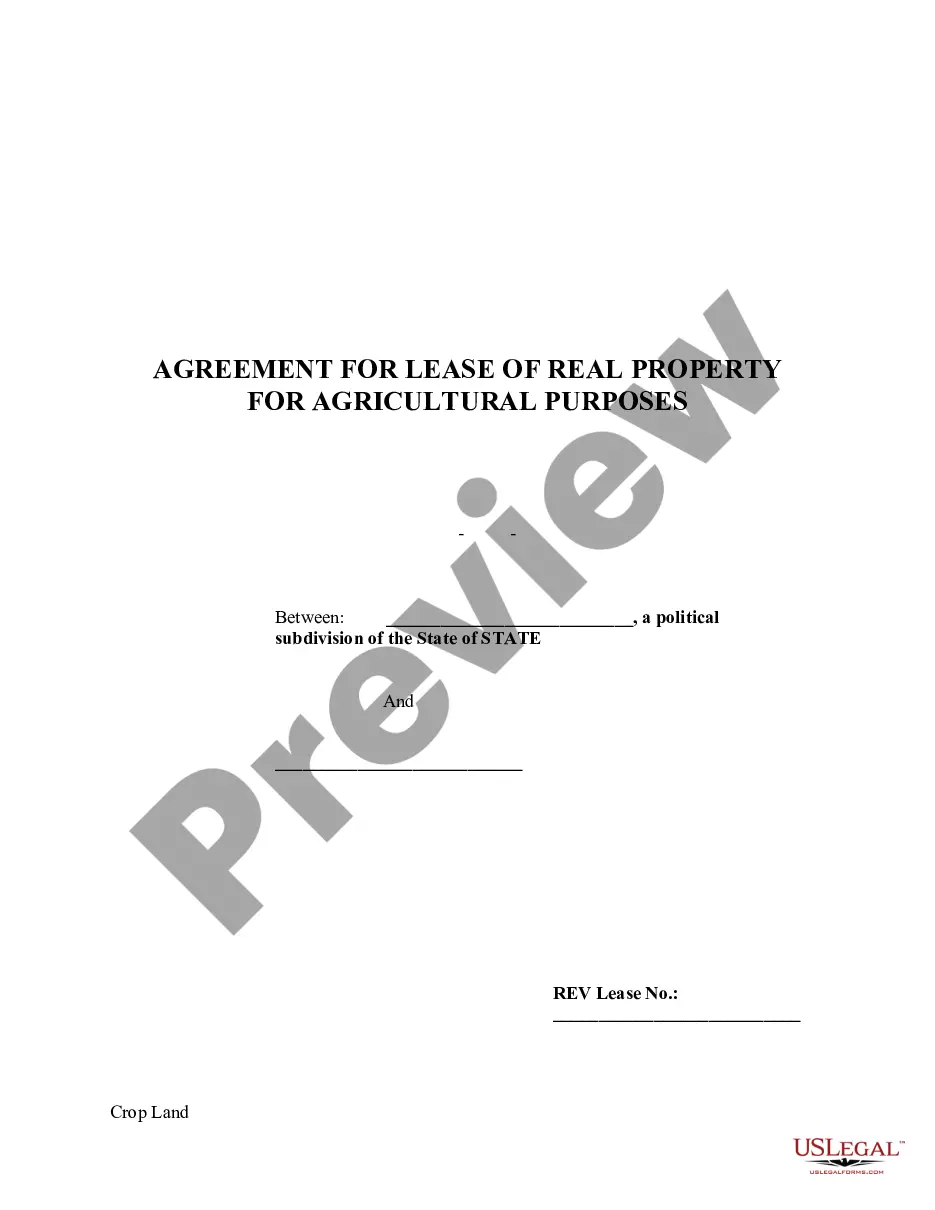
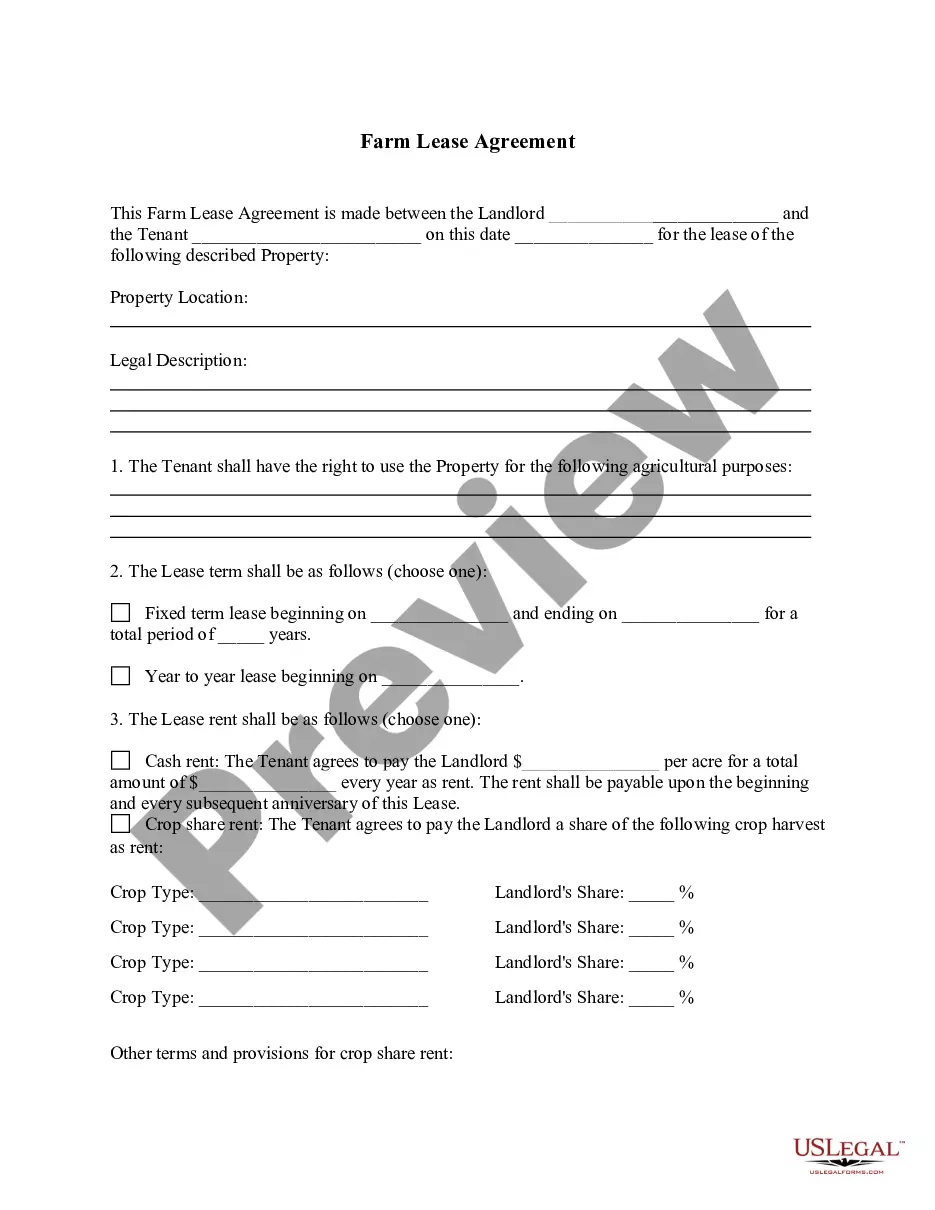
Get your form ready online
Our built-in tools help you complete, sign, share, and store your documents in one place.
Make edits, fill in missing information, and update formatting in US Legal Forms—just like you would in MS Word.
Download a copy, print it, send it by email, or mail it via USPS—whatever works best for your next step.
Sign and collect signatures with our SignNow integration. Send to multiple recipients, set reminders, and more. Go Premium to unlock E-Sign.
If this form requires notarization, complete it online through a secure video call—no need to meet a notary in person or wait for an appointment.
We protect your documents and personal data by following strict security and privacy standards.

Make edits, fill in missing information, and update formatting in US Legal Forms—just like you would in MS Word.

Download a copy, print it, send it by email, or mail it via USPS—whatever works best for your next step.

Sign and collect signatures with our SignNow integration. Send to multiple recipients, set reminders, and more. Go Premium to unlock E-Sign.

If this form requires notarization, complete it online through a secure video call—no need to meet a notary in person or wait for an appointment.

We protect your documents and personal data by following strict security and privacy standards.
Looking for another form?
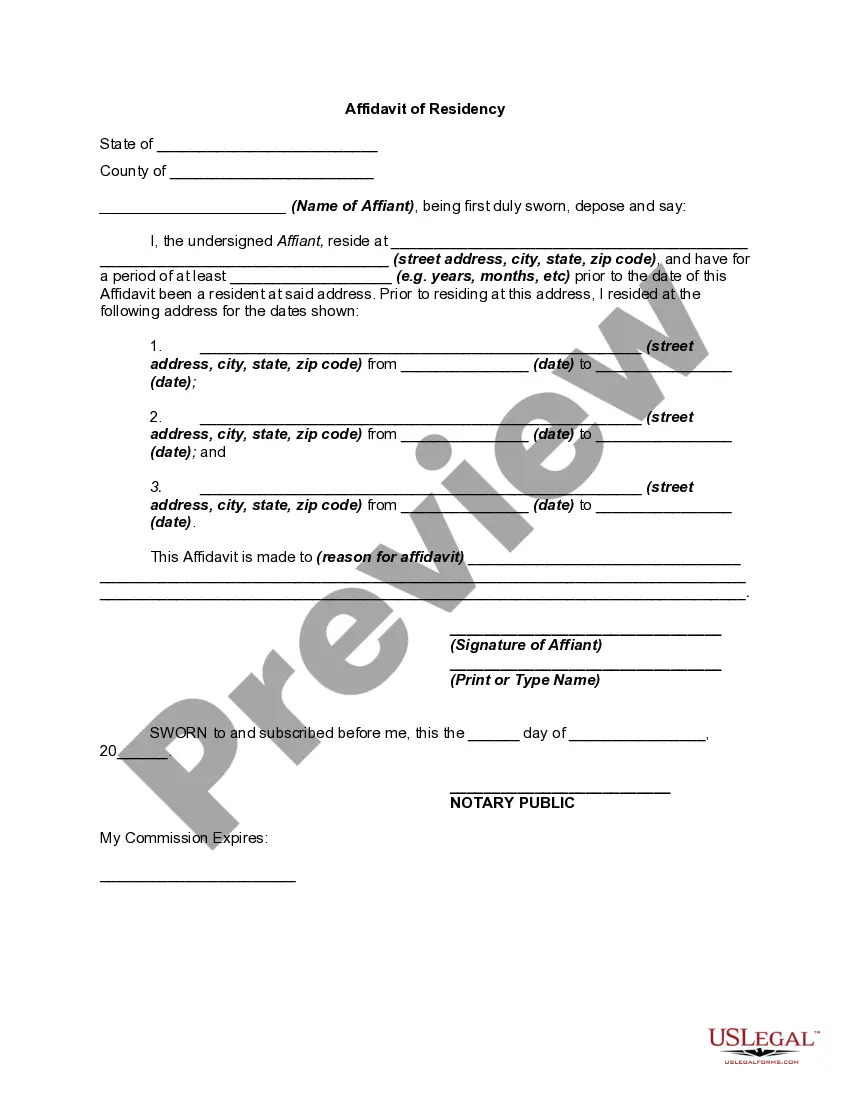
How to fill out Farmers Market Lease Agreement?
If you need to thorough, procure, or create sanctioned document templates, utilize US Legal Forms, the largest assortment of sanctioned forms, available online.
Leverage the site's convenient and straightforward search to discover the documents you require.
Various templates for commercial and personal uses are organized by categories and states, or keywords.
Step 4. Once you have found the form you need, click on the Buy now option. Choose the payment plan you prefer and enter your credentials to register for an account.
Step 5. Proceed with the transaction. You can use your credit card or PayPal account to finalize the payment. Step 6. Download the format from the sanctioned form and save it on your system. Step 7. Complete, modify, and print or sign the Louisiana Farmers Market Lease Agreement.
Every sanctioned document template you purchase is yours indefinitely. You have access to every form you saved in your account. Go to the My documents section and choose a form to print or download again.
Complete and download, and print the Louisiana Farmers Market Lease Agreement with US Legal Forms. There are countless professional and state-specific forms available for your commercial or personal needs.
- Use US Legal Forms to locate the Louisiana Farmers Market Lease Agreement with just a few clicks.
- If you are already a US Legal Forms customer, Log In to your account and click on the Download option to acquire the Louisiana Farmers Market Lease Agreement.
- You can also retrieve forms you previously saved in the My documents section of your account.
- Should you be using US Legal Forms for the first time, follow the instructions below.
- Step 1. Ensure you have chosen the form suitable for your specific city/state.
- Step 2. Utilize the Review option to examine the form's details. Always remember to check the description.
- Step 3. If you are not content with the form, make use of the Search area at the top of the page to locate different types in the sanctioned form design.
Form popularity
FAQ
Yes, you can sell produce to grocery stores in Louisiana, but you must comply with the regulations governing such sales. This often requires obtaining a vendor's license and adhering to food safety standards and inspections. Understanding the terms in your Louisiana Farmers Market Lease Agreement can also help guide the process, ensuring that you maintain compliance while expanding your market reach.
Yes, a vendor's license is typically required to sell produce in Louisiana. This license is essential for ensuring compliance with state agricultural regulations and food safety standards. It's a good idea to consult your Louisiana Farmers Market Lease Agreement for any specific licenses or permits that might be required for your situation.
Registering as a farmer in Louisiana involves completing the application process with the Louisiana Department of Agriculture and Forestry. This often requires documentation that verifies your farming activities and compliance with local laws. Once registered, it becomes easier to navigate selling at farmers markets, especially with the guidance of a Louisiana Farmers Market Lease Agreement.
Accepting payments at farmers markets can be easily managed using a mobile payment system. Many vendors increasingly use apps and card readers that connect to smartphones for seamless transactions. Always ensure that you keep track of your earnings for proper documentation. Additionally, a Louisiana Farmers Market Lease Agreement may outline any restrictions on payment methods allowed at the market.
To sell fruit in Louisiana, you typically need a vendor's license from the Louisiana Department of Agriculture and Forestry. Specific types of fruit may also have additional requirements depending on their category. In addition, familiarize yourself with your Louisiana Farmers Market Lease Agreement to ensure you meet all necessary guidelines for selling at farmers' markets.
Yes, selling produce in Louisiana generally requires a vendor's license. This license ensures compliance with state regulations and helps maintain food safety standards. You can apply for a license through the Louisiana Department of Agriculture and Forestry. Understanding the compliance required in your Louisiana Farmers Market Lease Agreement can streamline this process.
In Louisiana, selling homemade food items typically requires compliance with the state's cottage food laws. These laws permit individuals to prepare and sell specific types of food from home, provided they meet health and safety regulations. It is essential to check local rules, as they may vary by parish. A Louisiana Farmers Market Lease Agreement can help you understand your obligations when selling at local markets.
Yes, you can lease your land to farmers in Louisiana, and doing so can be a beneficial arrangement for both parties. It’s essential to draft a clear lease agreement that outlines the expectations, payment terms, and property usage. Using a Louisiana Farmers Market Lease Agreement can help ensure that all legal requirements are met and interests are protected. This can lead to a successful partnership in agricultural pursuits.
Yes, you can terminate a lease early in Louisiana, but it typically depends on the lease's terms and applicable laws. You may need to present valid reasons for the termination, such as significant property issues or personal emergencies. Always notify your landlord as soon as possible to discuss your options. A Louisiana Farmers Market Lease Agreement provides specific guidance on terms related to early termination.
There isn’t a universal best excuse to break a lease, as circumstances vary significantly. Common reasons include job relocation, health issues, or unsafe living conditions. Each reason should be communicated clearly with your landlord, who may agree to terminate the lease. Consider a Louisiana Farmers Market Lease Agreement, which may contain provisions specific to your circumstances.