Louisiana Last Will and Testament Package

Overview of this form package
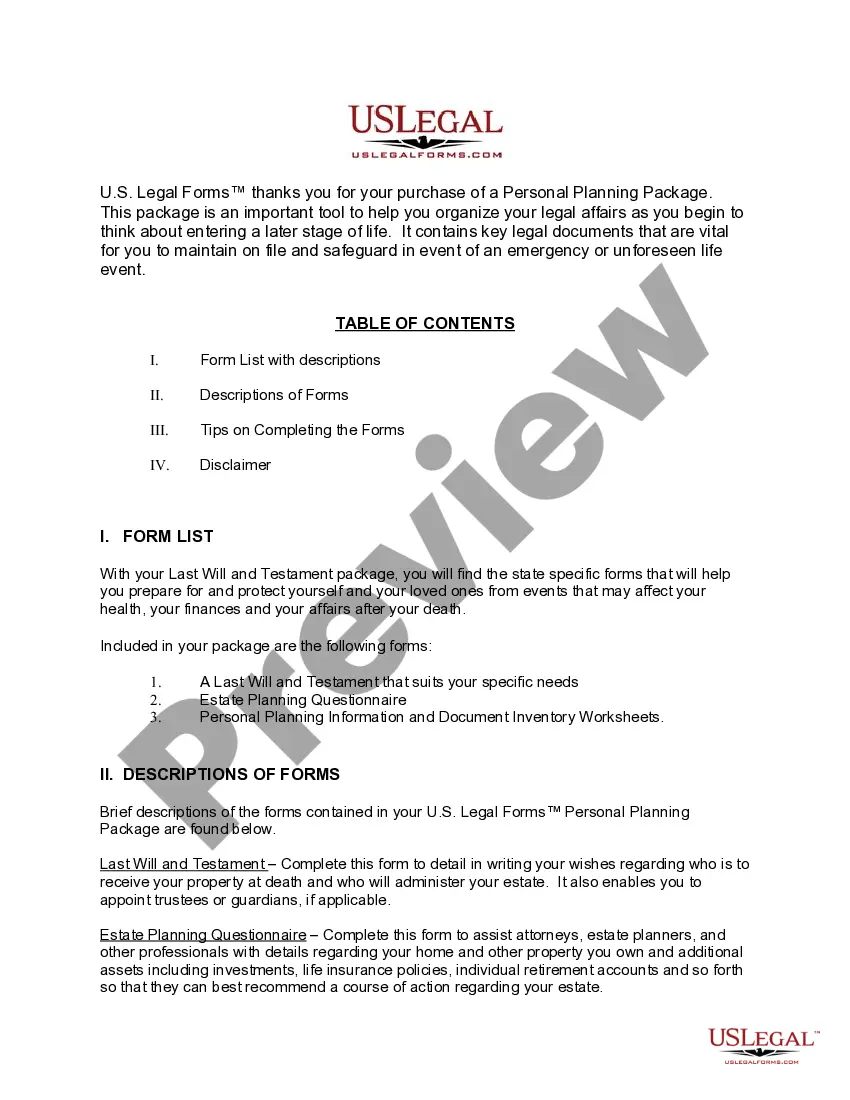
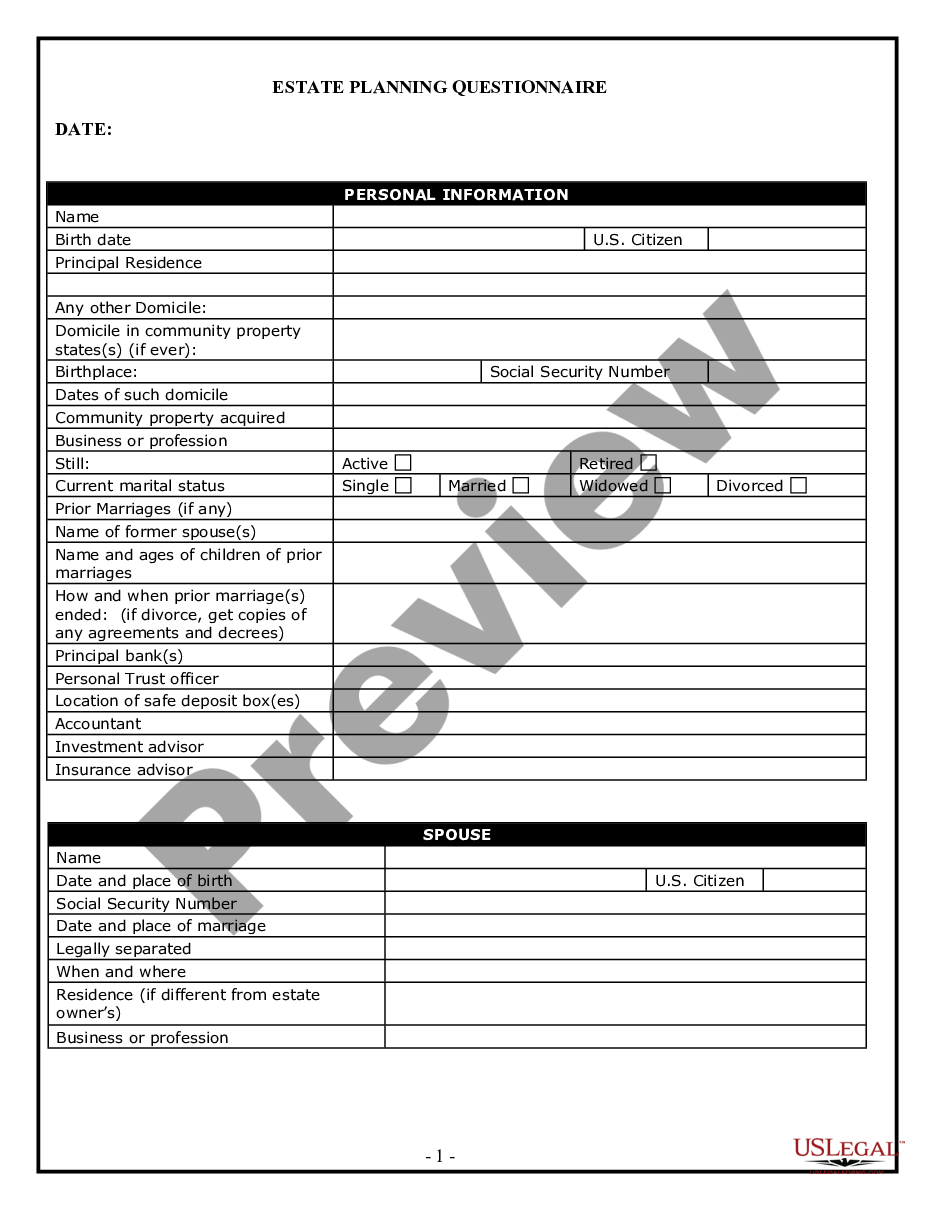
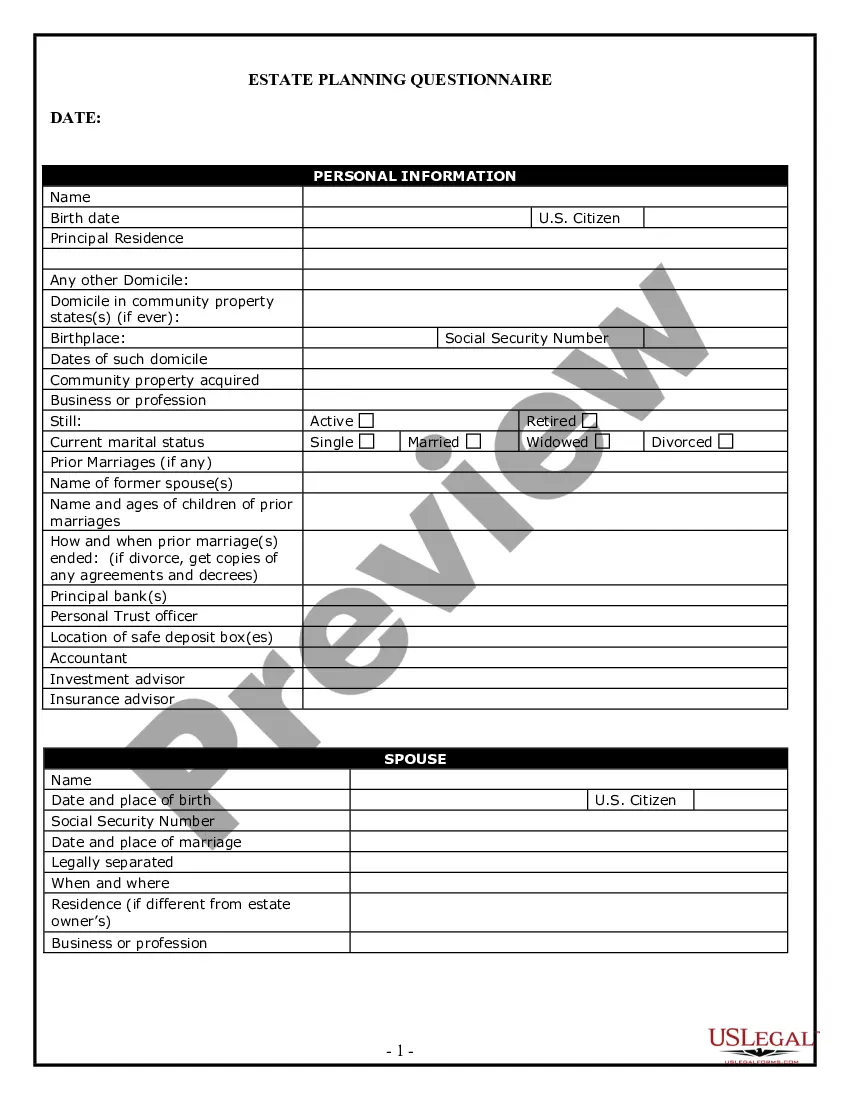
The Louisiana Last Will and Testament Package is designed to help individuals prepare for the future by providing essential legal documents. This package includes a state-specific Last Will and Testament along with an Estate Planning Questionnaire and Personal Planning Information and Document Inventory Worksheets. By offering these tailored forms, this package ensures that users can make important decisions about their health, finances, and affairs after their passing, differentiating it from more generic options available elsewhere.
What’s included in this form package



Common use cases
Consider using the Louisiana Last Will and Testament Package in the following situations:
- You want to ensure that your wishes are clearly outlined after your death.
- You need to designate guardians for minor children or dependents.
- You require a plan for managing your estate and distributing your assets.
- You want to document your healthcare wishes in case of incapacity.
- You aim to organize important information regarding your personal and financial affairs.
Who should use this form package
- Individuals wanting to create or update their Last Will and Testament.
- Parents looking to establish guardianship for their children.
- Adults managing their estate and long-term planning.
- Those seeking to ensure their healthcare preferences are documented.
- Anyone who wishes to organize their financial and legal information.
Completing these forms step by step
- Review the included forms to understand the requirements for each document.
- Complete the Estate Planning Questionnaire to gather crucial information about your assets and family.
- Fill out the Personal Planning Information and Document Inventory Worksheets to keep a record of important contacts and documents.
- Draft your Last Will and Testament using clear and specific language about your wishes.
- Ensure all forms are signed and dated as required by Louisiana law.
Notarization guidance for this package
Forms in this package typically do not require notarization unless required by local law. It is advisable to check any additional requirements specific to your circumstances to ensure that these documents are legally enforceable.
Get your form ready online
Our built-in tools help you complete, sign, share, and store your documents in one place.
Make edits, fill in missing information, and update formatting in US Legal Forms—just like you would in MS Word.
Download a copy, print it, send it by email, or mail it via USPS—whatever works best for your next step.
Sign and collect signatures with our SignNow integration. Send to multiple recipients, set reminders, and more. Go Premium to unlock E-Sign.
If this form requires notarization, complete it online through a secure video call—no need to meet a notary in person or wait for an appointment.
We protect your documents and personal data by following strict security and privacy standards.

Make edits, fill in missing information, and update formatting in US Legal Forms—just like you would in MS Word.

Download a copy, print it, send it by email, or mail it via USPS—whatever works best for your next step.

Sign and collect signatures with our SignNow integration. Send to multiple recipients, set reminders, and more. Go Premium to unlock E-Sign.

If this form requires notarization, complete it online through a secure video call—no need to meet a notary in person or wait for an appointment.

We protect your documents and personal data by following strict security and privacy standards.
Common mistakes to avoid
- Failing to sign the Last Will and Testament in accordance with state requirements.
- Not updating the will after significant life changes, such as marriage or the birth of a child.
- Overlooking the need for witnesses in the signing process.
- Neglecting to keep the original documents in a safe and accessible location.
- Forgetting to review and update personal planning documents periodically.
Benefits of completing this package online
- Convenience of accessing and completing forms from home.
- Editability allows you to make changes easily as your situation evolves.
- Reliable legal language crafted by licensed attorneys.
- Comprehensive package includes all essential documents for estate planning.
- Cost-effective solution compared to hiring an attorney for basic needs.
Main things to remember
- The Louisiana Last Will and Testament Package provides crucial documents for estate planning.
- Understanding and completing the forms accurately helps prevent future legal issues.
- Consulting a legal professional can provide clarity on complex estate matters.
Looking for another form?

Form popularity
FAQ
A person's last will and testament outlines what to do with possessions, whether the deceased will leave them to another person, a group or donate them to charity, and what happens to other things that they are responsible for, such as custody of dependents and management of accounts and financial interests.
The general requirements for a valid Will are usually as follows: (a) the document must be written (meaning typed or printed), (b) signed by the person making the Will (usually called the testator or testatrix, and (c) signed by two witnesses who were present to witness the execution of the document by the maker
Your will should state who gets what from your savings and property, including your home, investments and cash. It should cover all the things you own, such as cars, furniture, pictures and jewelry.
LOUISIANA'S LIVING WILL.A living will can be executed by a person and simply witnessed by two people who will not inherit anything from the person when they decease. It does NOT need to be notarized.
There are certain types of property that legally cannot be included in a person's will. Depending on state laws, these may include: Any Property that is Co-Owned with Someone Else Through Joint-Tenancy: Married couples typically own the marital home in joint tenancy.Property being held in a living trust.
Form a Last Will in Louisiana Signature: In the presence of a notary and two competent witnesses, the testator must declare or signify to the witnesses that the document is his Louisiana Last Will and Testament and must sign his name at the end of the document and on each other separate page.
Bank accounts. Brokerage or investment accounts. Retirement accounts and pension plans. A life insurance policy.
Physical assets such as a house, cars or jewellery. Financial assets such as shares or bank savings, and. Heirlooms or possessions with sentimental value.
In order to satisfy legal requirements in Louisiana, a will must be signed by two (2) witnesses who have attested the testator's signature. In addition, a will must be notarized by a state-authorized individual and registered with the Secretary of State's Office.