Louisiana Rule to Set Visitation
About this form
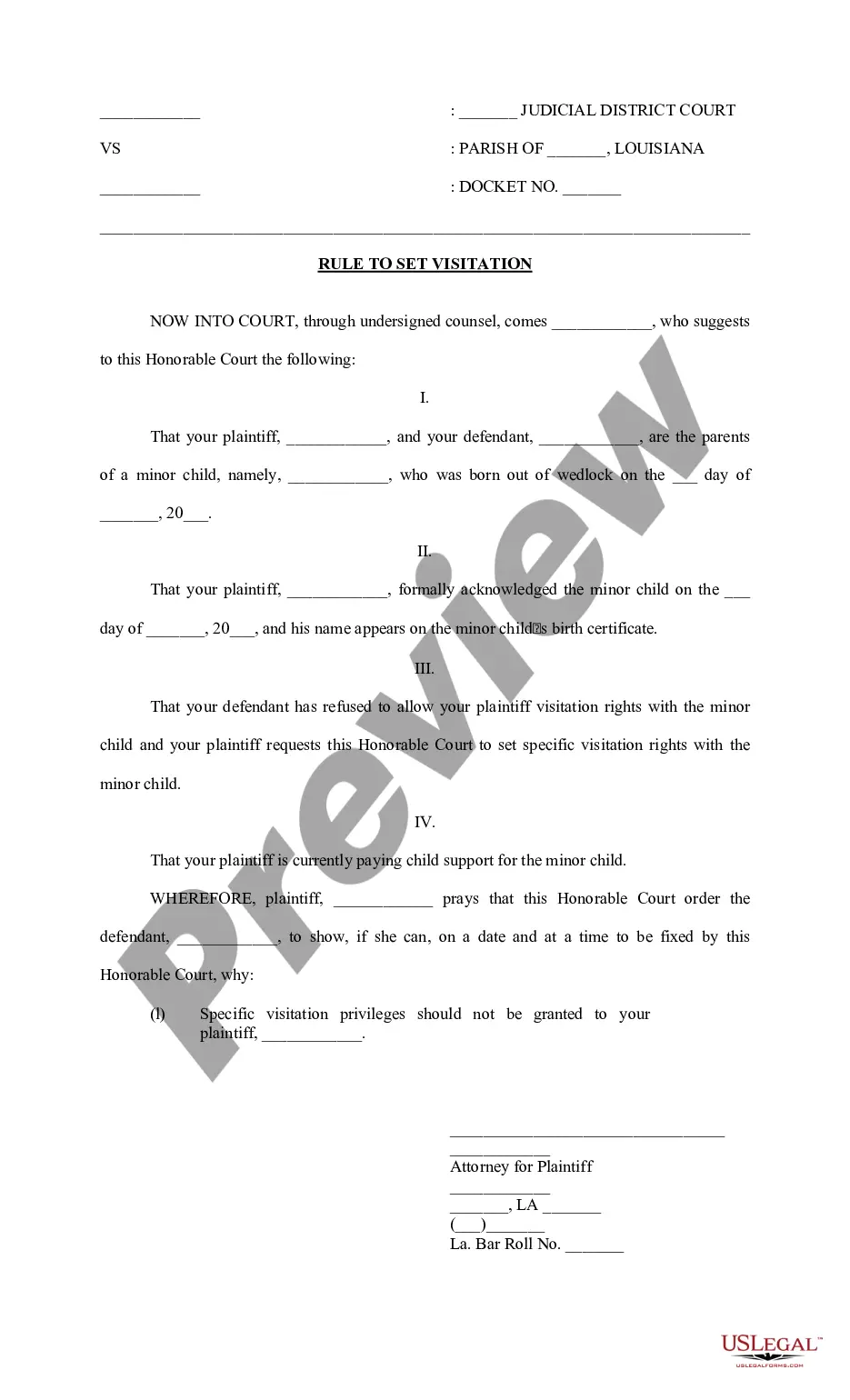
The Rule to Set Visitation is a legal document that allows a parent to formally request specific visitation rights with their minor child. This form is typically used when one parent has been denied visitation by the other parent and seeks a court order to establish clear visitation guidelines. Unlike other custody forms, this one specifically addresses the need for a court ruling on visitation arrangements based on the child's best interests and the parents' circumstances.
Key parts of this document
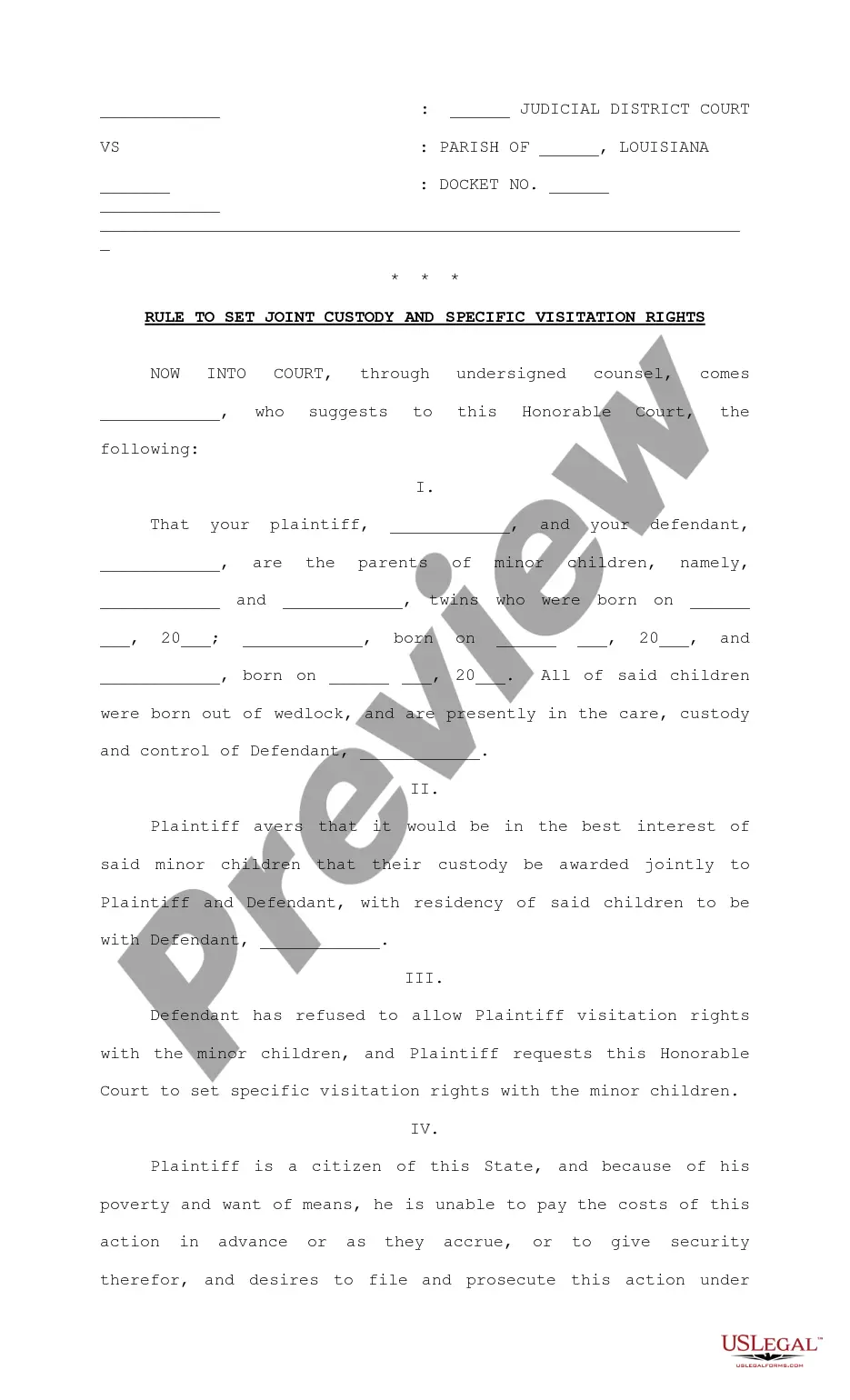
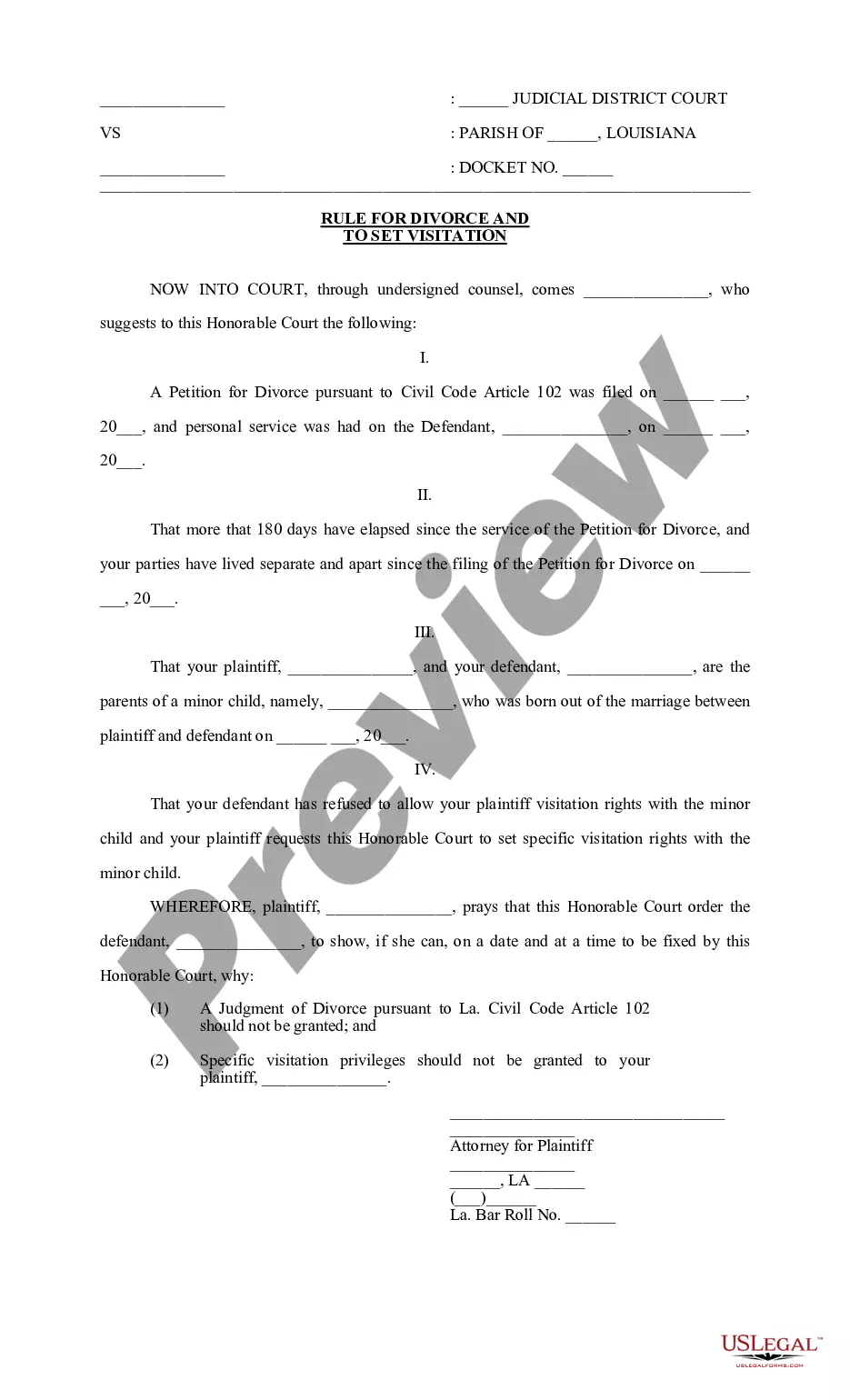
- Identification of the plaintiff and defendant as parents of the minor child.
- Details about the minor child, including birth date and acknowledgment of paternity.
- Statement regarding child support payments made by the plaintiff.
- Request for specific visitation privileges to be established by the court.
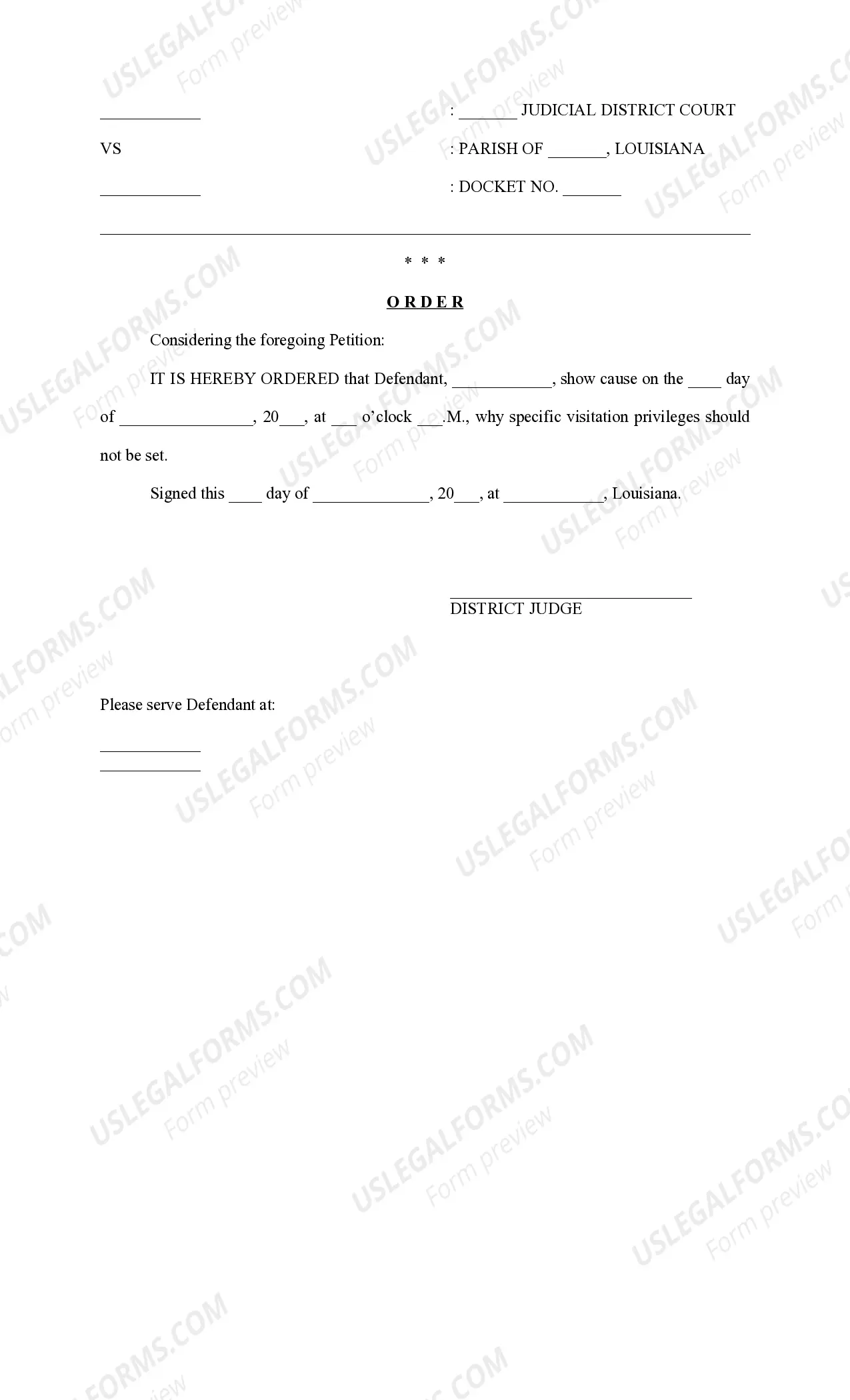
- Order for the defendant to appear in court to show cause for denying visitation.
Situations where this form applies
This form is necessary in situations where a parent is seeking legal visitation rights for a minor child. It is commonly used when one parent has refused to allow the other parent access to the child, particularly in cases where the parents were never married. It is important to use this form to ensure that visitation rights are legally recognized and enforced by the court.
Who should use this form
- Biological parents of a child born out of wedlock who wish to establish visitation rights.
- Any parent who is currently paying child support and has been denied visitation.
- Individuals seeking a court-ordered framework for visitation to ensure compliance by the other parent.
Steps to complete this form
- Identify the parties involved by entering the names of the plaintiff and defendant.
- Fill in the child's information, including the full name and birth date.
- Enter the date on which the plaintiff acknowledged paternity.
- Specify the reasons for the visitation request and detail any previous visitation arrangements if applicable.
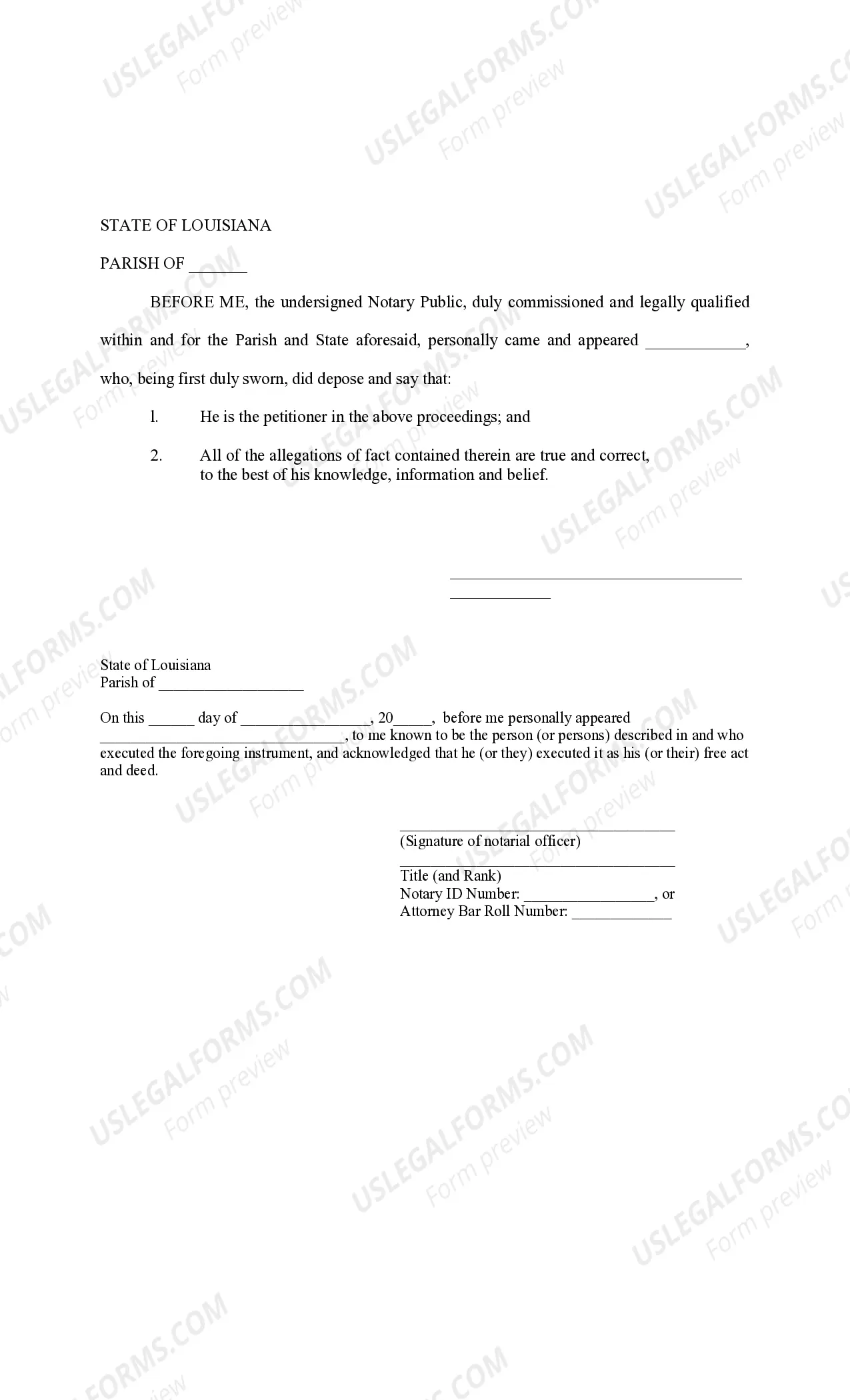
- Sign the form in front of a notary public to ensure its legal validity.
Does this document require notarization?
Yes, this form must be notarized to be legally valid. Notarization serves to confirm the identity of the signer and the voluntary nature of the document execution. US Legal Forms provides integrated online notarization options that are available 24/7, allowing you to have your document notarized via secure video call, ensuring it meets all legal requirements without the need for travel.
Get your form ready online
Our built-in tools help you complete, sign, share, and store your documents in one place.
Make edits, fill in missing information, and update formatting in US Legal Forms—just like you would in MS Word.
Download a copy, print it, send it by email, or mail it via USPS—whatever works best for your next step.
Sign and collect signatures with our SignNow integration. Send to multiple recipients, set reminders, and more. Go Premium to unlock E-Sign.
If this form requires notarization, complete it online through a secure video call—no need to meet a notary in person or wait for an appointment.
We protect your documents and personal data by following strict security and privacy standards.

Make edits, fill in missing information, and update formatting in US Legal Forms—just like you would in MS Word.

Download a copy, print it, send it by email, or mail it via USPS—whatever works best for your next step.

Sign and collect signatures with our SignNow integration. Send to multiple recipients, set reminders, and more. Go Premium to unlock E-Sign.

If this form requires notarization, complete it online through a secure video call—no need to meet a notary in person or wait for an appointment.

We protect your documents and personal data by following strict security and privacy standards.
Mistakes to watch out for
- Failing to include all required party information.
- Not specifying the desired visitation schedule clearly.
- Neglecting to notarize the document where required.
- Missing court dates or not properly serving the defendant.
- Assuming the court will automatically grant visitation without a formal request.
Advantages of online completion
- Convenience of downloading and filling out the form at your own pace.
- Editability allows for easy corrections and updates to the information provided.
- Access to templates drafted by licensed attorneys ensures legal reliability.
Legal use & context
- This form can be used to create enforceable visitation rights recognized by the court.
- It is essential in resolving disputes over visitation arrangements between parents.
- The court can grant or deny the request based on the child's best interests, ensuring the process is not merely procedural but substantive.
Quick recap
- The Rule to Set Visitation is critical for establishing formal visitation rights.
- Correctly filling out this form can help secure your rights as a parent.
- Legal support and guidelines ensure that both parties are held accountable.
Looking for another form?

Form popularity
FAQ
One of the biggest mistakes in a custody battle is to neglect the importance of communication. When parents fail to keep lines of communication open, it can lead to misunderstandings and resentment. It's crucial to focus on the best interests of the child, as outlined by the Louisiana Rule to Set Visitation. Additionally, demonstrating cooperation with your co-parent can strengthen your case during custody proceedings.
Can a Parent Stop a Child From Seeing the Other Parent? Yes, it is possible to legally prevent your ex from any contact with your children, under certain circumstances. If, for example, your ex is abusive or potentially dangerous, keeping your children out of his or her reach may be necessary.
Some judges have stated that a 5-year-old child is too young to have an opinion on custody and won't consider such a young child's opinion at all. If the child is at least 12 years old, courts will usually give the child's preference some weight. Courts don't have to follow a child's custodial preference.
The answer is usually no, a parent cannot stop a child from seeing the other parent unless a court order states otherwise.The parents have an existing court order, and a parent is violating the court order by interfering with the other parent's parenting time.
Some states take failure to comply with a visitation order so seriously that there could be a change of custody, meaning that if the custodial parent consistently refuses to allow the other parent any time with the children, a court may decide to transfer custody of the kids to the non-custodial parent.
The relationship between the child and each parent. The relationship between the child and any siblings residing in the parents' households. Each parent's ability to care for the child. Each parent's ability to provide shelter, clothing, and food for the child.
The legal definition of an unfit parent is when the parent through their conduct fails to provide proper guidance, care, or support. Also, if there is abuse, neglect, or substance abuse issues, that parent will be deemed unfit.
If there is a valid, court-approved custody order in force, denying visitation is illegal and can have serious legal repercussions for the parent who denies visitation.However, the custodial parent must still take specific steps before denying visitation, such as notifying the appropriate authorities.
The answer is usually no, a parent cannot stop a child from seeing the other parent unless a court order states otherwise.The parent with whom the child lives is limiting contact between the child and the other parent. The parents have an existing child custody and parenting time order.
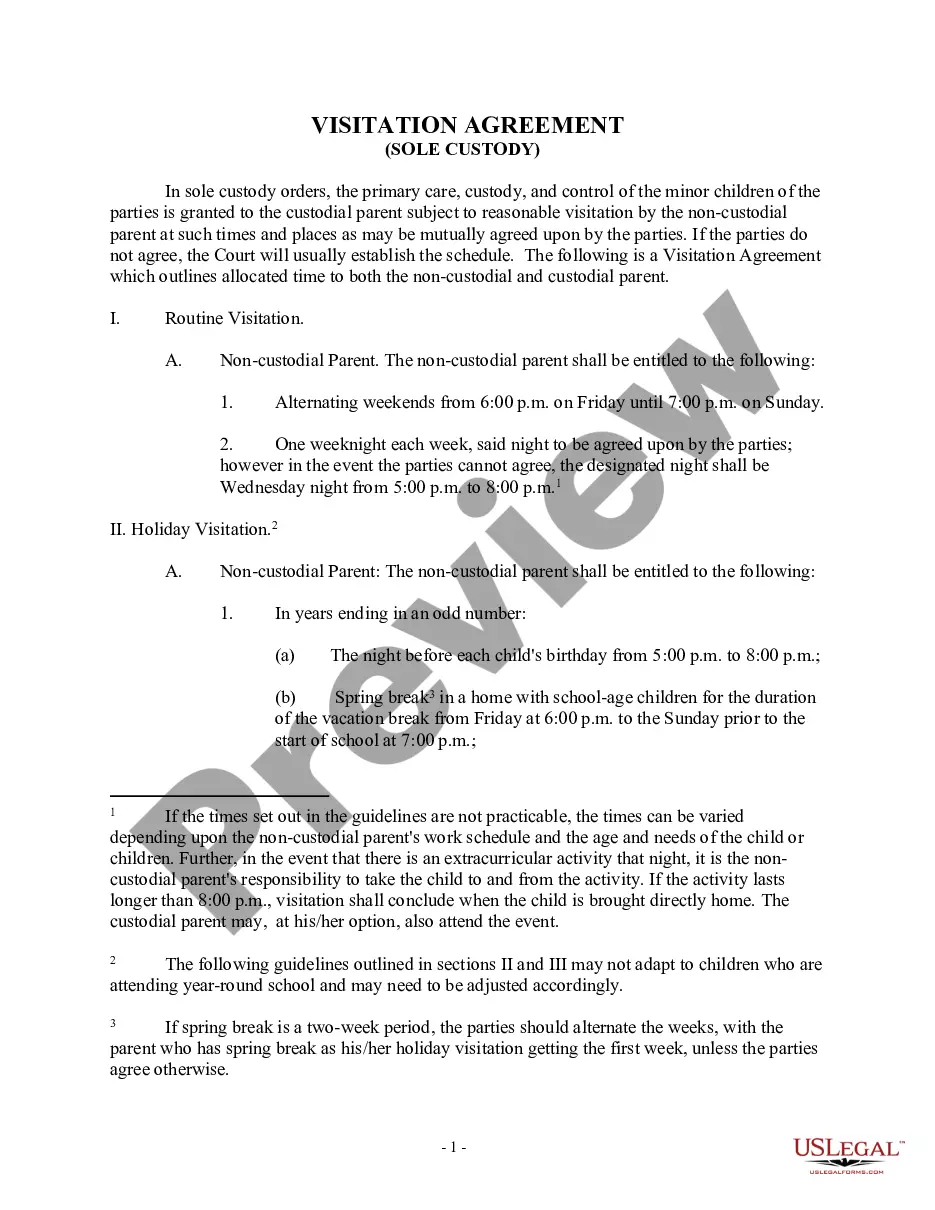
While there's no one-size-fits-all routine, a typical visitation schedule may include: Overnights every other weekend. One weeknight visit or overnight per week. An extended visit during the summer, such as two - six weeks.