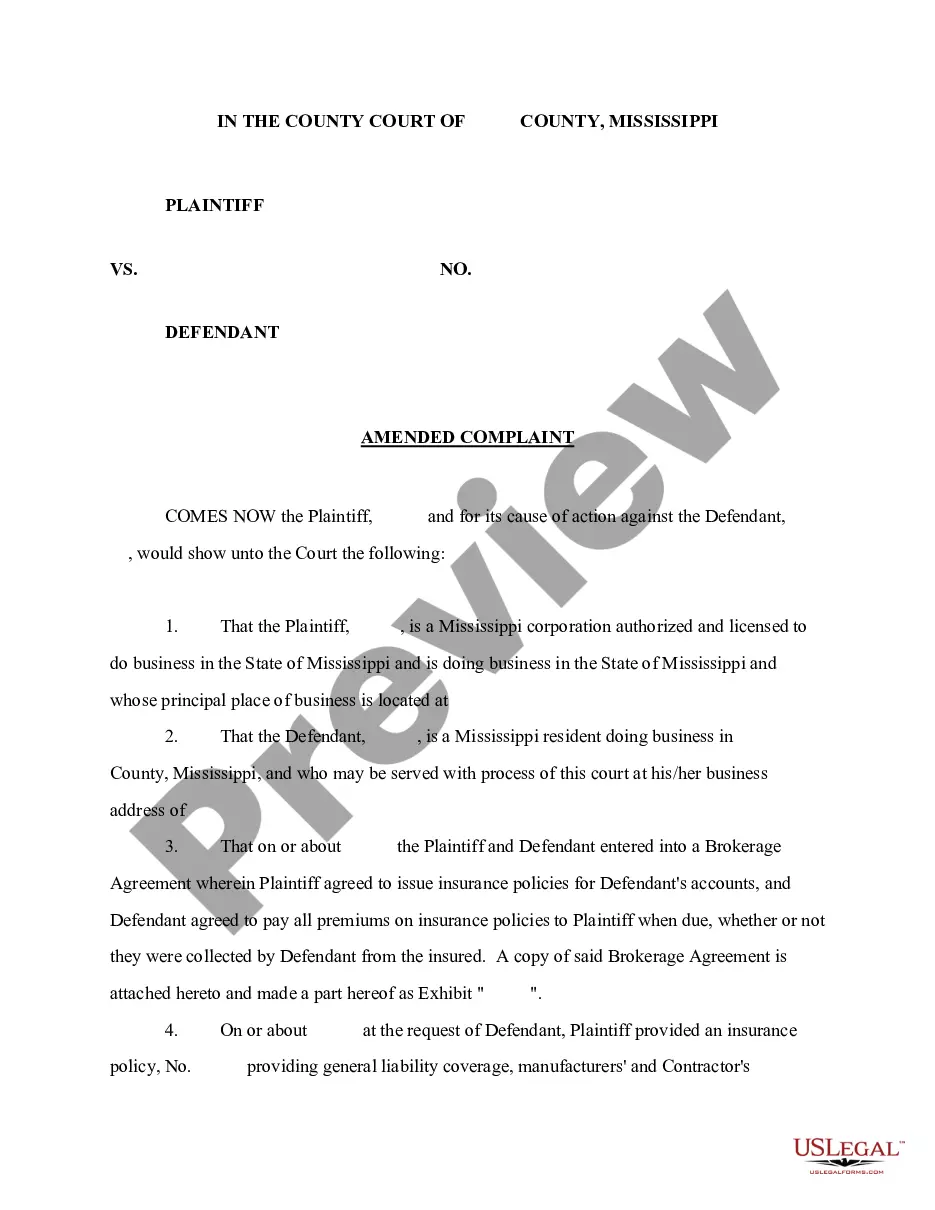
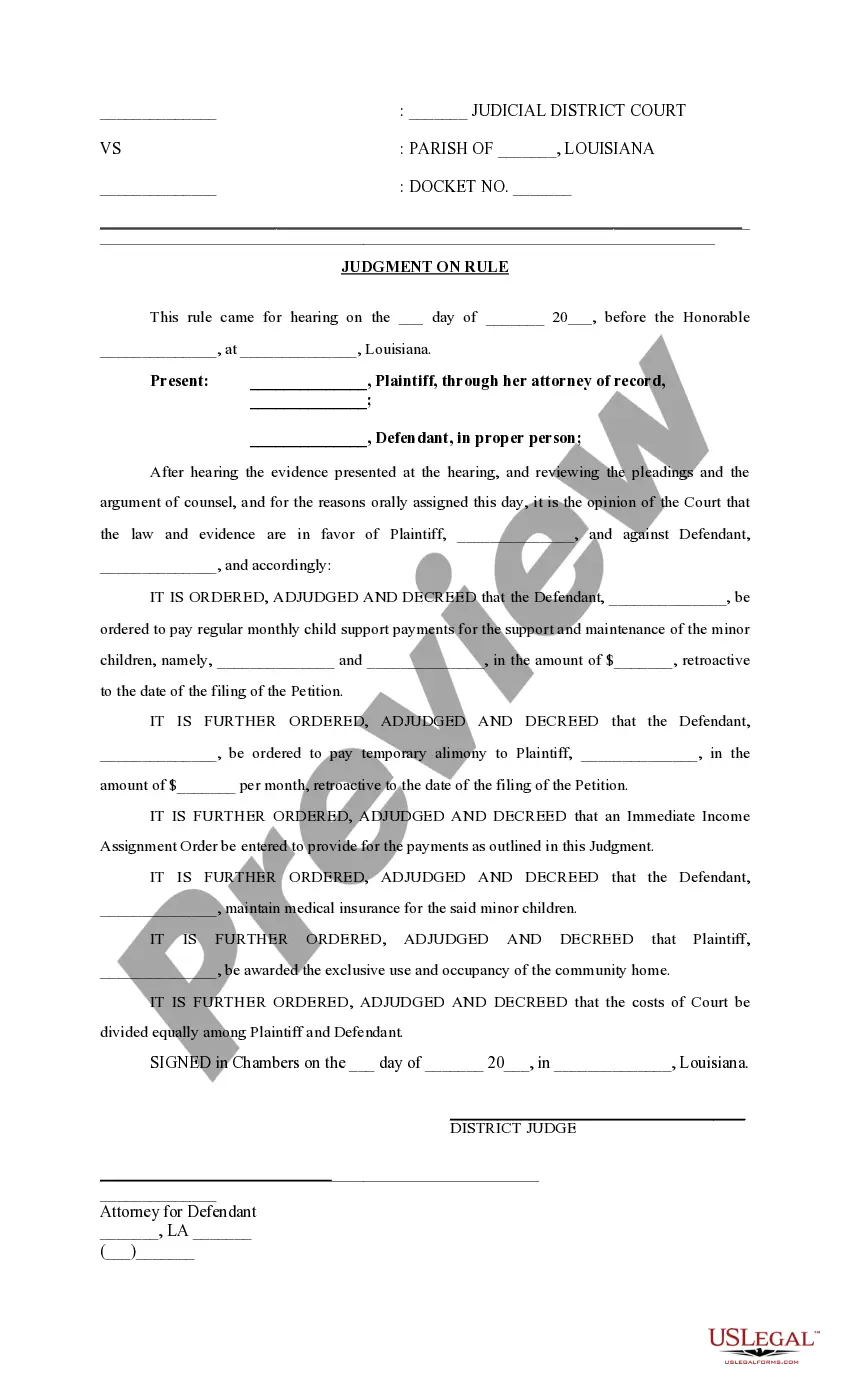
Louisiana Judgment on Rule of Child Support, Alimony, and Income Assignment Order
Overview of this form
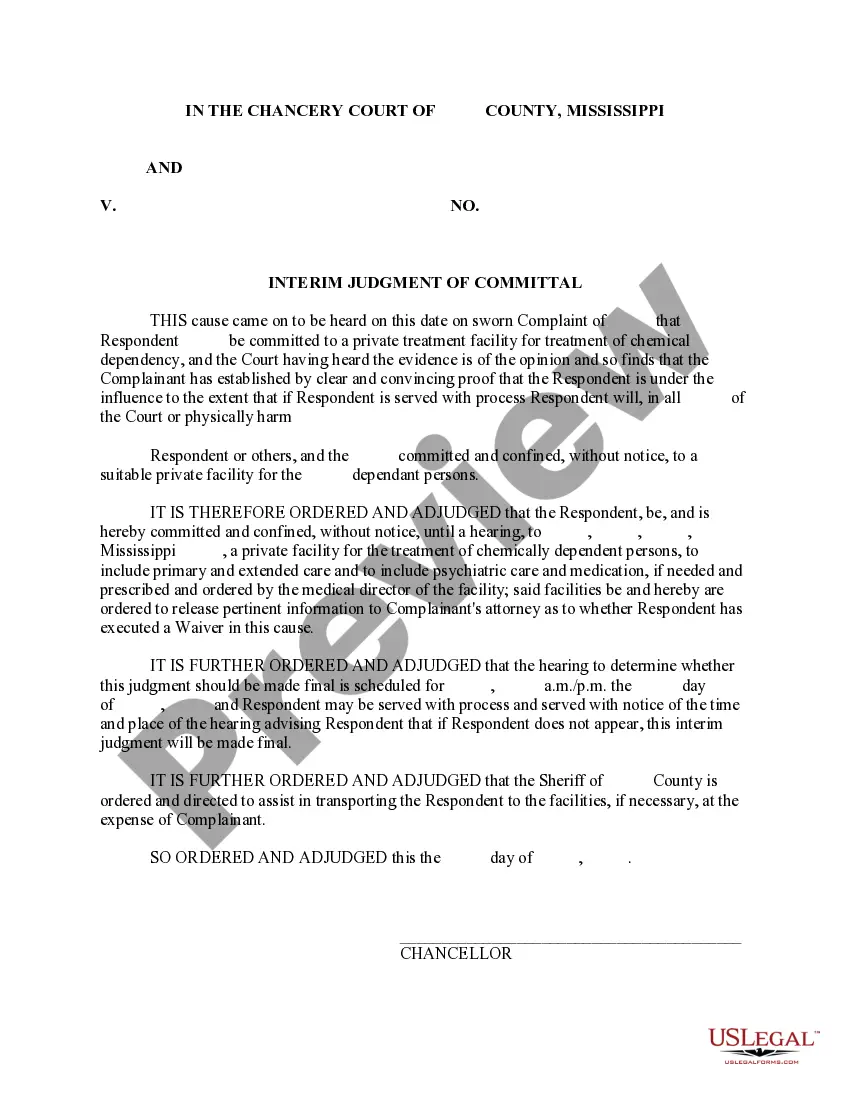
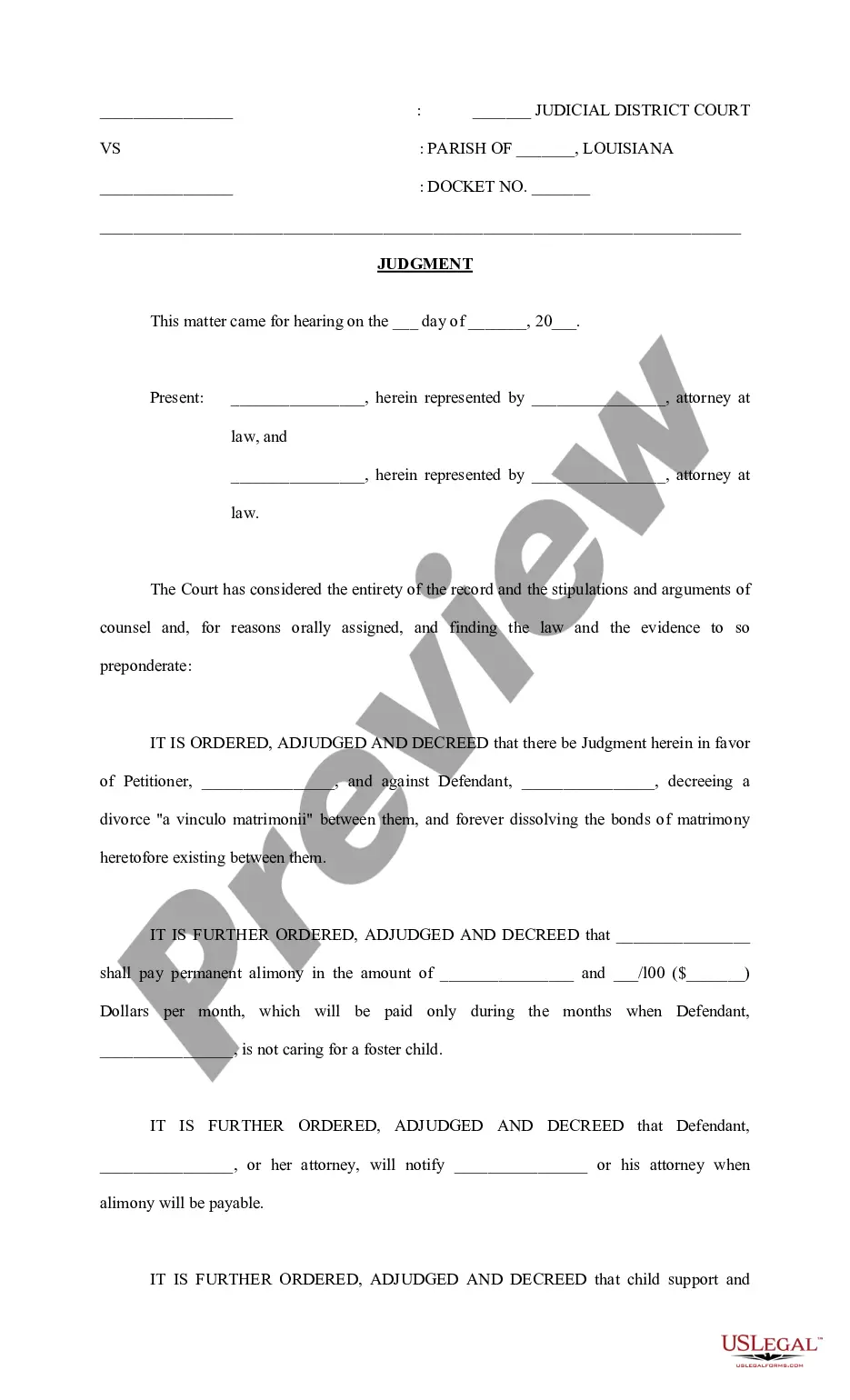
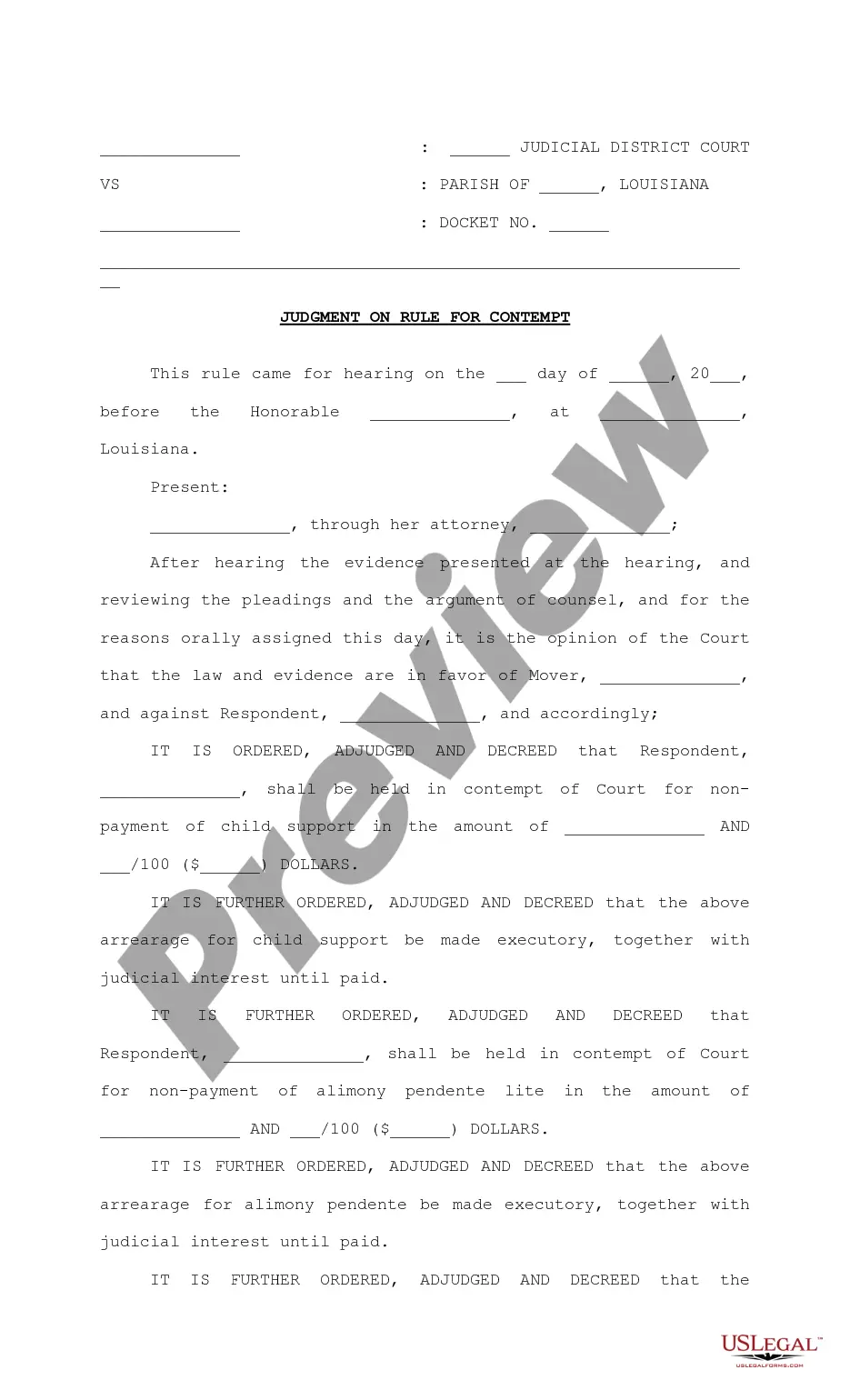
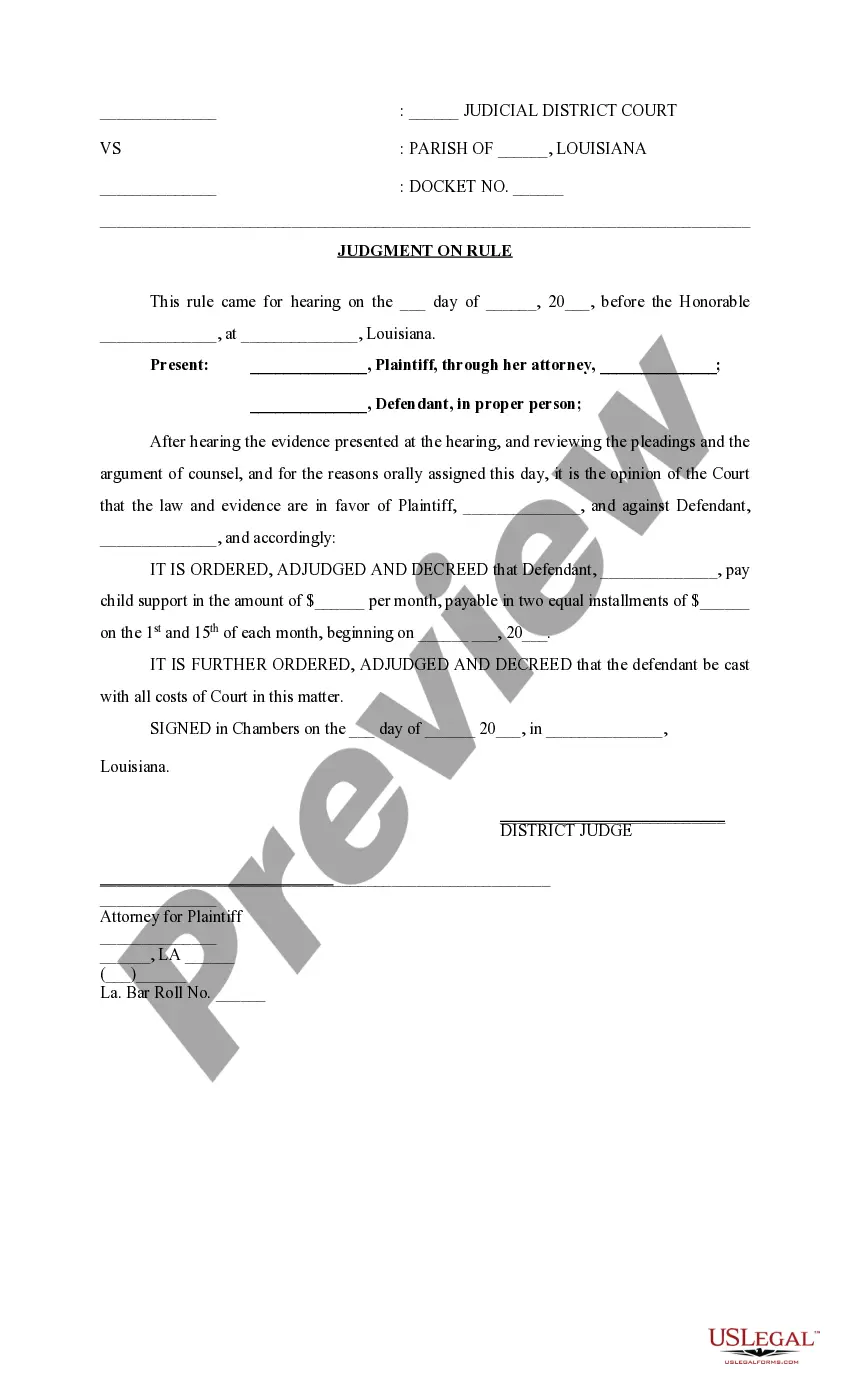
The Judgment on Rule of Child Support, Alimony, and Income Assignment Order is a legal document issued by the court that formalizes decisions related to child support and alimony following a hearing. This form establishes the financial obligations of a defendant towards their children and a plaintiff, ensuring regular monthly payments, retroactive payments, and other mandatory support arrangements. It differs from other family law forms by focusing specifically on judgments regarding financial support after legal proceedings.
Main sections of this form
- The names of the parties involved (plaintiff and defendant).
- Ordered monthly child support payments, along with the specified amount.
- Ordered temporary alimony payments to the plaintiff, with specified amounts.
- An Immediate Income Assignment Order for enforcing payment.
- Requirements for maintaining medical insurance for minor children.
- Division of court costs between parties.
When this form is needed
This form should be used after a court hearing where a plaintiff has sought child support and alimony from a defendant. It is applicable when the court has made a ruling on these financial obligations, ensuring that the necessary payments are enforced and documented. Use this form to establish legal grounds for support payment requirements retroactively and for any ongoing arrangements.
Intended users of this form
- Individuals who are plaintiffs seeking child support and alimony from a former partner.
- Defendants who have been ordered by the court to pay child support or alimony.
- Legal representatives or attorneys acting on behalf of either party in the proceedings.
Completing this form step by step
- Identify the parties involved by filling in their names and addresses.
- Enter the date and details of the court hearing.
- Specify the amount of child support to be paid each month and the commencement date.
- Detail the alimony amount to be paid monthly and its effective date.
- Include any additional required information, such as medical insurance responsibilities.
- Ensure all parties involved sign and date the document where indicated.
Does this form need to be notarized?
This form does not typically require notarization unless specified by local law. Review any specific requirements in your jurisdiction to ensure compliance.
Get your form ready online
Our built-in tools help you complete, sign, share, and store your documents in one place.
Make edits, fill in missing information, and update formatting in US Legal Forms—just like you would in MS Word.
Download a copy, print it, send it by email, or mail it via USPS—whatever works best for your next step.
Sign and collect signatures with our SignNow integration. Send to multiple recipients, set reminders, and more. Go Premium to unlock E-Sign.
If this form requires notarization, complete it online through a secure video call—no need to meet a notary in person or wait for an appointment.
We protect your documents and personal data by following strict security and privacy standards.

Make edits, fill in missing information, and update formatting in US Legal Forms—just like you would in MS Word.

Download a copy, print it, send it by email, or mail it via USPS—whatever works best for your next step.

Sign and collect signatures with our SignNow integration. Send to multiple recipients, set reminders, and more. Go Premium to unlock E-Sign.

If this form requires notarization, complete it online through a secure video call—no need to meet a notary in person or wait for an appointment.

We protect your documents and personal data by following strict security and privacy standards.
Mistakes to watch out for
- Failing to include all necessary party names and their correct addresses.
- Omitting the retroactive date for child support and alimony payments.
- Not specifying the method of payment or income assignment order.
- Neglecting to sign the document where required, which could render it unenforceable.
Benefits of completing this form online
- Convenience of downloading and completing the form at your own pace.
- Editability allows for easy adjustments as needed before finalizing.
- Reliability of attorney-drafted language tailored to meet legal requirements.
Looking for another form?




Form popularity
FAQ
The court orders a flat percentage of 25% of the non-custodial parent's income to be paid in child support to the custodial parent.
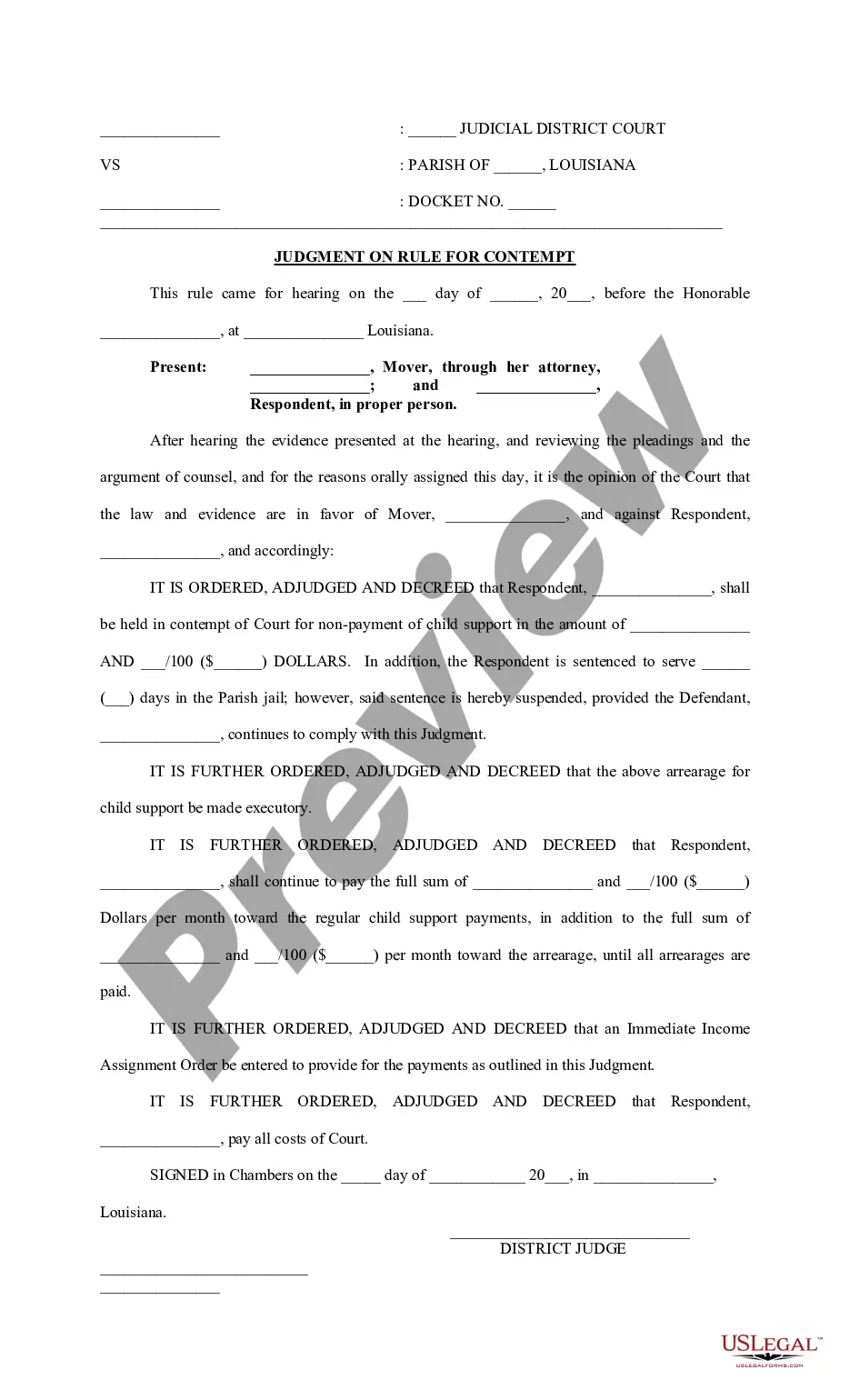
California courts can enforce a child support order by holding the delinquent parent in contempt of court. Being held in contempt means the judge believes you have willfully disobeyed a court order. Contempt can be criminal or civil.
As mentioned, if that parent still fails to pay, the court can hold him or her in contempt of court (for failing to follow a court order) and impose a jail term.Regardless of what consequences are imposed, the fact is that you do have options if your ex doesn't pay child support.
The most common way to enforce a child support order is by filing a motion for civil contempt. Filing this motion (written request) tells the court that you have a valid child support order in place, and the noncustodial parent is behind on payments.
Assignment of Income The splitting of a person or company's income to another person or company so that the first person or company pays less in taxes. The United States Supreme Court has disallowed assignment of income under most circumstances.
A custodial parent can waive or forgive all arrears owed to him or her directly. Use the Account Summary from the SCU to determine what arrears are owed to the parent, and what arrears are owed to the state (if the custodial parent ever received Public Assistance).
Louisiana law requires both parents to pay child support based on the needs of the child and the ability of the parents to provide support. Both parents are expected to provide basic financial support for things like food, housing, and clothing.
Income assignment" is a provision of a support order which directs the obligor to assign a portion of the monies, income, or periodic earnings due and owing to the obligor to the person entitled to the support or to another person or entity designated by the support order or assignment for payment of support, the
Child support back pay cannot be totally forgiven or waived, but there are a few situations that can help you handle it. Double-check the amount the court states you are in arrears. You can always ask the court to recalculate this amount to make sure it is correct.You can request a manageable payment schedule.