Louisiana Stipulated Judgment Paternity
What this document covers
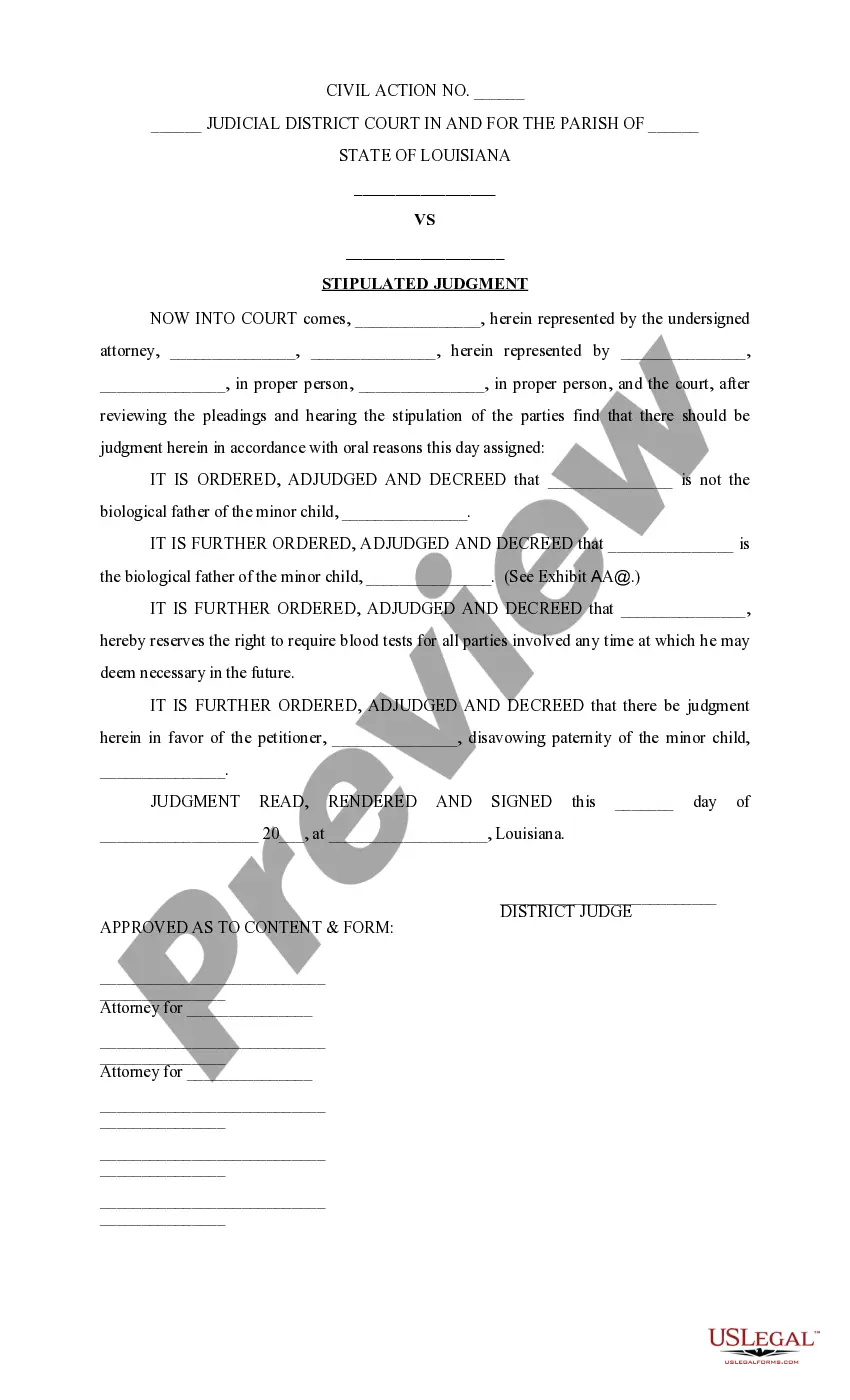
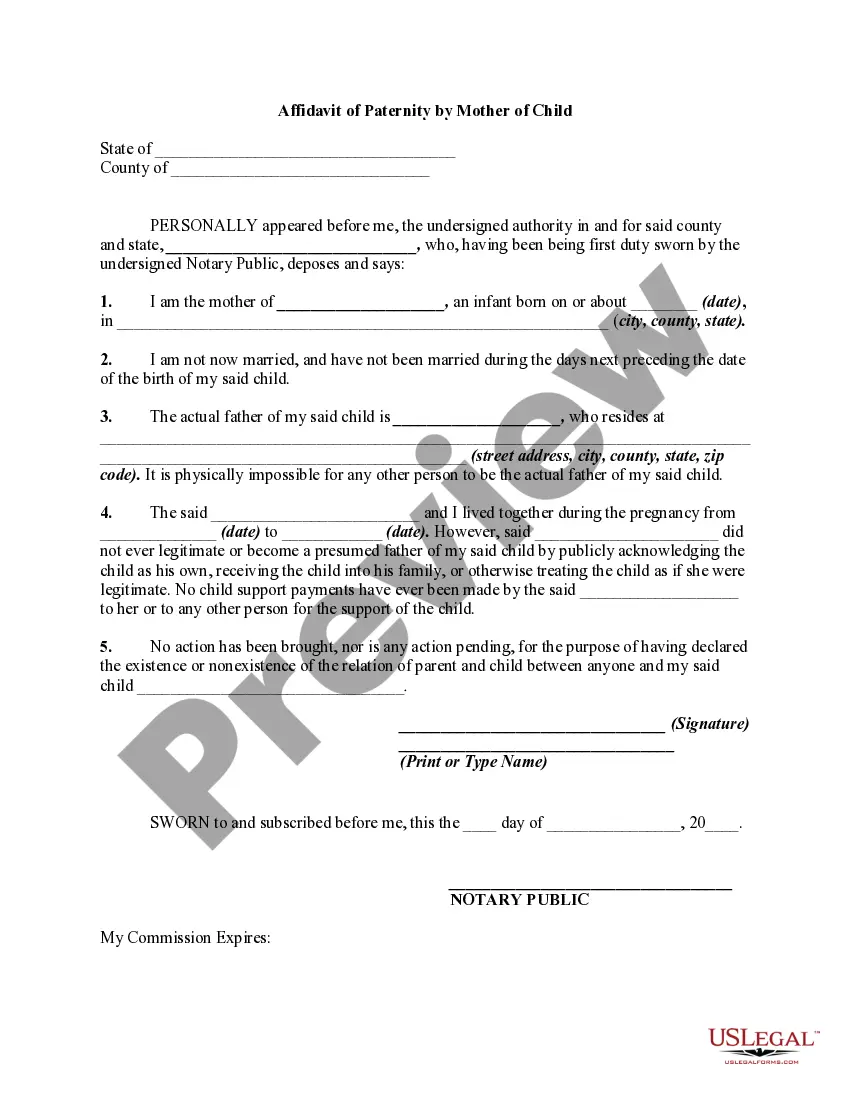
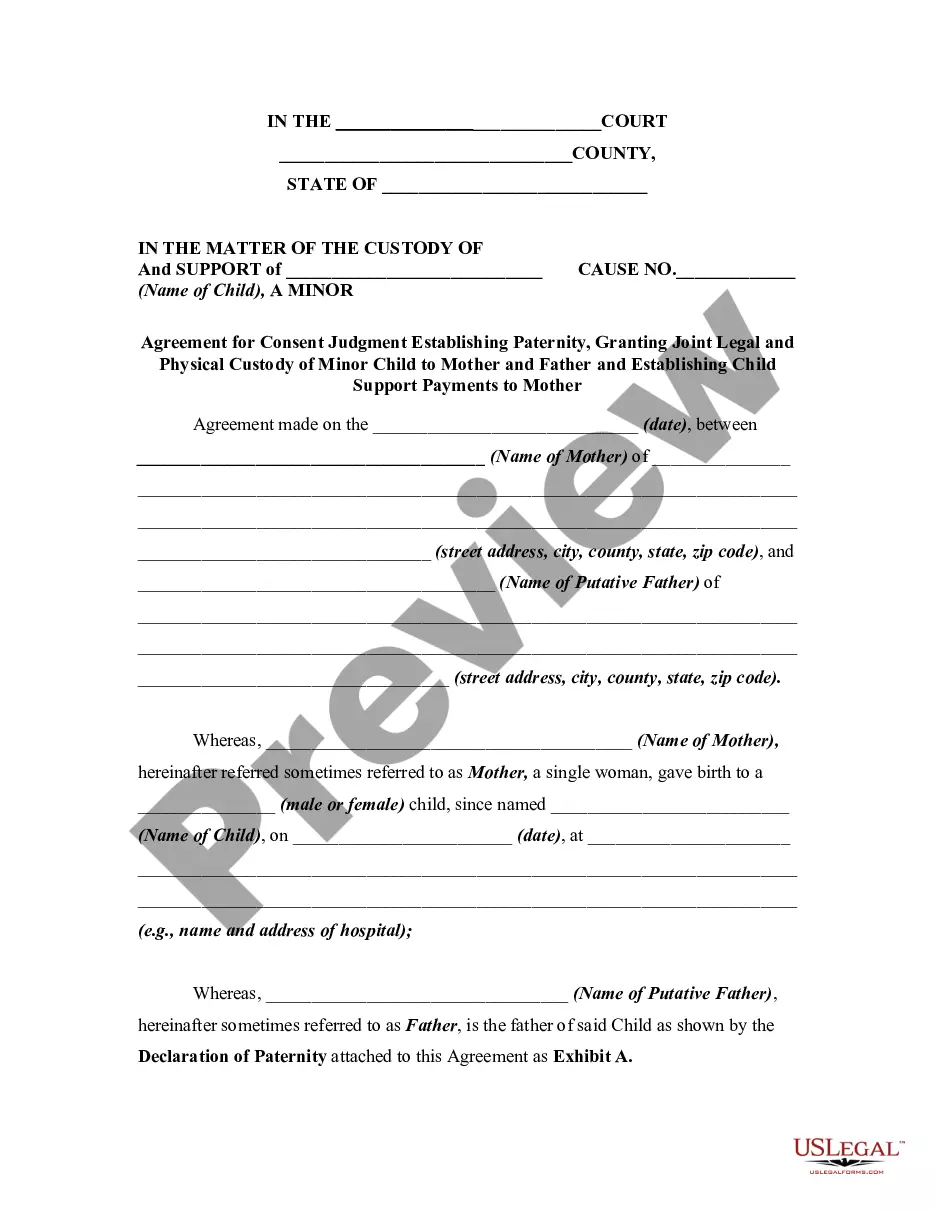
The Stipulated Judgment Paternity form is a legal document used in paternity cases to formally acknowledge that a specific individual is not the biological father of a child. Instead, it specifies another individual as the biological father, while reserving the right for any party to request future blood tests for verification. This form is crucial for establishing clear legal relationships and responsibilities regarding parentage, differing from other paternity forms by focusing on disavowed biological fatherhood.
Main sections of this form
- Identification of the judicial district court and involved parties.
- Declarations regarding biological paternity status of the child.
- Reservation of rights for the petitioner to request blood tests in the future.
- Judgment in favor of the petitioner disavowing paternity.
- Signature lines for the district judge and attorneys involved.
Situations where this form applies
This form should be used in situations where an individual wishes to legally disavow paternity after determining they are not the biological father of a child. It is essential in cases where the former alleged father needs to clarify his non-paternity status and establish the correct biological parental rights and obligations. This form can also be utilized when there may be a dispute regarding parentage and the right to pursue further biological testing in the future.
Who can use this document
This form is intended for:
- Individuals who have been identified as the alleged father of a child but wish to legally disavow that status.
- The biological father who is being established through this judgment.
- Attorneys representing either party in a paternity case.
Completing this form step by step
- Identify the judicial district court where the case is filed.
- Fill in the names of the parties involved and their respective representatives if applicable.
- Specify the minor child's name and declare paternity status clearly.
- Include any exhibits or additional evidence as necessary.
- Ensure all involved parties sign the document where indicated.
- Keep a copy for personal records once the form is filed and judgment is rendered.
Is notarization required?
This form usually doesn’t need to be notarized. However, local laws or specific transactions may require it. Our online notarization service, powered by Notarize, lets you complete it remotely through a secure video session, available 24/7.
Get your form ready online
Our built-in tools help you complete, sign, share, and store your documents in one place.
Make edits, fill in missing information, and update formatting in US Legal Forms—just like you would in MS Word.
Download a copy, print it, send it by email, or mail it via USPS—whatever works best for your next step.
Sign and collect signatures with our SignNow integration. Send to multiple recipients, set reminders, and more. Go Premium to unlock E-Sign.
If this form requires notarization, complete it online through a secure video call—no need to meet a notary in person or wait for an appointment.
We protect your documents and personal data by following strict security and privacy standards.

Make edits, fill in missing information, and update formatting in US Legal Forms—just like you would in MS Word.

Download a copy, print it, send it by email, or mail it via USPS—whatever works best for your next step.

Sign and collect signatures with our SignNow integration. Send to multiple recipients, set reminders, and more. Go Premium to unlock E-Sign.

If this form requires notarization, complete it online through a secure video call—no need to meet a notary in person or wait for an appointment.

We protect your documents and personal data by following strict security and privacy standards.
Mistakes to watch out for
- Failing to fully identify all parties involved can lead to dismissal.
- Not providing accurate information about the child can invalidate the judgment.
- Omitting the reservation of rights for future blood tests may limit future options.
- Not ensuring all signatures are complete can delay the court process.
Benefits of completing this form online
- Immediate access to the latest legal requirements and formats.
- Editability allows for custom modifications to suit specific case needs.
- A reliable source drafted by licensed attorneys ensures legal validity.
- Convenient downloading means you can fill out and submit at your pace.
Looking for another form?
Form popularity
FAQ
To make a Judgment executory in Louisiana, you must obtain a court order that formally declares the judgment enforceable. This step typically involves filing for the appropriate court action. A Louisiana Stipulated Judgment Paternity can simplify this process, as both parties can agree on terms that can be quickly made executory, allowing for immediate enforcement of the decision.
A Judgment of paternity in Louisiana is a legal determination that establishes a man as the biological father of a child. This ruling can be crucial for legal purposes, including child support and custody rights. With a Louisiana Stipulated Judgment Paternity, parties involved can reach an agreement that saves time and resources while ensuring the child's best interests are prioritized.
Establishing paternity is the legal process used by the court to determine the child's biological father. Until the court determines paternity, the child's father doesn't have any rights or responsibilities to the child, meaning no duty to pay child support or the right to enjoy custody or visitation with the child.
You can establish paternity in California quickly by signing a Voluntary Declaration of Paternity form. It has to be signed by both parents to be valid. This form concludes that each parent acknowledges they are the parents and that the man is the biological father. This can be signed at the hospital or later.
Paternity leave Business English a period of time that a father is legally allowed to be away from his job so that he can spend time with his new baby: on paternity leave He was on paternity leave after the birth of his son. Many fathers decide not to take paternity leave. paid/unpaid paternity leave.
This man cannot demand that you give a DNA test to determine the paternity of your baby as a matter of right, but if he files a paternity action in court alleging that he is the father of your child, and you deny this, then yes, he can demand a DNA test and the court will order the DNA test be conducted to determine