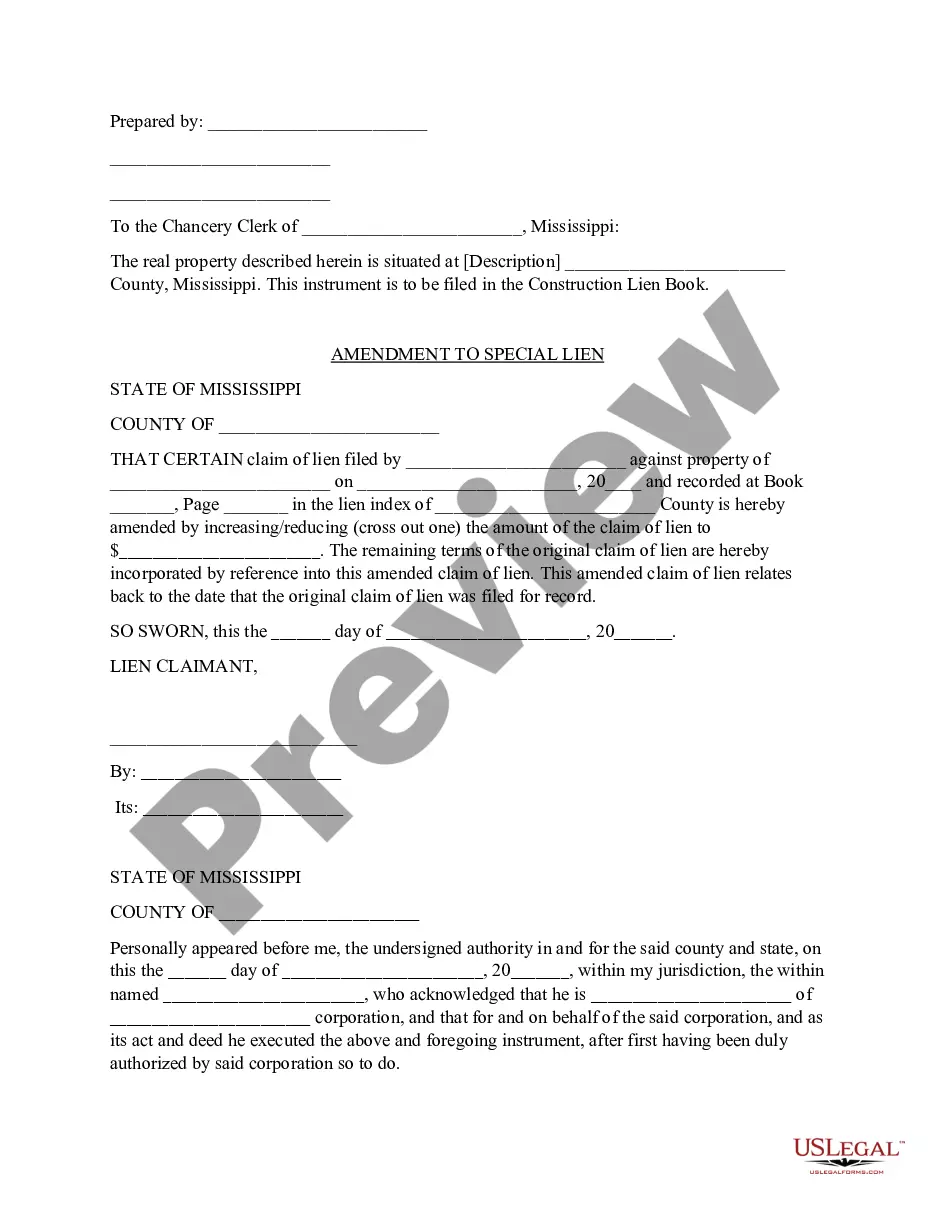
Louisiana Demand Letter - Repayment of Bank Notes
About this form
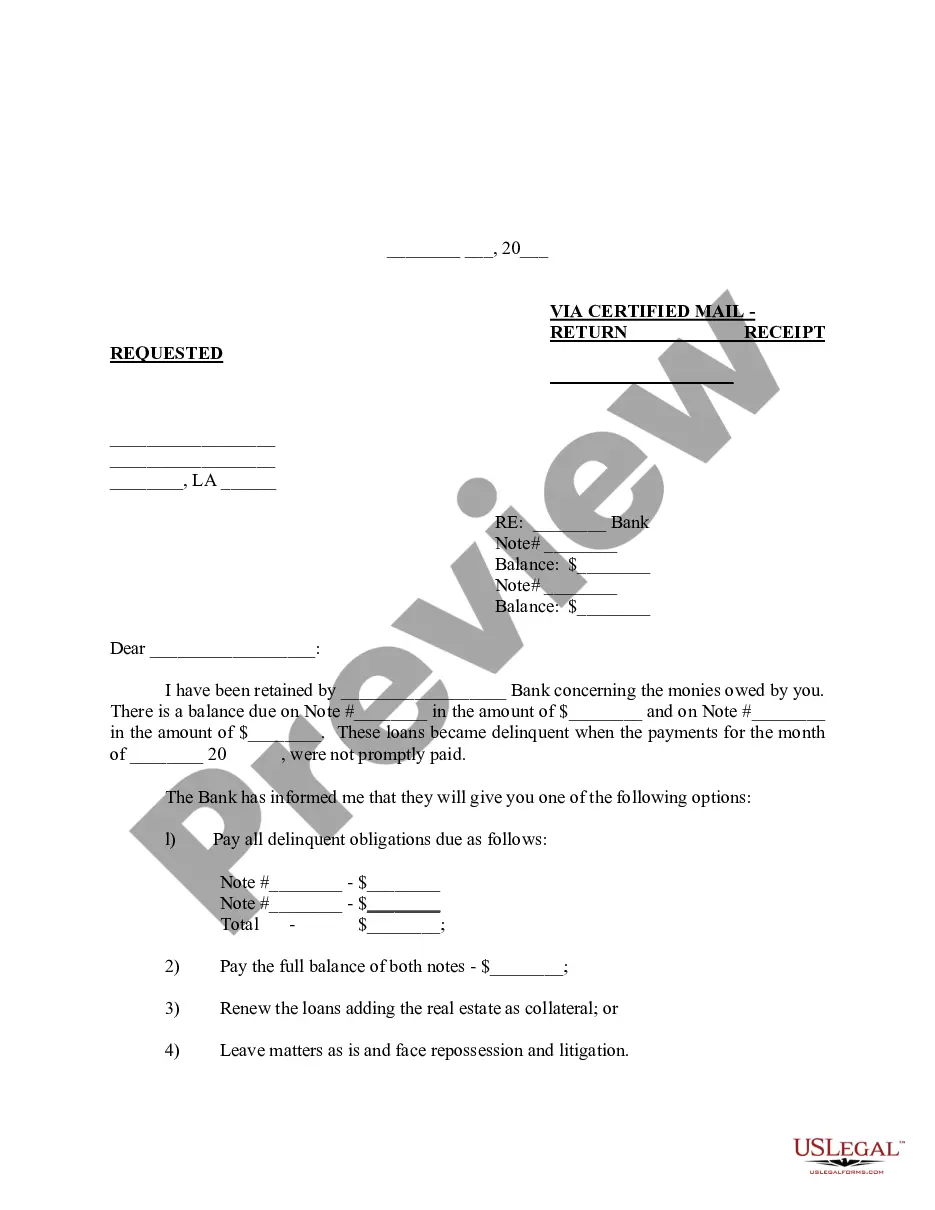
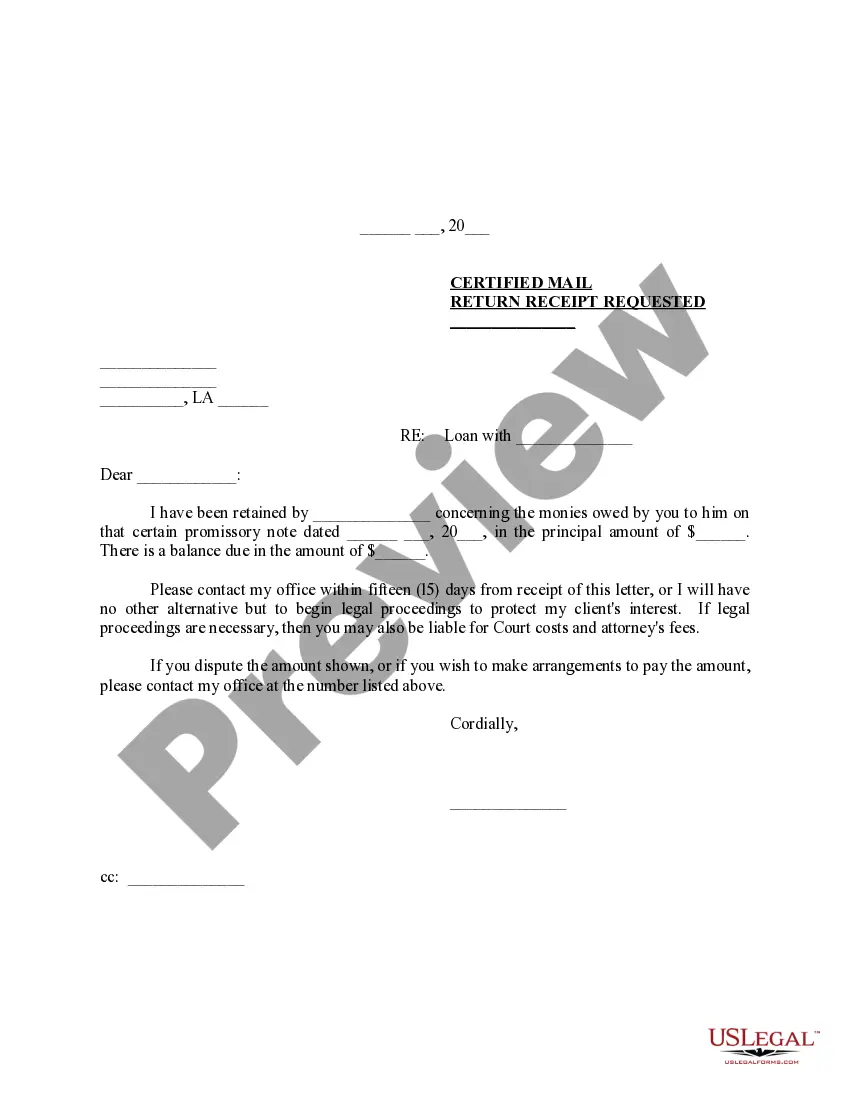
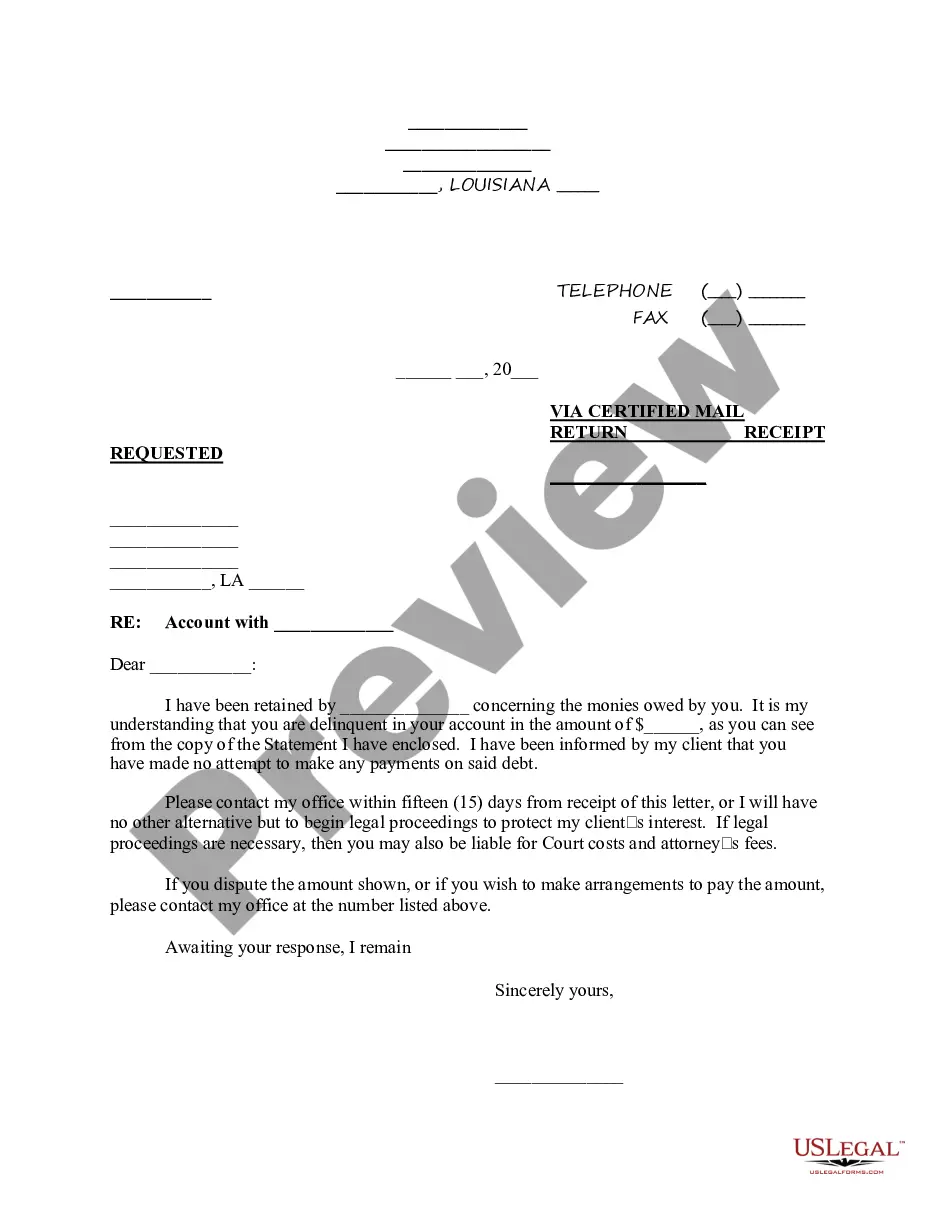
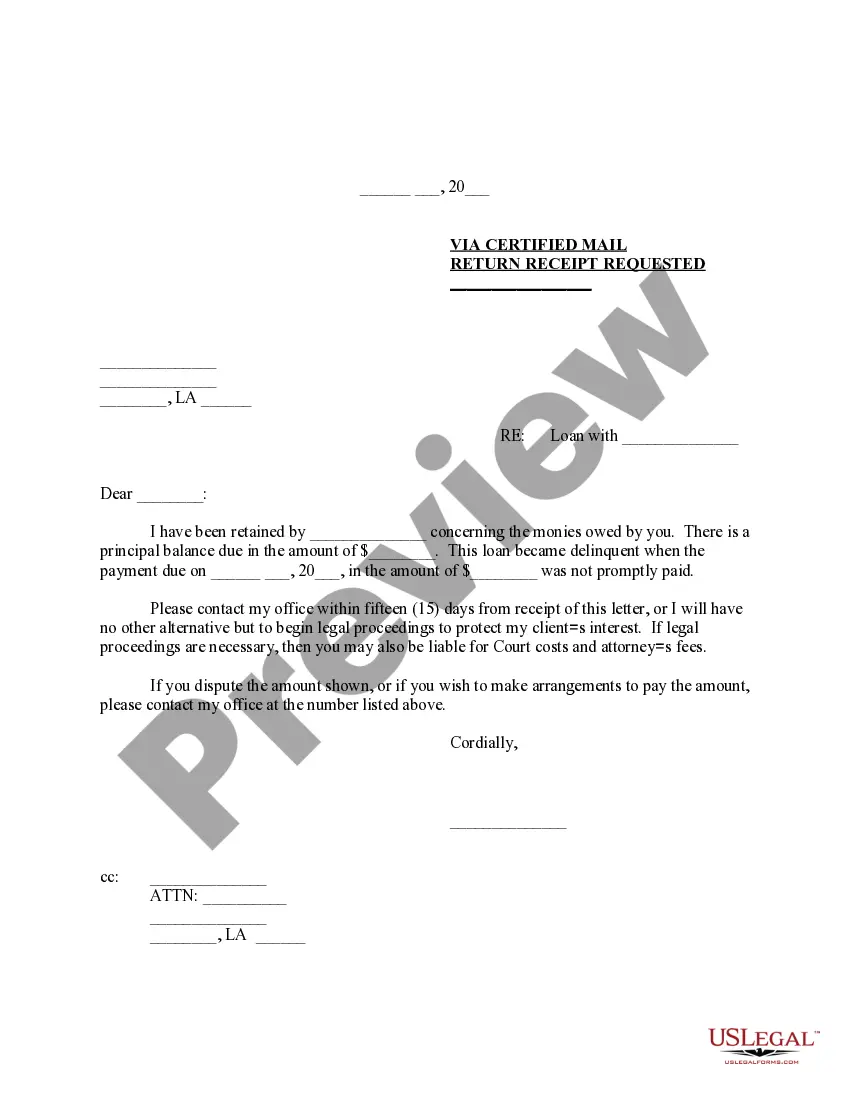
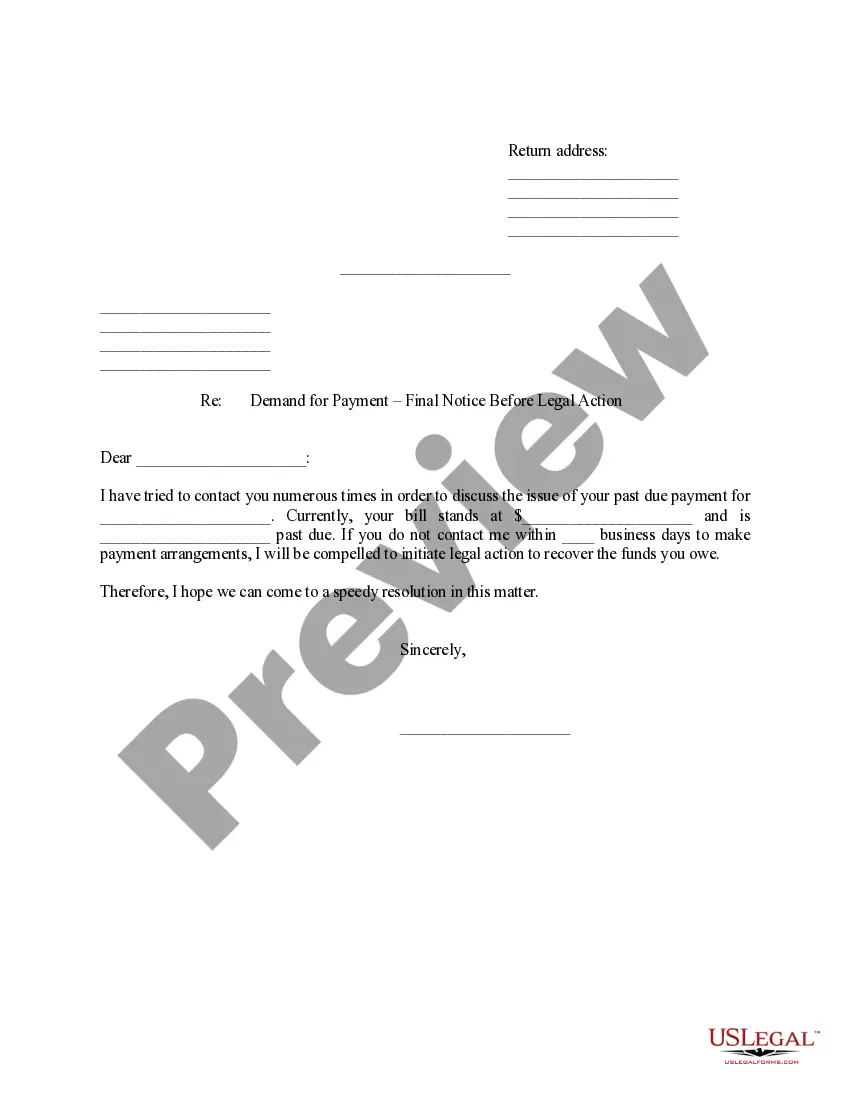
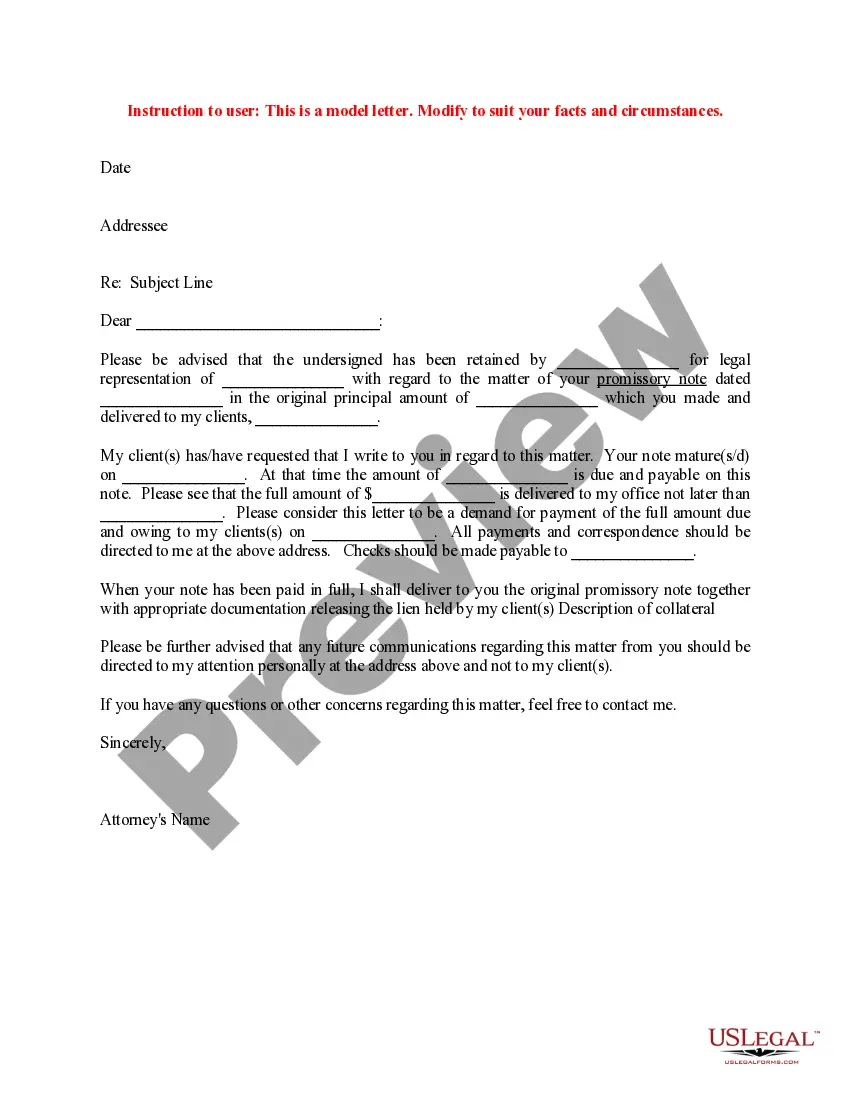
The Demand Letter for Repayment of Bank Notes is a formal communication requesting payment for multiple overdue bank notes. This letter is typically crafted by an attorney representing the creditor and outlines the outstanding balances owed. It differs from informal communications by providing specific options for the debtor regarding repayment or alternative actions, as well as the implications of failing to respond.
Main sections of this form
- Date and method of delivery (certified mail)
- Creditorâs details and attorney's contact information
- Identification of the bank notes and their respective balances
- Options for repayment or resolution of the debts
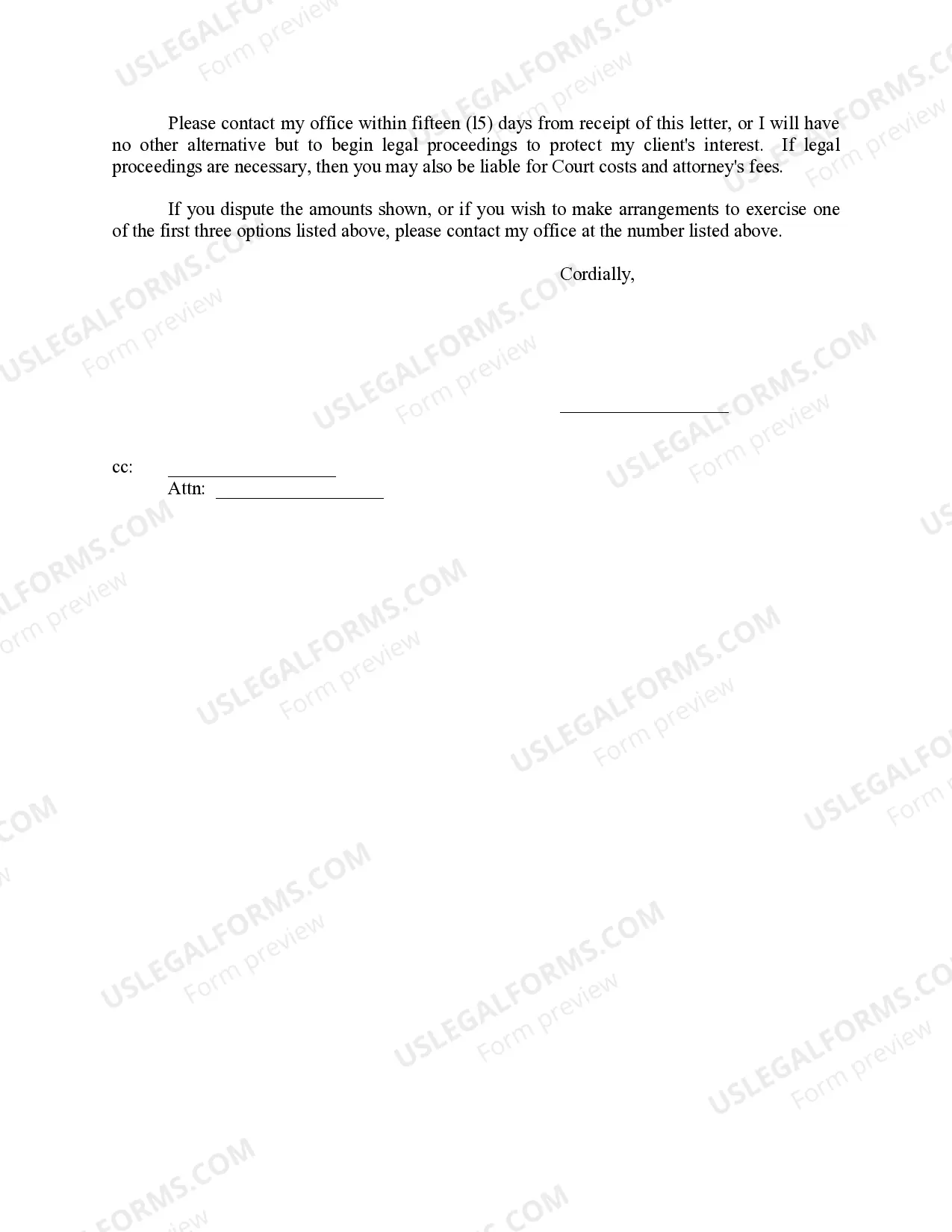
- Legal implications of failing to respond
- Signature of the attorney or representing party
Common use cases
This form should be used when a debtor has fallen behind on multiple bank notes, and the creditor wishes to formalize their demand for payment. It is particularly essential before initiating legal proceedings, as it serves as a last attempt to resolve the matter amicably. The demand letter clearly articulates the outstanding debts, giving the debtor notice of their obligations and options.
Who needs this form
- Creditors or their attorneys seeking repayment of overdue bank notes
- Individuals or businesses holding secured debt against a debtor
- Anyone looking to clarify repayment options for debts associated with bank notes
How to prepare this document
- Enter the date and method of mailing at the top of the letter.
- Provide the creditor's and attorney's contact details, including the address.
- List the bank notes with their distinctive balances for clarity.
- Outline the repayment options available to the debtor.
- Add a statement regarding the consequences of failing to respond.
- Sign the letter, including any relevant copy recipients.
Is notarization required?
This form does not typically require notarization unless specified by local law. However, it is advisable to confirm any state-specific requirements that may dictate notarization for legal effectiveness.
Get your form ready online
Our built-in tools help you complete, sign, share, and store your documents in one place.
Make edits, fill in missing information, and update formatting in US Legal Forms—just like you would in MS Word.
Download a copy, print it, send it by email, or mail it via USPS—whatever works best for your next step.
Sign and collect signatures with our SignNow integration. Send to multiple recipients, set reminders, and more. Go Premium to unlock E-Sign.
If this form requires notarization, complete it online through a secure video call—no need to meet a notary in person or wait for an appointment.
We protect your documents and personal data by following strict security and privacy standards.

Make edits, fill in missing information, and update formatting in US Legal Forms—just like you would in MS Word.

Download a copy, print it, send it by email, or mail it via USPS—whatever works best for your next step.

Sign and collect signatures with our SignNow integration. Send to multiple recipients, set reminders, and more. Go Premium to unlock E-Sign.

If this form requires notarization, complete it online through a secure video call—no need to meet a notary in person or wait for an appointment.

We protect your documents and personal data by following strict security and privacy standards.
Common mistakes to avoid
- Failing to include all relevant debt details, such as balances and note identifiers.
- Not specifying a clear timeframe for response.
- Using informal language instead of a formal tone.
- Neglecting to sign the letter or provide proper contact information.
Benefits of completing this form online
- Convenient access to downloadable templates for quick use.
- Editability allows for customization to fit specific situations.
- Reliability of professionally drafted documents that meet legal standards.
Looking for another form?
Form popularity
FAQ
200badmit you owe some or all of the money. deny you owe the money and explain why you don't owe it. ask for more information, without admitting or denying you owe the money. offer to pay a different amount. offer to pay some or all of the money in instalments.
Establish facts. Don't assume everyone knows the facts. Refer to evidence. If there's evidence (like a contract), you don't need to include it, but you should refer to it. Make a demand. Be specific as to what you want. Set a deadline and establish method of payment. Offer a consequence.
No, a demand letter is not necessary prior to filing a superior court limited/unlimited jurisdiction lawsuit in California.
Establish facts. Don't assume everyone knows the facts. Refer to evidence. If there's evidence (like a contract), you don't need to include it, but you should refer to it. Make a demand. Be specific as to what you want. Set a deadline and establish method of payment. Offer a consequence.
Although an attorney often writes the demand letter, you can also do it yourself in several cases:If you have a fairly simple legal issue and you want to go through the process yourself, without an attorney. If you want to clarify your thoughts on what happened and what you want.
The date of the letter. The names of the borrower and lender. The original amount of the loan. The date of the promissory note and any reference number or account number it contains. The payment schedule that was agreed upon.
Be Organized. Submit the Letter in a Timely Manner. Reference Pertinent Claim Information on All Communication. Use Appropriate Professional Language and Tone. Use Subheadings. Be Specific. Set Forth Demand Amount Clearly. Provide Deadline for Response.
A summary of the original demand letter, with an outline of its assertions (even if these are disputed) and the total payment that was demanded. An alternative account of events, as relevant, with corroborating evidence, if possible. Suggestions for how to remedy the dispute.
Use a letterhead. Outline the facts/story leading up to the demand letter in a chronological manner. State the legal basis for your claim. State how you will pursue legal action if your demand is not met, and include a timeline within which the demand is to be met.