Louisiana Petition for Contempt for Nonpayment of Medical Expenses, and Order
What is this form?
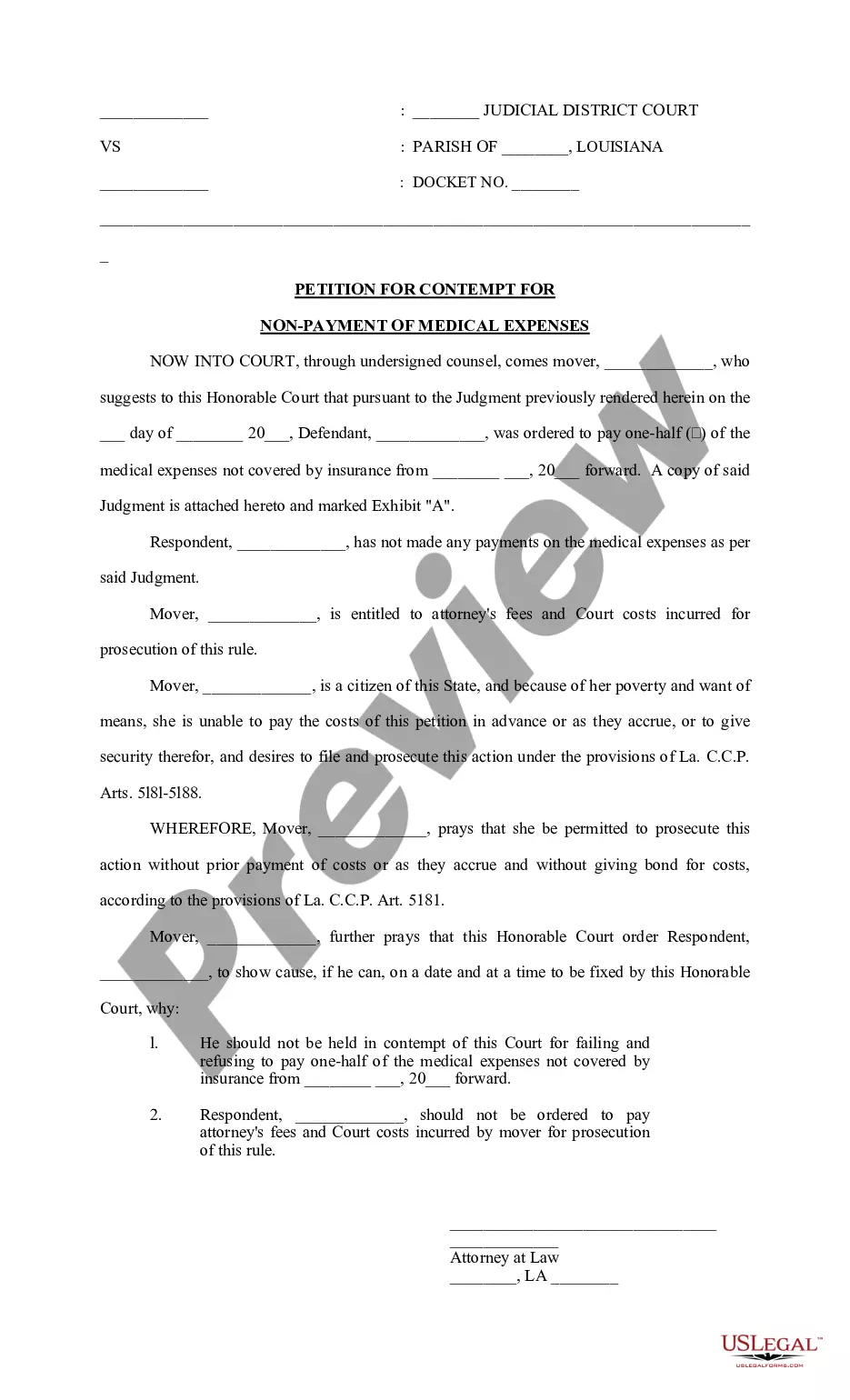
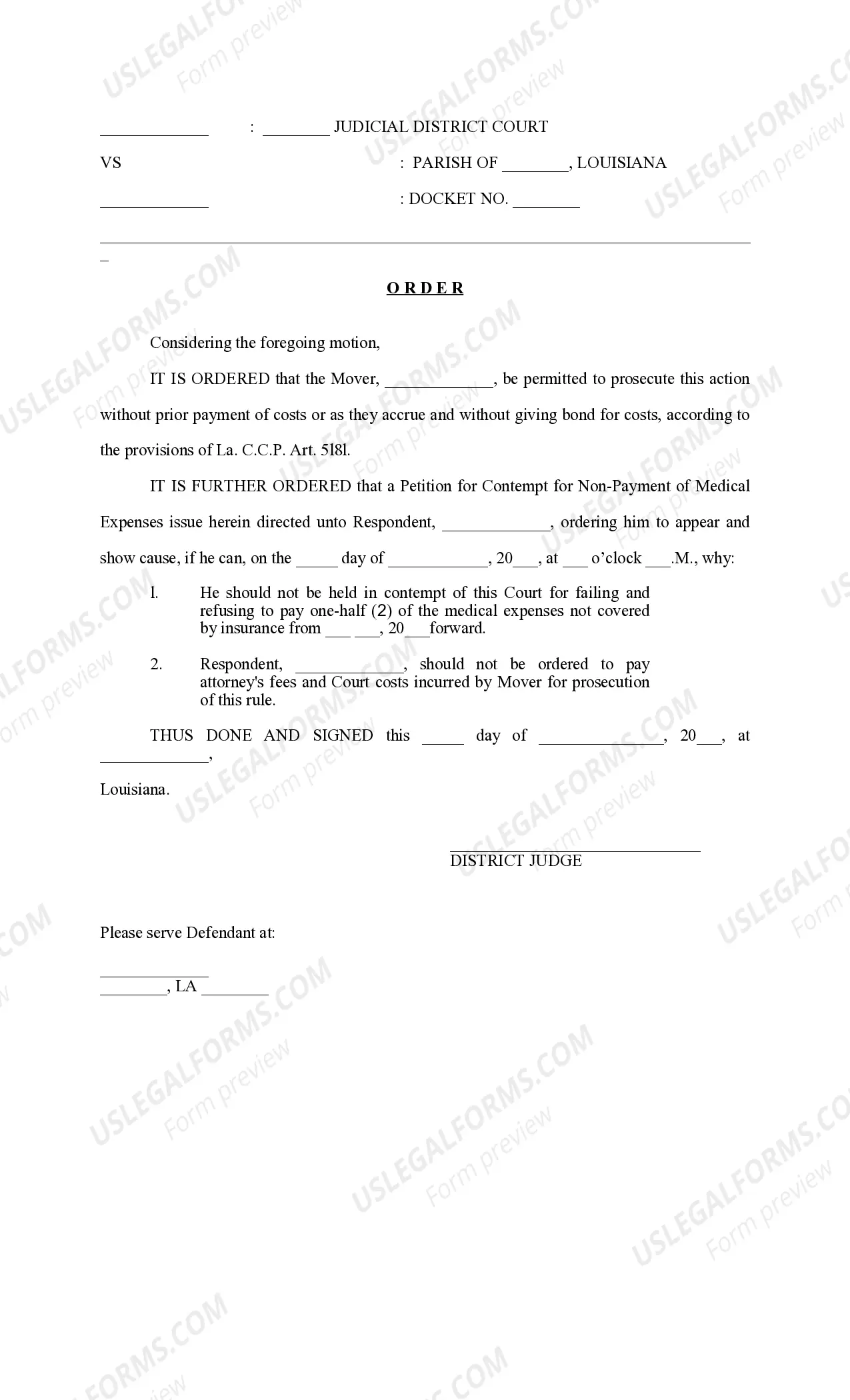
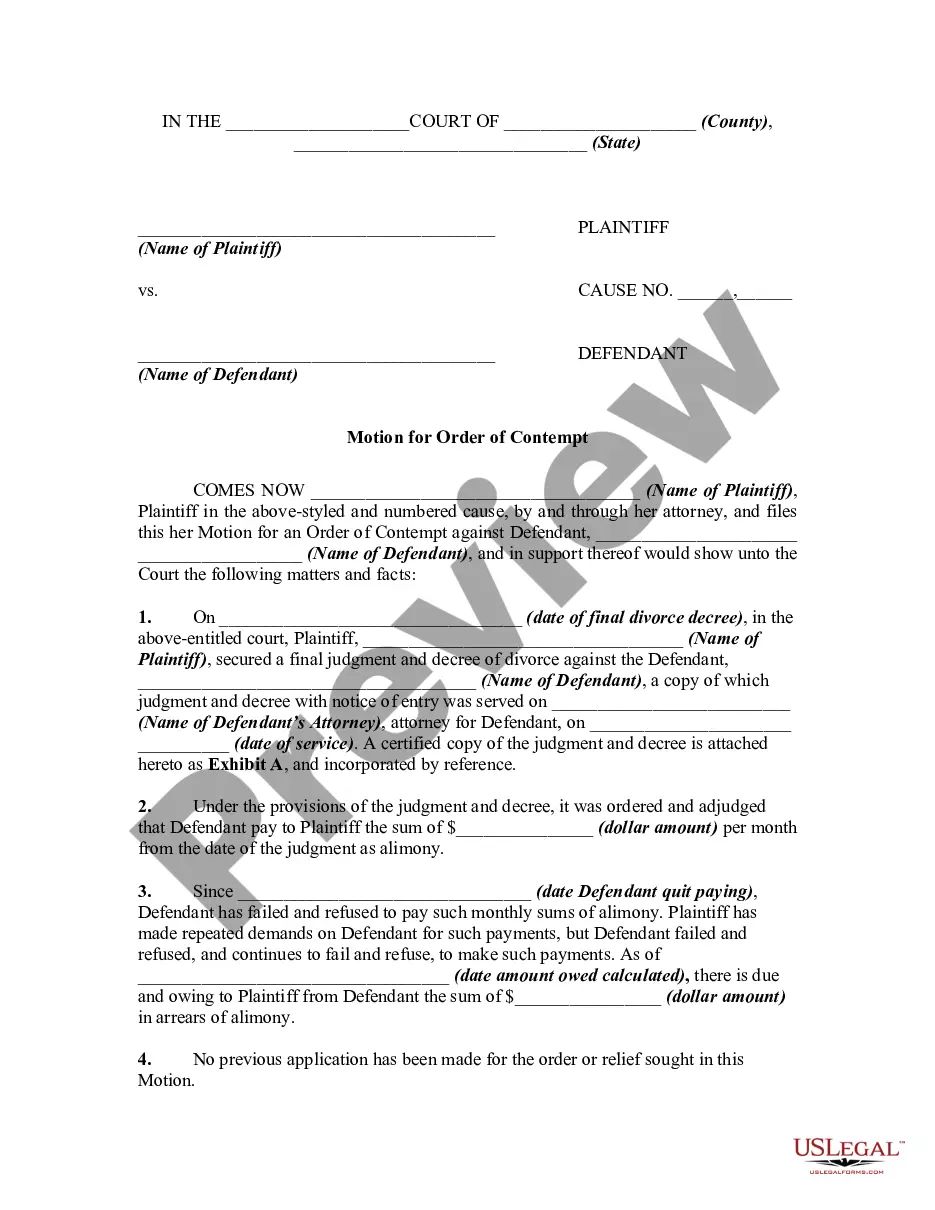
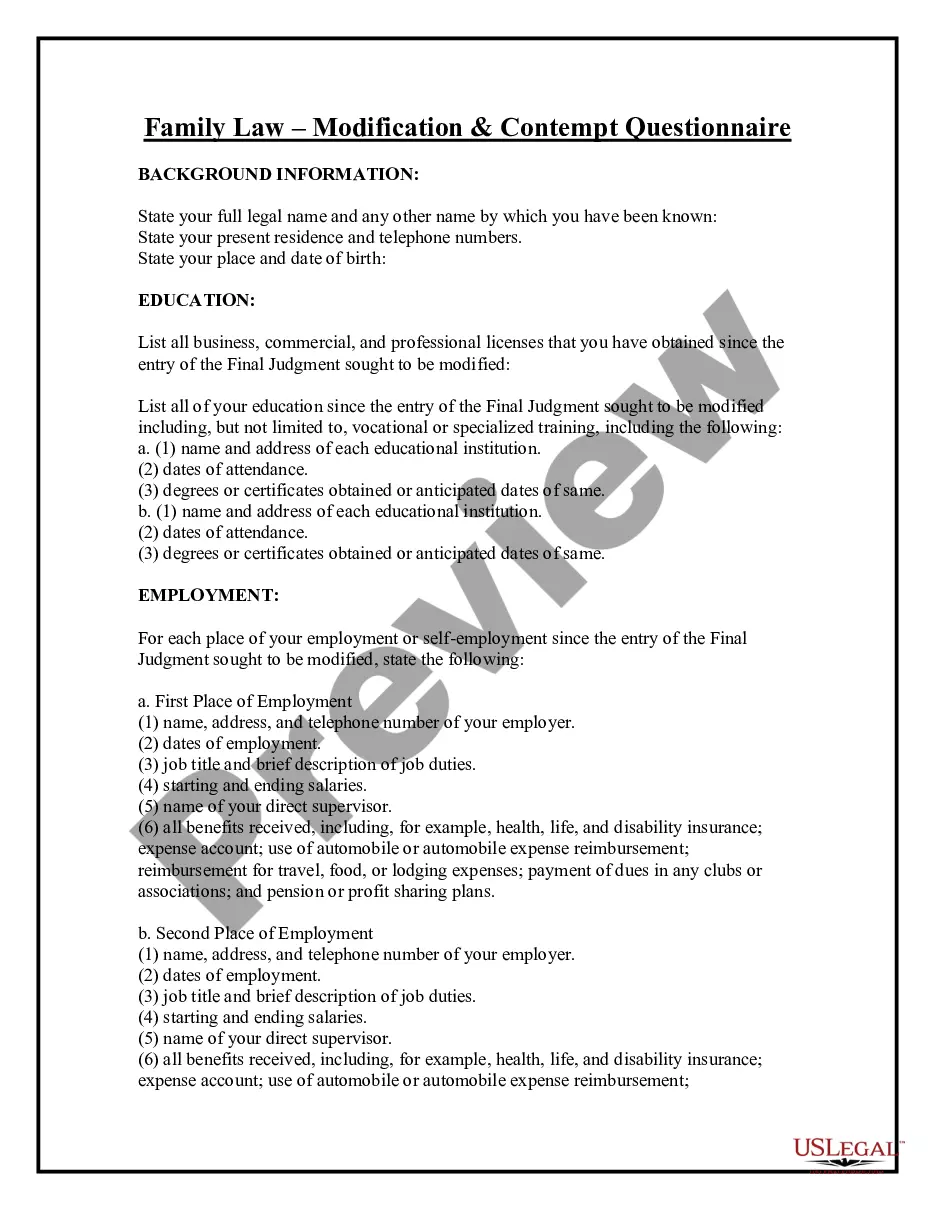
The Petition for Contempt for Nonpayment of Medical Expenses, and Order is a legal document used to address situations where a defendant fails to comply with a court order related to medical expenses for a minor child. This form specifically requests the court to hold the defendant in contempt for not paying their share of medical costs not covered by insurance. It distinguishes itself from other forms by focusing on the enforcement of payment orders and includes requests for attorney fees and costs incurred in the process.
Form components explained
- Information about the parties involved, including the petitioner and defendant.
- Citation of the original court judgment detailing the medical expenses obligations.
- Claims regarding the defendant's noncompliance with the previous court order.
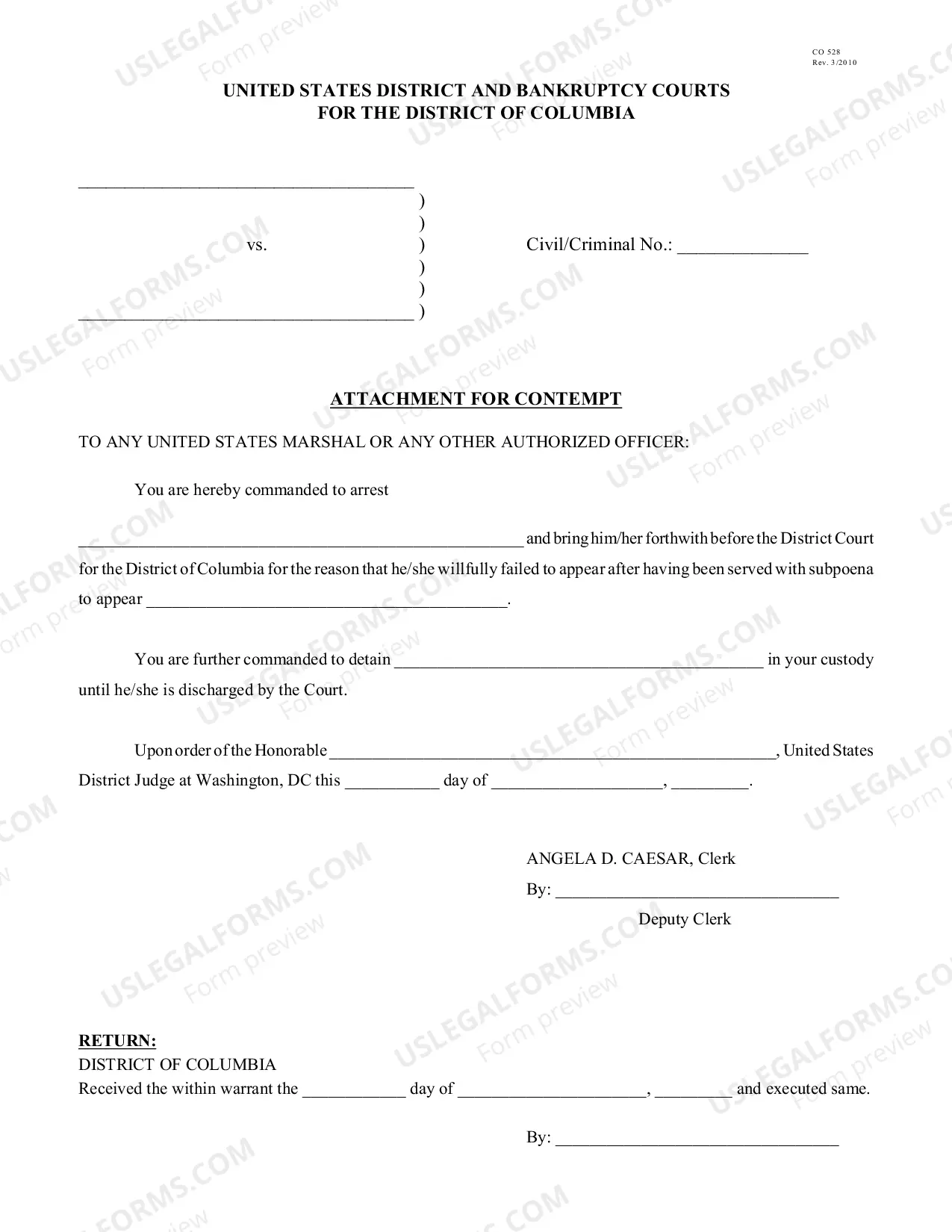
- Request for the court to hold the defendant in contempt.
- Request for an order directing the defendant to pay attorney fees and costs.
- Provisions for filing without the prior payment of court costs, if applicable.

When to use this form
This form should be used when a parent or guardian has a court order mandating that the other parent pay a portion of medical expenses for their minor child, but that parent has failed to make the required payments. It is essential to have a previously established judgment that outlines the payment obligations before filing this petition.
Who can use this document
- Parents or guardians seeking enforcement of a court order regarding medical expenses.
- Individuals who have not received payment for medical expenses per a court ruling.
- Persons eligible for fee waivers due to financial hardship, as stated in the petition.
How to prepare this document
- Identify the plaintiff (mover) and defendant by filling in their names and relevant contact information.
- Reference the original court judgment by entering the date and details of the order on medical expenses.
- Clearly state the defendant's noncompliance with the payment obligations.
- Request the court's permission to prosecute the case without prior payment of costs if applicable.
- Complete the order section, specifying the date and time for the defendant to appear in court.
Notarization guidance
Notarization is generally not required for this form. However, certain states or situations might demand it. You can complete notarization online through US Legal Forms, powered by Notarize, using a verified video call available anytime.
Get your form ready online
Our built-in tools help you complete, sign, share, and store your documents in one place.
Make edits, fill in missing information, and update formatting in US Legal Forms—just like you would in MS Word.
Download a copy, print it, send it by email, or mail it via USPS—whatever works best for your next step.
Sign and collect signatures with our SignNow integration. Send to multiple recipients, set reminders, and more. Go Premium to unlock E-Sign.
If this form requires notarization, complete it online through a secure video call—no need to meet a notary in person or wait for an appointment.
We protect your documents and personal data by following strict security and privacy standards.

Make edits, fill in missing information, and update formatting in US Legal Forms—just like you would in MS Word.

Download a copy, print it, send it by email, or mail it via USPS—whatever works best for your next step.

Sign and collect signatures with our SignNow integration. Send to multiple recipients, set reminders, and more. Go Premium to unlock E-Sign.

If this form requires notarization, complete it online through a secure video call—no need to meet a notary in person or wait for an appointment.

We protect your documents and personal data by following strict security and privacy standards.
Mistakes to watch out for
- Failing to attach a copy of the original court judgment as evidence.
- Not specifying the total amount of unpaid medical expenses.
- Completing the form without consulting an attorney about local court requirements.
Advantages of online completion
- Convenient access to a legally accurate template prepared by licensed attorneys.
- Editability allows you to customize the form to your specific situation easily.
- Downloadable for immediate use, saving time and effort compared to traditional methods.
Legal use & context
- This form is used within the context of enforcing a court order for child support and medical expenses.
- It is important for ensuring compliance with legal financial obligations relating to children's healthcare.
- If successfully filed, the court can impose penalties for contempt, promoting adherence to the law.
Key takeaways
- The Petition for Contempt for Nonpayment of Medical Expenses is vital for enforcing financial obligations set by a court.
- Understanding the proper use of this form can help ensure that necessary medical payments for children are made.
- Always consider consulting legal counsel to navigate the complexities of family law and court procedures.
Looking for another form?

Form popularity
FAQ
Read the summons and make sure you know the date you must answer by. Read the complaint carefully. Write your answer. Sign and date the answer. Make copies for the plaintiff and yourself. Mail a copy to the plaintiff. File your answer with the court by the date on the summons.
Civil vs Criminal Contempt An action to essentially punish the person who does not comply with a court order is called a contempt action.A civil contempt action seeks to compel compliance with a court order before punishment occurs; a criminal contempt action can impose jail time for failure to obey.
Depending on the infraction, contempt of court consequences can include fines, compensatory visitation, a modification to the custody arrangement, and in some instances even jail time. In most cases, if someone is held in contempt, the court will first give them the opportunity to make amends for the violation.
Contempt of court, often referred to simply as "contempt", is the offense of being disobedient to or disrespectful toward a court of law and its officers in the form of behavior that opposes or defies the authority, justice and dignity of the court.
Typically, a person must file a motion for contempt of court. This does not create a new case. The motion is filed in the same county and court where the original order was entered. The moving party may also be required to file a declaration or affidavit with the court.
There is a valid court order in effect. The other person knows about the court order. The facts show a plain violation of the order. You have given the person notice of the contempt hearing and a chance to be heard. Contempt is an appropriate remedy for the violation.
If a person is found to be in contempt, the court is able to impose sanctions, which may include the following: jail time (usually 1-30 days) ordering the party held in contempt to pay the money owed. ordering the party held in contempt to pay the other party's attorney's fees.
Go to the clerk's office at the court that made the orders. Give the clerk your completed Motion for Contempt and Appearance forms. The clerk will write a hearing date and time on the motion, sign it, and give it back to you. The hearing date is when you and the other person must go to court.
To file your papers, you must go to Clerk of Court's Suit Accounting office, located on the Third Floor of the Nineteenth Judicial District Courthouse, 300 North Boulevard, Baton Rouge, Louisiana. If you want to make other arrangements for filing, you should contact that office at (225) 389-3982.