Louisiana Motion to Overturn Bail Bond Forfeiture
What this document covers
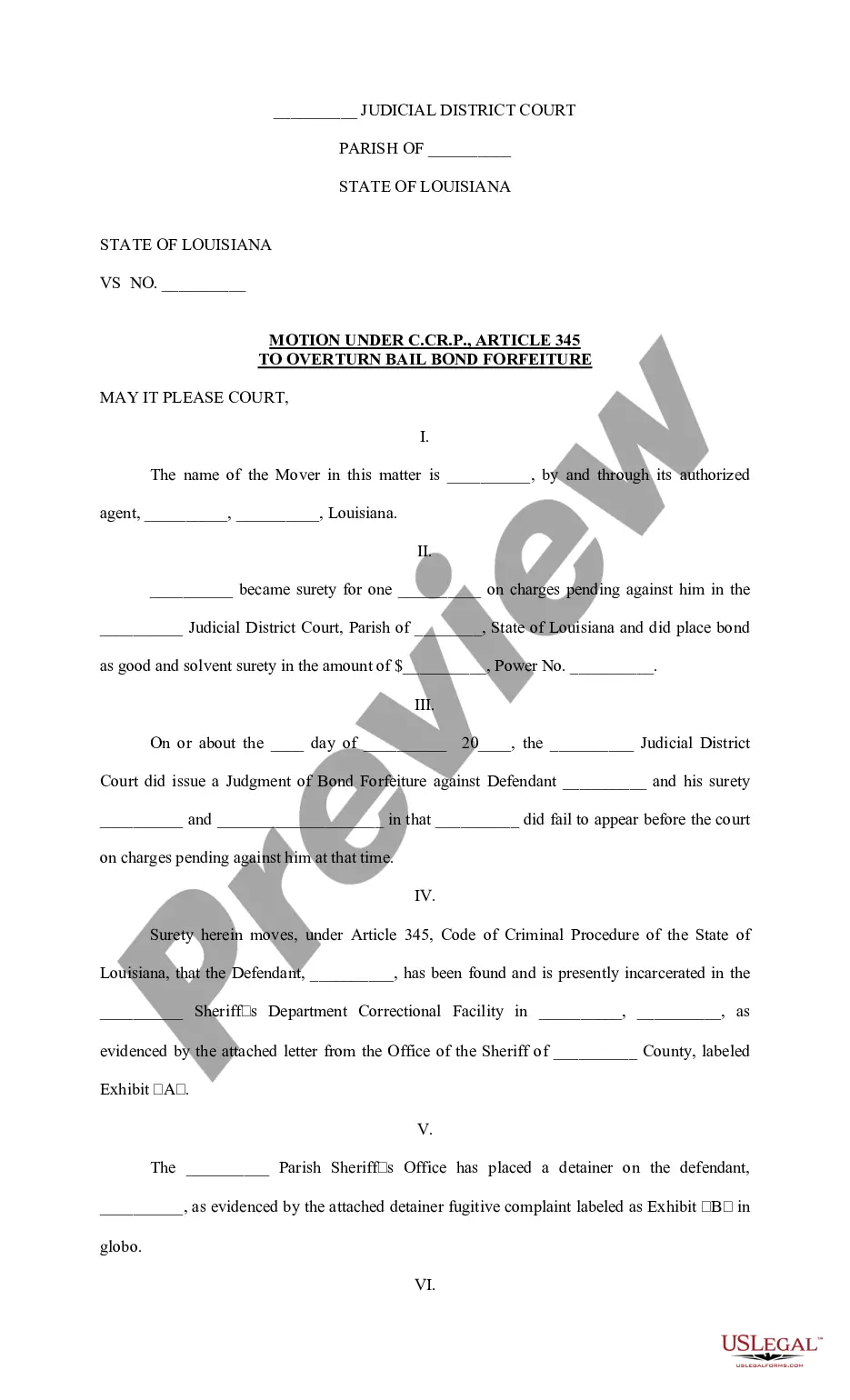
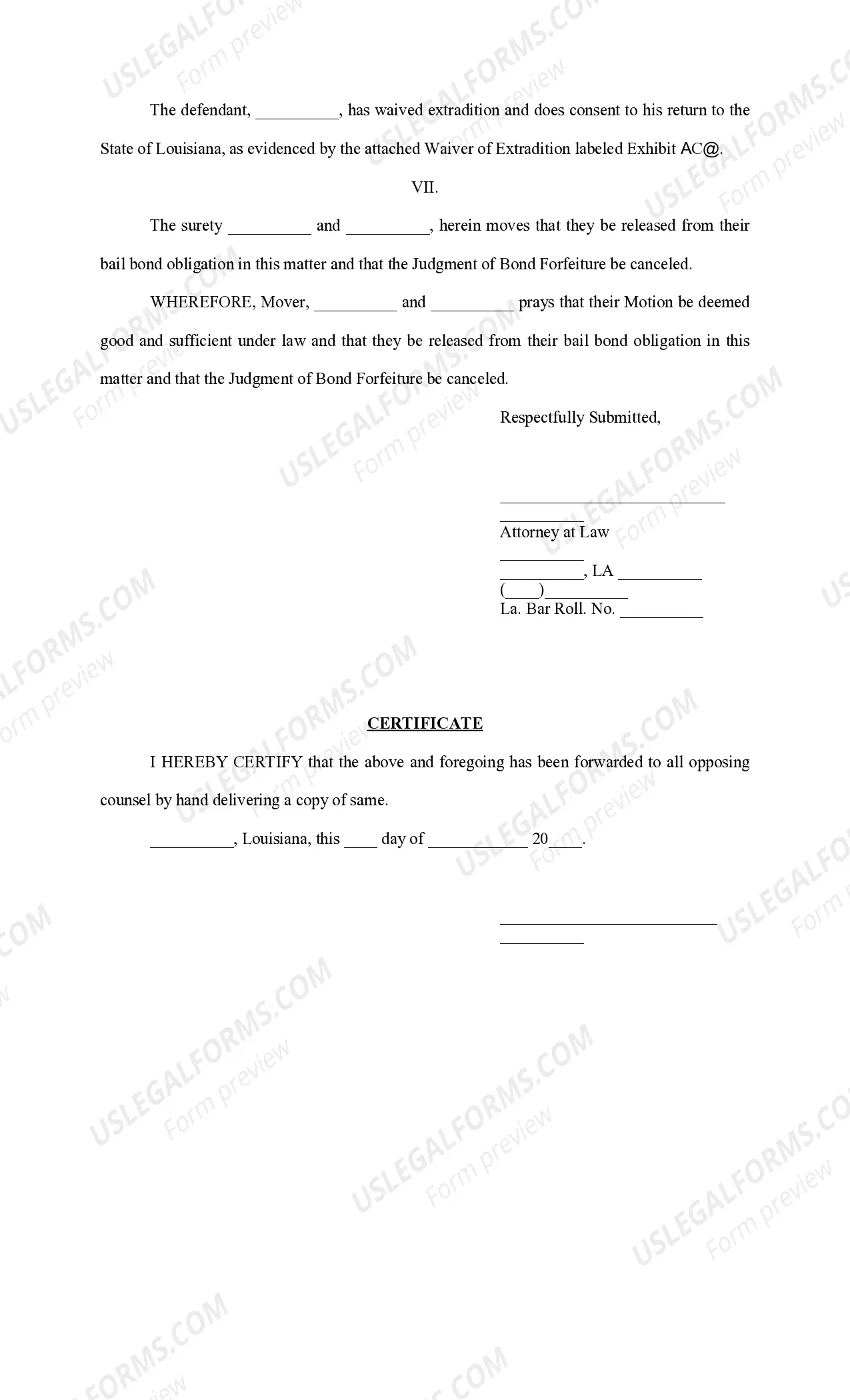
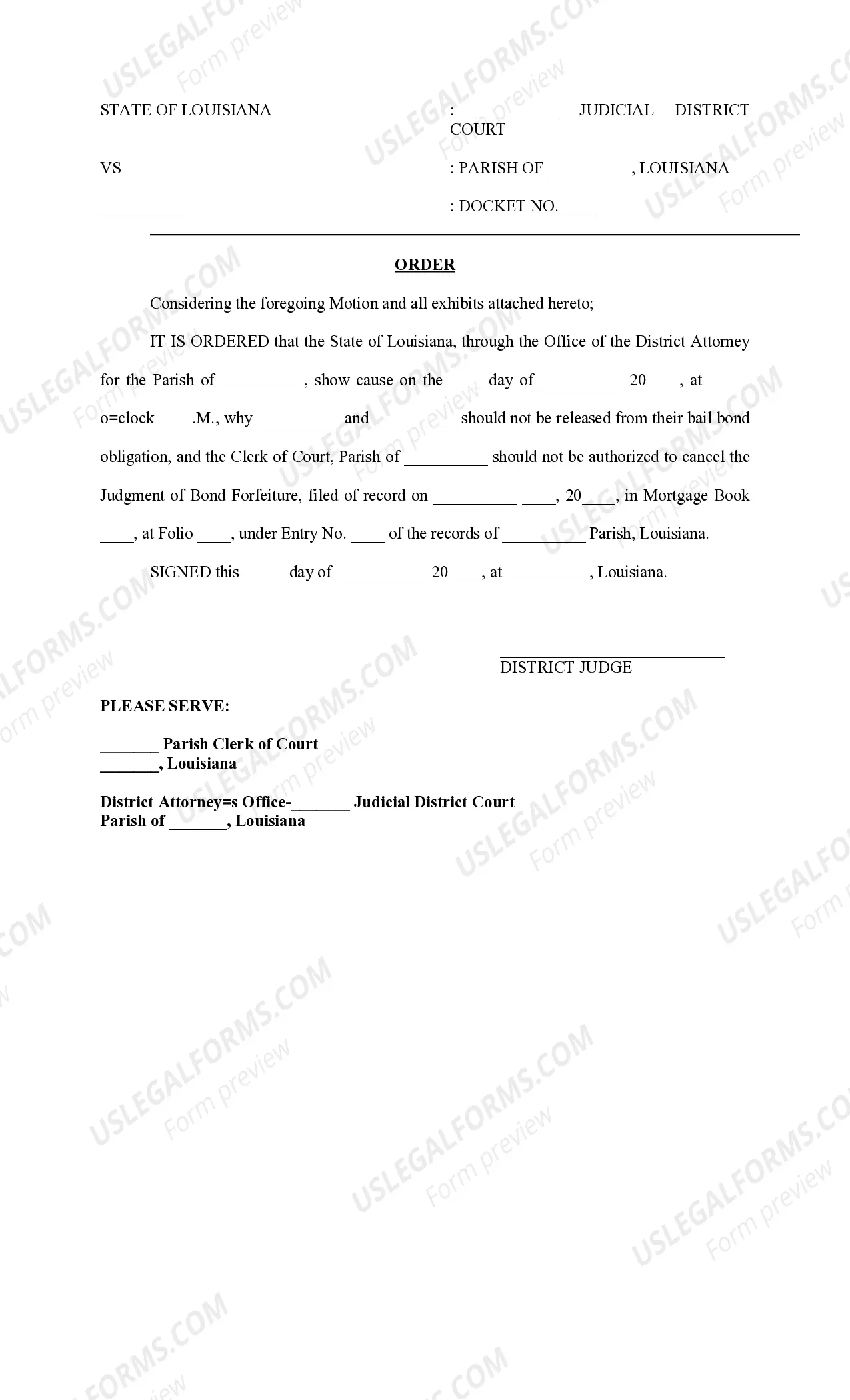
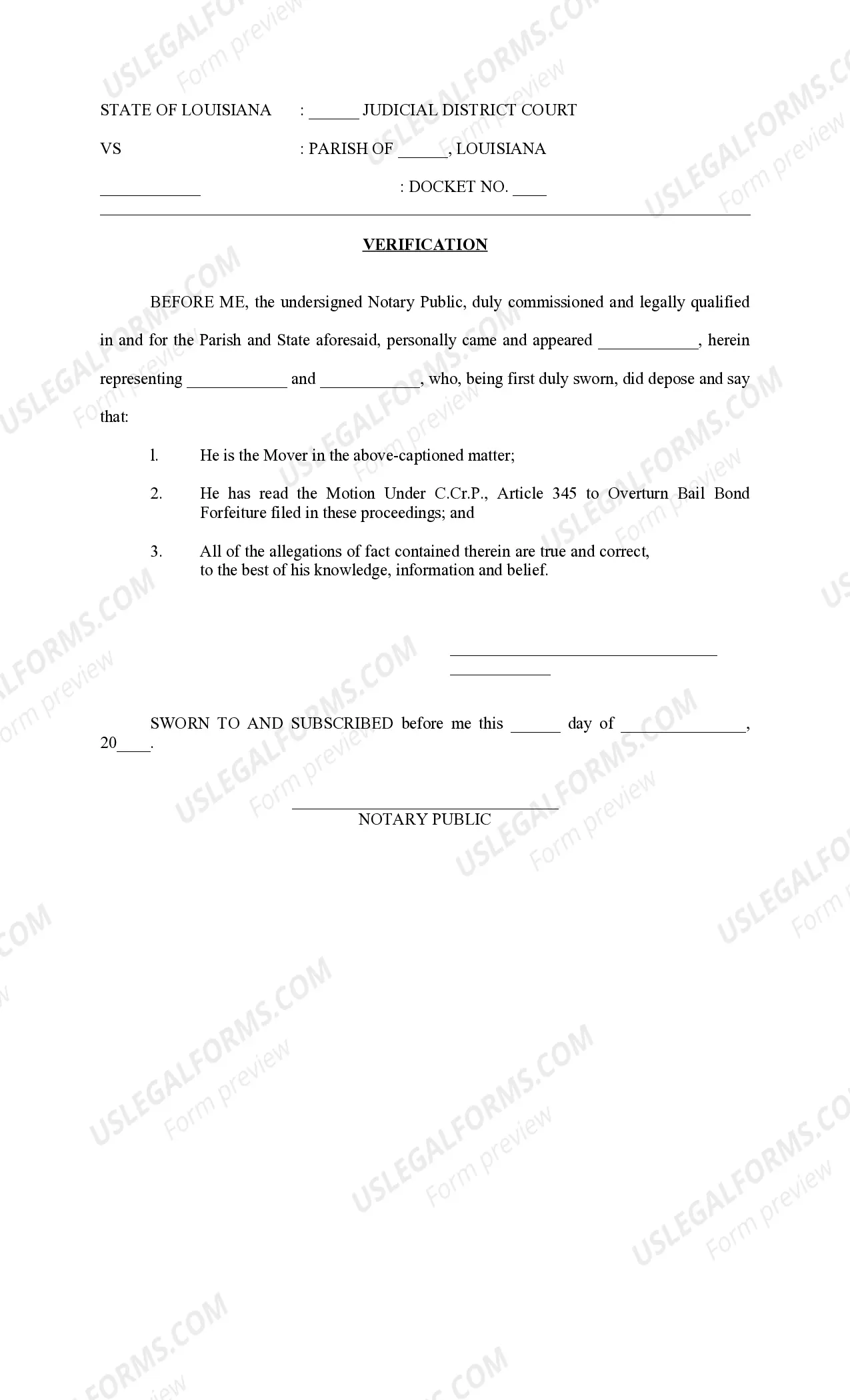
The Motion to Overturn Bail Bond Forfeiture is a legal document filed in Louisiana courts to challenge a judgment of bond forfeiture. This motion is based on La. C.Cr.P. Article 345 and is typically used when a defendant fails to appear in court due to circumstances beyond their control, such as being incarcerated in another parish. By using this motion, the surety seeks to be relieved from the financial obligation of the bail bond and to cancel the forfeiture judgment.
Form components explained
- Identification of the mover, defendant, and surety.
- Details of the bond, including the amount and power number.
- Information about the judgment of bond forfeiture issued by the court.
- Evidence showing the defendant's incarceration in another parish.
- Request for the release from bond obligation and cancellation of the forfeiture judgment.
When to use this document
This form is utilized when a defendant has failed to appear in court and a judgment of bond forfeiture has been issued against them. It is particularly relevant if the defendant was unable to attend due to being in custody in a different location. This motion helps ensure that the surety is not unfairly penalized for the defendant's absence under such circumstances.
Intended users of this form
This motion is intended for:
- Sureties or bail bondsmen who have posted a bail bond for a defendant.
- Defendants who have been incarcerated in a different parish and failed to appear in court.
- Attorneys representing clients in matters related to bond forfeiture.
How to prepare this document
- Identify the parties involved, including the mover (surety) and the defendant.
- Provide the bond and judgment details, including amounts and court information.
- Attach evidence of the defendant's incarceration and any related detainers.
- State the request clearly for the cancellation of the bond forfeiture judgment.
- Include signatures of the mover and any legal representatives as required.
Does this document require notarization?
This form does not typically require notarization unless specified by local law. However, it is essential to check any particular requirements that may apply based on jurisdiction.
Get your form ready online
Our built-in tools help you complete, sign, share, and store your documents in one place.
Make edits, fill in missing information, and update formatting in US Legal Forms—just like you would in MS Word.
Download a copy, print it, send it by email, or mail it via USPS—whatever works best for your next step.
Sign and collect signatures with our SignNow integration. Send to multiple recipients, set reminders, and more. Go Premium to unlock E-Sign.
If this form requires notarization, complete it online through a secure video call—no need to meet a notary in person or wait for an appointment.
We protect your documents and personal data by following strict security and privacy standards.

Make edits, fill in missing information, and update formatting in US Legal Forms—just like you would in MS Word.

Download a copy, print it, send it by email, or mail it via USPS—whatever works best for your next step.

Sign and collect signatures with our SignNow integration. Send to multiple recipients, set reminders, and more. Go Premium to unlock E-Sign.

If this form requires notarization, complete it online through a secure video call—no need to meet a notary in person or wait for an appointment.

We protect your documents and personal data by following strict security and privacy standards.
Common mistakes to avoid
- Failing to provide adequate evidence of the defendant's incarceration.
- Not including all necessary exhibits labeled correctly.
- Missing signatures or proper identification of parties involved.
- Submitting the motion outside of the specified legal timeframe.
Benefits of using this form online
- Convenience of downloading and printing the form at any time.
- Access to attorney-drafted templates ensuring legal compliance.
- Editability to customize with specific case details before submission.
- Secure storage and easy retrieval for future reference.
Looking for another form?

Form popularity
FAQ
The 72-hour rule in Louisiana generally dictates that a defendant must be brought before a judge within 72 hours of arrest. This rule ensures the prompt legal process for individuals in custody. Understanding this rule is essential for anyone navigating the complexities of bail, especially when considering a Louisiana Motion to Overturn Bail Bond Forfeiture.
Article 334 refers to the Louisiana Code of Criminal Procedure's guidelines on bail and release conditions. This article outlines the legal processes and considerations for bonds and bail forfeiture. Understanding Article 334 can be crucial when pursuing a Louisiana Motion to Overturn Bail Bond Forfeiture, as it sets the legal groundwork.
Bail/Bond Forfeiture Non-Conviction. The defendant forfeits or pays their bond in place of going to trial.There is no finding of guilt and the defendant is being discharged from trial but there are special conditions that must be followed.
The court may have a form for the bond company to fill out. Likewise, if someone else paid your bail moneyfor example, a relative or friendthen they need to also sign a consent to reinstate bail or similar form.
If the court has arrested you again and bail is reinstated, there will be a refund of the bond money or property, and you'll be allowed to leave jail again.
Bond forfeiture is the enforcement of a guarantee.Most commonly, bail bonds are forfeited when a defendant misses a court date. The bail bondsman or bondswoman must then pay the outstanding bail. Depending on the amount of money owed, those bondsmen may seek out the defendant and return them to the courts.
After you've posted bail, the money that the bondsman put up for your release will be held by the courts.The courts will disperse the forfeited bail amount to the state, cities, and county using a formula in the California Penal Code.
A: A reinstatement is a process by which a defendant who has failed to appear in court may have their warrant removed and bail bond reactivated or reinstated by the court. Reinstatements may result in additional fees to the indemnitor or defendant.
Bail bond forfeiture results when a court appearance is missed, and the company or person who put up the bond is required to pay the defendant's outstanding bail amount. A forfeited bond becomes the property of the jurisdiction overseeing the case, and it cannot be refunded.
After the defendant has been acquitted or charges have been dropped, the money will be returned to the person who posted bail.If the person is found guilty, the bail goes toward court fees. In those cases, the court keeps all the bail money and does not issue a refund. Using a bail agent helps with several things.