Louisiana Motion to Amend Sentence - Excessive Sentencing
Overview of this form
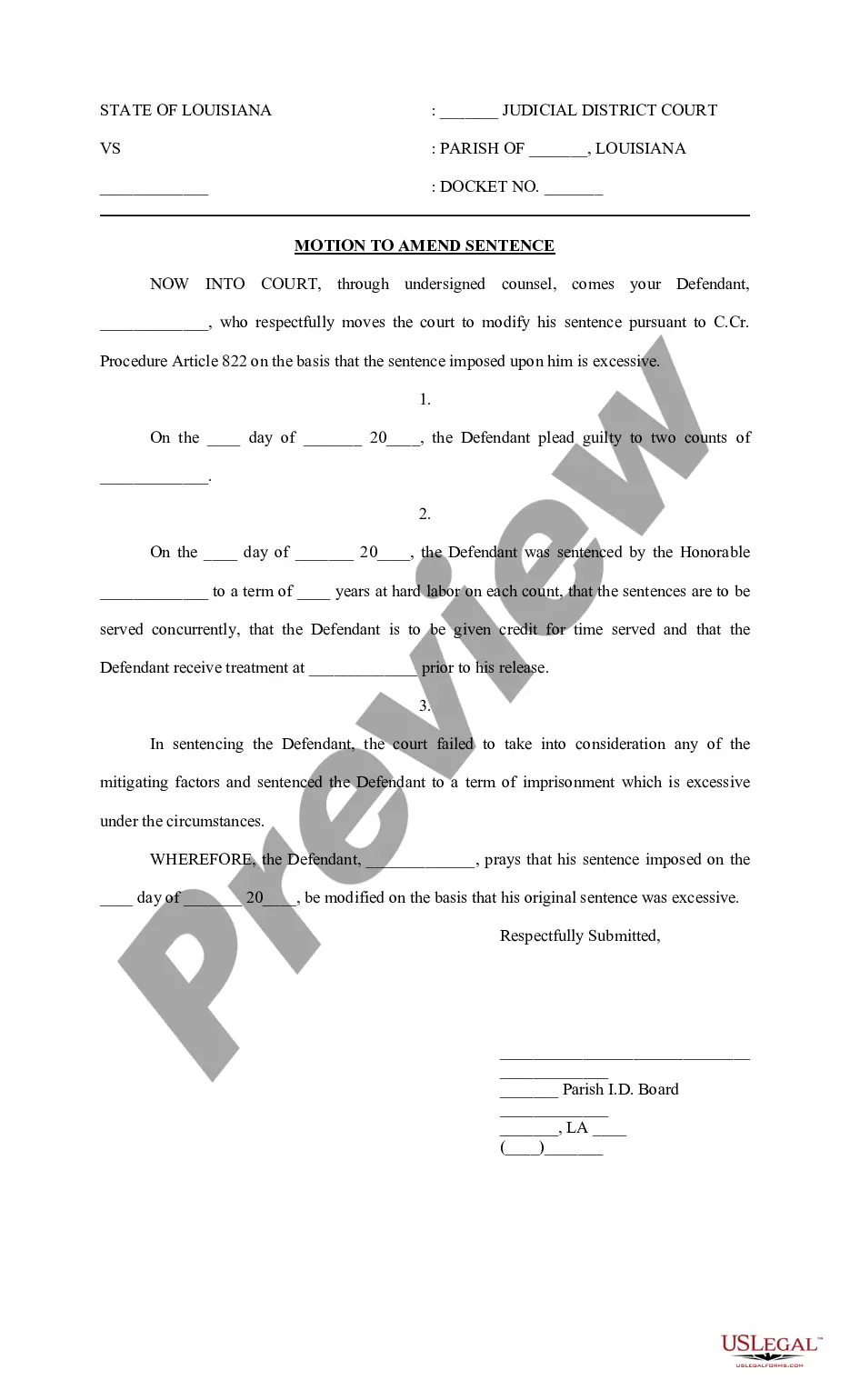
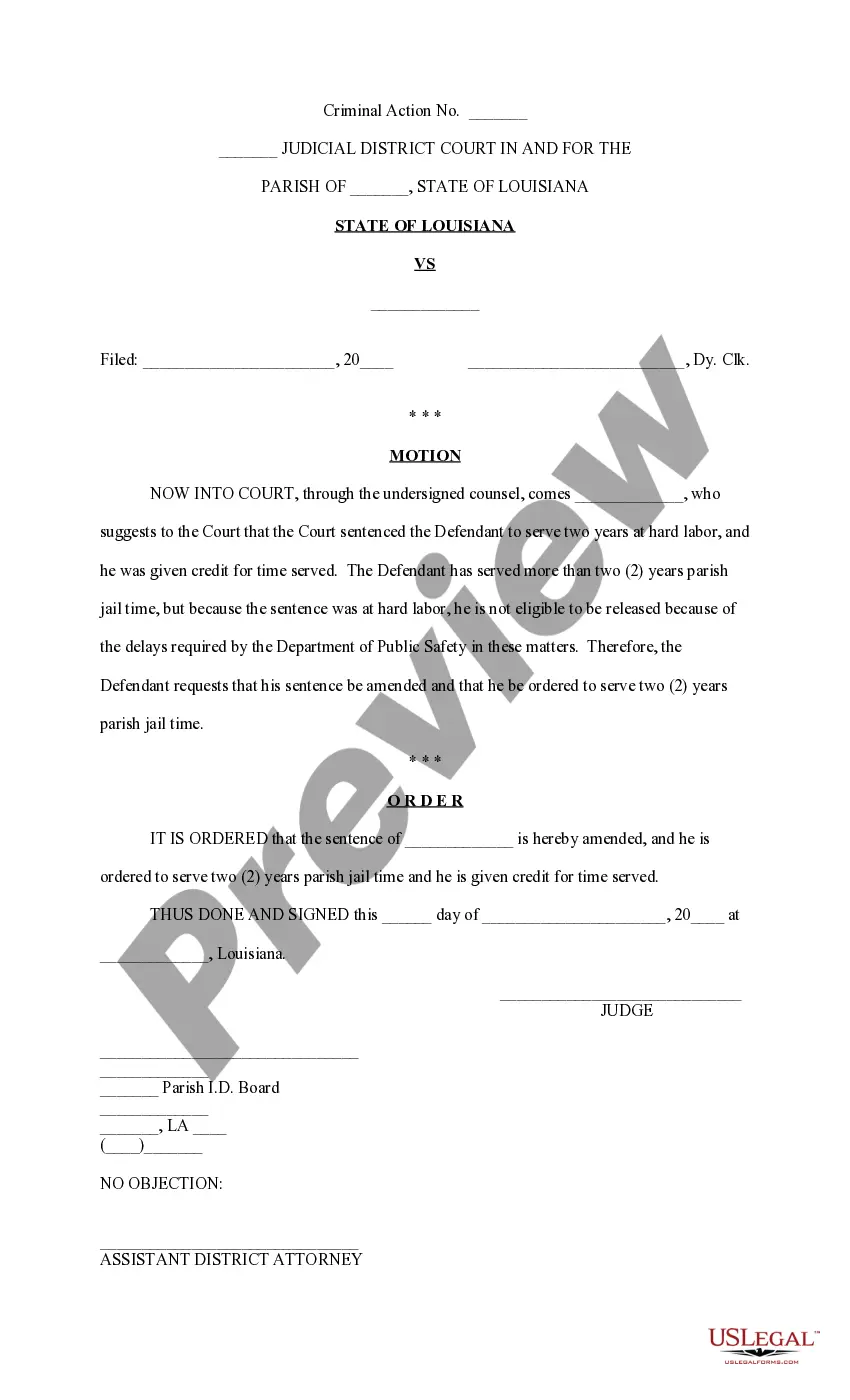
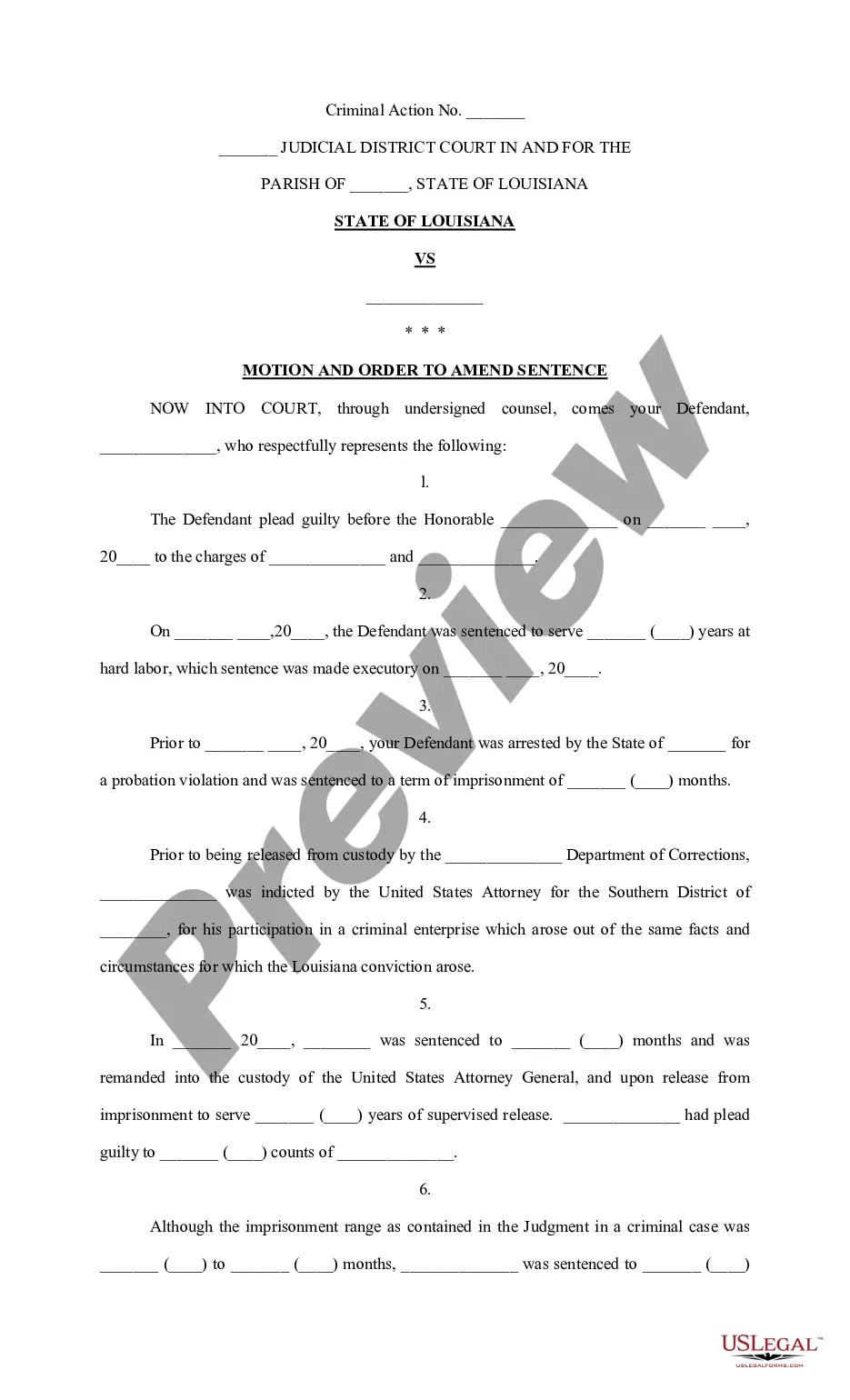
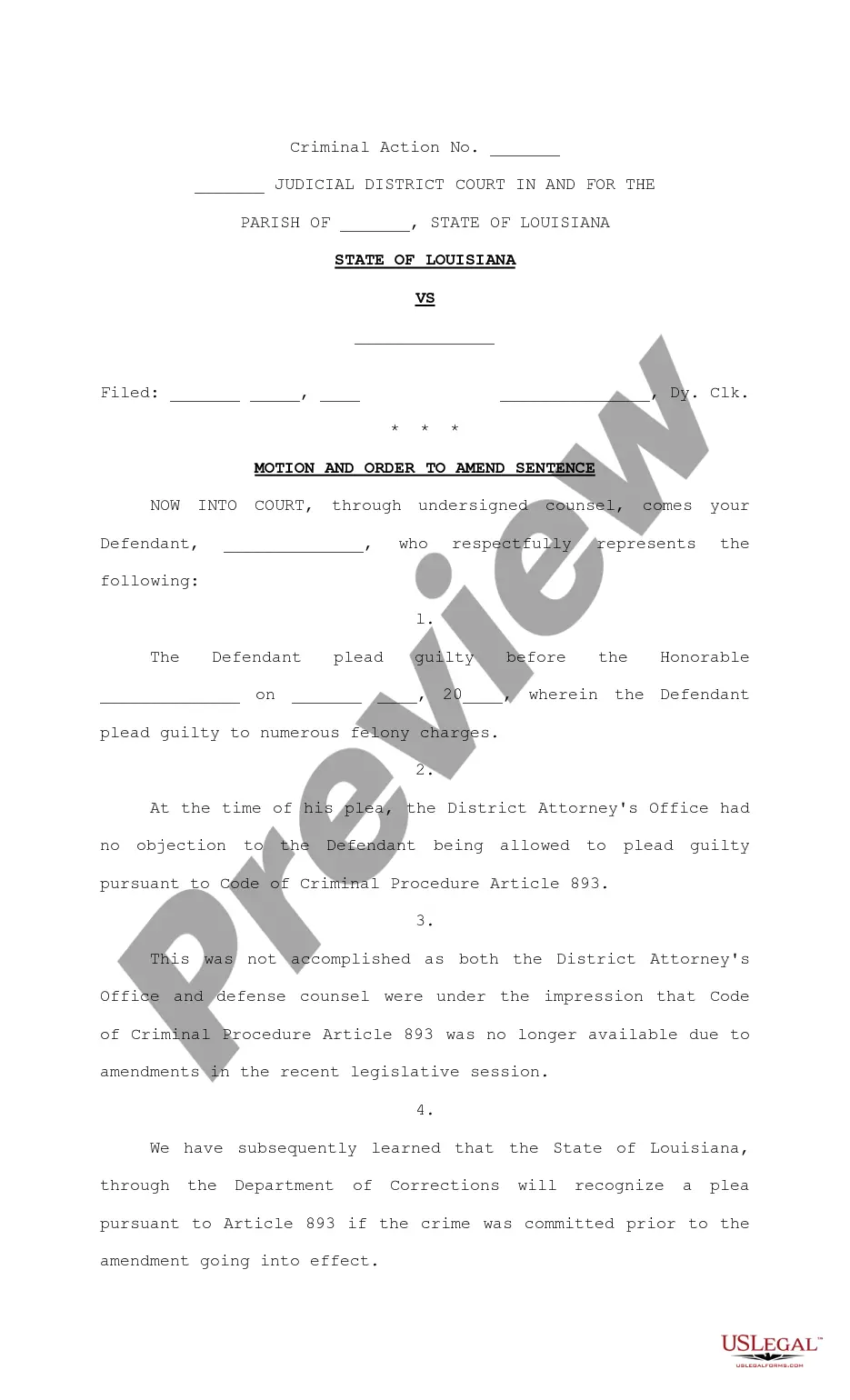
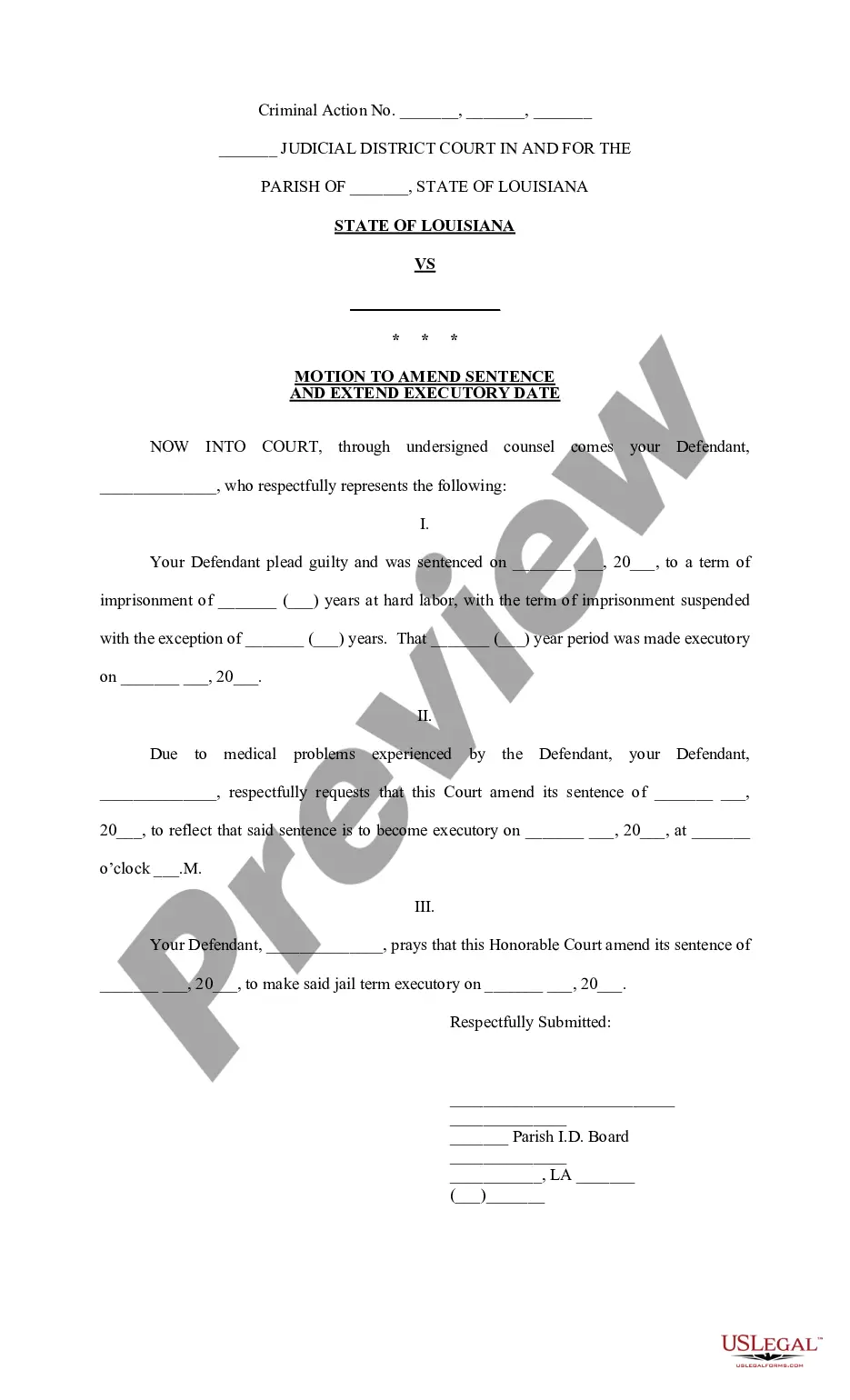
The Motion to Amend Sentence - Excessive Sentencing is a legal document that allows a defendant to request the court to modify their sentence if it is deemed excessive. This form asserts that the court did not consider important mitigating factors during sentencing, leading to an unjust punishment. Unlike other motions, this specific form focuses on appealing the length or severity of a sentence rather than disputing the guilt or the terms of the original plea agreement.
Form components explained
- Caption: Identifies the case and court.
- Defendant's details: Name and reasons for the motion.
- Summary of the original charges and plea: Details about the guilty plea and sentencing date.
- Request for sentence modification: A clear statement requesting the modification based on excessiveness.
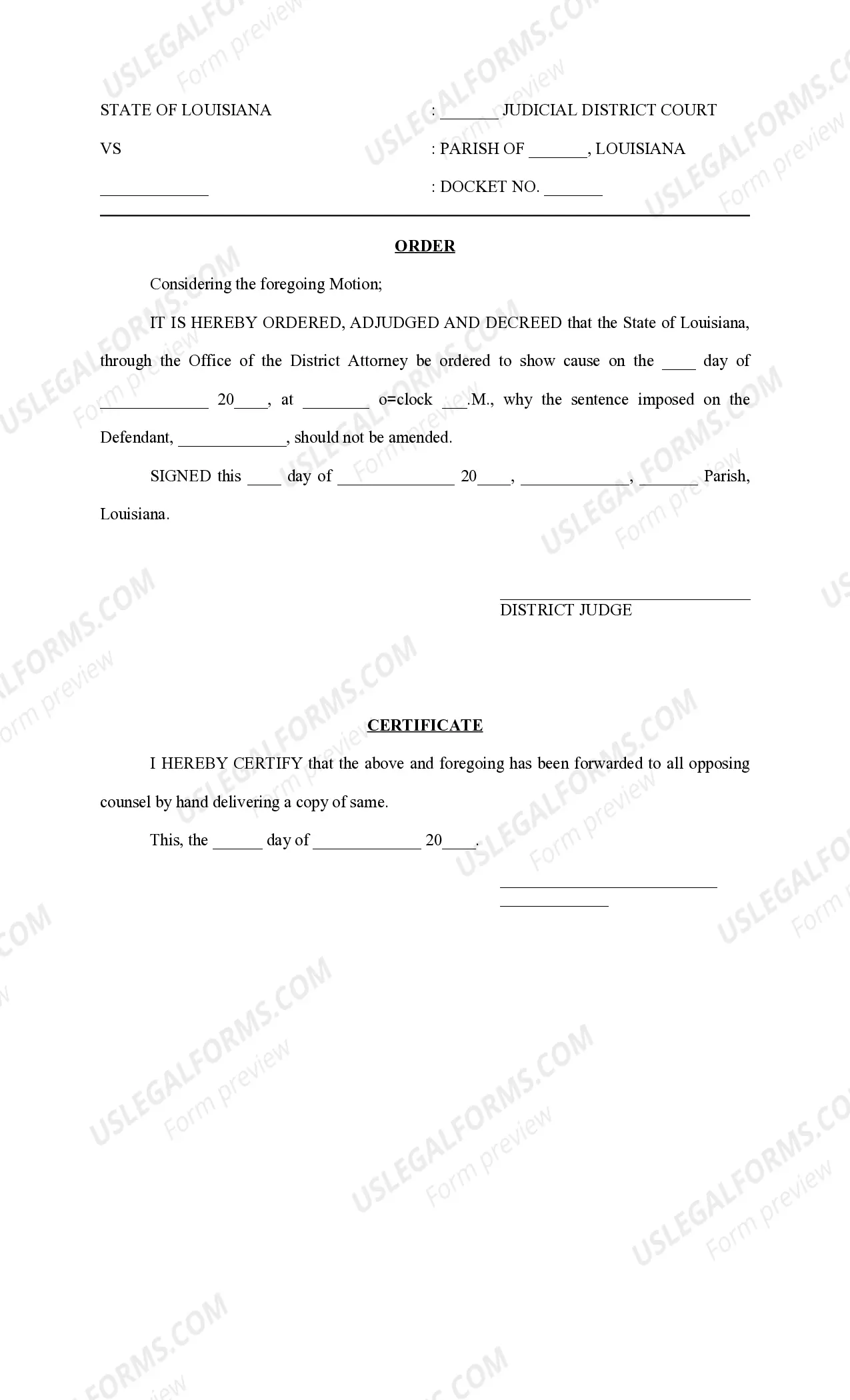
- Order for the District Attorney: A request for the DA to justify the current sentence.
Situations where this form applies
This form should be used when a defendant believes that their sentence is excessive given the circumstances of their case. It is applicable after a guilty plea or conviction when the imposed sentence does not adequately account for mitigating factors such as the defendantâs background, the nature of the offense, or personal circumstances that may warrant a shorter sentence.
Who should use this form
- Defendants who have been convicted of a crime in Louisiana.
- Individuals sentenced to a term of imprisonment they believe is excessive.
- Those seeking to have their sentences reviewed by the court on grounds of unfairness.
Instructions for completing this form
- Enter the names of the parties involved and the docket number at the top of the form.
- Fill in the defendant's name and the details of the conviction, including the date of the guilty plea.
- Specify the length of the sentence and any conditions imposed by the court.
- Argument: Clearly state that the sentence is excessive and outline the mitigating factors that support your claim.
- Sign and date the motion, as well as ensure proper service to the District Attorney's office as required.
Does this document require notarization?
This form does not typically require notarization unless specified by local law. However, it is advisable to check with your legal representation if notarization is necessary for submission.
Get your form ready online
Our built-in tools help you complete, sign, share, and store your documents in one place.
Make edits, fill in missing information, and update formatting in US Legal Forms—just like you would in MS Word.
Download a copy, print it, send it by email, or mail it via USPS—whatever works best for your next step.
Sign and collect signatures with our SignNow integration. Send to multiple recipients, set reminders, and more. Go Premium to unlock E-Sign.
If this form requires notarization, complete it online through a secure video call—no need to meet a notary in person or wait for an appointment.
We protect your documents and personal data by following strict security and privacy standards.

Make edits, fill in missing information, and update formatting in US Legal Forms—just like you would in MS Word.

Download a copy, print it, send it by email, or mail it via USPS—whatever works best for your next step.

Sign and collect signatures with our SignNow integration. Send to multiple recipients, set reminders, and more. Go Premium to unlock E-Sign.

If this form requires notarization, complete it online through a secure video call—no need to meet a notary in person or wait for an appointment.

We protect your documents and personal data by following strict security and privacy standards.
Typical mistakes to avoid
- Failing to include all necessary details regarding the original sentencing.
- Not articulating mitigating factors clearly and convincingly.
- Missing deadlines for filing the motion as dictated by local rules.
- Neglecting to serve the motion to the opposing party as required.
Benefits of completing this form online
- Convenient access: Download the form instantly from anywhere.
- Editability: Tailor the form to fit your specific case details easily.
- Accuracy: Forms are drafted by licensed attorneys to ensure legal compliance.
Looking for another form?
Form popularity
FAQ
Post-conviction relief in Louisiana refers to legal remedies available after a conviction has been finalized. It allows individuals to challenge their conviction or sentence based on factors like new evidence or ineffective legal representation. Through this process, a Louisiana Motion to Amend Sentence - Excessive Sentencing may be included to argue that the sentence imposed was excessively punitive. This pathway provides hope for those seeking a fair resolution.
In Louisiana, a motion to amend a judgment allows a defendant to request changes to a court's earlier decision. This process is crucial when there are errors or changes in circumstances that justify modifying the original sentence. Utilizing the Louisiana Motion to Amend Sentence - Excessive Sentencing can help in reducing a sentence that is deemed excessively harsh. It’s a formal way to seek justice and ensure the ruling reflects fairness.
Unfortunately, yes, a sentence can be changed or modified so long as the court has jurisdiction over the matter. When a person is on probation the court continues to have jurisdiction.
Prosecutors often use charge stacking to terrify a defendant into accepting a plea bargain.The prosecutor won't hesitate to amend the charges if new evidence comes up during the trial. Lastly, can a judge add charges to your criminal case? The answer to that question is no.
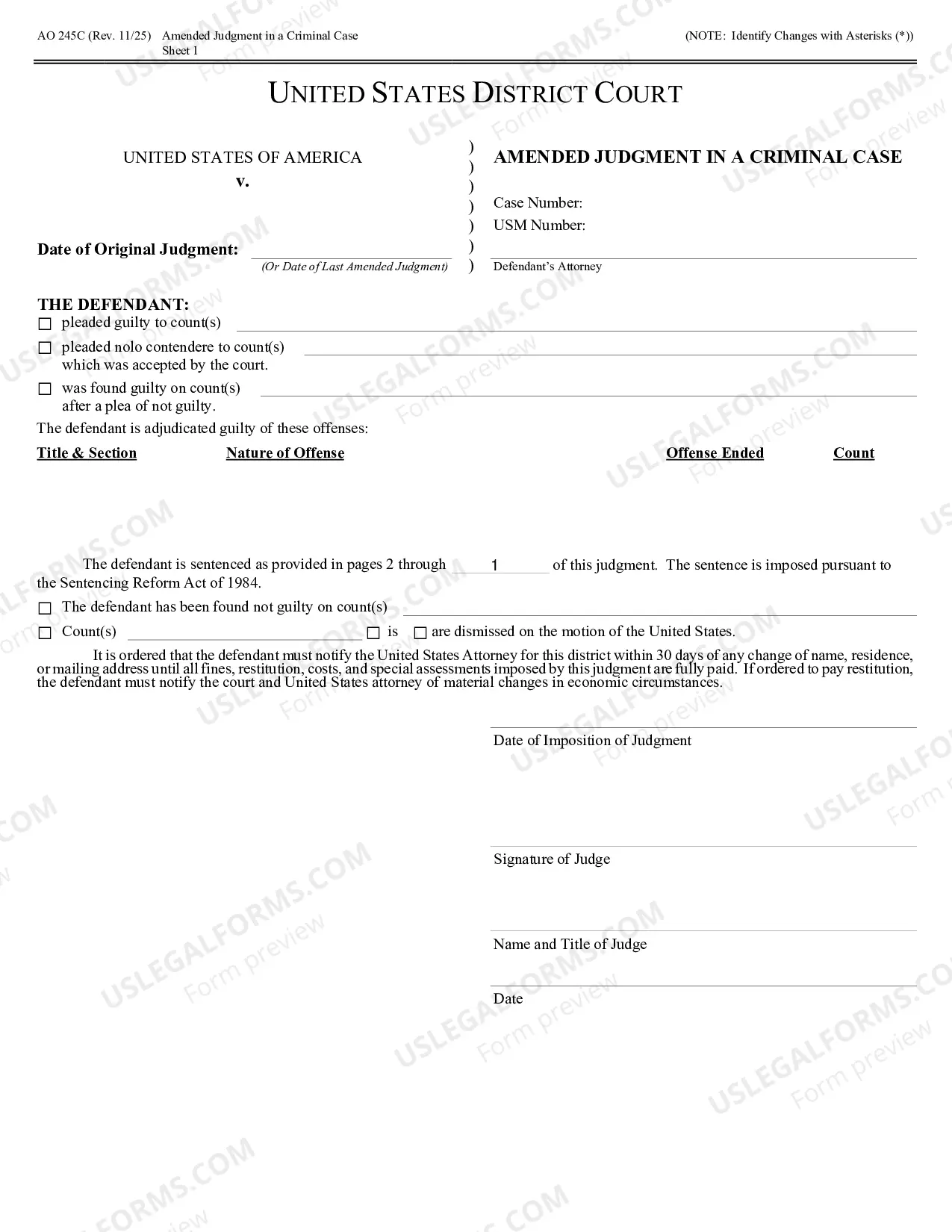
Federal judges have discretion over the sentences they impose, despite the Guidelines' mandatory appearance. Congress passed The Sentencing Reform Act of 1984 in response to concerns that federal judges' sentences tended to be too lenient and vary too much from one locale to another.
Unfortunately, yes, a sentence can be changed or modified so long as the court has jurisdiction over the matter. When a person is on probation the court continues to have jurisdiction.
When Can Sentences Be Changed? As a general rule, once a final judgment has been entered in a criminal caseonce the judge has delivered a legally valid sentencethe judge loses the ability to change that sentence unless a specific law gives the court authority to modify it.
Making an appeal. successful, the court may decide that the time you spend in prison to make your appeal will be extra to your sentence. Make sure you get advice from your solicitor or barrister before you decide anything. You may have to make your appeal quickly.
A sentence modification is for the Judgebto consider a new factor that could influence sentencing. The Court is free to modify the sentence any way it feels is justified by the new factor, other than the court can't increase it...
A judge may in fact modify your sentence if their was a clerical error. Yes. A court generally maintains power to correct an incorrect sentence. This means that if the sentence was brought about by a clerical error, the court can simply amend the abstract of judgment to reflect the correct sentence.