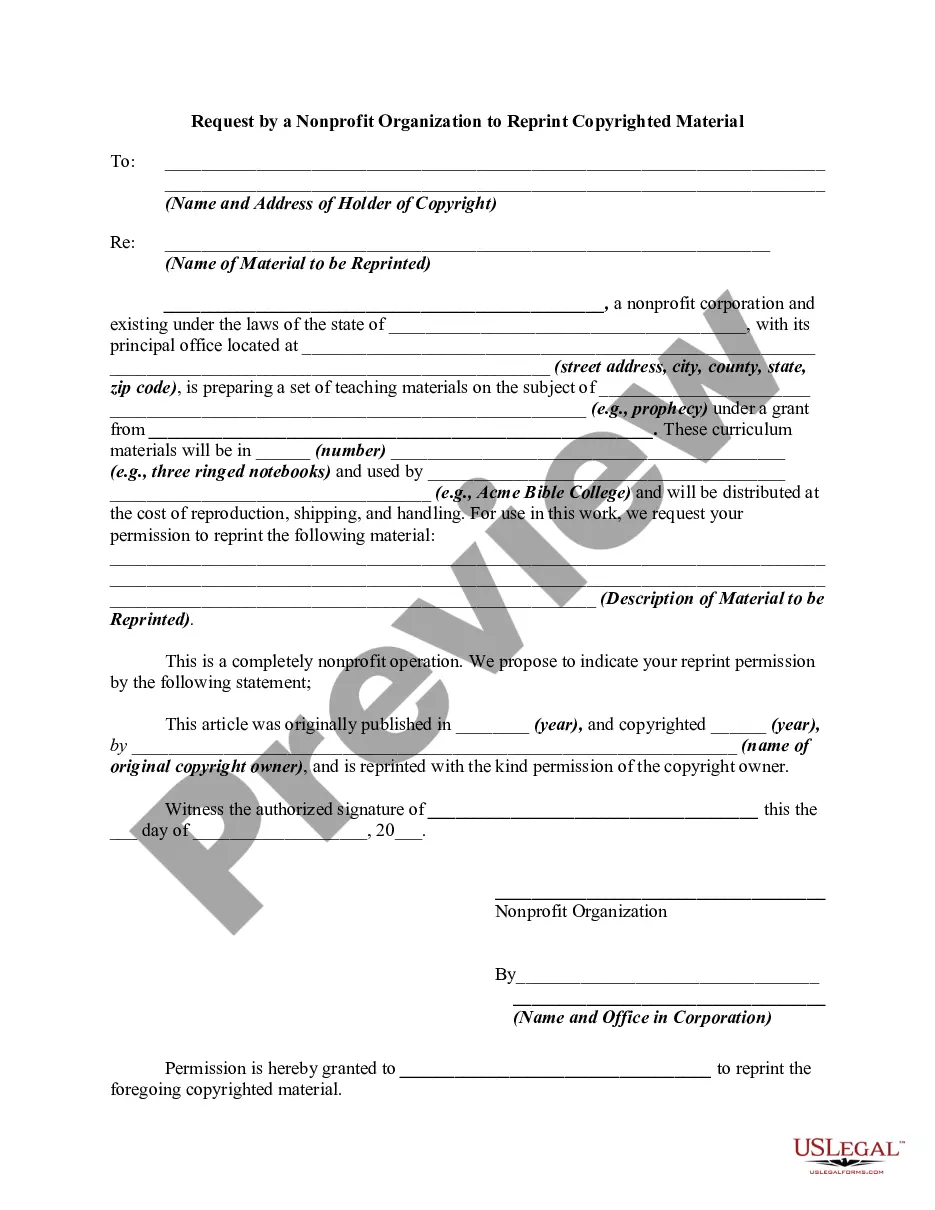
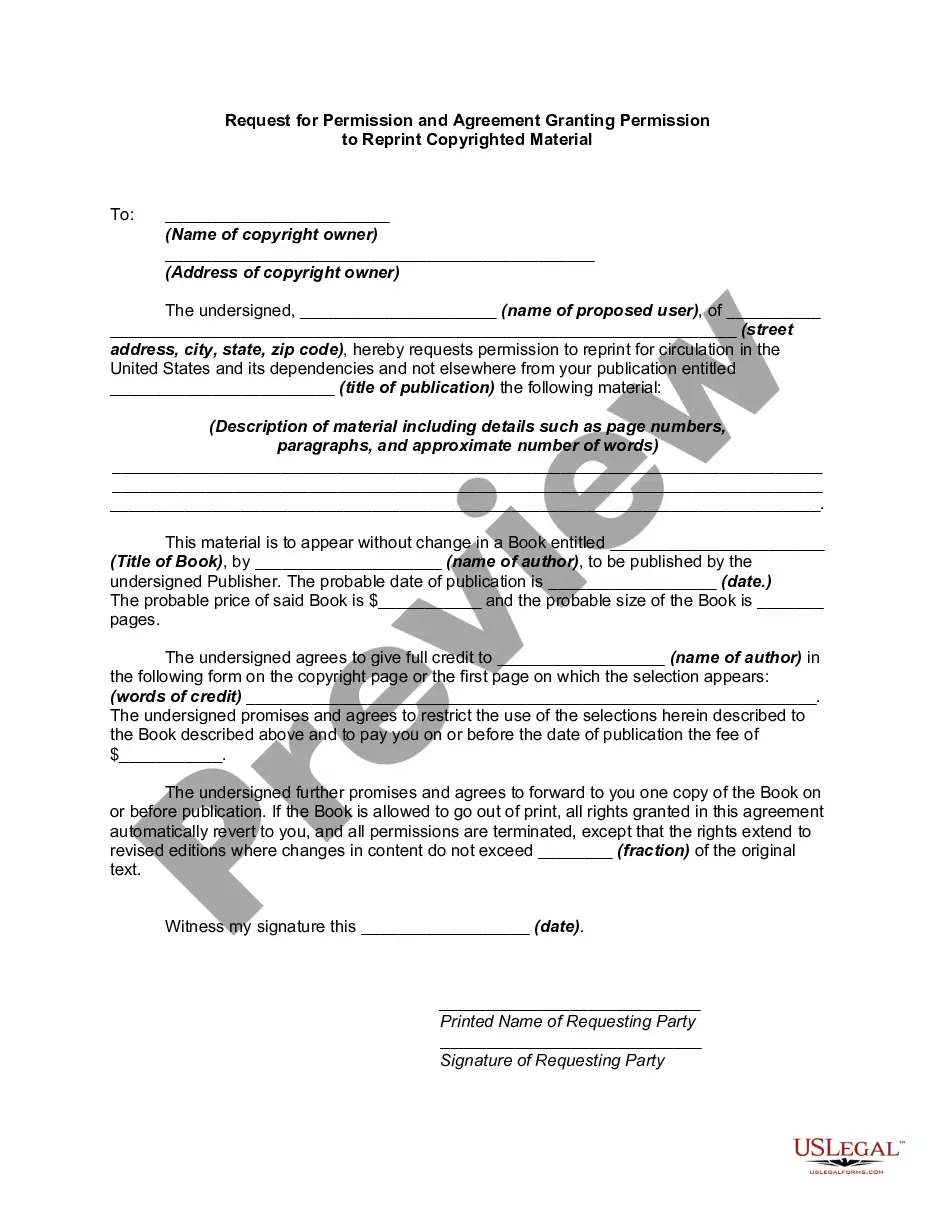
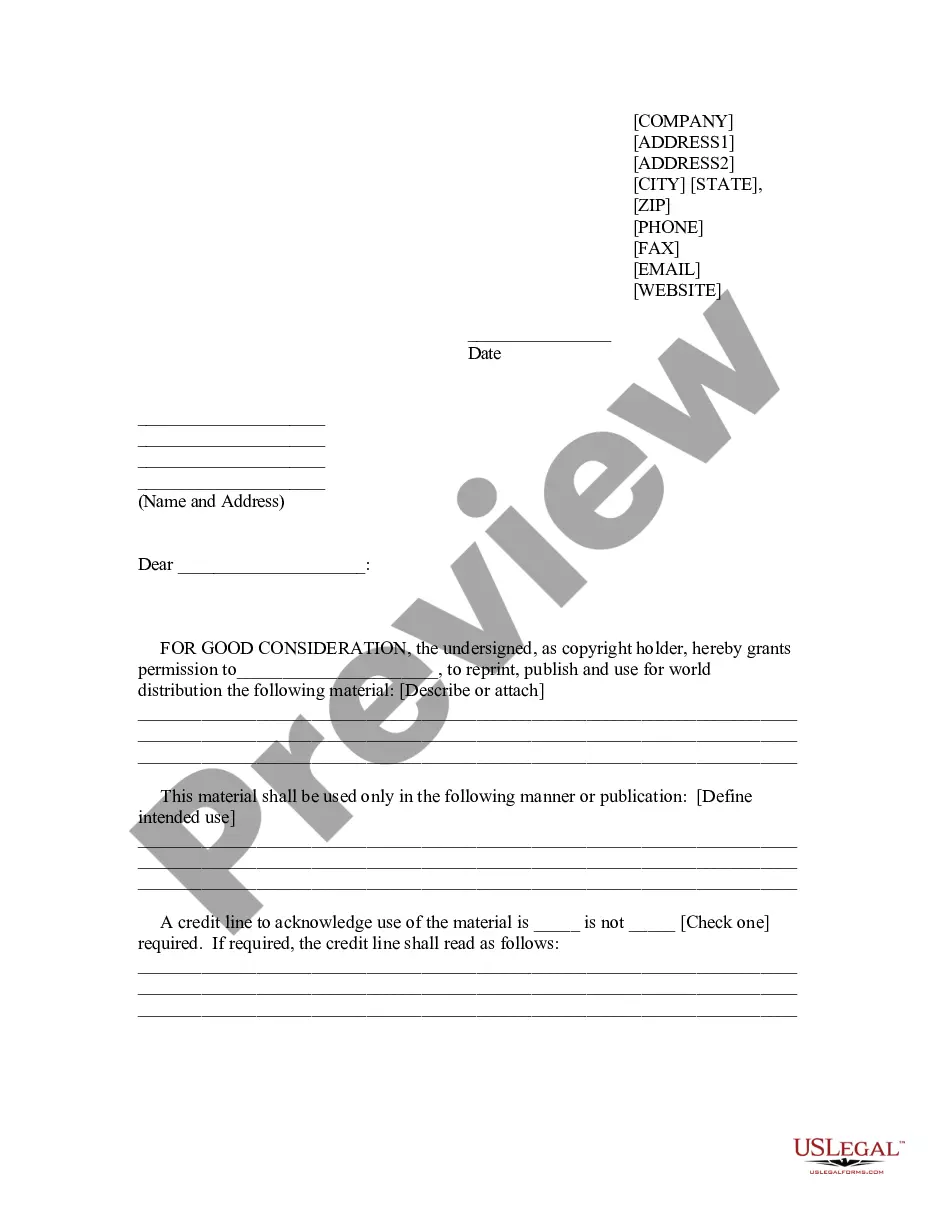
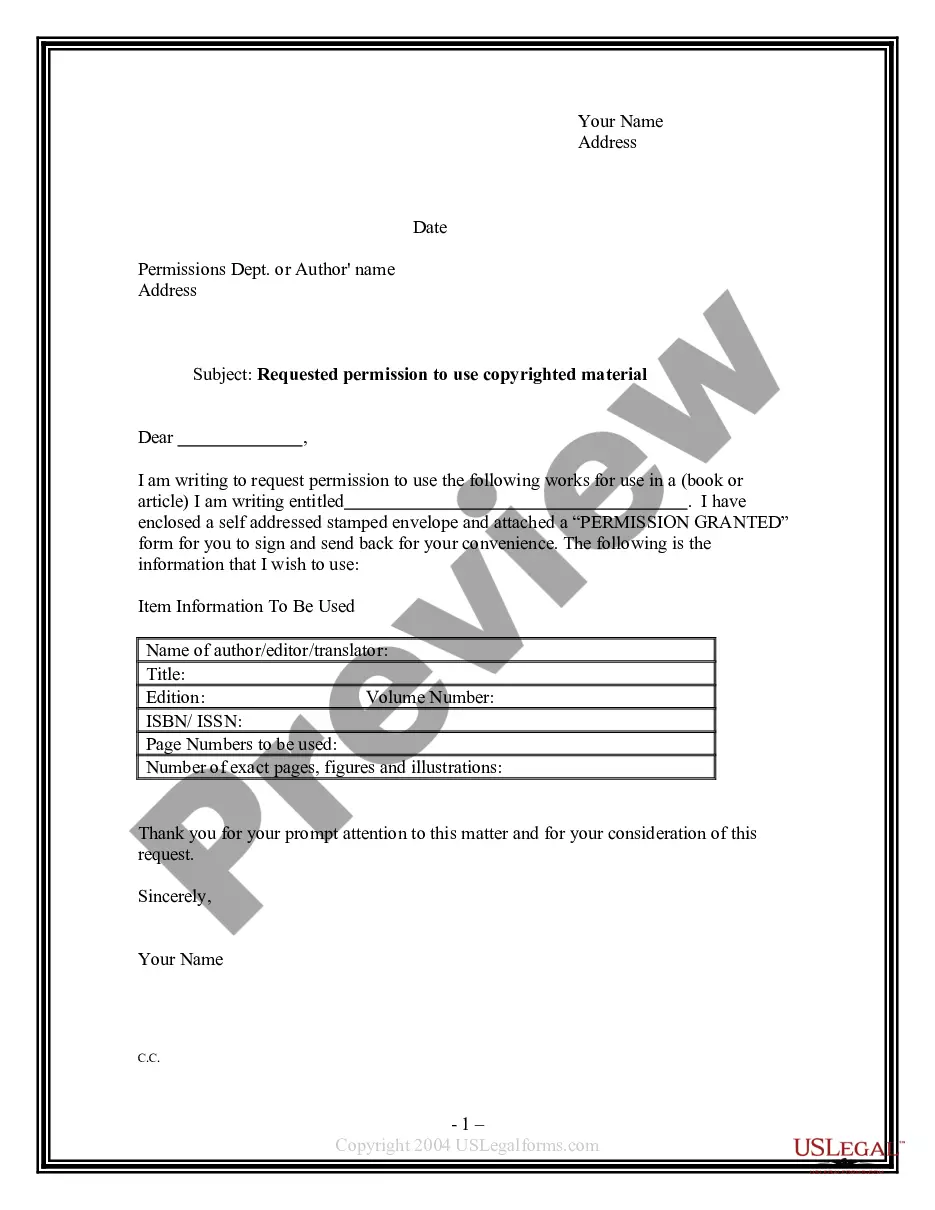
This is a permission request made by a teacher or professor requesting the right to use an author's material for a class or as part of a school curriculum. This form also includes an addendum for the author or editor to sign and send back to the teacher granting permission.
Kentucky Permission Request to Use Copyrighted Material For Class
State:
Multi-State
Control #:
US-PRM-04
Format:
Word;
Rich Text
Instant download
Description
Free preview
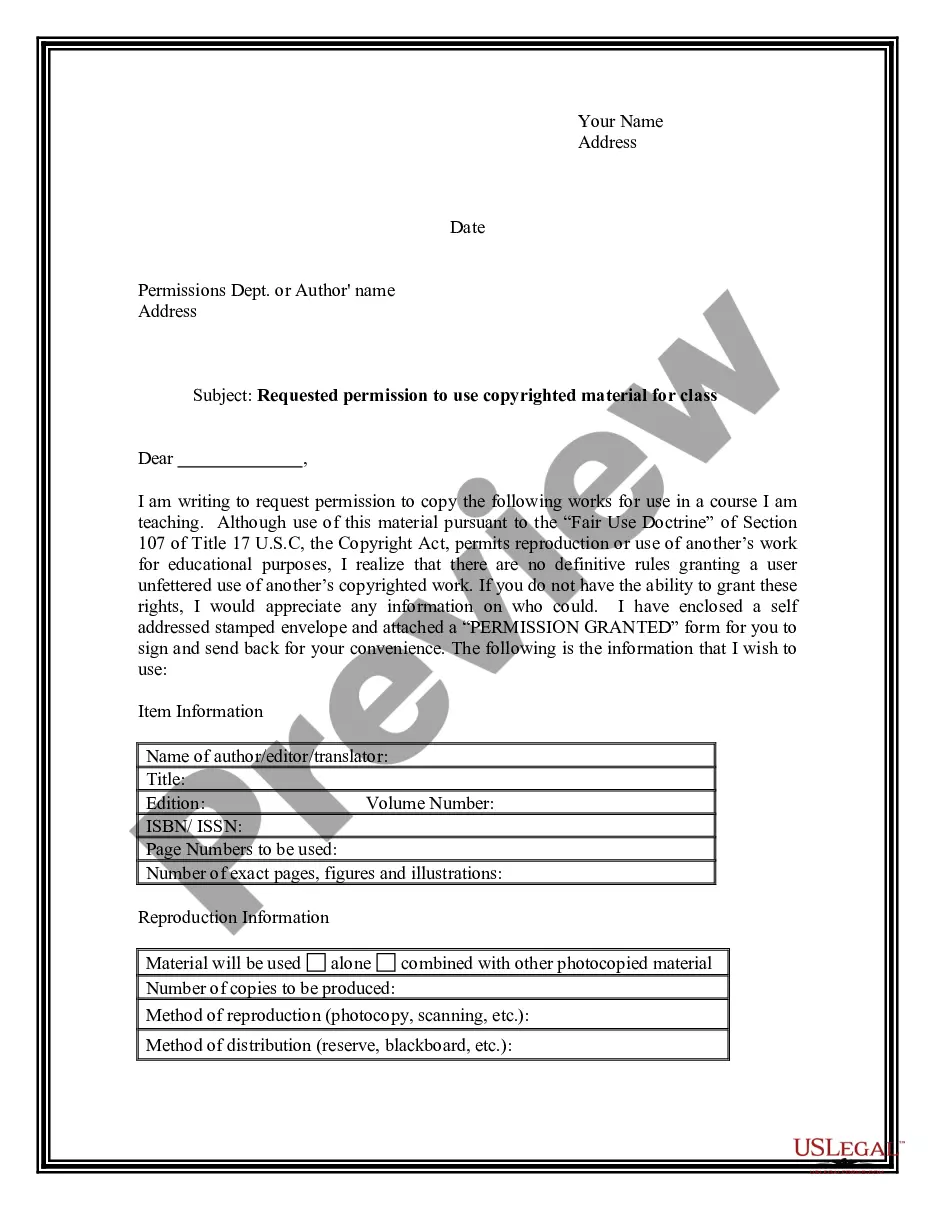
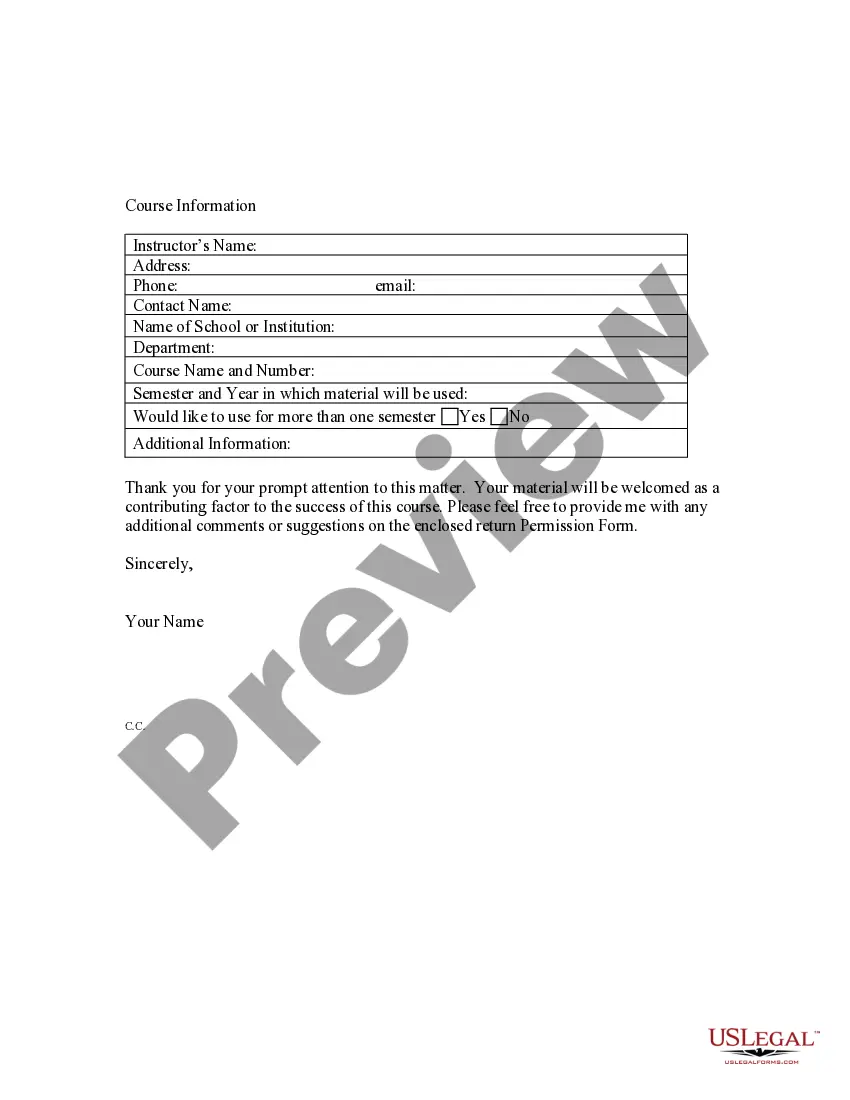
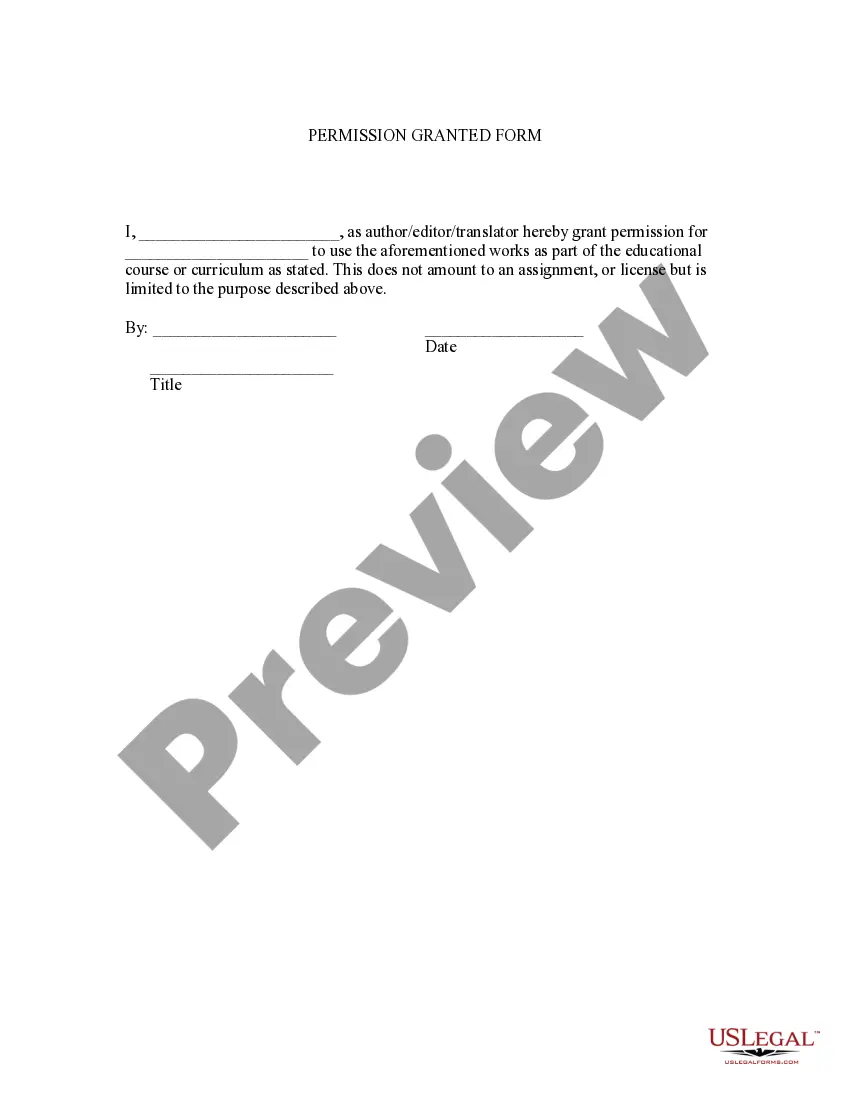

How to fill out Permission Request To Use Copyrighted Material For Class?
Locating the appropriate valid document format can be a challenge. Clearly, there is a multitude of templates accessible online, but how will you find the authentic design you require? Utilize the US Legal Forms website. This service offers a vast array of templates, such as the Kentucky Permission Request to Use Copyrighted Material For Class, which can be utilized for business and personal purposes. All of the forms are verified by professionals and adhere to state and federal regulations.
If you are currently registered, Log In to your account and click the Download button to obtain the Kentucky Permission Request to Use Copyrighted Material For Class. Use your account to search through the official forms you have purchased previously. Visit the My documents section of your account to download another copy of the document you need.
If you are a new user of US Legal Forms, here are straightforward steps for you to follow: First, ensure that you have selected the correct form for your city/state. You can review the document using the Preview option and read the form description to confirm it is the right one for you. If the form does not meet your needs, utilize the Search field to find the correct document. Once you are confident that the form is suitable, click the Get now button to obtain the form. Choose the payment plan you prefer and enter the required information. Create your account and complete the purchase using your PayPal account or credit card. Select the document format and download the official document to your device. Complete, modify, print, and sign the acquired Kentucky Permission Request to Use Copyrighted Material For Class.
Make the most of US Legal Forms to simplify your document preparation process.
- US Legal Forms is the largest collection of official forms where you can find various document templates.
- Utilize the service to download professionally crafted documents that meet state requirements.
- The website provides a user-friendly interface for easy navigation.
- Templates are regularly updated to ensure compliance with legal standards.
- You can access forms for a wide range of legal needs.
- Customer support is available to assist with any inquiries.
Form popularity
FAQ
Writing a letter to request permission to use copyrighted material should be straightforward. Start with a polite greeting, then introduce yourself and explain the purpose of your request. Be specific about the material you want to use and how it will be used. Closing with gratitude and providing your contact information can enhance your chances of a positive response. A Kentucky Permission Request to Use Copyrighted Material For Class template can help you draft a professional letter.
Students can often use copyrighted materials for school use under the fair use doctrine, but this can be complicated. Fair use allows limited use without permission for purposes like education, criticism, or commentary. However, it is crucial to understand the specific guidelines that apply. For clear guidance on the Kentucky Permission Request to Use Copyrighted Material For Class, check resources available on uslegalforms.
Requesting permission to use copyrighted material involves writing a clear and concise letter or email to the copyright holder. In your request, include details about the material, how you plan to use it, and the context of your request. Be polite and provide your contact information for any follow-up. Utilizing a Kentucky Permission Request to Use Copyrighted Material For Class form can simplify this process.
To obtain permission to use copyrighted material, start by identifying the copyright holder of the work. You can often find this information in the copyright notice or by searching online. Once you have the contact details, reach out directly to request permission. For a structured approach, consider using a Kentucky Permission Request to Use Copyrighted Material For Class template available on platforms like uslegalforms.
One way to make sure your intended use of a copyrighted work is lawful is to obtain permission or a license from the copyright owner. Contact a copyright owner or author as far as pos- sible in advance of when you want to use the material specified in your permissions request.
Yes, You Can Use Copyrighted Material in the Classroom.
Section 107 of the Copyright Act gives examples of purposes that are favored by fair use: criticism, comment, news reporting, teaching (including multiple copies for classroom use), scholarship, and research. Use for one of these illustrative purposes is not automatically fair, and uses for other purposes can be
Fair use explicitly allows use of copyrighted materials for educational purposes such as criticism, comment, news reporting, teaching, scholarship, and research.
In general, the permissions process involves a simple five-step procedure:Determine if permission is needed.Identify the owner.Identify the rights needed.Contact the owner and negotiate whether payment is required.Get your permission agreement in writing.
Under § 110(1), faculty and students may only perform or display but not reproduce or distribute any copyrighted work in the course of face-to-face teaching activities in a classroom, without seeking permission.