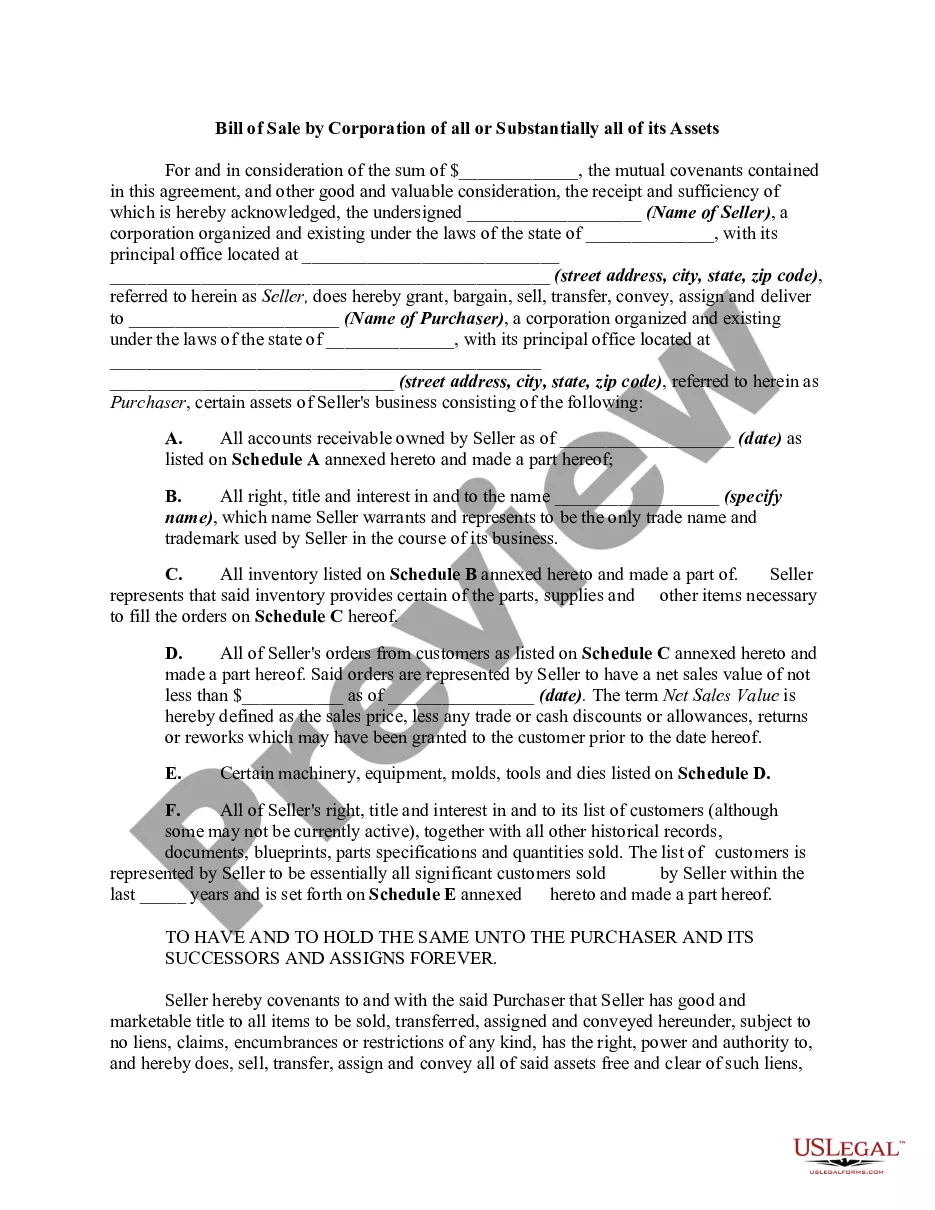
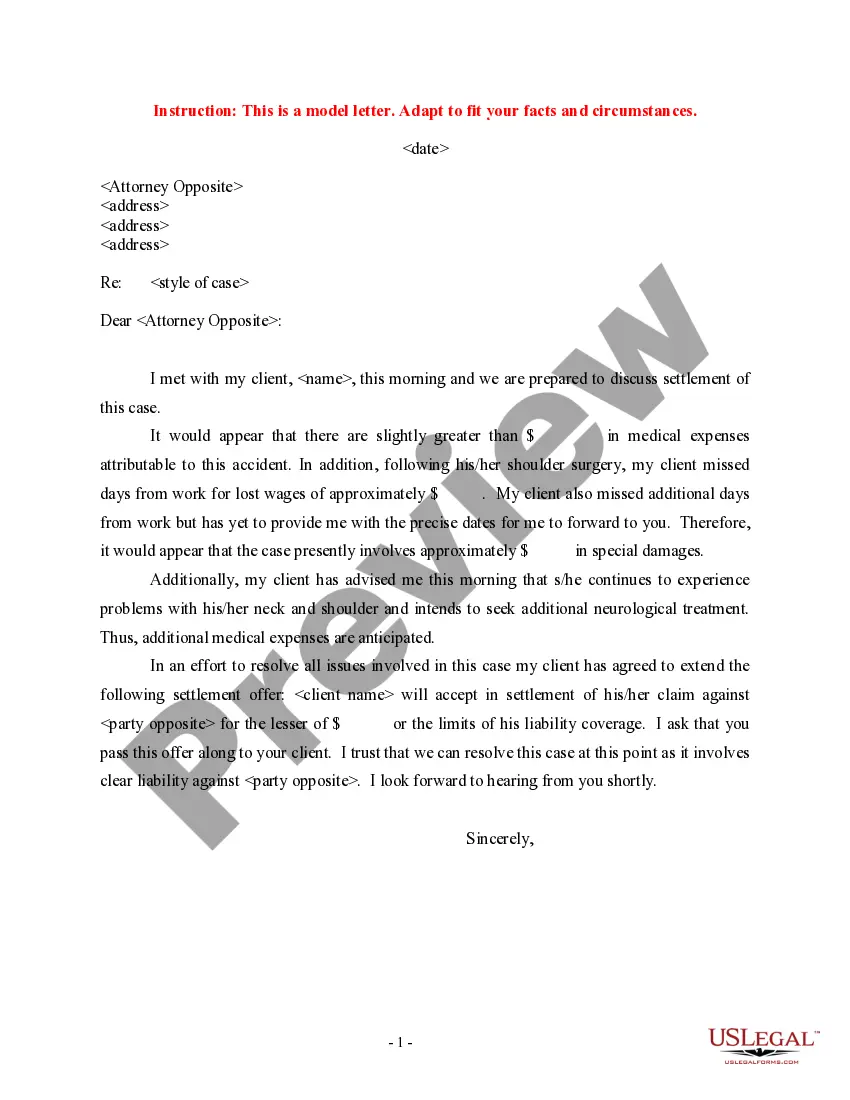
Kentucky Sample Letter to Opposing Counsel concerning Settlement of Litigation
Description


Get your form ready online
Our built-in tools help you complete, sign, share, and store your documents in one place.
Make edits, fill in missing information, and update formatting in US Legal Forms—just like you would in MS Word.
Download a copy, print it, send it by email, or mail it via USPS—whatever works best for your next step.
Sign and collect signatures with our SignNow integration. Send to multiple recipients, set reminders, and more. Go Premium to unlock E-Sign.
If this form requires notarization, complete it online through a secure video call—no need to meet a notary in person or wait for an appointment.
We protect your documents and personal data by following strict security and privacy standards.

Make edits, fill in missing information, and update formatting in US Legal Forms—just like you would in MS Word.

Download a copy, print it, send it by email, or mail it via USPS—whatever works best for your next step.

Sign and collect signatures with our SignNow integration. Send to multiple recipients, set reminders, and more. Go Premium to unlock E-Sign.

If this form requires notarization, complete it online through a secure video call—no need to meet a notary in person or wait for an appointment.

We protect your documents and personal data by following strict security and privacy standards.
Looking for another form?



How to fill out Sample Letter To Opposing Counsel Concerning Settlement Of Litigation?
If you wish to comprehensive, obtain, or produce lawful record themes, use US Legal Forms, the greatest assortment of lawful varieties, that can be found online. Make use of the site`s simple and hassle-free research to discover the papers you require. Various themes for business and specific reasons are categorized by groups and suggests, or keywords. Use US Legal Forms to discover the Kentucky Sample Letter to Opposing Counsel concerning Settlement of Litigation in just a couple of clicks.
When you are already a US Legal Forms buyer, log in to your bank account and then click the Download option to find the Kentucky Sample Letter to Opposing Counsel concerning Settlement of Litigation. You can even gain access to varieties you previously acquired inside the My Forms tab of your own bank account.
If you use US Legal Forms initially, refer to the instructions below:
- Step 1. Make sure you have selected the shape for the appropriate area/nation.
- Step 2. Utilize the Review method to check out the form`s articles. Never forget about to learn the explanation.
- Step 3. When you are not satisfied with the type, utilize the Look for field at the top of the screen to find other versions from the lawful type web template.
- Step 4. Upon having identified the shape you require, go through the Purchase now option. Select the pricing prepare you choose and add your credentials to register on an bank account.
- Step 5. Approach the purchase. You can use your Мisa or Ьastercard or PayPal bank account to complete the purchase.
- Step 6. Choose the formatting from the lawful type and obtain it in your product.
- Step 7. Full, edit and produce or sign the Kentucky Sample Letter to Opposing Counsel concerning Settlement of Litigation.
Every lawful record web template you buy is yours forever. You have acces to each and every type you acquired within your acccount. Click on the My Forms area and select a type to produce or obtain again.
Remain competitive and obtain, and produce the Kentucky Sample Letter to Opposing Counsel concerning Settlement of Litigation with US Legal Forms. There are millions of specialist and status-particular varieties you can use to your business or specific requires.
Form popularity
FAQ
Here are five points to keep in mind when drafting a pre-litigation demand letter: Clearly state the nature of your demand. ... Stick to the facts and avoid inflammatory language. ... Consider the applicable ethical constraints. ... Follow the requirements of any applicable contracts or statutes.
Here are five points to keep in mind when drafting a pre-litigation demand letter: Clearly state the nature of your demand. ... Stick to the facts and avoid inflammatory language. ... Consider the applicable ethical constraints. ... Follow the requirements of any applicable contracts or statutes.
A letter of intent to sue is used to notify an individual or business that legal action may be taken against them if the demands included in the letter are not met. By sending an intent to sue letter, you may be able to resolve the dispute without having to initiate a costly lawsuit.
This is a formal letter that should include: A summary of the original incident with any factual disputes highlighted. Evidence to support the version of events provided in the Settlement Demand Letter. An outline of any relevant legal standards that apply to the matter. A settlement offer and terms/timeline for acceptance.
Using an Angry Tone. Writing in an angry tone or personally attacking the other party is the worst thing you can do in a demand letter. If you let your emotions speak, you'll only invite the receiver to respond in the same tone.
In fact, Rule 1.5(b) provides that, at the beginning of the representation, you must memorialize in writing three essential items: (1) the scope of the representation; (2) the basis or rate of the fee; and (3) the expenses for which the client will be responsible.
Dear [Opposing Counsel Name], I am writing to follow up on our recent communication regarding [case name]. I have not yet received a response from you regarding [list the specific issue or question]. Please let me know your thoughts as soon as possible so that we can continue to move forward with the case.