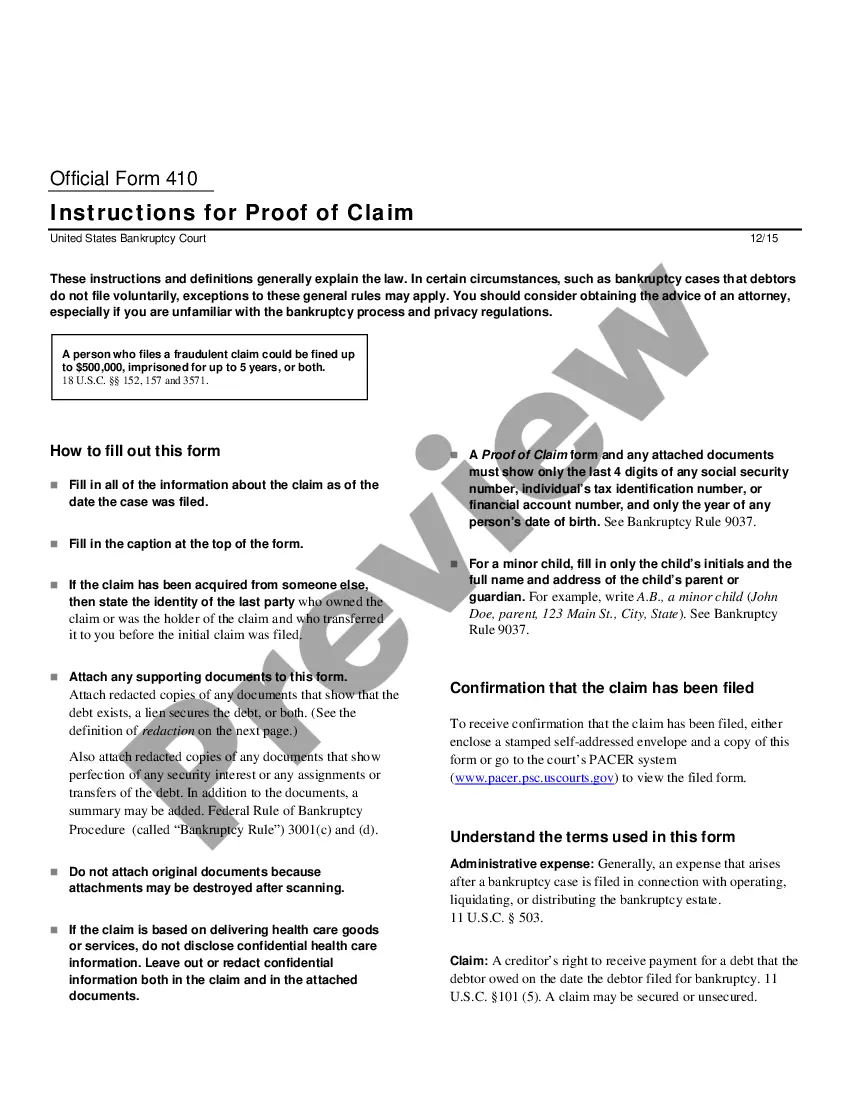
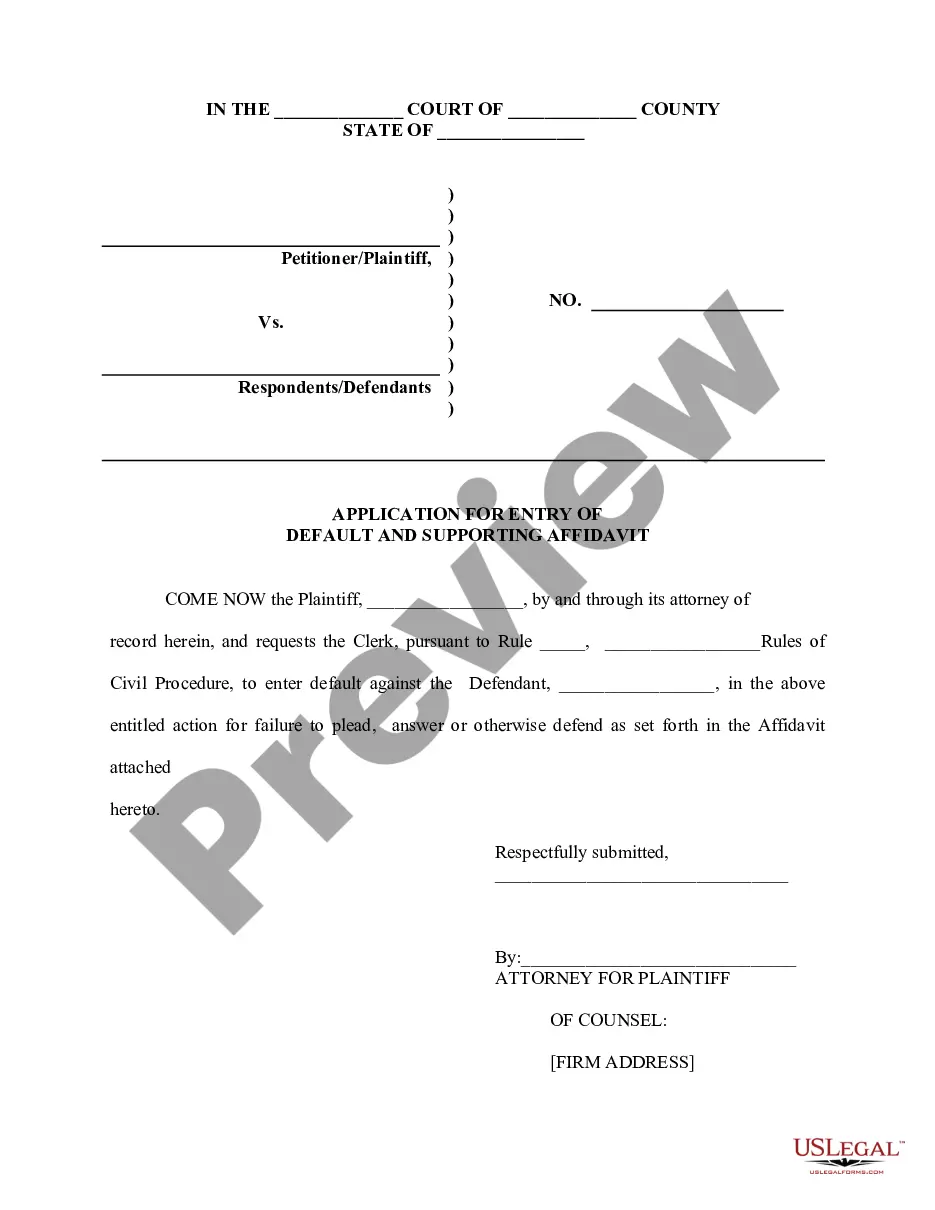
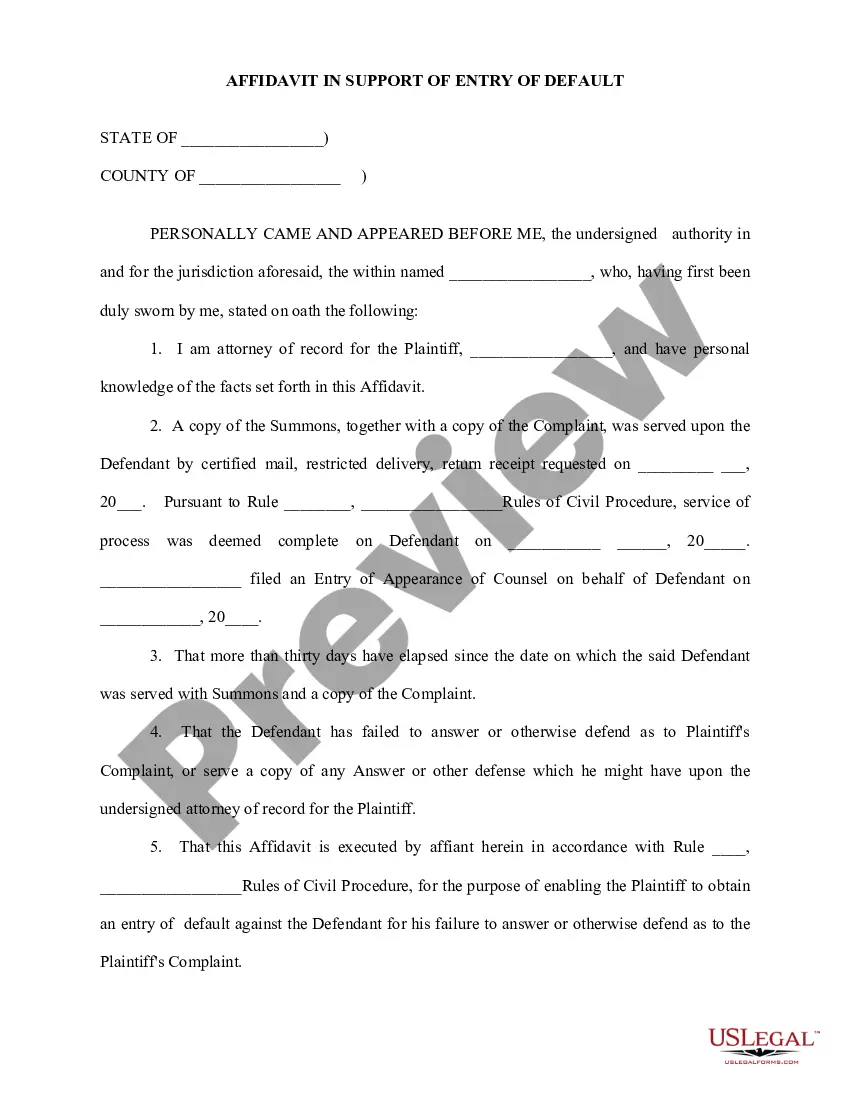
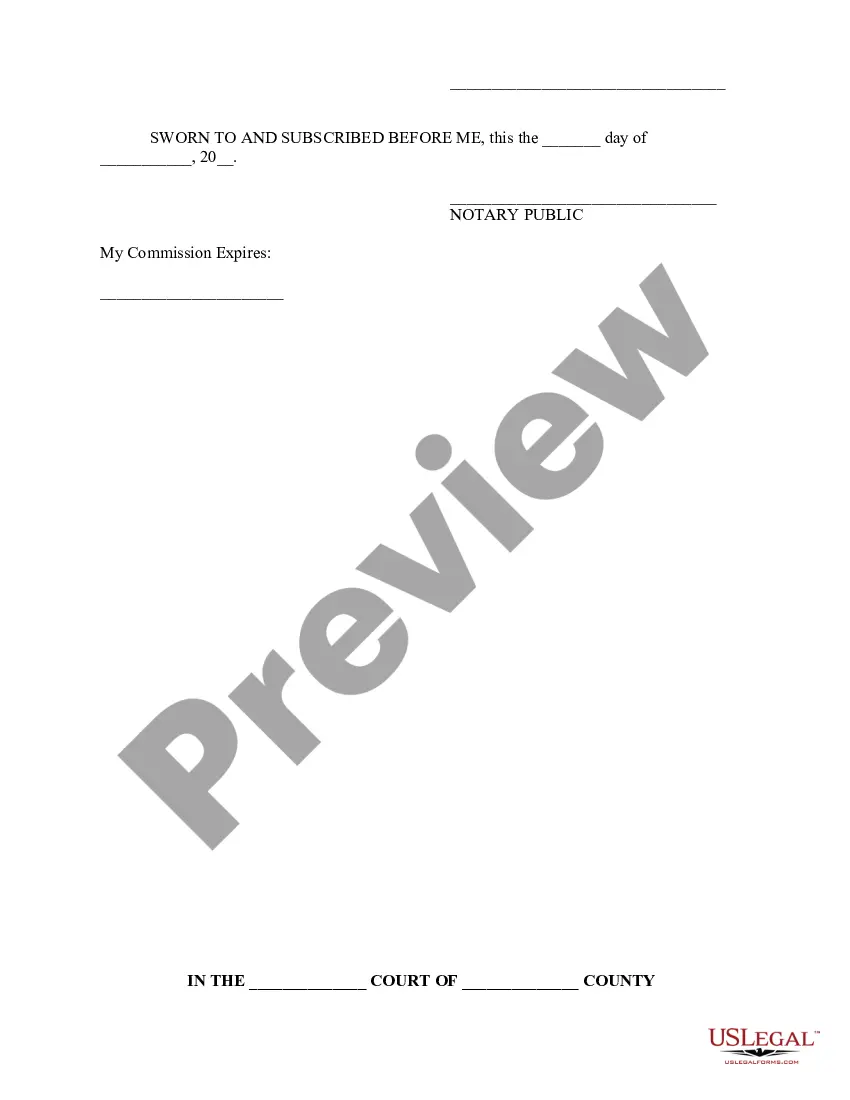
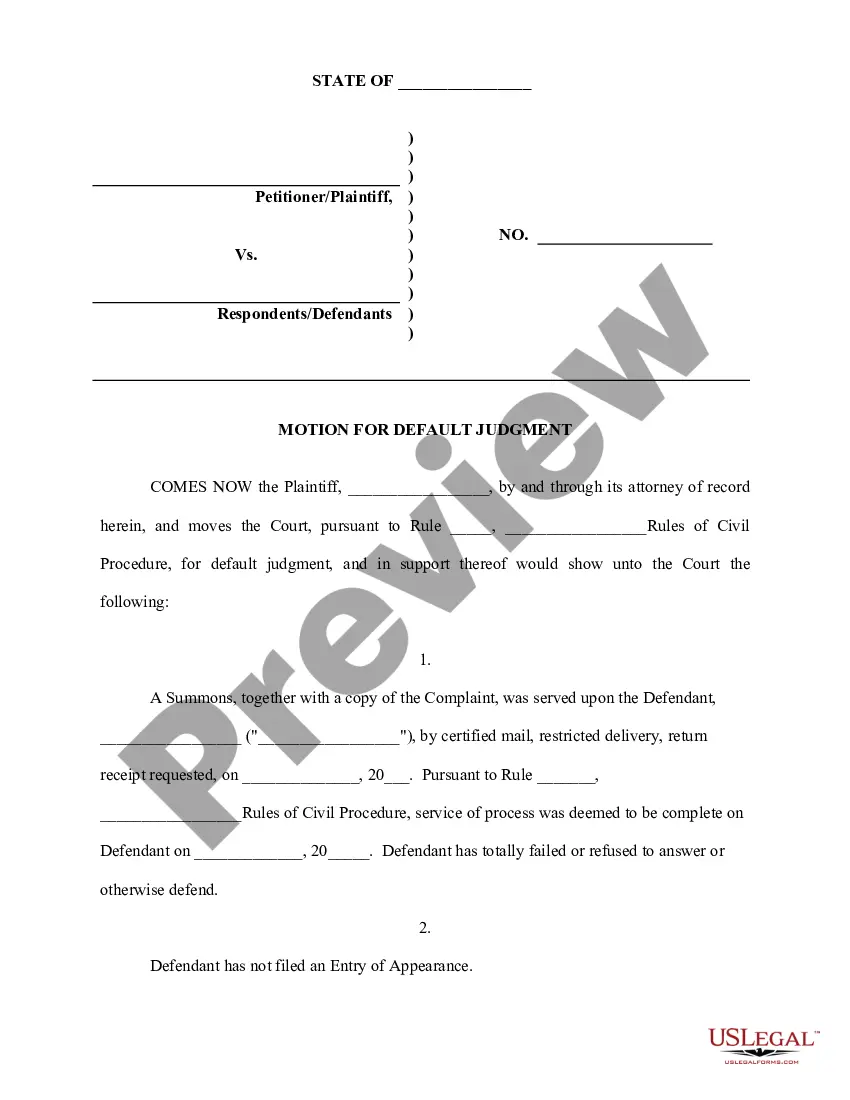
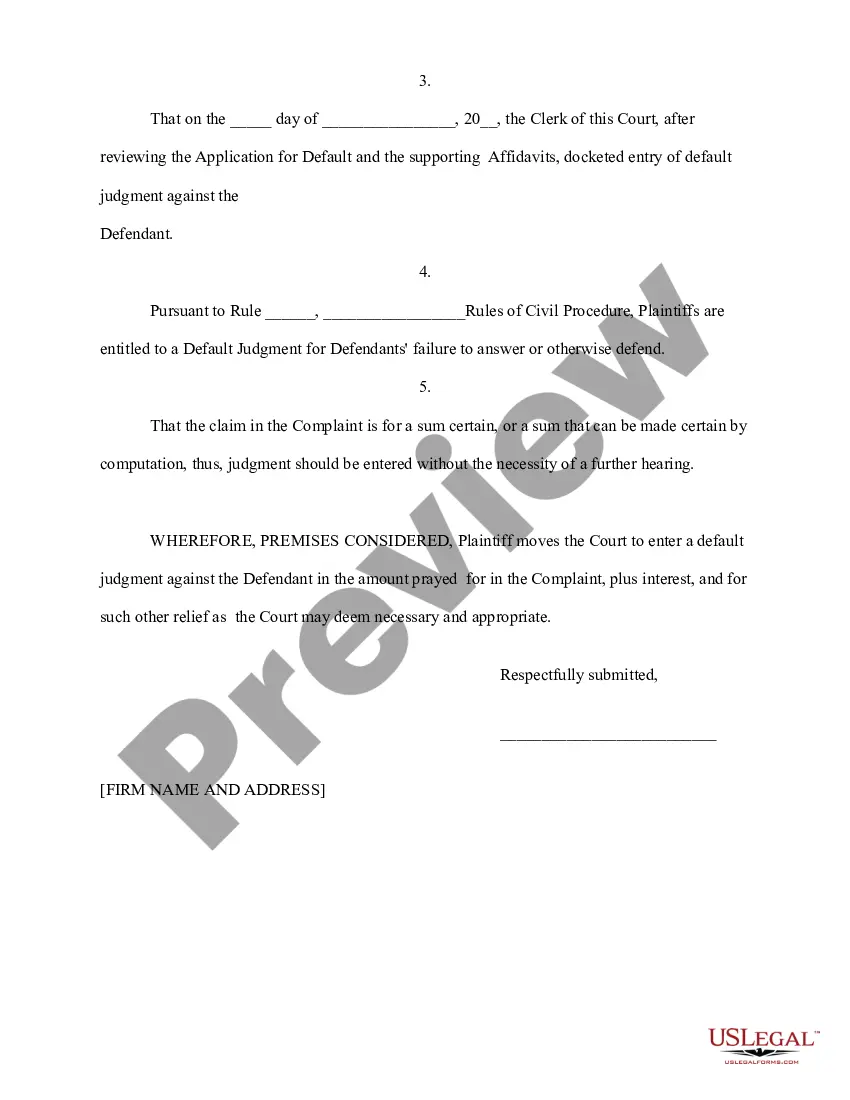
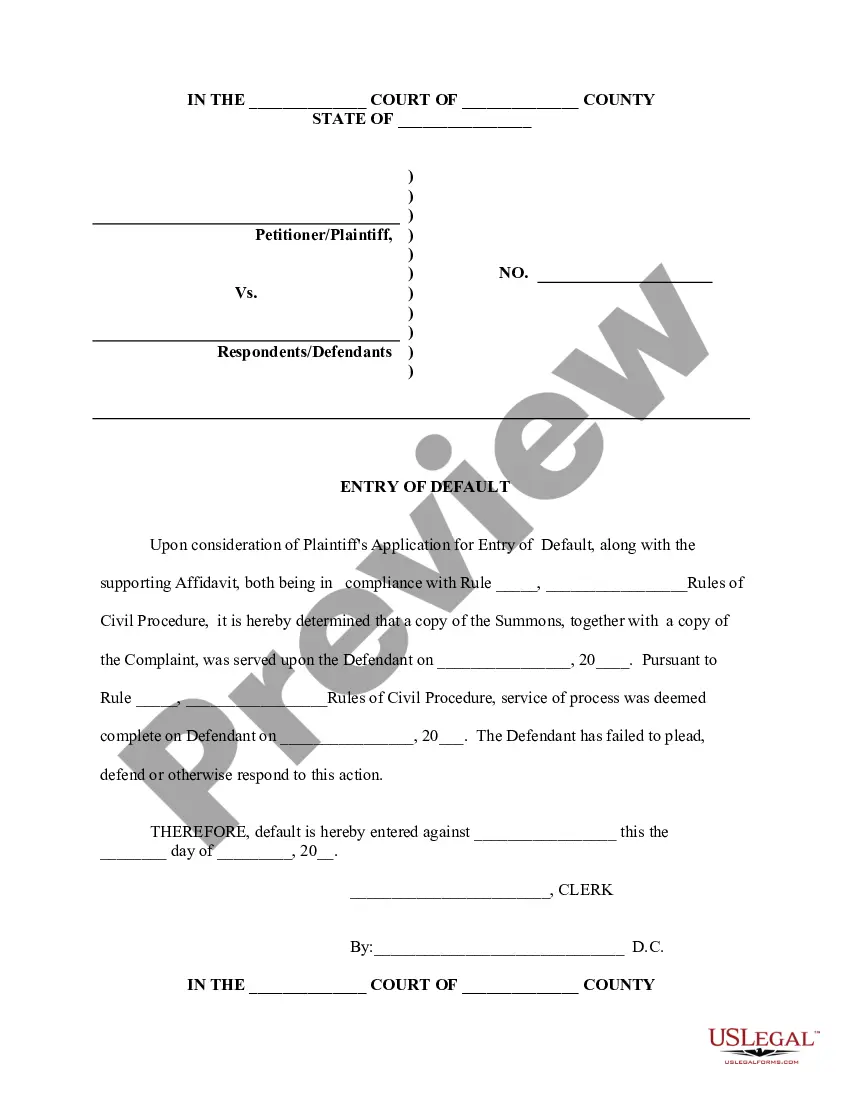
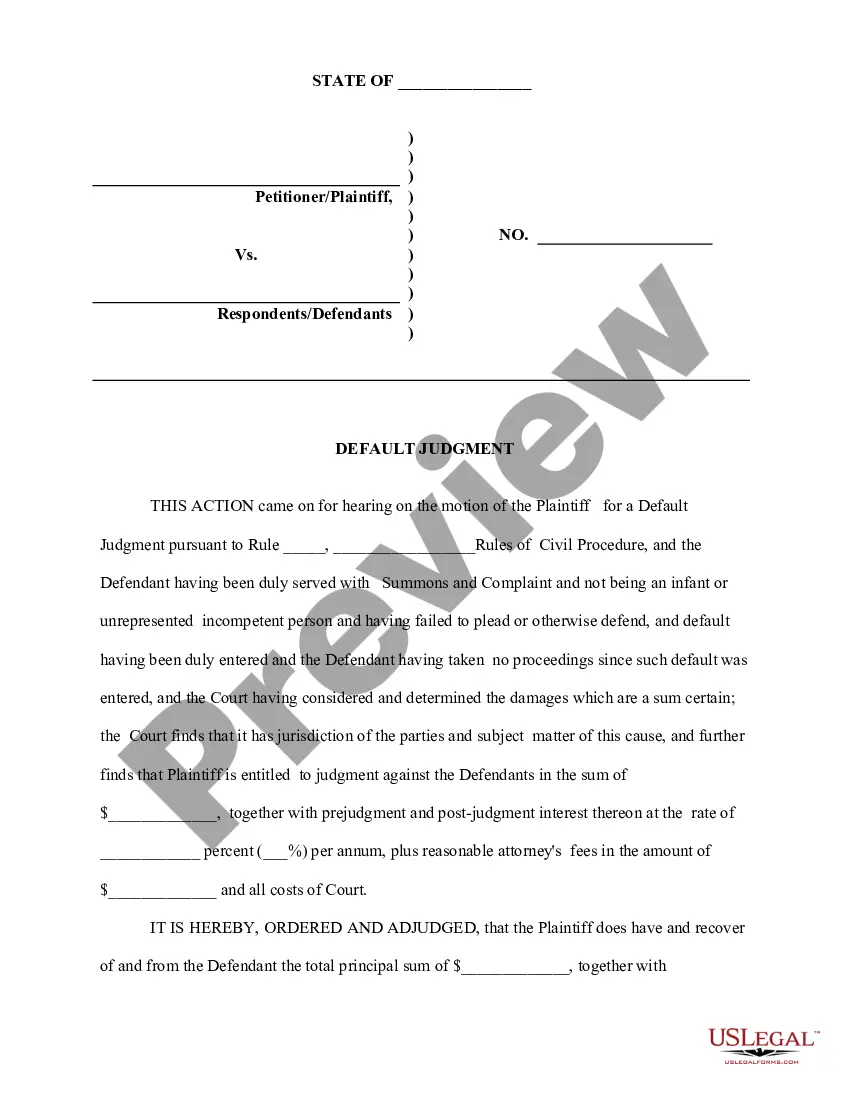
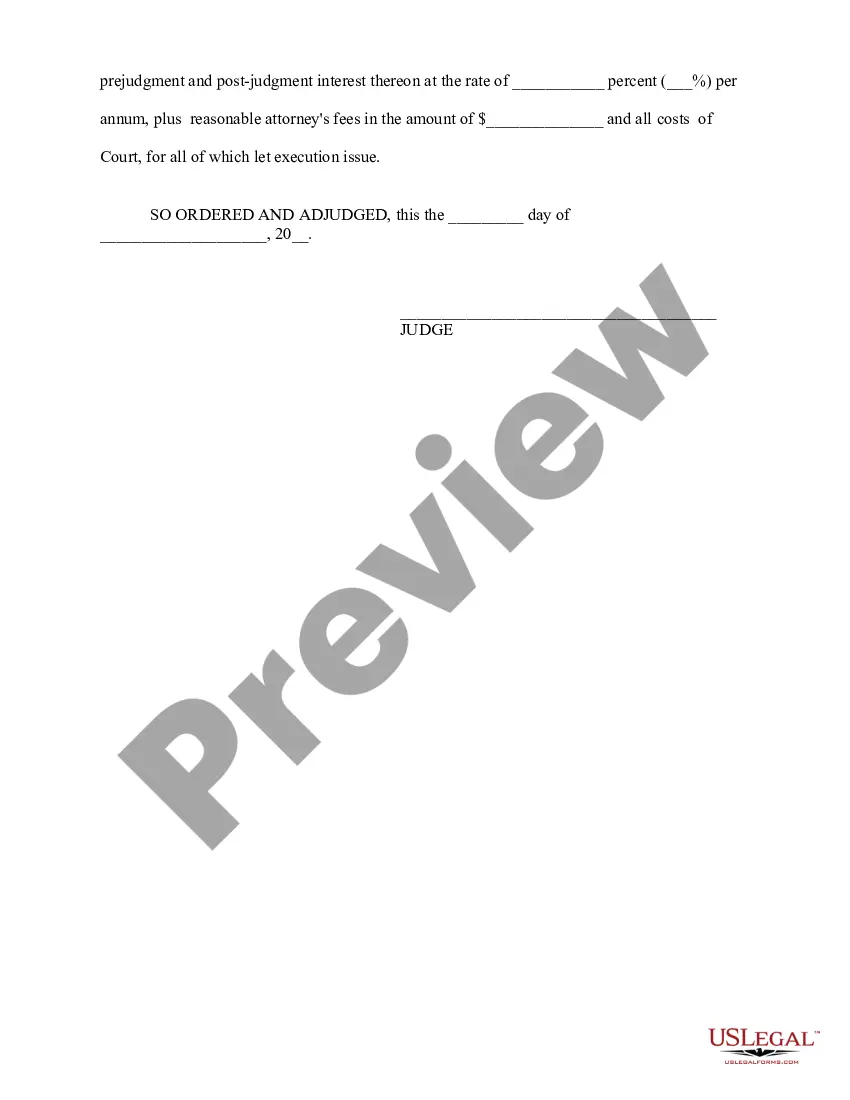
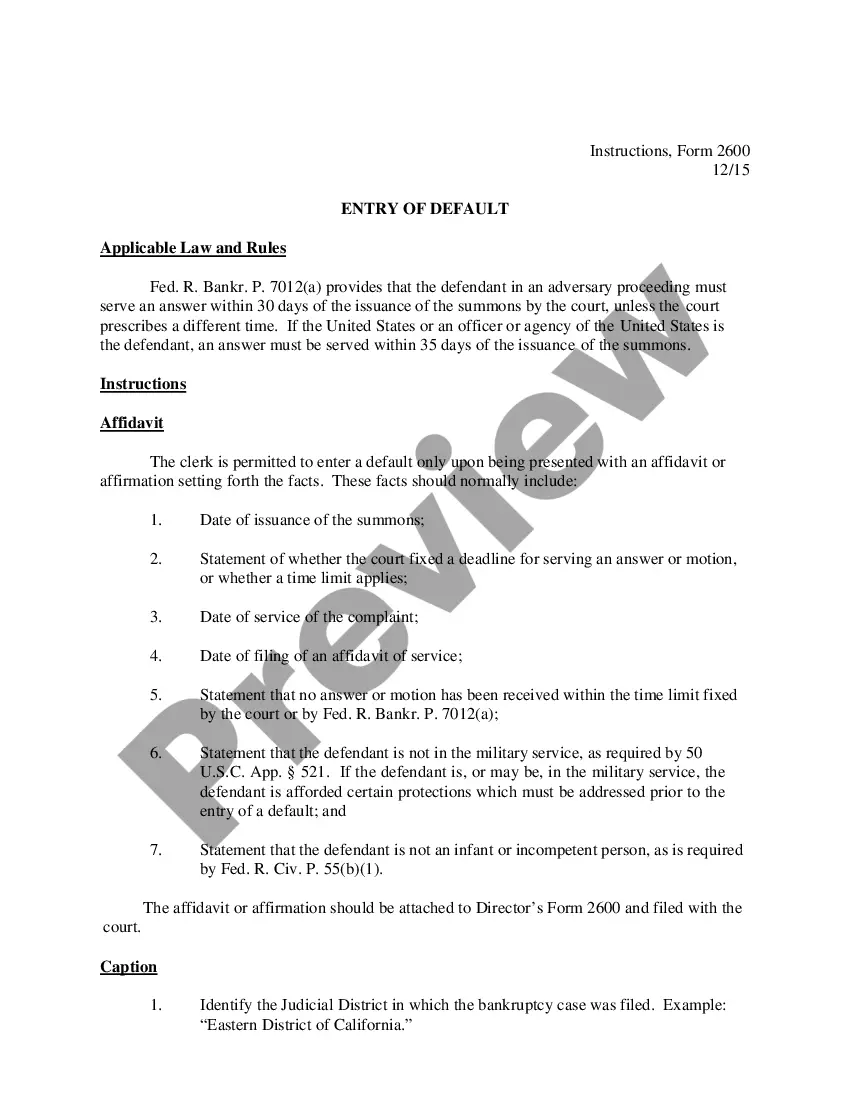
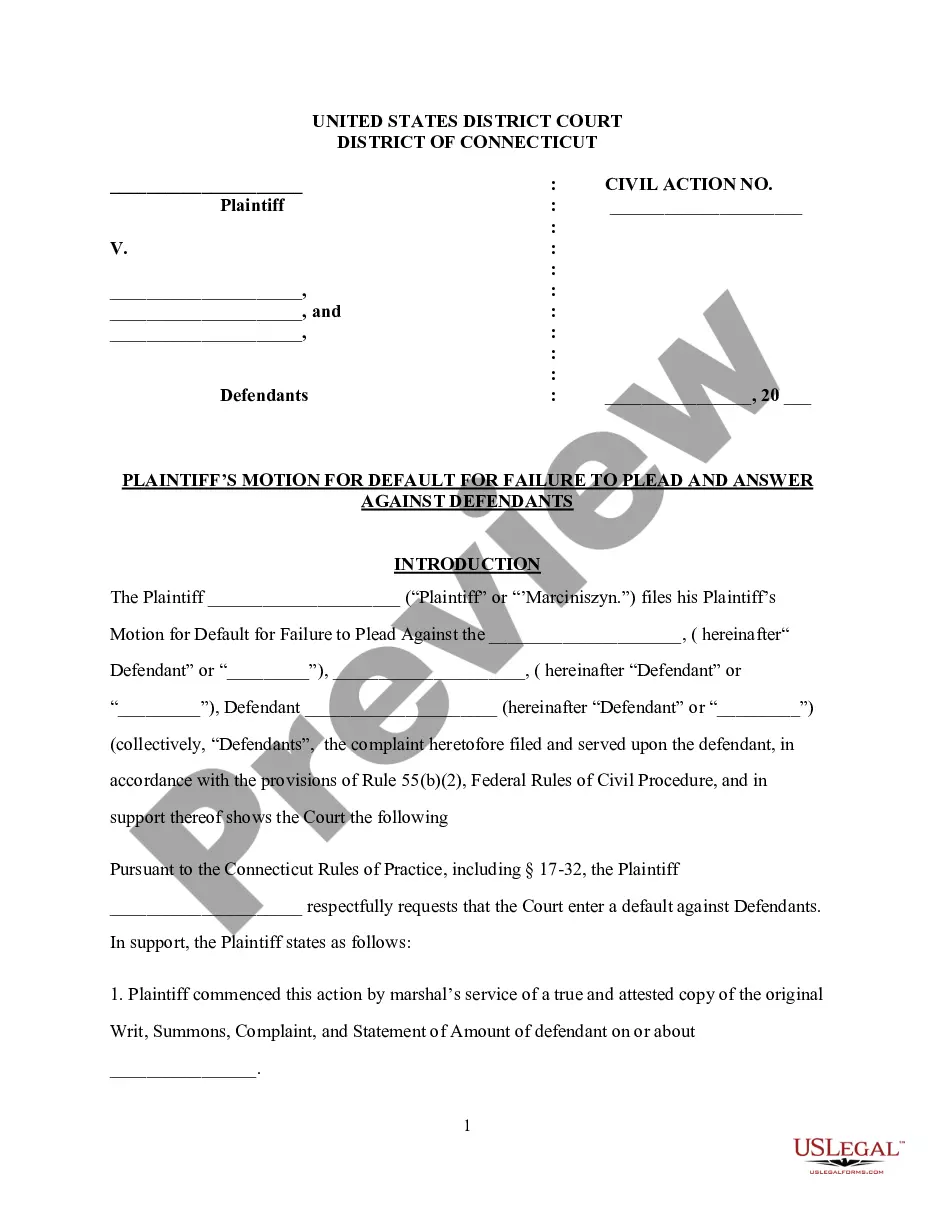
This form is a sample Application for Entry of Default and a Supporting Affidavit. The plaintiff places before the court an application for entry of default against the defendant. The form also contains an affidavit which supports the allegations made by the plaintiff.
Kentucky Application for Entry of Default - Affidavit - Motion - Entry of Default - Default judgment
1,558 downloads

Reviewed by
Description
Free preview
Get your form ready online
Our built-in tools help you complete, sign, share, and store your documents in one place.
Built-in online Word editor
Make edits, fill in missing information, and update formatting in US Legal Forms—just like you would in MS Word.
Export easily
Download a copy, print it, send it by email, or mail it via USPS—whatever works best for your next step.
E-sign your document
Sign and collect signatures with our SignNow integration. Send to multiple recipients, set reminders, and more. Go Premium to unlock E-Sign.
Notarize online 24/7
If this form requires notarization, complete it online through a secure video call—no need to meet a notary in person or wait for an appointment.
Store your document securely
We protect your documents and personal data by following strict security and privacy standards.

Make edits, fill in missing information, and update formatting in US Legal Forms—just like you would in MS Word.

Download a copy, print it, send it by email, or mail it via USPS—whatever works best for your next step.

Sign and collect signatures with our SignNow integration. Send to multiple recipients, set reminders, and more. Go Premium to unlock E-Sign.

If this form requires notarization, complete it online through a secure video call—no need to meet a notary in person or wait for an appointment.

We protect your documents and personal data by following strict security and privacy standards.
Looking for another form?
How to fill out Application For Entry Of Default - Affidavit - Motion - Entry Of Default - Default Judgment?
You might spend numerous hours online looking for the legal document template that meets the state and federal requirements you seek.
US Legal Forms offers a vast array of legal documents that can be reviewed by professionals.
You can conveniently obtain or create the Kentucky Application for Entry of Default - Affidavit - Motion - Entry of Default - Default judgment from their services.
If available, utilize the Preview button to review the document template simultaneously. If you wish to find another version of the form, use the Search field to locate the template that suits your needs and requirements. Once you have found the template you want, click Get now to proceed. Choose the pricing plan you prefer, enter your credentials, and register for an account on US Legal Forms. Complete the purchase. You can use your credit card or PayPal account to pay for the legal form. Select the file format and download it to your system. Make edits to the document if possible. You may complete, modify, sign, and print the Kentucky Application for Entry of Default - Affidavit - Motion - Entry of Default - Default judgment. Download and print numerous document templates using the US Legal Forms site, which offers the largest selection of legal forms. Utilize professional and state-specific templates to address your business or personal needs.
- If you already possess a US Legal Forms account, you may Log In and press the Download button.
- Afterward, you can complete, modify, create, or sign the Kentucky Application for Entry of Default - Affidavit - Motion - Entry of Default - Default judgment.
- Every legal document template you obtain is yours for an extended period.
- To get another copy of any purchased form, navigate to the My documents section and click the corresponding button.
- If you are visiting the US Legal Forms website for the first time, follow these simple instructions.
- First, ensure that you have selected the appropriate document template for your area of interest.
- Review the form description to confirm you have chosen the correct form.
Form popularity
FAQ
If you never knew you were being sued, and motion for default judgment is filed against you, you should respond with a Motion to Vacate Judgment, also known as a Motion to Set Aside Judgment.
An entry of default is the first step to obtaining a default judgment against a party, and allows you to proceed in the action without further notice or input from the opposing party. An entry of default can come in two forms, an entry by the clerk or an entry by the judge.
A very important fact you should keep in mind is that California courts do impose a timeline for seeking entry of a default judgment. Specifically, a request for entry of default must be filed within 10 days following a defendant's failure to timely file and serve a responsive pleading.
A default judgment (also known as judgment by default) is a ruling granted by a judge or court in favor of a plaintiff in the event that the defendant in a legal case fails to respond to a court summons or does not appear in court.
If you don't file a response to divorce papers, your spouse can request a default. This means asking the court to decide the case without your input. In a default divorce, the court makes the final decisions based on the information from your spouse, and what the law says, without hearing your side.
A plaintiff asks for a default judgment if a defendant fails to file an answer within 20 days after being served. If you fail to file an answer within 20 days the court will take the position that you agree with the allegations in the complaint and a default judgment is entered.
Entry of judgment is a final recording of the decision and opinion, if the court made one.
A default is a failure to perform a duty in legal proceedings. A default judgment is binding, and the defaulting defendant may not litigate his case or present any evidence. A civil action default judgment will grant the amount of relief sought in a plaintiff's complaint.