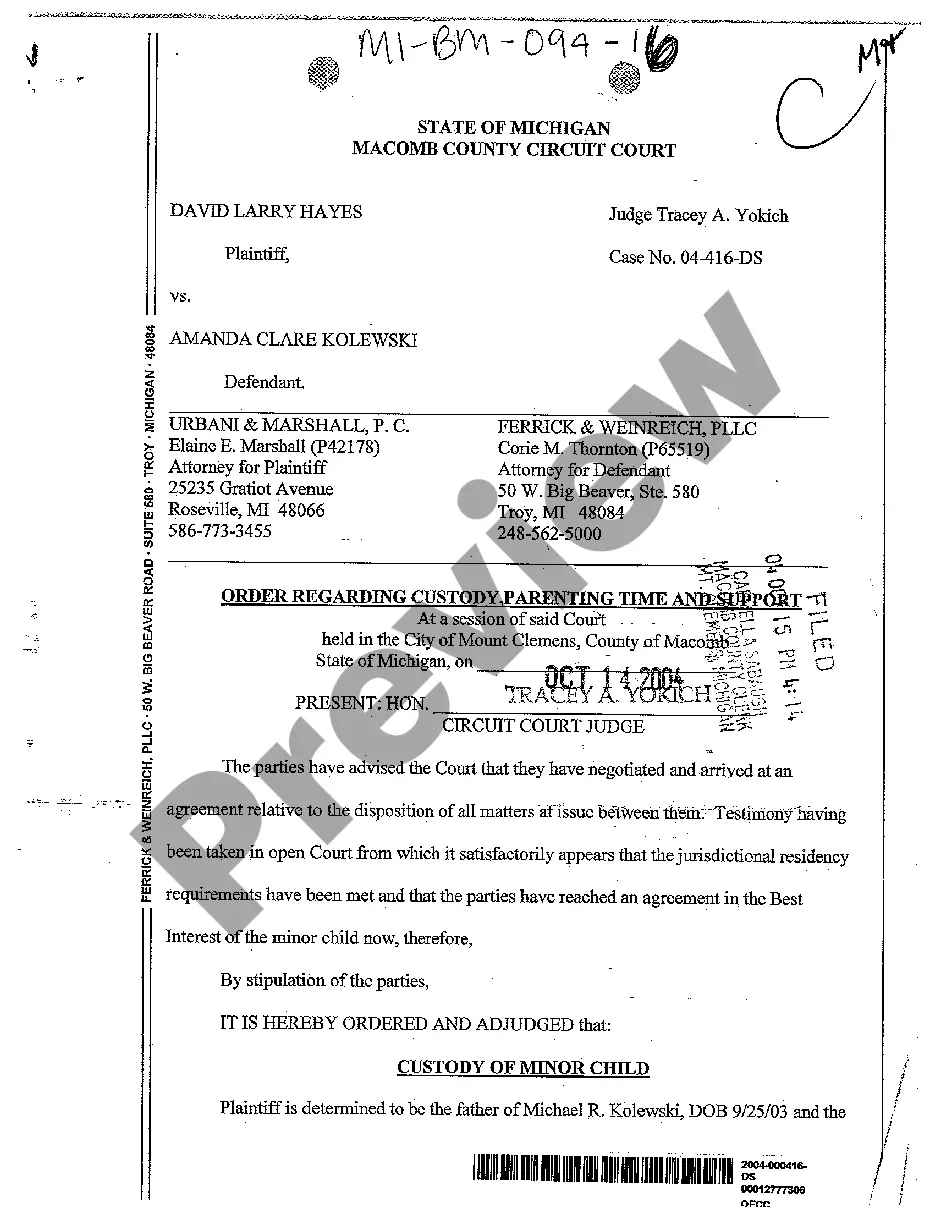
Kentucky Commercial Sublease
Overview of this form
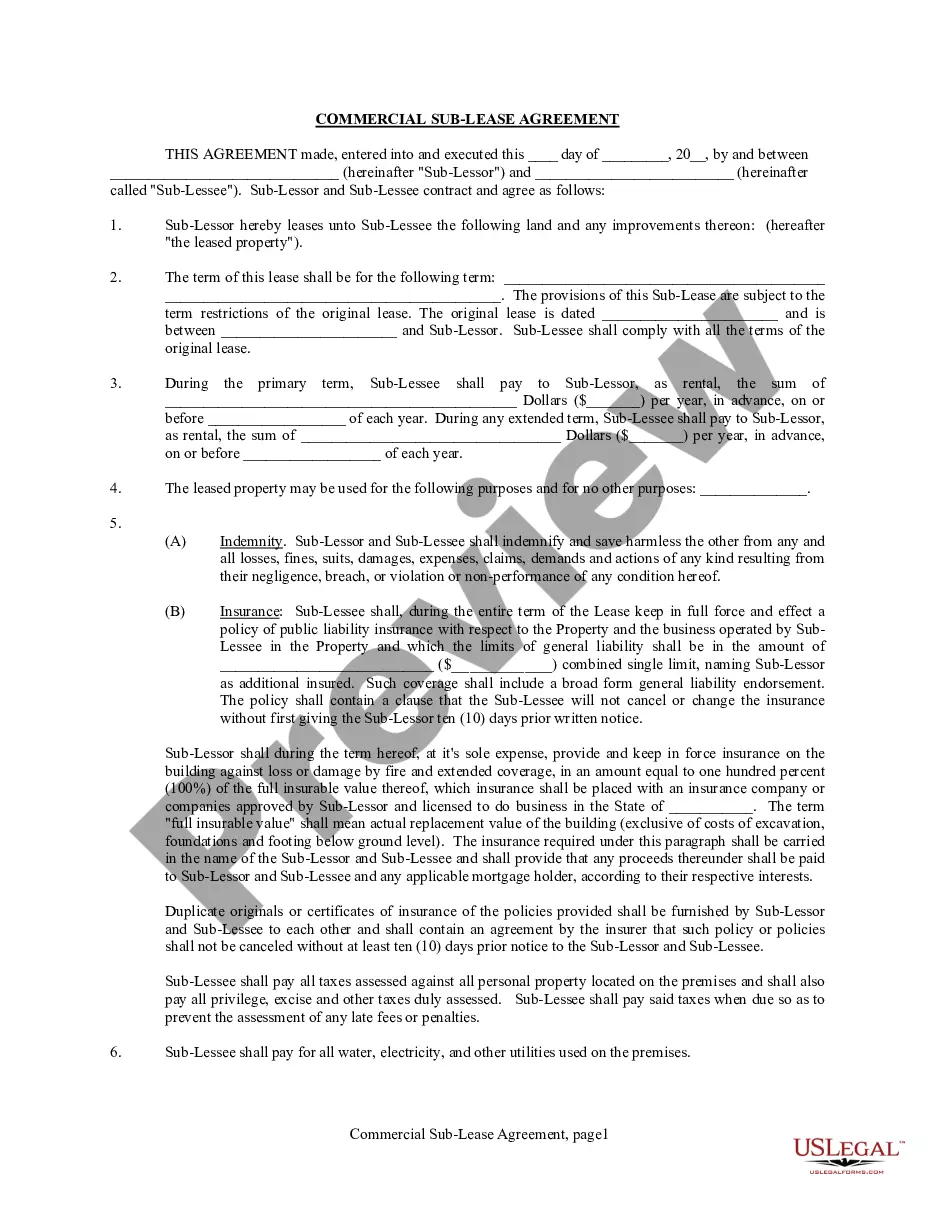
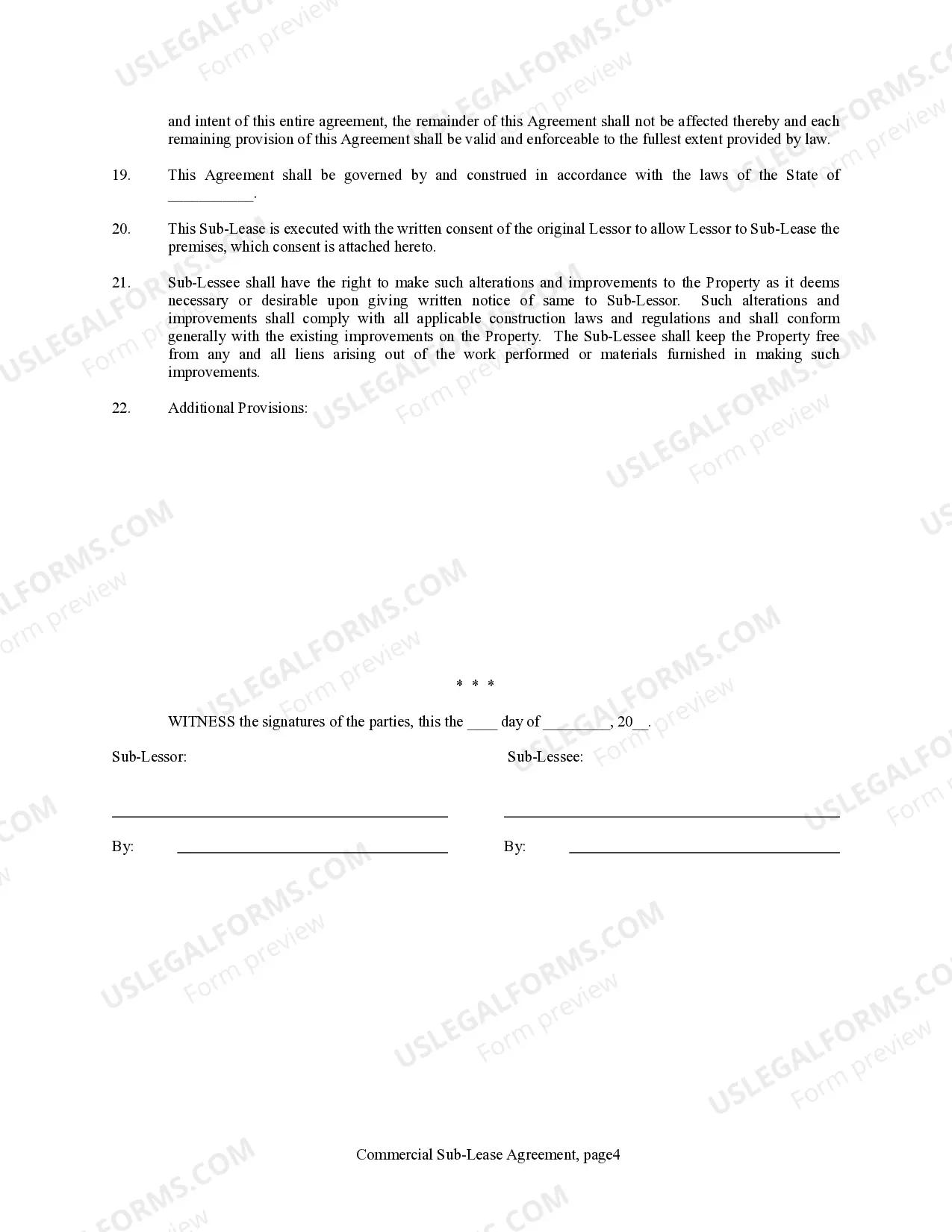
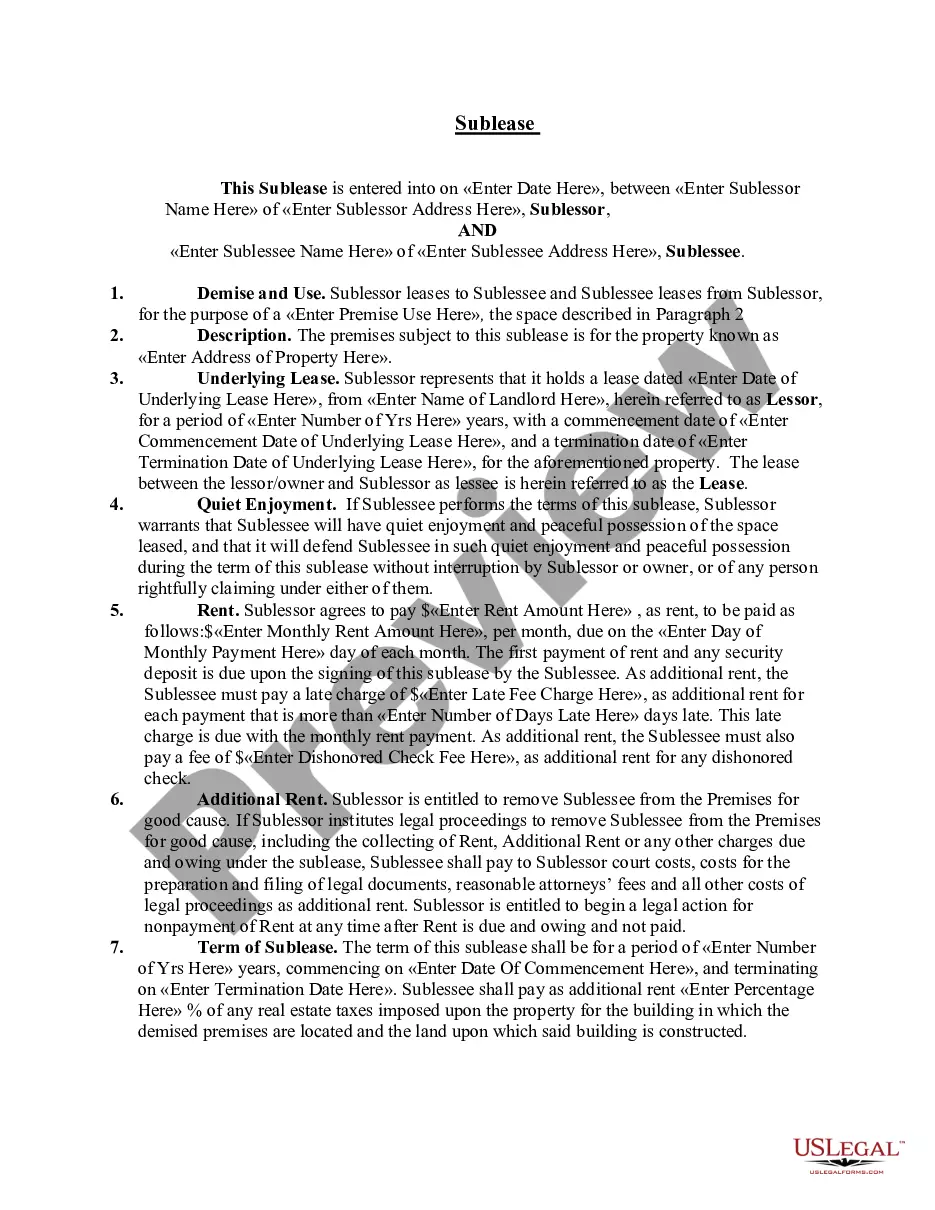
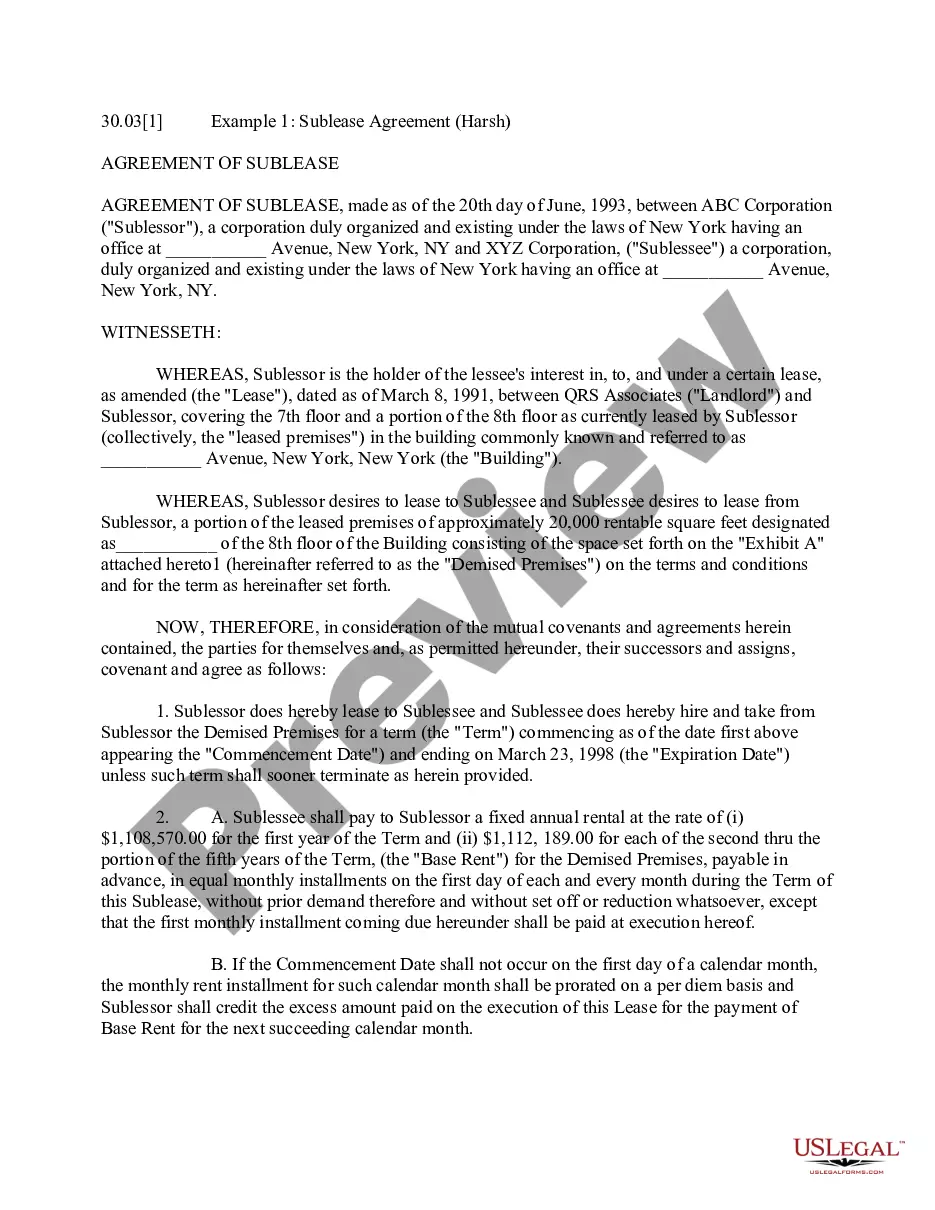
The Commercial Sublease form is a legal document that allows a tenant (Sub-Lessor) to lease their leased property to another party (Sub-Lessee) while still being bound by the original lease terms. This form ensures both parties understand their obligations and rights, differentiating it from a standard lease agreement by outlining the specific conditions under which a tenant can sublease the property.
Key parts of this document
- Parties involved: Identifies the Sub-Lessor and Sub-Lessee.
- Leased property: Specifies the property being leased and its intended use.
- Rental payment terms: Outlines the payment amounts and due dates.
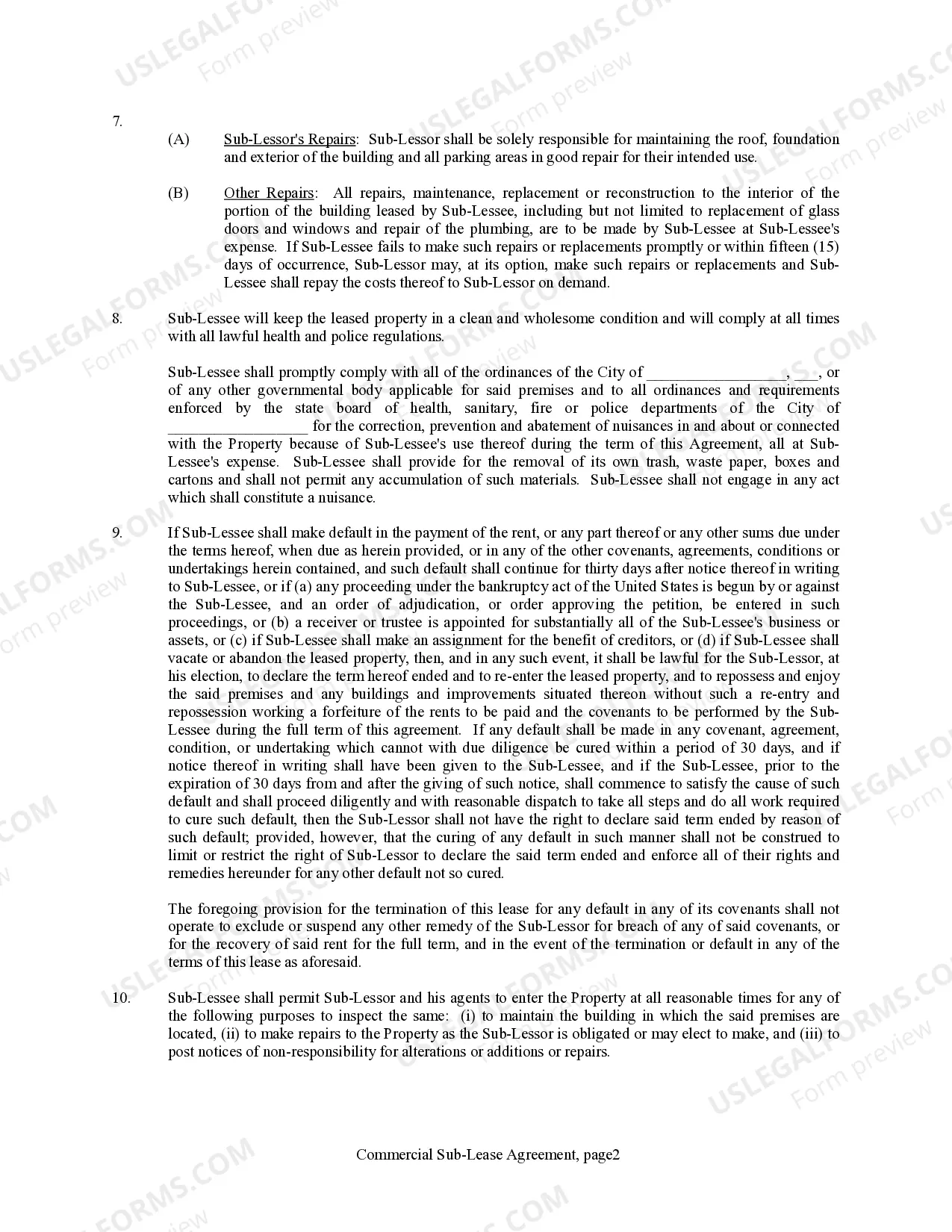
- Insurance requirements: Details insurance obligations for both parties.
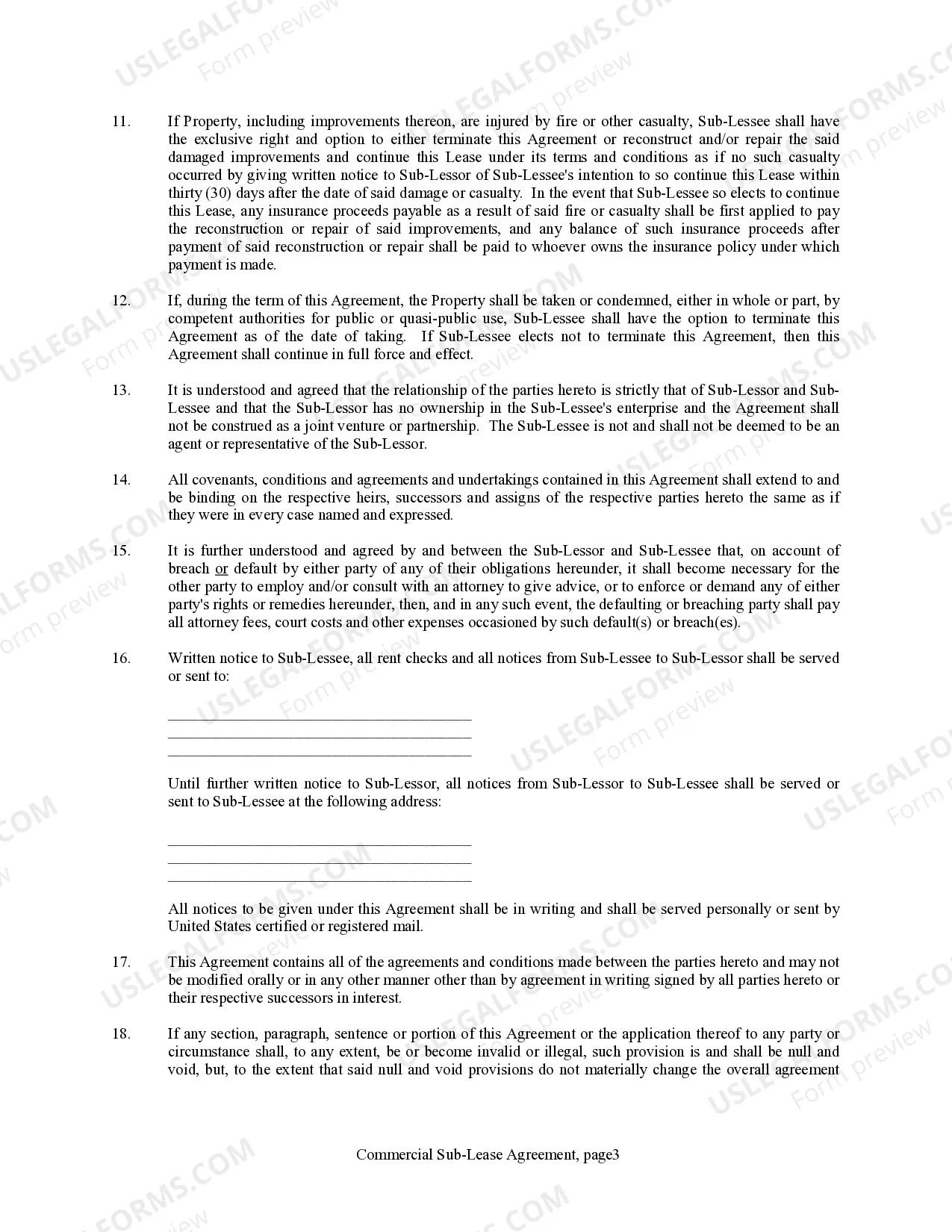
- Repairs and maintenance: Clarifies responsibilities for property upkeep.
- Default and remedies: States the consequences of failing to comply with the lease terms.
Common use cases
This form is necessary when a commercial tenant wants to sublease their leased space to another party. It is commonly used when the original tenant needs to vacate the premises but would like to retain rental income or avoid breaking their lease. This could occur in situations such as business downsizing, relocating, or temporary closure.
Who needs this form
- Business owners looking to sublease commercial property.
- Individuals or companies who are tenants under a current lease agreement.
- Sub-Lessors seeking to legally document the terms of a sublease.
- Sub-Lessees interested in leasing space under the conditions set by the Sub-Lessor.
How to complete this form
- Identify the parties: Enter the names of the Sub-Lessor and Sub-Lessee.
- Specify the property: Clearly define the leased property and its intended use.
- Enter the rental payment details: Fill in rental amounts and payment due dates for both primary and extended lease terms.
- Review insurance obligations: Indicate required insurance coverage and limits for both parties.
- Sign and date the document: Ensure that both parties sign the agreement to make it legally binding.
Notarization guidance
This form does not typically require notarization unless specified by local law. However, it is advisable to consult legal counsel to ensure all requirements are met for your jurisdiction.
Get your form ready online
Our built-in tools help you complete, sign, share, and store your documents in one place.
Make edits, fill in missing information, and update formatting in US Legal Forms—just like you would in MS Word.
Download a copy, print it, send it by email, or mail it via USPS—whatever works best for your next step.
Sign and collect signatures with our SignNow integration. Send to multiple recipients, set reminders, and more. Go Premium to unlock E-Sign.
If this form requires notarization, complete it online through a secure video call—no need to meet a notary in person or wait for an appointment.
We protect your documents and personal data by following strict security and privacy standards.

Make edits, fill in missing information, and update formatting in US Legal Forms—just like you would in MS Word.

Download a copy, print it, send it by email, or mail it via USPS—whatever works best for your next step.

Sign and collect signatures with our SignNow integration. Send to multiple recipients, set reminders, and more. Go Premium to unlock E-Sign.

If this form requires notarization, complete it online through a secure video call—no need to meet a notary in person or wait for an appointment.

We protect your documents and personal data by following strict security and privacy standards.
Mistakes to watch out for
- Not obtaining the original property owner's consent for subleasing.
- Failing to specify terms of payment clearly, leading to confusion.
- Not providing adequate insurance coverage, which may result in legal issues.
- Ignoring state-specific lease laws, which can invalidate the agreement.
Benefits of completing this form online
- Convenience of downloading and completing the form at your own pace.
- Editability allows you to customize the document to fit your specific situation.
- Access to professionally drafted templates ensures legal compliance and reliability.
Legal use & context
- This Commercial Sublease agreement provides essential protections and clarifies roles and responsibilities between the Sub-Lessor and Sub-Lessee.
- It helps avoid potential disputes by clearly defining each partyâs obligations.
- By utilizing this form, both parties gain formal recognition of their agreement, contributing to enforceability in court if necessary.
Main things to remember
- The Commercial Sublease form is essential for legal subleasing arrangements.
- It details rights, responsibilities, and terms of the lease, subject to the original lease agreement.
- Using this form can prevent misunderstandings and disputes between landlords and tenants.
Looking for another form?
Form popularity
FAQ
Can the landlord refuse consent to an Assignment? Most leases will say that the Landlord cannot unreasonably withhold consent. According to section 19 (1A) of the Landlord and Tenant Act 1927 the landlord can insert conditions in the lease, which need to be met in the case of an assignment.
Summary. There are different types of leases, but the most common types are absolute net lease, triple net lease, modified gross lease, and full-service lease. Tenants and proprietors need to understand them fully before signing a lease agreement.
A Triple Net Lease (NNN Lease) is the most common type of lease in commercial buildings. In a NNN lease, the rent does not include operating expenses. Operating expenses include utilities, maintenance, property taxes, insurance and property management.
Anyone renting a building, whether for commercial or personal use, has the right to privacy. You are entitled to do anything on the property that you wish, so long as whatever you are doing is legal. The landlord cannot prevent you from operating your business nor from allowing guests or patrons on the property.
Commercial landlords with multiple properties, or developments with more than one tenant, are generally loath to disclose to potential tenants the terms of leases into which they have previously entered.
Under California law, a lease does have to be in writing to be enforceable, but only when the lease is for a period of more than a year.There is, however, an additional legal doctrine called partial performance which does make oral contracts enforceable even if they are covered by the Statute of Frauds.
Evaluate the Length of the Lease. Research Comparable Rents. Look for Hidden Costs. Ask for Favorable Clauses. Check the Termination Clause Closely.
Recording a lease means that it (or a Notice of Lease) is submitted to the public record, usually at the local Registry of Deeds following the signing of it by both parties. Generally, recording of the lease protects the tenant against subsequent claims to the property.
Leases with an initial term not exceeding seven years are not required to be recorded so long as each renewal term under the lease (a) is for seven years or fewer, and (b) may be effected or prevented by a party to the lease or its assigns.