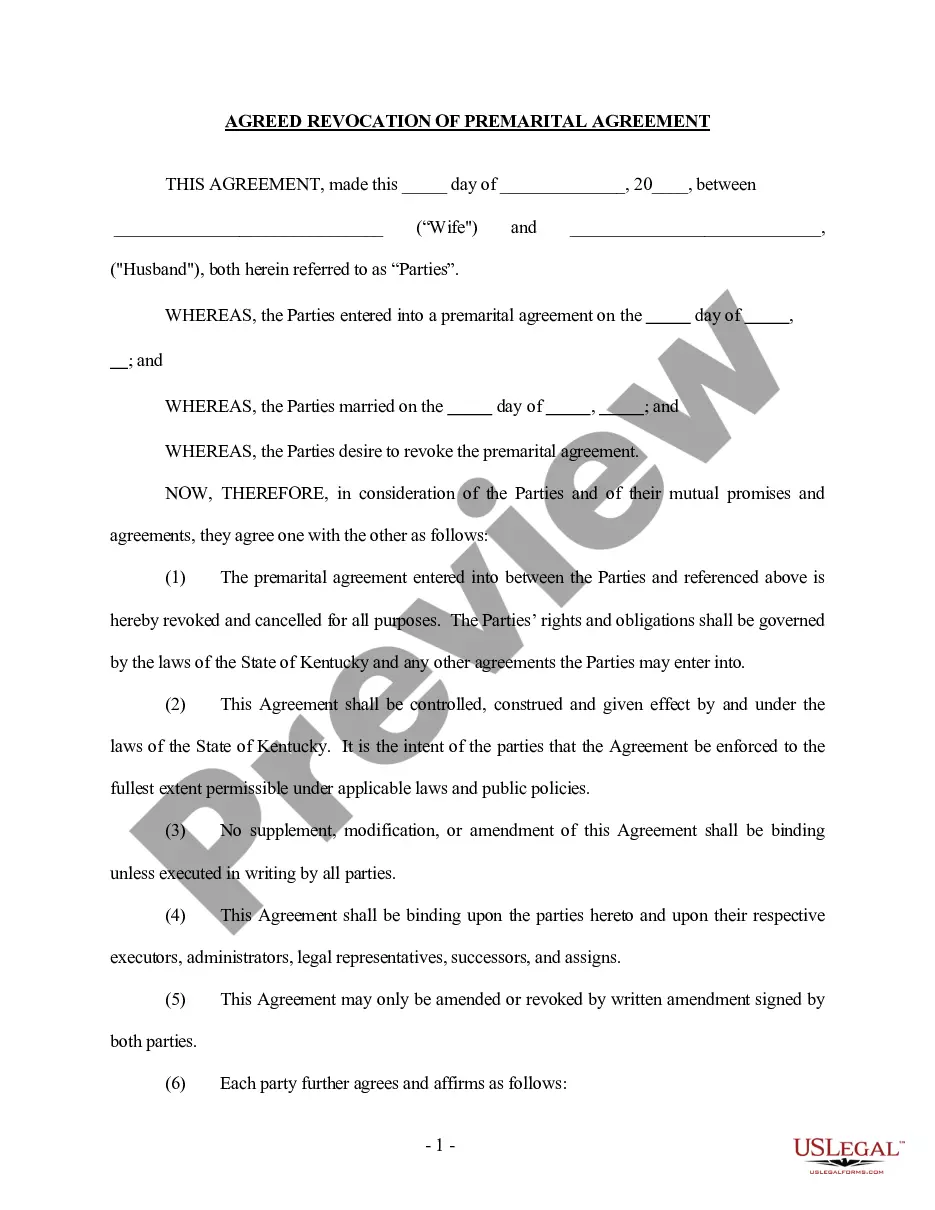
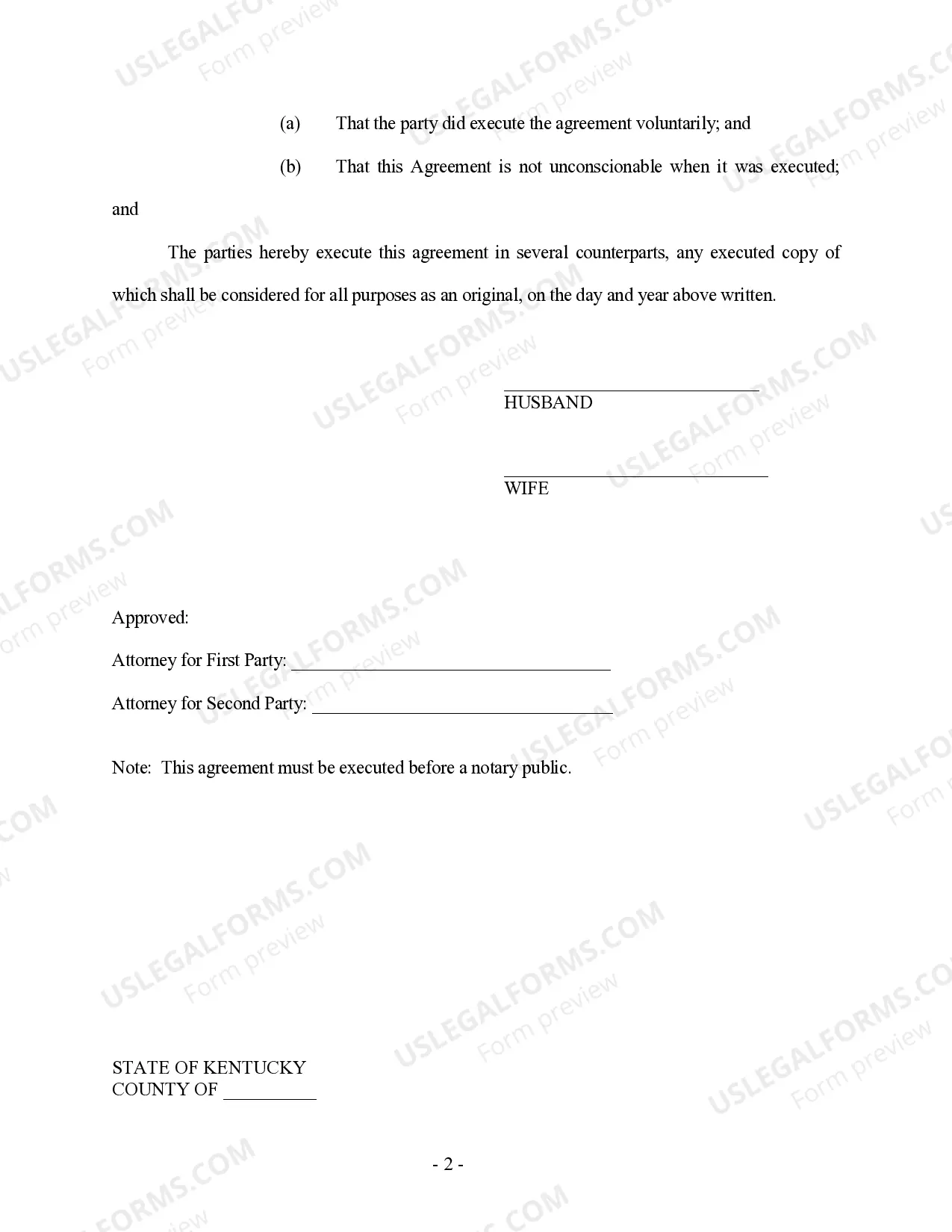
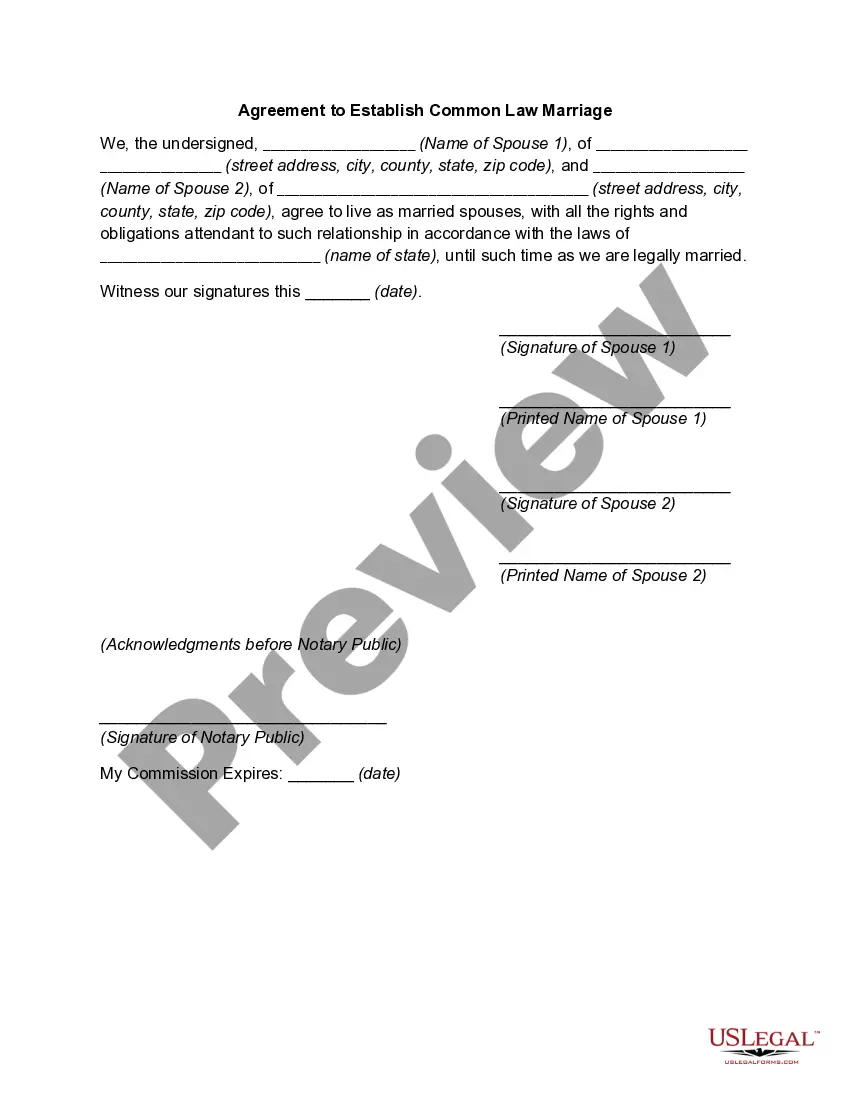
A husband and wife may use this form to revoke an existing premarital agreement. The agreement is also binding on their executors, administrators, legal representatives, successors, and assigns.
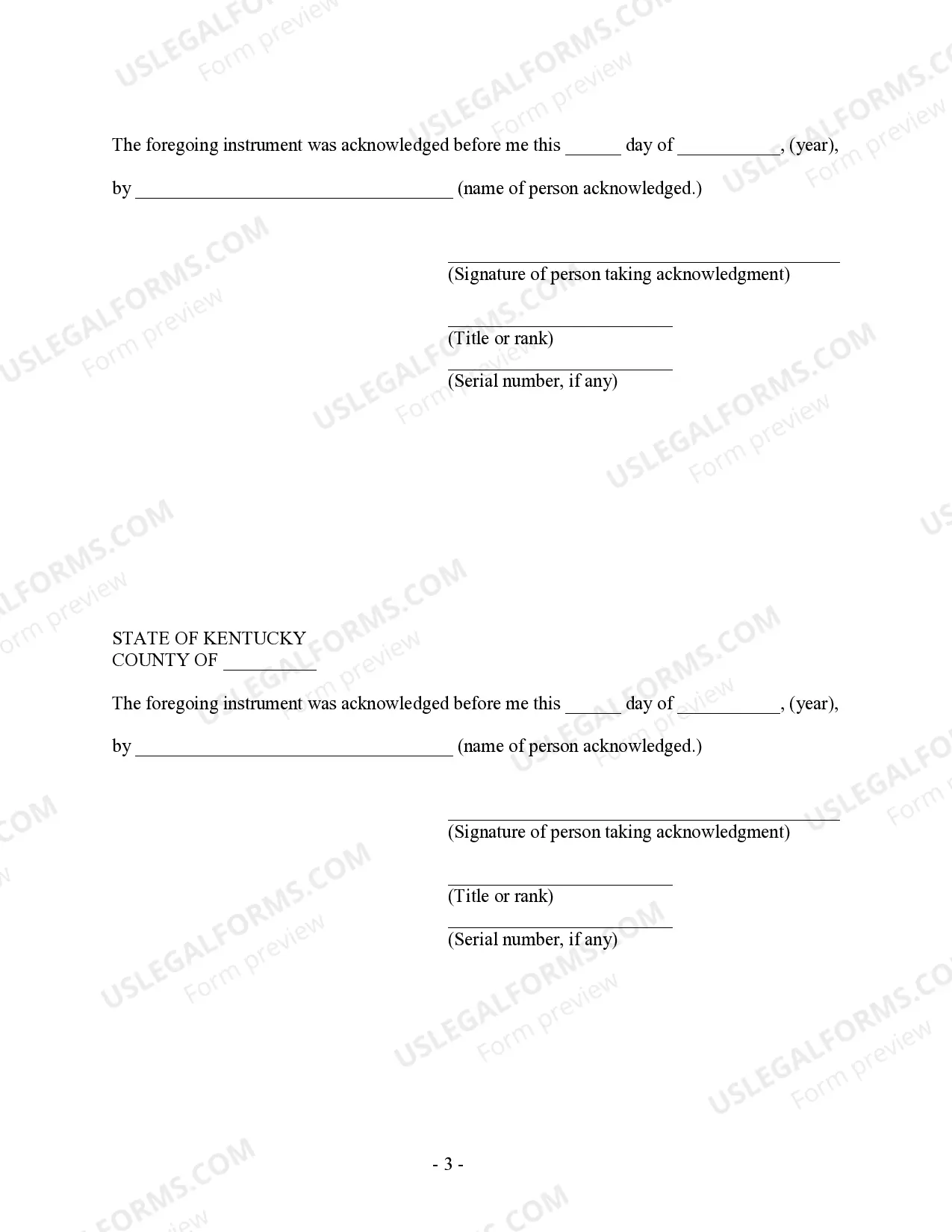
Kentucky Revocation of Premarital or Prenuptial Agreement
State:
Kentucky
Control #:
KY-00590-E
Format:
Word;
Rich Text
Instant download
Description
Free preview
How to fill out Kentucky Revocation Of Premarital Or Prenuptial Agreement?
Searching for templates for the Kentucky Revocation of Premarital or Prenuptial Agreement and completing them could prove to be difficult.
To conserve considerable time, expenses, and effort, utilize US Legal Forms to locate the appropriate sample specifically for your state with just a few clicks.
Our legal experts prepare each document, so all you have to do is fill them in. It is genuinely that simple.
Select your payment method on the pricing page and create your account. Choose to pay with a credit card or via PayPal. Download the form in your desired file format. You can now print the Kentucky Revocation of Premarital or Prenuptial Agreement form or complete it using any online editor. You need not worry about making errors as your form can be utilized and submitted, and printed as many times as you require. Experience US Legal Forms and gain access to over 85,000 state-specific legal and tax documents.
- Log in to your account and navigate back to the form's webpage to save the sample.
- Your saved templates are stored in My documents and are accessible at any time for future use.
- If you haven't subscribed yet, you must sign up.
- Follow our comprehensive instructions on how to obtain the Kentucky Revocation of Premarital or Prenuptial Agreement form in several minutes.
- To acquire a valid form, verify its applicability for your state.
- Review the sample using the Preview option (if available).
- If there's a description, examine it to understand the details.
- Click on the Buy Now button once you find what you seek.
Form popularity
FAQ
No, you cannot get a prenup if you are already married.You can still sign a postnuptial agreement (or postnup), which achieves the same goals as a prenup in most cases. Prenups are a common step before marriage. Texas community property rules are the reason why prenups are common in Texas.
The agreement was signed under fraud or duress; The agreement is unconscionable; The circumstances of the parties have changed, making the agreement unenforceable at this time.
Prenuptial agreements help couples determine what will happen to the parties' assets in the event of a divorce or a spouse's death. The law states that couples cannot revoke prenuptial agreements unless both parties agree to it.
The three most common grounds for nullifying a prenup are unconscionability, failure to disclose, or duress and coercion. Unconscionability may be present if the agreement is patently unfair to one party.
A prenup can also be overturned if one or both parties change their mind after initially signing the agreement. They may decide at that time to sign a new agreement suspending the prenup.
Prenuptial agreements do not expire, unless they have a specific clause in them stating the agreement expires after a certain length of marriage (very uncommon).
The three most common grounds for nullifying a prenup are unconscionability, failure to disclose, or duress and coercion.Duress and coercion can also invalidate a prenup. If the prenup was signed the day before your wedding, it may appear that the parties didn't have much time to fully review the agreement.
#1) One spouse signed the prenup under duress. #2) The prenup is too one-sided. #3) The prenup is full of unenforceable clauses. #4) One or both parties committed fraud. #5) One or both parties did not have a lawyer at the time of signing.
Prenuptial agreements are generally one-sided, but are dressed up to pretend that there is consideration for the contract on both sides.