Kentucky Plumbing Contract for Contractor
Overview of this form
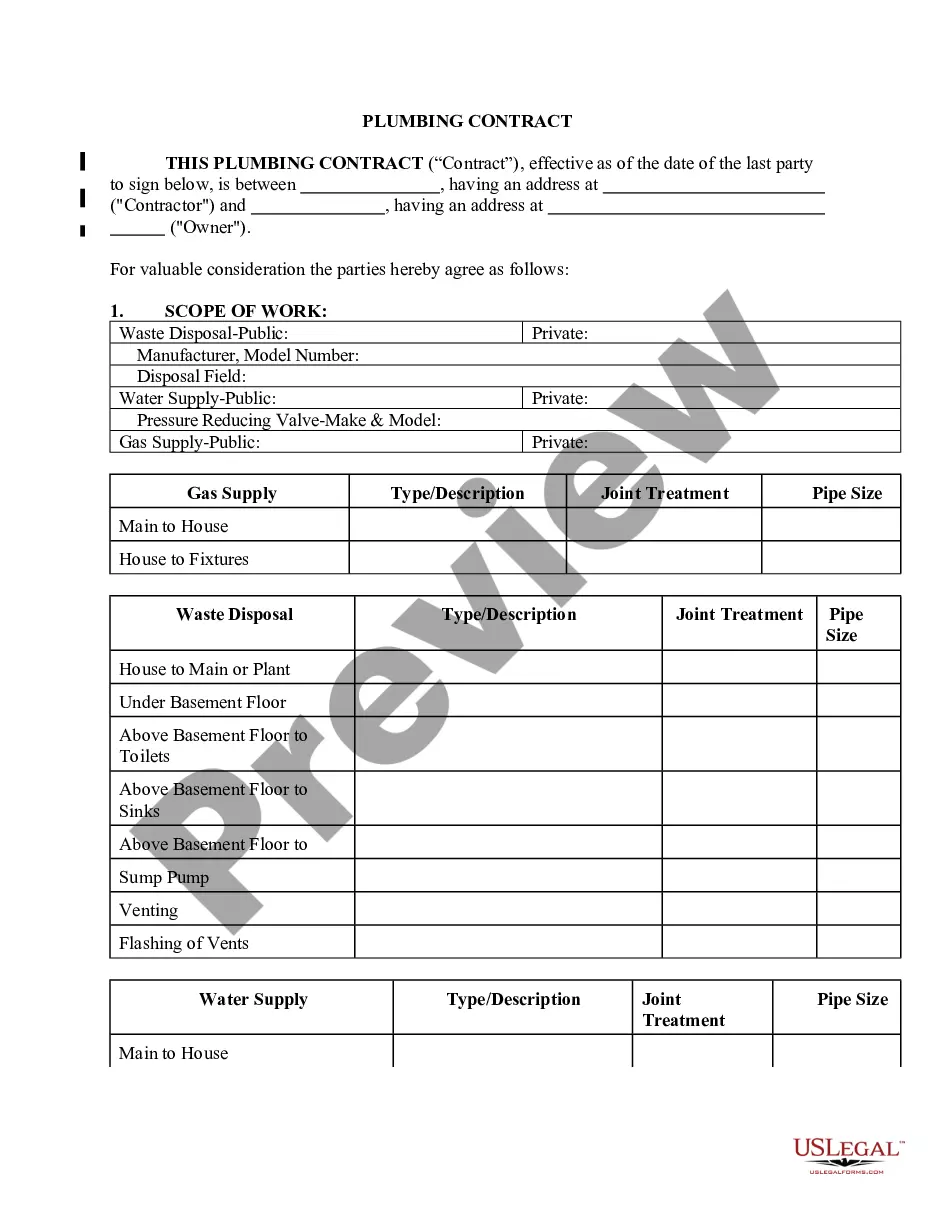
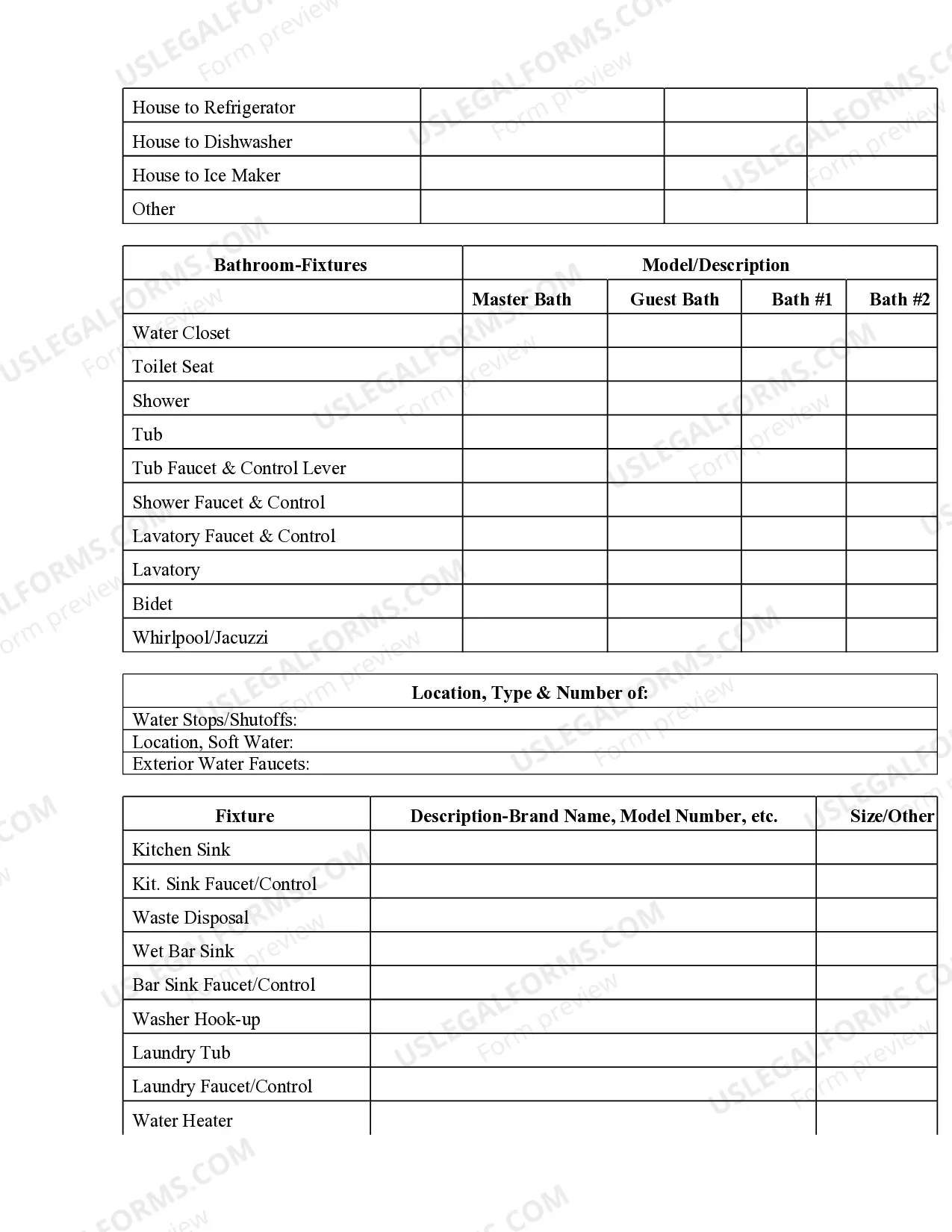
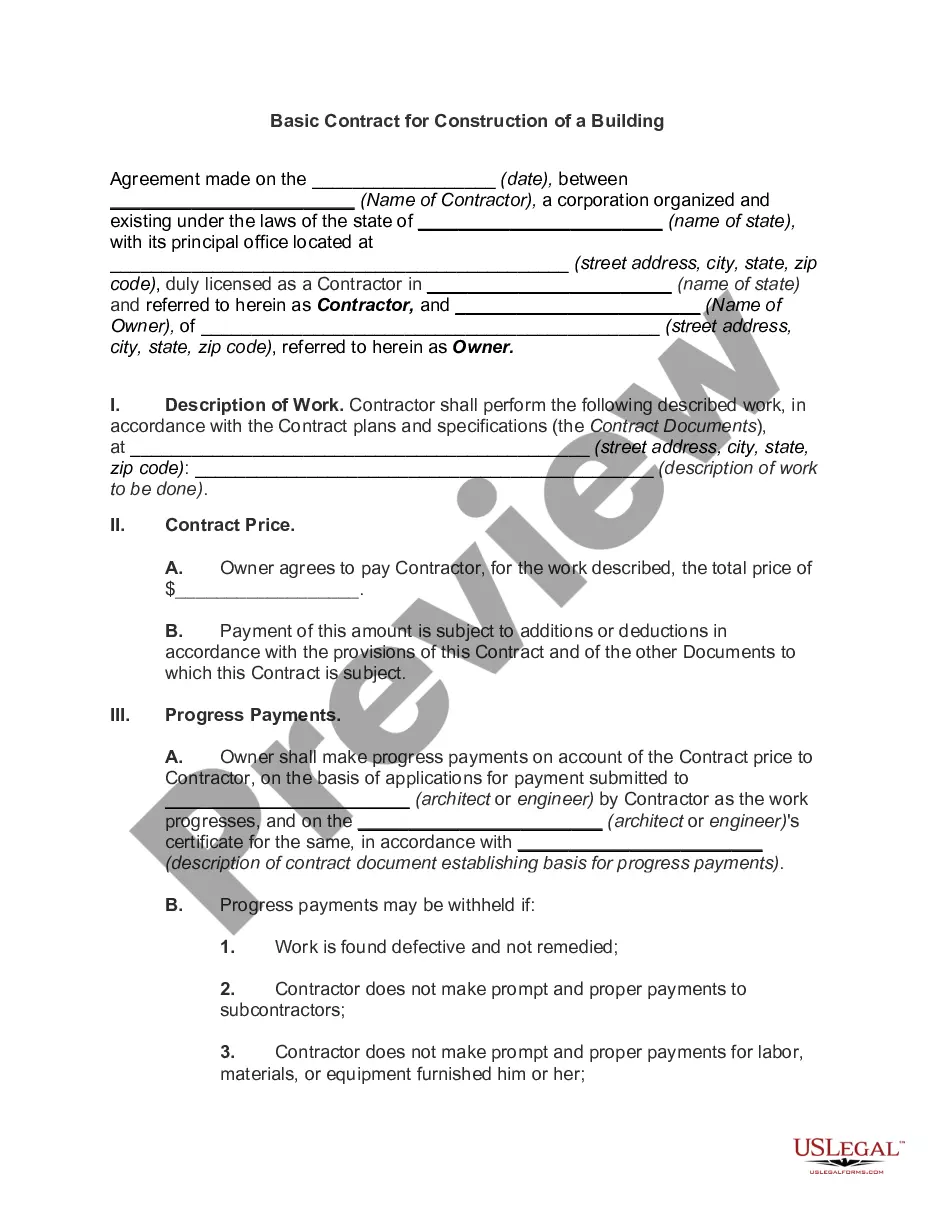
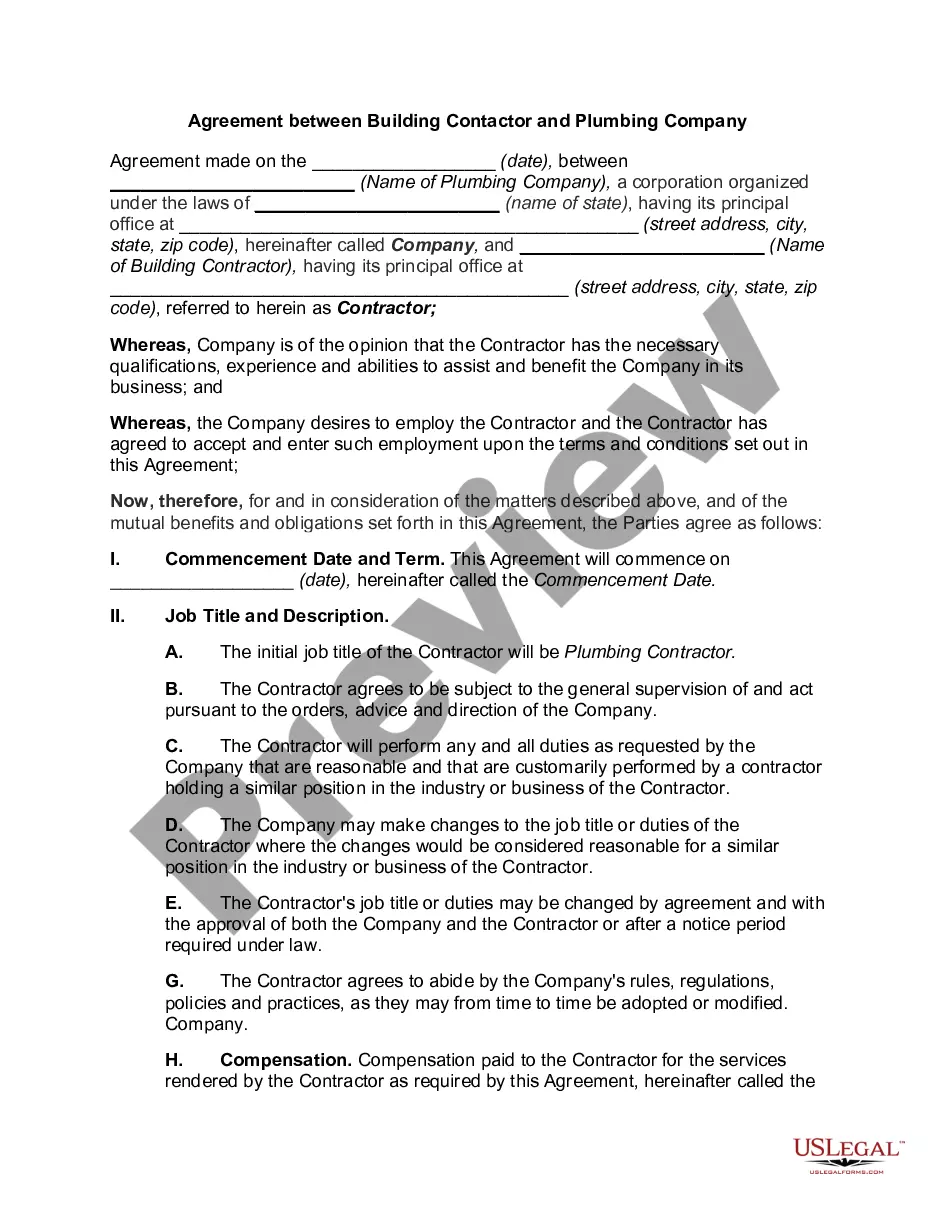
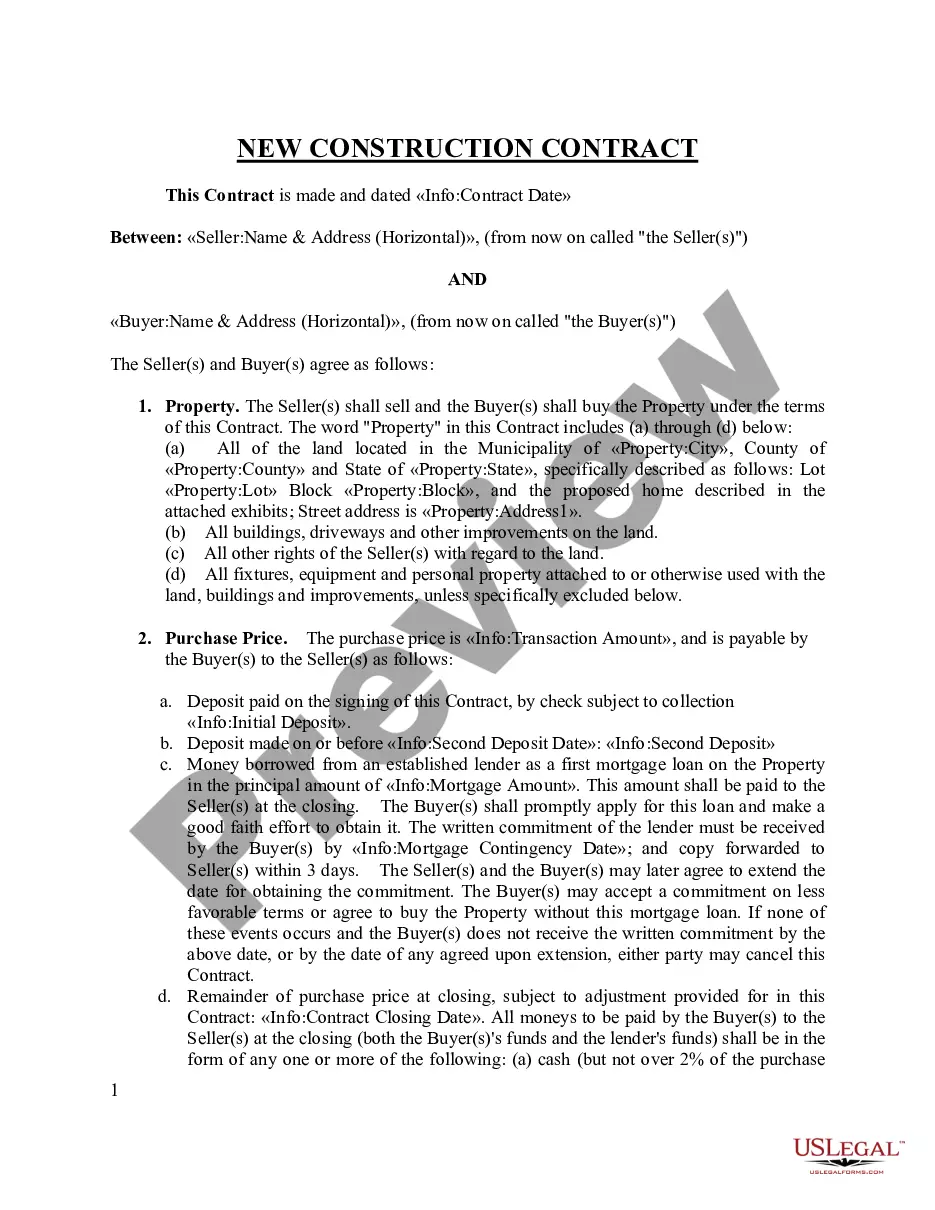
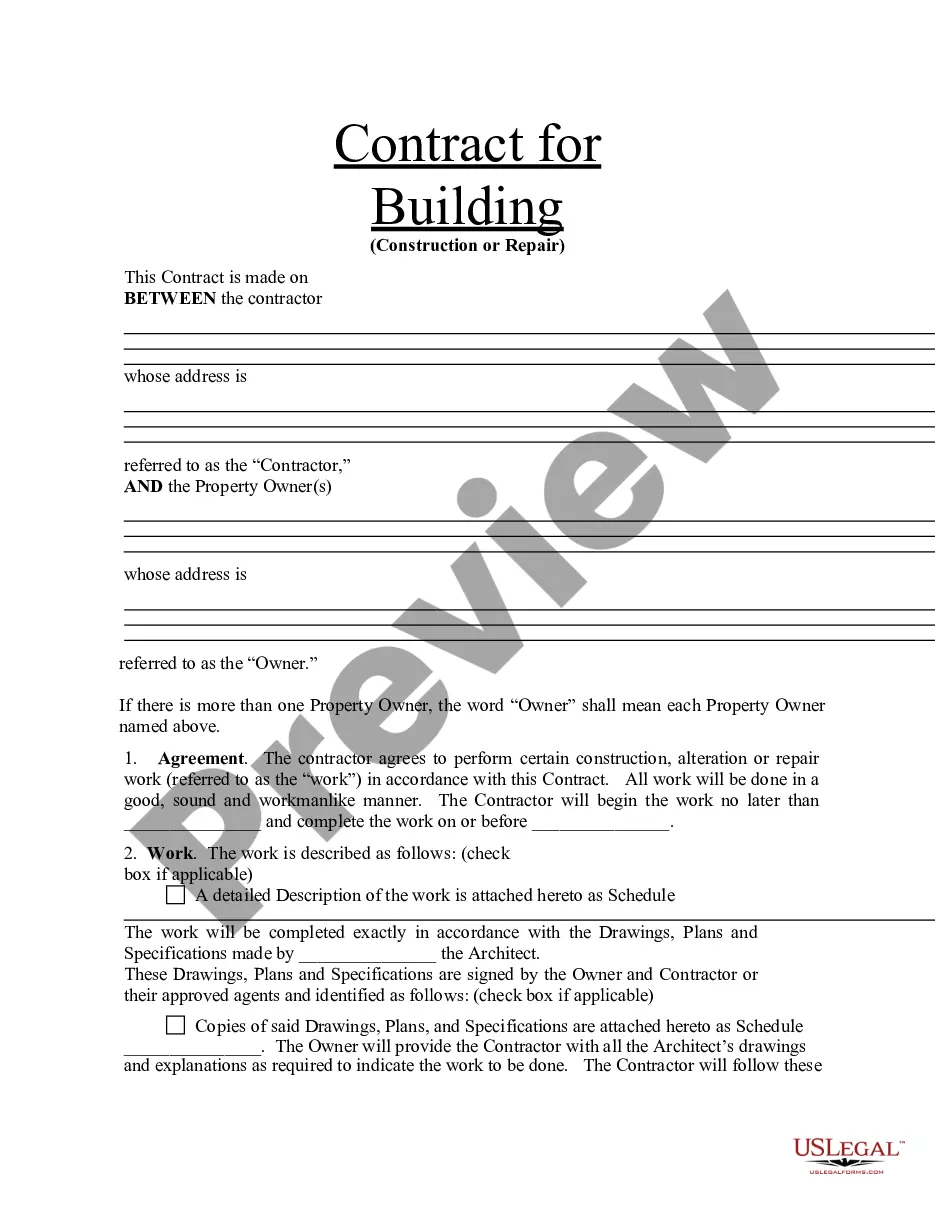
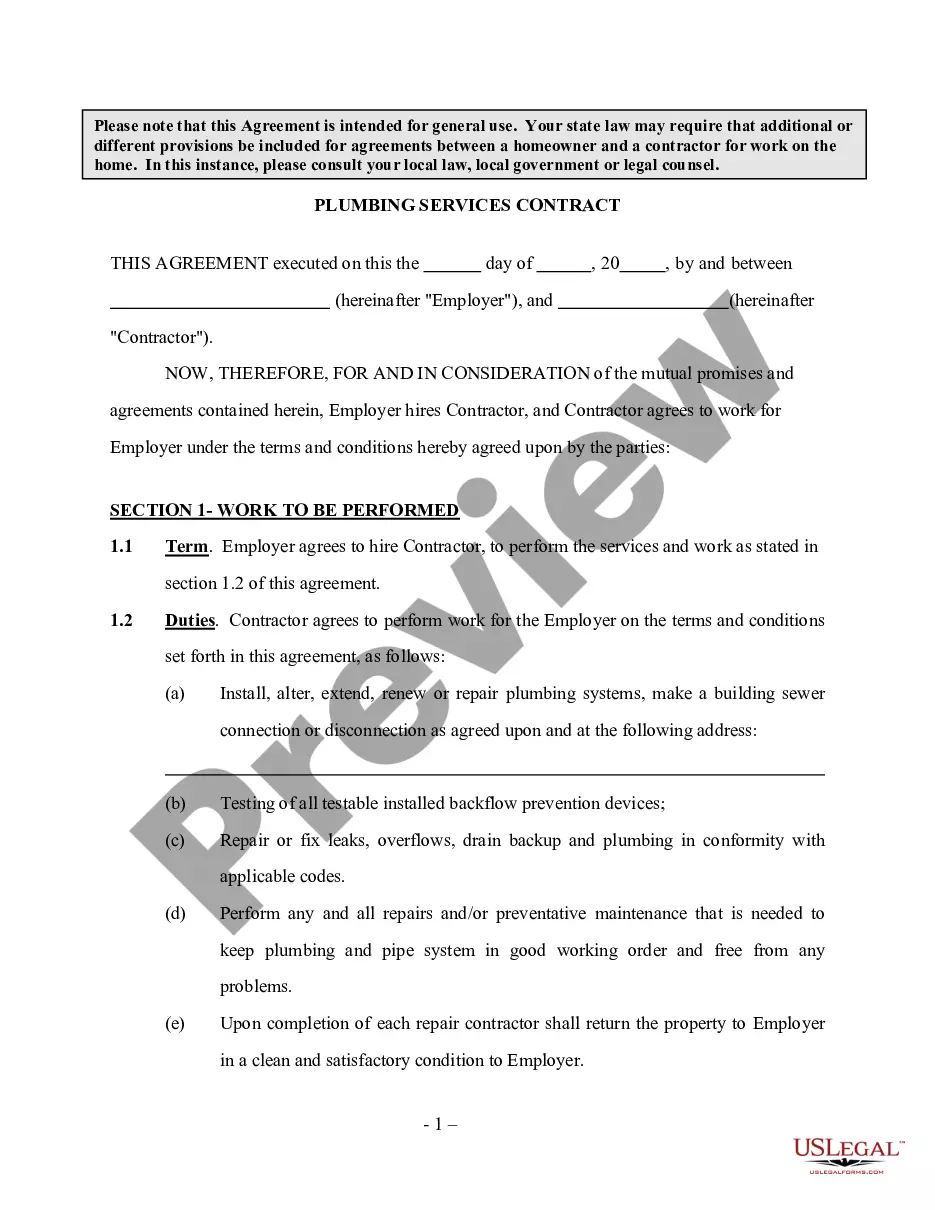
The Plumbing Contract for Contractor is a legal document tailored for use between plumbing contractors and property owners. This form outlines essential terms regarding payment arrangements, project scope, responsibilities around permits, and other critical aspects that govern the relationship between the two parties. Developed to comply with Kentucky state laws, this contract provides clarity and protection during plumbing work, ensuring all parties are on the same page regarding expectations and obligations.
What’s included in this form
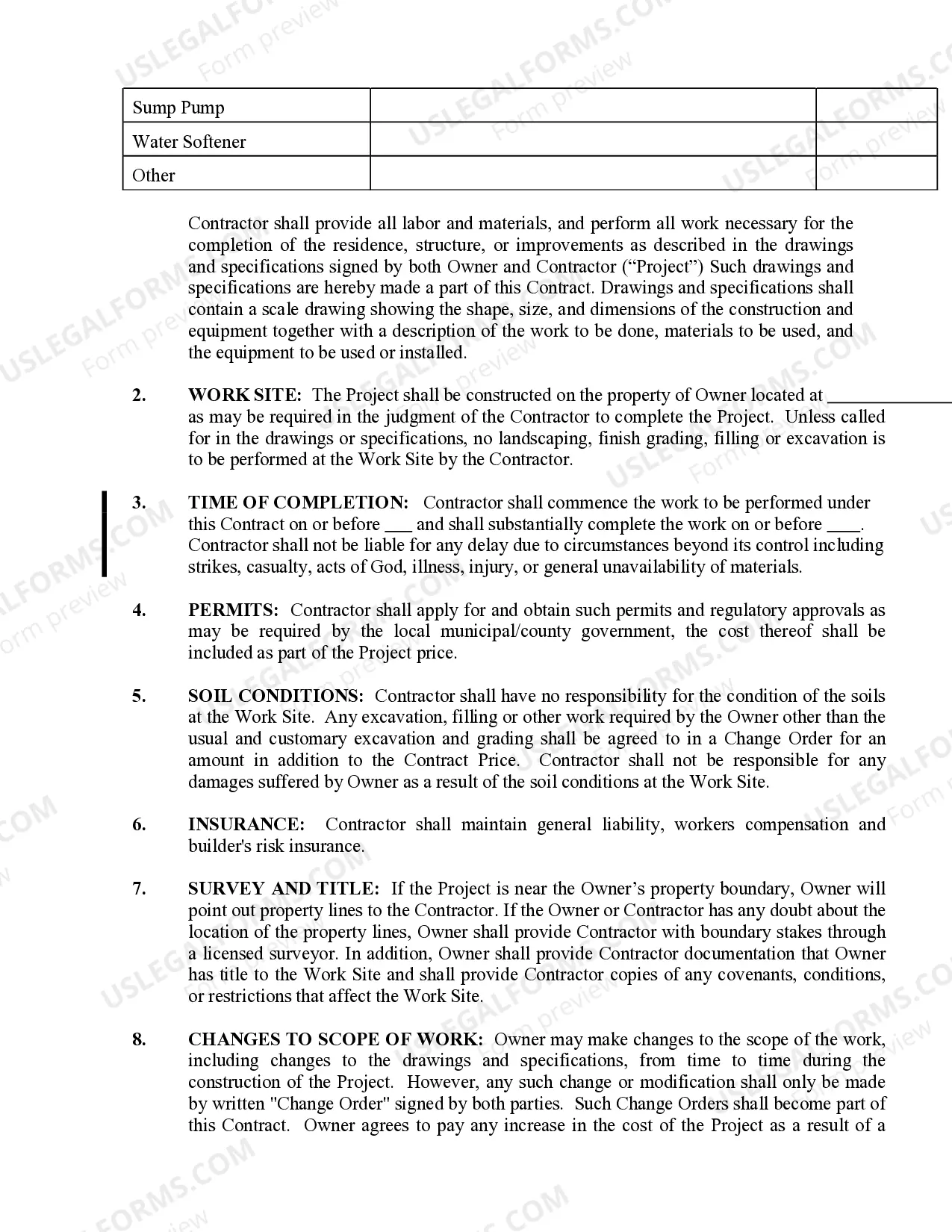
- Permits: Details on the responsibility of contractors to obtain necessary permits.
- Soil conditions: Outlines contractorâs non-responsibility for soil issues at the work site.
- Insurance: Requirement for contractors to maintain various types of insurance.
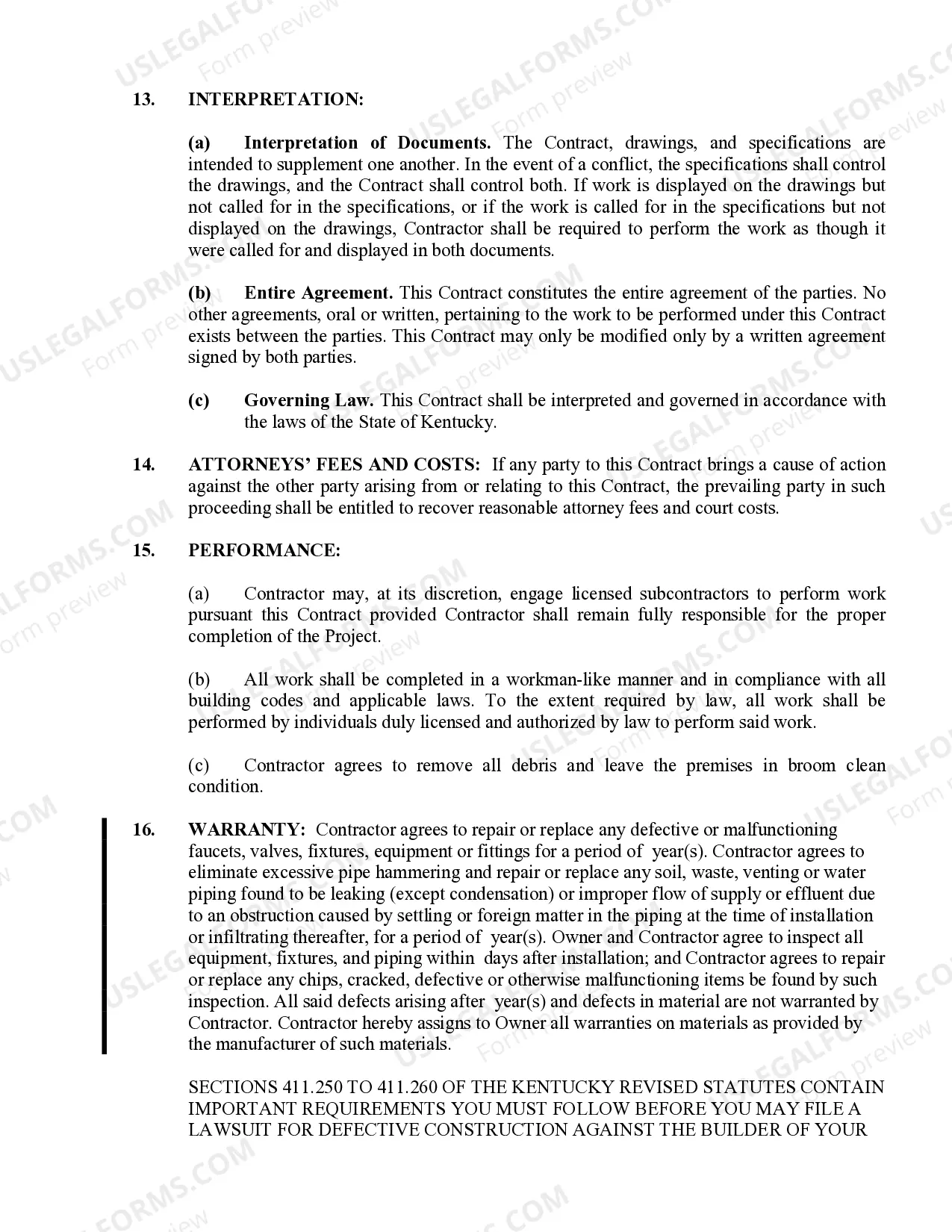
- Change orders: Protocol for modifying the scope of work during the project.
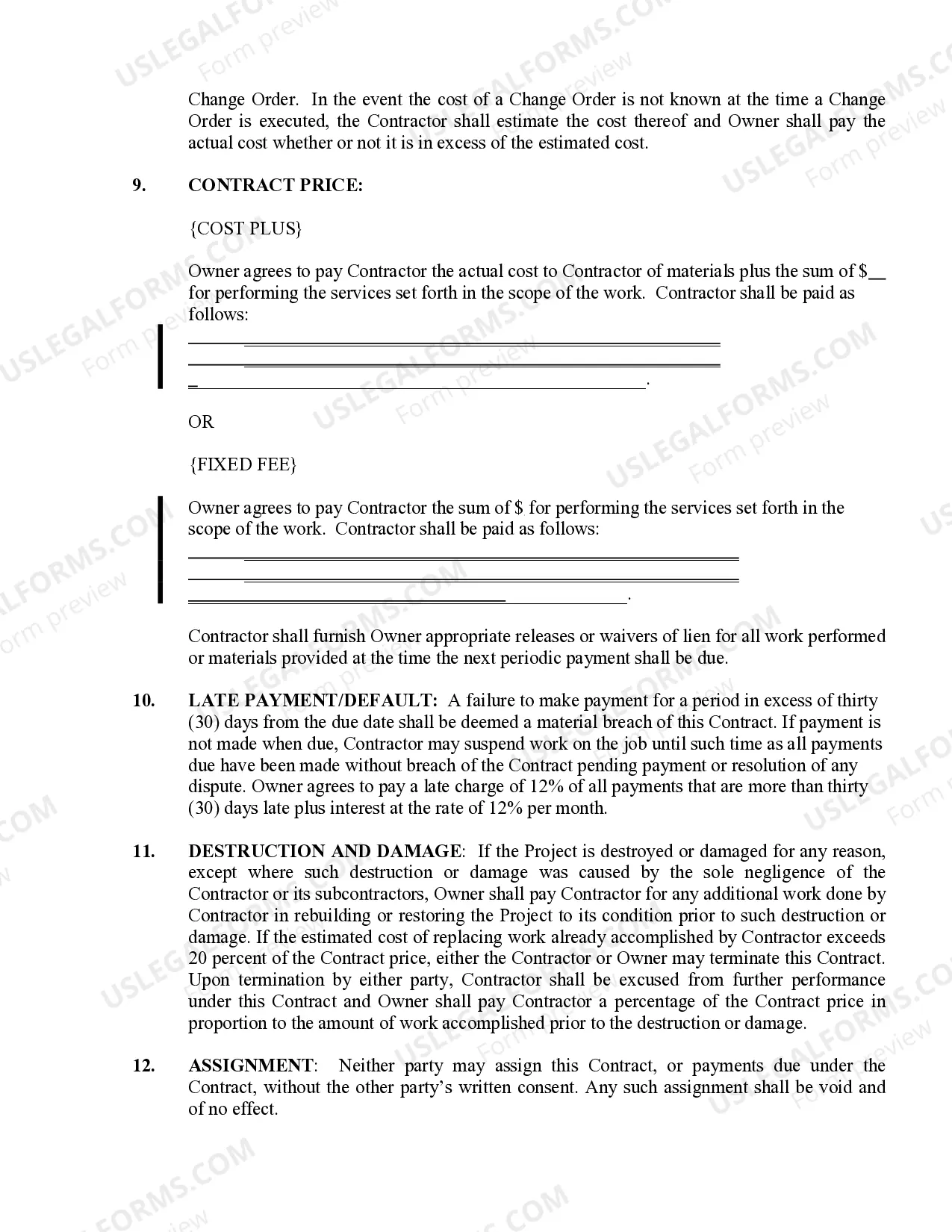
- Contract price: Options for cost plus or fixed fee payment arrangements.
- Late payment/default: Conditions under which late payments become a breach of contract.


When this form is needed
You should use the Plumbing Contract for Contractor when hiring a plumbing contractor for residential or commercial plumbing projects. This contract is beneficial if you need clear agreements on project scope, changes, payment terms, and liability management. It is particularly relevant for jobs that require multiple stages of work along with permits, ensuring that both parties have documented expectations throughout the project lifecycle.
Intended users of this form
- Property Owners: Individuals or businesses hiring a plumbing contractor.
- Plumbing Contractors: Licensed professionals entering into a contract with property owners.
- Real estate developers: Those needing structured agreements for multiple plumbing installations.
How to prepare this document
- Identify the parties: Enter the names and contact information of both the property owner and the plumbing contractor.
- Specify the project details: Clearly outline the scope of work to be performed and the location.
- Indicate payment terms: Choose between cost plus or fixed fee arrangements.
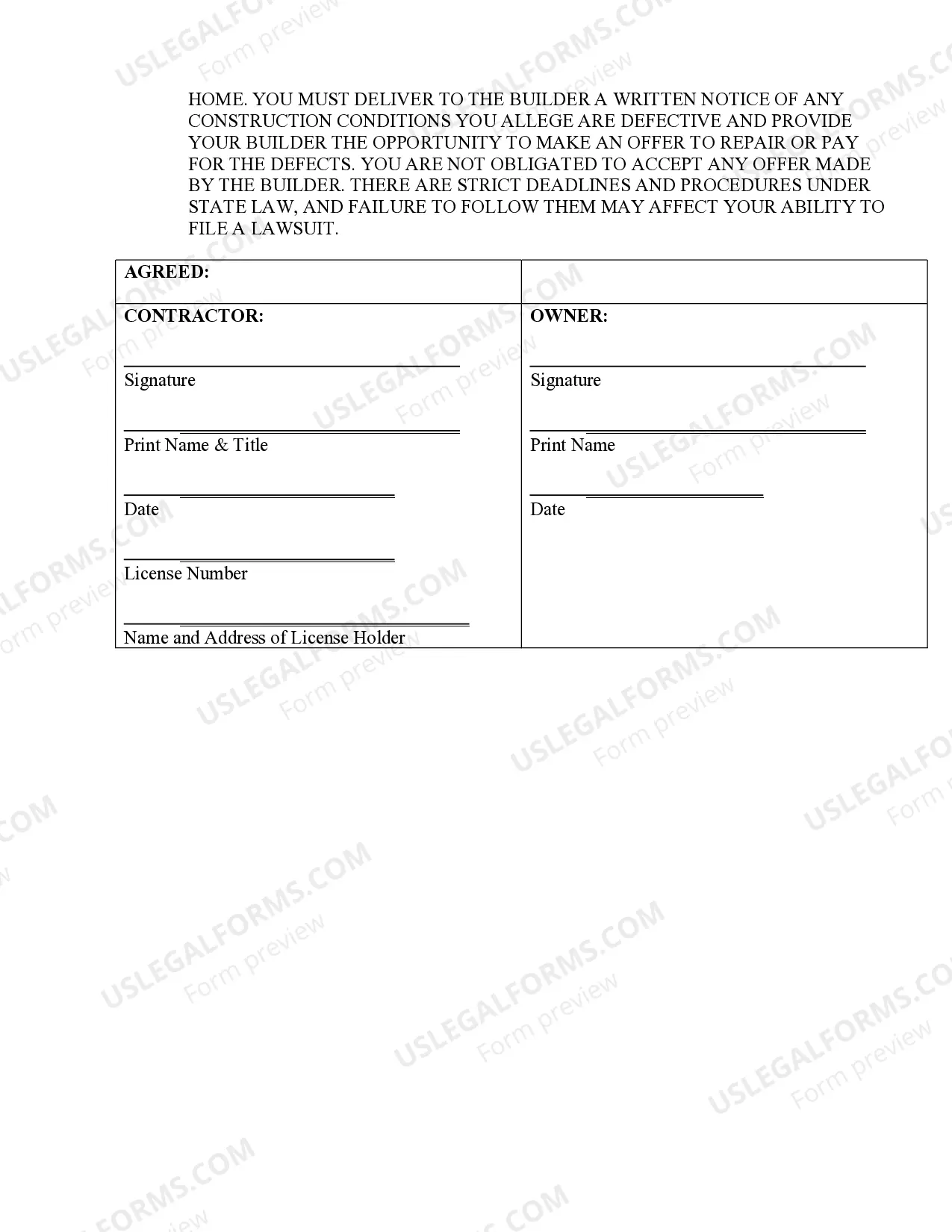
- Obtain necessary signatures: Ensure both parties sign and date the contract to make it legally binding.
- Attach any relevant documents: Include permits, plans, or change orders as necessary.
Is notarization required?
This form does not typically require notarization unless specified by local law. It is advisable to consult with a legal professional if there are any specific concerns about notarization requirements for your project.
Get your form ready online
Our built-in tools help you complete, sign, share, and store your documents in one place.
Make edits, fill in missing information, and update formatting in US Legal Forms—just like you would in MS Word.
Download a copy, print it, send it by email, or mail it via USPS—whatever works best for your next step.
Sign and collect signatures with our SignNow integration. Send to multiple recipients, set reminders, and more. Go Premium to unlock E-Sign.
If this form requires notarization, complete it online through a secure video call—no need to meet a notary in person or wait for an appointment.
We protect your documents and personal data by following strict security and privacy standards.

Make edits, fill in missing information, and update formatting in US Legal Forms—just like you would in MS Word.

Download a copy, print it, send it by email, or mail it via USPS—whatever works best for your next step.

Sign and collect signatures with our SignNow integration. Send to multiple recipients, set reminders, and more. Go Premium to unlock E-Sign.

If this form requires notarization, complete it online through a secure video call—no need to meet a notary in person or wait for an appointment.

We protect your documents and personal data by following strict security and privacy standards.
Common mistakes
- Failing to specify payment terms clearly, leading to conflicts over costs.
- Not addressing potential change orders in the original contract.
- Neglecting to obtain necessary permits before commencing work.
Benefits of completing this form online
- Convenience: Download and complete the contract from anywhere without needing a lawyer.
- Editability: Customize the form to fit specific project requirements easily.
- Reliability: Access professionally drafted legal documents that comply with Kentucky law.
Legal use & context
- This contract provides a clear legal framework to ensure both parties understand their obligations.
- It helps minimize disputes over work scope and payment terms.
- Enforceable in Kentucky, it protects the rights of both contractors and property owners.
Key takeaways
- The Plumbing Contract for Contractor establishes clear terms between property owners and plumbing contractors.
- It allows for flexibility in payment structures and includes essential legal protections.
- Use this form to ensure legal compliance and clarity in plumbing agreements in Kentucky.
Looking for another form?


Form popularity
FAQ
A completed application form. Proof of general liability insurance and worker's compensation insurance. And unemployment affidavit. Depending on the type of license, proof of experience and training. A $125 application fee for Building Type A licenses.
Generally speaking, a general contractor is someone who manages a team of subcontractors to help do various types of construction projects in your home. A custom home builder, however, is specialized in building custom homes and is able to complete this specific type of project start to finish on their own.
Residential contractors build and renovate homes or manage such projects from start to finish. The residential contractor typically secures permits, supervises labor and enlists specialized subcontractors such as plumbers and electricians.
Kentucky requires all electrical, HVAC, plumbing, and elevator contractors to have a permit before conducting any work. This is not optional. However, for a general contractor's license, the process is different. The measures you need to take depend on the county/city you plan on performing work in.
Make sure the contractor obtains a permit if the job requires one. Ask for a copy of the contractor's license and proof of insurance. Pay by check and get a receipt. Document any changes to the contract in writing.
Here are some steps on how to start a legal handyman business in the state of Kentucky. -Register your handyman business name. -Select your business structure. Sole-proprietor, LLC, Partnership, Corporation, etc. -Register your handyman business. -Open a Business Checking Account.
A certified contractor passed the state licensing examination. Certified contractors can work anywhere within the state in which they are licensed. A registered contractor is registered by a local county or municipality and receives a certificate of competency from the Electrical Contractors' Licensing Board.
In California, anyone who contracts to perform work on a project that is valued at $500 or more for combined labor and materials costs must hold a current, valid license from CSLB.The quality of their work usually doesn't compare to that of a licensed contractor. Don't take the chance in order to save a few dollars.
A general contractor is responsible for providing all of the material, labor, equipment (such as engineering vehicles and tools) and services necessary for the construction of the project. A general contractor often hires specialized subcontractors to perform all or portions of the construction work.