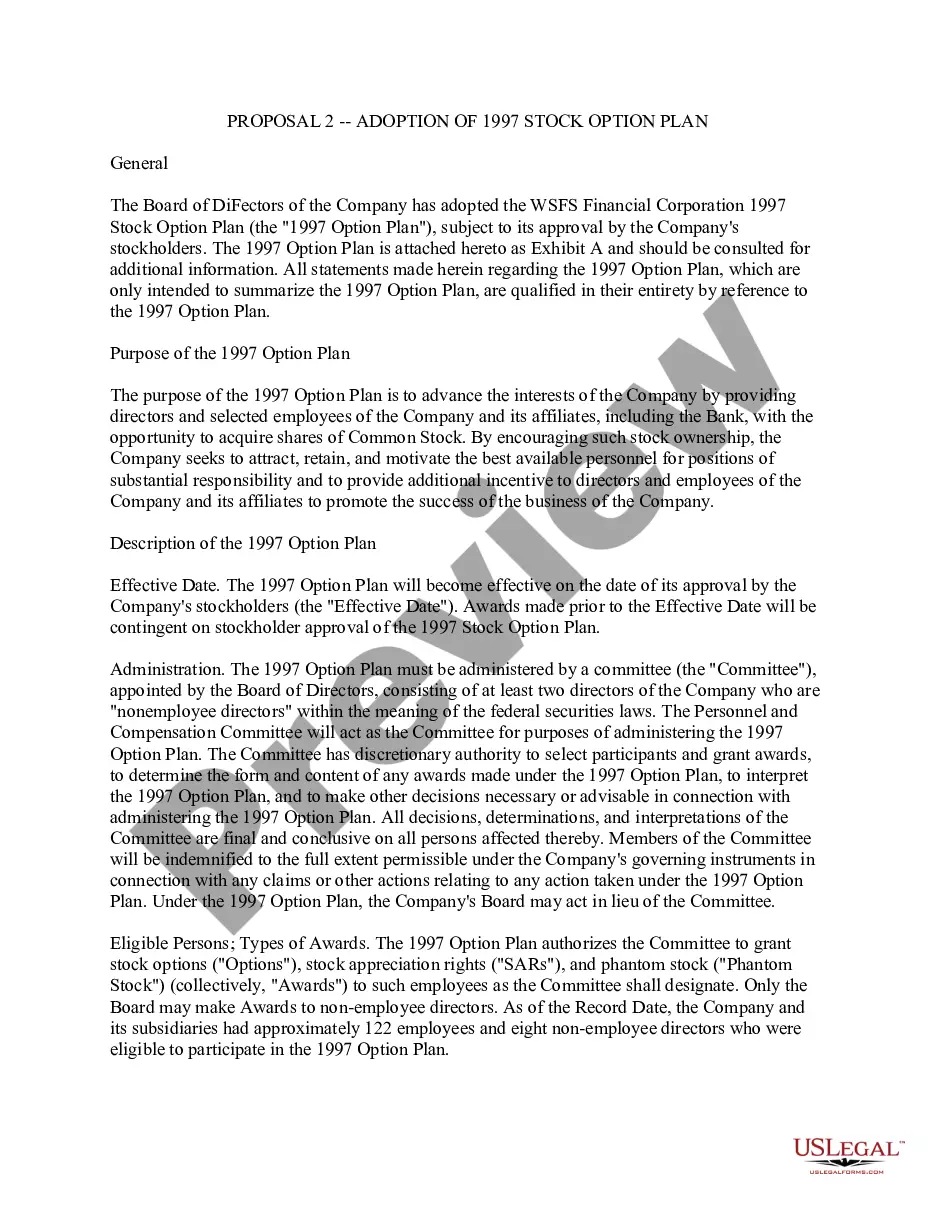
Kansas Second Letter Requesting a Collection Agency to Validate a Debt that You Allegedly Owe a Creditor
Description
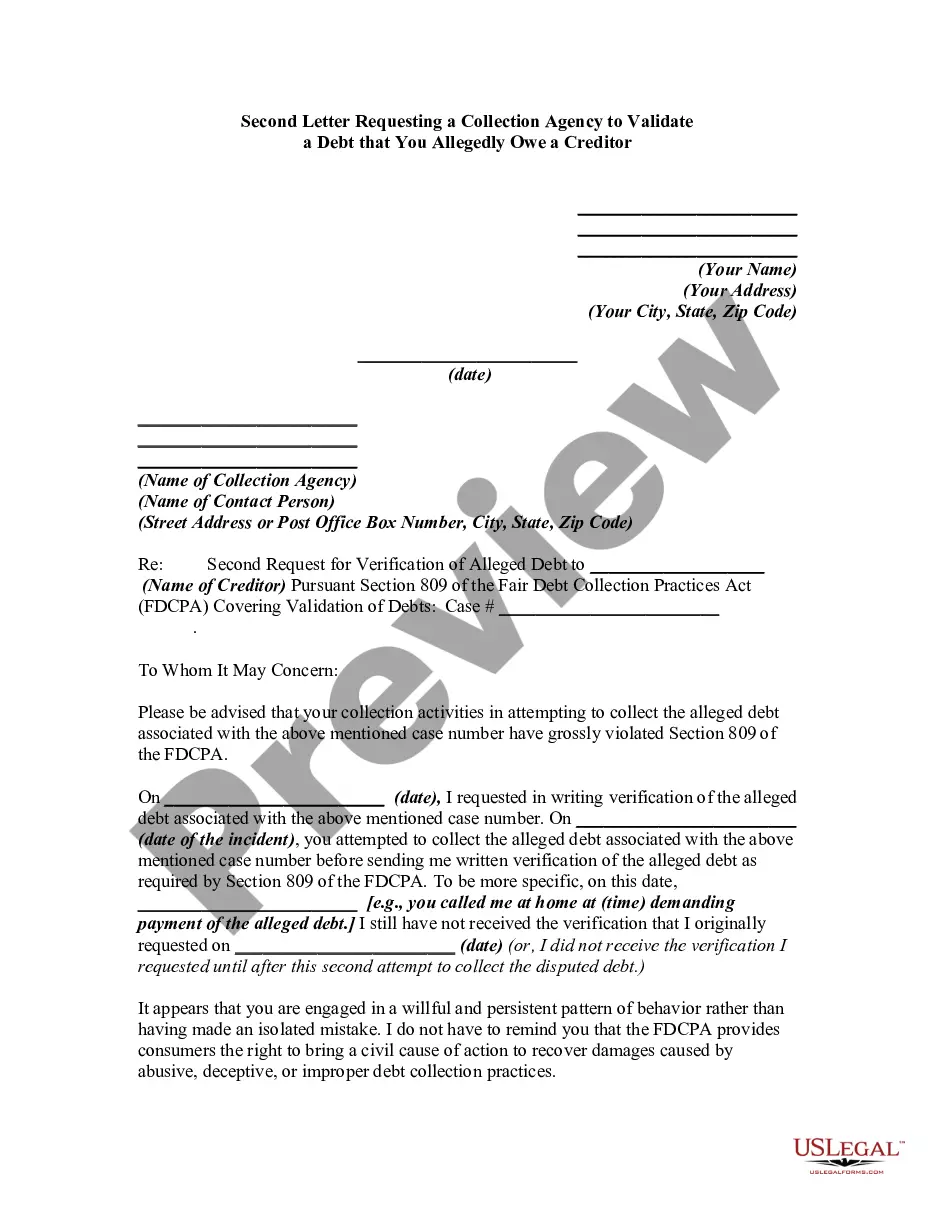
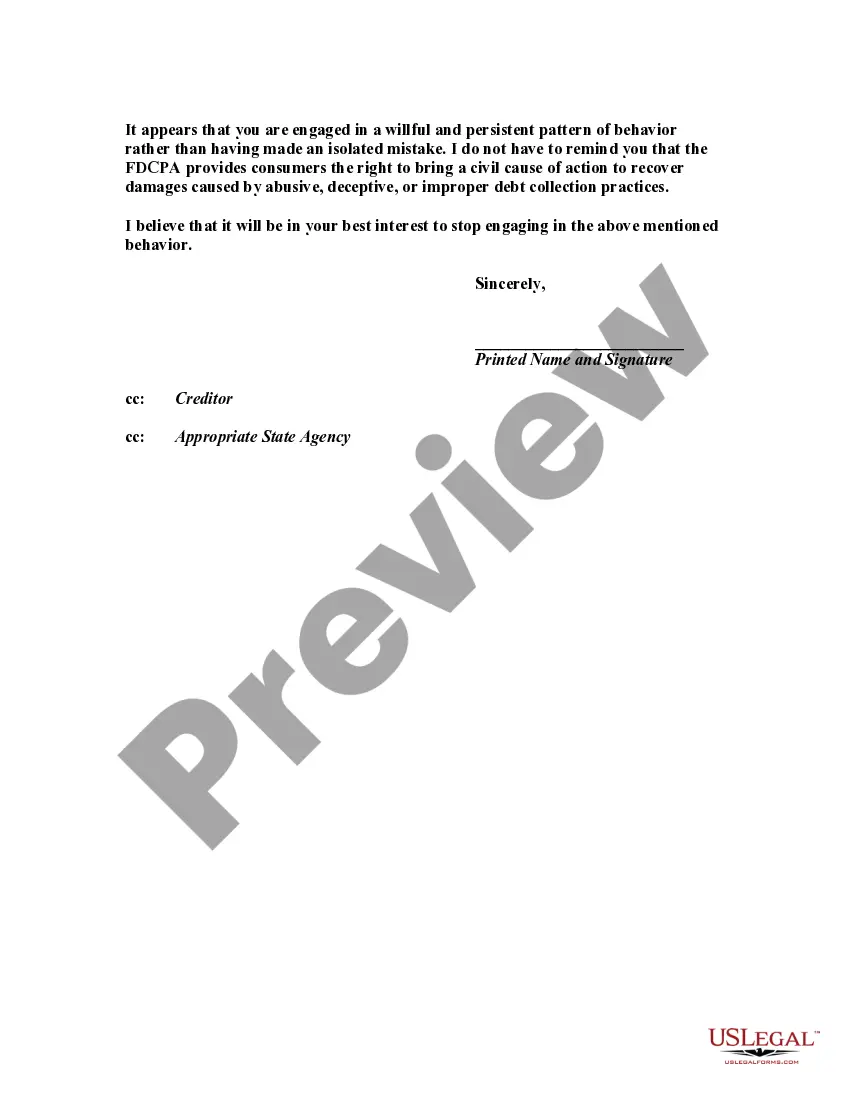
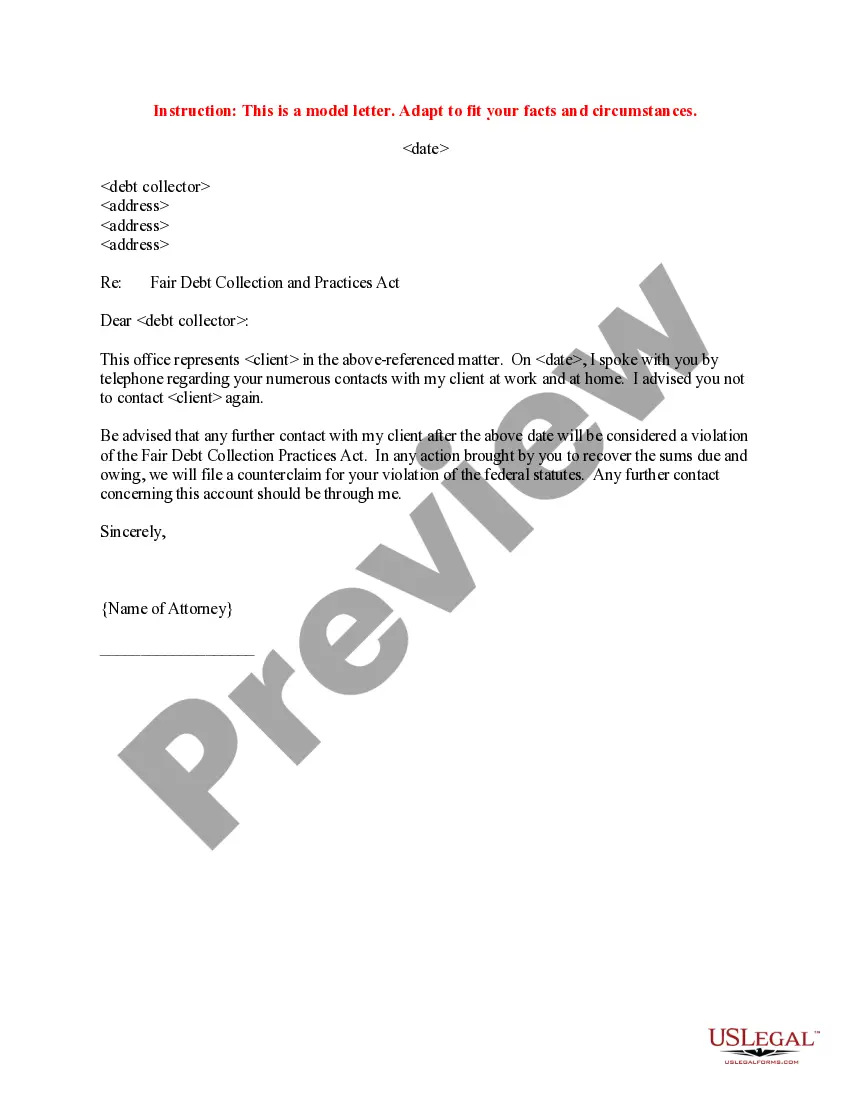
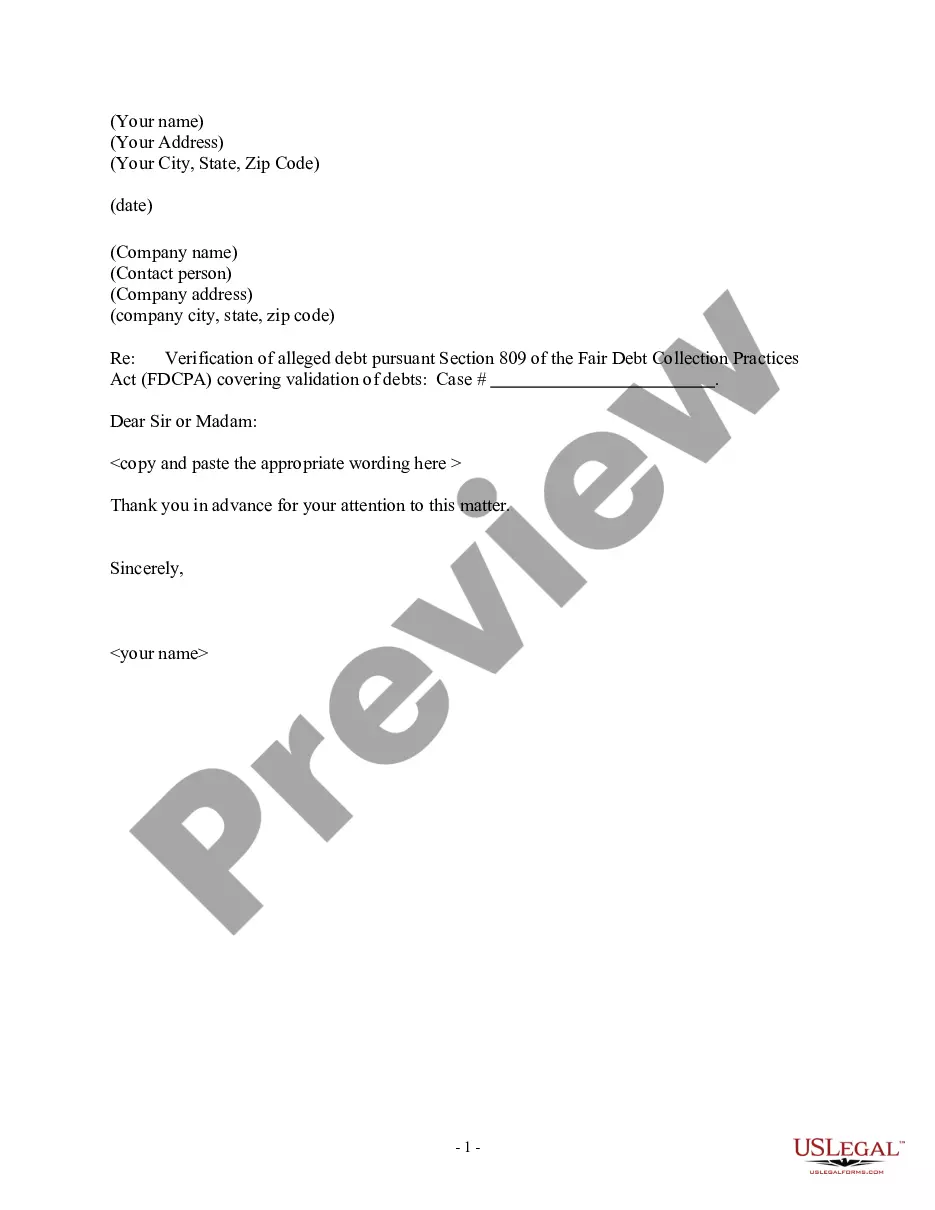
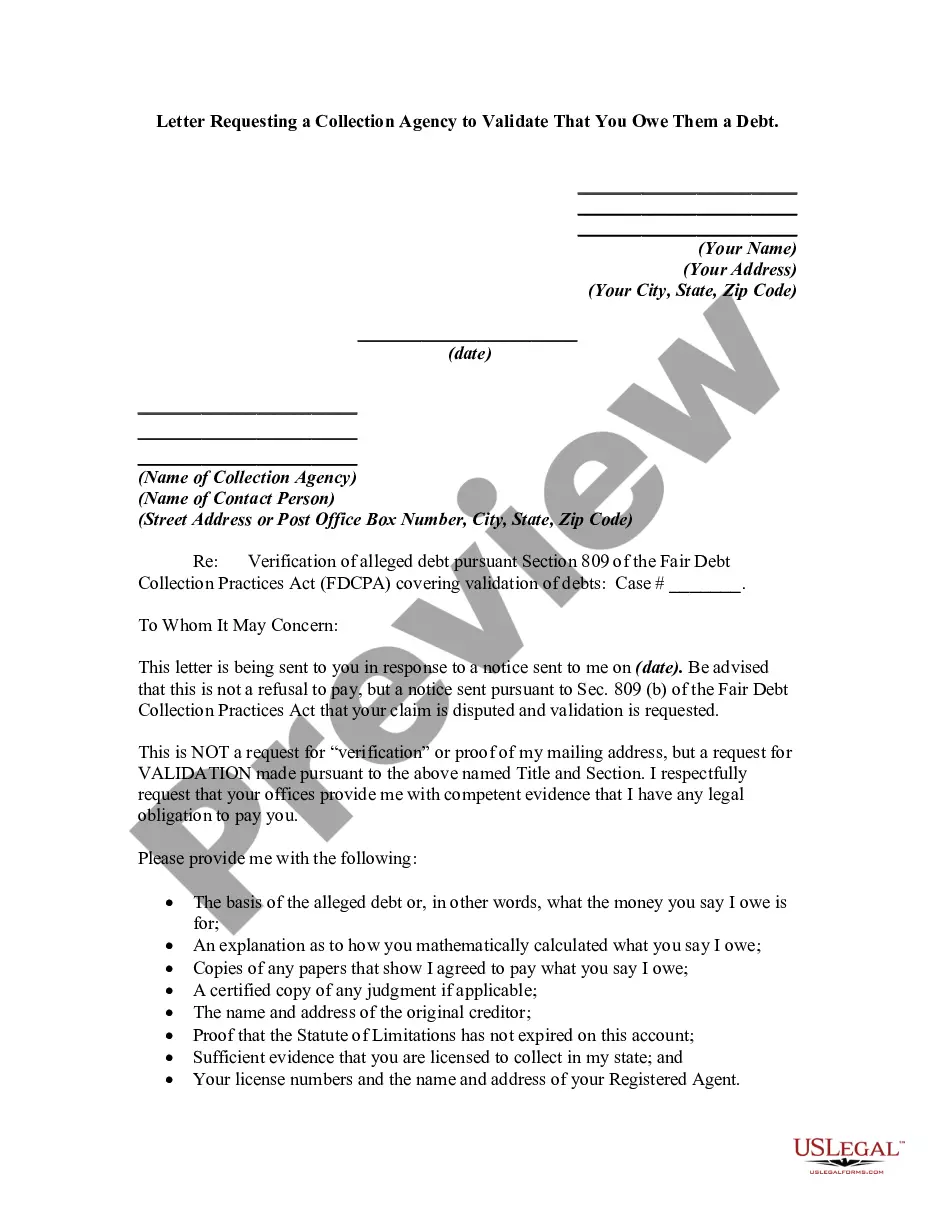
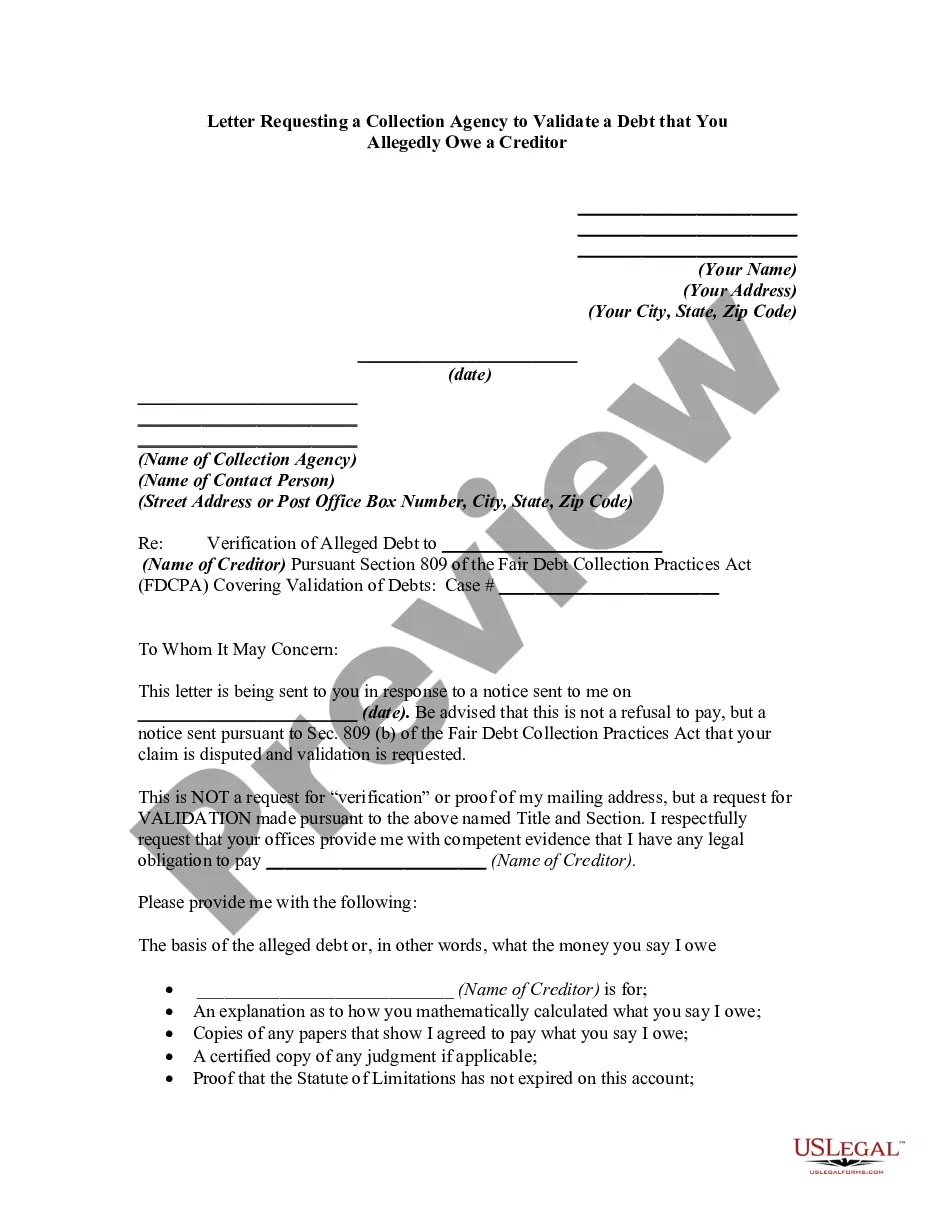
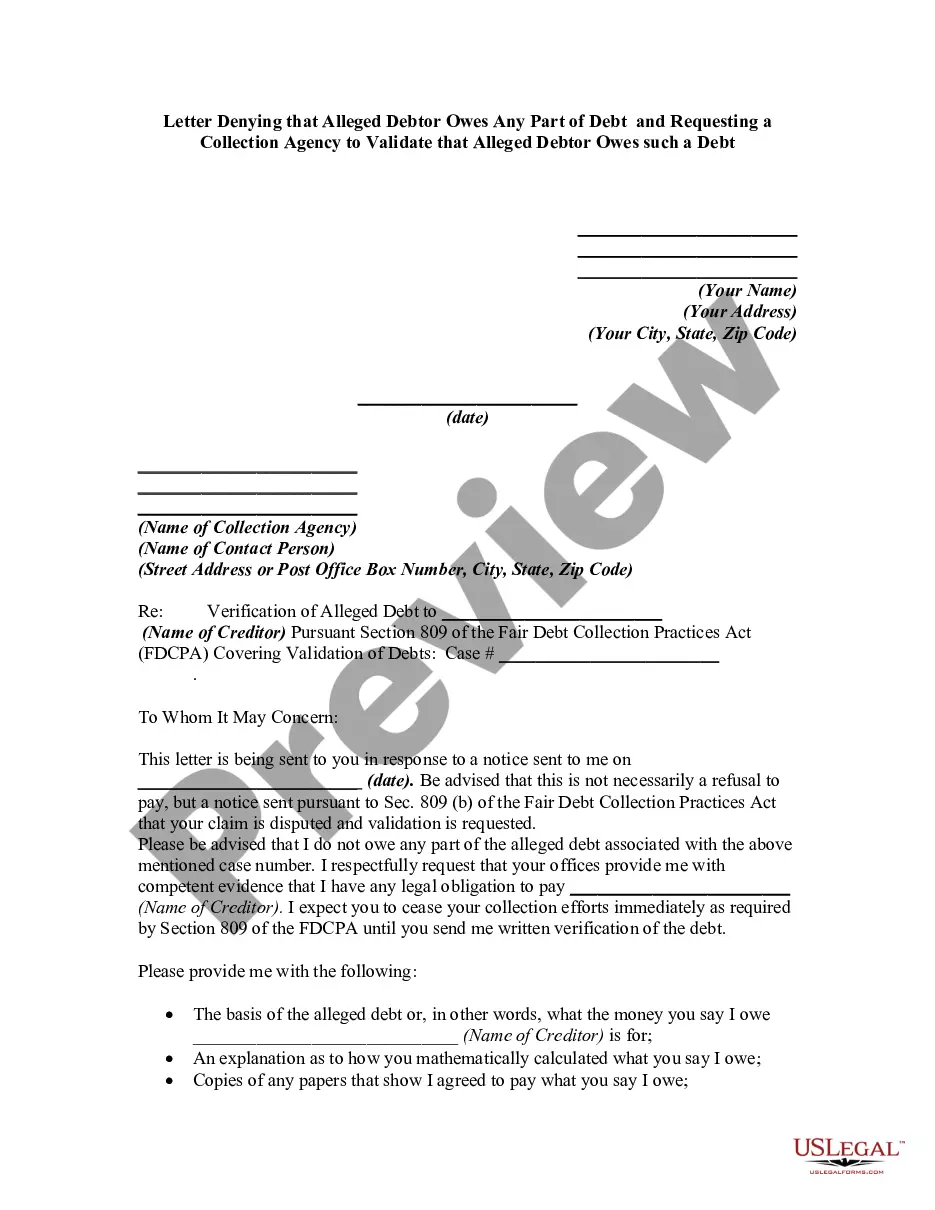
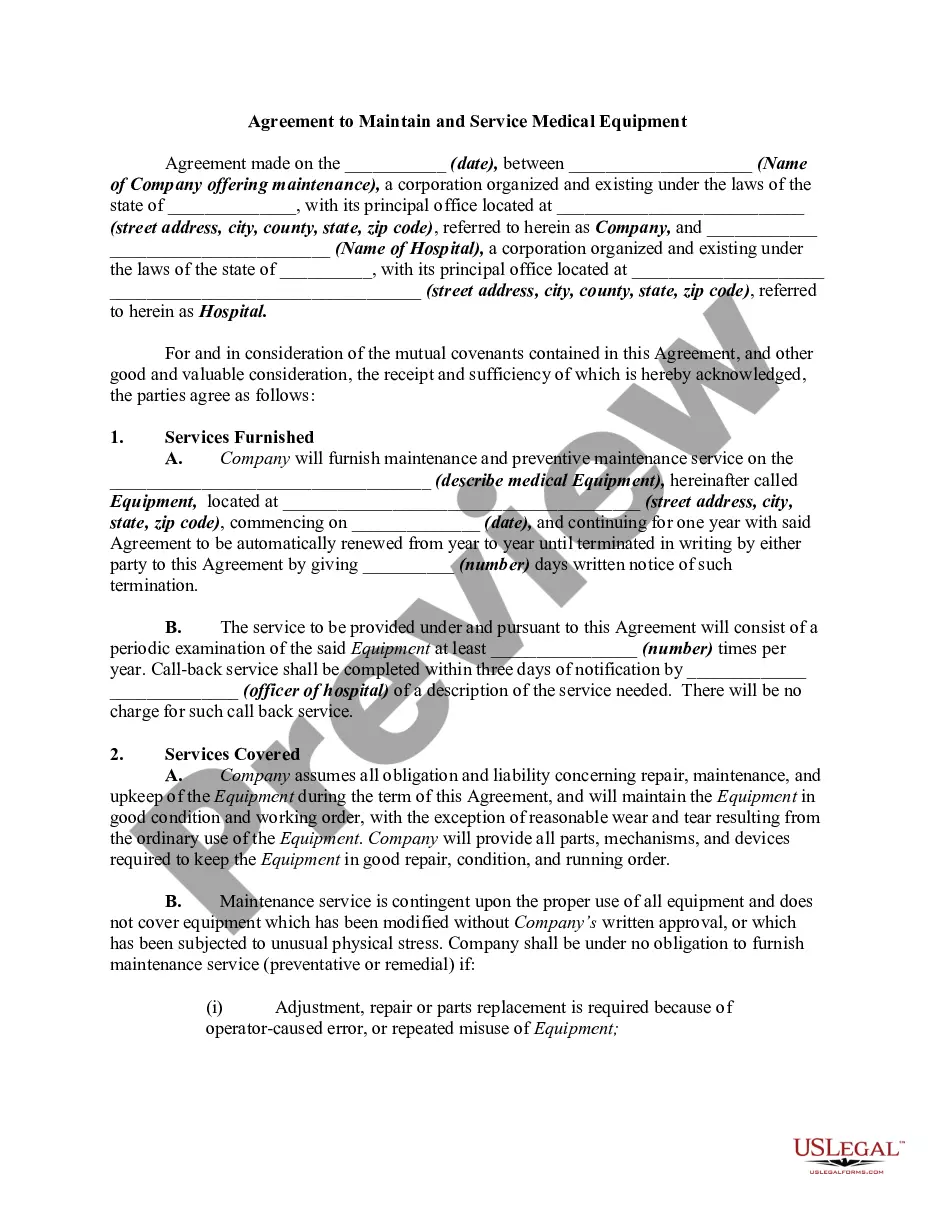

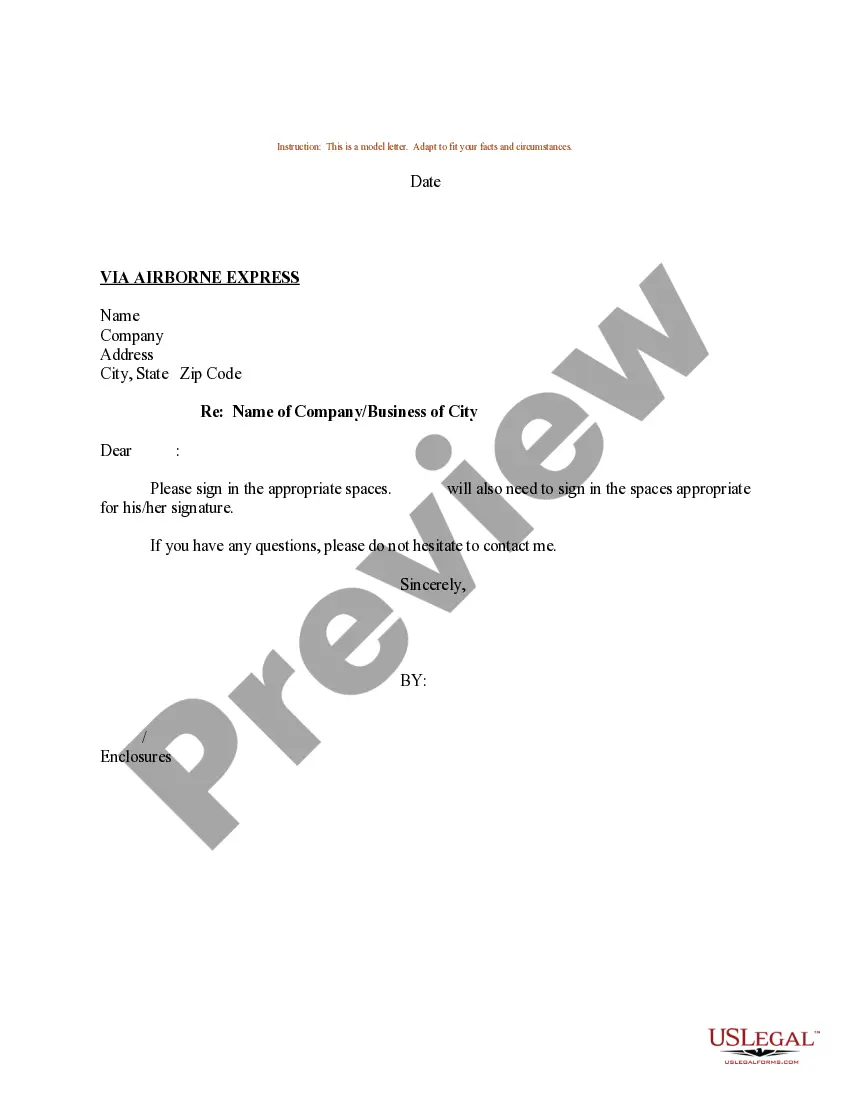
How to fill out Second Letter Requesting A Collection Agency To Validate A Debt That You Allegedly Owe A Creditor?
Are you presently situated in a location where you require documentation for both organizational or individual purposes on almost every occasion.
There are many legal document templates available online, but finding reliable ones isn't straightforward.
US Legal Forms provides thousands of templates, such as the Kansas Second Letter Requesting a Collection Agency to Validate a Debt that You Allegedly Owe a Creditor, crafted to comply with state and federal laws.
Once you locate the appropriate form, click Purchase now.
Choose the pricing plan you want, fill in the necessary information to create your account, and pay for your order using either PayPal or a credit card.
- If you are already familiar with the US Legal Forms website and have an account, simply Log In.
- Then, you can download the Kansas Second Letter Requesting a Collection Agency to Validate a Debt that You Allegedly Owe a Creditor template.
- If you do not have an account and want to start using US Legal Forms, follow these steps.
- Select the form you need and ensure it is for your specific city/state.
- Utilize the Preview button to examine the document.
- Review the information to confirm you have selected the correct form.
- If the form is not what you are looking for, use the Search field to find the form that meets your needs and requirements.
Form popularity
FAQ
An example of a letter to verify debt would start with your contact information, followed by the agency's details. In the body, clearly state that you are seeking validation of the debt, reference the Kansas Second Letter Requesting a Collection Agency to Validate a Debt that You Allegedly Owe a Creditor, and outline what validation documents you expect to receive. This letter should be concise, respectful, and clearly articulate your request for proof that the debt is valid and owed to the stated creditor.
§ 1006.34 Notice for validation of debts.Deceased consumers.Bankruptcy proofs of claim.In general.Subsequent debt collectors.Last statement date.Last payment date.Transaction date.Assumed receipt of validation information.More items...
You can submit a complaint via the FTC website under the link for consumer complaint. Contact each credit reporting agency and dispute the debt. You can do this via their websites. Notify them that you have failed to receive debt verification from the debt collector.
The validation notice is meant to help you recognize whether the debt is yours and dispute the debt if it is not yours. The notice generally must include: A statement that the communication is from a debt collector. The name and mailing information of the debt collector and the consumer.
In dismissing a putative class action under the Fair Debt Collection Practices Act (FDCPA), the Court held that a debt collector may place the validation notice in the body of an email serving as the initial communication with the consumer without having to comply with the Electronic Signatures in Global Commerce Act (
I am requesting that you provide verification of this debt. Please send the following information: The name and address of the original creditor, the account number, and the amount owed. Verification that there is a valid basis for claiming I am required to pay the current amount owed.
Debt validation is your federal right granted under the Fair Debt Collection Practices Act (FDCPA). To request debt validation, you must send a written request to the debt collector within 30 days of being contacted by the collection agency.
The key is to be thorough in your request for debt verification. In your letter, ask for details on: Why the collector thinks you owe the debt: Ask who the original creditor is and request documentation that verifies you owe the debt, such as a copy of the original contract.
While a debt validation letter provides information about the debt the collection agency claims you owe, a verification letter must prove it. In other words, if the collection agency doesn't have enough evidence to prove you owe it, their hands may be tied.
To request verification, send a letter to the collection agency stating that you dispute the validity of the debt and that you want documentation verifying the debt. Also, request the name and address of the original creditor.