Kansas Cable Consortium Cable Television Franchise Agreement
Description
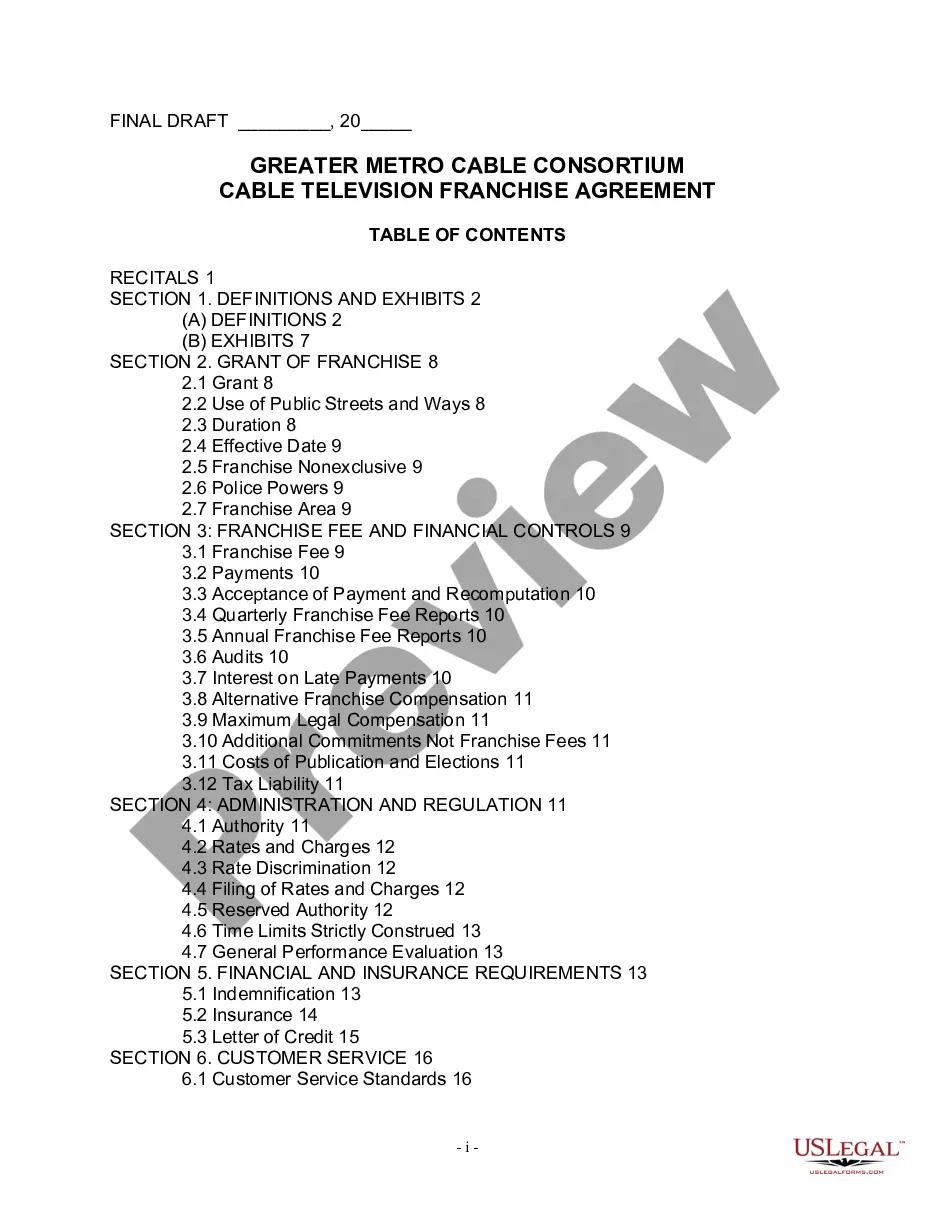
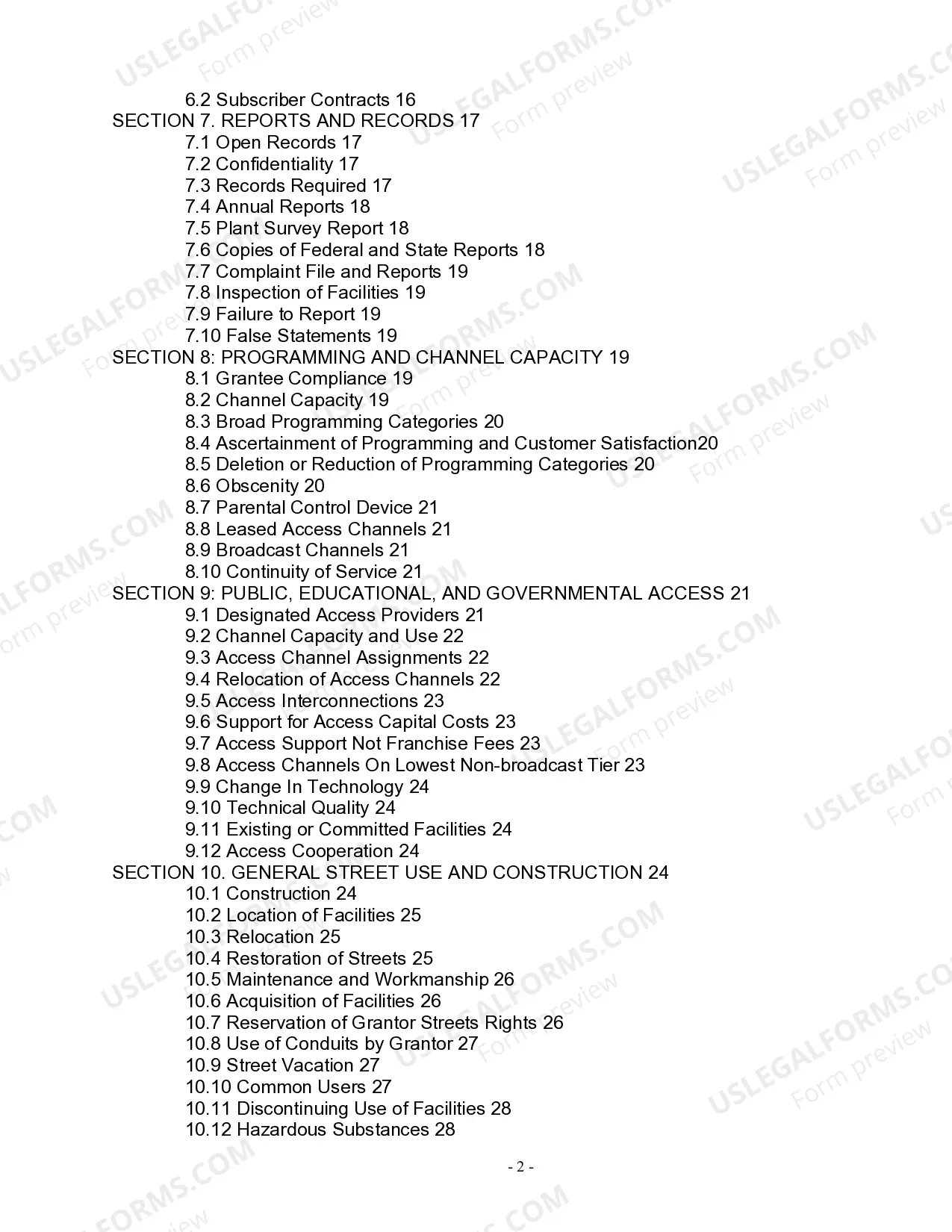
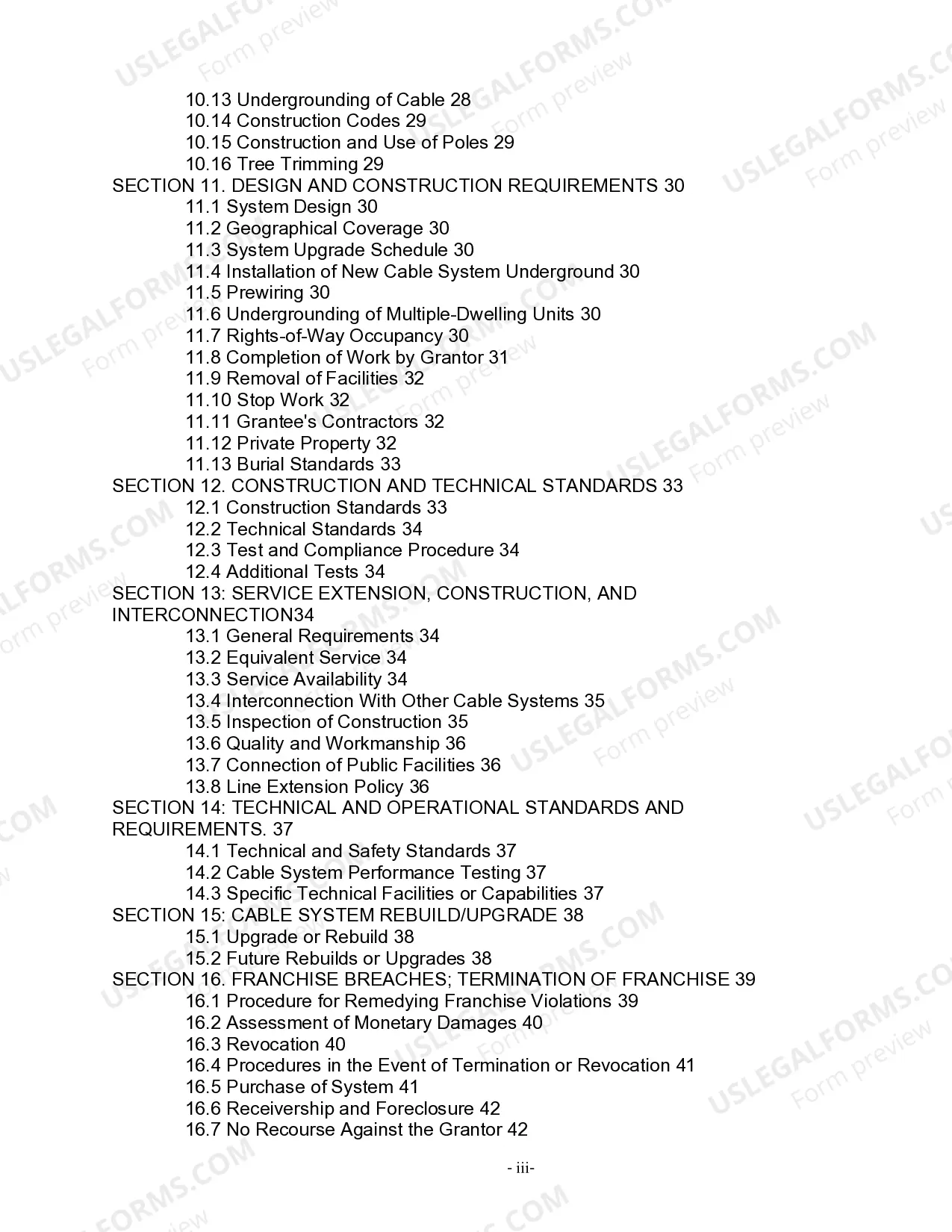
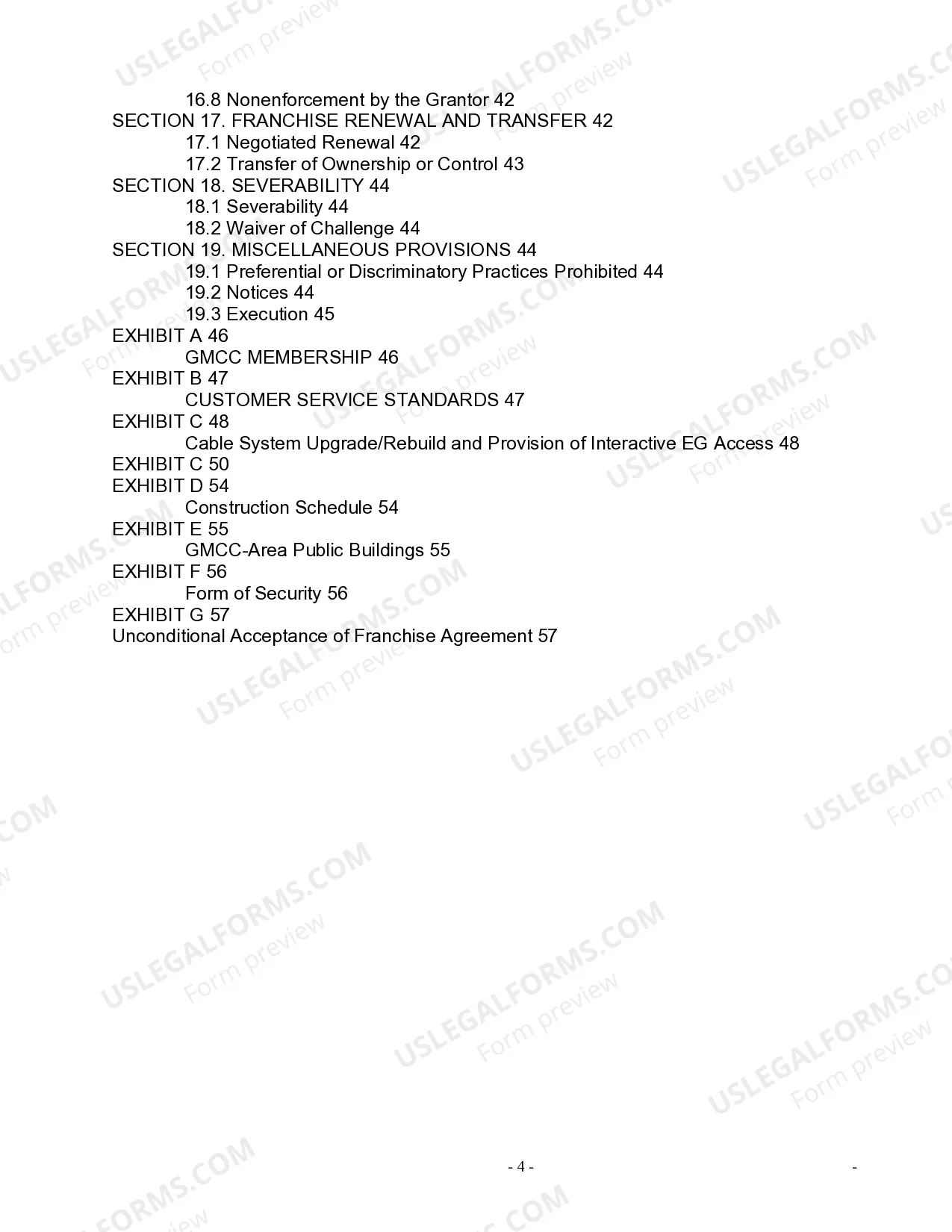
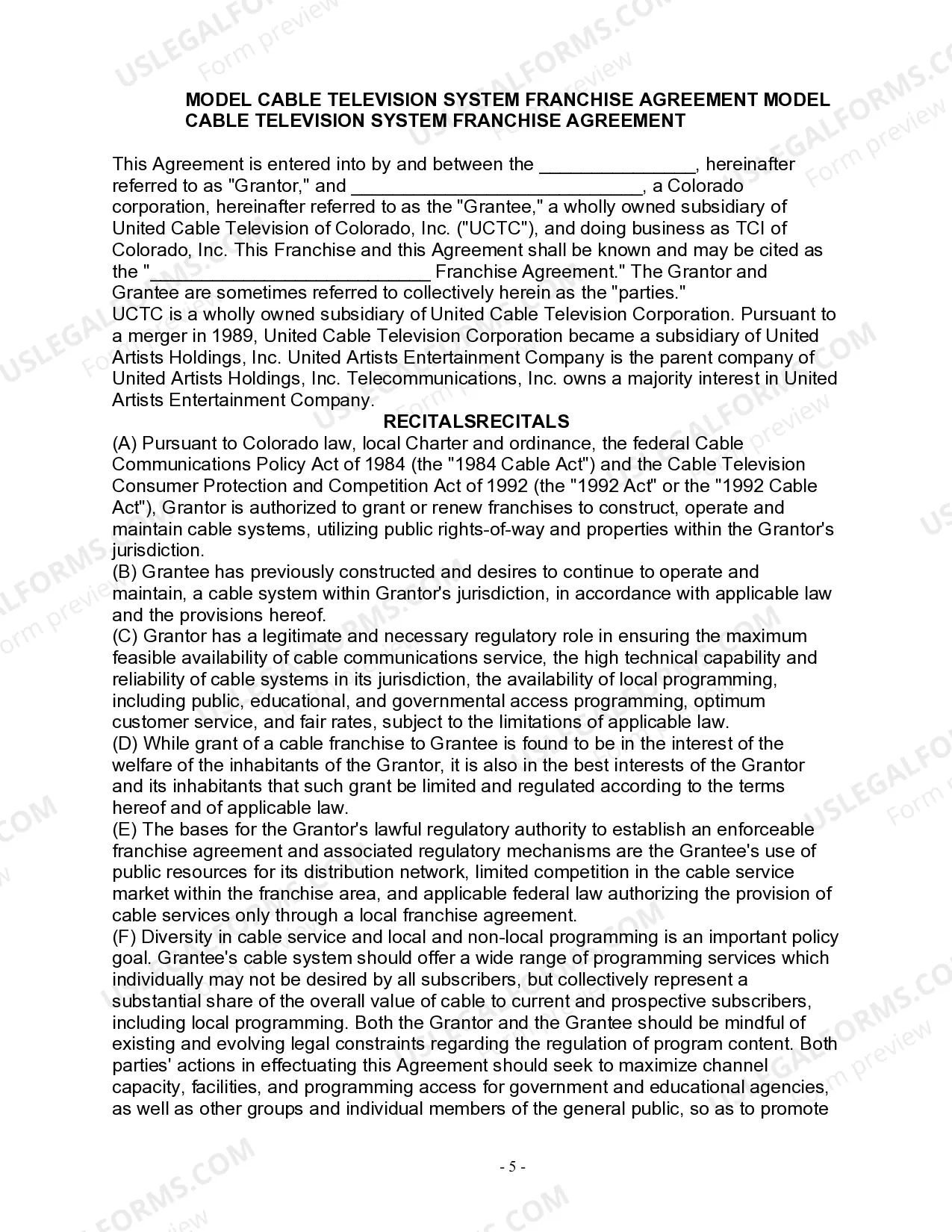
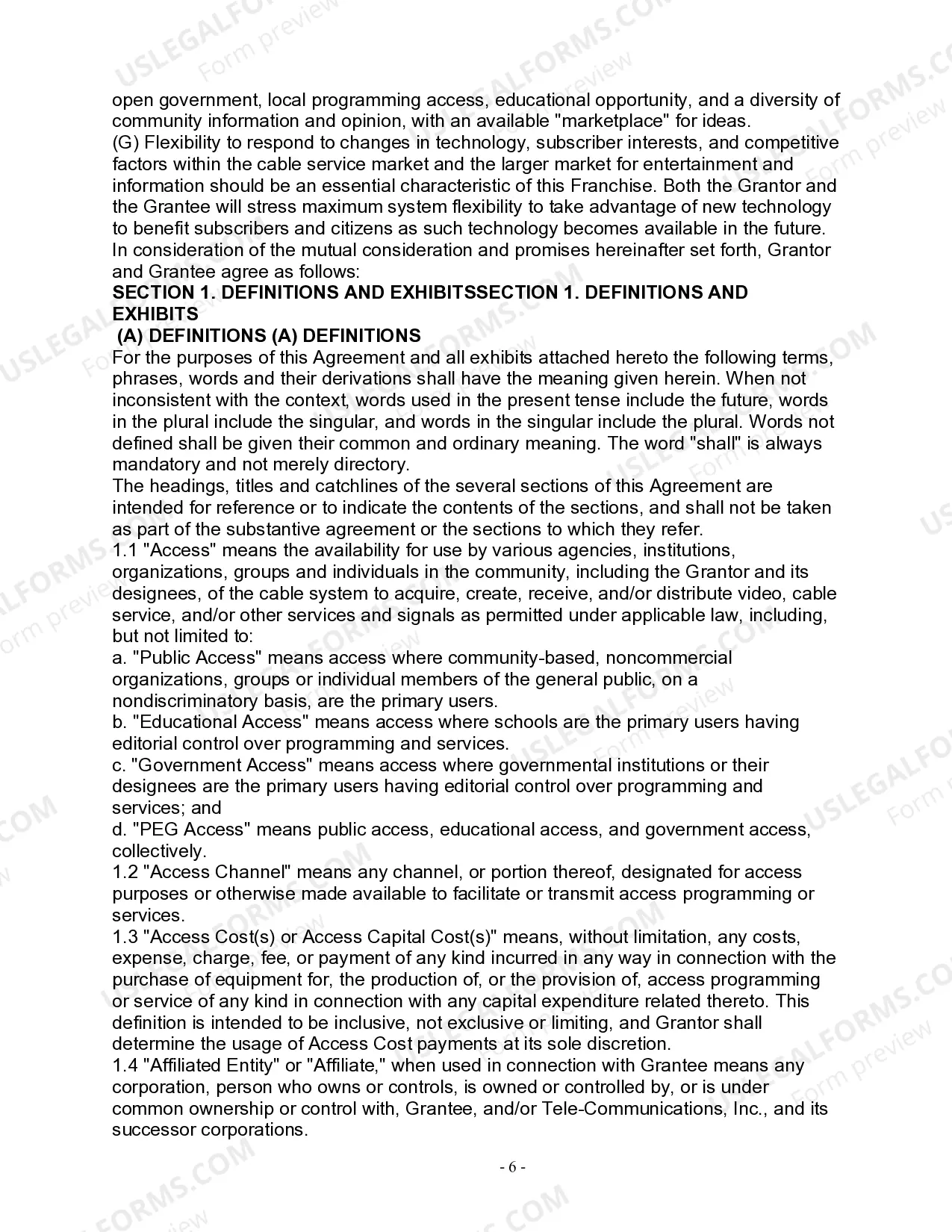
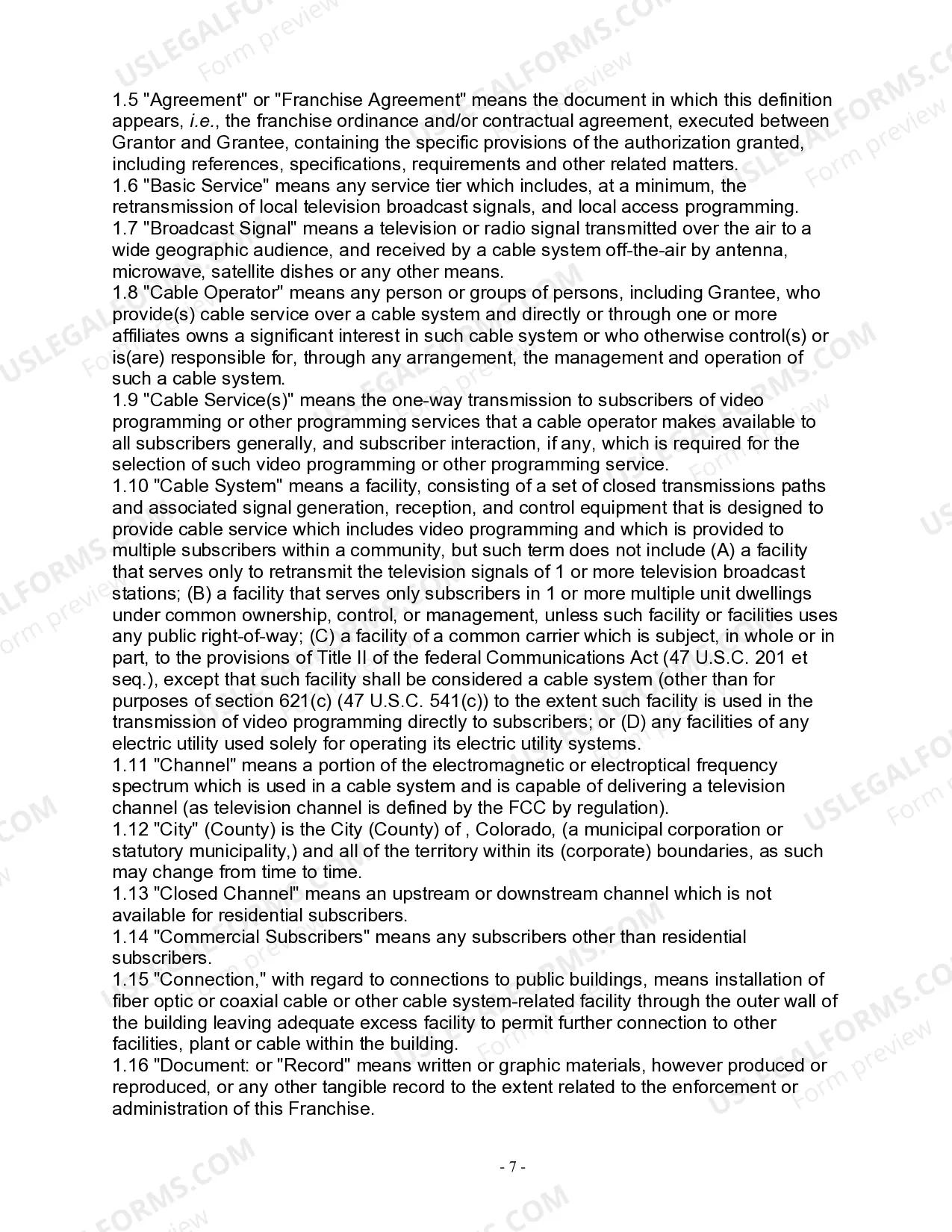


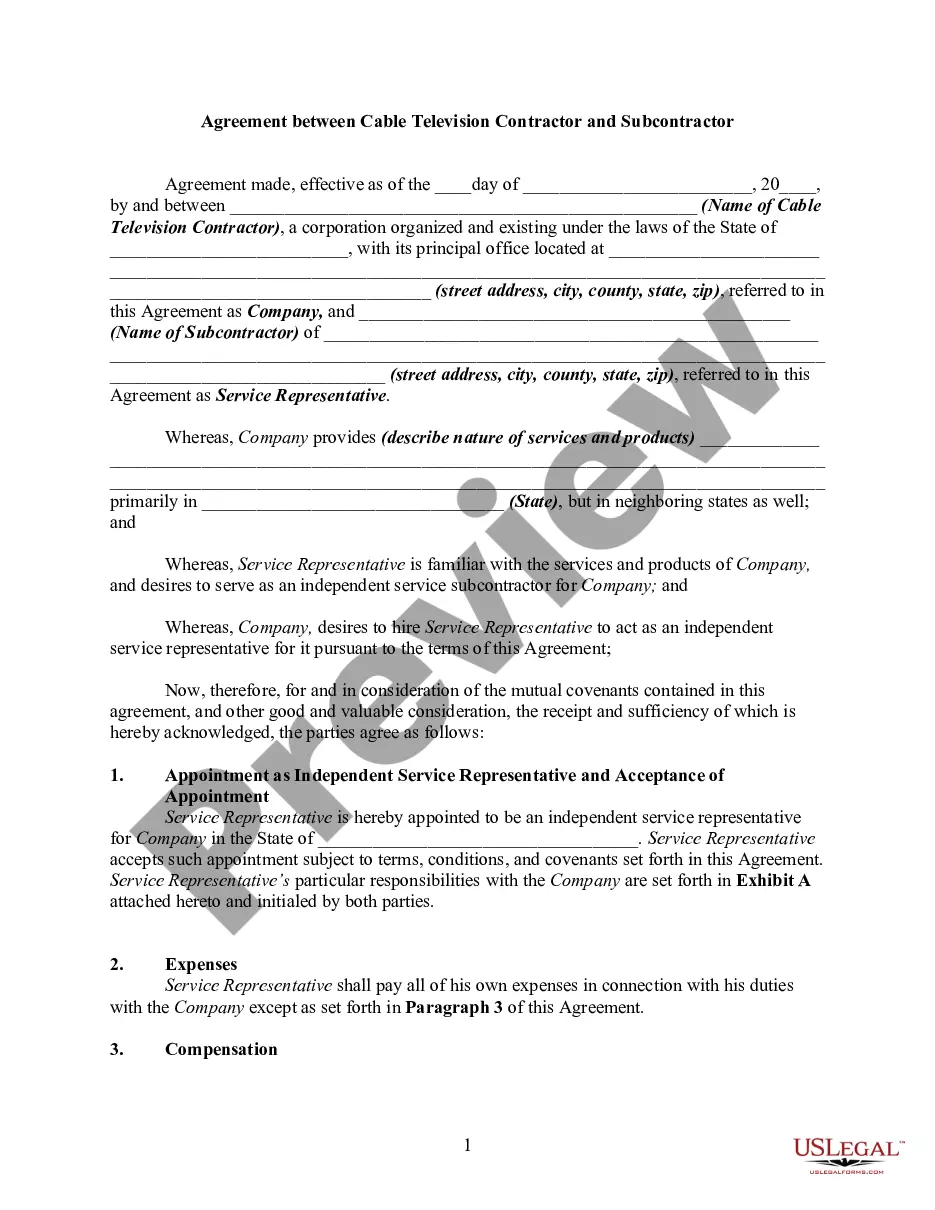





How to fill out Cable Consortium Cable Television Franchise Agreement?
It is feasible to dedicate numerous hours online searching for the legal document template that meets the federal and state requirements you will need.
US Legal Forms offers thousands of legal forms that can be reviewed by professionals.
You can effortlessly acquire or print the Kansas Cable Consortium Cable Television Franchise Agreement from your service.
If available, utilize the Preview option to browse the document template as well. To find another version of the form, use the Lookup field to find the template that suits your needs and requirements. Once you have located the template you desire, click Buy now to proceed. Select the pricing plan you prefer, enter your details, and register for an account on US Legal Forms. Complete the transaction. You may use your Visa or Mastercard or PayPal account to purchase the legal form. Choose the format of the document and download it to your device. Make modifications to the document if possible. You can complete, modify, sign, and print the Kansas Cable Consortium Cable Television Franchise Agreement. Download and print thousands of document templates using the US Legal Forms website, which offers the largest collection of legal forms. Utilize professional and state-specific templates to address your business or personal needs.
- If you possess a US Legal Forms account, you can Log In and then select the Obtain option.
- Subsequently, you can complete, modify, print, or sign the Kansas Cable Consortium Cable Television Franchise Agreement.
- Every legal document template you purchase is yours indefinitely.
- To retrieve another copy of a purchased form, visit the My documents tab and click the relevant option.
- If you are visiting the US Legal Forms site for the first time, follow the simple instructions below.
- First, ensure that you have chosen the correct document template for the area/region of your preference.
- Review the form description to confirm you have selected the right form.
Form popularity
FAQ
The regulation of cable television falls under both federal and state authorities, primarily governed by the Federal Communications Commission (FCC) and local entities. The Kansas Cable Consortium Cable Television Franchise Agreement outlines specific compliance requirements for cable operators. This ensures that operators adhere to standards regarding service quality, programming, and consumer protections. For a comprehensive understanding of your obligations, reviewing the franchise agreement and local regulations is essential.
Franchise fees under the Kansas Cable Consortium Cable Television Franchise Agreement are considered taxable income. Local governments can impose these fees as a percentage of the gross revenue from cable services. It is crucial for cable operators to account for these fees in their financial reporting. For detailed guidance on tax implications, consulting with a tax professional or legal expert is advisable.
A franchise agreement serves as a contract between a local government and a cable provider, outlining the rights and responsibilities of both parties. Specifically, within the framework of the Kansas Cable Consortium Cable Television Franchise Agreement, this document ensures that cable providers deliver reliable services while adhering to local regulations. This agreement aims to protect consumer interests and promote fair competition in the cable industry.
Cable franchise fees can be utilized for various public purposes such as funding local government initiatives, supporting community programming, and maintaining public access channels. In the context of the Kansas Cable Consortium Cable Television Franchise Agreement, these fees help ensure that residents receive quality cable services while also benefiting the local community. Proper allocation of these funds can enhance educational resources and community engagement.
Yes, cable channels generally need a broadcast license to operate legally. This requirement ensures that channels comply with federal regulations and standards for broadcasting. If you are navigating the Kansas Cable Consortium Cable Television Franchise Agreement, being aware of licensing requirements is essential for a smooth operation and compliance with local laws.
Section 626 of the Cable Act outlines the rules governing cable franchises, including the requirements for local authorities to grant franchises. This section emphasizes the need for fair competition and consumer protection. Understanding this section is vital for any entity involved in the Kansas Cable Consortium Cable Television Franchise Agreement, as it provides a framework for franchise negotiations and obligations.
Cable franchises, such as those offered through the Kansas Cable Consortium Cable Television Franchise Agreement, are typically awarded for a term of 10 to 15 years. This duration allows providers to establish their services and invest in infrastructure while ensuring compliance with local regulations. When entering into such agreements, it is crucial to understand the implications of this time frame on service delivery and community engagement.