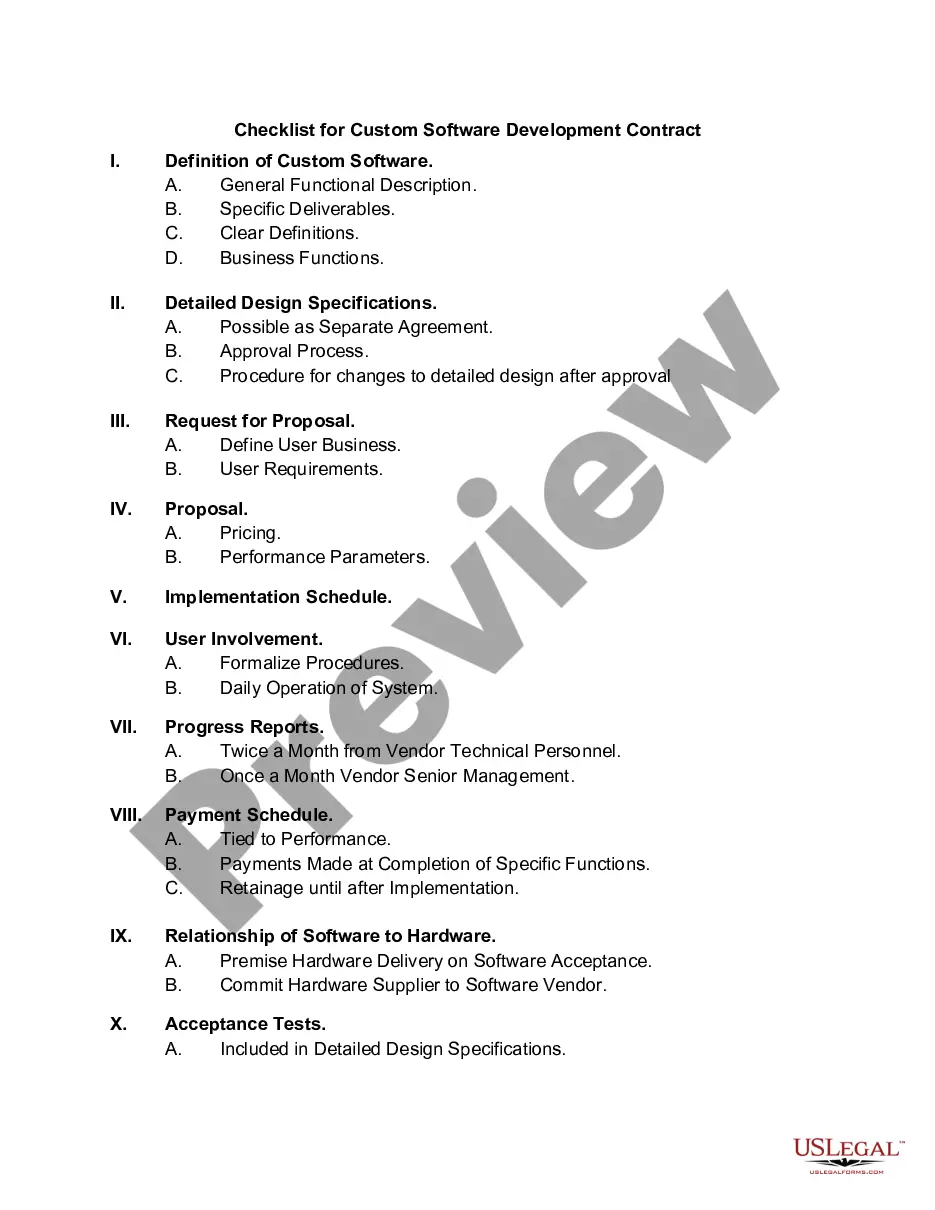
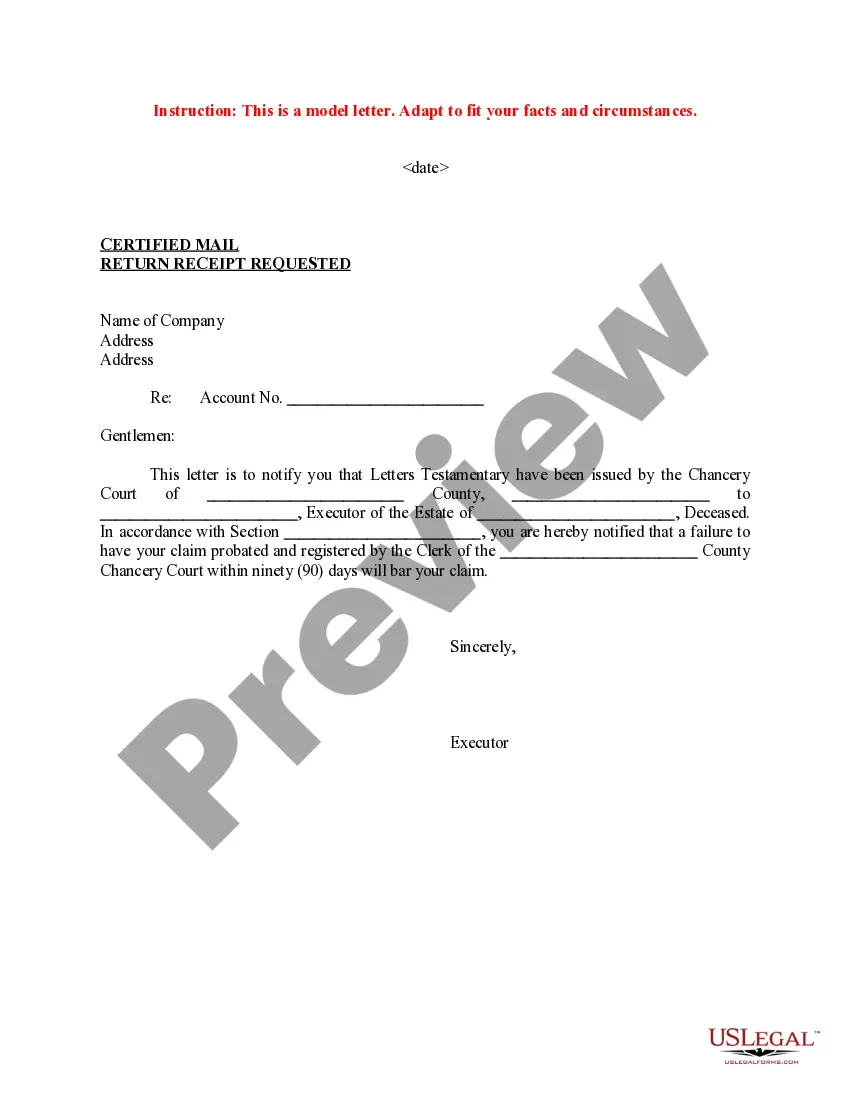
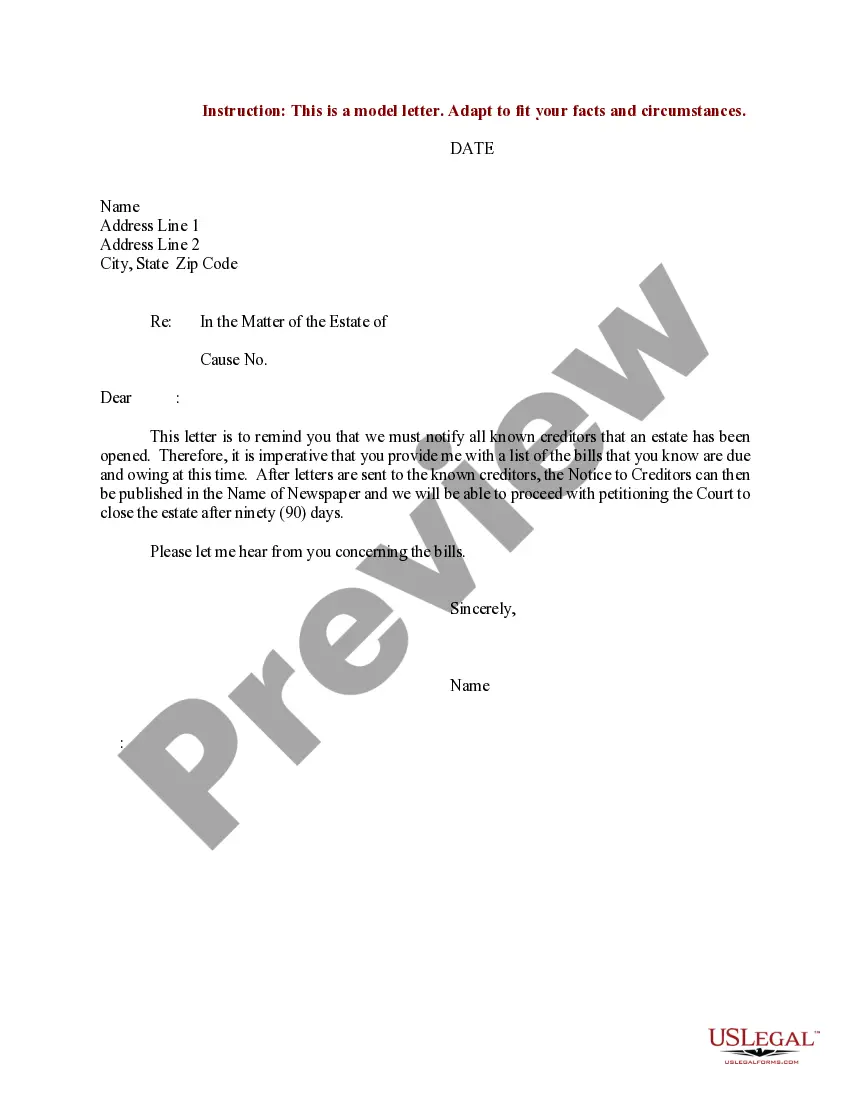
Kansas Sample Letter for Notification to Creditor to Probate and Register Claim
Description

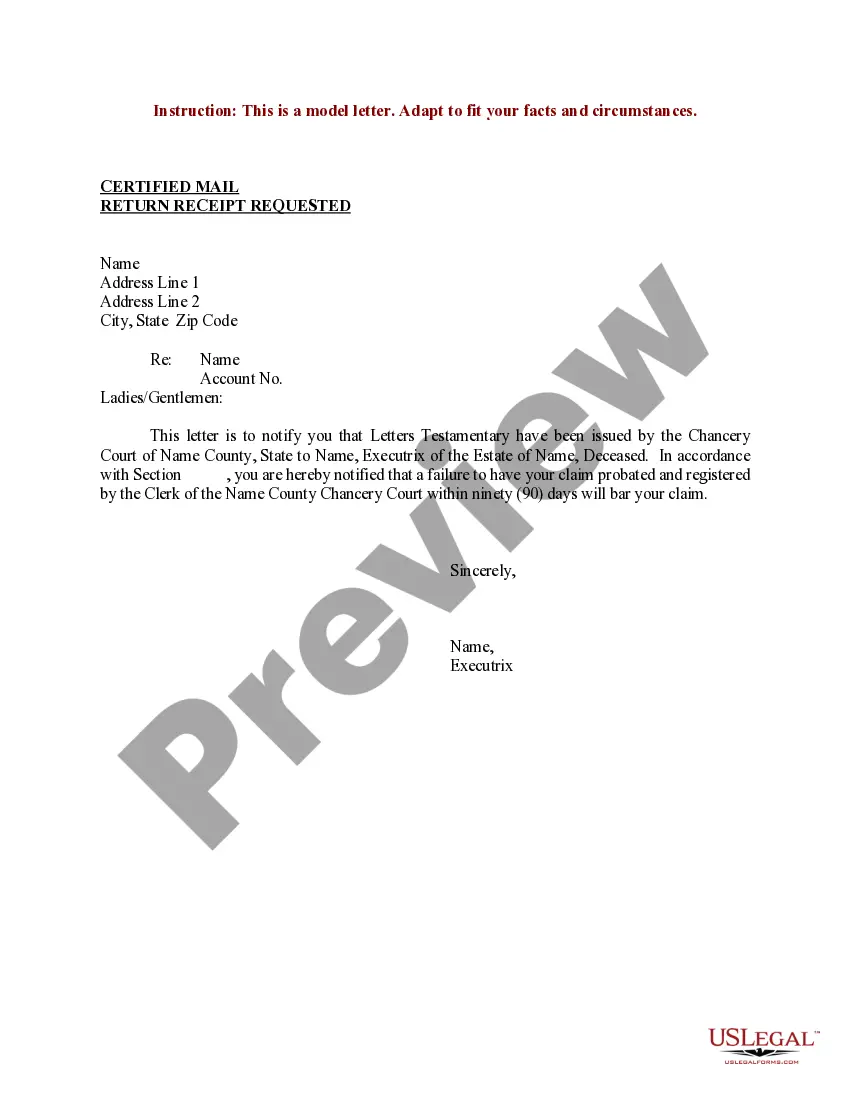

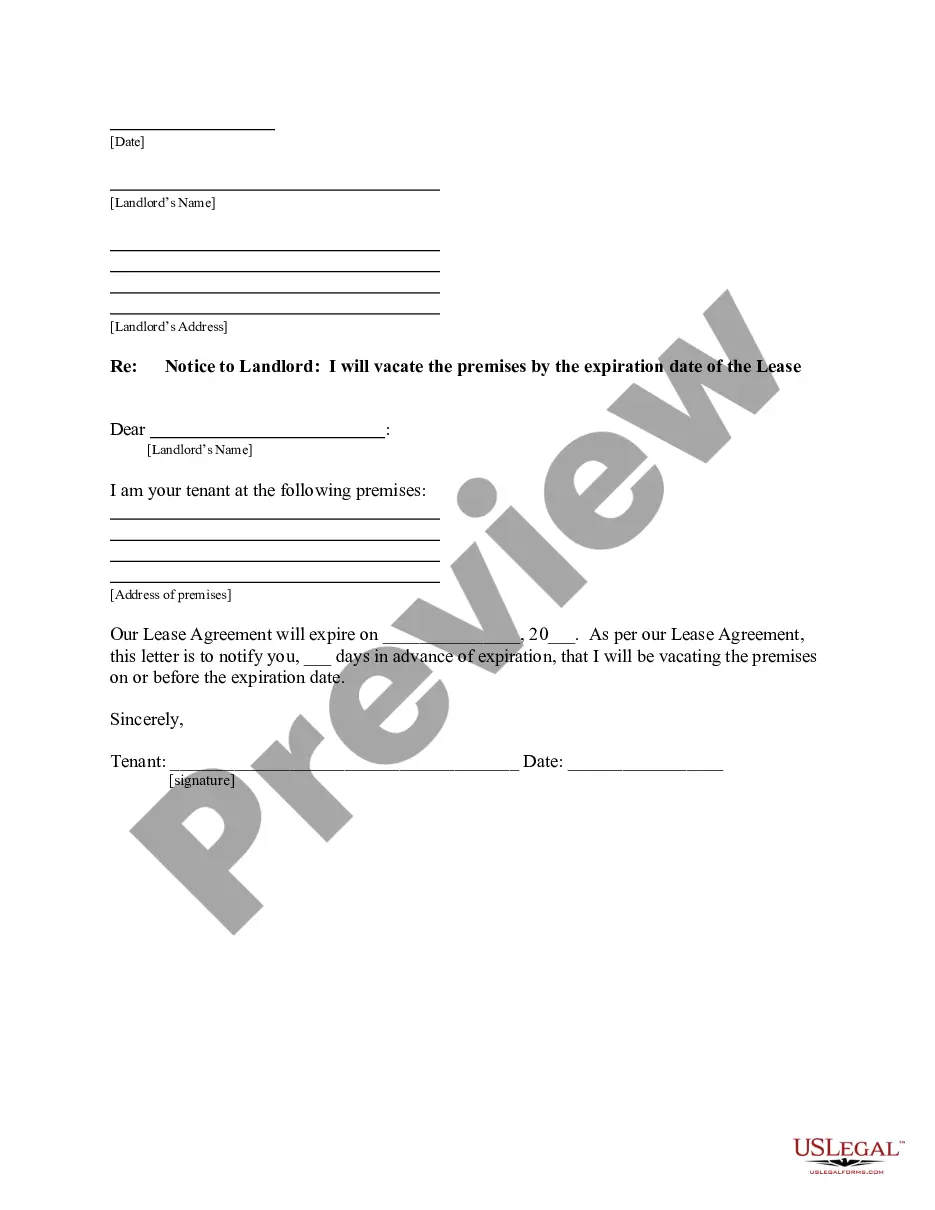
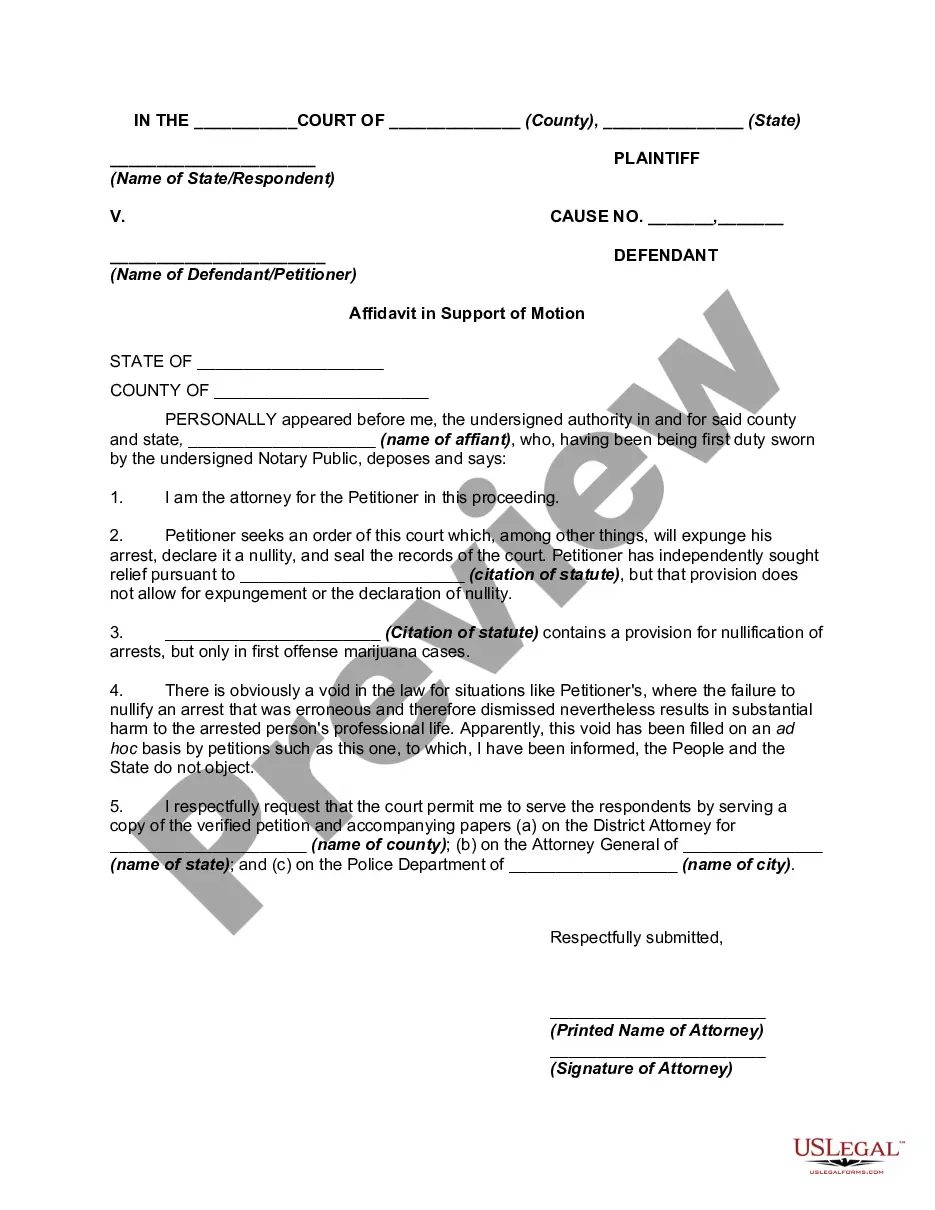
How to fill out Sample Letter For Notification To Creditor To Probate And Register Claim?
US Legal Forms - among the largest libraries of authorized kinds in America - provides an array of authorized papers themes you can download or print. Making use of the website, you can find a large number of kinds for enterprise and personal purposes, sorted by groups, claims, or keywords and phrases.You will find the newest versions of kinds like the Kansas Sample Letter for Notification to Creditor to Probate and Register Claim within minutes.
If you currently have a subscription, log in and download Kansas Sample Letter for Notification to Creditor to Probate and Register Claim in the US Legal Forms local library. The Acquire key will appear on every single form you view. You get access to all formerly delivered electronically kinds inside the My Forms tab of your bank account.
In order to use US Legal Forms the first time, here are straightforward recommendations to help you get started off:
- Be sure you have picked out the best form for your metropolis/county. Click the Preview key to check the form`s information. See the form outline to ensure that you have selected the correct form.
- In case the form doesn`t match your demands, make use of the Search area towards the top of the screen to get the one that does.
- When you are content with the shape, affirm your decision by simply clicking the Get now key. Then, select the rates plan you want and provide your qualifications to register for the bank account.
- Process the financial transaction. Make use of charge card or PayPal bank account to finish the financial transaction.
- Select the formatting and download the shape on your own device.
- Make modifications. Fill out, modify and print and indicator the delivered electronically Kansas Sample Letter for Notification to Creditor to Probate and Register Claim.
Each format you put into your account lacks an expiration day and is also yours permanently. So, if you would like download or print one more duplicate, just visit the My Forms portion and click on in the form you need.
Gain access to the Kansas Sample Letter for Notification to Creditor to Probate and Register Claim with US Legal Forms, one of the most comprehensive local library of authorized papers themes. Use a large number of professional and condition-particular themes that meet your organization or personal requires and demands.
Form popularity
FAQ
As part of the probate process, letters testamentary are issued by your state's probate court. To obtain the document, you need a copy of the will and the death certificate, which are then filed with the probate court along with whatever letters testamentary forms the court requires as part of your application.
KS Form 725, which may also referred to as Letters Testamentary Issued Under The Kansas Simplified Estates Act, is a probate form in Kansas. It is used by executors, personal representatives, trustees, guardians & other related parties during the probate & estate settlement process.
Once the will is determined to be valid, the next step is the probate process. Probate proceedings are usually only required if the deceased person owned any assets in their name only. Other assets, also known as non-probate property, can generally be transferred to the other owner without probate.
However, most assets held in the sole name of the deceased person require probate before being transferred to the beneficiaries named in a will. If the funds in the estate are $40,000 or less, no probate is necessary and all that is required is an affidavit from the heir(s) and a copy of the death certificate.
The first step to probate is to file a petition. Filing must happen within 6 months after the date of death. Persons having knowledge and access to a will may offer it for probate at any time within the 6 months following the death.
A Letter of Testamentary is a document granted to the Executor of an estate by the probate court. This document gives the Executor the authority he or she will need to formally act on behalf of the decedent. It gives the right to handle financial and other affairs related to closing out the estate.
While the Kansas probate process usually takes several months to complete, the length of time depends on the size and complexity of the assets involved. Regardless, there are certain steps that must be taken in every situation, so probate typically takes at least six months to finish.