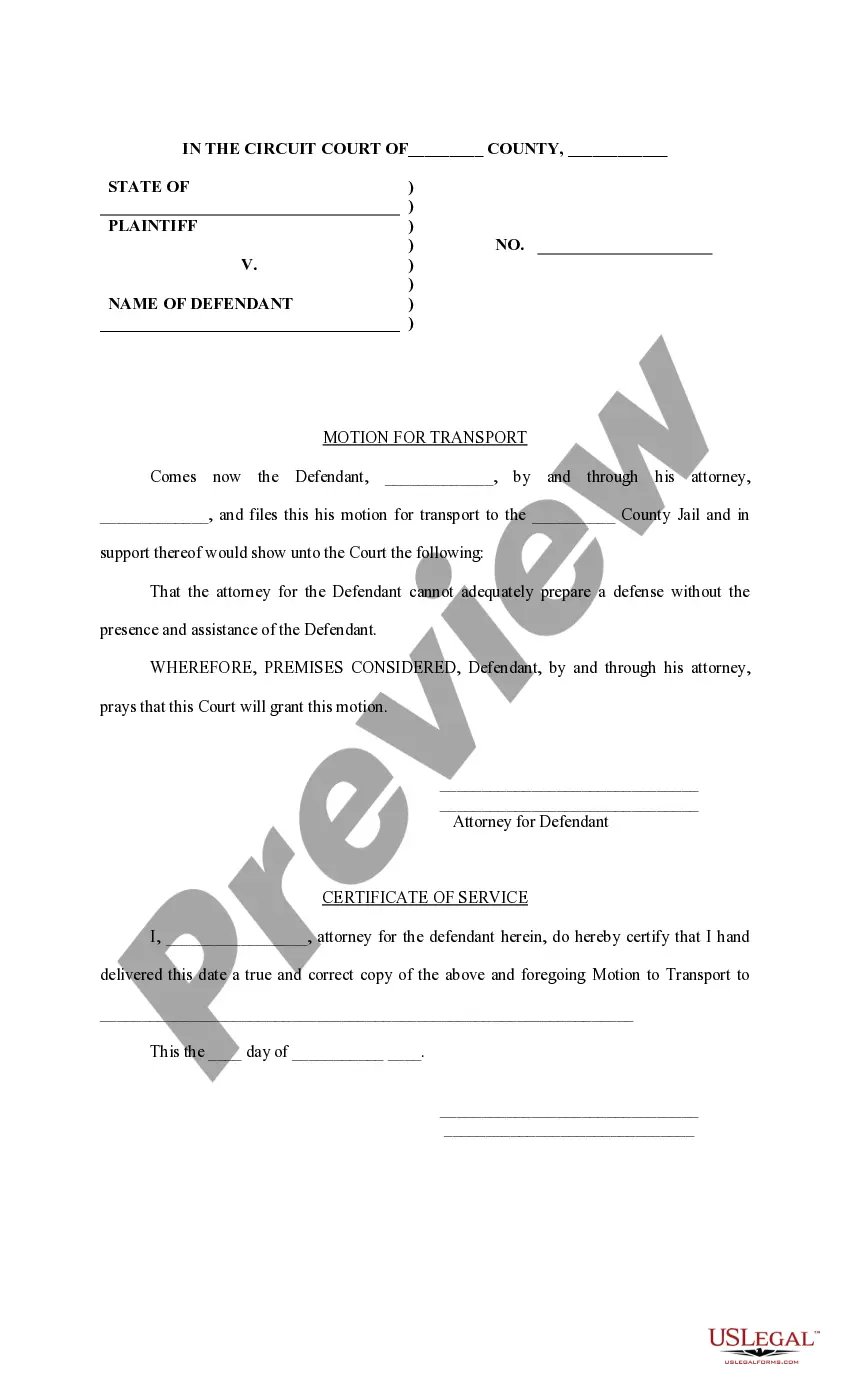
Kansas Motion for Transport
Description
Get your form ready online
Our built-in tools help you complete, sign, share, and store your documents in one place.
Make edits, fill in missing information, and update formatting in US Legal Forms—just like you would in MS Word.
Download a copy, print it, send it by email, or mail it via USPS—whatever works best for your next step.
Sign and collect signatures with our SignNow integration. Send to multiple recipients, set reminders, and more. Go Premium to unlock E-Sign.
If this form requires notarization, complete it online through a secure video call—no need to meet a notary in person or wait for an appointment.
We protect your documents and personal data by following strict security and privacy standards.

Make edits, fill in missing information, and update formatting in US Legal Forms—just like you would in MS Word.

Download a copy, print it, send it by email, or mail it via USPS—whatever works best for your next step.

Sign and collect signatures with our SignNow integration. Send to multiple recipients, set reminders, and more. Go Premium to unlock E-Sign.

If this form requires notarization, complete it online through a secure video call—no need to meet a notary in person or wait for an appointment.

We protect your documents and personal data by following strict security and privacy standards.
Looking for another form?




How to fill out Motion For Transport?
Have you found yourself in a situation where you need documents for either business or personal purposes almost all the time.
There are numerous legal document templates available online, but finding ones you can trust can be challenging.
US Legal Forms offers thousands of document templates, including the Kansas Motion for Transport, which can be filled out to meet state and federal requirements.
Once you find the appropriate form, click on Purchase now.
Choose the pricing plan you prefer, fill in the required information to create your account, and complete the transaction using your PayPal or credit card.
- If you are already familiar with the US Legal Forms website and have an account, simply Log In.
- After that, you can download the Kansas Motion for Transport template.
- If you do not have an account and wish to start using US Legal Forms, follow these steps.
- Find the form you need and ensure it is for the correct city/state.
- Use the Preview button to review the form.
- Check the details to confirm you have selected the right document.
- If the form is not what you're looking for, utilize the Search field to locate the form that fits your needs and specifications.
Form popularity
FAQ
A motion is a written request for the judge to issue an order or make a decision on a contested issue. You can use this procedural device to request relief on a specific detail of a case, like a hearing date. Under certain circumstances, you can also use it to resolve the whole case before it goes to court.
A motion is a formal request made by any party for a desired ruling, order, or judgment. The party that makes the motion is known as the movant. A motion can be written or spoken, as the relevant rules require. Various motions can be made throughout a proceeding, but only after the initial complaint has been filed.
A motion is a request to the court for the judge to make a decision about the issue. For example, during a trial one of the parties involved may discover that somebody else might be responsible for the plaintiff's loss and should be added to the lawsuit.
(d) Release to detainer. (1) Each inmate who has been granted parole to a detainer only shall remain in confinement until sufficient arrangements have been made to determine when the detaining authority will assume custody.
The most common post-trial motions include: Motion to set aside the verdict. Motion for a new trial. Motion to dismiss.
A written motion in a civil action is made up of a set of documents, including: Notice of Motion; ? Motion; ? Brief in Support of Motion; ? Affidavit in Support of Motion; and ? Other Supporting Documents. Other documents may be required, depending on the court rule and/or law that apply to the type of motion you make.