Advisory Board Member Consulting Agreement
About this form
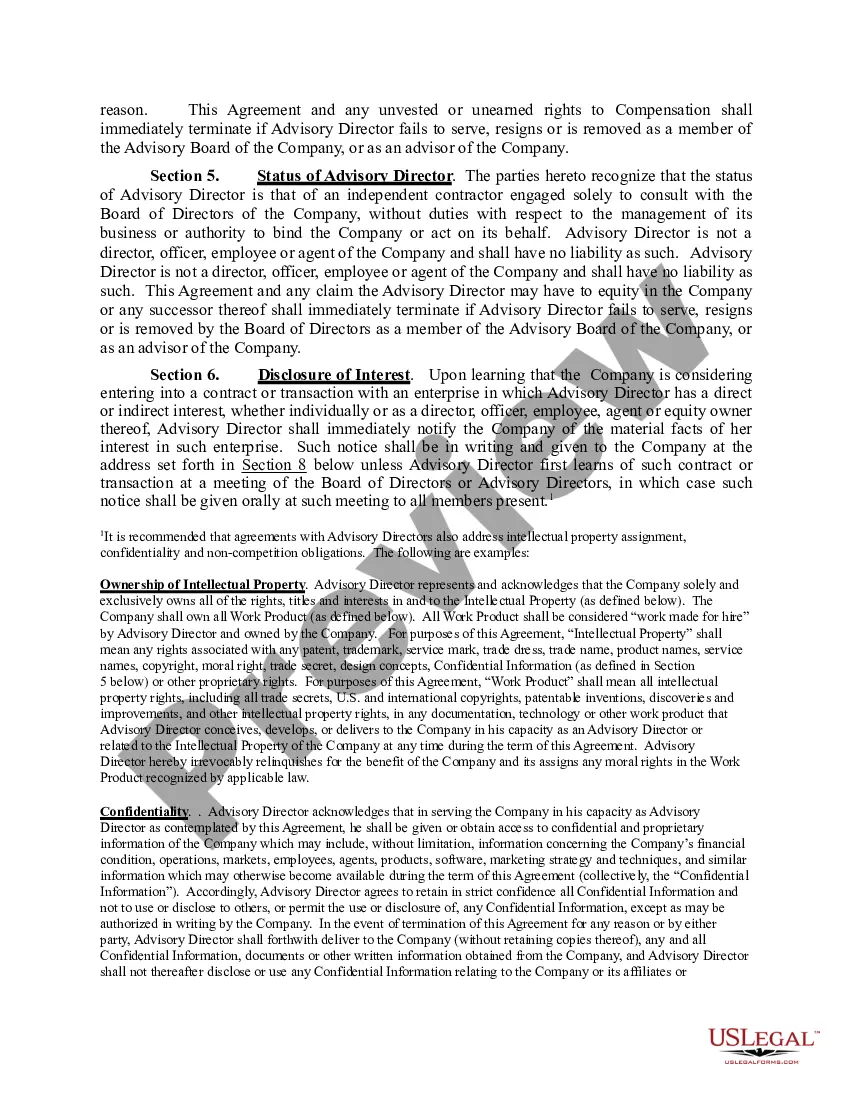
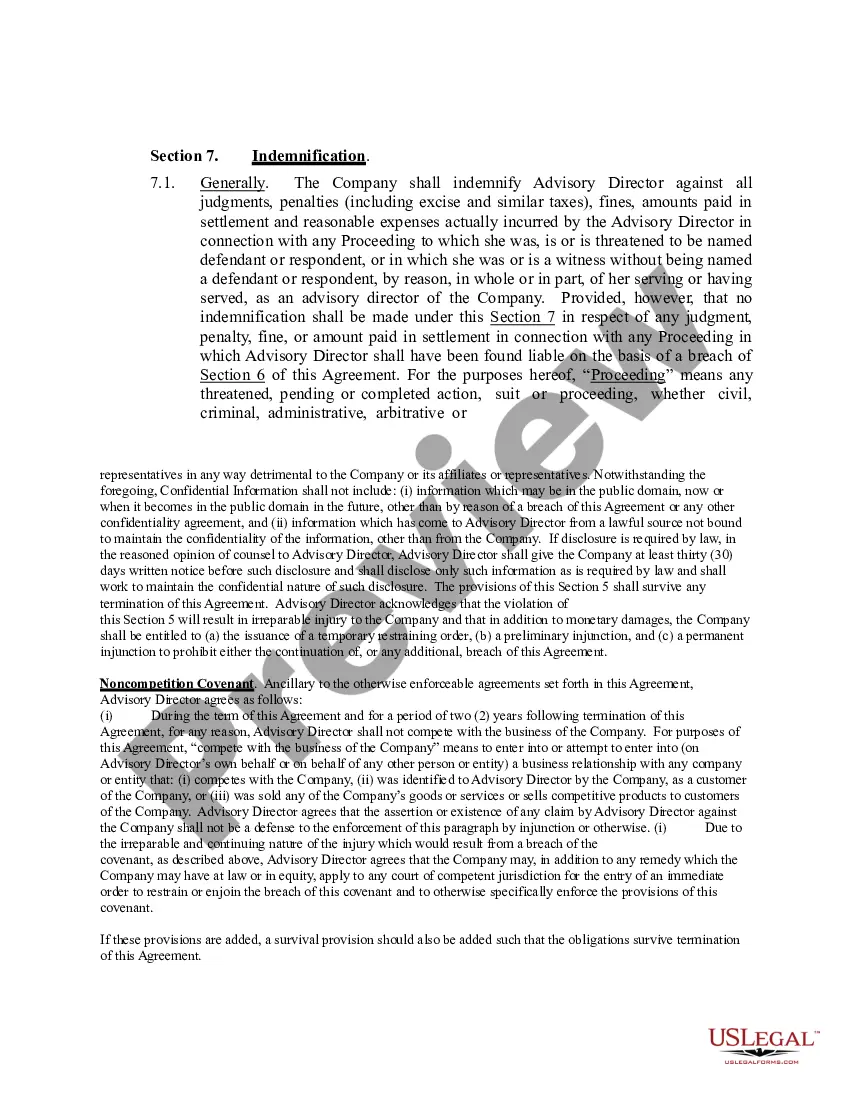
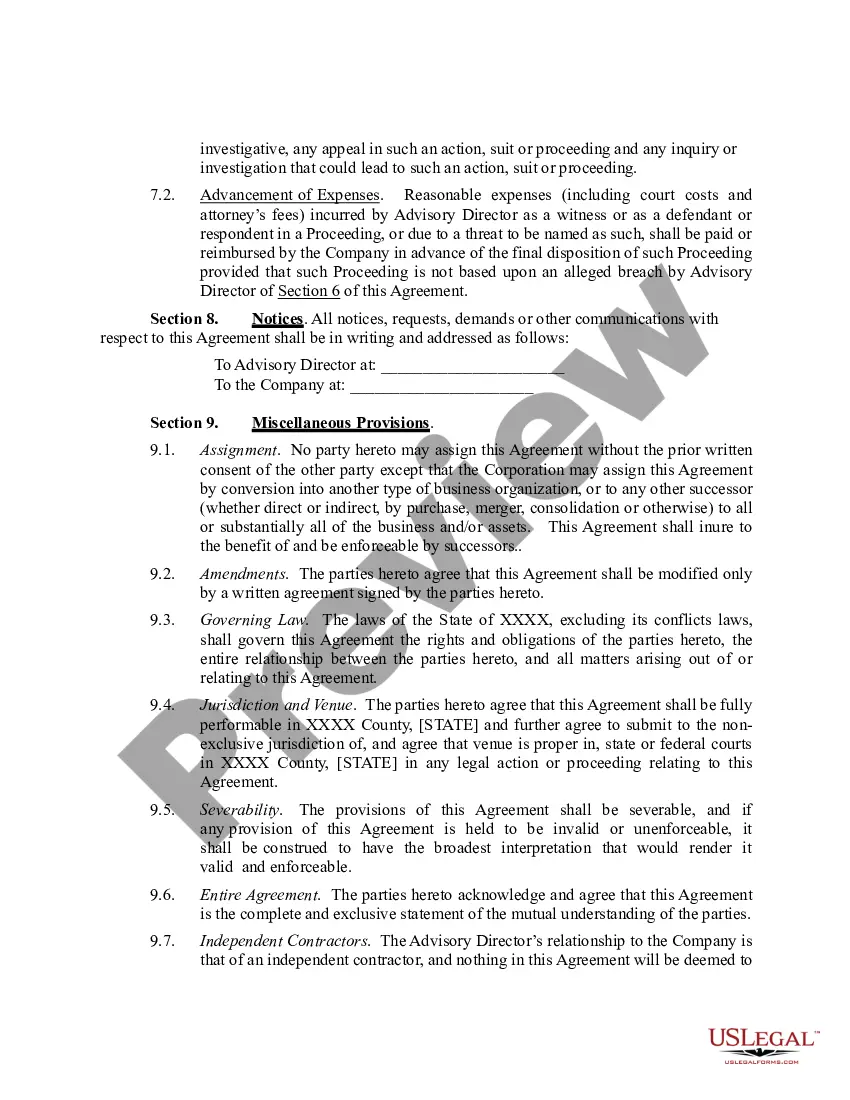
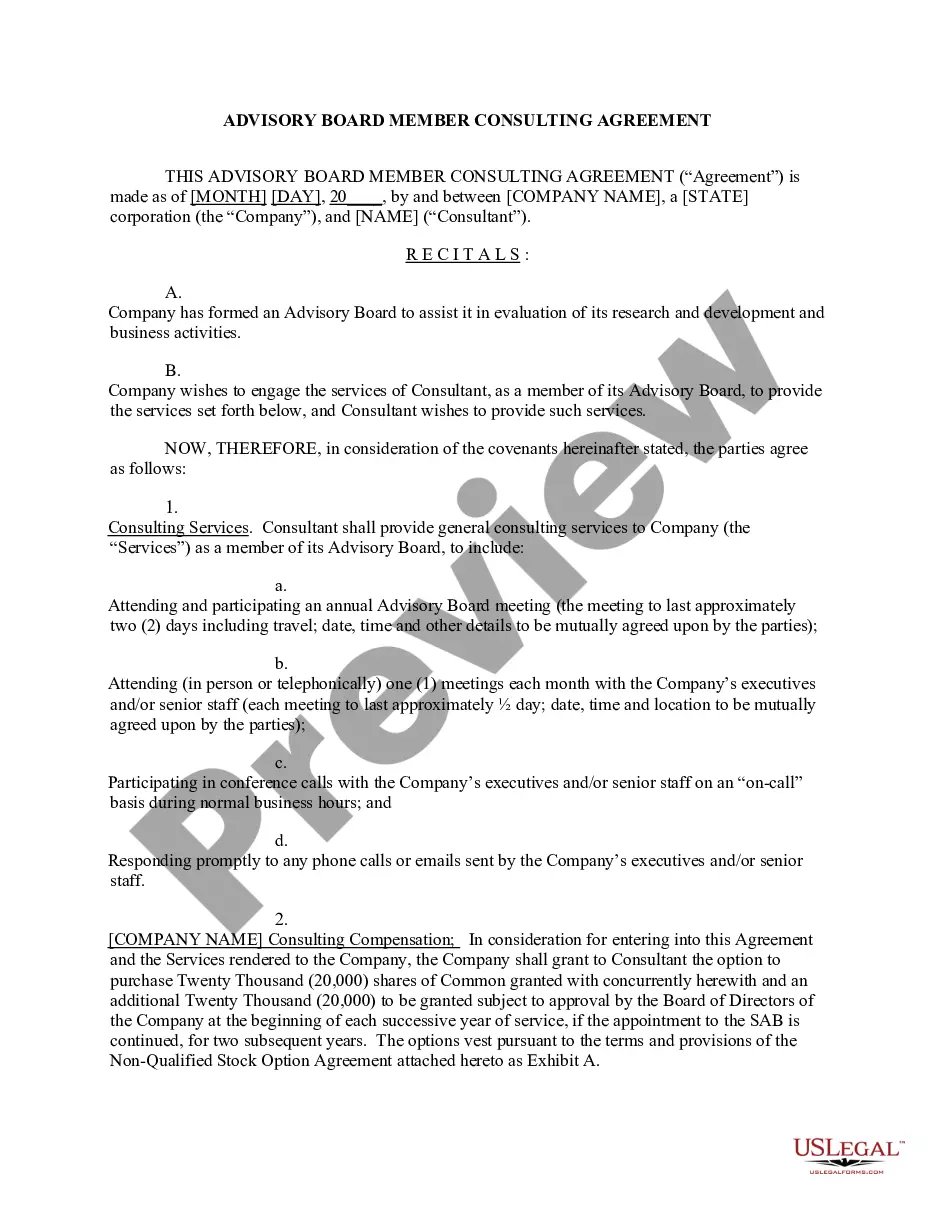
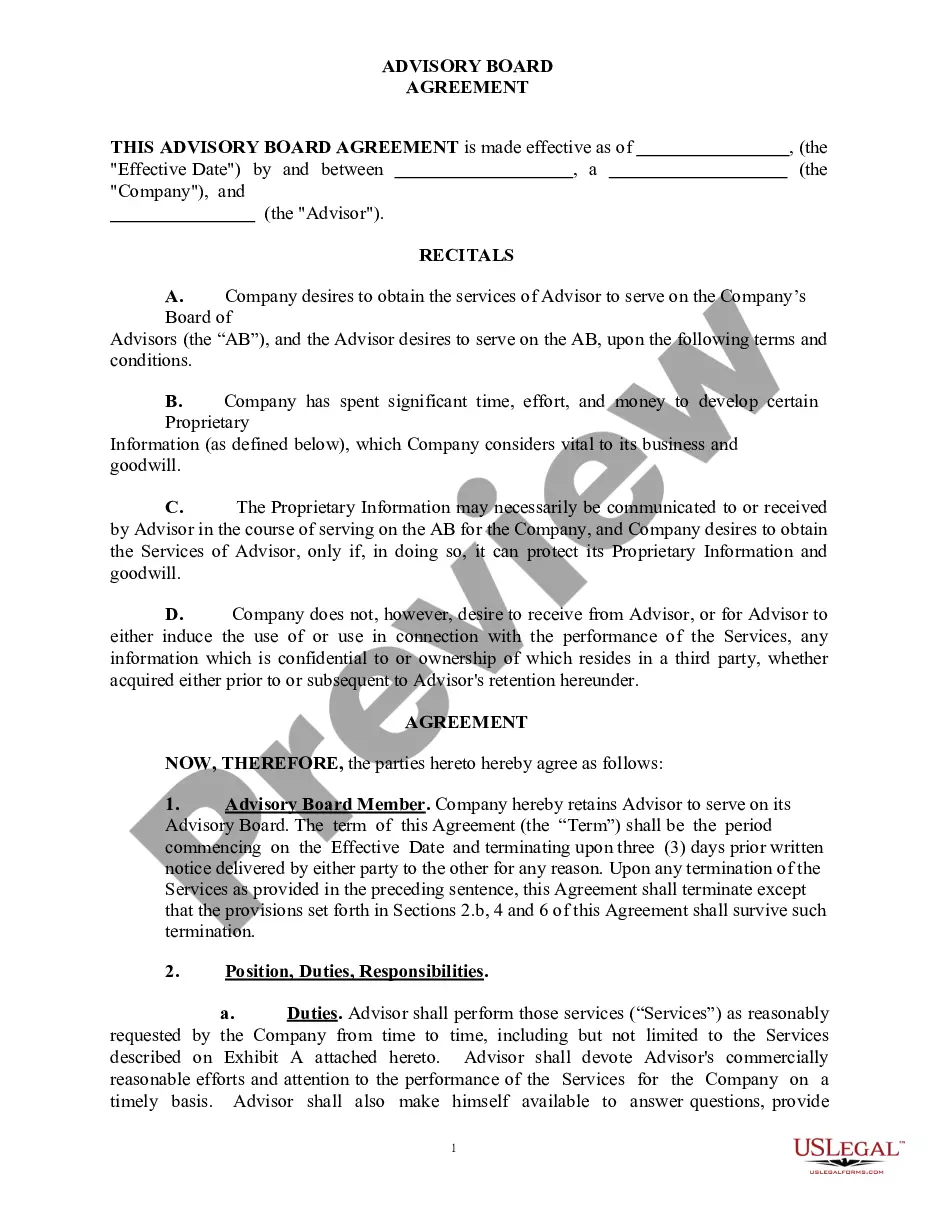
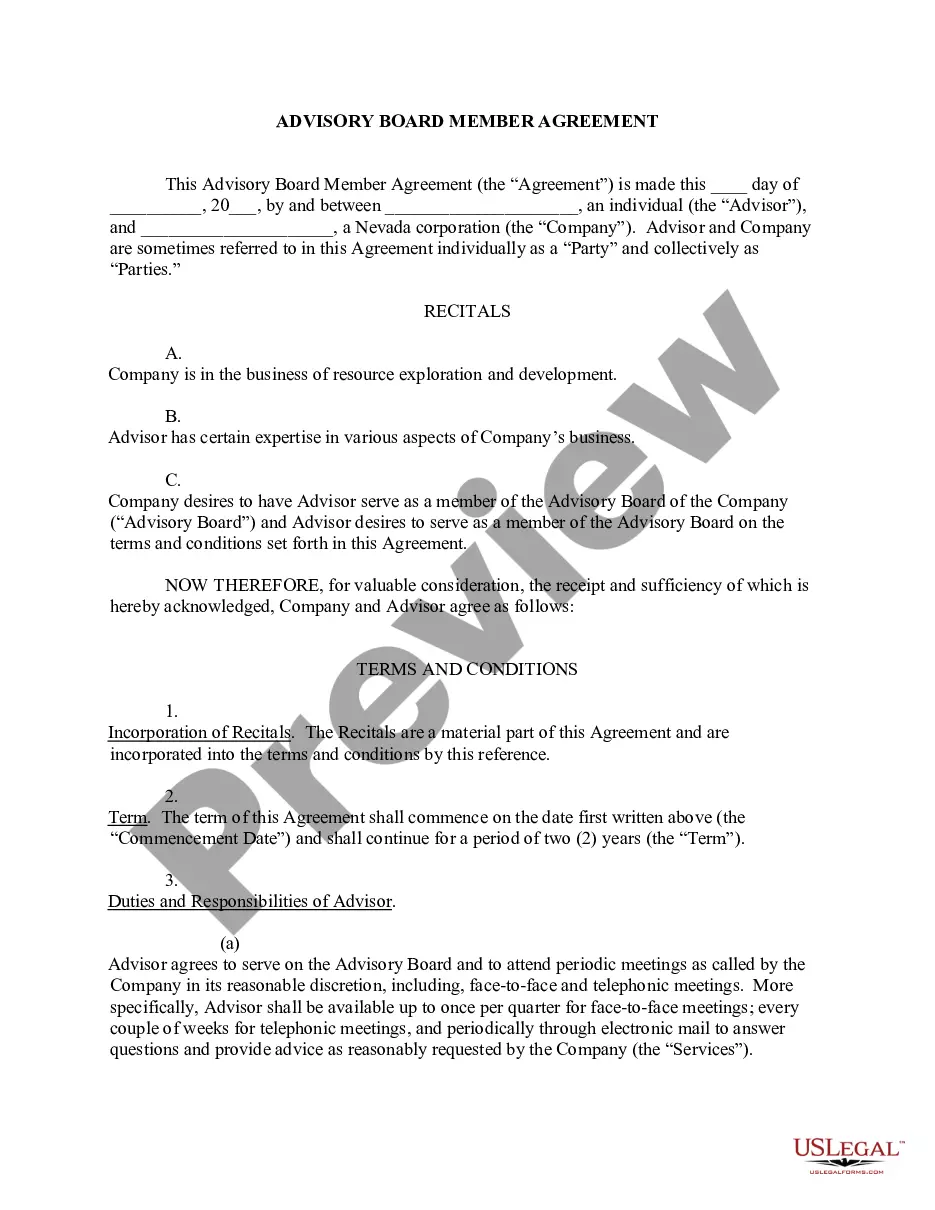
The Advisory Board Member Consulting Agreement is a legal document used to establish the relationship between a company and an advisory board member. This agreement outlines the expectations of both parties, including the advisory services to be provided and the compensation structure. Unlike standard employment contracts, this form specifically addresses the independent nature of the advisory role, including confidentiality and intellectual property considerations.
Main sections of this form
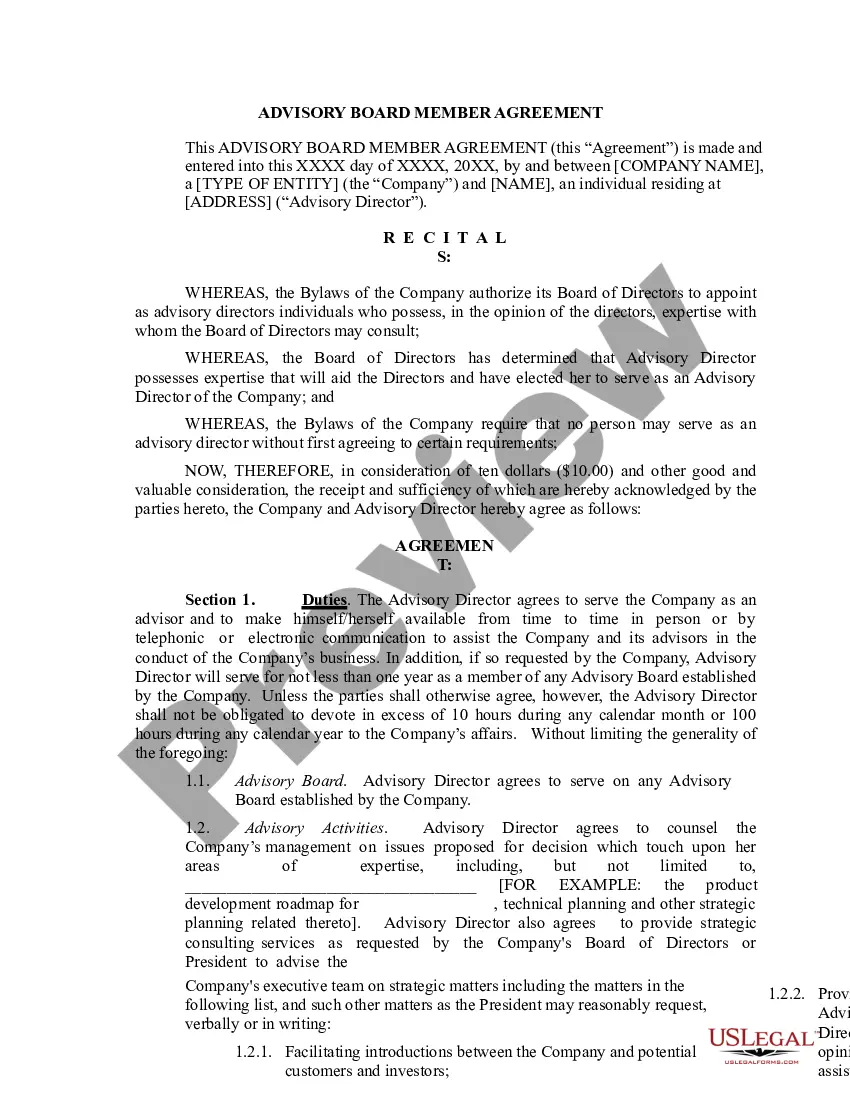
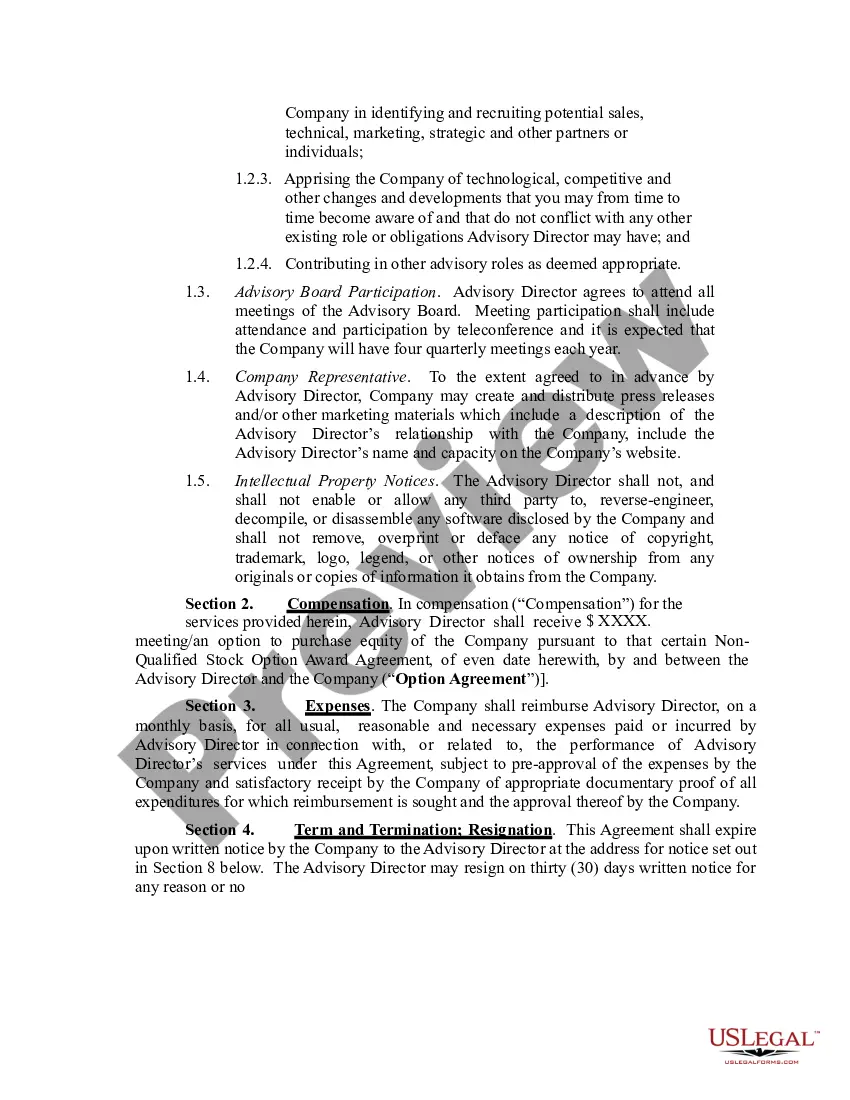
- Duties of the Advisory Director: Details the obligations and availability of the advisory board member to assist the company.
- Compensation: Specifies the payment arrangement for the advisory services provided.
- Intellectual Property Rights: Clarifies ownership of any work product developed during the advisory relationship.
- Confidentiality: Ensures that sensitive information shared during the engagement remains protected.
- Term and Termination: Outlines how and when the agreement can be ended by either party.
Situations where this form applies
This form is ideal for companies that are looking to engage an expert or consultant on an advisory basis. It should be used when a business seeks specialized guidance without formal employment, such as in product development, strategic planning, or market introductions. When starting collaborations with industry experts or experienced professionals, this agreement helps to clarify roles and protect both parties' interests.
Who can use this document
- Businesses looking to add expertise to their advisory board without hiring full-time staff.
- Startups seeking guidance from experienced professionals in their industry.
- Entrepreneurs wanting to formalize relationships with advisors who will provide strategic insight.
- Organizations that require clear terms of engagement for advisory roles.
Instructions for completing this form
- Identify the parties involved: Enter the companyâs name and type of entity, along with the advisory directorâs name and address.
- Specify duties: Clearly outline the advisory services expected from the advisory director.
- Determine compensation: Fill in the payment amount and structure for the advisory services.
- Include confidentiality terms: Ensure that any sensitive information is covered under the confidentiality clause.
- Enter termination details: Specify the duration of the agreement and the conditions for termination.
Does this document require notarization?
This form does not typically require notarization unless specified by local law. However, it is essential to check your stateâs requirements regarding advisory agreements to ensure compliance.
Get your form ready online
Our built-in tools help you complete, sign, share, and store your documents in one place.
Make edits, fill in missing information, and update formatting in US Legal Forms—just like you would in MS Word.
Download a copy, print it, send it by email, or mail it via USPS—whatever works best for your next step.
Sign and collect signatures with our SignNow integration. Send to multiple recipients, set reminders, and more. Go Premium to unlock E-Sign.
If this form requires notarization, complete it online through a secure video call—no need to meet a notary in person or wait for an appointment.
We protect your documents and personal data by following strict security and privacy standards.

Make edits, fill in missing information, and update formatting in US Legal Forms—just like you would in MS Word.

Download a copy, print it, send it by email, or mail it via USPS—whatever works best for your next step.

Sign and collect signatures with our SignNow integration. Send to multiple recipients, set reminders, and more. Go Premium to unlock E-Sign.

If this form requires notarization, complete it online through a secure video call—no need to meet a notary in person or wait for an appointment.

We protect your documents and personal data by following strict security and privacy standards.
Common mistakes
- Failing to clearly define the advisory services expected, which can lead to misunderstandings.
- Not addressing confidentiality requirements, risking exposure of sensitive information.
- Overlooking the intellectual property terms, which can affect ownership rights of work produced.
- Neglecting to specify compensation, leading to disputes over payment.
Why complete this form online
- Convenience of customization: Easily modify the agreement to suit specific needs.
- Quick access: Download the form anytime and anywhere to meet business needs.
- Reliability: Templates are drafted by licensed attorneys ensuring legal soundness.
- Cost-effective: Save on legal fees by using professionally prepared templates.
Looking for another form?

Form popularity
FAQ
The average Advisory Board Member salary is $64,559 as of , but the salary range typically falls between $57,932 and $72,725. Salary ranges can vary widely depending on many important factors, including education, certifications, additional skills, the number of years you have spent in your profession.
Advisory boards and committees are two types of boards that can help a company's management team. The difference between an advisory board and a board of directors is that the former is usually made up of non-executive members while the latter is composed of executive board members.
The advisor is remunerated for each meeting they attend, including any pre or post-meeting activities. Most businesses conduct between four and six half or full-day meetings per year. Annual retainer: Some organisations may opt to compensate their Chair or advisors on an annual retainer often paid monthly.
Advisor equity commonly ranges between 0.10% and 0.25% for a (typical) two-year engagement. In unusual circumstances it can be much higher: 1% or more.
Advisory Board Member Salary Annual SalaryMonthly PayTop Earners$318,500$26,54175th Percentile$134,000$11,166Average$115,612$9,63425th Percentile$37,500$3,125
What is an Advisory Board Agreement? An advisory board agreement is a legal document that covers a business' relationship with their advisory board. The agreement outlines what type of advice an advisor can offer, how much compensation they will receive, and when their relationship with the company will come to an end.
Share the agenda with your advisory board one week before the meeting. Ask questions and expect feedback. Perhaps the most important step you'll take in planning a worthwhile advisory board meeting is asking detailed and narrowly-focused questions.Keep an open mind.Follow through with follow-up.Keep in touch.
A board is in place to challenge the organization's current state of affairs. Board members must be willing to voice concerns and suggestions with as much candor and honesty as possible. They must have the guts to ask tough questions and can't be easily intimidated.