Indiana USLegal Guide to Advance Directives for Health Care
Description
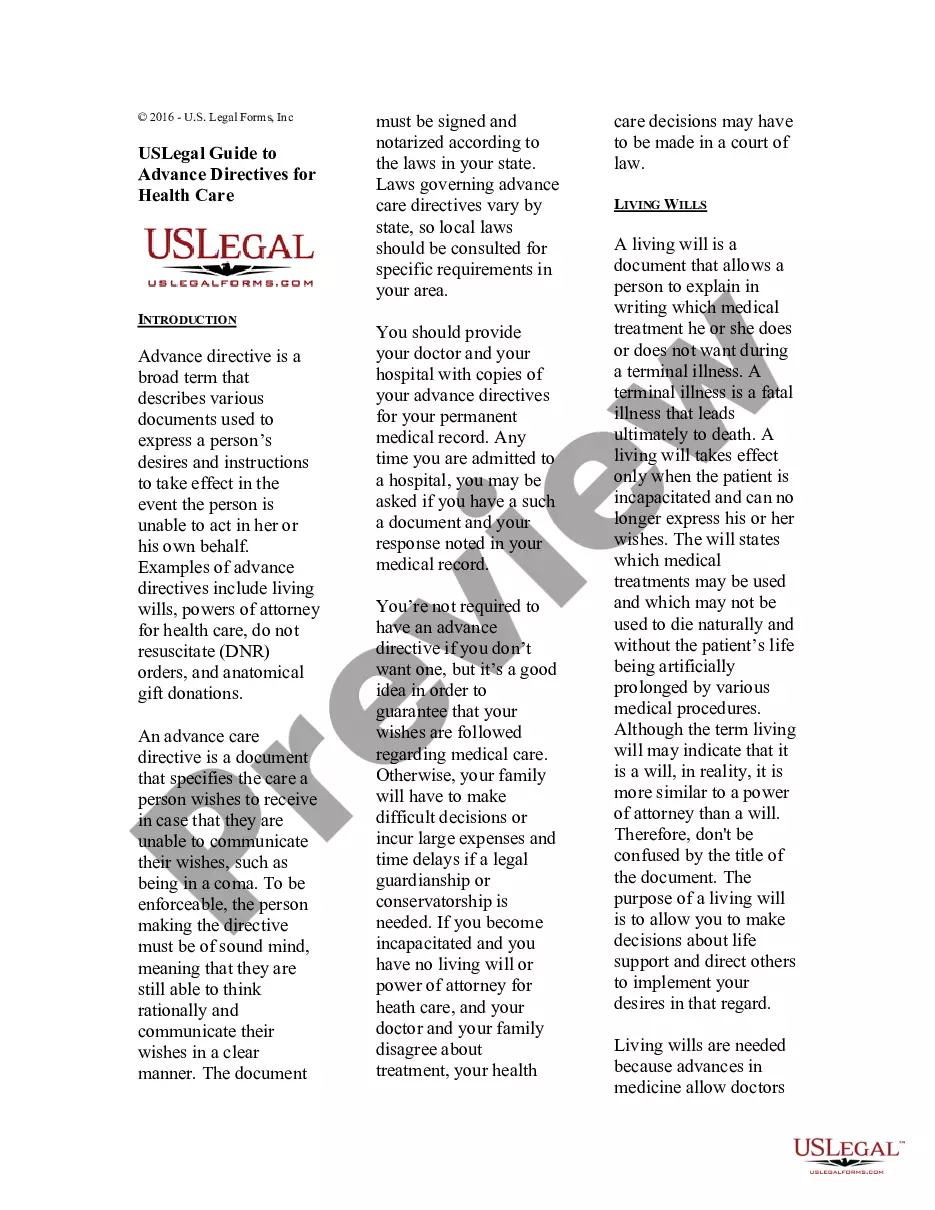
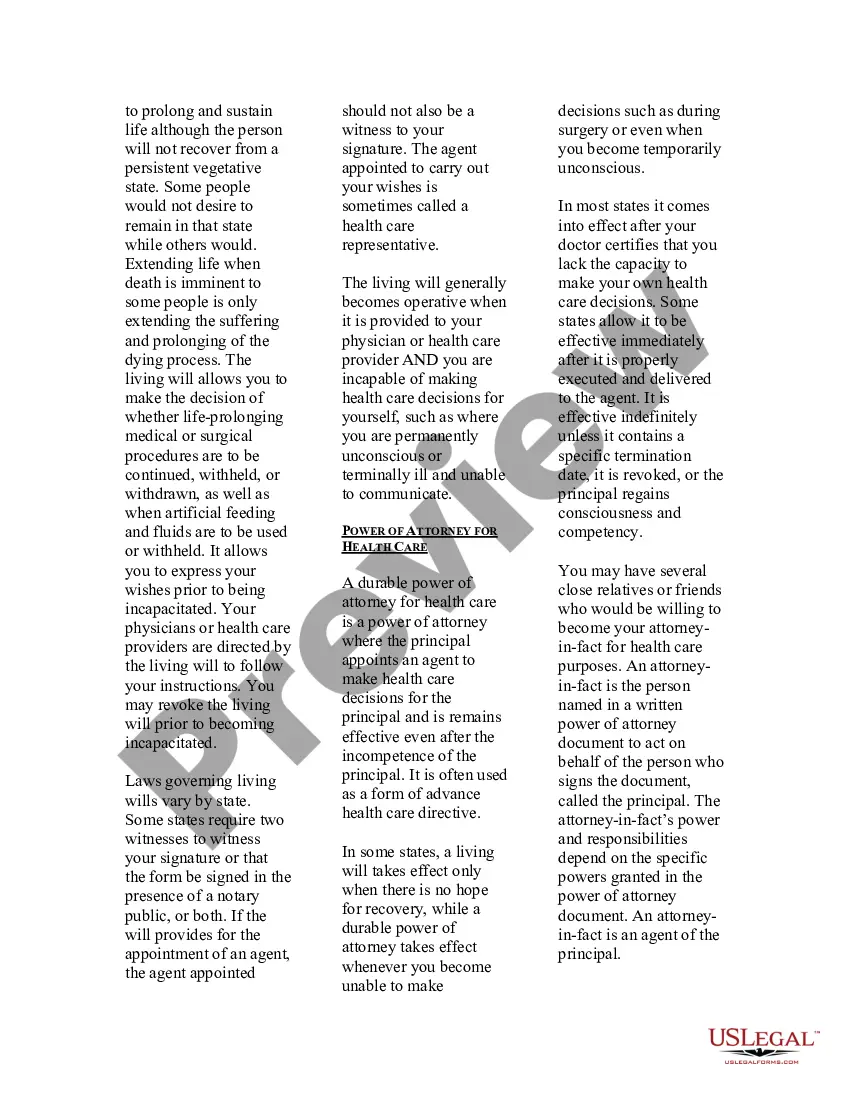
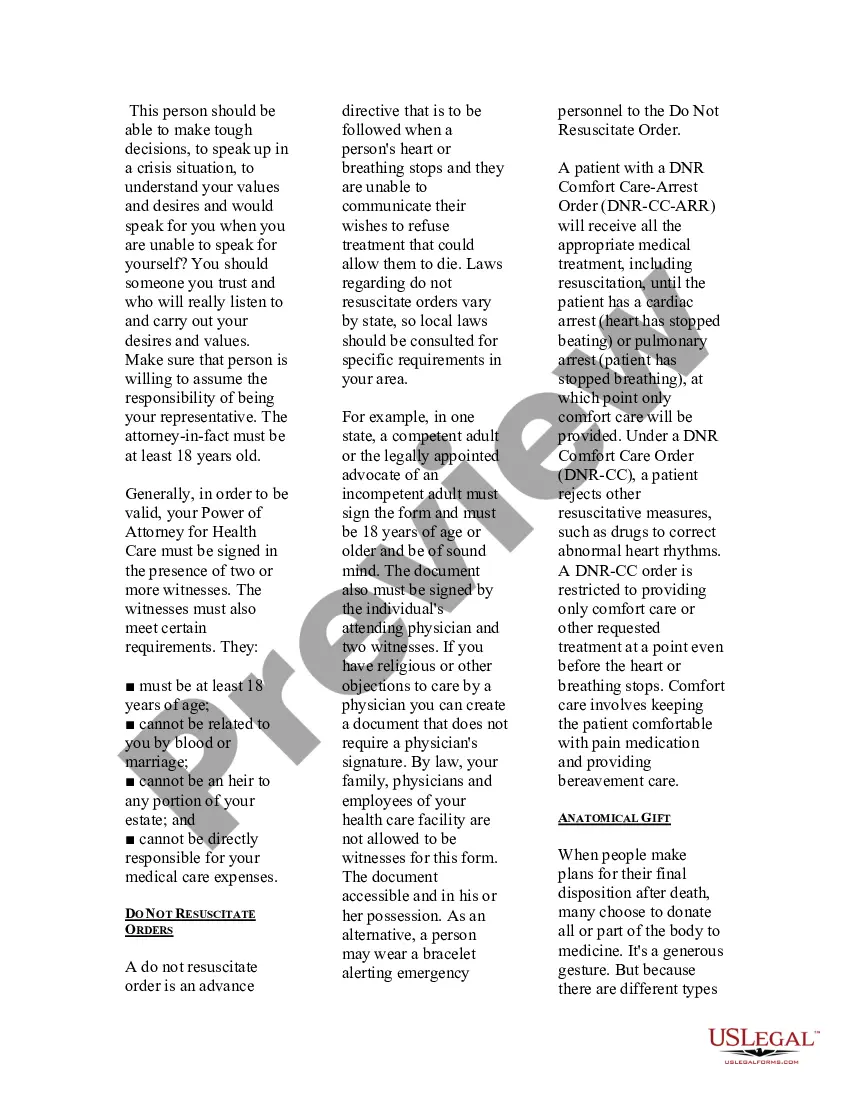
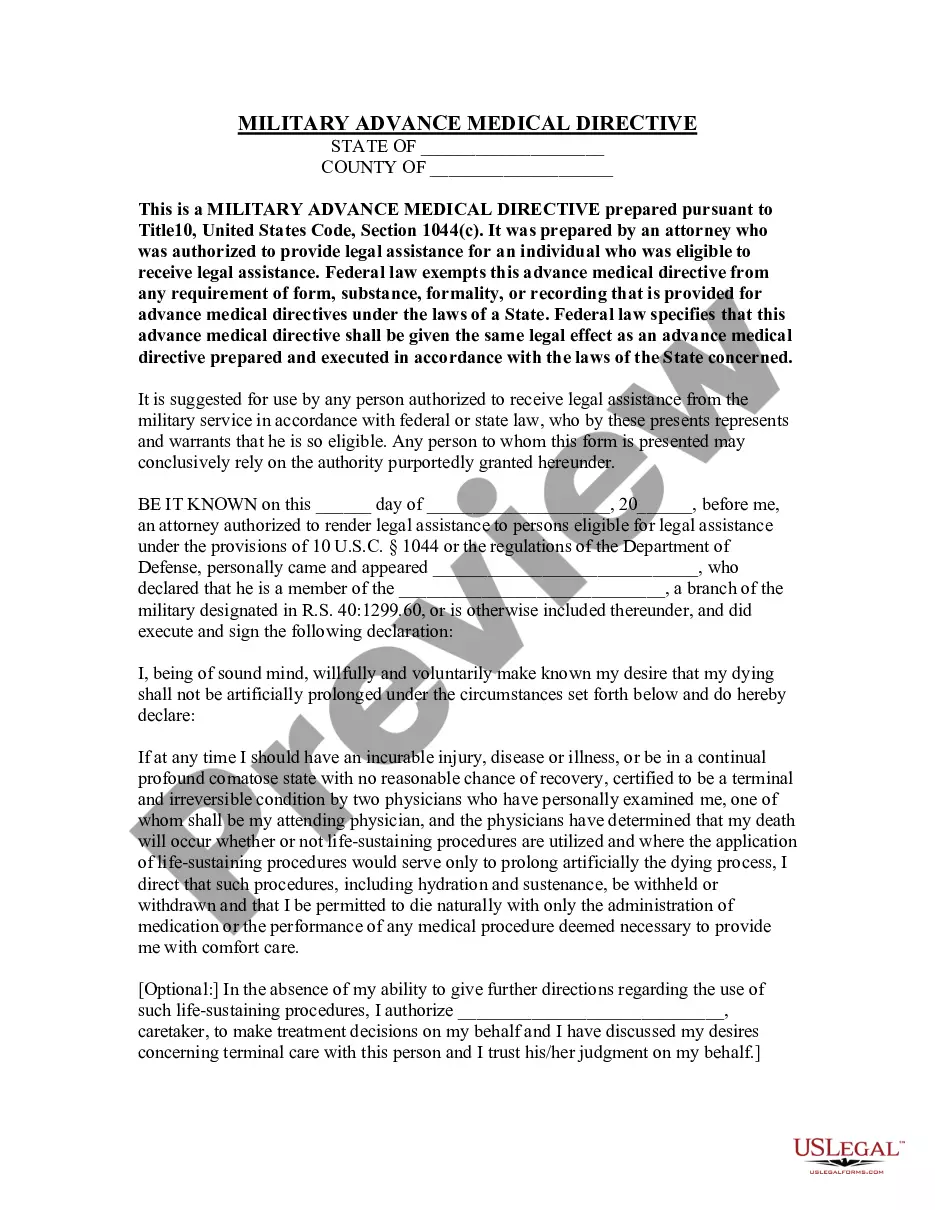
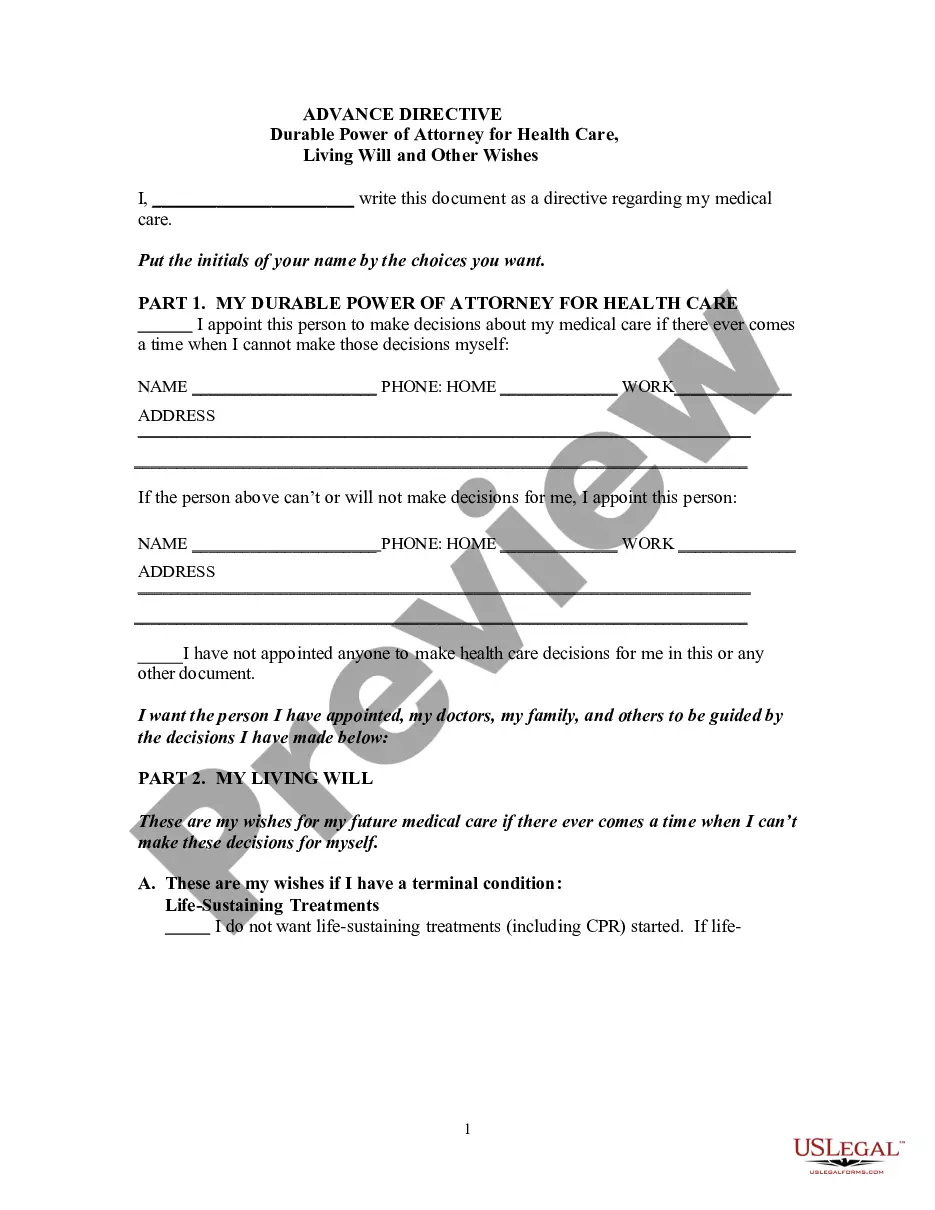
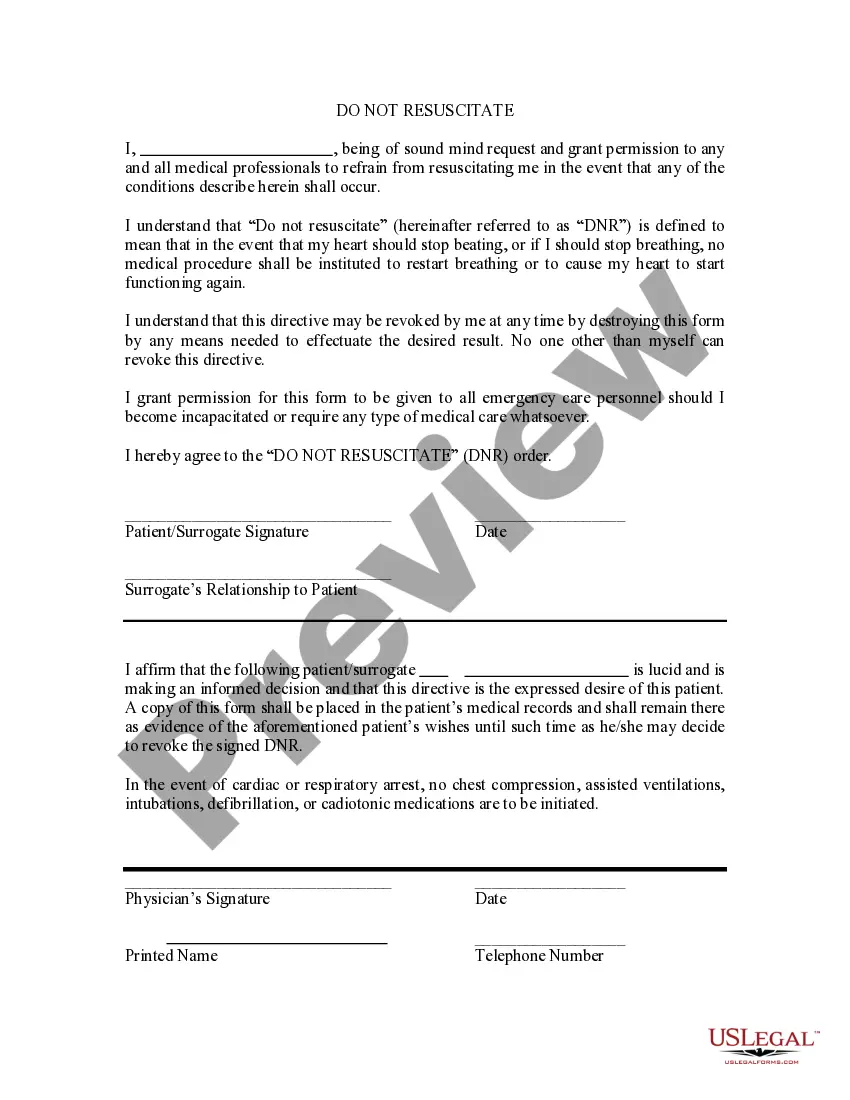

How to fill out USLegal Guide To Advance Directives For Health Care?
Selecting the appropriate valid document template can be quite a challenge.
Clearly, there are numerous templates accessible online, but how can you locate the valid form you require.
Utilize the US Legal Forms website.
If you are a new user of US Legal Forms, here are simple steps to follow: First, ensure you have selected the correct form for your area/county. You can browse the form using the Review button and read the form description to verify it is suitable for you.
- The service provides thousands of templates, including the Indiana USLegal Guide to Advance Directives for Health Care, suitable for both business and personal needs.
- All forms are reviewed by experts and comply with federal and state requirements.
- If you are already registered, Log In to your account and click the Download button to obtain the Indiana USLegal Guide to Advance Directives for Health Care.
- Use your account to access the legal forms you may have acquired previously.
- Go to the My documents tab in your account and download another copy of the document you need.
Form popularity
FAQ
In Utah, an advance directive does not necessarily need to be notarized; however, it must be signed by two witnesses who meet specific requirements. This ensures that your intentions are properly validated and legally recognized. By consulting the Indiana USLegal Guide to Advance Directives for Health Care, you can learn more about the requirements and find templates to help streamline your document preparation.
The advance directive law in Indiana allows individuals to make decisions about their health care in advance. Under Indiana law, these directives must be in writing, signed, and either witnessed or notarized. For a comprehensive understanding, the Indiana USLegal Guide to Advance Directives for Health Care serves as an excellent resource.
In Maine, an advance directive does not need to be notarized to be valid. However, it must be signed by you and witnessed by two individuals. To get complete and accurate information, refer to the Indiana USLegal Guide to Advance Directives for Health Care as it provides detailed insights into requirements across different states.
Absolutely, you can create an advance directive online. Various legal platforms, such as the one provided in the Indiana USLegal Guide to Advance Directives for Health Care, allow you to prepare and customize your documents securely. This approach offers convenience and ensures that your directives are drafted correctly.
One of the main problems with advance directives is that they may not be easily located or accessible during a medical emergency. If health care providers cannot find your directive, they might not know your wishes. Utilizing the Indiana USLegal Guide to Advance Directives for Health Care can help you understand how to communicate and store your advance directives effectively.
Yes, you can fill out an advance directive online. Many resources, including the Indiana USLegal Guide to Advance Directives for Health Care, offer forms and templates that can be completed digitally. This option simplifies the process and makes accessing the documents more efficient for users.
To make an advance directive a legal document, you must follow your state's specific regulations. Generally, you need to sign the document in the presence of witnesses, and some states may require notarization. It’s crucial to refer to the Indiana USLegal Guide to Advance Directives for Health Care to ensure you meet all legal requirements.
In Indiana, an advance directive does not need to be notarized, but it must be signed by at least two witnesses. The Indiana USLegal Guide to Advance Directives for Health Care clarifies this requirement. This flexibility allows you to complete your directive without a notary's assistance. Always ensure that your witnesses are competent and suitable according to Indiana law.
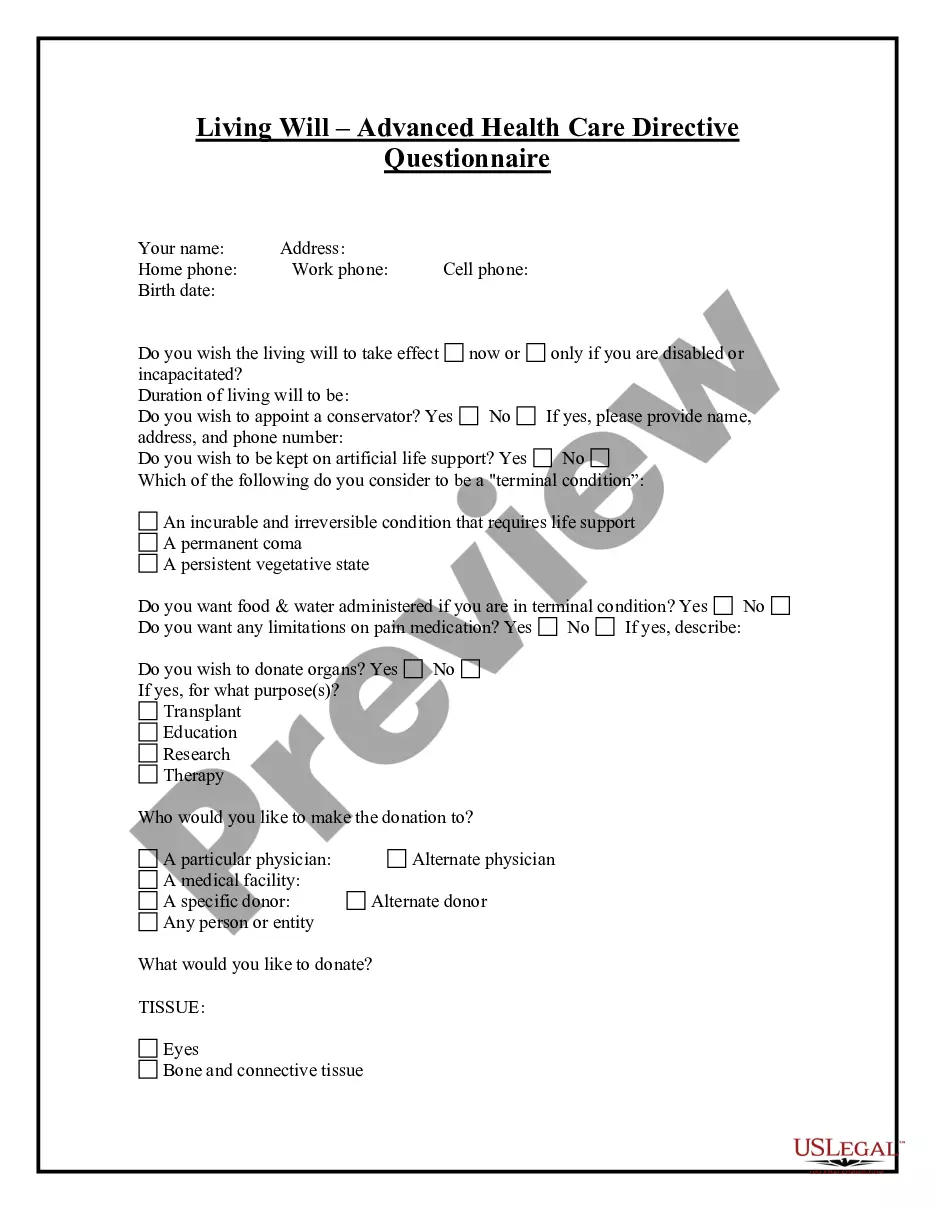
Advance directives commonly include a living will and a durable power of attorney for health care. The living will outlines your medical preferences, while the durable power of attorney designates someone to make decisions on your behalf. For detailed guidance, refer to the Indiana USLegal Guide to Advance Directives for Health Care. It ensures that your wishes are communicated effectively.
A sample wording for an advance directive typically outlines your medical preferences and appoints a health care representative. The Indiana USLegal Guide to Advance Directives for Health Care includes examples to guide you. Use straightforward language to express your wishes clearly. This ensures that your healthcare team understands your desires precisely.